Introduction
Overview
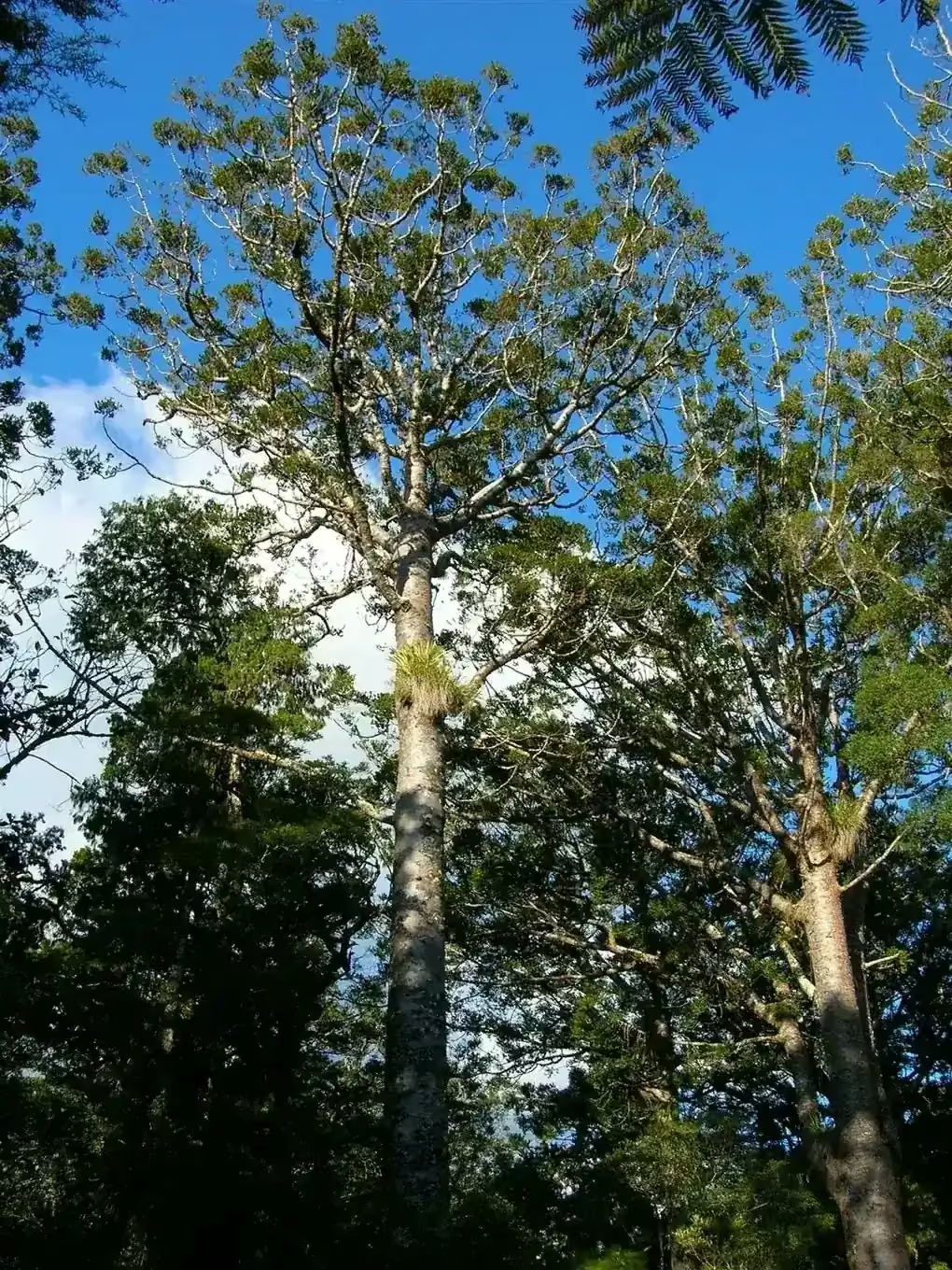
New Zealand's native trees are vital to the country's unique ecosystems, providing habitat, stabilizing soils, and supporting biodiversity. The forests are home to ancient giants like kauri (Agathis australis), tōtara (Podocarpus totara), and rimu (Dacrydium cupressinum), as well as fast-growing pioneers such as mānuka ( Leptospermum scoparium ) and kānuka (Kunzea ericoides). These trees are valued for their ecological roles, cultural significance, and use in restoration and landscaping projects across the country.
Many of New Zealand's native trees are evergreen, with distinctive forms that define the character of our landscapes. They provide habitat for native birds and insects, help prevent erosion, and hold immense cultural significance for both Māori and European New Zealanders.
Explore our collection of native New Zealand trees below to learn about their care requirements, cultural significance, and how to incorporate them into your garden or landscape. For our complete native plant collection, visit our main plant guide .
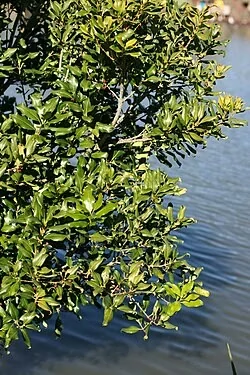
Coastal Maire
Nestegis apetala
Coastal Maire is a handsome evergreen tree with broad, leathery leaves, resilient in exposed maritime conditions and found in coastal forests.
Learn more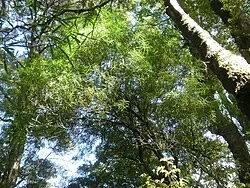
Narrow-leaved Maire
Nestegis montana
Elegant evergreen tree with slender branches and very narrow, leathery leaves, typically found in montane and subalpine forests throughout New Zealand.
Learn more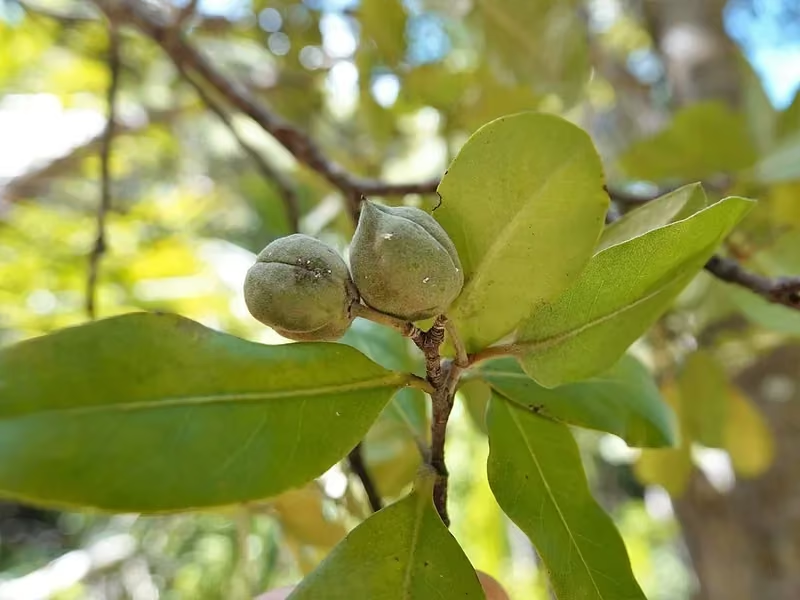
Oval-Leaved Pittosporum
Pittosporum ellipticum
Handsome tree or large shrub with leathery, elliptic leaves and clusters of fragrant dark flowers, primarily found in coastal and lowland forests of the North Island.
Learn more
Hutton's Kōhūhū
Pittosporum huttonianum
Attractive small tree or shrub with silvery-grey foliage and dark red flowers, endemic to Great Barrier Island and the Coromandel Peninsula.
Learn more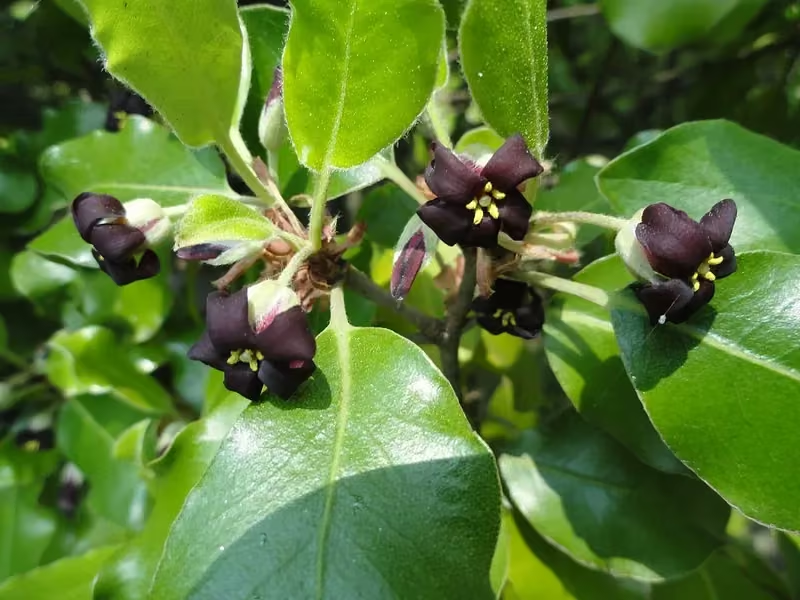
Karo
Pittosporum ralphii
Hardy evergreen shrub or small tree with leathery leaves and fragrant dark red flowers, often found in coastal and lowland areas of the North Island.
Learn more
Haekaro
Pittosporum umbellatum
Attractive small tree or shrub with leathery leaves and umbels of fragrant red flowers, endemic to the coastal and lowland forests of the northern North Island.
Learn more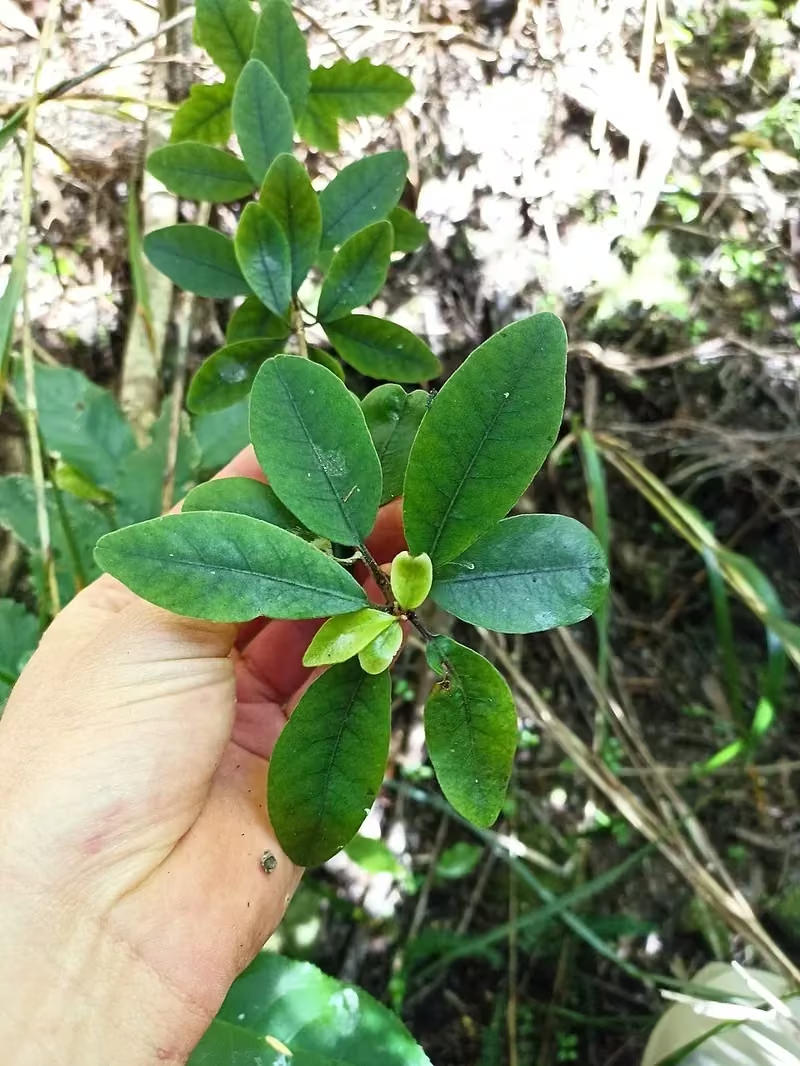
Slender Kōhūhū
Pittosporum virgatum
Rare and delicate native tree with a distinct juvenile stage of interlaced branches, maturing into an elegant tree with fragrant dark red flowers.
Learn more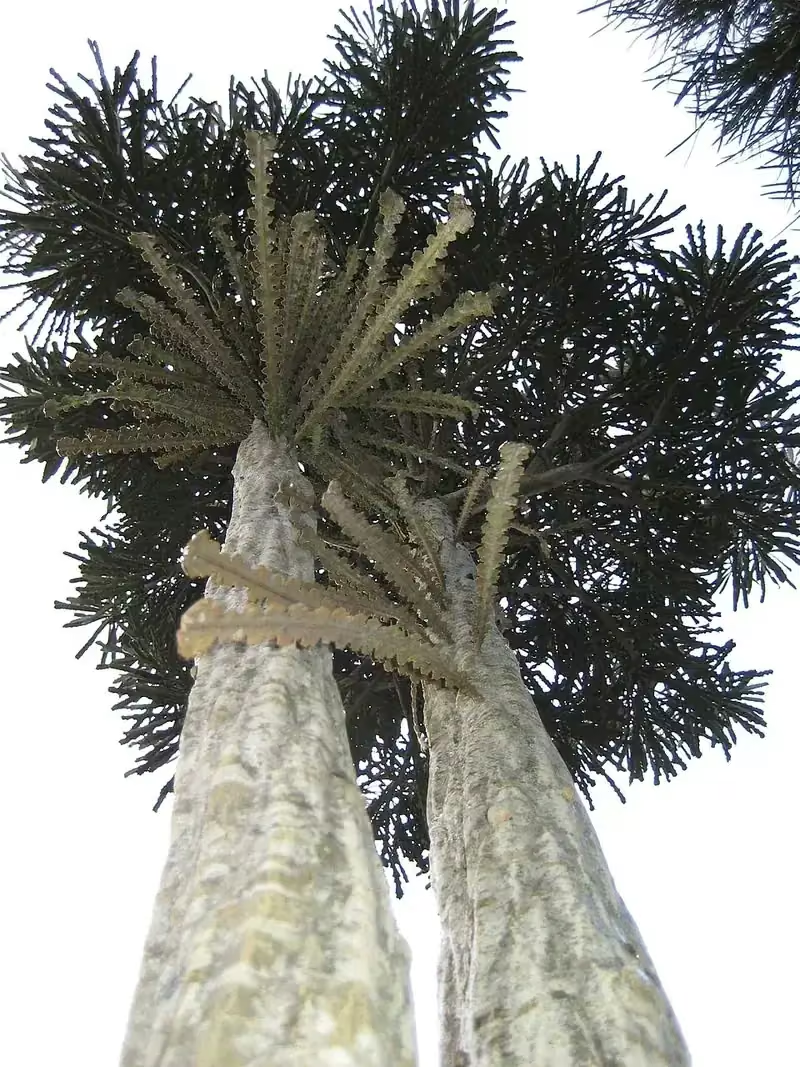
Fierce Lancewood
Pseudopanax ferox
Striking and rare native tree known for its unusual, stiffly-toothed juvenile leaves that point downwards, eventually maturing into a more conventional tree form.
Learn more
Kāmahi
Pterophylla racemosa
New Zealand's most abundant forest tree, an essential pioneer species producing spikes of white flowers and valued for its hard timber and tannin-rich bark.
Learn more
Forest Maire
Pterophylla sylvicola
Medium-sized evergreen tree endemic to the northern North Island, known for its glossy compound leaves and spikes of small white flowers.
Learn more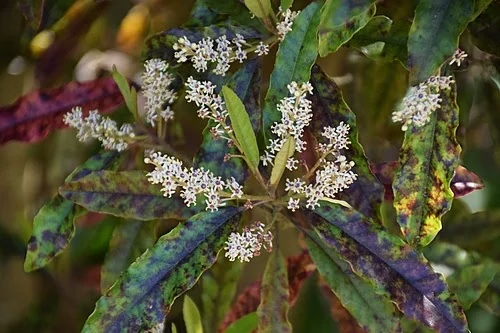
Tāwheowheo
Quintinia serrata
Attractive evergreen tree with mottled, serrated leaves and spikes of small white flowers, typical of the wet forests of the South Island's West Coast.
Learn more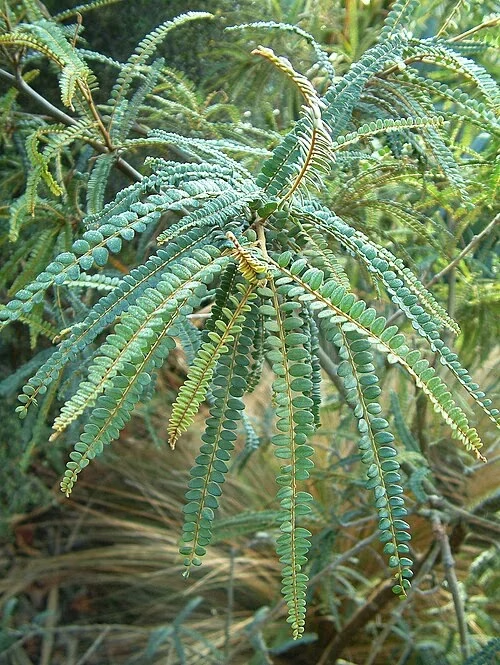
Godley's Kōwhai
Sophora godleyi
Elegant native tree with pendulous branches and spectacular golden-yellow flowers, endemic to the central North Island and well-adapted to limestone regions.
Learn more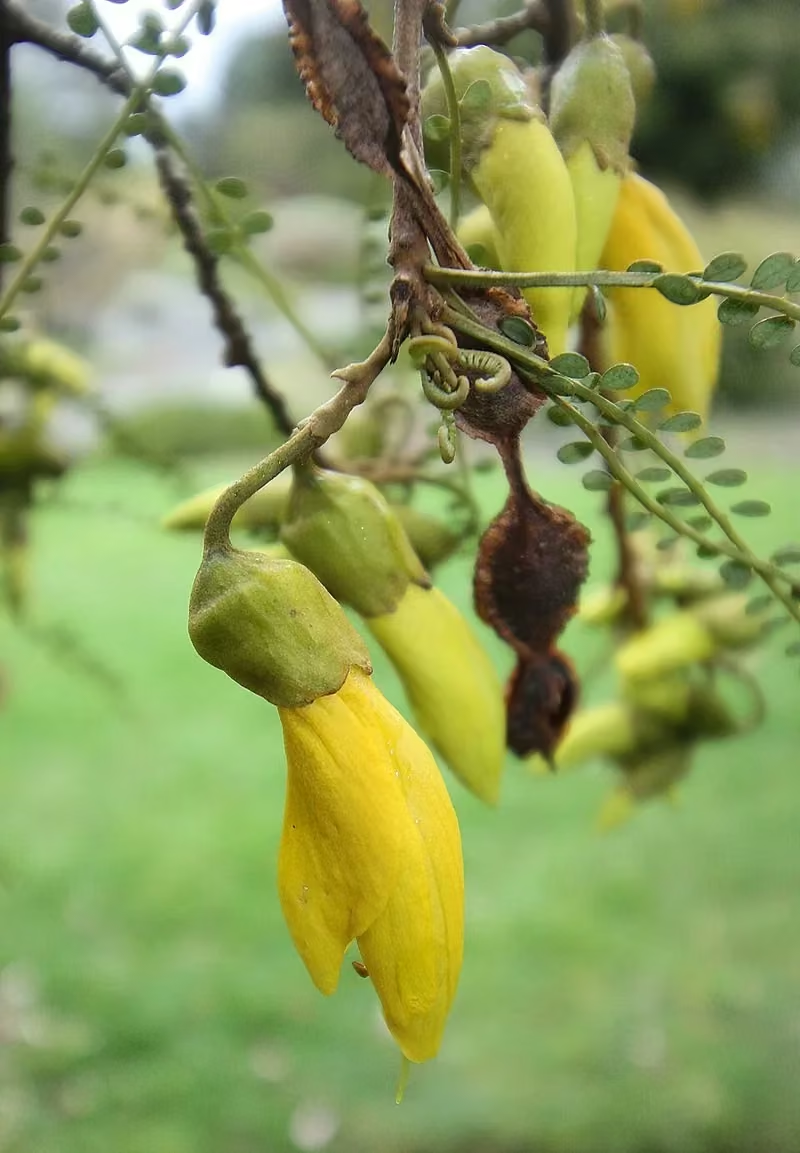
Long-Keel Kōwhai
Sophora longicarinata
A graceful limestone-loving kōwhai from the northern South Island, distinguished by its exceptionally long-keeled yellow flowers and fine, feathery foliage.
Learn more
Willow-Leaf Hebe
Veronica salicifolia (synonym)
Fast-growing evergreen shrub or small tree with willow-like leaves and drooping spikes of fragrant white to pale lilac flowers, a quintessential part of the New Zealand bush.
Learn more
Koromiko
Veronica stricta
Important Rongoā plant and hardy pioneer shrub featuring long pale green leaves and dense spikes of white flowers, thriving in open and disturbed habitats.
Learn more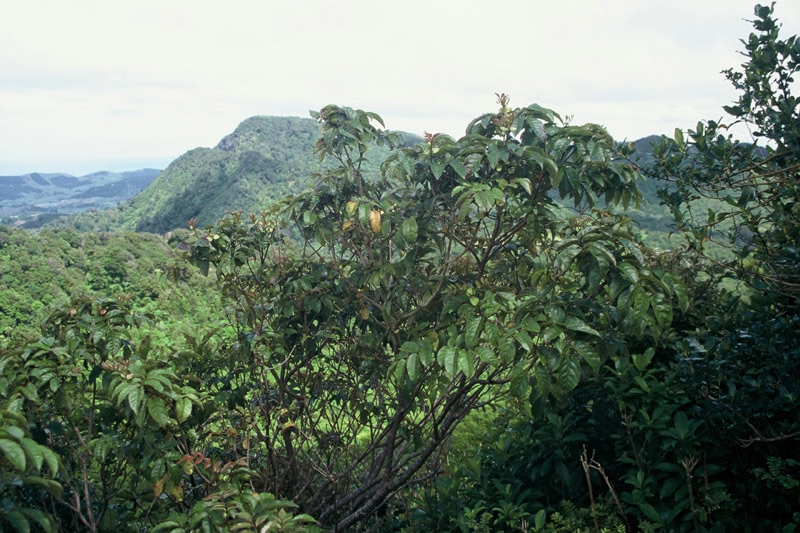
Turoa Onamata
Ackama nubicola
Turoa onamata ( Ackama nubicola ) is a small, multi-trunked tree 5 to 15 m tall, known only from cloud forest above 500 m in Waima Forest, South Hokianga, Northland.
Learn more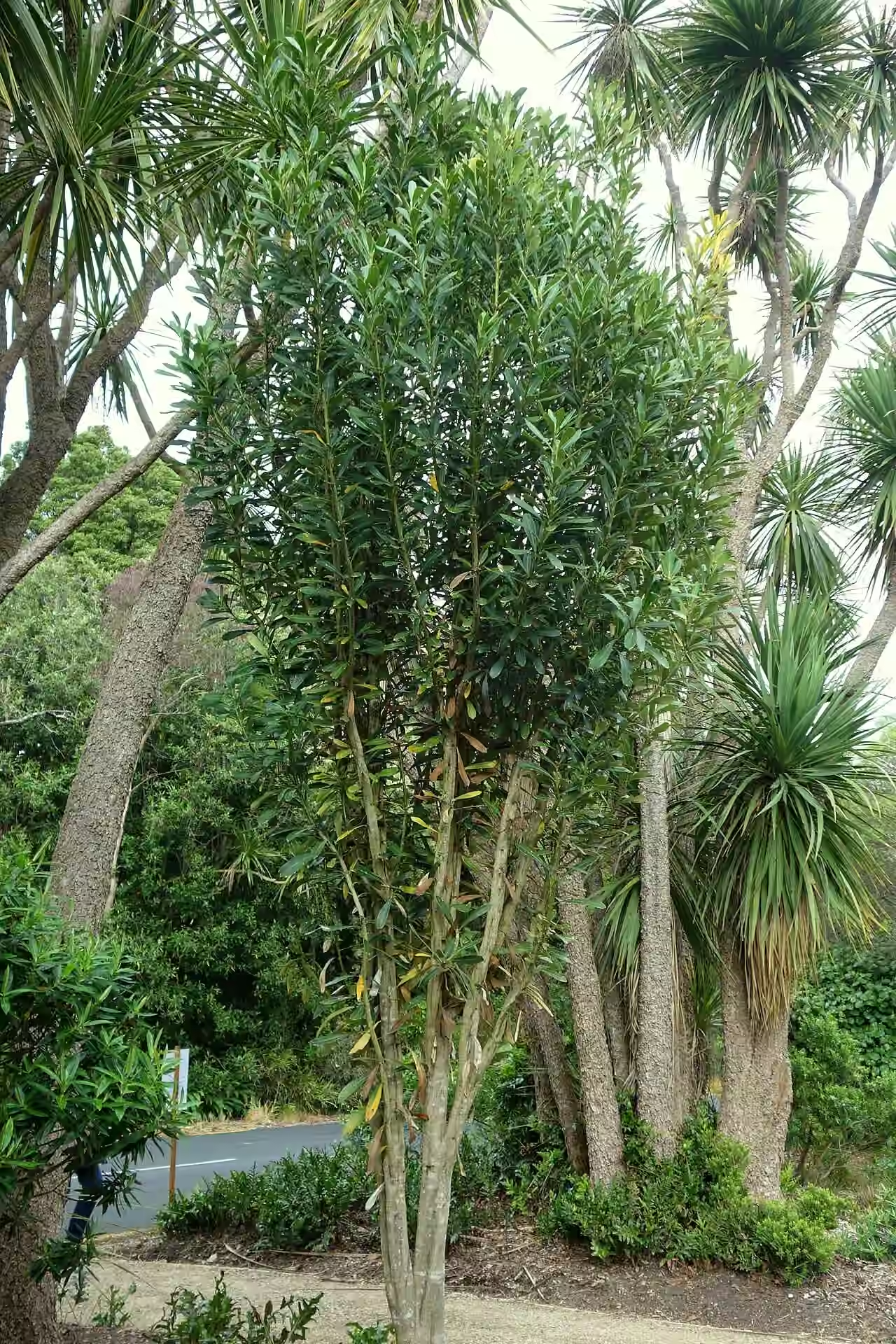
Chatham Island Lancewood
Pseudopanax chathamicus
Chatham Island lancewood or hoho ( Pseudopanax chathamicus ) is a small tree up to 7 m, occasionally 12 m, found naturally only on the Chatham Islands.
Learn more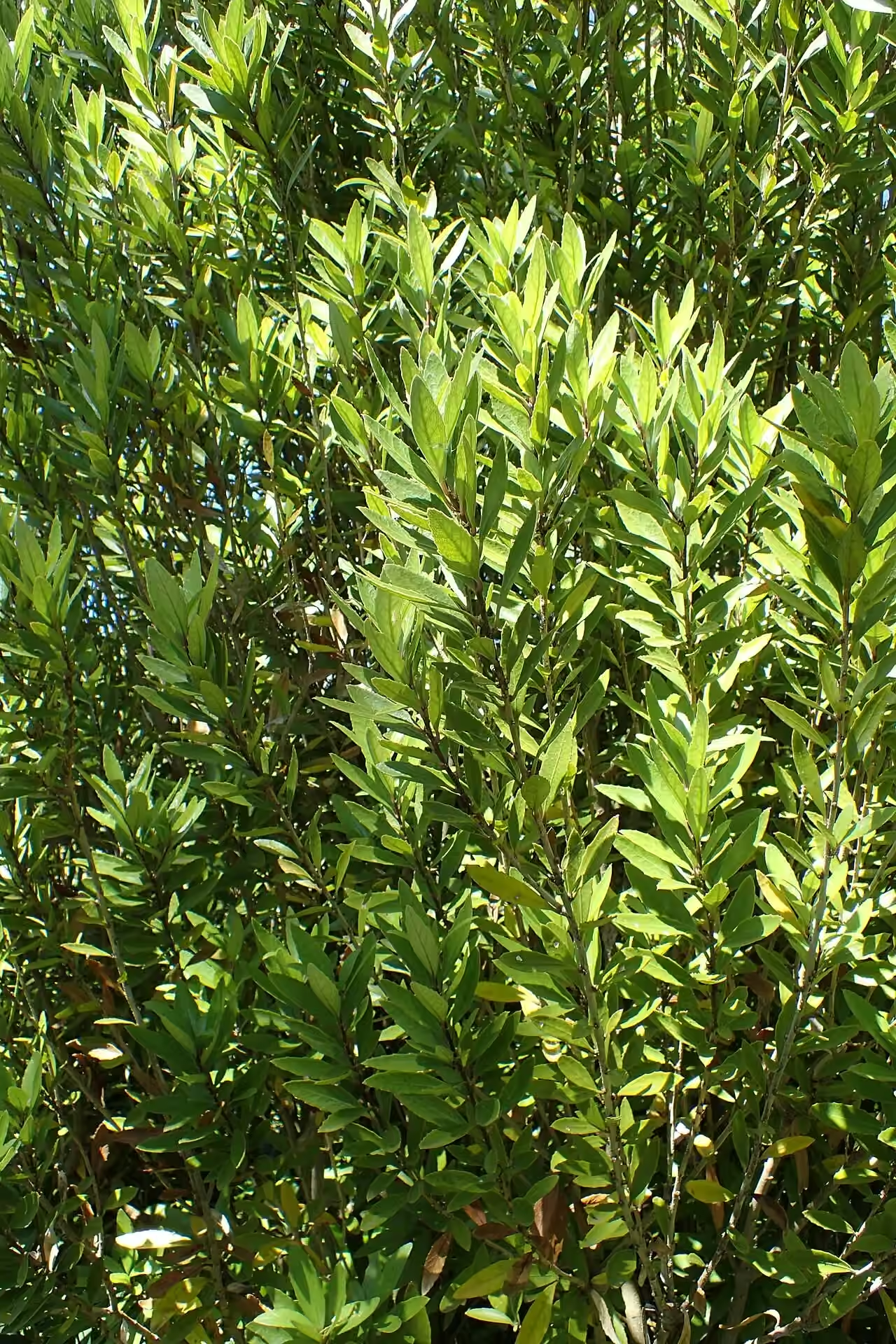
Chatham Island Māhoe
Melicytus chathamicus
Chatham Island māhoe ( Melicytus chathamicus ) is a shrub or small tree endemic to the Chatham Islands, where it is a widespread and common tree of coastal forest.
Learn more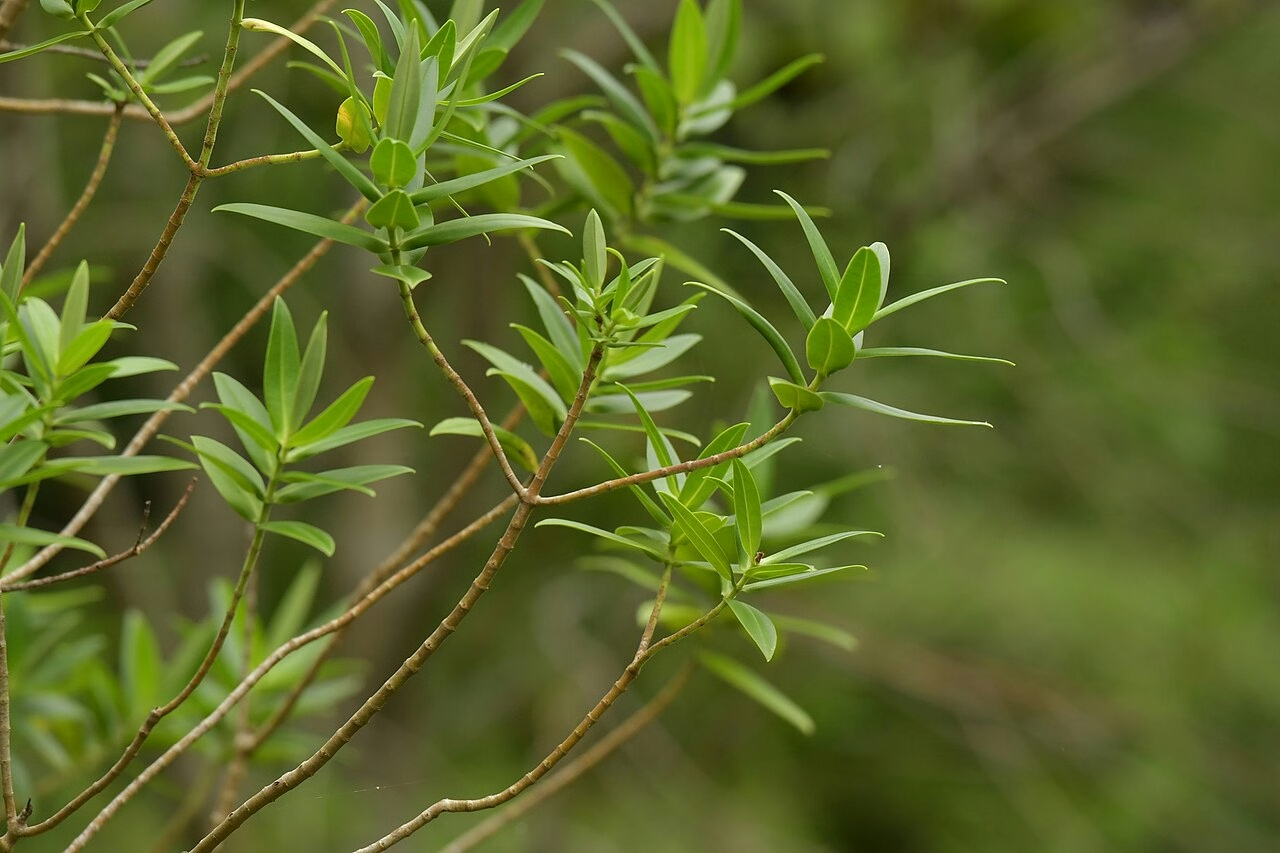
Chatham Island Tree Hebe
Veronica barkeri
Chatham Island tree hebe (Veronica barkeri, now Veronica barkeri), also called Barker's koromiko, is a bushy small tree with a dense rounded to conical crown that can.
Learn more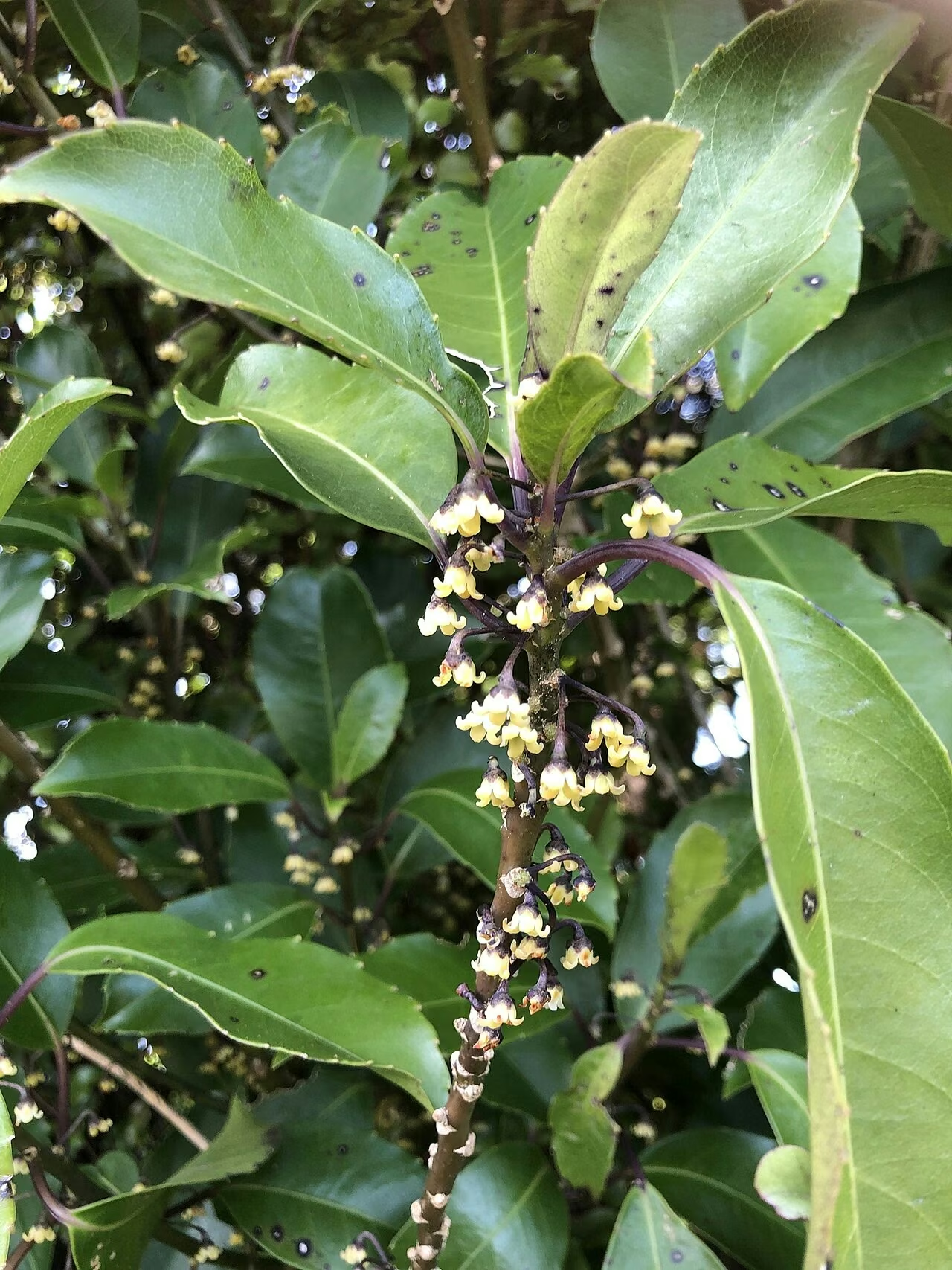
Large-Leaved Māhoe
Melicytus macrophyllus
Large-leaved māhoe ( Melicytus macrophyllus ) is a small endemic tree or bushy shrub of the violet family, usually 2 to 3 m tall but reaching about 6 m.
Learn more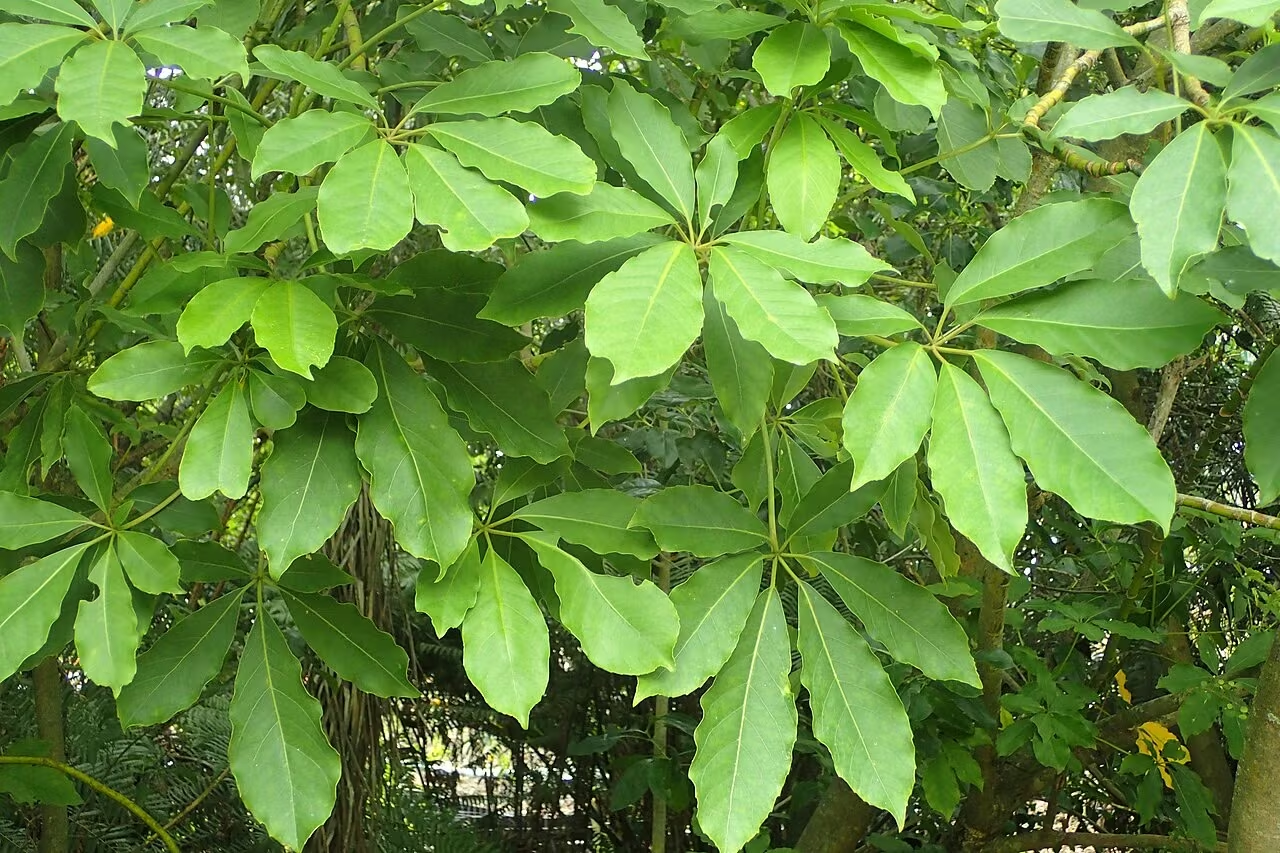
Kermadec Five Finger
Pseudopanax kermadecensis
Kermadec five finger ( Pseudopanax kermadecensis ) is a small, many-branched tree up to 10 m tall, found naturally only on Raoul Island in the Kermadec group.
Learn more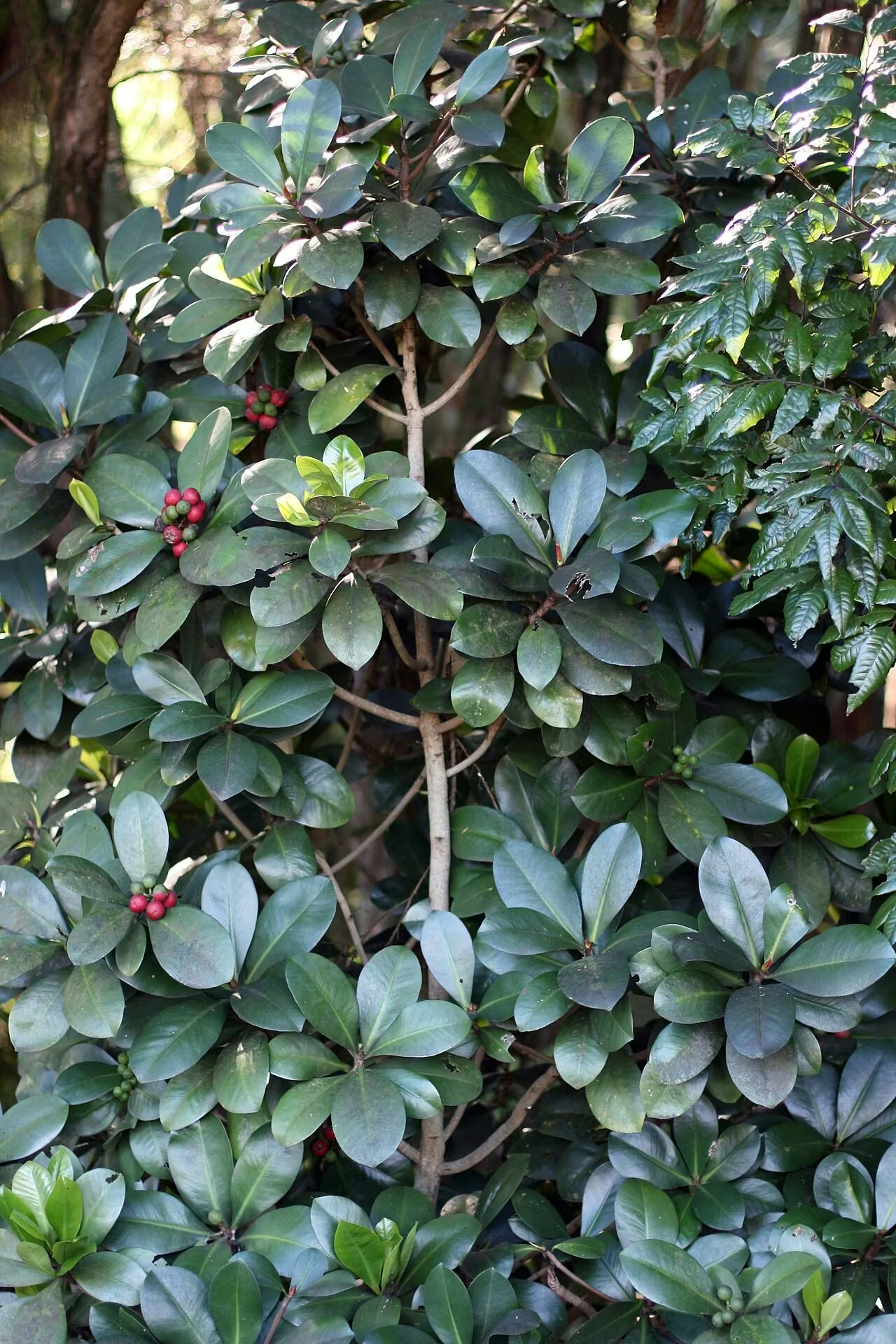
Elingamita johnsonii
Elingamita johnsonii
Elingamita (Elingamita johnsonii) is a small tree up to 8 m tall found naturally only on West Island and two nearby rocky islets in the Three Kings Islands, about 55 km.
Learn more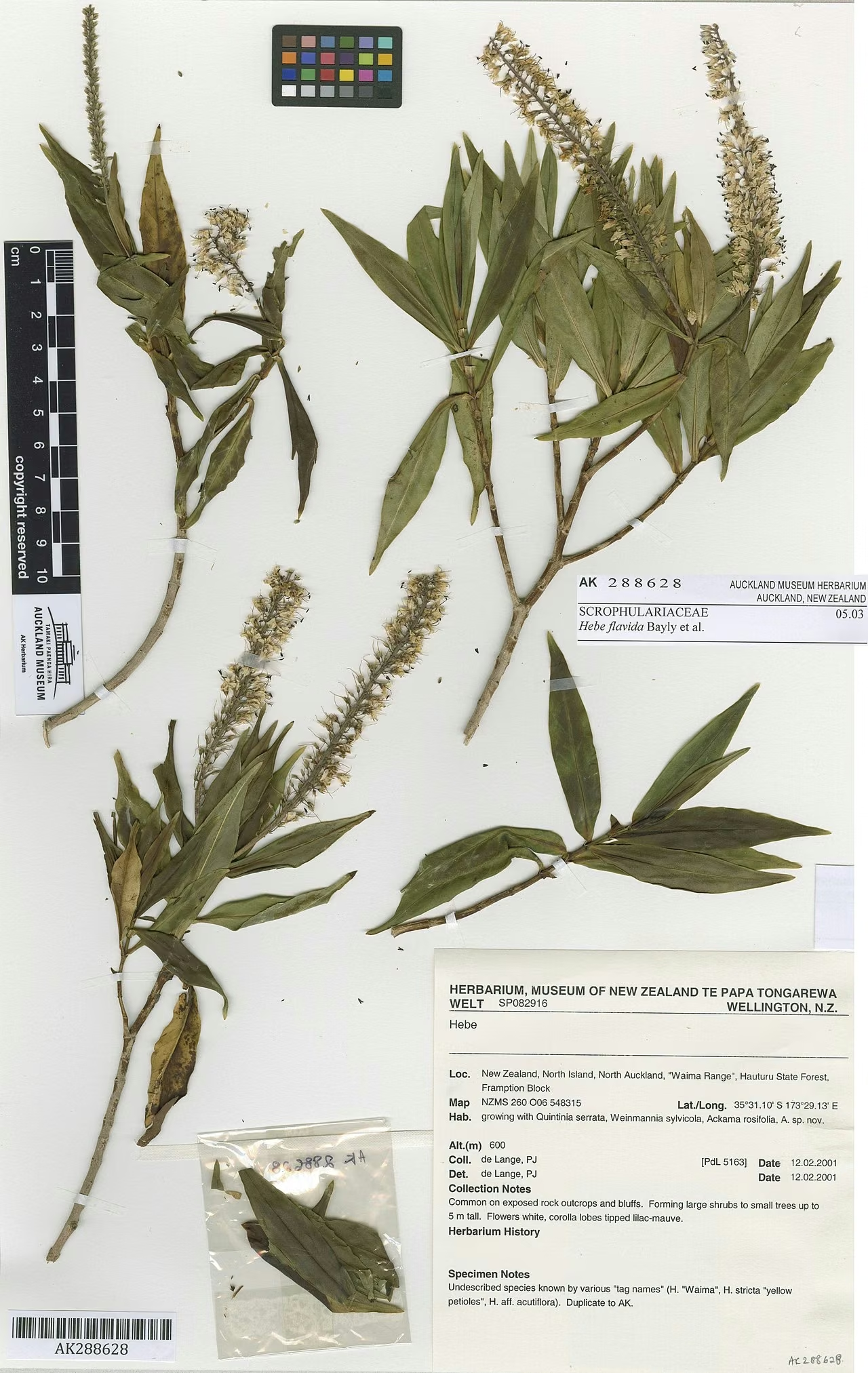
Veronica flavida
Veronica flavida
Veronica flavida, described in 2002 as Veronica flavida , is a fast-growing hebe that usually forms a small tree up to 8 m tall, unusually large for the group.
Learn more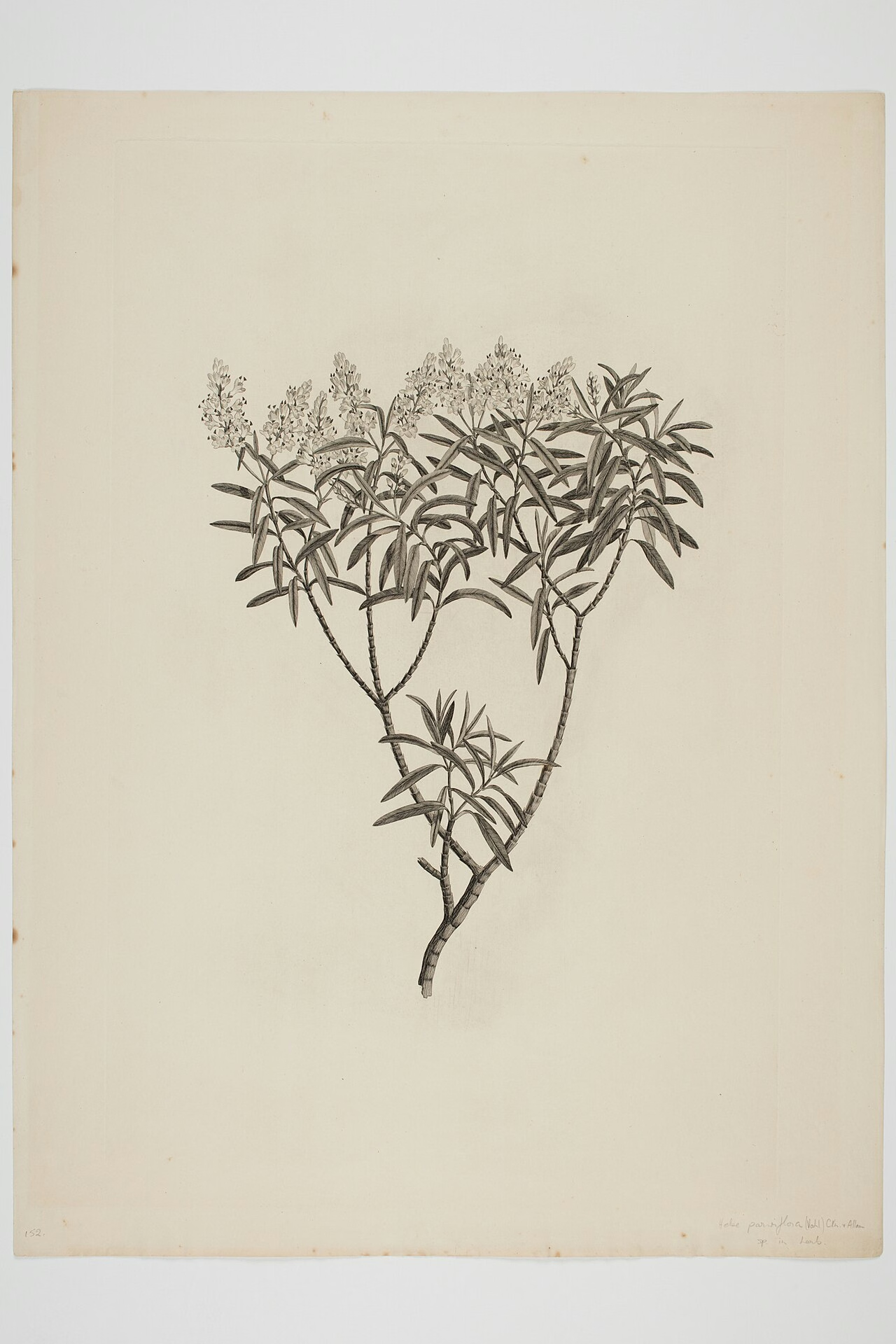
Veronica parviflora
Veronica parviflora
Veronica parviflora, formerly Veronica parviflora, is the largest New Zealand hebe, a rounded, bushy shrub or small tree usually up to 7.5 m and occasionally 12 m tall.
Learn more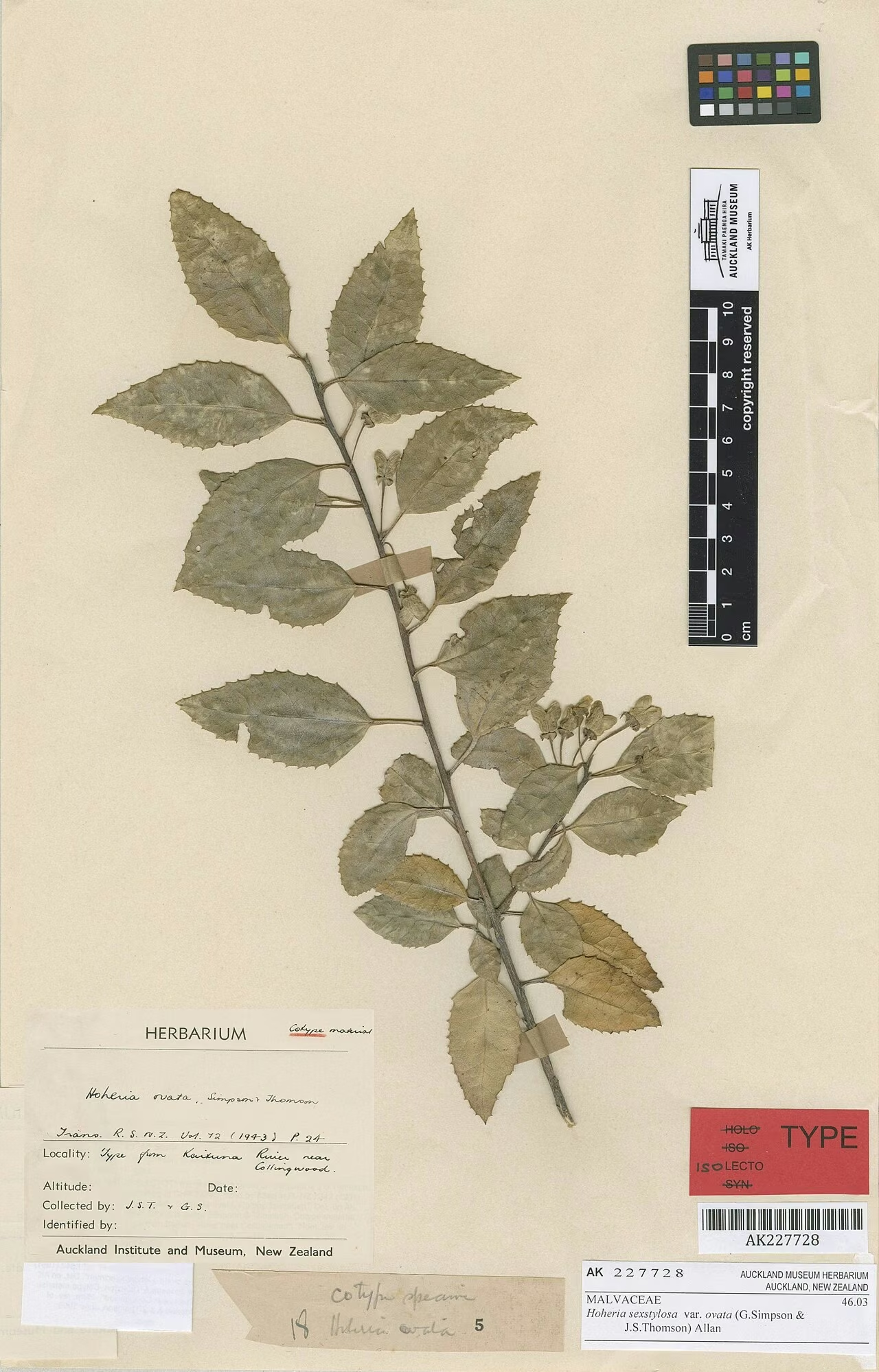
Hoheria ovata
Hoheria ovata
Hoheria ovata is an endemic lacebark, a much-branched, spreading small tree up to about 6 m tall with a domed crown.
Learn more