Kermadec Five Finger
Pseudopanax kermadecensis
Last updated:
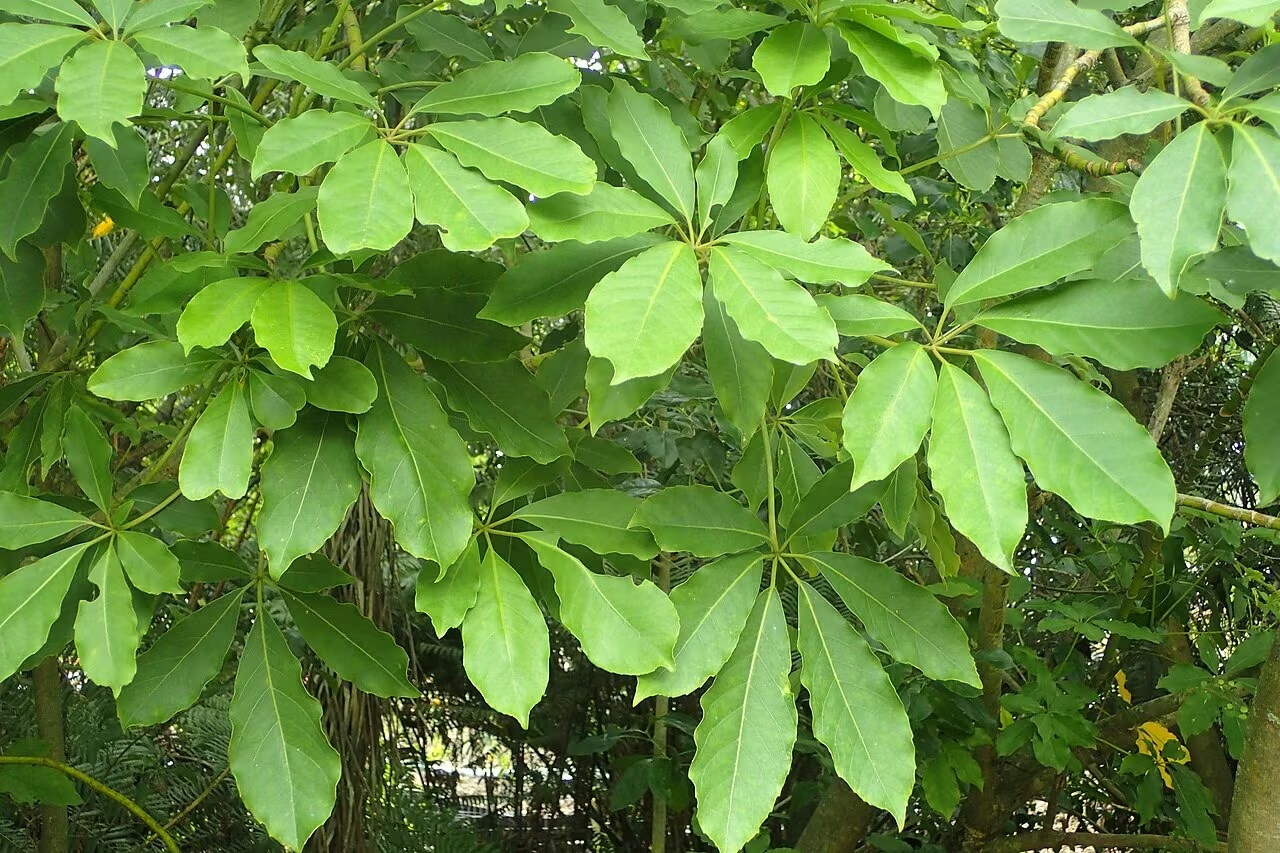
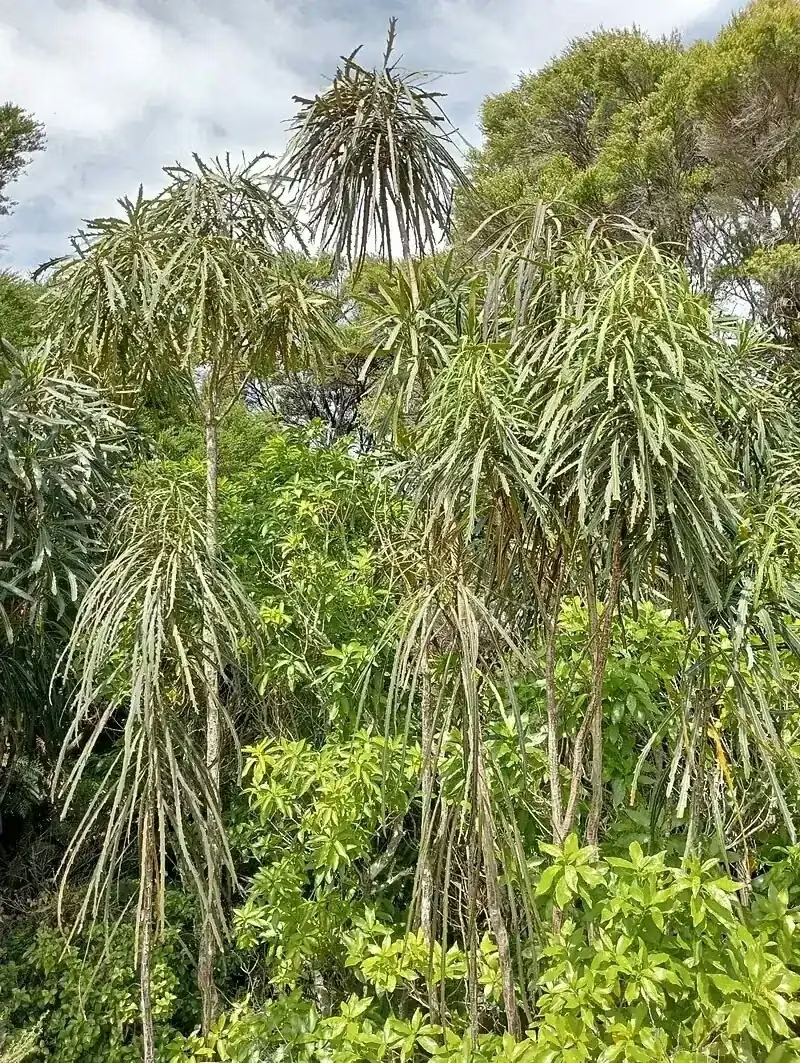
Kermadec five finger (Pseudopanax kermadecensis) is a small, many-branched tree up to 10 m tall, found naturally only on Raoul Island in the Kermadec group. Its hand-like leaves usually have seven thin, pointed leaflets on a long stalk, larger and more coarsely toothed than those of the mainland five finger. It grows from the coast to the summit ridges and crater rim, mostly in wet forest above 230 m, as part of the subcanopy beneath Kermadec pōhutukawa. Goats once suppressed it, but it has recovered spectacularly since their eradication in 1983. It is ranked At Risk - Naturally Uncommon because it lives on one island. Explore more New Zealand native trees in our native plant guide.
Plant Description
Pseudopanax kermadecensis is a small, multi-branched tree up to 10 m tall with brittle branchlets and trunks that can reach 1 m in diameter. Its leaves are alternate and palmately compound, usually with seven thin, pointed leaflets radiating from the tip of a long stalk 10 to 15 cm long.
The terminal leaflets are 10 to 15 cm long and 3.5 to 7 cm wide, elliptic to elliptic-ovate, thin and membranous, with a greenish grey upper surface. Flowers are borne in compact terminal compound umbels with about eight primary rays, followed by fleshy purple fruits about 5 mm across that are laterally compressed.
It is closely related to the mainland five finger, Pseudopanax arboreus, which was once treated as including it. P. arboreus usually has five leaflets, paler and less coarsely toothed, and a tighter inflorescence; the two do not overlap in the wild.
Quick Facts
| Scientific Name | Pseudopanax kermadecensis |
|---|---|
| Height | Up to 10 m |
| Spread | 3-5 m |
| Water Needs | Moderate; moist but well-drained soil |
| Light | Semi-shade preferred |
| Frost Tolerance | Low; subtropical island origin |
| Salt Tolerance | Moderate; occurs down to the coast |
| Growth Rate | Moderate to fast |
| Lifespan | Long-lived perennial tree |
Climate Best Suited to
Suits a warm, humid, frost-free subtropical climate like that of Raoul Island. On the mainland it does best in sheltered, mild northern gardens.
Regional Suitability
| City | Climate Suitability |
|---|---|
| Auckland | High |
| Wellington | Medium |
| Christchurch | Low |
| Dunedin | Low |
Plant Habitat
Kermadec five finger is endemic to Raoul Island, the largest of the Kermadec Islands, about 1000 km north-east of New Zealand.
It ranges from the coast to the main summit ridges and the crater rim, in both dry and wet forest types, but is mostly found in wet forest above about 230 m. There it forms part of the subcanopy in forest dominated by Kermadec pōhutukawa (Metrosideros kermadecensis).
Growing Requirements
Soil Requirements
On Raoul Island it grows on volcanic soils under forest. In cultivation NZPCN recommends a well-draining but moist soil.
- Moist, free-draining loam
- Good drainage reduces the risk of Phytophthora root rot
- Mulch with leaf litter to mimic forest conditions
Light Requirements
As a subcanopy tree it prefers semi-shade, though older trees tolerate brighter conditions.
- Semi-shade is ideal
- Shelter young plants from hot afternoon sun
Water Requirements
It favours wet forest and needs steady moisture, but waterlogged soil encourages root disease.
- Water regularly in dry weather
- Never plant in heavy, poorly drained ground
Planting and Establishing
Plant in spring in a sheltered, frost-free position with dappled shade. Work in compost, ensure excellent drainage, water in and mulch.
Because NZPCN warns it is prone to Phytophthora and Verticillium wilt, buy clean nursery stock, avoid planting where other plants have died of root rot, and do not overwater.
Ecological Role
Kermadec five finger is a key subcanopy tree in Raoul Island's pōhutukawa forest. Its fleshy purple fruits are typical of bird-dispersed Pseudopanax, although the specific birds that feed on it are not documented in the sources consulted.
Its recovery after goats were eradicated in 1983 shows how strongly introduced browsers had suppressed the island's forest understorey. Flowering runs from February to August, and fruit can be found in almost any month.
Uses & Significance
Garden Uses
In warm gardens it is a handsome small shade tree with large, bold hand-shaped leaves.
- Specimen tree for sheltered northern gardens
- Subtropical and island-themed plantings
- Shady woodland gardens
Ecological Value
It is one of the characteristic endemic trees of Raoul Island.
- Endemic to a single island
- Important subcanopy tree in Kermadec pōhutukawa forest
- Fleshy fruit available to birds for much of the year
- A success story of goat eradication
Landscaping Uses
Use it where its seven-fingered leaves can be appreciated at eye level, such as beside a path or deck in partial shade. It combines well with nīkau, Kermadec pōhutukawa and ferns in a subtropical planting.
Give it room to develop a broad crown, and keep it away from paving and drains, as its trunk can thicken substantially with age.
Seasonal Care Calendar
Spring
New leaves flush and this is the best time to plant in frost-free areas.
- Plant out after cold weather
- Check drainage around new plantings
Summer
Growth is strongest, and fruit from the previous season may still be present.
- Water during dry spells
- Take semi-hardwood cuttings in late summer
Autumn
Flowering is under way, having begun in February.
- Collect fresh fruit when purple
- Mulch to retain moisture
Winter
Flowering continues into August, and fruit develops.
- Protect young plants from frost
- Avoid waterlogging in wet weather
When to Prune and How Much
Pruning is rarely needed. Remove dead or damaged branches cleanly, remembering that the branchlets are brittle.
If a branch wilts suddenly, cut it back to healthy wood and disinfect tools afterwards, as Verticillium wilt can spread on pruning equipment.
How to Grow Kermadec Five Finger
NZPCN states that Kermadec five finger is easily grown from fresh seed and from semi-hardwood cuttings. Its long fruiting season means fresh seed is often available. Because the species is confined to Raoul Island, which is a nature reserve, wild collection requires permits; most growers will source seed or cuttings from cultivated trees. Plants raised for gardens should be kept in clean, free-draining mixes because the species is prone to Phytophthora root rot and Verticillium wilt, and diseased stock can introduce these pathogens to a garden.
From Seed
Collect the small purple, laterally flattened fruits when ripe. Fresh seed gives the best results.
Seedlings grow quickly in warmth; keep them in bright shade and water from below if possible to keep the leaves and stems dry.
- Pick ripe purple fruit from a healthy cultivated tree
- Soak and rub off the flesh, then rinse the seeds
- Sow fresh into a clean, free-draining seed mix
- Keep warm and evenly moist but not wet
- Pot seedlings into sterile potting mix once large enough
From Cuttings
Semi-hardwood cuttings strike readily. Take them from vigorous, disease-free shoots.
Cuttings taken from the upper, well-lit branches of a cultivated tree generally give the most vigorous plants.
- Take 10-15 cm semi-hardwood cuttings in late summer or autumn
- Remove lower leaves and cut large leaflets in half
- Insert into a sterile mix of pumice and peat
- Keep humid and warm in bright shade until rooted
- Discard any cuttings showing blackened stems or wilting
Pests & Diseases
NZPCN notes that cultivated plants are prone to Phytophthora root rot and Verticillium wilt. Signs include sudden wilting of branches, yellowing and dieback; good drainage and clean stock are the best prevention.
In the wild, browsing by feral goats was the historic threat on Raoul Island until they were eradicated in 1983.
Cultural Significance
No traditional Māori name or use of Pseudopanax kermadecensis is recorded in the sources consulted.
It was first described by W.R.B. Oliver as Nothopanax kermadecensis following his botanical work on Raoul Island, and later moved to Pseudopanax by H.H. Allan. The epithet refers to the Kermadec Islands.
Bonus Tip
Grow it on a slight mound or slope rather than in a hollow. Its biggest weakness in cultivation is root disease, and lifting the root zone a little above surrounding soil helps excess water drain away from the trunk.
Related Plants
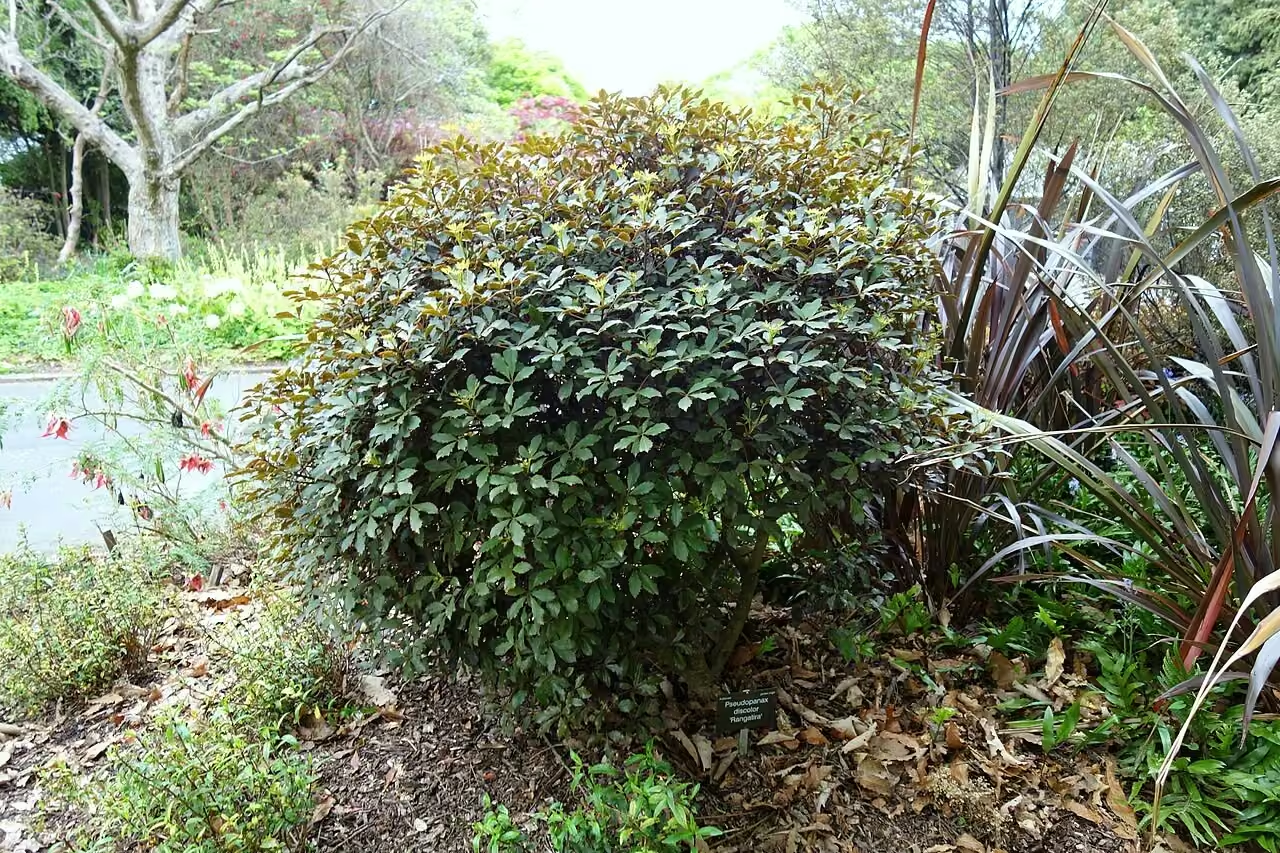
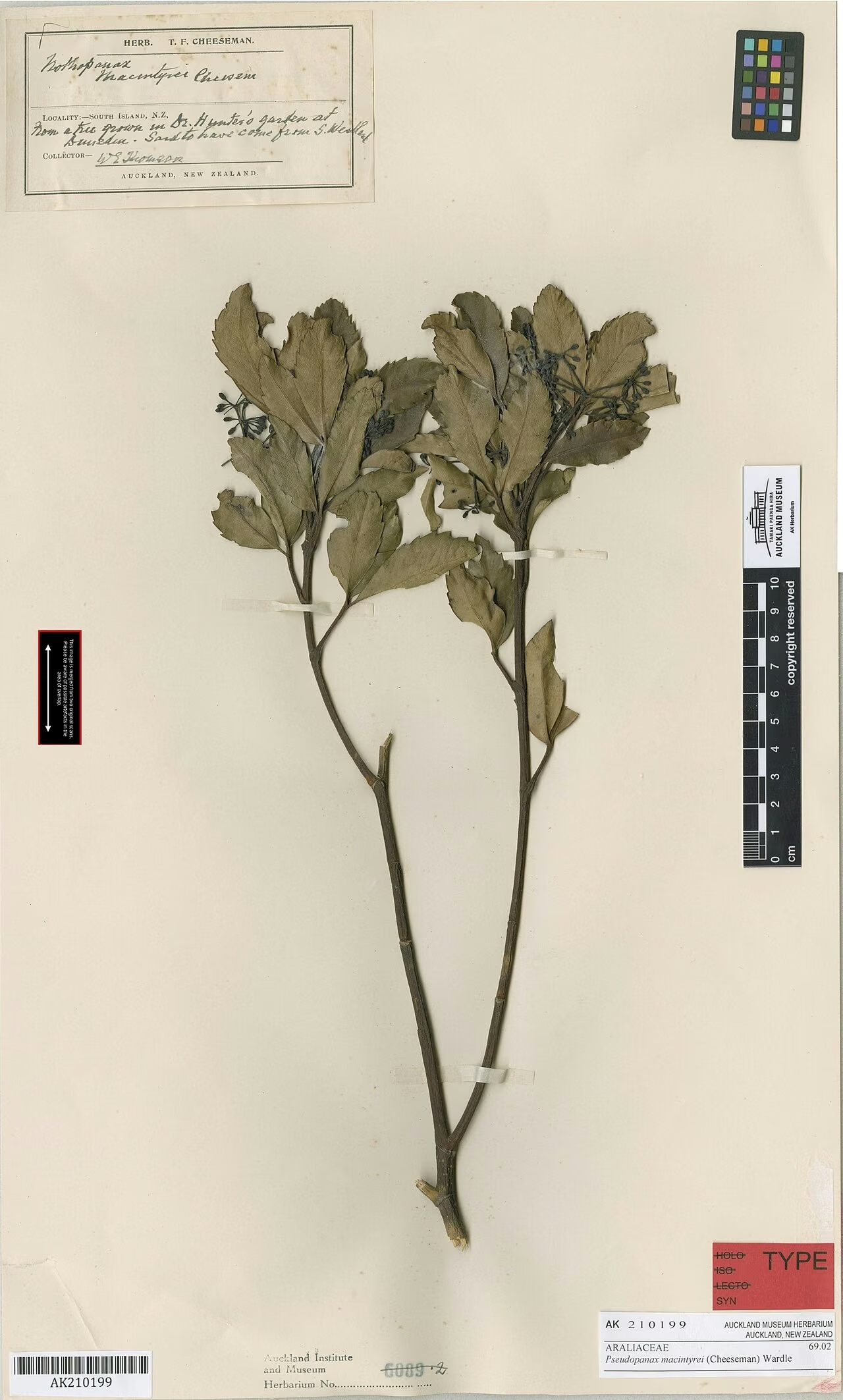
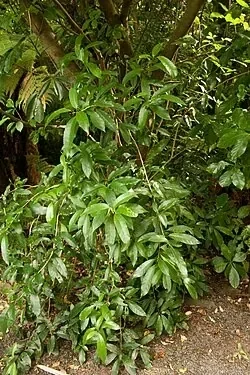
Explore other native plants that share similar characteristics or habitats with Kermadec Five Finger (Pseudopanax kermadecensis), offering further insights into New Zealand's diverse flora. These related species provide context and opportunities for complementary planting in your garden.
Plant Conservation
Pseudopanax kermadecensis is ranked At Risk - Naturally Uncommon (2023) with the qualifiers CD (conservation dependent) and IE (island endemic). It is listed because it is a narrow-range endemic confined to a single island.
The eradication of goats from Raoul Island in 1983 allowed a spectacular recovery. Continued biosecurity and weed control on Raoul Island, which is part of the Kermadec Islands Nature Reserve, help keep it secure.
Frequently Asked Questions
How is Kermadec five finger different from ordinary five finger?
It usually has seven leaflets rather than five, with darker green, more coarsely toothed leaflets and a more open flower head. Its trunk can reach 1 m in diameter.
Where does Pseudopanax kermadecensis grow?
Only on Raoul Island in the Kermadec Islands, from the coast to the summit ridges and crater rim, but mainly in wet forest above 230 m.
Can I grow Kermadec five finger in my garden?
Yes, in mild areas. NZPCN says it grows easily from fresh seed and cuttings and prefers semi-shade and moist, well-drained soil, but warns it is prone to Phytophthora and Verticillium wilt.
Is Kermadec five finger endangered?
No. It is ranked At Risk - Naturally Uncommon because it is confined to a single island, and its population has recovered strongly since goats were eradicated.
Sources and Further Reading
The botanical, growing, and conservation details for Kermadec Five Finger (Pseudopanax kermadecensis) on this page draw on the New Zealand plant references below. Consult them for full technical records and the latest distribution data.