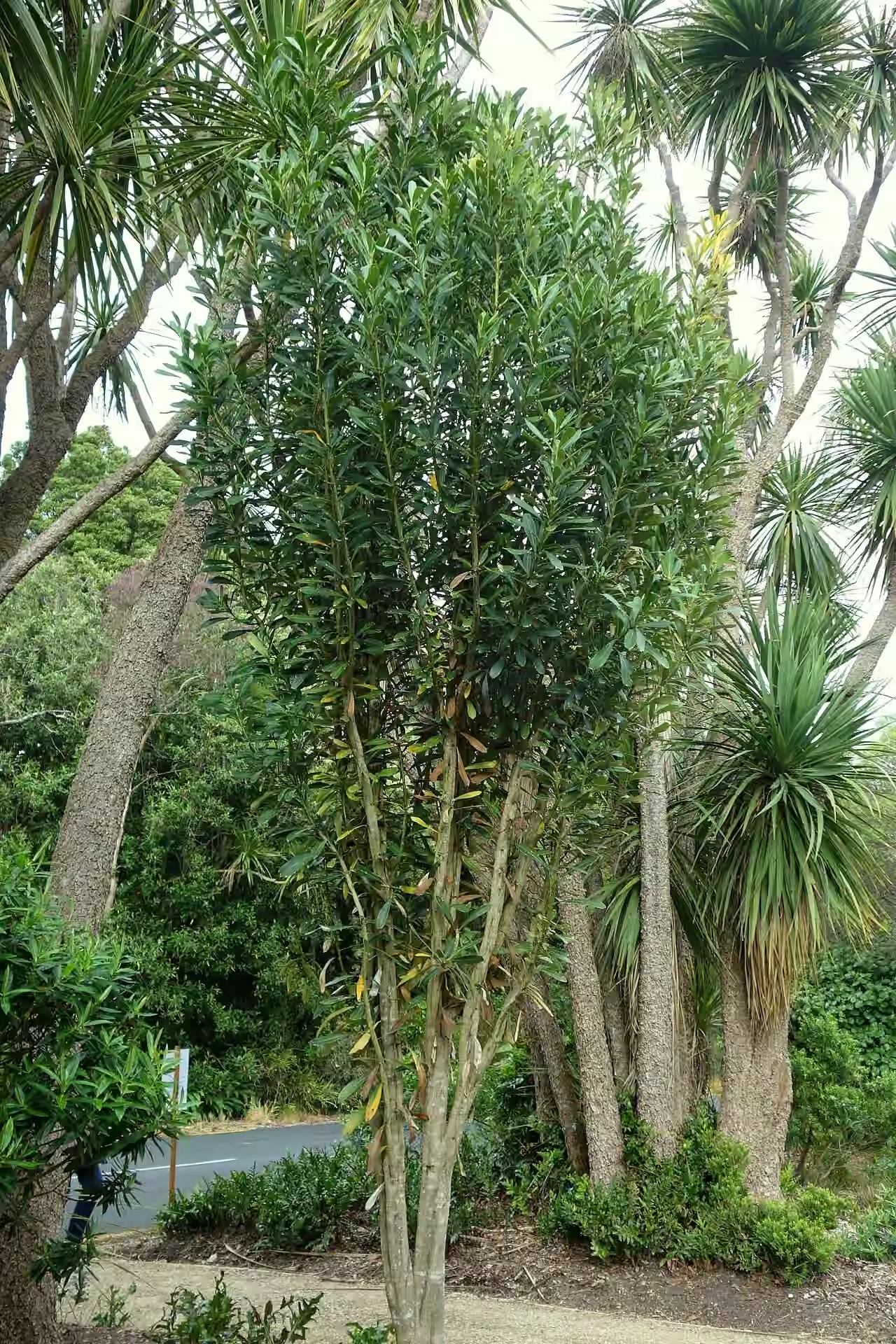
Chatham Island Lancewood
Pseudopanax chathamicus
Last updated:
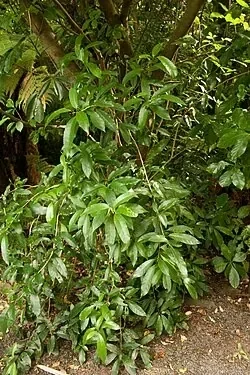
Chatham Island lancewood or hoho (Pseudopanax chathamicus) is a small tree up to 7 m, occasionally 12 m, found naturally only on the Chatham Islands. Like the mainland lancewood it passes through a distinctive juvenile stage with long, narrow, stiff leaves up to 30 cm long, before forming a bushy head of shorter, broader, dark green adult leaves. It grows in most Chatham Island forests and is most common in damp coastal forest, gullies and gentle slopes alongside karamu and matipo. It is ranked At Risk - Naturally Uncommon because of its island-limited range, and it is a tough, wind-tolerant tree for gardens. Explore more New Zealand native trees in our native plant guide.
Plant Description
Pseudopanax chathamicus is a small tree 7 m, occasionally 12 m, tall, with a trunk usually unbranched low down and stout, succulent branchlets. Juvenile plants carry simple, stiff, lanceolate to oblong leaves, recorded as 5 to 15 cm by NZPCN and up to 30 cm long and 5 cm wide by nurseries, with shallow serrations and an upright to spreading habit.
As the tree matures the leaves become thicker, shorter and broader, about 10 to 15 cm long, dark green above and paler beneath with a prominent midrib. The flowers are borne in terminal compound umbels: male umbels have 5 to 10 primary rays with the flowers arranged along them, and female umbels have shorter rays. The fruit is dark purple, broadly oblong, and contains five laterally grooved seeds.
It is closely related to the mainland lancewood (Pseudopanax crassifolius) and toothed lancewood (P. ferox), but on the Chathams it is the only lancewood-type tree. Compared with P. crassifolius, its juvenile leaves are shorter, broader and not held hanging down, and the adult tree becomes bushier.
Quick Facts
| Scientific Name | Pseudopanax chathamicus |
|---|---|
| Height | 5-7 m, occasionally to 12 m |
| Spread | 2-4 m |
| Water Needs | Moderate to high; likes damp soil |
| Light | Full sun to partial shade |
| Frost Tolerance | Good; nursery-rated frost tolerant |
| Salt Tolerance | Good; coastal and wind tolerant |
| Growth Rate | Slow to moderate |
| Lifespan | Long-lived perennial tree |
Climate Best Suited to
Suits the cool, windy, humid oceanic climate of the Chatham Islands, and adapts well to mild and cool climates throughout New Zealand, including exposed coastal sites.
Regional Suitability
| City | Climate Suitability |
|---|---|
| Auckland | Medium |
| Wellington | High |
| Christchurch | High |
| Dunedin | High |
Plant Habitat
Hoho is endemic to the Chatham Islands, where it is found in most forest remnants on Rēkohu/Chatham Island and the smaller islands.
It is more common in coastal forest where the soil stays moist for much of the year, and it often grows in gullies or on gentle slopes with karamu (Coprosma) and matipo (Myrsine). It forms part of the low canopy and subcanopy of Chatham Island forests.
Growing Requirements
Soil Requirements
NZPCN recommends planting it in a deep, damp, fertile soil, which matches the moist gully soils where it is most common in the wild.
- Deep, fertile loam or peaty soil
- Consistent moisture, but not stagnant waterlogging
- Benefits from mulch to keep roots cool and moist
Light Requirements
It thrives in full sun but also tolerates the partial shade of a forest canopy, especially when young.
- Full sun gives the densest, bushiest crown
- Partial shade is fine for juvenile plants
Water Requirements
It favours sites that stay damp most of the year and does not like prolonged drought.
- Water during dry summers until well established
- Ideal for damp gullies and riparian plantings
Planting and Establishing
Plant in autumn or spring into a deep, well-prepared hole with plenty of compost, in a site that stays moist. Firm in, water well and mulch, keeping the mulch clear of the stem.
Because it tolerates wind and salt, it can be used on exposed coastal sites, though young plants establish faster with some initial shelter. Allow 2 to 4 m of space for the eventual crown.
Ecological Role
The dark purple fleshy fruits are eaten by birds, and nurseries list it as a bird and bee food plant. On the Chatham Islands its fruit is part of the food supply for native forest birds, which spread the seed.
Its long flowering season, from October to May, and an even longer fruiting season, from November to September, mean flowers or fruit are available for much of the year, which is valuable on islands with a limited range of food plants.
Uses & Significance
Garden Uses
It is a hardy feature tree that offers the architectural juvenile foliage of a lancewood while being tough enough for exposed coastal gardens.
- Specimen tree for small gardens
- Coastal and wind-exposed plantings
- Riparian and forest restoration plantings
- Bird-attracting native gardens
Ecological Value
It is a common and important member of Chatham Island forests and a food source for birds and insects.
- Endemic to the Chatham Islands
- Fruit eaten by native birds
- Flowers visited by bees and other insects
- Useful in Chatham Islands forest restoration
Landscaping Uses
Use young plants as an architectural accent in gravel gardens, courtyards or among low grasses, where the stiff, toothed juvenile leaves stand out. With age the tree fills out into a rounded crown that can anchor a corner of the garden.
It pairs naturally with other Chatham Islands plants such as Chatham Island forget-me-not, akeake and karamu in a themed island planting.
Seasonal Care Calendar
Spring
Flowering begins in October and new leaves expand.
- Plant out new trees
- Take semi-hardwood cuttings later in the season
Summer
Flowering continues and the first fruits ripen from November.
- Water young trees during dry spells
- Top up mulch
Autumn
Flowering tails off by May, while the purple fruits continue to ripen and attract birds.
- Collect fresh fruit for seed
- A good time to plant
Winter
Fruit can still be present into winter, and growth slows.
- Little care needed
- Protect very young plants from hard frost inland
When to Prune and How Much
Little pruning is needed. Let young plants develop their natural single-stemmed juvenile form, since cutting the leader early can produce a multi-stemmed shrub.
On older trees, remove dead or crossing branches in late spring. Shaping can be done lightly, but the tree is slow and does not need regular trimming.
How to Grow Chatham Island Lancewood
NZPCN describes Pseudopanax chathamicus as easy to grow from fresh seed, and notes that semi-hardwood cuttings also work but can be slow to strike. Seed is the usual nursery method and gives vigorous juvenile plants with the characteristic narrow leaves. Nurseries report that seed germinates without pretreatment, although about four weeks of cold stratification can speed germination. Because the species is naturally restricted to the Chatham Islands, seed for restoration plantings there should be collected locally, while gardeners elsewhere can use nursery-grown plants or seed from cultivated trees.
From Seed
Collect the dark purple fruit when fully ripe. The long fruiting season means ripe fruit can be found for much of the year.
- Pick ripe purple fruits and squash them to release the seeds
- Clean off the flesh by rubbing in a sieve under running water
- Sow fresh, or chill moist seed in the fridge for about four weeks first
- Cover lightly with seed mix and keep moist in a sheltered spot
- Pot seedlings individually once they are large enough to handle
From Cuttings
Semi-hardwood cuttings will root, but slowly. Patience and a humid environment improve success.
- Take semi-hardwood cuttings in late summer or autumn
- Trim below a node and reduce the leaf area
- Dip in rooting hormone and insert into a free-draining propagating mix
- Keep in a humid, shaded propagator for several months until roots form
- Pot on gently once roots are well developed
Pests & Diseases
No serious pests specific to this species are recorded in the sources consulted. Scale insects and sooty mould can affect stressed garden plants, and young seedlings can be grazed by rabbits.
On the Chatham Islands, browsing by stock and feral animals and the clearance of forest remnants have reduced forest habitat generally, so fencing forest remnants benefits hoho along with other native trees.
Cultural Significance
NZPCN records the name hoho for this tree. The origin of the name and any traditional Moriori or Māori use of Pseudopanax chathamicus are not documented in the sources consulted.
The species was described by Thomas Kirk, whose epithet chathamicus means from the Chathams. The genus name Pseudopanax means false panax, referring to its resemblance to the ginseng genus Panax.
Bonus Tip
If you want the dramatic juvenile look of a lancewood in a windy coastal garden, hoho is often the tougher choice. Plant it in damp, fertile ground rather than dry sand, as it grows noticeably faster and fuller where its roots stay moist.
Related Plants
Explore other native plants that share similar characteristics or habitats with Chatham Island Lancewood (Pseudopanax chathamicus), offering further insights into New Zealand's diverse flora. These related species provide context and opportunities for complementary planting in your garden.
Argentina anserinoides
Argentina anserinoides
Kermadec Nettle-Tree
Pouzolzia australis
Prasophyllum colensoi
Prasophyllum colensoi
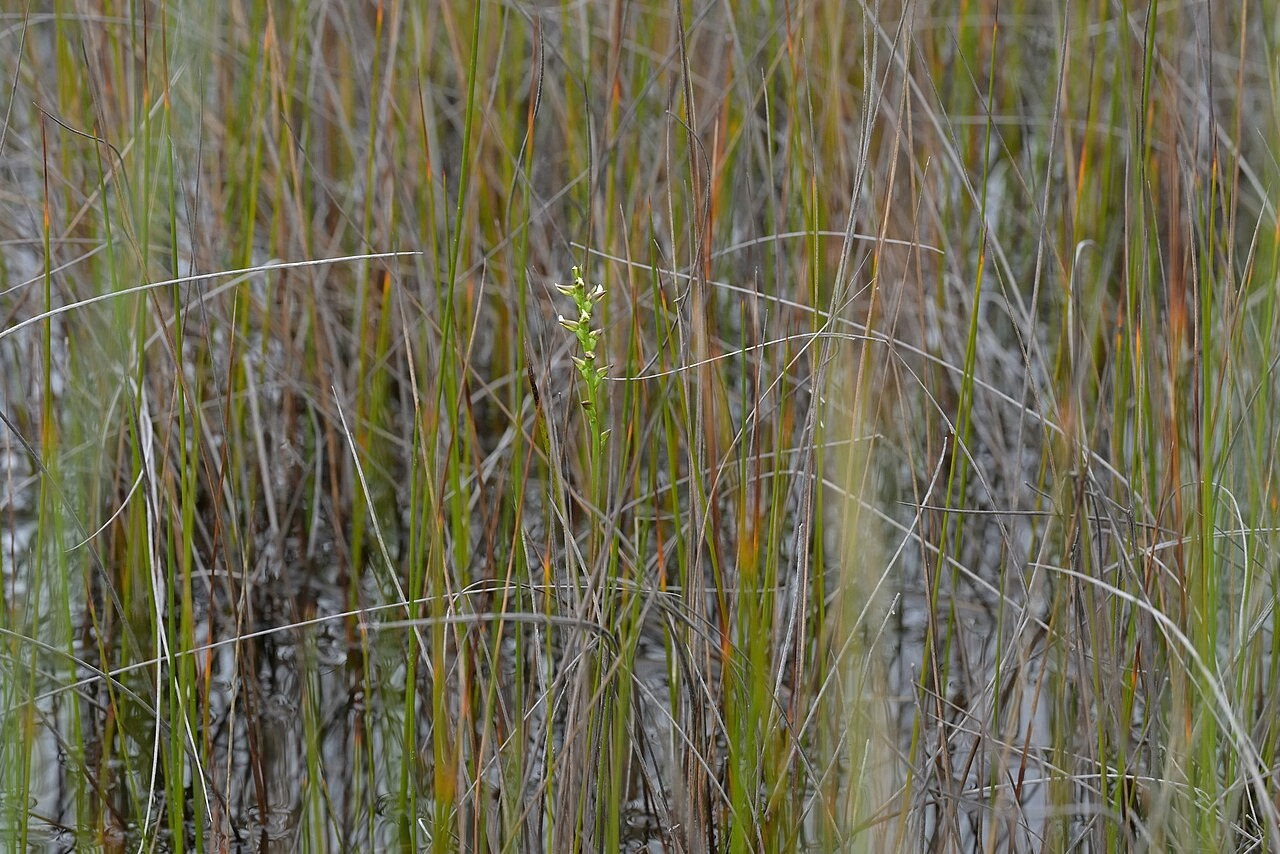
Swamp Leek Orchid
Prasophyllum hectorii
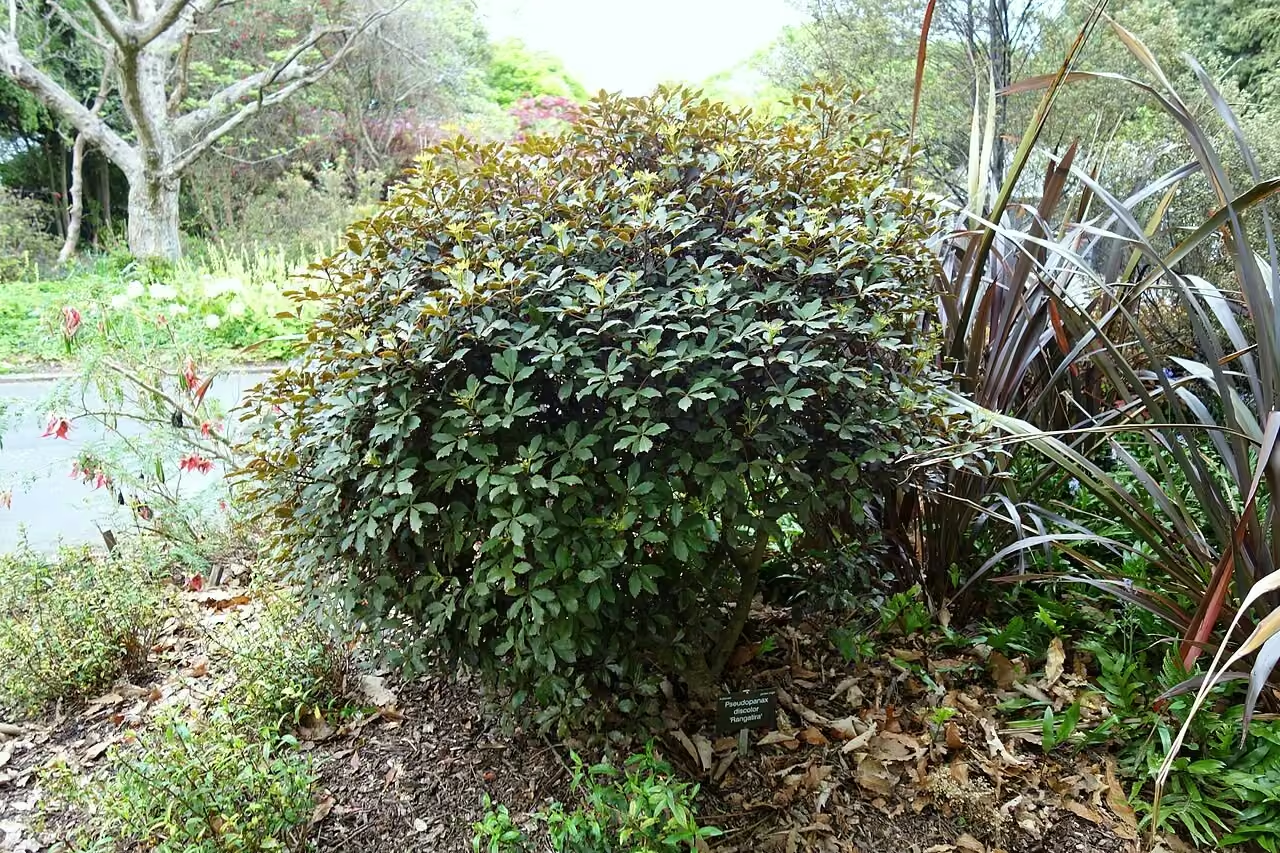
Pseudopanax discolor
Pseudopanax discolor
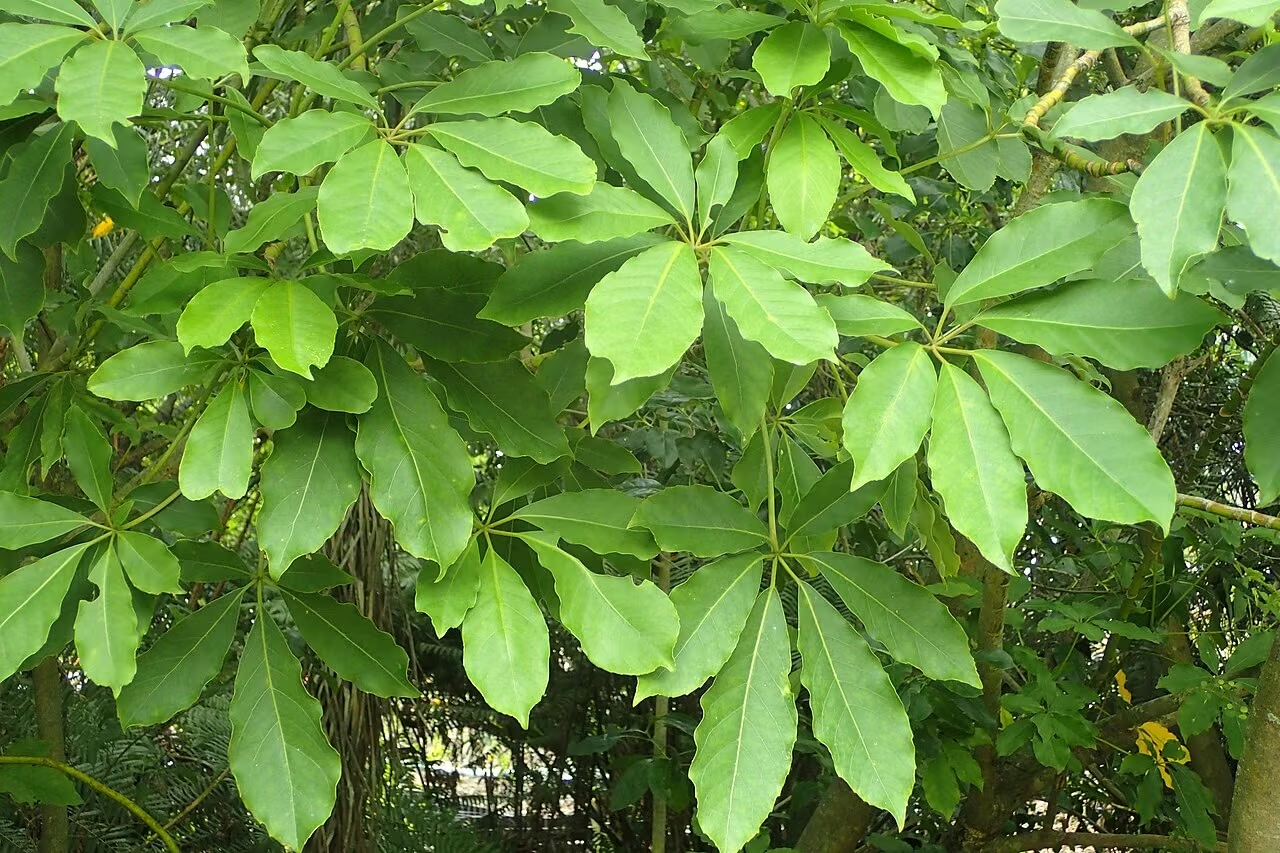
Kermadec Five Finger
Pseudopanax kermadecensis
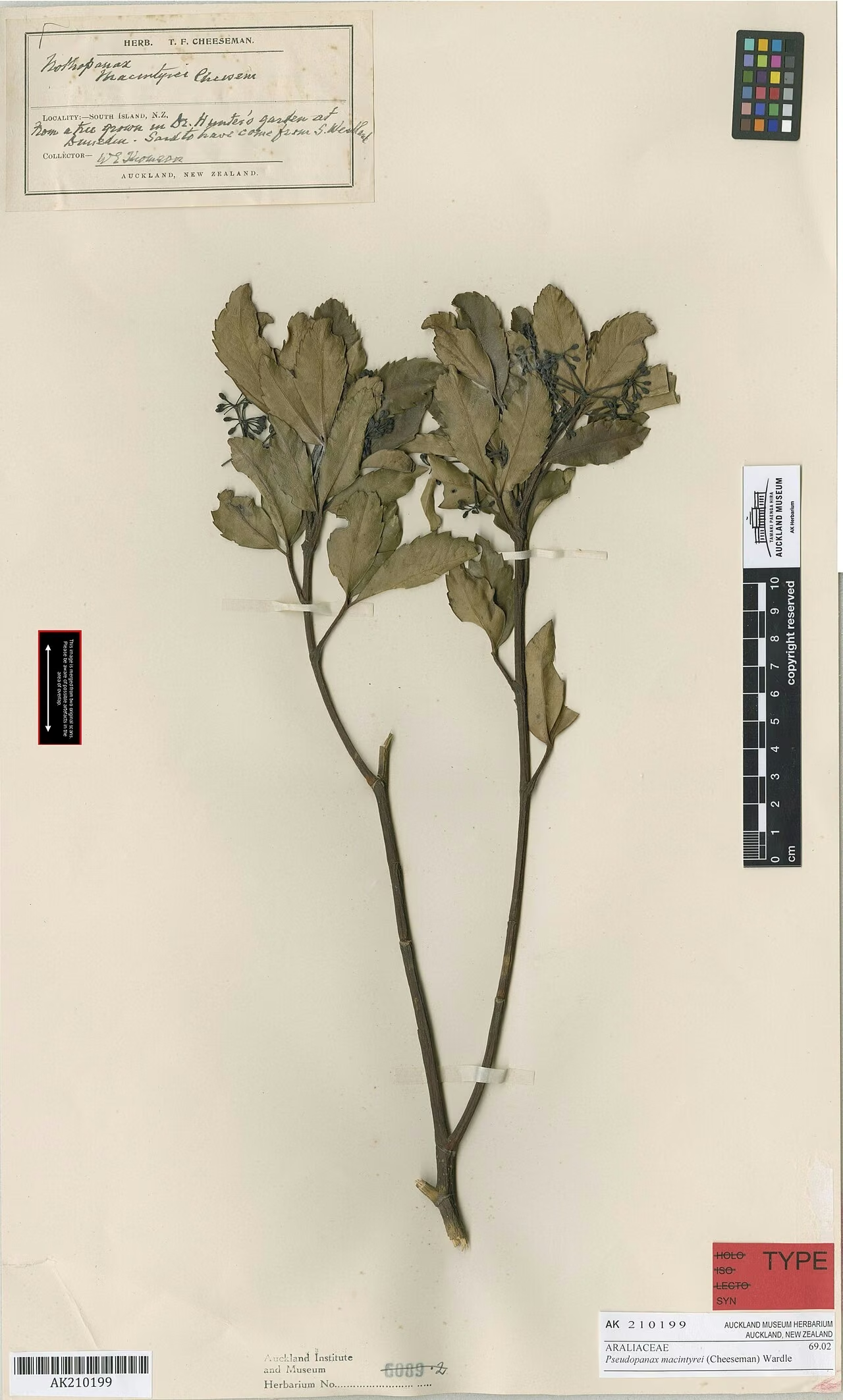
MacIntyre's Panax
Pseudopanax macintyrei
Five Finger
Five Finger
Plant Conservation
Pseudopanax chathamicus is ranked At Risk - Naturally Uncommon (2023) with the qualifier Island Endemic. It is common in most Chatham Island forests, and its ranking reflects its small natural range rather than a documented decline.
Protecting and fencing Chatham Islands forest remnants from stock, and including locally sourced hoho in restoration plantings, help secure its future.
Frequently Asked Questions
How is Chatham Island lancewood different from ordinary lancewood?
Its juvenile leaves are broader and less dramatically long and drooping than those of Pseudopanax crassifolius, held upright to spreading, and the adult tree forms a bushier crown. It is endemic to the Chatham Islands.
How tall does Pseudopanax chathamicus grow?
NZPCN records it as a small tree usually up to 7 m tall, occasionally reaching 12 m, with a trunk that is usually unbranched low down.
Does hoho grow well on the mainland?
Yes. It is grown by native nurseries and is described as frost, sun, coastal and wind tolerant, doing best in full sun in deep, damp, fertile soil.
Is Pseudopanax chathamicus threatened?
It is ranked At Risk - Naturally Uncommon with the qualifier Island Endemic, reflecting its natural restriction to the Chatham Islands rather than a known decline.
Sources and Further Reading
The botanical, growing, and conservation details for Chatham Island Lancewood (Pseudopanax chathamicus) on this page draw on the New Zealand plant references below. Consult them for full technical records and the latest distribution data.