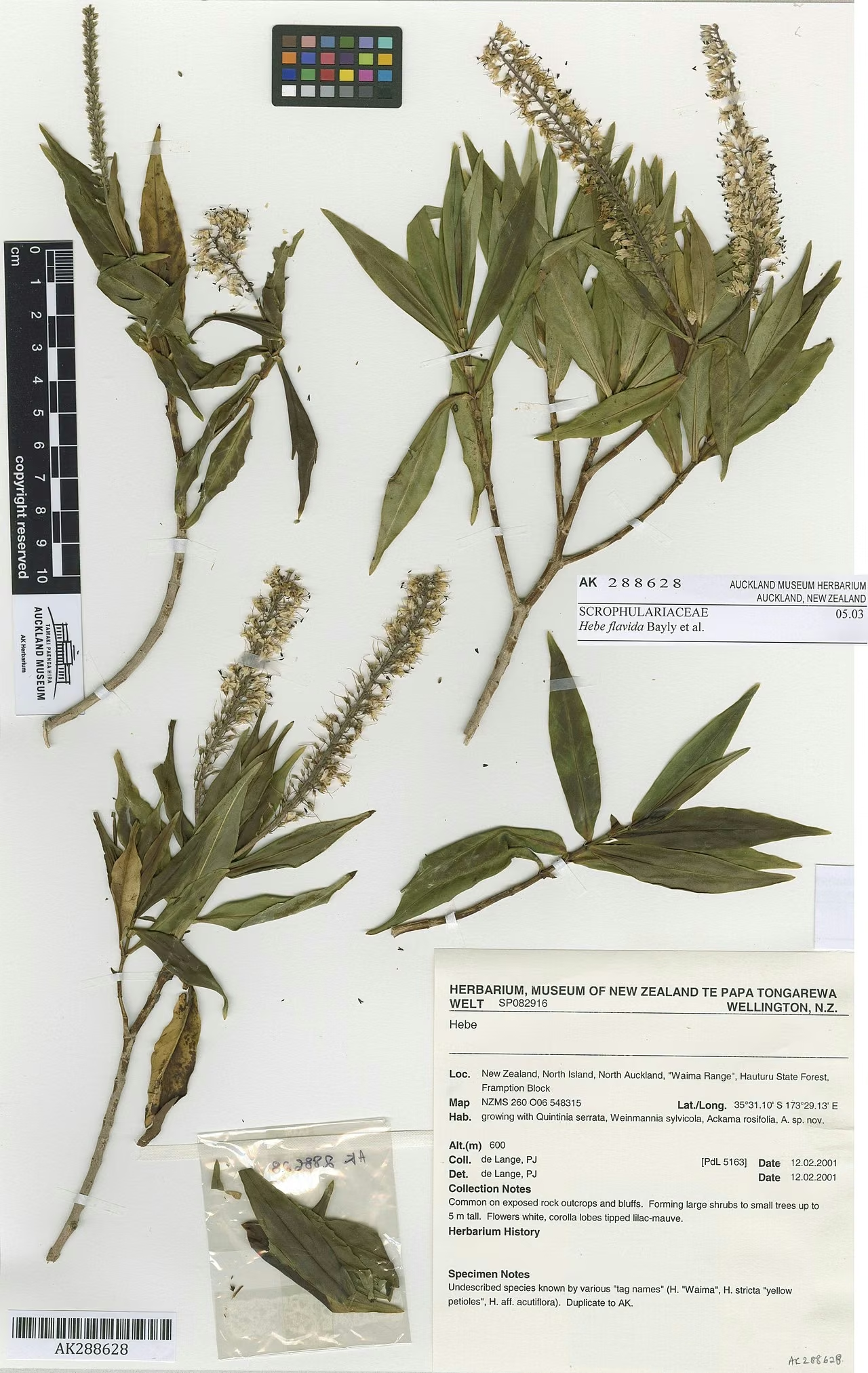
Hebe
Veronica flavida
Last updated:
Veronica flavida, described in 2002 as Veronica flavida, is a fast-growing hebe that usually forms a small tree up to 8 m tall, unusually large for the group. It is found only in western and inland Northland, from near Kaitaia south to Tangihua Forest, mostly on hilltops and rock outcrops above about 250 m, often in cloud forest. Its narrow leaves, up to 13.5 cm long, have a conspicuous yellowish midrib, which gives the species its name, meaning pale yellow. Erect spikes of white flowers appear from January to June. It is ranked Not Threatened and is easy to grow from fresh seed or cuttings. It was previously known as Hebe flavida. Explore more New Zealand native trees in our native plant guide.
Plant Description
Veronica flavida is usually a small tree, sometimes a shrub, up to 8 m tall with erect branches. Old stems are brown or grey, and the young branchlets are green and finely hairy. The leaves are linear-lanceolate to narrowly elliptic or oblanceolate, thin to slightly leathery, mostly 50 to 100 mm long (up to 135 mm) and 10 to 20 mm wide, with an acute or tapering tip. The upper surface is light to dark green, and the midrib and leaf base are usually yellow.
The flowers are carried in long, erect, unbranched lateral spikes, mostly 7 to 16 cm long and holding 60 to 140 or more flowers. The corolla is white or faintly mauve-pink, with a short funnel-shaped tube 1.5 to 3 mm long that is no longer than the calyx, and the anthers are violet, purple or blue. The small capsules are 2.5 to 4 mm long.
It resembles Veronica stricta, Veronica rivalis and Veronica ligustrifolia. Veronica stricta has longer corolla tubes and stays shrubby, Veronica rivalis is lower-growing with narrower leaves and grows only on riverbanks, and the differences from Veronica ligustrifolia are less clear-cut. The Flora of New Zealand notes considerable variation between populations.
Quick Facts
| Scientific Name | Veronica flavida |
|---|---|
| Height | Usually 5 to 6 m, up to 8 m |
| Spread | Not recorded; small tree with erect branches |
| Water Needs | Moderate to high; a cloud forest species |
| Light | Full sun to partial shade |
| Frost Tolerance | No published data; its Northland range has mild winters |
| Salt Tolerance | No information available; grows inland on hilltops |
| Growth Rate | Fast |
| Lifespan | Long-lived perennial |
Climate Best Suited to
Suits the mild, humid climate of Northland's hill country, where cloud and mist are frequent and frosts are light. It is best in warm, moist northern gardens.
Regional Suitability
| City | Climate Suitability |
|---|---|
| Auckland | High |
| Wellington | Medium |
| Christchurch | Low |
| Dunedin | Low |
Plant Habitat
Veronica flavida is endemic to Northland. NZPCN gives its range as between Warawara Forest and the Waikaraka Valley in the north and Tangihua Forest in the south, and the Flora of New Zealand records it from Okahu near Kaitaia southwards, on both the western coast and inland. The type was collected in Hauturu State Forest in the Waima Range at 600 m.
It grows mostly in upland areas above about 250 m, with records between 240 and 620 m, on hilltops and rock outcrops, and often in cloud forest.
Growing Requirements
Soil Requirements
In the wild it grows on hilltop soils and rock outcrops in cloud forest. In gardens it does well in moist, well-drained, reasonably fertile soil.
- Moist, free-draining loam
- Add compost to improve dry or poor soils
- Avoid compacted, waterlogged clay
Light Requirements
It grows on exposed hilltops and outcrops as well as within cloud forest, so it handles sun or part shade.
- Full sun to partial shade
- Shelter from hot, drying winds helps
Water Requirements
Cloud forest sites are frequently bathed in mist, so the plant expects consistent moisture.
- Water regularly during dry summers
- Mulch to keep the root zone cool and moist
Planting and Establishing
Plant in autumn or spring in a moist, well-drained position with room for a small tree up to 5 m or more. Water in well and keep watered through the first summer.
Because it grows quickly, it can be used to establish cover rapidly in Northland restoration plantings, preferably with locally sourced stock.
Ecological Role
Its long flowering season, from January to June, supplies nectar and pollen to native insects into late autumn when few other plants are in flower. NZPCN records that its seeds are wind dispersed.
As a fast-growing small tree of hilltops and cloud forest margins, it contributes to the canopy and edges of upland Northland forest.
Uses & Significance
Garden Uses
A fast-growing hebe that becomes a small tree, useful where a quick screen or shelter is needed in mild gardens.
- Quick shelter and screening
- Late summer to autumn flowers for pollinators
- Northland restoration plantings
Ecological Value
It is a distinctive element of Northland's upland and cloud forest flora and an important late-season nectar source.
- Flowers from January to June
- Fast growth provides early cover
- Endemic to Northland
Landscaping Uses
Use it as a fast, upright small tree at the back of a native border, or as a screening plant along a boundary. The yellow-ribbed leaves give a warm tone that contrasts with darker greens.
In larger gardens, it can be planted as a specimen where its erect white flower spikes can be seen in late summer and autumn.
Seasonal Care Calendar
Spring
Rapid new leafy growth.
- Plant out young trees
- Feed with compost
Summer
Flowering begins in January with erect white spikes.
- Water in dry spells
- Watch for insects visiting the flowers
Autumn
Flowering continues into June, with capsules ripening from March.
- Collect fresh seed
- Take semi-hardwood cuttings
Winter
Late capsules may still be ripening into September.
- Check for wind damage
- Plan shaping cuts for spring
When to Prune and How Much
Pruning is optional. To keep it shrubby and dense, trim after flowering in late autumn or in spring. Left alone it will develop into a small tree.
Remove any crossing or damaged branches and spent flower spikes as needed.
How to Grow Hebe
NZPCN describes Veronica flavida as easy from fresh seed and semi-hardwood cuttings, and notes that it is a fast-growing species that often forms a small tree 5 to 6 m tall. Both methods are straightforward. Cuttings are the quicker route to a flowering plant and preserve the form of the parent, while seed is useful for raising larger numbers for restoration. Collect seed only from wild plants or isolated garden plants, because hebes hybridise readily when different species flower close together, and seed from a mixed garden collection may not come true.
From Seed
Capsules ripen from March to June and occasionally into September. Sow the seed fresh for the best germination.
- Collect capsules as they turn brown and begin to split
- Shake out the small, flattened seed
- Sow on the surface of a fine seed-raising mix and cover lightly
- Keep moist and warm in good light
- Prick out seedlings into individual pots once they have two leaf pairs
From Cuttings
Semi-hardwood cuttings root readily, especially in late summer and autumn. Because the plant grows so fast, there is usually plenty of suitable firm new growth to choose from on an established specimen.
- Take 10 to 15 cm cuttings from firm, non-flowering shoots
- Remove lower leaves and halve the larger remaining leaves to reduce water loss
- Insert into a free-draining propagating mix
- Keep humid and shaded until rooted, then pot on into a larger container before planting out
Pests & Diseases
No specific pests are recorded for this species. Large-leaved hebes can be affected by downy mildew and leaf spot in humid, still conditions, and by scale insects.
Good air circulation and healthy growing conditions reduce these problems.
Cultural Significance
The Flora of New Zealand notes that the Māori names kōkōmuka and koromiko are applied broadly to large-leaved shrubby veronicas, which would include this species, though no use specific to Veronica flavida is recorded in the sources consulted.
The species was only formally described in 2002, by Bayly, Kellow and de Lange, from a specimen collected in the Waima Range in Northland, showing that distinctive plants can remain unnamed until recently.
Bonus Tip
If you want a hebe for height rather than a low shrub, this is one of the few that becomes a genuine small tree. In northern gardens, plant it where you need fast cover, and enjoy flowers through late summer and autumn, later than most hebes.
Related Plants
Explore other native plants that share similar characteristics or habitats with Hebe (Veronica flavida), offering further insights into New Zealand's diverse flora. These related species provide context and opportunities for complementary planting in your garden.
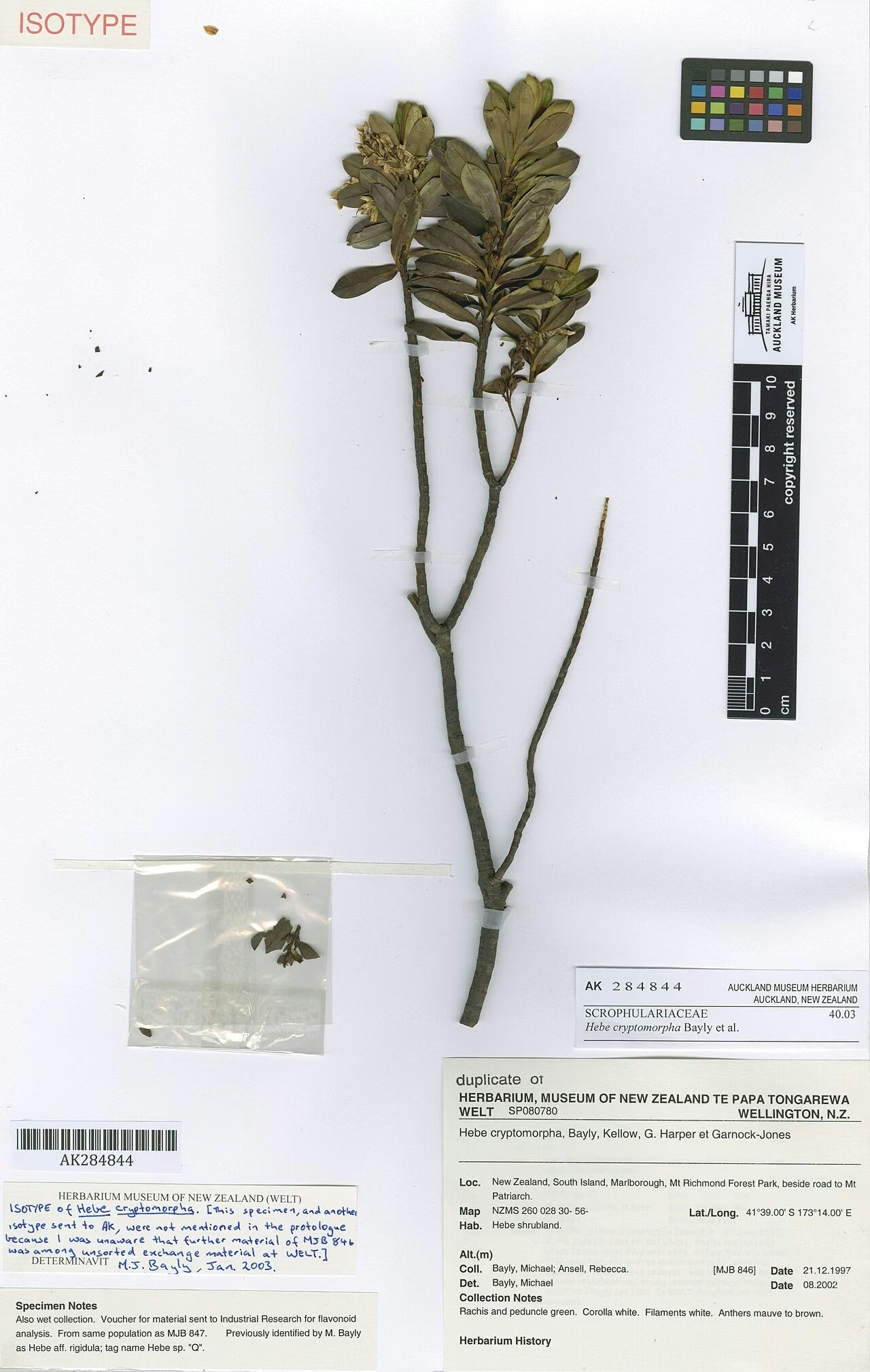
Veronica cryptomorpha
Veronica cryptomorpha
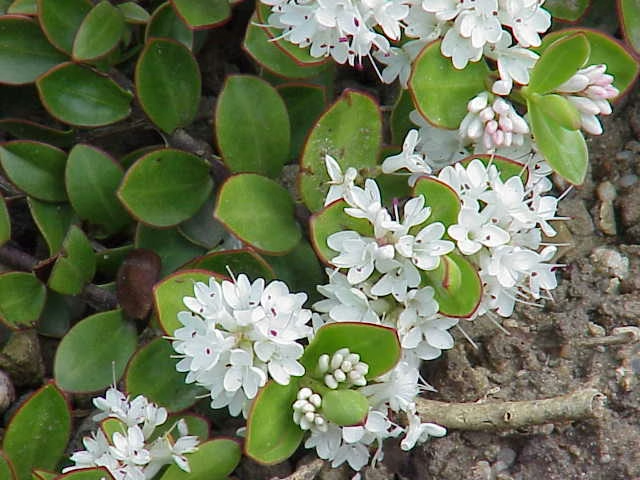
Veronica decumbens
Veronica decumbens
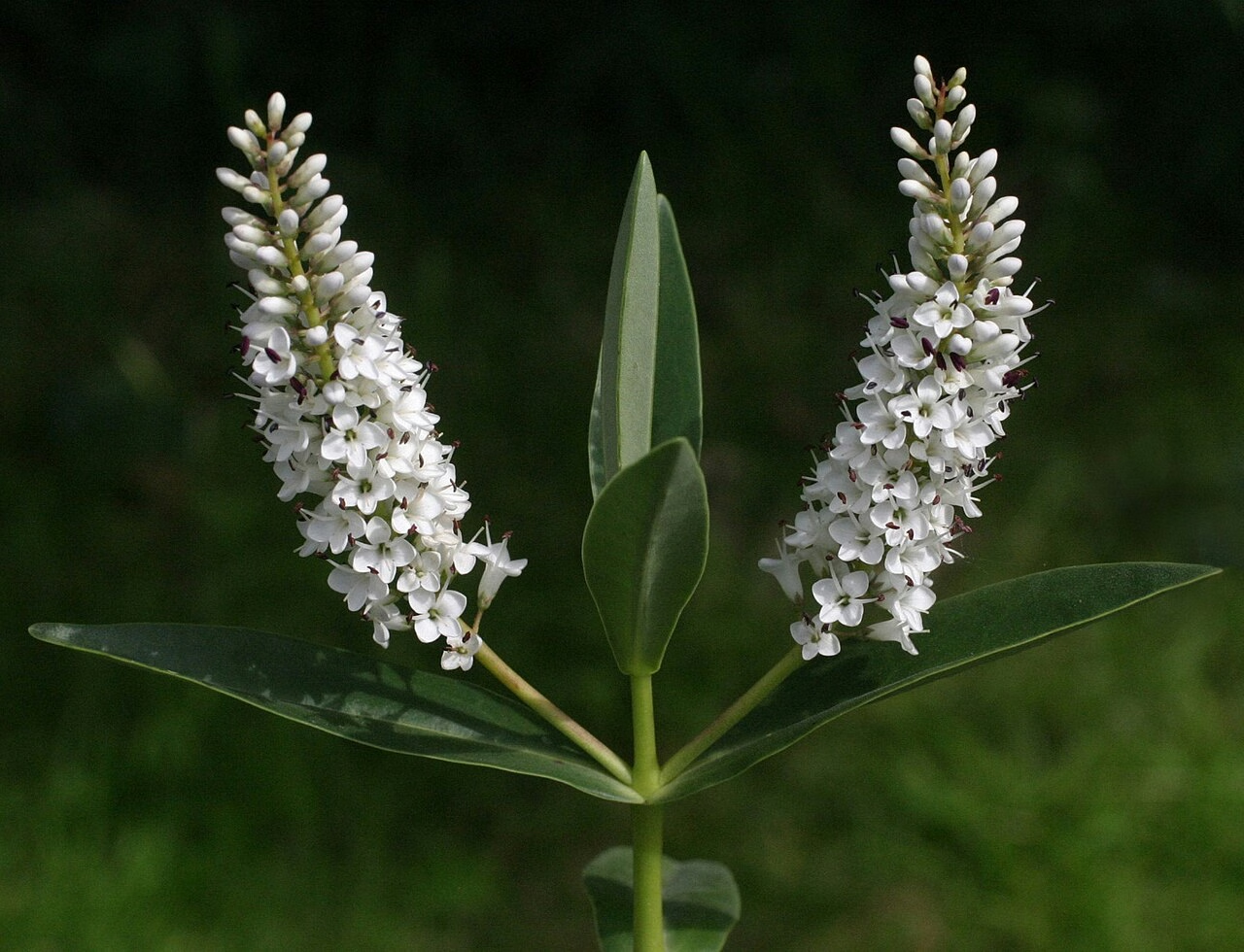
Dieffenbach's Koromiko
Veronica dieffenbachii
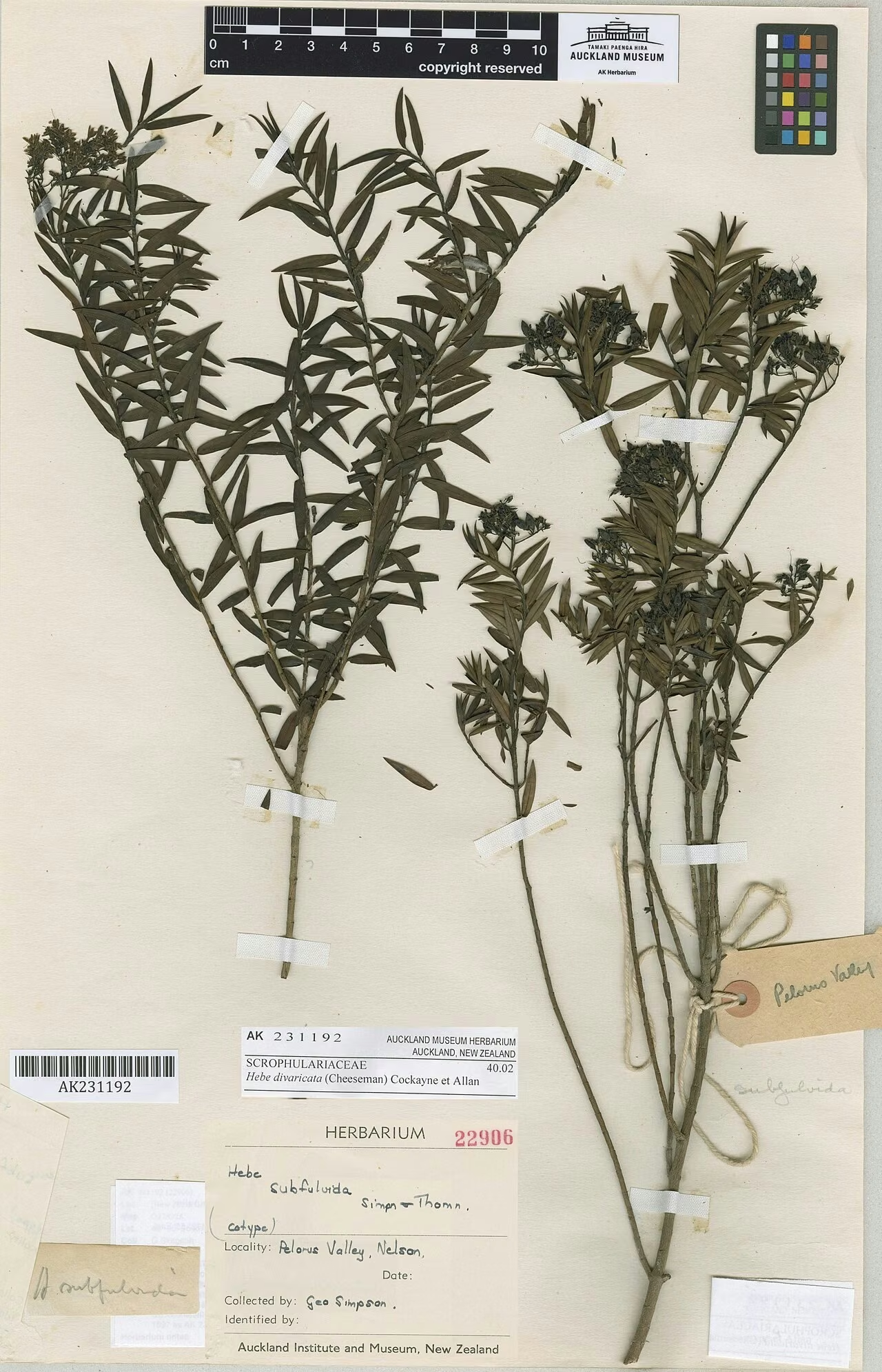
Veronica subfulvida
Veronica subfulvida
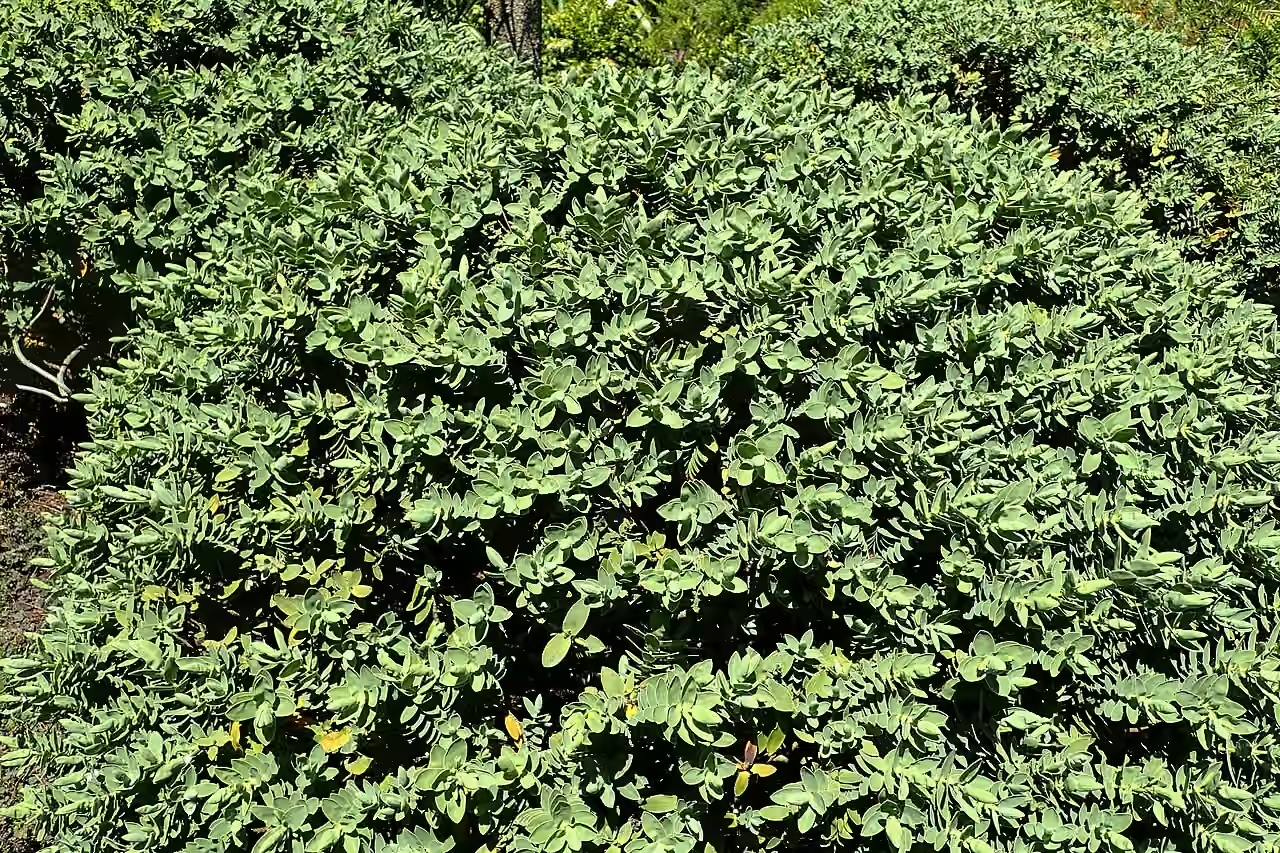
Veronica gibbsii
Veronica gibbsii
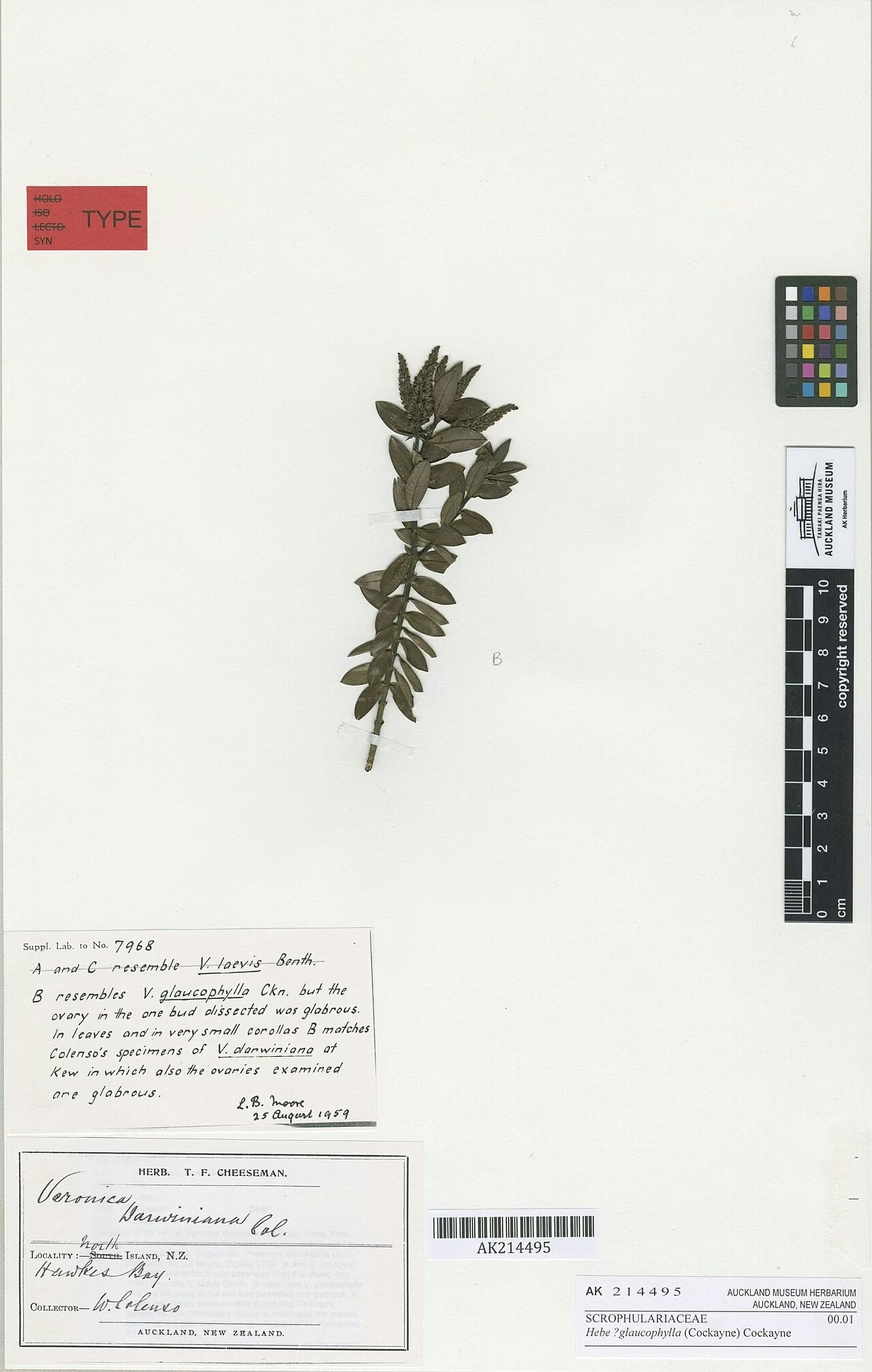
Veronica glaucophylla
Veronica glaucophylla
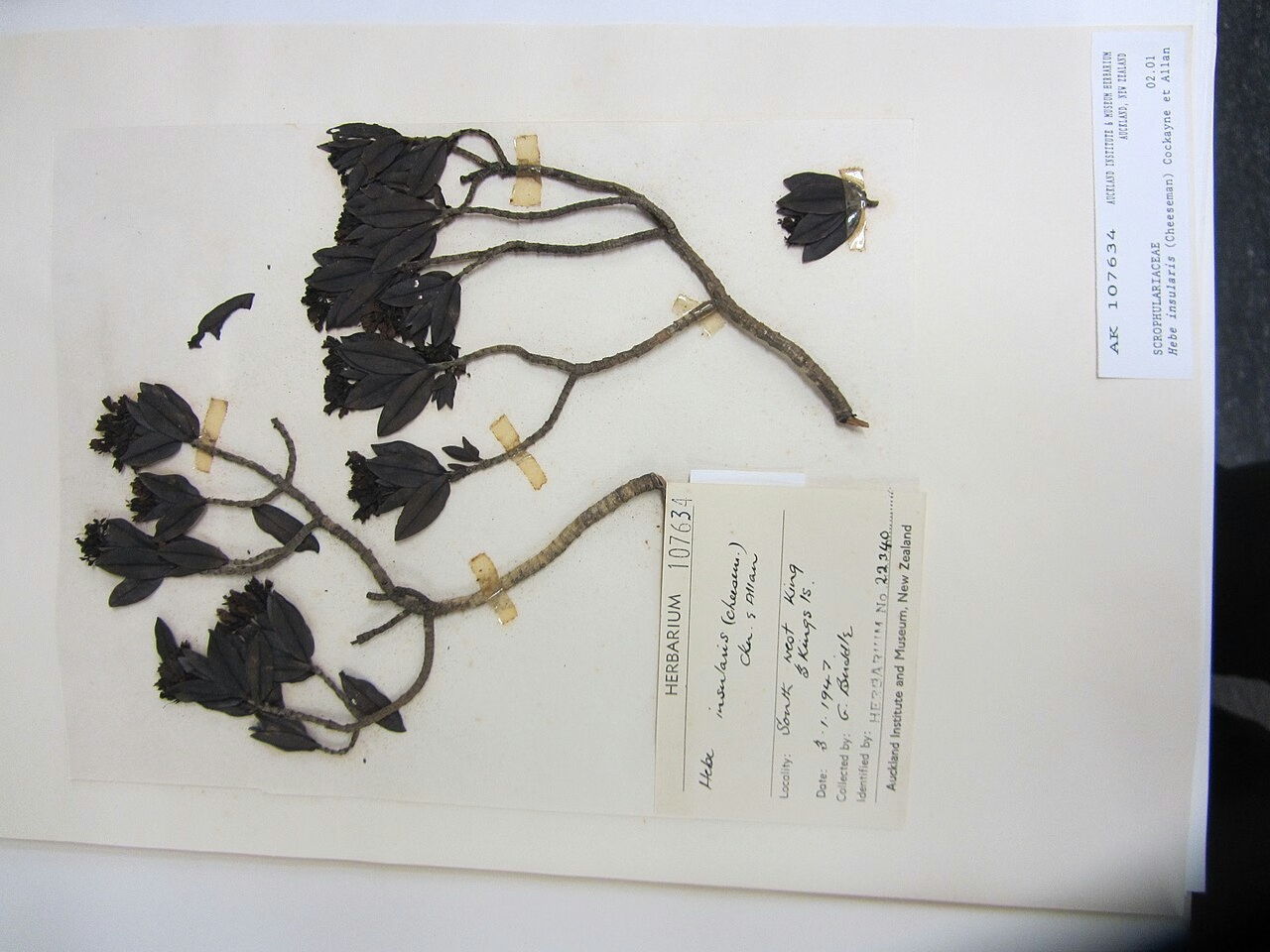
Three Kings Koromiko
Veronica insularis
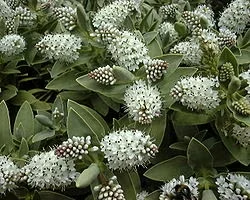
Snow Hebe
Snow Hebe
Plant Conservation
Veronica flavida is ranked Not Threatened (2023) and is also listed as Regionally Not Threatened in Northland. It has held a Not Threatened ranking in every assessment since 2004.
Its upland forest habitat is affected by browsing animals such as possums, goats and deer, so pest control in Northland's forests supports this and many other species.
Frequently Asked Questions
How tall does Veronica flavida grow?
It is usually a small tree, and NZPCN records it reaching up to 8 m. NZPCN notes that this fast-growing species often forms a small tree about 5 to 6 m tall.
What does flavida mean?
Flavida means pale yellow, referring to the yellowish midrib and leaf base that make this hebe easy to pick out from its relatives.
Where is Veronica flavida found?
It is endemic to Northland, between Warawara Forest and the Waikaraka Valley in the north and Tangihua Forest in the south, mostly above about 250 m and often in cloud forest.
How do you tell Veronica flavida from koromiko (Veronica stricta)?
Veronica flavida has short corolla tubes about equal to the calyx, leaves with a conspicuous yellow midrib, and a tree habit. Veronica stricta remains a shrub and has longer corolla tubes.
Sources and Further Reading
The botanical, growing, and conservation details for Hebe (Veronica flavida) on this page draw on the New Zealand plant references below. Consult them for full technical records and the latest distribution data.