Large-Leaved Māhoe
Melicytus macrophyllus
Last updated:
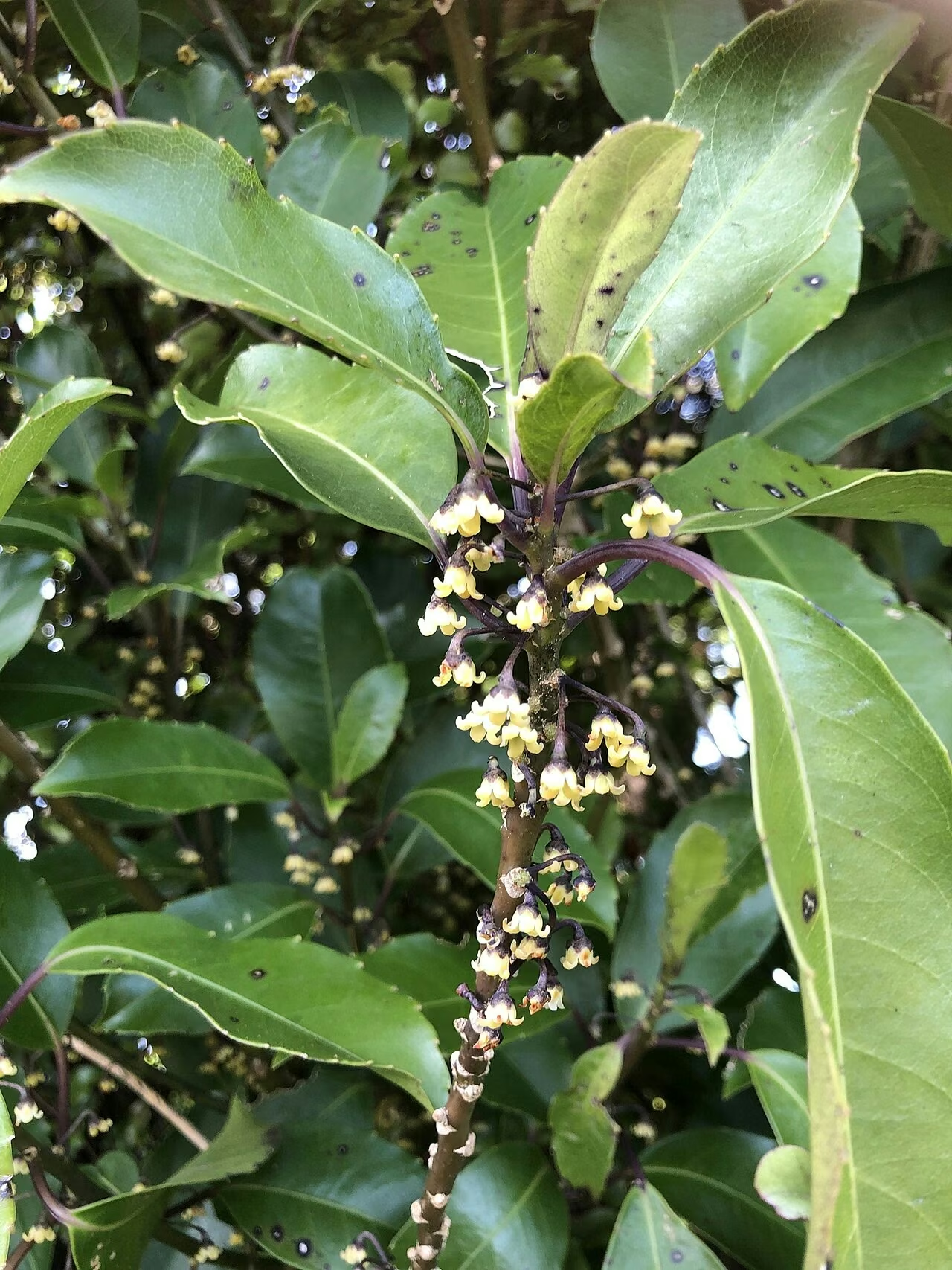
Large-leaved māhoe (Melicytus macrophyllus) is a small endemic tree or bushy shrub of the violet family, usually 2 to 3 m tall but reaching about 6 m. It grows only in the northern North Island, from near Kaitaia south to the Waitākere Ranges and Mount William near Bombay, where it is closely associated with kauri forest. It is easily told from the common māhoe or whiteywood by its much larger, thick, leathery leaves with a few blunt teeth on the margin. Small yellowish flowers hang along the twigs in spring and are followed by purple-flushed berries. It is a tough, shade-tolerant plant for northern gardens and restoration plantings. Explore more New Zealand native trees in our native plant guide.
Plant Description
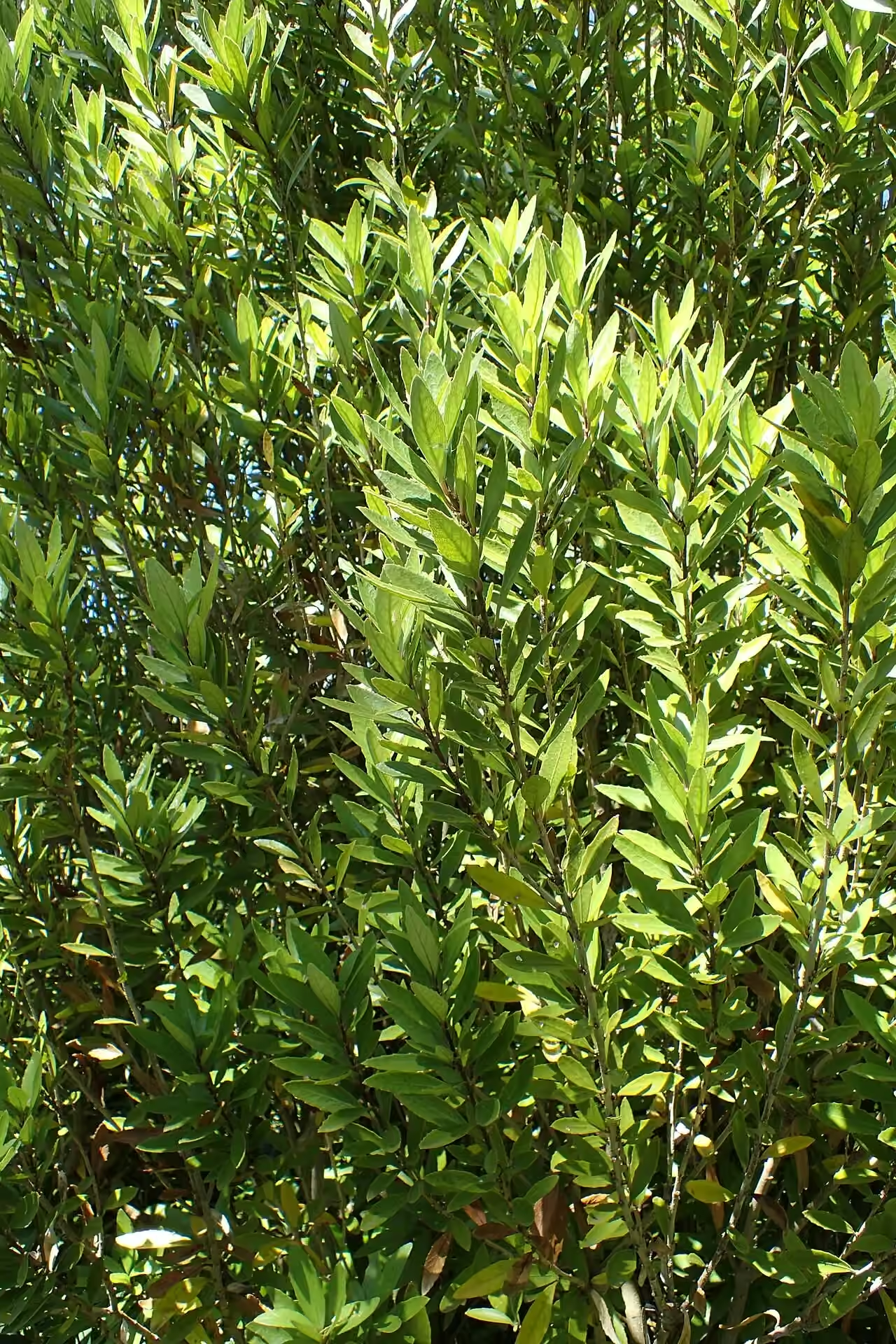
Melicytus macrophyllus is a small, bushy tree up to 6 m tall with a trunk up to 40 cm across and light brown bark, though in the forest it is more often a multi-stemmed shrub of 2 to 3 m. The leaves are leathery, obovate-oblong, 5 to 20 cm long and 3 to 10 cm wide, with a wedge-shaped base, pale stalks and a margin bearing a few coarse, blunt teeth. The midrib is green and the network of veins is more visible on the underside.
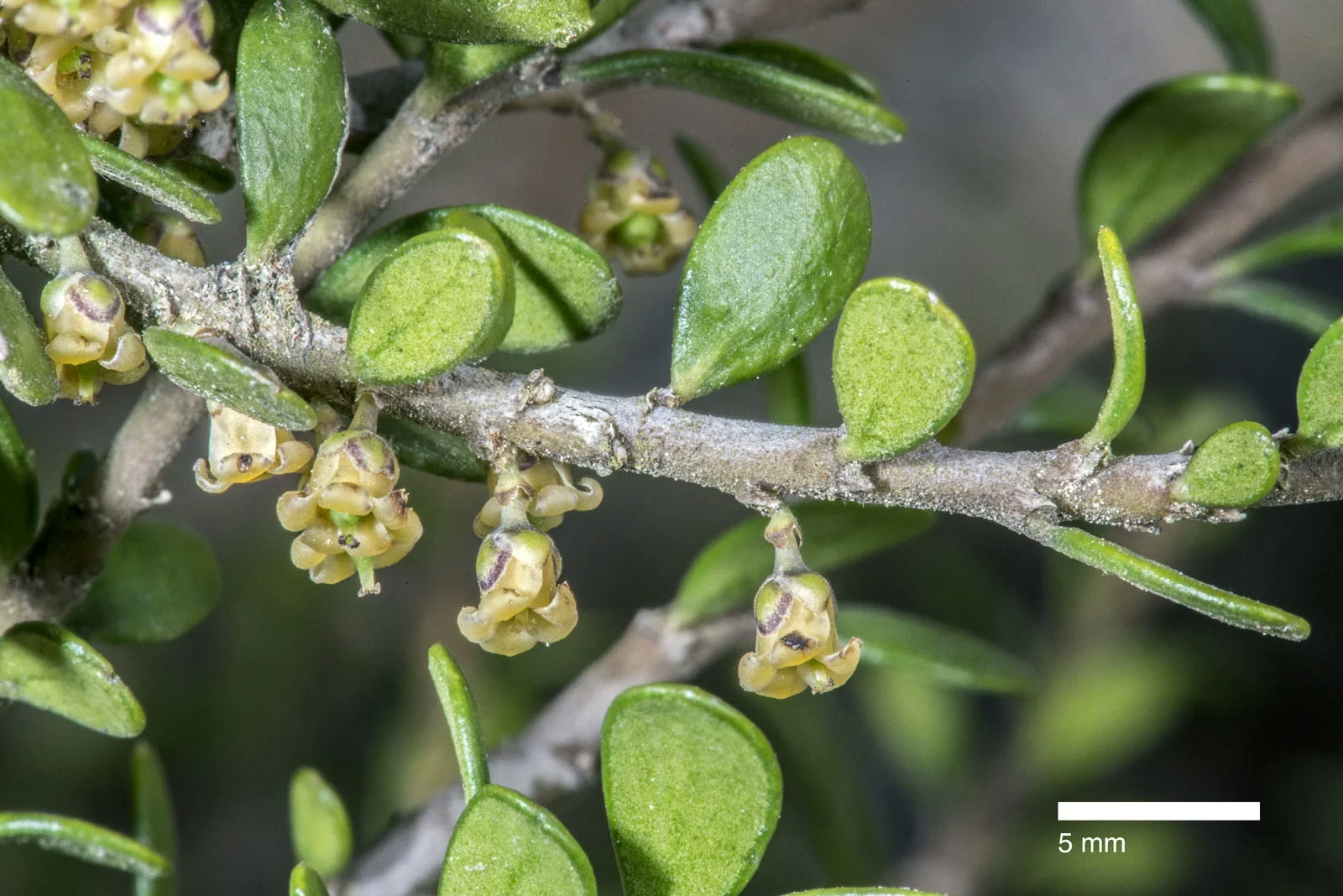
The flowers are small, about 6 to 7 mm across and yellowish, borne in clusters of 3 to 12 on slender drooping stalks scattered along the twigs. They are followed by small, rounded to top-shaped berries that are white flushed with purple and contain four to six seeds.
Its closest look-alike is common māhoe or whiteywood (Melicytus ramiflorus), which grows throughout the same forests. Large-leaved māhoe has noticeably longer, broader and more leathery leaves with only a few bumps on the edge, and its natural range is confined to the far north.
Quick Facts
| Scientific Name | Melicytus macrophyllus |
|---|---|
| Height | 2-6 m |
| Spread | 1.5-3 m |
| Water Needs | Moderate; prefers moist but free-draining soil |
| Light | Partial to full shade; tolerates some sun |
| Frost Tolerance | Low to moderate; a northern lowland species |
| Salt Tolerance | Low; no specific information available |
| Growth Rate | Moderate |
| Lifespan | Long-lived perennial |
Climate Best Suited to
Suits the mild, humid, largely frost-free climate of Northland and Auckland. It can be grown further south in sheltered, frost-protected sites under a tree canopy.
Regional Suitability
| City | Climate Suitability |
|---|---|
| Auckland | High |
| Wellington | Medium |
| Christchurch | Low |
| Dunedin | Low |
Plant Habitat
Large-leaved māhoe is endemic to the northern North Island. NZPCN gives its range as from near Kaitaia south to the Waitākere Ranges in the west and Mount William, near Bombay, in the east. Records from near Dunedin are now known to come from mislabelled herbarium specimens.
It is a plant of coastal, lowland and lower montane forest, and Te Ara notes that it is closely associated with kauri forest from Auckland northwards. It grows as an understorey shrub or small tree beneath taller canopy trees.
Growing Requirements
Soil Requirements
NZPCN describes it as tolerant of a wide range of soil conditions. In the wild it grows in the often poor, acidic clay and leaf-litter soils of kauri forest.
- Tolerates clay and low-fertility soils
- Benefits from a mulch of leaf litter
- Avoid permanently waterlogged ground
Light Requirements
This is an understorey tree that copes with deep shade, and NZPCN says it does best when planted under taller trees.
- Ideal in dappled or full shade under a canopy
- Tolerates morning sun in sheltered spots
- Hot, exposed sites can scorch the large leaves
Water Requirements
It grows naturally in humid forest where the soil rarely dries out completely.
- Water regularly through the first two summers
- Mulch to keep roots cool and moist
- Established plants under a canopy are reasonably drought tolerant
Planting and Establishing
Plant in autumn or winter in northern districts so roots establish before summer. Choose a sheltered position under existing trees or on the shaded side of a building, dig a generous hole, and backfill with the native soil mixed with some compost.
In restoration projects it is a good understorey species to add once nurse shrubs such as mānuka or kānuka have created some shade, especially within its natural range in Northland and Auckland.
Ecological Role
Like other Melicytus species, its small flowers produce nectar from staminal nectaries, the feature the genus name refers to, and they are likely visited by insects. The purple-flushed berries are eaten by native birds, which spread the seeds through the forest, although the particular bird species are not documented for this plant in the sources consulted.
It is a component of the shrub layer of northern kauri forest, contributing to the dense, layered understorey that shelters ground ferns and seedlings.
Uses & Significance
Garden Uses
Large-leaved māhoe is a handsome foliage shrub for shady northern gardens, valued for its bold, glossy leaves.
- Understorey planting beneath established trees
- Shade-tolerant screening shrub
- Native woodland and bird-friendly gardens
- Restoration plantings within Northland and Auckland
Ecological Value
It adds structure and food to the understorey of northern forest restorations.
- Berries provide food for fruit-eating birds
- Spring flowers supply nectar for insects
- Contributes to the natural shrub layer of kauri forest
Landscaping Uses
Use it as a mid-layer shrub between canopy trees and low ferns, where its broad, leathery leaves contrast well with fine-leaved plants such as ferns and Coprosma. It can be grown as a single-stemmed small tree or left bushy as an informal screen.
Its tolerance of shade makes it useful in the awkward dim corners of urban gardens where many sun-loving natives struggle.
Seasonal Care Calendar
Spring
Clusters of small yellowish flowers hang along the twigs from September to October.
- Apply mulch as soil warms
- Plant out nursery stock early in spring if not done in autumn
Summer
Berries ripen from October to December, turning white flushed with purple.
- Water young plants during dry spells
- Collect ripe fruit for seed
Autumn
New growth hardens off and the plant is in good condition for planting and cutting material.
- Take semi-hardwood cuttings
- Main planting season in the north
Winter
Growth is slow, and young plants outside the frost-free north may need protection.
- Cover young plants on frosty nights
- Light shaping can be done now
When to Prune and How Much
Little pruning is required. Remove dead or crossing branches and lightly shape after fruiting if a tidier form is wanted.
To train it as a small tree, remove lower side shoots gradually over several years; to keep it bushy for screening, tip-prune the leaders while the plant is young.
How to Grow Large-Leaved Māhoe
Large-leaved māhoe is one of the easier native trees to propagate. NZPCN states that it is easily grown from fresh semi-hardwood cuttings, and fresh seed from the purple-flushed berries also germinates, although seedlings take longer to reach planting size. Melicytus species commonly carry male and female flowers on separate plants, so if you want berries for seed, collect from a plant that is clearly fruiting. Raising plants from local stock is the best choice for restoration within its natural northern range.
From Cuttings
Semi-hardwood cuttings taken from the current season's growth in late summer or autumn root readily. Cuttings from a known female plant will produce fruiting plants, which is useful in a garden where berries for birds are wanted.
- Select healthy, semi-hardened shoots 10 to 15 cm long
- Remove the lower leaves and cut the remaining large leaves in half to reduce moisture loss
- Dip the base in rooting hormone and insert into a free-draining mix of bark and pumice
- Keep in a shaded, humid spot or under misting until roots form
- Pot on once a good root system has developed
From Seed
Collect ripe berries between October and December, when they are white flushed with purple. Each berry contains four to six small seeds, which should be sown fresh because they are likely to lose viability if allowed to dry out.
- Squash the berries and wash the pulp away from the seeds
- Sow on the surface of a seed-raising mix and cover lightly
- Keep moist and in a sheltered, shaded place
- Prick out seedlings once they have a few true leaves
Pests & Diseases
No serious pests are recorded for this species in the sources consulted. Like other Melicytus, the leaves may be chewed by native caterpillars, which is normal and seldom harmful.
In the wild, browsing by possums and other introduced animals in northern forests can damage the foliage of understorey plants, and pest control benefits it along with the rest of the forest.
Cultural Significance
The Flora of New Zealand records 'māhoe' as the Māori name, the same name used for the common Melicytus ramiflorus. No traditional Māori use specific to Melicytus macrophyllus is recorded in the sources consulted.
The genus name comes from the Greek meli, honey, and kytos, a hollow container, referring to the nectaries on the stamens, while macrophyllus means large-leaved. The species was named by Allan Cunningham, an early botanical explorer of northern New Zealand.
Bonus Tip
If you are planting in Auckland or Northland and want a māhoe with more presence, choose this species over common whiteywood: its big, leathery leaves stay neat in deep shade where whiteywood becomes thin and leggy, and it pairs naturally with kauri, which it accompanies in the wild.
Related Plants
Explore other native plants that share similar characteristics or habitats with Large-Leaved Māhoe (Melicytus macrophyllus), offering further insights into New Zealand's diverse flora. These related species provide context and opportunities for complementary planting in your garden.
Plant Conservation
Melicytus macrophyllus is ranked Not Threatened nationally (2023). The Auckland regional assessment lists it as Regionally Naturally Uncommon, reflecting the fact that Auckland is at the southern edge of its small natural range.
Its habitat is linked to kauri forest, so protecting remaining northern forest, controlling browsing pests and following kauri dieback hygiene rules on tracks all help this species too.
Frequently Asked Questions
How is large-leaved māhoe different from ordinary māhoe?
Melicytus macrophyllus has thick, leathery leaves 5 to 20 cm long with only a few blunt teeth, while common māhoe (Melicytus ramiflorus) has thinner, more finely toothed leaves. Large-leaved māhoe is also restricted to Northland and Auckland.
Where does Melicytus macrophyllus grow naturally?
It is endemic to the North Island from near Kaitaia south to the Waitākere Ranges in the west and Mount William near Bombay in the east, mainly in kauri forest.
Is large-leaved māhoe easy to grow?
Yes. NZPCN says it is easily grown from fresh semi-hardwood cuttings, tolerates a wide range of soils and light levels, and does best planted under taller trees.
When does large-leaved māhoe flower and fruit?
Flowering is from September to October, and the small white berries flushed with purple ripen from October to December.
Sources and Further Reading
The botanical, growing, and conservation details for Large-Leaved Māhoe (Melicytus macrophyllus) on this page draw on the New Zealand plant references below. Consult them for full technical records and the latest distribution data.