Hebe
Veronica parviflora
Last updated:
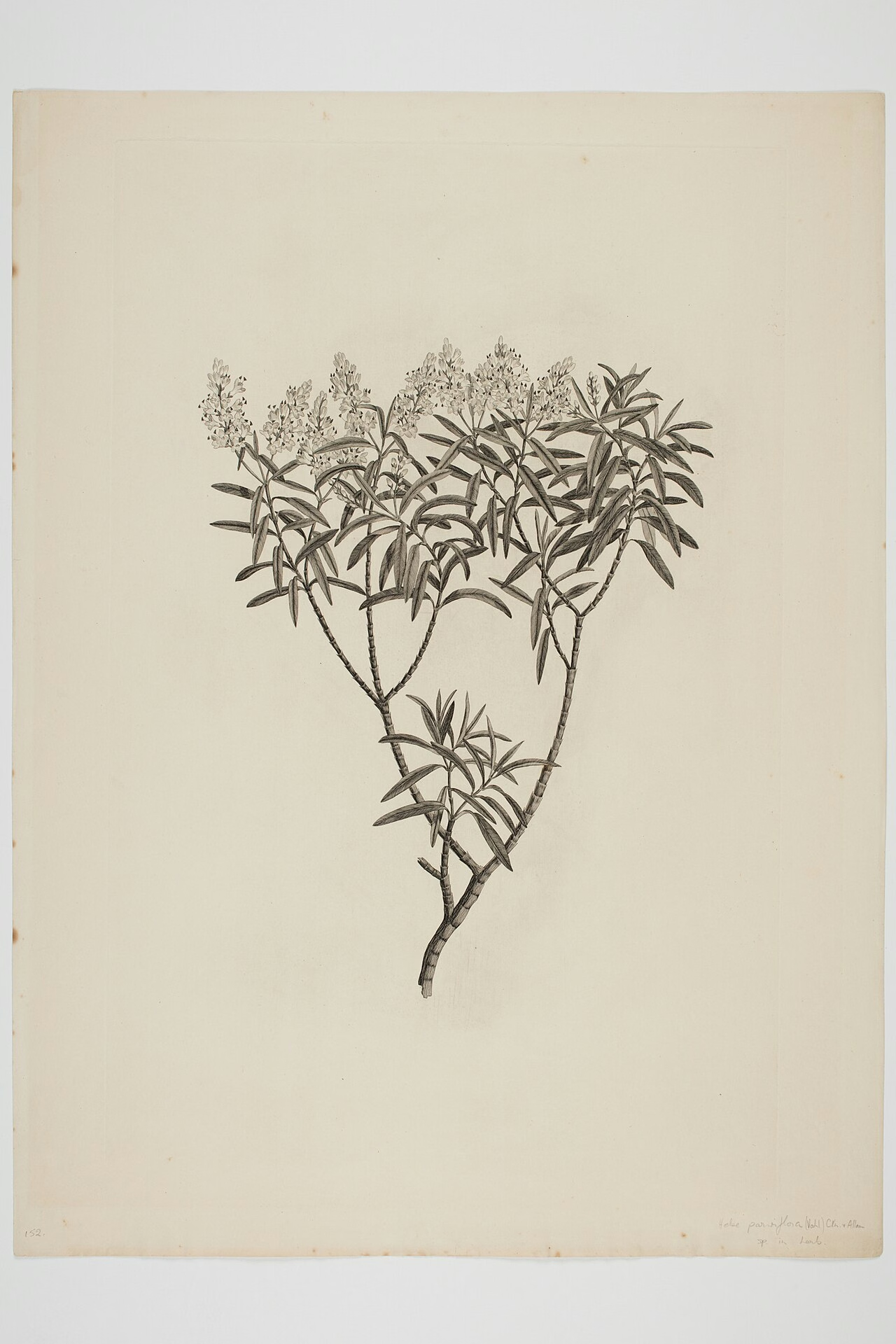
Veronica parviflora, formerly Hebe parviflora, is the largest New Zealand hebe, a rounded, bushy shrub or small tree usually up to 7.5 m and occasionally 12 m tall, sometimes with a trunk over 25 cm thick. Its narrow leaves cluster at the ends of the branches, and from about January to March it carries slender spikes of small white flowers tinged pink or mauve. It grows in scrub on hillsides, along streams, at forest margins and in frost hollows through much of the North Island and in coastal Marlborough. It is ranked Not Threatened. Explore more New Zealand native trees in our native plant guide.
Plant Description
Veronica parviflora is a rounded, bushy large shrub or small tree, usually up to 7.5 m and occasionally 12 m tall. Young plants are soft-branched shrubs, but older plants develop a dominant trunk that can exceed 250 mm in diameter, with a characteristic dome-shaped crown. The leaves are in opposite pairs, crowded towards the ends of the branchlets, linear to linear-lanceolate, usually 25 to 60 mm long but only 1.5 to 7 mm wide, and spreading to curved back, with a whitish, pointed tip.
The small flowers are white, tinged pink or mauve, and are carried in slender lateral spikes of 20 to 130 flowers. The main flowering period is January to March, though flowers may appear from September and occasionally into August. Small capsules ripen mainly from February to June and may persist on the plant until November.
It differs from similar narrow-leaved hebes in its tree-like size and its short capsules, about twice the length of the calyx. The calyx has a mix of glandular and non-glandular hairs, and the inside of the corolla tube is hairy. Leaf size and habit vary between regions.
Quick Facts
| Scientific Name | Veronica parviflora |
|---|---|
| Height | Usually up to 7.5 m, occasionally 12 m |
| Spread | 3-5 m, dome-shaped |
| Water Needs | Moderate |
| Light | Full sun to light shade |
| Frost Tolerance | Moderate; grows in inland frost hollows within its range |
| Salt Tolerance | Moderate; occurs near the coast, but no specific data |
| Growth Rate | Moderate to fast |
| Lifespan | Long-lived perennial |
Climate Best Suited to
Suits mild to moderately cold climates from the warm north to coastal Marlborough, including inland valleys with frosty flats. It is adaptable but prefers reasonable rainfall.
Regional Suitability
| City | Climate Suitability |
|---|---|
| Auckland | High |
| Wellington | High |
| Christchurch | Medium |
| Dunedin | Medium |
Plant Habitat
Veronica parviflora is endemic to New Zealand. NZPCN describes its range as eastern, central and southern North Island, including the Hen and Chickens and Great Barrier islands, and north-east South Island, from near Russell to near Kekerengu. The Flora of New Zealand lists the North Island regions from Northland to the south of the island, and in the South Island only coastal Marlborough, from Arapaoa Island to Kekerengu.
It grows in scrub on hillsides, along streams, at forest margins, and on frost flats and hollows, from near the coast to montane sites up to about 1070 m. In places it forms the canopy of low forest or tall scrub.
Growing Requirements
Soil Requirements
It grows on a range of soils, from hillside scrub to stream banks and frosty flats.
- Moist, free-draining loam
- Tolerates moderately poor or stony soils
- Mulch to retain moisture
Light Requirements
It grows in open scrub and forest margins and can form a canopy, so it prefers full sun or light shade.
- Full sun for a dense, rounded crown
- Light shade tolerated
Water Requirements
It often grows along streams and in moist scrub, but tolerates drier hillsides once established.
- Water young trees through dry summers
- Established plants need little extra water
Planting and Establishing
Plant in autumn or spring with room for a tree 3 to 5 m across. It can be used as a fast-growing nurse plant in restoration or as a small specimen tree in gardens.
Because it naturally grows in frost hollows and flats, it is a useful hebe for colder valley sites within its range. Use ecosourced plants for restoration.
Ecological Role
Its summer flowers provide nectar for native insects such as bees, flies, butterflies and moths, although specific pollinator records for this species were not found in the sources consulted. The seed is wind dispersed.
As a fast-growing shrub that can become a small tree, it is part of regenerating scrub on hillsides and along streams, and can form the canopy of low forest before taller trees take over.
Uses & Significance
Garden Uses
A hardy, tree-forming hebe that gives height and summer flowers.
- Small specimen tree
- Shelter belts and screens
- Nurse plant in restoration projects
- Stream-side planting
Ecological Value
It contributes canopy, shelter and summer nectar to regenerating scrub and forest margins.
- Early successional canopy species
- Summer nectar for insects
- Tolerates frost hollows where few other hebes grow
Landscaping Uses
Its domed crown of fine, narrow leaves gives a soft, almost willow-like texture. Plant it as a small tree on a lawn edge, or in groups to form an informal screen behind lower shrubs and grasses.
In larger restoration plantings it makes quick cover alongside mānuka, kānuka and other pioneer species.
Seasonal Care Calendar
Spring
New shoots develop and early flowers may appear from September.
- Plant new trees
- Mulch around young plants
Summer
The main flowering period runs from January to March.
- Water young trees in dry spells
- Watch for insects on the flowers
Autumn
Capsules ripen from February to June.
- Collect seed
- Take semi-hardwood cuttings
Winter
Capsules may persist on the tree; plants are hardy to frost within their range.
- Prune for shape if needed
- Check stakes on young trees
When to Prune and How Much
Little pruning is needed. Young plants can be shaped to a single trunk or kept bushy by tip pruning. Remove spent flower spikes if a tidy look is wanted.
For hedging, trim lightly after the main summer flowering.
How to Grow Hebe
Veronica parviflora is propagated from seed or cuttings, like other hebes. Cuttings preserve the form of the parent, which is useful because leaf size and habit vary between regions. Seed gives genetically diverse plants for restoration, but hebes hybridise readily, so seed from garden plants grown near other hebes may produce hybrids. For restoration, collect seed or cuttings from several local wild plants, with permission, so new plants suit local conditions. In Auckland, where it is ranked Regionally Vulnerable, ecosourced plants are particularly valuable.
From Seed
Capsules ripen from February to June and may stay on the plant for months. Collect them when brown and splitting.
Seedlings grow fairly quickly and can be planted out once they have filled a small pot with roots. Plant them in their permanent position while young, since the developing trunk makes older potted plants less tolerant of root disturbance.
- Collect ripe capsules in autumn
- Sow seed on the surface of fine seed-raising mix and cover thinly
- Keep moist in a sheltered spot
- Prick out seedlings and grow on in pots before planting out
From Cuttings
Semi-hardwood cuttings taken after the main flowering generally root well.
Choose vigorous, upright shoots if you want a plant that will form a single trunk, as cuttings from side branches can stay bushy for longer.
- Take 8 to 10 cm cuttings of non-flowering shoots from late summer to autumn
- Remove the lower leaves
- Insert into a mix of potting mix and pumice or perlite
- Keep humid and shaded until rooted, then pot on and harden off
Pests & Diseases
No pests specific to this species are recorded. Hebes can suffer from downy mildew and leaf spot in humid, crowded conditions, and from root rot in waterlogged soil.
Scale insects and aphids occasionally affect new growth; they are rarely serious on established trees.
Cultural Significance
The Te Mara Reo etymology site, citing Elsdon Best, records the name koromiko tāranga for Veronica parviflora, and kōkōmuka tāranga as a name shared with Pimelea longifolia. No specific traditional use of this species was found in the sources consulted, although koromiko hebes generally were well known in rongoā Māori as a remedy for diarrhoea.
The species was described by the botanist Martin Vahl as Veronica parviflora. Trees and Shrubs Online describes it as the largest of all New Zealand hebes and notes that it has been grown in British gardens, though it is uncommon in cultivation there.
Bonus Tip
If you want a native hebe that grows into a real small tree, choose Veronica parviflora and train it to a single leader while young by removing competing stems. It forms a neat dome with a short trunk, giving light shade and summer flowers where most hebes would stay as shrubs.
Related Plants
Explore other native plants that share similar characteristics or habitats with Hebe (Veronica parviflora), offering further insights into New Zealand's diverse flora. These related species provide context and opportunities for complementary planting in your garden.
Veronica macrocarpa var. latisepala
Veronica macrocarpa var. latisepala
Veronica macrocarpa var. macrocarpa
Veronica macrocarpa var. macrocarpa
Murrell's Hebe
Veronica murrellii
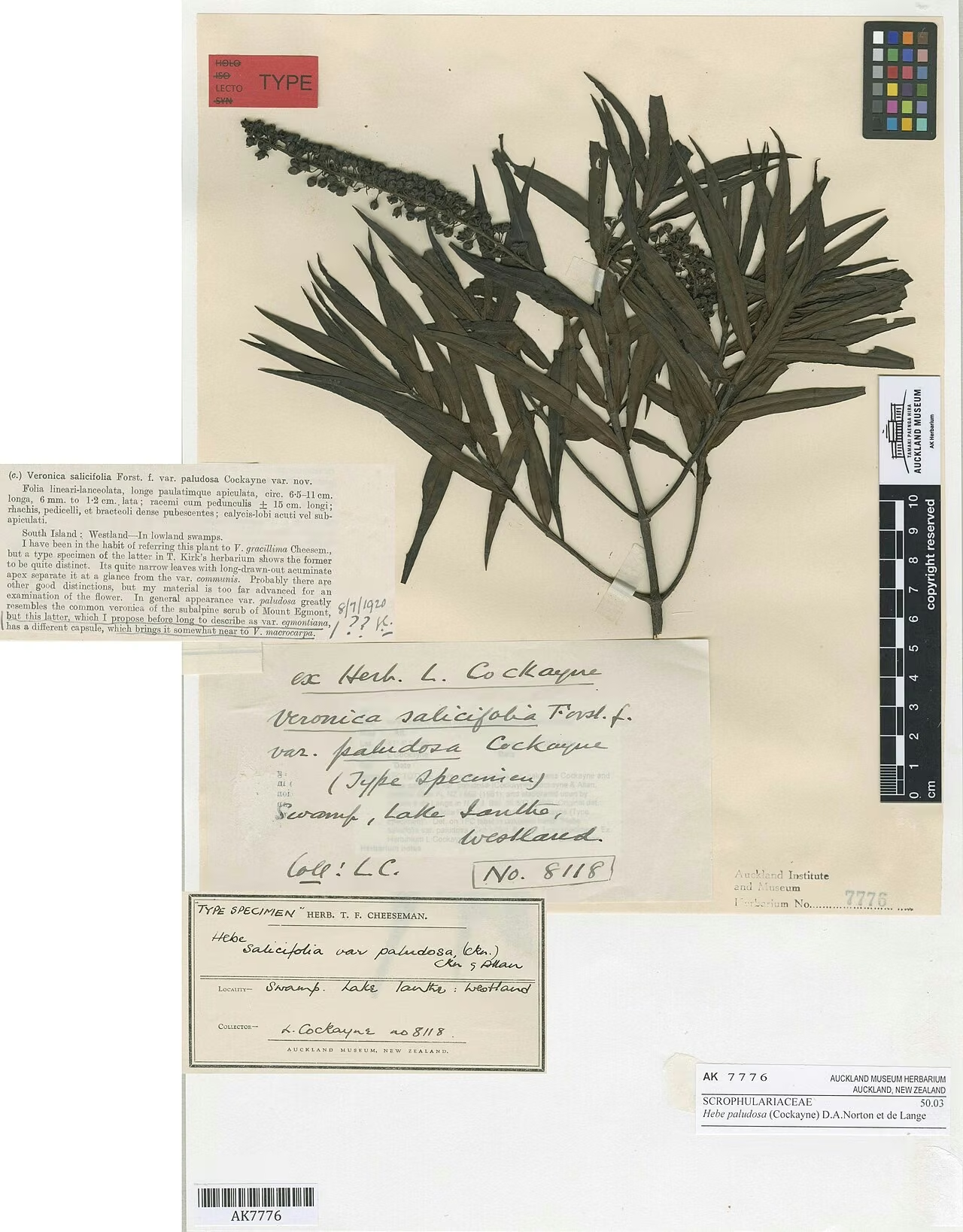
Veronica phormiiphila
Veronica phormiiphila
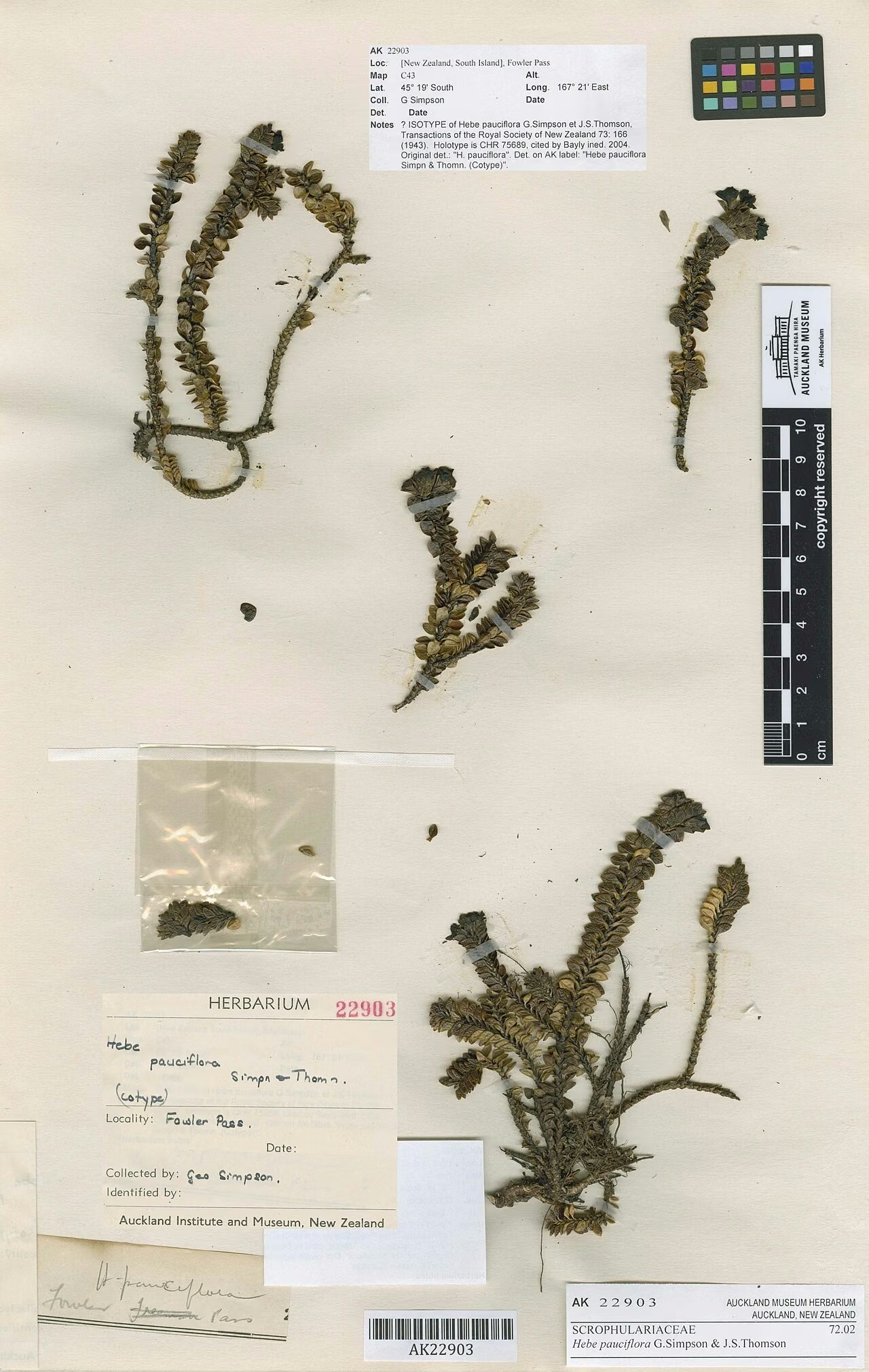
Veronica notialis
Veronica notialis
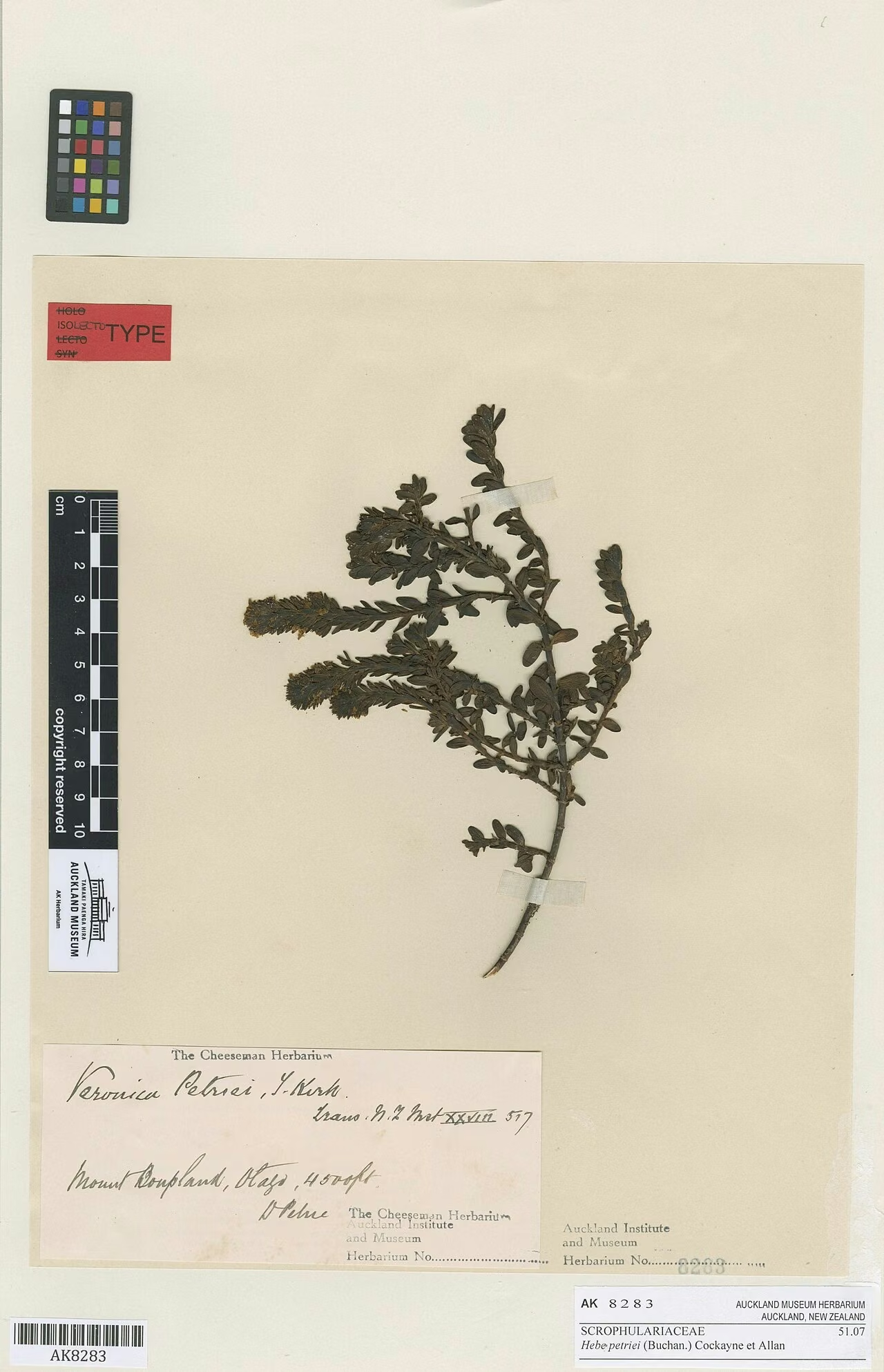
Veronica petriei
Veronica petriei
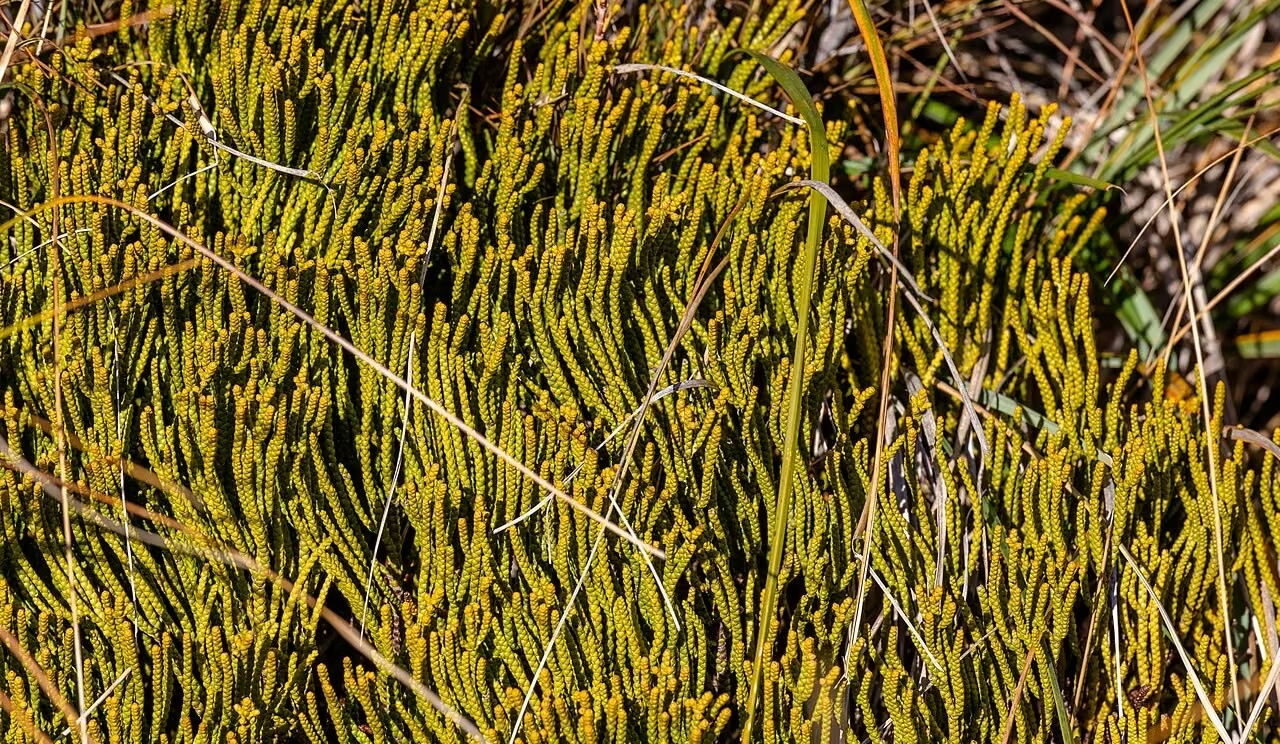
Veronica propinqua
Veronica propinqua
Veronica kellowiae
Veronica kellowiae
Plant Conservation
Veronica parviflora is ranked Not Threatened (2023) nationally. Regionally it is ranked Regionally Vulnerable in Auckland (2025) and Regionally Naturally Uncommon in Northland (2026).
Clearance of scrub and weed invasion of forest margins and stream banks affect its habitat. Ecosourced planting in restoration projects, particularly in the Auckland region, helps support local populations.
Frequently Asked Questions
How tall does Veronica parviflora grow?
It is usually a shrub or small tree up to about 7.5 m tall, occasionally reaching 12 m, which makes it the tallest of the New Zealand hebes.
Where does Veronica parviflora grow?
It occurs through much of the North Island, including the Hen and Chickens Islands and Great Barrier Island, and in the South Island only in coastal Marlborough from Arapaoa Island south to near Kekerengu.
Does Veronica parviflora have a Māori name?
The Te Mara Reo etymology site, drawing on Elsdon Best, records the name koromiko tāranga for Veronica parviflora; koromiko is the general Māori name for several hebes.
Why is it called parviflora?
Parviflora means small-flowered, from the Latin parvus, small, and flos, flower, referring to its small individual flowers.
Sources and Further Reading
The botanical, growing, and conservation details for Hebe (Veronica parviflora) on this page draw on the New Zealand plant references below. Consult them for full technical records and the latest distribution data.