Turoa Onamata
Ackama nubicola
Last updated:
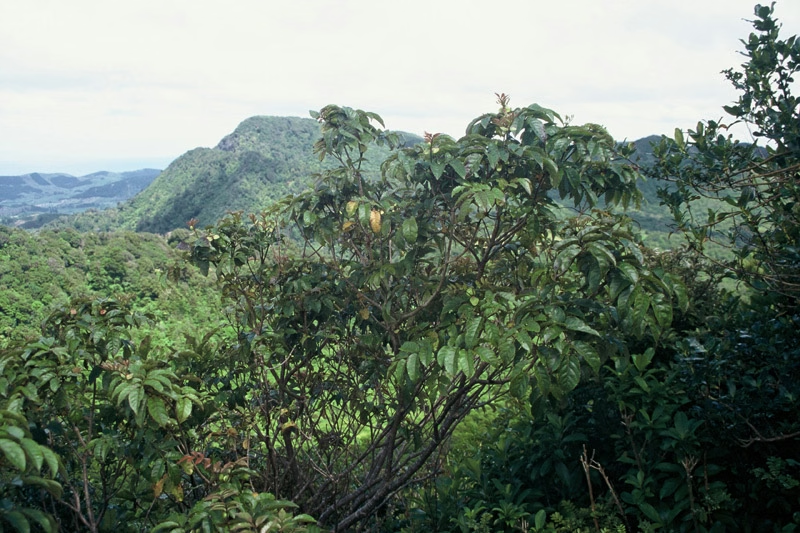
Turoa onamata (Ackama nubicola) is a small, multi-trunked tree 5 to 15 m tall, known only from cloud forest above 500 m in Waima Forest, South Hokianga, Northland. A relative of the familiar makamaka (Ackama rosifolia), it has leathery compound leaves that open wine-red or pink and mature dark green above and silvery beneath, giving the crown a silver-grey look. It was first collected in 2000 and described in 2002, making it one of the most recently discovered native trees. Possum browsing threatens its flowering and fruiting, and it is ranked Threatened - Nationally Critical. Explore more New Zealand native trees in our native plant guide.
Plant Description
Ackama nubicola is a small tree 5 to 15 m tall, usually with several trunks and often suckering from the base, with a spreading crown that looks silvery grey from a distance. The bark is firm, pale greyish white and streaked with graphite grey. The leathery compound leaves are 140 to 300 mm long, with usually four (from two up to eleven) pairs of serrated leaflets 30 to 150 mm long. New leaves are wine-red or pink, maturing dark green above and silvery green beneath.
A distinctive feature is the stipules: large, fleshy, rounded, about 14 by 18 mm, butter-yellow or cream flushed purple at the base, and long persistent. The small flowers are pinkish green to off-white or pink, with ten stamens bearing cream anthers. The fruit is a tiny capsule 2.4 to 3 mm long, cream at first and drying honey-brown to dark brown, containing four to six reddish-brown seeds. NZPCN notes that the hairy carpels are dispersed by wind.
It is easily confused with makamaka (Ackama rosifolia), which also grows in Northland. Makamaka is a smaller tree with smaller leaves and fewer leaflets, obvious tufts of hair (domatia) under the leaves, small green deciduous stipules with toothed tips, spring flowers and pink to carmine fruit.
Quick Facts
| Scientific Name | Ackama nubicola |
|---|---|
| Height | 5-15 m |
| Spread | Spreading multi-trunked crown; width not recorded |
| Water Needs | High; cannot tolerate drought |
| Light | Forest edges and secondary regrowth; part shade to sun |
| Frost Tolerance | Not documented; grows in mild, cloudy Northland uplands |
| Salt Tolerance | Low; an inland cloud-forest species |
| Growth Rate | Cuttings grow rapidly at first but are hard to maintain |
| Lifespan | Long-lived perennial tree |
Climate Best Suited to
Suits the mild, very wet and frequently cloud-covered uplands of western Northland, where cool, moist air persists year round. NZPCN notes that it cannot tolerate drought and dislikes humidity in cultivation.
Regional Suitability
| City | Climate Suitability |
|---|---|
| Auckland | Medium |
| Wellington | Low |
| Christchurch | Low |
| Dunedin | Low |
Plant Habitat
Ackama nubicola is endemic to the North Island and is known only from Waima Forest in the Waima Range of South Hokianga, western Northland. Field surveys after its discovery found roughly 500 trees, all apparently confined to this one area.
It seems to be restricted to secondary regrowth within cloud forest above 500 m. It grows at valley heads, along cliff margins, around rock outcrops and where forest meets pasture, typically in dense stands of 5 to 20 even-aged trees. Seedlings often establish as low epiphytes on the trunks of tree ferns. A 2001 herbarium collection from about 600 m records it growing with makamaka, tōwai (Weinmannia sylvicola), tāwheowheo (Quintinia serrata) and the tree fern Cyathea smithii.
Growing Requirements
Soil Requirements
In its cloud-forest habitat it grows on moist, organic forest soils and around rock outcrops, and seedlings can root in the fibrous trunks of tree ferns.
- Constantly moist, humus-rich soil
- Good drainage, as on slopes and cliff edges
- Never allowed to dry out
Light Requirements
It favours secondary regrowth, forest margins and openings, which suggests it needs more light than deep forest interiors provide.
- Forest edges and gaps
- Shelter from hot, drying sun in cultivation
Water Requirements
Cloud forest is bathed in mist for much of the year, and NZPCN states the species needs ample moisture and cannot tolerate drought.
- Keep roots consistently moist
- Cool conditions matter as much as water
Planting and Establishing
Turoa onamata is not a general garden tree. NZPCN describes it as rather fickle in cultivation, with varying degrees of success, needing cool conditions and plentiful moisture while disliking humidity.
Plants held for conservation should be grown in a cool, sheltered, moist site with good air movement, and should come only from authorised propagation of the Waima population.
Ecological Role
The tree's tiny capsules release seeds from hairy carpels that are dispersed by wind. Its pattern of even-aged stands in secondary regrowth, and seedlings perching on tree fern trunks, suggests it regenerates after disturbance at forest edges and on cliffs.
Flowering and fruiting have rarely been seen: NZPCN reports flowering observed only twice and fruit only three times since 2000, apparently because possums strip the foliage. Its pollinators have not been documented.
Uses & Significance
Garden Uses
Its main value is as a conservation subject rather than a garden plant.
- Botanic garden and conservation collections
- Restoration plantings in the Waima area under conservation guidance
- Educational example of a recently discovered New Zealand tree
Ecological Value
It is one of several endemic plants found only in the Waima Range cloud forest, an area of exceptional botanical importance in Northland.
- Found at only one location worldwide
- Part of the distinctive Northland cloud-forest flora
- Forms dense stands in regenerating forest
Landscaping Uses
Turoa onamata is not used in landscaping. In a botanic collection its silver-backed foliage and red young growth would make it an attractive small tree for a cool, moist woodland setting.
Gardeners wanting a similar effect can grow makamaka (Ackama rosifolia), which is widely grown.
Seasonal Care Calendar
Spring
New foliage emerges wine-red or pink before maturing to dark green with silvery undersides.
- Watch cultivated plants for drought stress
- Check for possum damage on new growth
Summer
Flowering appears to begin in February, with small pinkish-green to off-white flowers.
- Take softwood to semi-hardwood cuttings in February
- Keep plants cool and moist
Autumn
Flowering continues into March, and fruit appears to ripen from March to July.
- Collect ripe capsules only under authorisation
- Maintain possum control
Winter
Fruit may still be maturing in early winter; growth slows.
- Protect potted plants from waterlogging
- Avoid moving plants during cold, wet spells
When to Prune and How Much
Pruning is generally unnecessary. On cultivated trees, remove only dead or damaged branches.
The species naturally suckers and forms several trunks, so basal shoots can be left to develop the multi-stemmed form seen in the wild.
How to Grow Turoa Onamata
NZPCN states that Ackama nubicola is propagated from softwood to semi-hardwood cuttings taken in February. Cuttings strike readily and grow rapidly at first, but the young plants have proved difficult to keep alive, and the species is described as rather fickle in cultivation. It needs cool conditions and ample moisture, cannot tolerate drought, and dislikes humidity, so a shaded, well-ventilated growing area works better than a warm, closed propagation house once cuttings have rooted. Because it is Nationally Critical and known only from Waima Forest, all propagation material should come from authorised collections made with the Department of Conservation and in consultation with mana whenua.
From Cuttings
Cuttings are the documented method. Taking them in February coincides with firm new growth that is still soft enough to root quickly.
- In February take softwood to semi-hardwood tip cuttings
- Remove lower leaves and reduce large leaflets to cut water loss
- Insert into a free-draining propagation mix and keep moist
- Once rooted, move to a cool, shaded, airy position rather than a humid tent
- Pot on carefully and never let the mix dry out
From Seed
Seed propagation is not documented. Fruit has rarely been seen, and the reddish-brown seeds are less than 1 mm long, so they would need very careful surface sowing.
- Collect capsules as they turn honey-brown, only with authorisation
- Sow seed on the surface of fine, moist seed mix without covering
- Keep cool, shaded and evenly moist
Pests & Diseases
Possums are the main threat. NZPCN reports that they severely defoliate the trees, which prevents flowering and fruiting and so stops the population from reproducing.
In cultivation, plants fail mainly from drought stress, warmth or excessive humidity rather than from any recorded pest or disease.
Cultural Significance
NZPCN lists the name Turoa Onamata for this tree, but its origin and meaning were not found in the sources consulted, and no traditional Māori use is recorded. The genus name Ackama is formed from the Māori name makamaka, given to its relative Ackama rosifolia.
The specific epithet nubicola means 'cloud dweller', referring to its cloud-forest home. Its discovery in 2000 by Department of Conservation and Auckland Museum botanists showed that a tree species could still go unnoticed in New Zealand forests into the 21st century.
Bonus Tip
To distinguish Ackama nubicola from makamaka in the field, look at a shoot tip: if it has large, fleshy, butter-yellow stipules that persist below the leaves, it is the Waima cloud-forest species; makamaka has small, green, toothed stipules that soon fall.
Related Plants
Explore other native plants that share similar characteristics or habitats with Turoa Onamata (Ackama nubicola), offering further insights into New Zealand's diverse flora. These related species provide context and opportunities for complementary planting in your garden.
Aciphylla spedenii
Aciphylla spedenii
Stewart Island Speargrass
Aciphylla traillii
Chatham Island Speargrass
Aciphylla traversii
Aciphylla trifoliolata
Aciphylla trifoliolata
Adenochilus gracilis
Adenochilus gracilis
Adiantum fulvum
Adiantum fulvum
Adiantum viridescens
Adiantum viridescens
Feeble Bent
Agrostis imbecilla
Plant Conservation
Ackama nubicola is ranked Threatened - Nationally Critical (2023) with the qualifiers Conservation Dependent, Data Poor Size, One Location and Range Fragmented, and it has been Nationally Critical since 2004. In the Northland regional assessment it is ranked Regionally Critical.
Sustained possum control is the key action, because it allows the trees to keep their foliage and set seed. Holding cultivated plants from cuttings in secure collections provides insurance against the loss of its only known population.
Frequently Asked Questions
Where does Ackama nubicola grow?
It is known only from Waima Forest in the South Hokianga area of Northland, in secondary regrowth within cloud forest above about 500 m, around valley heads, cliff margins, rock outcrops and forest edges.
How is Ackama nubicola different from makamaka?
It is a larger tree with bigger leaves and more leaflets, large persistent creamy-yellow stipules, few or no hair-tuft domatia, late summer flowering and cream fruit. Makamaka flowers in spring and has pink to carmine fruit.
When was Ackama nubicola discovered?
The first specimens were collected in February 2000 without flowers or fruit. Fruiting material was found in July 2000 and flowers in February 2001, and Peter de Lange formally described the species in 2002.
Why is Ackama nubicola Nationally Critical?
It is confined to one location, and NZPCN identifies possums as the main threat because they severely defoliate the trees and prevent flowering and fruiting.
Sources and Further Reading
The botanical, growing, and conservation details for Turoa Onamata (Ackama nubicola) on this page draw on the New Zealand plant references below. Consult them for full technical records and the latest distribution data.