Hebe
Veronica truncatula
Last updated:
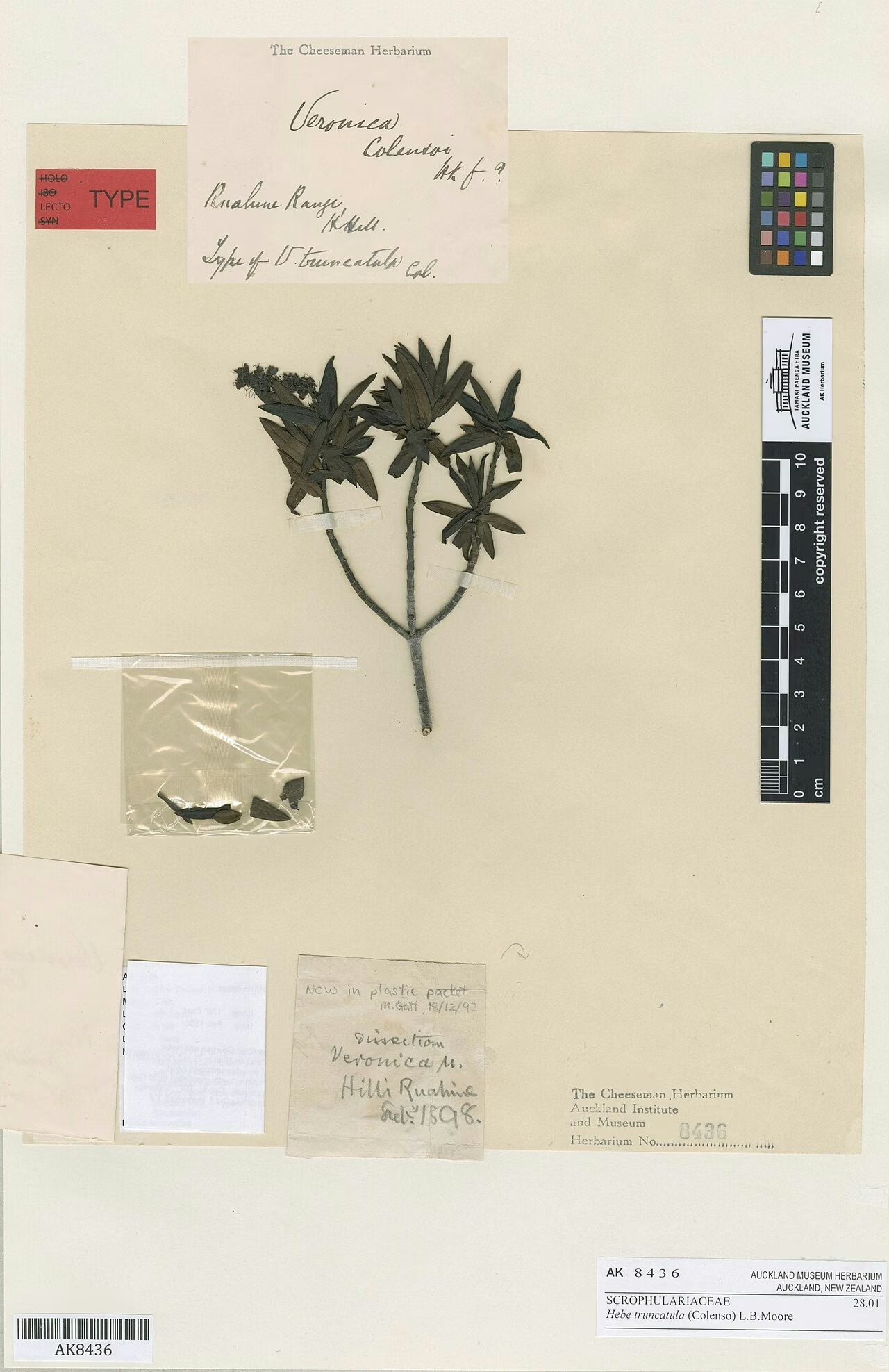
Veronica truncatula, still often listed as Veronica truncatula, is a bushy endemic hebe that grows to about 2 m tall in subalpine scrub of the North Island. It is known mainly from the Ruahine Range, from near Reporoa Bog south to near Maharahara, at roughly 1035-1500 m. Its narrow, leathery leaves end in a squared-off (truncate) tip, which gives the species its name, and their margins carry fine hairs. Crowded spikes of 28-68 white flowers appear mostly in January and February. Because it is confined to a small area, it is ranked At Risk - Naturally Uncommon. It was previously known as Hebe truncatula. Explore more native shrubs in our native plant guide.
Plant Description
Veronica truncatula is a bushy shrub up to 2 m tall with erect branches. The young branchlets are green and finely hairy. Leaves are arranged in opposite pairs, each pair at right angles to the next, and are leathery, slightly concave, lance-shaped to narrowly elliptic or oblong, mostly 18-42 mm long and 5-8.5 mm wide. They are glossy dark green above, with a minutely truncate or slightly pointed tip and finely hairy margins.
The flowers are white, sometimes tinged purplish, and are held in unbranched spikes 3-9 cm long that arise from the leaf axils near the shoot tips. Each spike carries a crowded 28-68 flowers. Flowering runs mainly from January to February, occasionally from November to March, and the small hairless capsules, about 3-4 mm long, ripen in April and May.
Similar species include V. subalpina, which has hairless leaf margins and fewer flowers per spike, V. evenosa, which has shorter leaves and 15-40 flowers per spike, V. rakaiensis, with broader leaves and hairy capsules, and V. calcicola, which has hairy ovaries and capsules. The Flora of New Zealand notes that DNA data have not shown a close link to any of these, although past hybridisation cannot be ruled out.
Quick Facts
| Scientific Name | Veronica truncatula |
|---|---|
| Height | Up to 2 m |
| Spread | About 1-1.5 m (bushy, erect branches) |
| Water Needs | Moderate; prefers soil that stays moist |
| Light | Full sun to light shade |
| Frost Tolerance | Hardy; a subalpine plant used to frost and snow |
| Salt Tolerance | Not recorded; not a coastal species |
| Growth Rate | Moderate |
| Lifespan | Perennial (long-lived shrub) |
Climate Best Suited to
A cool, wet mountain climate with regular frosts, cloud and snow in winter and mild summers. It is best suited to cooler gardens and struggles in hot, humid lowland conditions.
Regional Suitability
| City | Climate Suitability |
|---|---|
| Auckland | Low |
| Wellington | Medium |
| Christchurch | Medium |
| Dunedin | High |
Plant Habitat
This hebe is endemic to the North Island. NZPCN gives its range as the Ruahine Range, from near Reporoa Bog to near Maharahara, while the Flora of New Zealand records it from the Volcanic Plateau (Reporoa Bog) and the southern ranges, from the Ruahine Range south to Maharahara.
It grows in subalpine scrub at about 1035-1500 m, a habitat of dense, wind-trimmed shrubs above the treeline where cloud, rain and winter snow are frequent.
Growing Requirements
Soil Requirements
In the wild it grows in the thin, acidic, peaty or stony soils typical of subalpine scrub. In gardens it needs free-draining soil that does not dry out completely.
- Free-draining loam or gritty soil with added organic matter
- Avoid heavy clay that stays waterlogged
- Low fertility is fine; avoid heavy feeding
Light Requirements
As a shrub of open subalpine scrub, it is used to strong light and cool temperatures.
- Full sun in cool districts
- Light afternoon shade in warmer gardens
- Good air movement helps keep foliage healthy
Water Requirements
Its mountain habitat receives frequent rain and cloud, so the roots rarely dry out completely.
- Water regularly through the first summer
- Mulch to keep the root zone cool and moist
- Do not let containers dry out in hot weather
Planting and Establishing
Plant in autumn or early spring into a well-prepared hole in free-draining soil, setting the plant at the same depth it grew in the pot. Firm the soil, water thoroughly and mulch with bark or stone, keeping mulch clear of the stem.
Allow about 1-1.5 m between plants. In northern or lowland gardens choose the coolest, most airy site available, as subalpine hebes often decline in prolonged heat and humidity.
Ecological Role
Like other white-flowered hebes, the open flowers offer nectar and pollen to a range of insects, including native bees, flies and moths. Species-specific pollinator studies for Veronica truncatula were not found. The seeds are small and wind dispersed.
In the Ruahine subalpine scrub it forms part of the dense shrub belt above the forest, which shelters smaller herbs, slows runoff and stabilises soils on steep slopes.
Uses & Significance
Garden Uses
This species is rarely seen in cultivation, but it suits cool gardens where a medium white-flowered hebe with distinctive square-tipped leaves is wanted.
- Specialist native or alpine plant collections
- Shrub borders in cool, high-rainfall gardens
- Mountain-themed or Ruahine-sourced restoration plantings
Ecological Value
As a range-restricted endemic it adds to the distinctive plant diversity of the Ruahine Range, and its summer flowers feed insects at altitude.
- Summer nectar and pollen source in subalpine scrub
- Part of the shrub layer that protects mountain soils
- Genetic diversity unique to the central North Island
Landscaping Uses
Use Veronica truncatula as a mid-height shrub at the back of an alpine or rock garden, or in a mixed planting with tussocks and other subalpine shrubs. Its upright, bushy form and white midsummer spikes contrast well with golden tussock grasses.
Because flowering is in January and February, after many lowland hebes have finished, it can extend the flowering season in a native border.
Seasonal Care Calendar
Spring
New shoots grow from the branch tips and occasional early flower spikes may form from November.
- Check plants after winter for snow or wind damage
- Apply mulch as soils warm
Summer
Main flowering is in January and February, when crowded white spikes appear along the upper stems.
- Water during dry spells
- Watch for flowering to time any light trim afterwards
Autumn
Capsules ripen in April and May and split to release small wind-dispersed seeds.
- Collect ripe capsules for seed
- Take semi-hardwood cuttings
Winter
Growth stops in cold weather. In its mountain home the shrubs may be covered by snow.
- No feeding required
- Ensure drainage stays clear around roots
When to Prune and How Much
Little pruning is needed. Lightly trim the shoot tips after flowering to remove spent spikes and keep the shrub bushy.
Avoid cutting hard into old bare wood, as many hebes regrow poorly from it. Remove any dead or broken branches in late spring.
How to Grow Hebe
No published propagation protocol specific to Veronica truncatula was found in NZPCN or the Flora of New Zealand, so the methods below follow the general practice that works for most New Zealand hebes. Semi-hardwood cuttings are the most reliable way to keep plants true to type, while seed is useful for restoration but may give variable or hybrid offspring if other hebes grow nearby. Because the species is range restricted and At Risk, material should not be collected from the wild without permission, and any restoration planting in the Ruahine Range should use locally sourced stock.
From Cuttings
Semi-hardwood cuttings taken from late summer to autumn, after flowering, usually root readily in hebes. Choose healthy non-flowering side shoots from a cultivated plant.
- Take 8-10 cm cuttings from non-flowering shoots between February and April
- Remove the lower leaves and trim just below a node
- Insert into a free-draining mix of pumice or perlite and peat
- Keep in a cool, shaded, humid spot and check moisture regularly
- Pot on once a good root system has formed, usually within a few months
From Seed
The capsules ripen in April and May. The seeds are small and wind dispersed, so collect capsules just as they begin to turn brown and split.
- Dry the capsules in a paper bag to release the seed
- Sow on the surface of a fine seed-raising mix and barely cover
- Keep cool and moist; a winter outdoors can help germination
- Prick out seedlings when they have several pairs of leaves
Pests & Diseases
No pests or diseases specific to this species are recorded. In gardens, hebes can suffer from downy mildew and leaf spot in humid conditions, and from root rot in poorly drained soil.
Aphids, scale insects and thrips occasionally attack soft new growth. Good air movement and avoiding overhead watering in the evening reduce most problems.
Cultural Significance
No traditional Māori name or use is recorded specifically for Veronica truncatula in the sources consulted. The genus Veronica is named after Saint Veronica.
The species was described by William Colenso, the missionary printer and botanist who explored the Ruahine Range in the 1840s and later, and who named many of its plants.
Bonus Tip
If you are trying to name a white hebe in the Ruahine subalpine scrub, look closely at the leaf edge with a hand lens. Veronica truncatula has a fringe of tiny hairs along the margin and a blunt, squared-off leaf tip, while the similar V. subalpina has smooth, hairless margins.
Related Plants
Explore other native plants that share similar characteristics or habitats with Hebe (Veronica truncatula), offering further insights into New Zealand's diverse flora. These related species provide context and opportunities for complementary planting in your garden.
Veronica rupicola
Veronica rupicola
Veronica scopulorum
Veronica scopulorum
Mountain Koromiko
Veronica subalpina
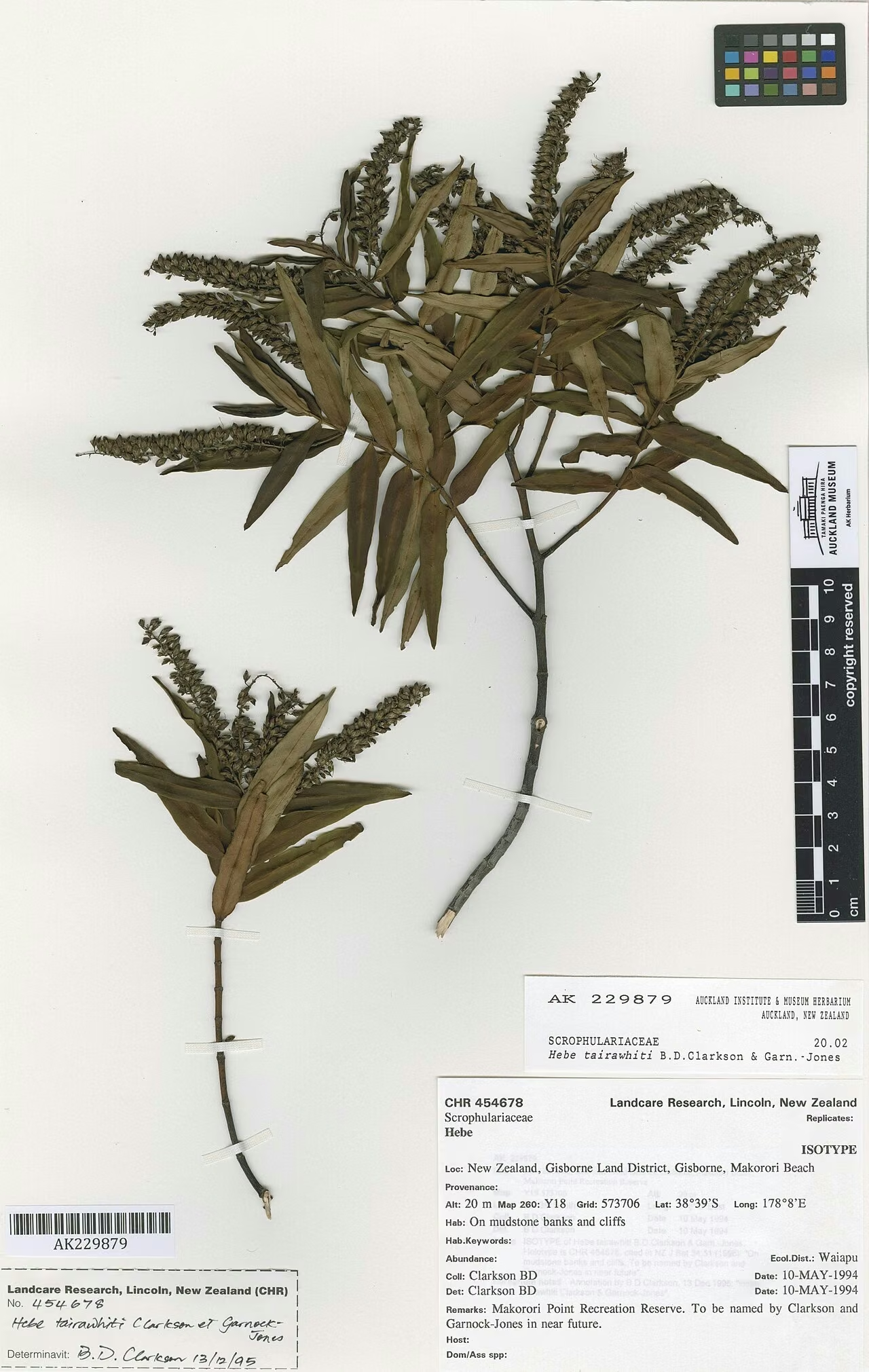
Wairoa Koromiko
Veronica tairawhiti
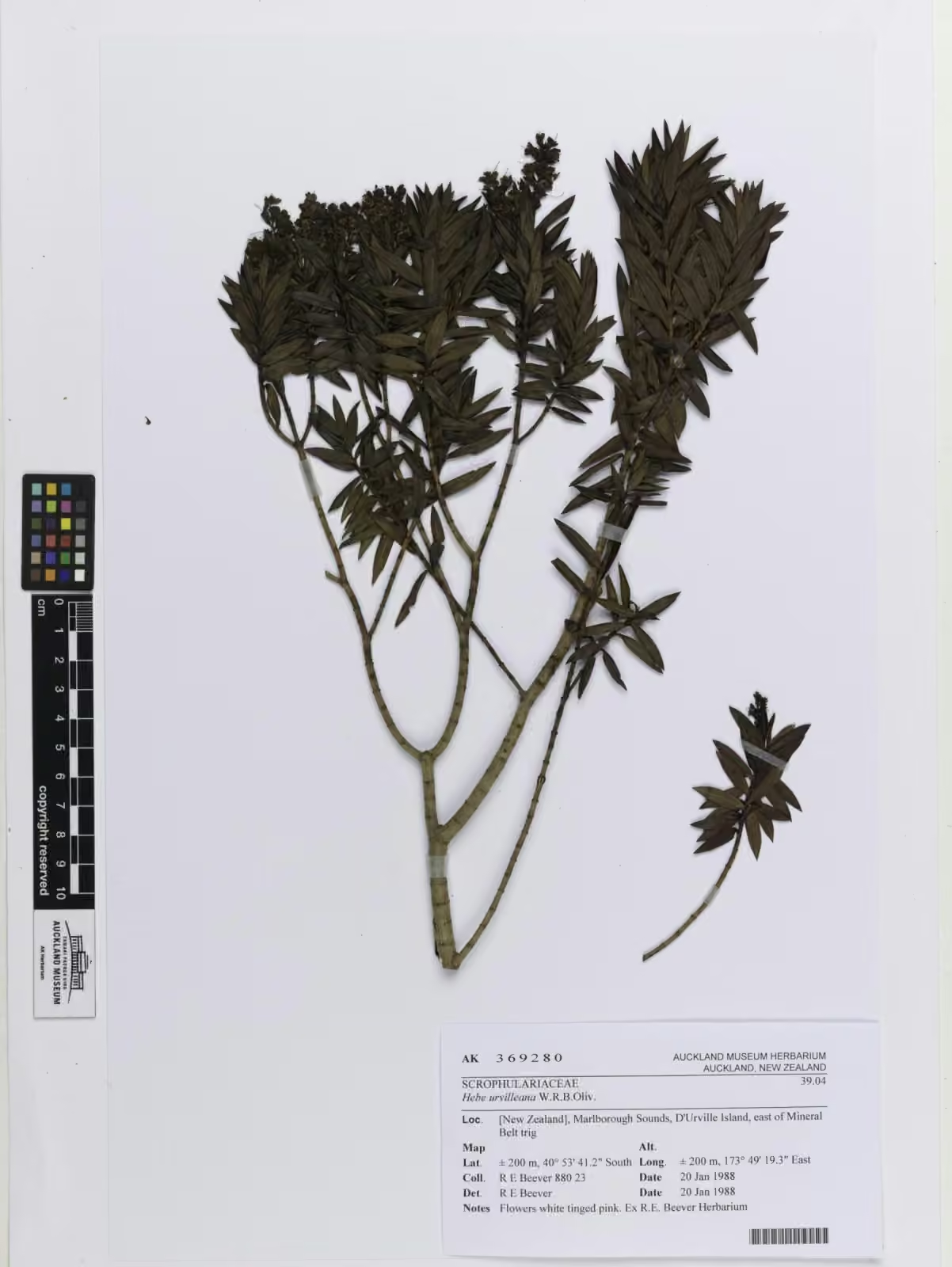
Veronica urvilleana
Veronica urvilleana

Climbing Everlasting
Helichrysum dimorphum
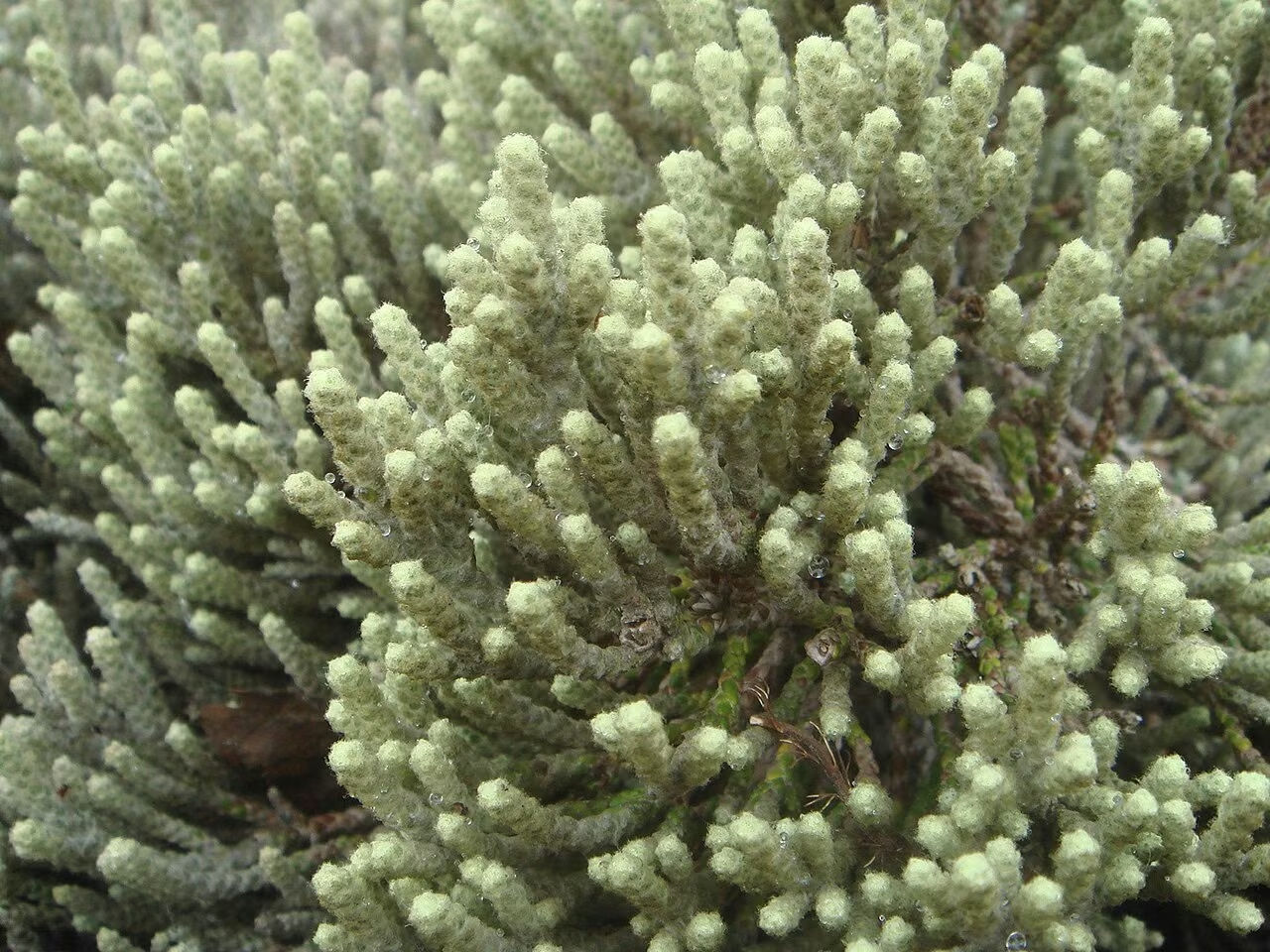
Helichrysum plumeum
Helichrysum plumeum
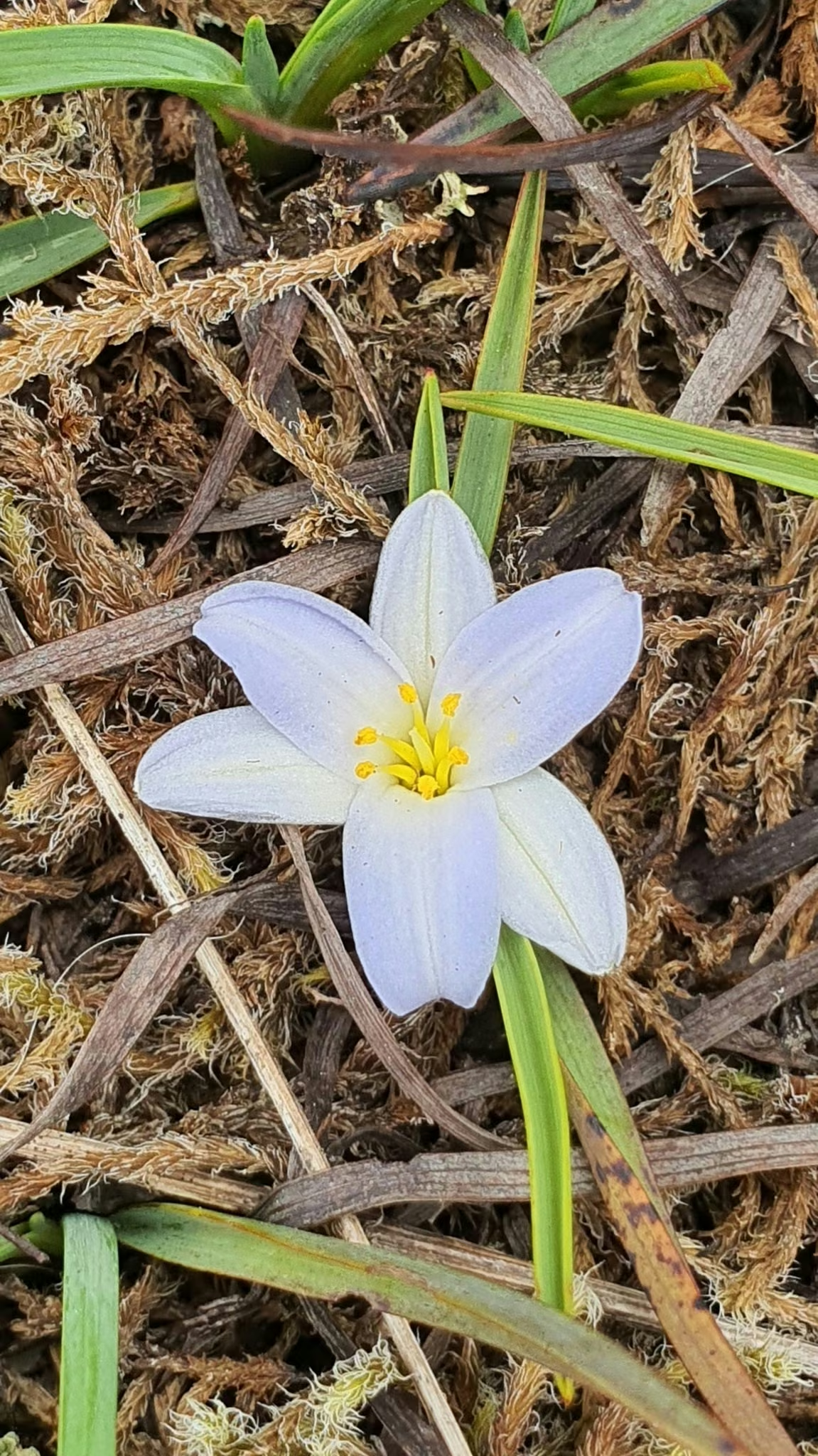
Grass Lily
Herpolirion novae zelandiae
Plant Conservation
Veronica truncatula is ranked At Risk - Naturally Uncommon in the 2023 assessment, with qualifiers including Range Restricted and Sparse. Its rarity reflects its naturally small range in the central North Island rather than a documented steep decline.
Much of its habitat lies within Ruahine Forest Park. Controlling browsing animals such as deer and goats, preventing fire, and avoiding the spread of weeds into subalpine scrub all help secure the populations.
Frequently Asked Questions
Why is it called truncatula?
The name comes from the Latin truncatus, meaning cut off or truncate, and refers to the squared-off tip of each leaf, which is one of the easiest field features to check.
Is Hebe truncatula the same as Veronica truncatula?
Yes. New Zealand hebes were transferred to the genus Veronica, so Veronica truncatula Colenso is now the accepted name and Hebe truncatula is a synonym still seen in nurseries and older books.
How do you tell Veronica truncatula from Veronica subalpina?
Veronica truncatula has hairy (ciliolate) leaf margins and longer flower spikes with 28-68 flowers, while V. subalpina has hairless leaf margins and shorter spikes with about 4-32 flowers.
Where can you see Veronica truncatula in the wild?
It grows in subalpine scrub in the Ruahine Range of the central North Island, at about 1035-1500 m above sea level, with a southern limit near Maharahara.
Sources and Further Reading
The botanical, growing, and conservation details for Hebe (Veronica truncatula) on this page draw on the New Zealand plant references below. Consult them for full technical records and the latest distribution data.