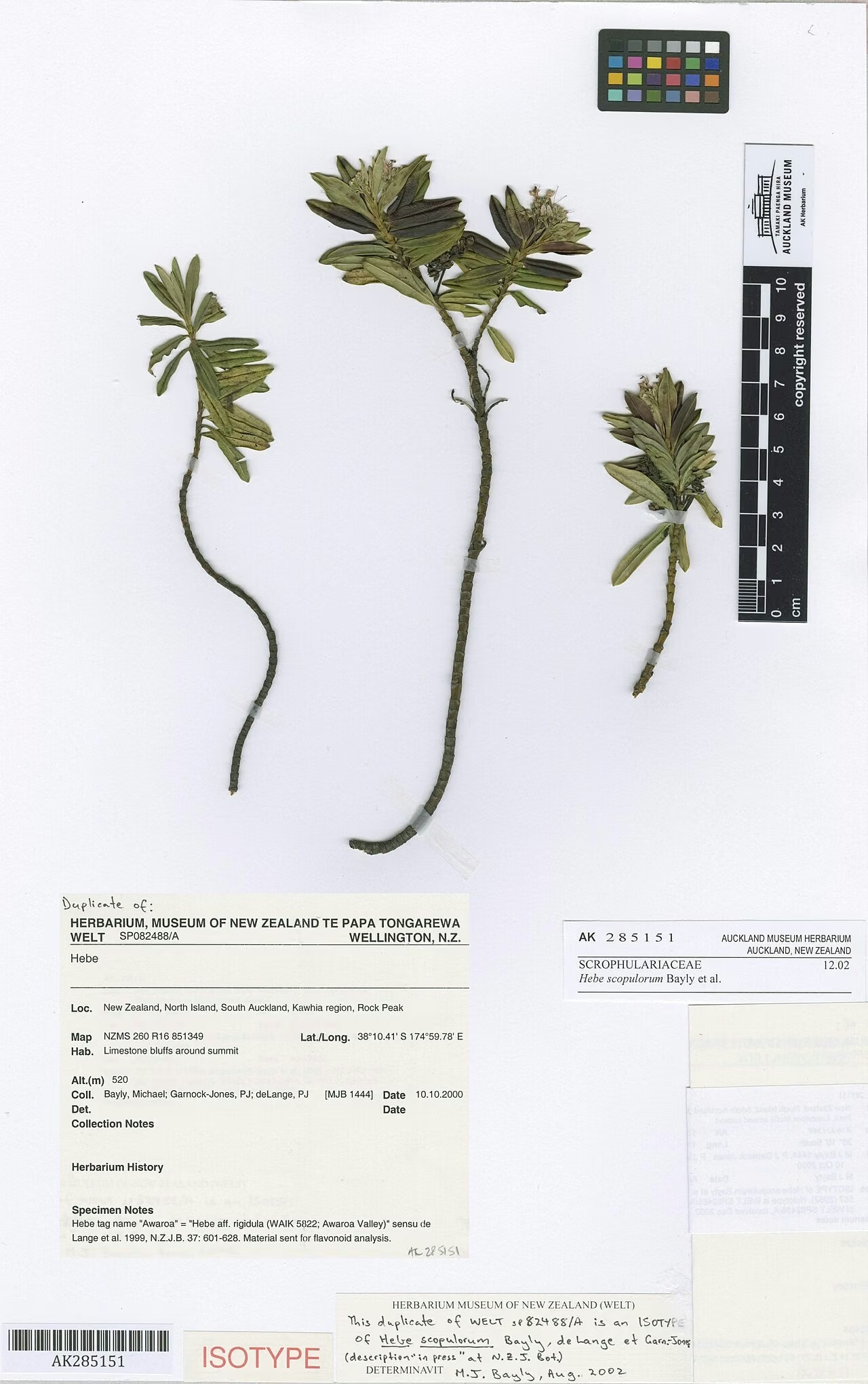
Hebe
Veronica scopulorum
Last updated:
Veronica scopulorum, described in 2002 as Veronica scopulorum, is a compact shrub 0.4-0.8 m tall found only on limestone bluffs in western Waikato, south of Kawhia Harbour. Its narrow leaves are glossy green above and dull bluish-grey beneath, and are folded along the midrib so they look m-shaped in cross-section. In spring, mainly October, it produces short spikes of flowers that are pale mauve when they open. It is confined to limestone outcrops at the head of the Awaroa River and the northern Taumatatotara Range, at about 335-525 m. It is ranked At Risk - Declining because of weed invasion, forest degradation and browsing by goats and possums. It was previously known as Hebe scopulorum. Explore more native shrubs in our native plant guide.
Plant Description
Veronica scopulorum is a compact shrub 0.4-0.8 m tall, with mature stems that are black or grey. The leaves are in opposite pairs, linear-elliptic to narrowly oblanceolate, 14-55 mm long (up to 80 mm on some plants) and 4-16 mm wide, on short stalks. They are glossy green to dark green above and dull and glaucous beneath, and deeply folded along the midrib, giving an m-shaped cross-section.
The flowers are crowded in lateral racemes 15-46 mm long, usually branched into three, each with 7-40 flowers. They are pale mauve when they open, with violet, mauve or white anthers. Flowering is from September to December, peaking in October, and the pointed, hairless capsules 3.2-4.5 mm long ripen from November to March.
It resembles Veronica colensoi and Veronica rigidula. It differs from V. colensoi in having glaucous leaves on the lower surface only and ciliate calyx margins, and from V. rigidula in its leaf buds, which are four-angled with concave rather than convex faces. Its limestone habitat near Kawhia is also distinctive.
Quick Facts
| Scientific Name | Veronica scopulorum |
|---|---|
| Height | 0.4-0.8 m |
| Spread | Compact; exact spread not recorded |
| Water Needs | Moderate; cool and damp but well drained |
| Light | Light to partial shade in cultivation |
| Frost Tolerance | Light frosts only; a lowland North Island species |
| Salt Tolerance | No reliable information available |
| Growth Rate | Moderate |
| Lifespan | Perennial shrub |
Climate Best Suited to
It grows in the mild, humid lowland climate of western Waikato, with warm summers, frequent rain and only light frosts. It suits cool, damp, sheltered sites rather than hot, dry ones.
Regional Suitability
| City | Climate Suitability |
|---|---|
| Auckland | Medium |
| Wellington | Medium |
| Christchurch | Low |
| Dunedin | Low |
Plant Habitat
Veronica scopulorum is endemic to the North Island and confined to a small area of western Waikato south of Kawhia Harbour. It is known from limestone outcrops at the headwaters of the Awaroa River and the northern Taumatatotara Range.
It grows on exposed limestone bluffs, cliffs and rock outcrops on ridges within forest, at about 335-525 m above sea level. This restriction to limestone makes it one of a number of New Zealand plants tied to calcareous rock.
Growing Requirements
Soil Requirements
In the wild it roots into limestone rock and the thin, lime-rich soils on bluffs. NZPCN recommends a free-draining, lime-enriched soil in cultivation.
- Free-draining soil with added limestone chip or garden lime
- Gritty mix for containers
- Avoid acidic, peaty or waterlogged soils
- Moderate fertility is adequate
Light Requirements
Although its bluffs are exposed, NZPCN advises a cool, shady situation in cultivation to reduce stress and fungal problems.
- Light shade or dappled shade
- Protection from hot afternoon sun
- Good air circulation to discourage disease
Water Requirements
It prefers cool, damp conditions but sharp drainage, as found on limestone rock in a high-rainfall area.
- Keep the root zone moist in summer
- Water at soil level to keep leaves dry
- Never allow standing water around the roots
Planting and Establishing
Veronica scopulorum is occasionally grown by native plant specialists. Plant it in a cool, damp, shady but airy spot with free-draining, lime-enriched soil, such as among limestone rocks or in a large container with added lime chip.
Set the plant at its pot depth, water in well and mulch with limestone chip or gravel. Because it is prone to fungal disease, avoid crowding it among dense plants where air cannot move freely.
Ecological Role
The pale mauve spring flowers provide nectar and pollen for native insects such as bees and flies at a time when many hebes are not yet flowering. No pollination study specific to this species was found.
As a shrub of limestone bluffs within forest, it is part of a specialised rock community that is vulnerable to weeds and browsing mammals, and its presence indicates intact limestone outcrop habitat.
Uses & Significance
Garden Uses
It is a plant for conservation-minded gardeners and specialist collections, particularly where limestone or lime-rich soil is available.
- Limestone rock gardens
- Conservation and botanic garden collections
- Shaded, well-drained native plantings in the upper North Island
Ecological Value
As a declining narrow endemic of western Waikato limestone, it has high conservation value.
- Part of the distinctive Kawhia limestone flora
- Early spring nectar for native insects
- Cultivated plants act as an insurance population
Landscaping Uses
Use Veronica scopulorum among limestone boulders in a shaded rockery, where its narrow, two-toned folded leaves and mauve spring flowers can be seen. It combines well with ferns and other shade-tolerant rock plants.
In a large container it can make a tidy specimen for a cool courtyard, provided the mix is gritty and lime-enriched.
Seasonal Care Calendar
Spring
Main flowering, peaking in October, with pale mauve spikes.
- Watch for fungal leaf problems in wet weather
- Apply limestone chip mulch
Summer
Capsules develop and ripen from November onwards.
- Keep moist in dry spells
- Ensure shade from hot sun
Autumn
Remaining capsules ripen through to March; a good time for cuttings.
- Collect seed from cultivated plants
- Take semi-hardwood cuttings
Winter
Tolerates light frosts but dislikes cold, wet, airless conditions.
- Check drainage
- Remove any diseased foliage
When to Prune and How Much
Light pruning after flowering keeps the plant compact and improves airflow through the foliage, which helps reduce fungal disease.
Remove any dead, diseased or crossing stems. Avoid heavy cuts into old black or grey wood.
How to Grow Hebe
NZPCN notes that Veronica scopulorum is susceptible to fungal diseases and needs a free-draining, lime-enriched, cool, damp, shady situation, and these needs apply during propagation too. Cuttings and seed are the standard methods for shrubby hebes. Because the species is At Risk - Declining and confined to a few limestone sites, wild collection should only be undertaken as part of authorised conservation work; use cultivated plants as the source wherever possible.
From Cuttings
Semi-hardwood cuttings taken after flowering are the most reliable way to propagate shrubby hebes. Keep humidity moderate and airflow good, since this species is prone to fungal rots.
Clean secateurs between plants and discard any cutting that shows blackening or mould, so disease does not spread through the batch.
- Take 6-8 cm semi-hardwood cuttings from late spring to autumn
- Remove the lower leaves and any flower buds
- Insert into a free-draining mix with added pumice and a little lime
- Keep in a cool, shaded spot and avoid enclosing the cuttings in a sealed bag
- Pot on once roots form, using a lime-enriched gritty mix
From Seed
Capsules ripen from November to March. Fresh seed sown promptly generally gives the best results with hebes.
- Collect brown capsules before they split
- Dry them in a paper bag and shake out the seed
- Sow on the surface of a fine, free-draining seed mix
- Keep moist in a cool, bright, shaded place
- Prick out seedlings when they have two leaf pairs
Pests & Diseases
NZPCN describes Veronica scopulorum as susceptible to fungal diseases in cultivation. Hebe downy mildew and leaf spots can cause leaf browning and drop in humid weather, and root rot occurs in poorly drained soils.
In the wild, browsing by goats and possums is a recorded threat. In gardens, scale insects and mealybugs may occasionally appear on stressed plants.
Cultural Significance
No traditional Māori name or use is recorded for Veronica scopulorum. Hebes in general are known as koromiko, and koromiko species were used medicinally, but no use is documented for this species, which was only recognised in 2002.
It was formally described as Veronica scopulorum by Michael Bayly, Peter de Lange and Phil Garnock-Jones in 2002. The epithet scopulorum means of the crags, referring to its cliff habitat.
Bonus Tip
If you grow this species, add crushed limestone or garden lime to the planting mix and keep it in a cool, shaded spot with moving air. These conditions, recommended by NZPCN, match its limestone bluff home and reduce the fungal problems that commonly kill it in cultivation.
Related Plants
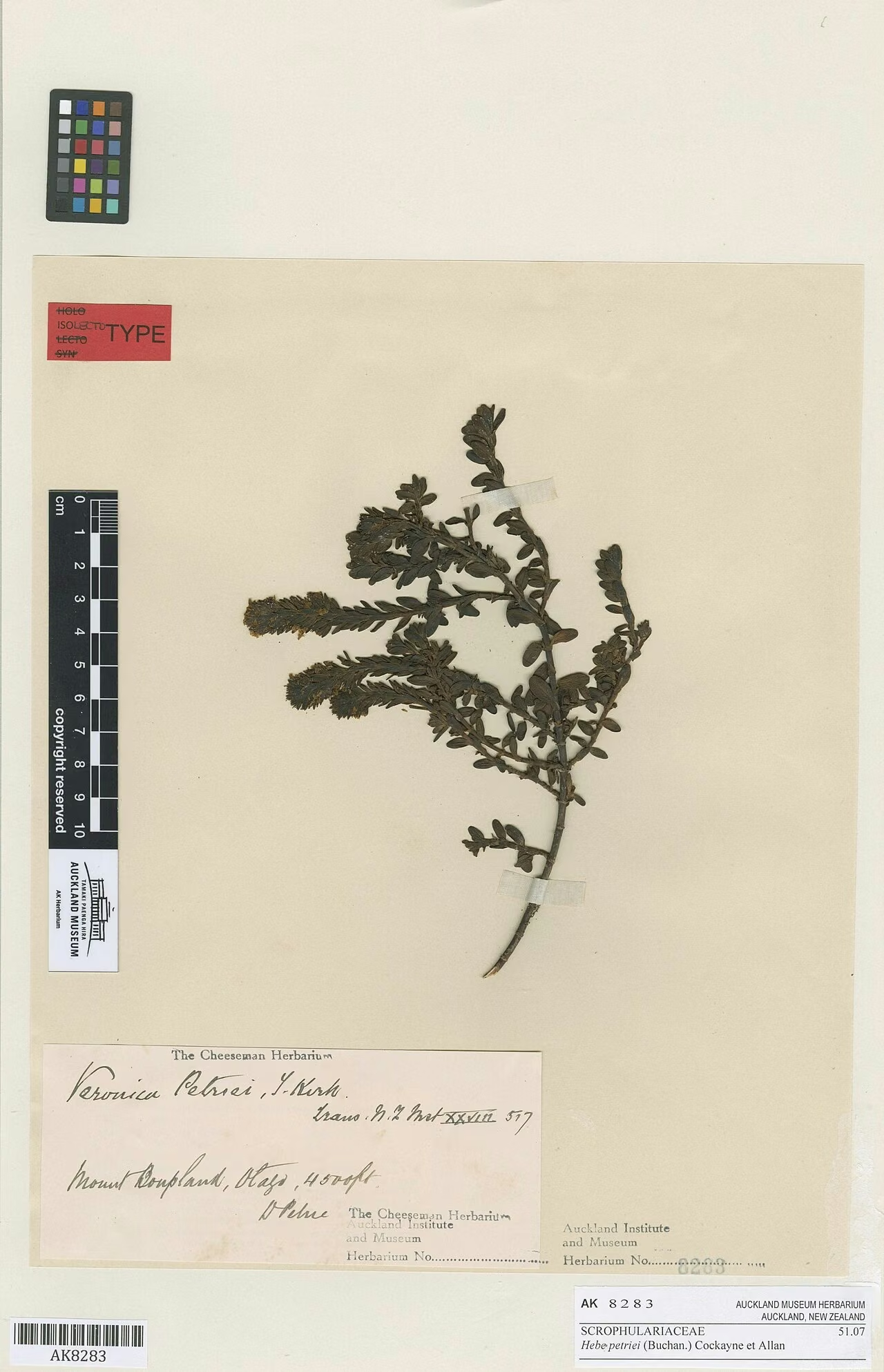
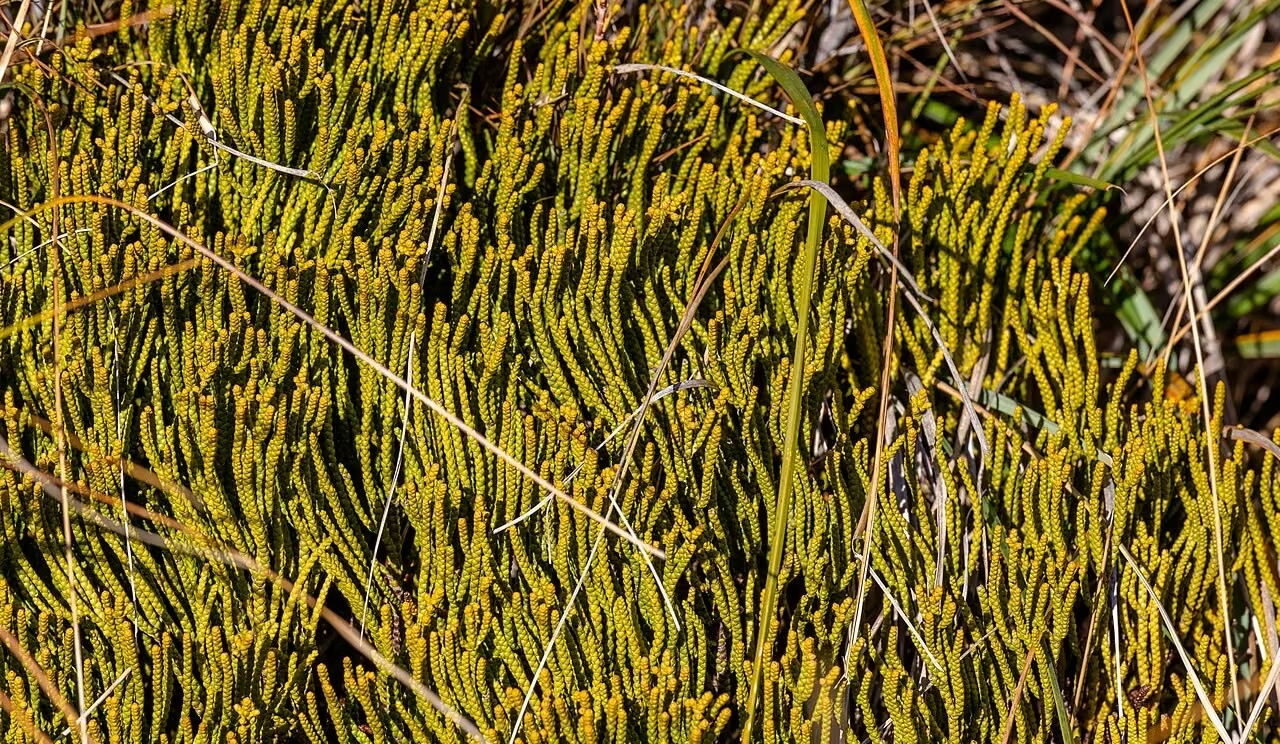
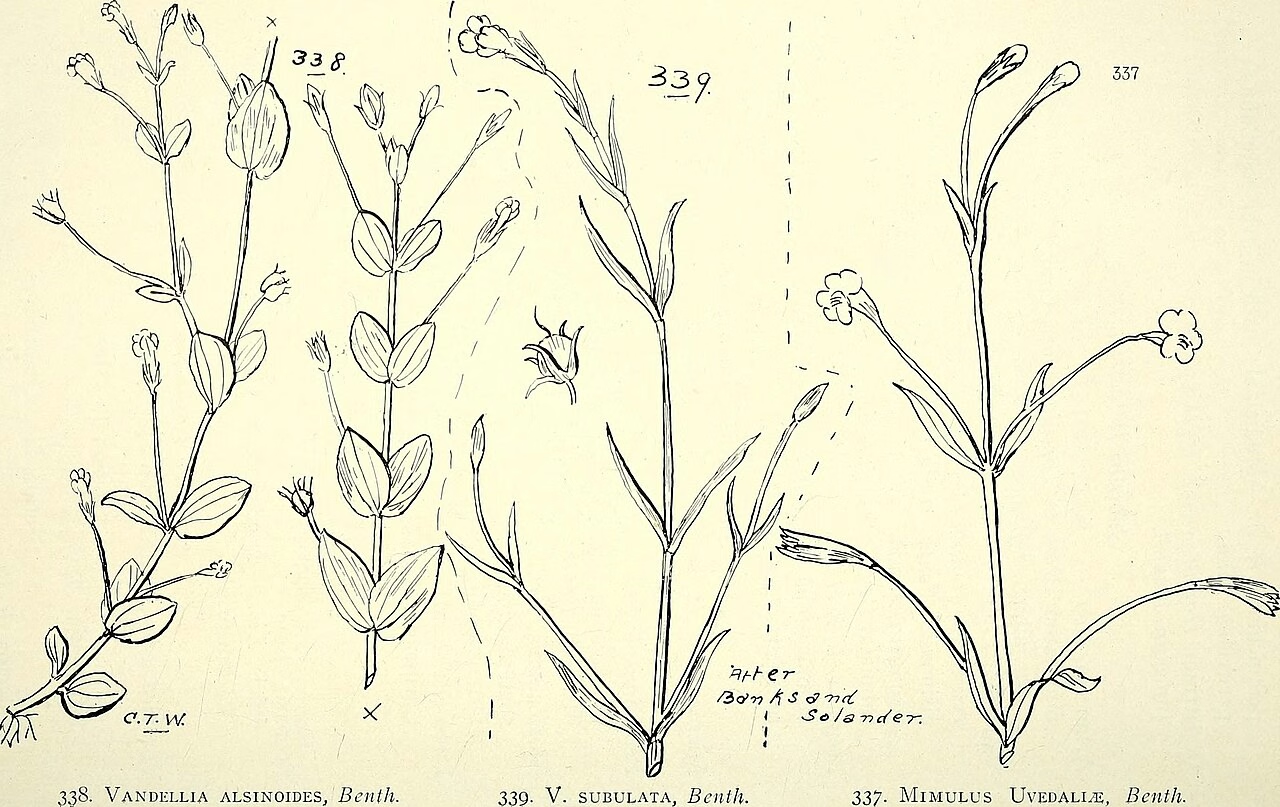
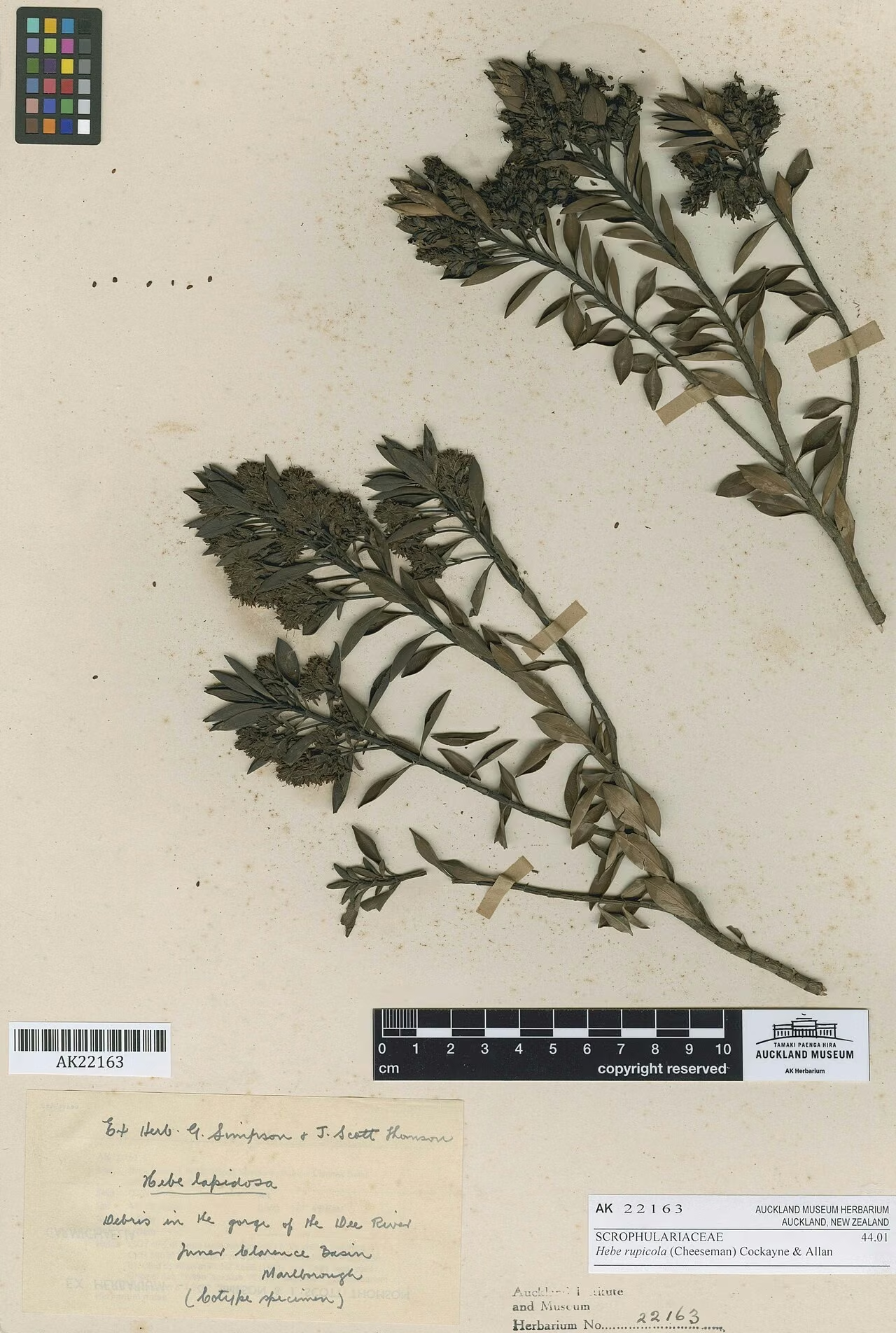
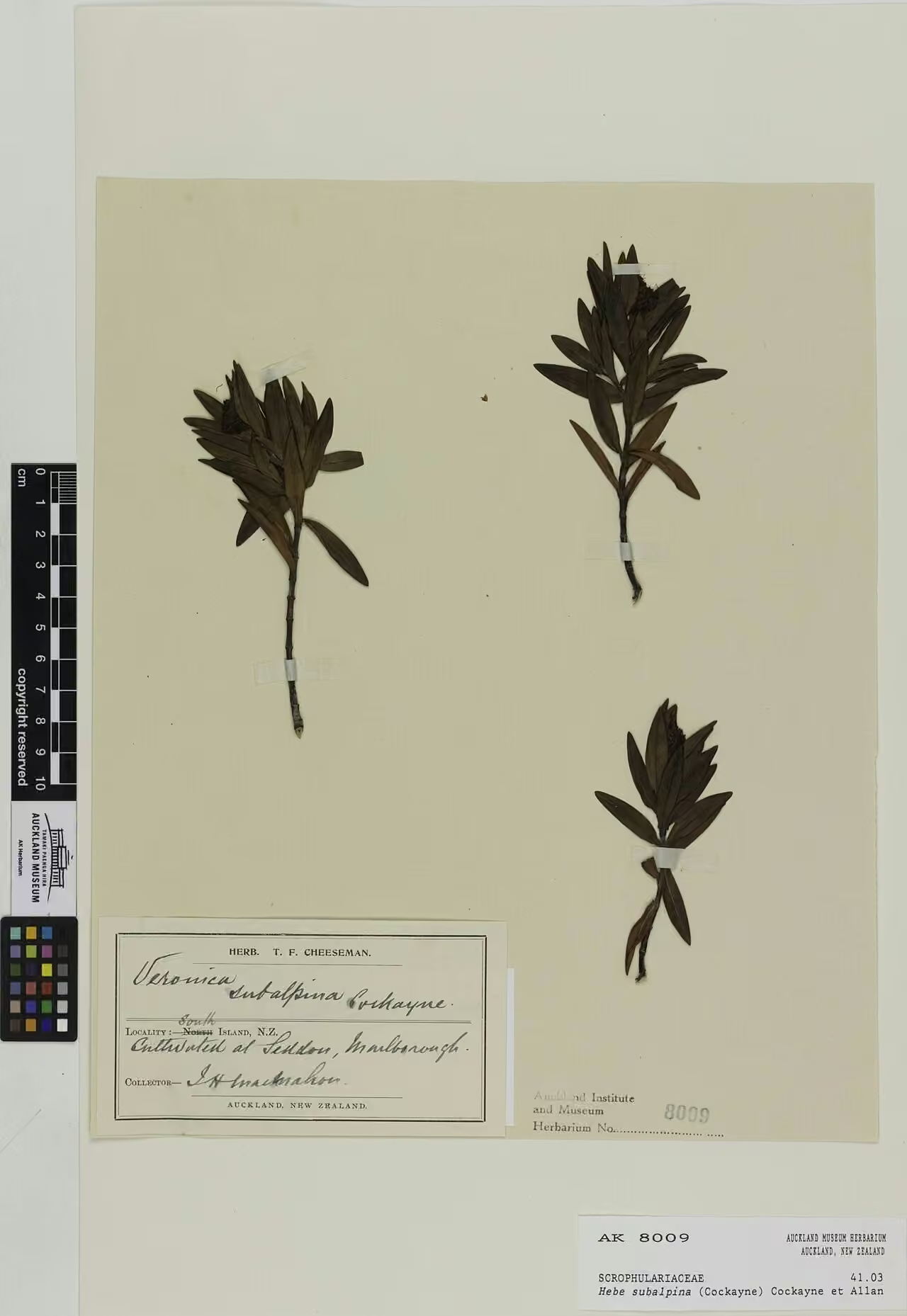
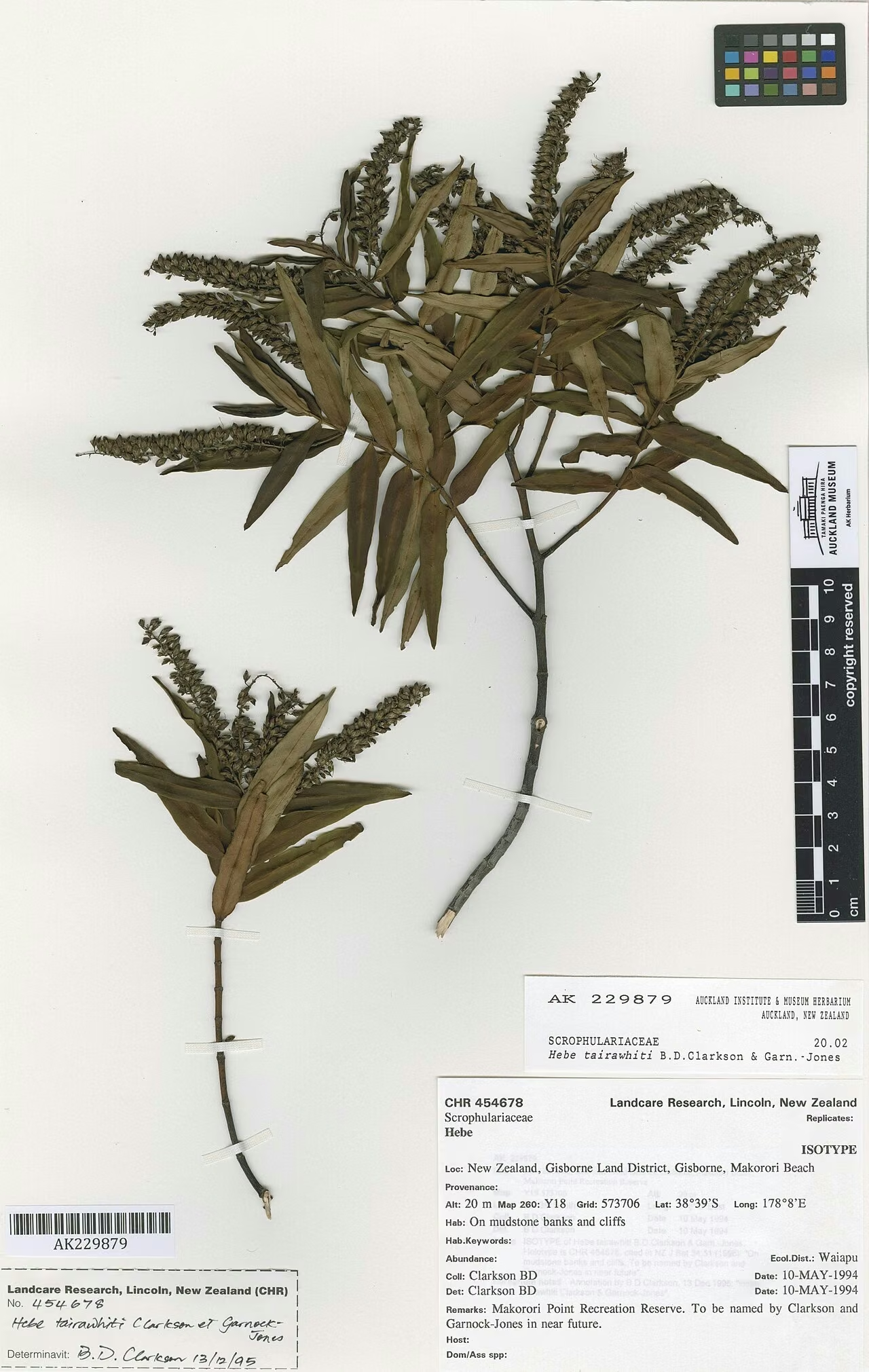
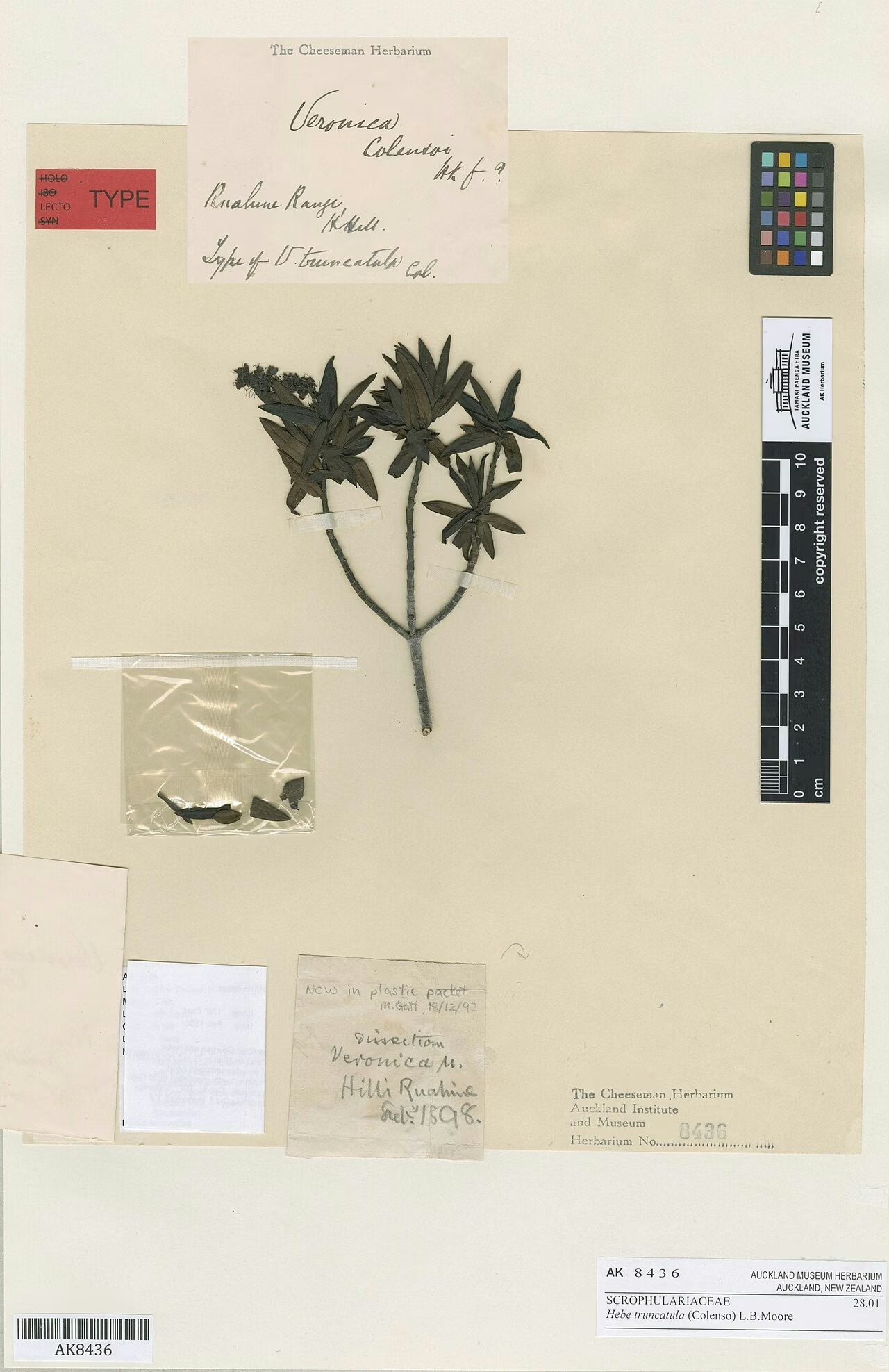
Explore other native plants that share similar characteristics or habitats with Hebe (Veronica scopulorum), offering further insights into New Zealand's diverse flora. These related species provide context and opportunities for complementary planting in your garden.
Plant Conservation
Veronica scopulorum is ranked At Risk - Declining in the 2023 New Zealand Threat Classification assessment, with the qualifiers DPS (data poor, size), DPT (data poor, trend) and RR (range restricted). It occurs in only a small area of western Waikato.
NZPCN lists habitat loss through weed invasion, forest degradation, and goat and possum browse as its threats. Controlling goats and possums, removing weeds from limestone outcrops, protecting surrounding forest, and keeping plants in cultivation as an insurance population all help.
Frequently Asked Questions
Where does Veronica scopulorum grow?
It grows only on exposed limestone bluffs and outcrops at the headwaters of the Awaroa River and in the northern Taumatatotara Range, south of Kawhia Harbour in western Waikato.
Why is Veronica scopulorum declining?
NZPCN lists habitat loss through weed invasion, degradation of the surrounding forest, and browsing by goats and possums as the main threats to this narrow-range limestone endemic.
Is Veronica scopulorum hard to grow?
It is susceptible to fungal diseases in cultivation. NZPCN advises a free-draining, lime-enriched soil in a cool, damp, shady position.
How do you identify Veronica scopulorum?
Look for narrow leaves folded along the midrib into an m-shape, glossy above and glaucous beneath only, ciliate calyx margins and pale mauve flowers, growing on limestone near Kawhia.
Sources and Further Reading
The botanical, growing, and conservation details for Hebe (Veronica scopulorum) on this page draw on the New Zealand plant references below. Consult them for full technical records and the latest distribution data.