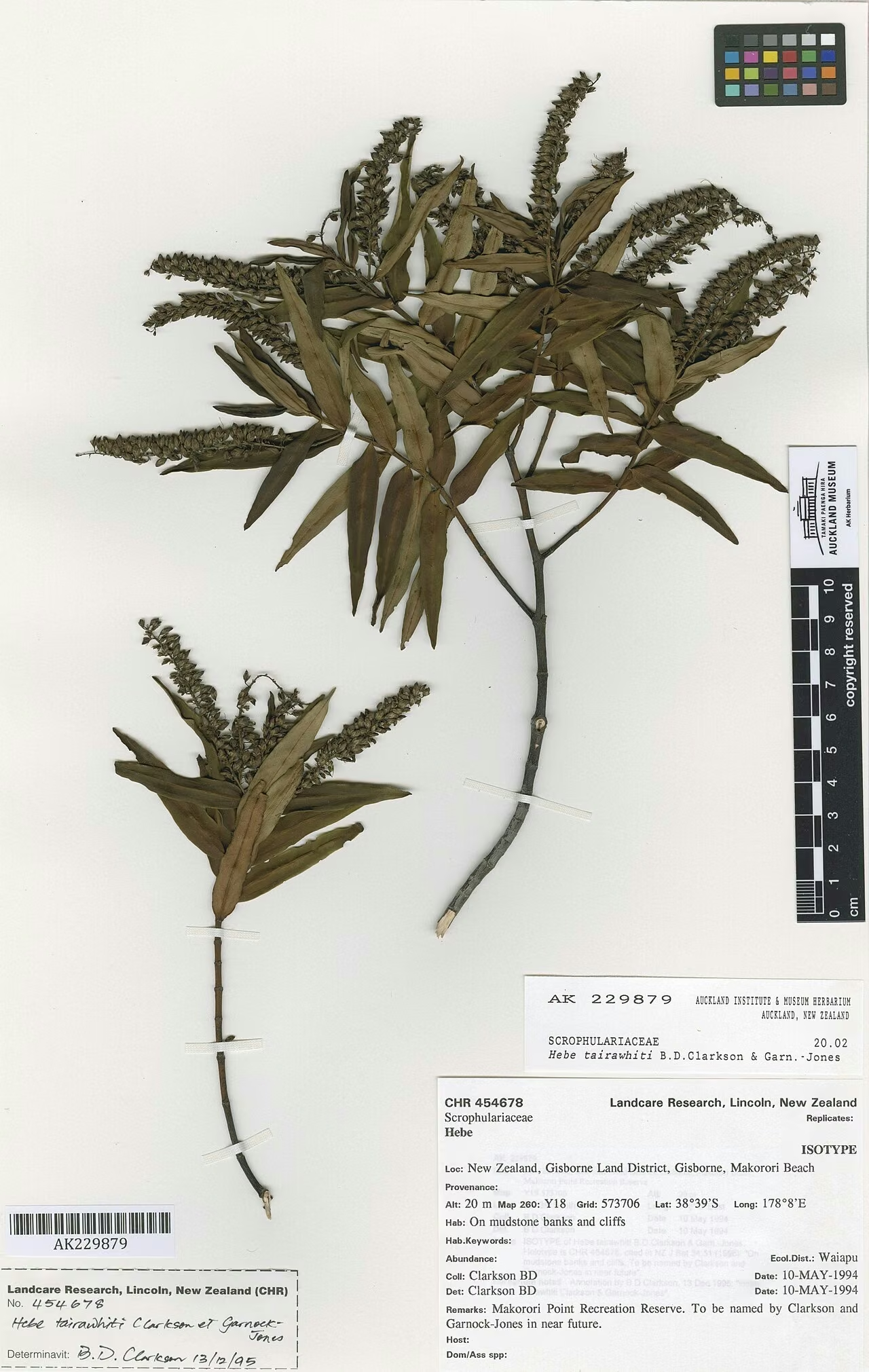
Wairoa Koromiko
Veronica tairawhiti
Last updated:
Wairoa koromiko (Veronica tairawhiti, formerly Hebe tairawhiti) is a heavily branched, bushy shrub or small tree up to about 3 m tall and 2 m wide, endemic to the East Cape region of the North Island. It has long, narrow, dull green leaves 45-150 mm long that taper evenly from a broad base, and from January to April it carries long racemes of 120-180 white flowers. It grows mainly in low coastal shrubland on calcareous mudstone and siltstone, and inland on river banks, road cuttings and outcrops, from the upper Motu River east to Gisborne and south to Wairoa and Māhia. It is ranked At Risk - Naturally Uncommon and is easily grown. Explore more native shrubs in our native plant guide.
Plant Description
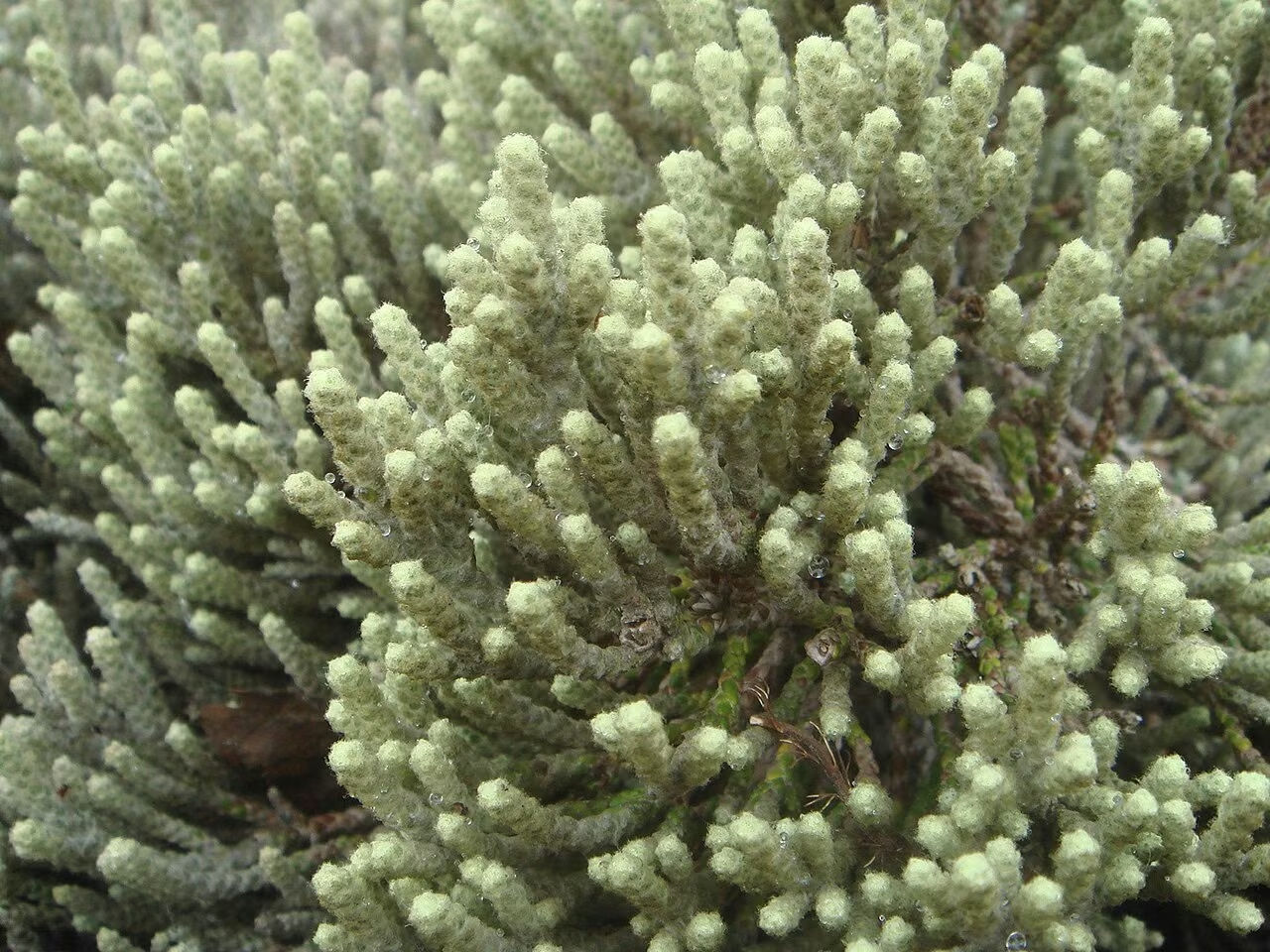
Veronica tairawhiti is a heavily branched, bushy shrub or small tree reaching about 3 m tall and 2 m across. Its leaves are linear-lanceolate, 45-150 mm long and 5-11 mm wide, tapering evenly from a broad base to a narrow, sharp tip. They are somewhat leathery, dull green above and paler below, with smooth edges.
The flowers are carried in long, dense lateral racemes 68-150 mm long, each with 120-180 crowded flowers. The corolla tube is white, 3-3.5 mm long, and the lobes are white or pale purplish when the flower first opens, with purplish anthers. Flower stalks are 1.3-2 mm long and usually shorter than the bracts. Flowering is from January to April, and the hairless capsules ripen from February to May, persisting on the plant to December.
It is most similar to Veronica stricta var. egmontiana of Taranaki, but differs in its easterly distribution and narrower leaves. Veronica stricta has broader leaves and hairy calyx lobes, while Veronica angustissima is a smaller shrub with thinner leaves, longer flower stalks and fewer flowers per raceme.
Quick Facts
| Scientific Name | Veronica tairawhiti |
|---|---|
| Height | Up to 3 m |
| Spread | Up to 2 m |
| Water Needs | Low to moderate once established |
| Light | Full sun to light shade |
| Frost Tolerance | Light frosts; a lowland and coastal species |
| Salt Tolerance | Grows on coastal cliffs; degree of salt tolerance not documented |
| Growth Rate | Fast |
| Lifespan | Perennial shrub |
Climate Best Suited to
Wairoa koromiko suits the warm, sunny and often dry climate of the Gisborne and northern Hawke's Bay coast, with mild winters and only light frosts. It grows well in most North Island and northern South Island gardens.
Regional Suitability
| City | Climate Suitability |
|---|---|
| Auckland | High |
| Wellington | High |
| Christchurch | Medium |
| Dunedin | Low |
Plant Habitat
Veronica tairawhiti is endemic to the East Cape region of the North Island. It occurs from the upper Motu River and the Maraehara River east and south through the Gisborne district to Wairoa in northern Hawke's Bay and Māhia Peninsula, at elevations of about 5-549 m.
It is mainly a coastal shrub of low shrubland, often over calcareous mudstone or siltstone, and also grows on coastal cliffs and inland on river banks, road cuttings and rock outcrops. NZPCN notes it tolerates some browsing and occasionally spreads into pasture.
Growing Requirements
Soil Requirements
In the wild it grows on soft, often lime-rich mudstone and siltstone. In gardens it adapts to most well-drained soils.
- Free-draining loam, clay loam or sandy soil
- Tolerates lime-rich soils
- Avoid permanently waterlogged ground
- Moderate fertility; little feeding needed
Light Requirements
It grows in open shrubland and on exposed cliffs and banks, and flowers best in sun.
- Full sun for the best flowering
- Tolerates light shade
- Suitable for exposed open sites
Water Requirements
Adapted to the relatively dry East Coast climate, established plants tolerate dry spells.
- Water regularly while establishing
- Mulch to retain moisture
- Water only in extended drought once established
Planting and Establishing
Plant in autumn or spring in a sunny, well-drained position. Its fast growth and tolerance of open, disturbed ground make it useful for revegetating banks, road cuttings and coastal shrubland, particularly within its natural East Cape range where eco-sourced plants should be used.
Dig a hole twice the width of the root ball, plant at pot depth, firm in and water well. Allow about 1.5-2 m between plants for full-sized shrubs, or closer for a screen.
Ecological Role
Its long white flower spikes produce nectar and pollen in late summer and autumn, when fewer native plants are flowering, attracting native bees, flies, butterflies and moths. No pollination study specific to this species was found. The seeds are small and released from capsules that persist for months.
As a fast-growing colonist of banks, cliffs and low shrubland on soft sedimentary rock, it helps stabilise erosion-prone ground and provides shelter for birds, lizards and invertebrates.
Uses & Significance
Garden Uses
A fast, tough, free-flowering hebe for sunny gardens, especially in the warmer North Island.
- Informal hedges and screens
- Erosion control on banks and cuttings
- Coastal and restoration plantings in the East Cape region
- Late summer and autumn nectar for pollinators
Ecological Value
It is a regional endemic of Tairāwhiti and northern Hawke's Bay and a useful native colonist of disturbed ground.
- Late-season nectar for insects
- Stabilises soft mudstone banks
- Shelter for wildlife in coastal shrubland
Landscaping Uses
Use Wairoa koromiko as a fast background shrub or informal screen, where its long, narrow leaves give a fine, willowy texture. Its late flowering extends the season in a native border.
Plant it with flaxes, coastal grasses and other East Coast natives on banks and slopes, or use it singly as a quick-growing feature shrub in a sunny corner.
Seasonal Care Calendar
Spring
Active growth begins; a good time to plant or trim.
- Plant new shrubs
- Shape plants before summer growth
Summer
Flowering starts in January with dense white racemes.
- Water young plants in dry spells
- Watch for pollinators
Autumn
Flowering continues to April, and capsules ripen from February to May.
- Collect fresh seed
- Take semi-hardwood cuttings
Winter
Capsules persist on the plant; growth slows.
- Protect young plants from heavy frost in cold districts
- Check drainage
When to Prune and How Much
Trim after flowering to remove spent racemes and keep the shrub bushy. It responds well to regular light pruning, and can be clipped as an informal hedge.
Older, leggy plants can be cut back by up to a third in spring. Avoid removing all the foliage at once.
How to Grow Wairoa Koromiko
NZPCN notes that Wairoa koromiko is easily grown from semi-hardwood cuttings and fresh seed, making it one of the more straightforward hebes to propagate. Cuttings give plants identical to the parent and are quick to reach planting size. Seed is useful for producing genetically diverse plants for restoration, but in gardens hebes can hybridise, so collect seed only from plants growing away from other hebe species. For planting within the East Cape region, use eco-sourced material from local populations.
From Cuttings
Semi-hardwood cuttings root readily, usually within a few weeks. Take them from healthy shoots that are not flowering.
- Take 8-12 cm semi-hardwood cuttings from late summer to autumn
- Remove the lower leaves and any flower buds
- Insert into a free-draining propagating mix of bark and perlite or pumice
- Keep in bright shade with moderate humidity
- Pot on once roots are established
From Seed
Capsules ripen from February to May. NZPCN notes fresh seed germinates readily, so sow it soon after collection.
Seedlings grow quickly in warm conditions and can often be planted out within their first year once they are hardened off outdoors in a sunny spot.
- Collect brown capsules before they split
- Dry them in a paper bag and shake out the seed
- Sow on the surface of a fine seed-raising mix
- Cover lightly and keep moist in a warm, bright place
- Prick out seedlings into pots at two or three leaf pairs
Pests & Diseases
No pests specific to Veronica tairawhiti are recorded. Like other hebes, it may suffer from downy mildew and leaf spot in humid weather, and from root rot in poorly drained soils.
Scale insects, mealybugs and aphids can occasionally build up on hebes. In the wild it tolerates some browsing, but heavy browsing by goats or stock can still damage plants.
Cultural Significance
NZ Flora records kōkōmuka and koromiko as vernacular names for this species; both are Māori names used for hebes generally. Koromiko leaves were traditionally used as a remedy for diarrhoea and other ailments, but no use documented specifically for Veronica tairawhiti was found.
The species was described by botanists Bruce Clarkson and Phil Garnock-Jones, who named it after Tairāwhiti, the Māori name for the Gisborne and East Coast region where it grows.
Bonus Tip
Wairoa koromiko flowers from January to April, later than many hebes, so plant it alongside spring and early-summer flowering natives to keep nectar available for bees and butterflies through autumn. Its fast growth also makes it a good nurse shrub on bare East Coast banks.
Related Plants
Explore other native plants that share similar characteristics or habitats with Wairoa Koromiko (Veronica tairawhiti), offering further insights into New Zealand's diverse flora. These related species provide context and opportunities for complementary planting in your garden.
Veronica kellowiae
Veronica kellowiae
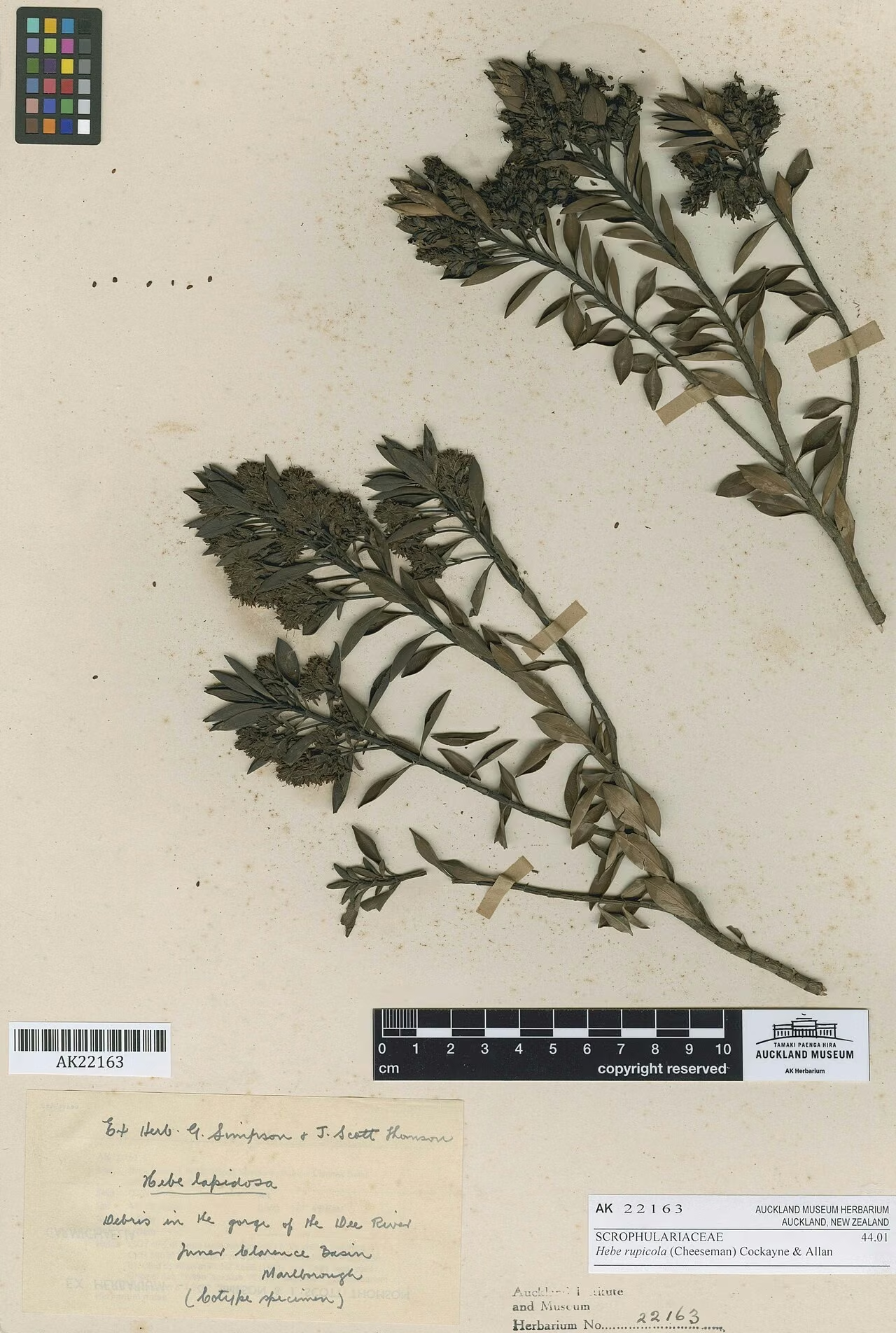
Veronica rupicola
Veronica rupicola
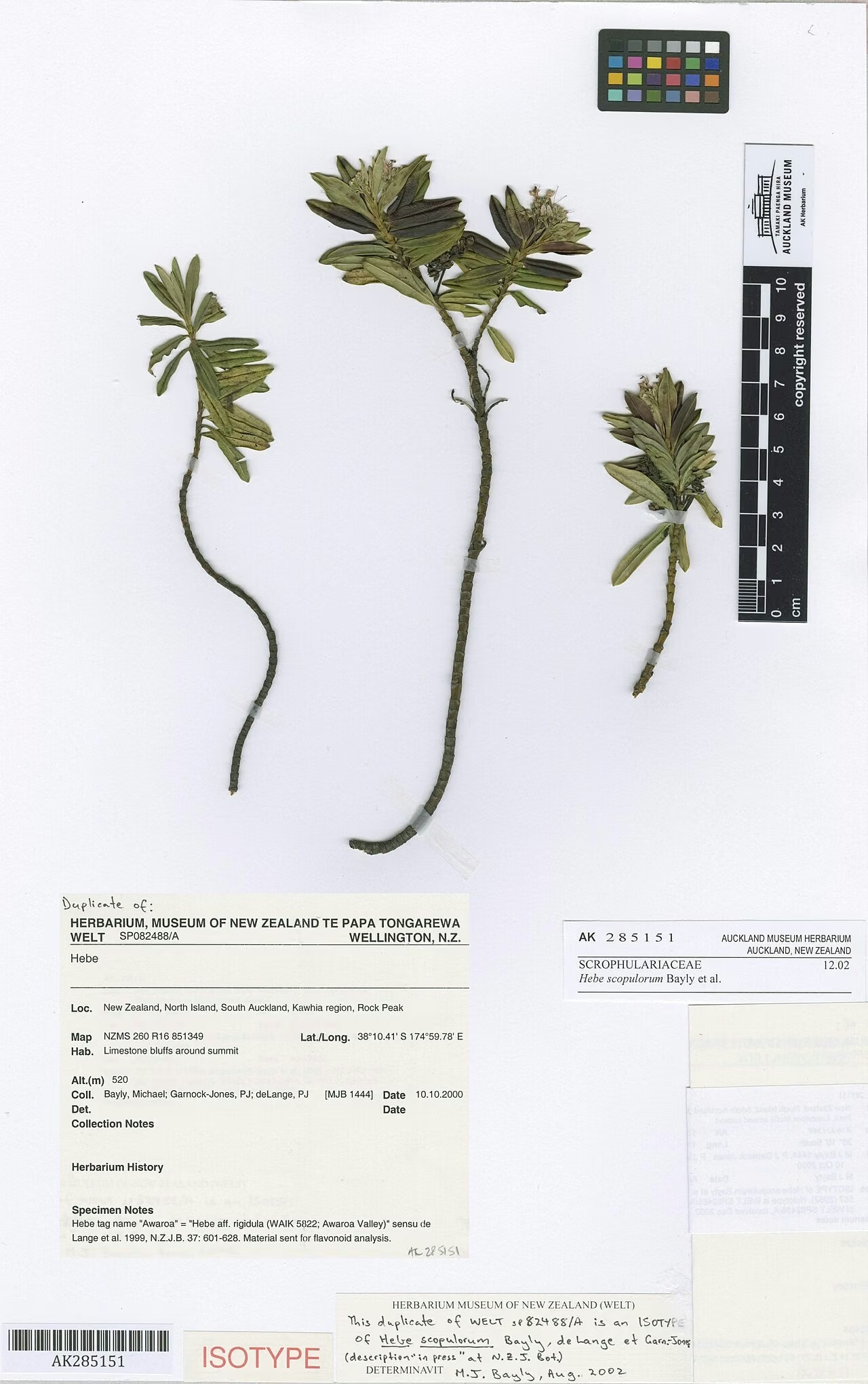
Veronica scopulorum
Veronica scopulorum
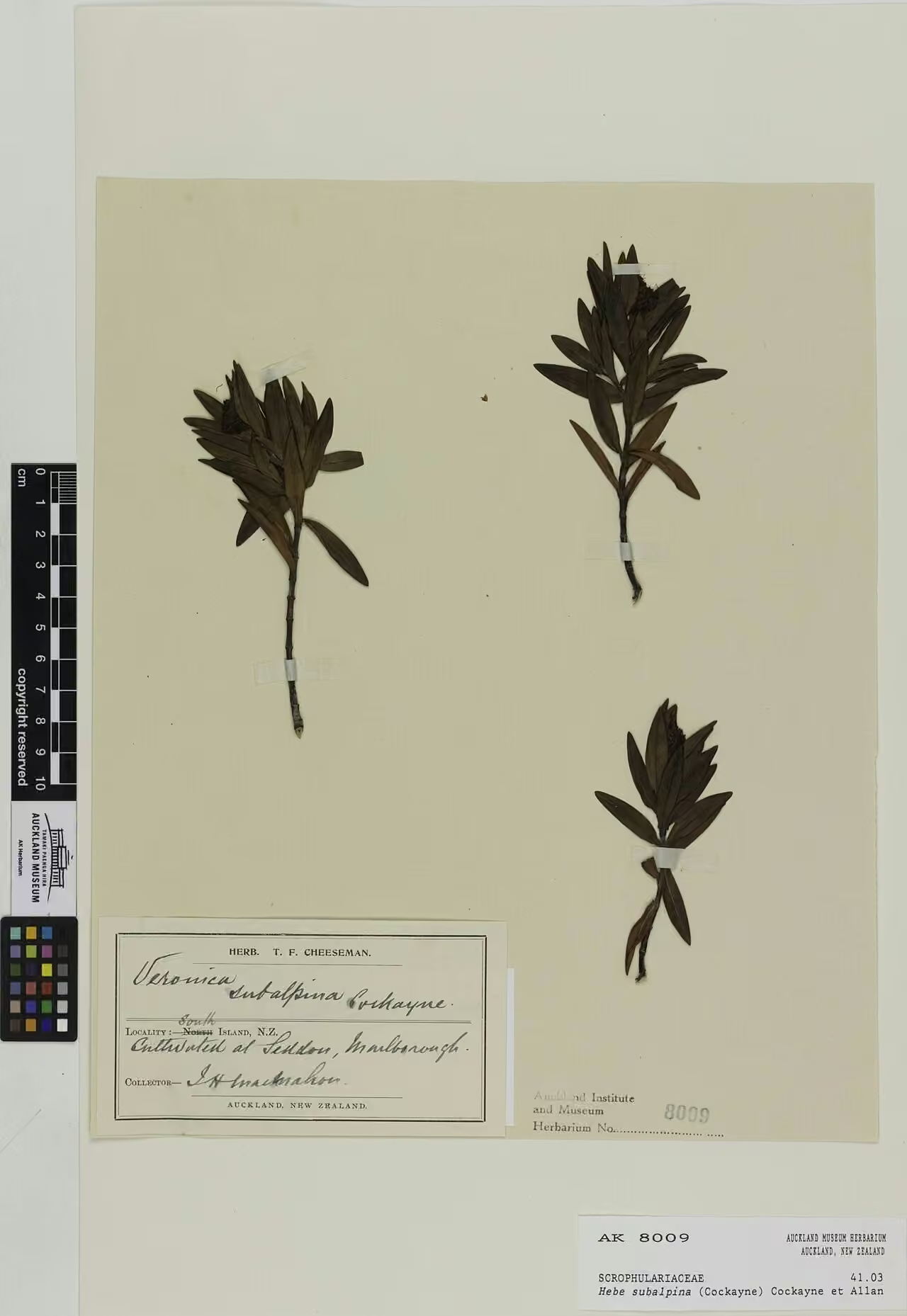
Mountain Koromiko
Veronica subalpina
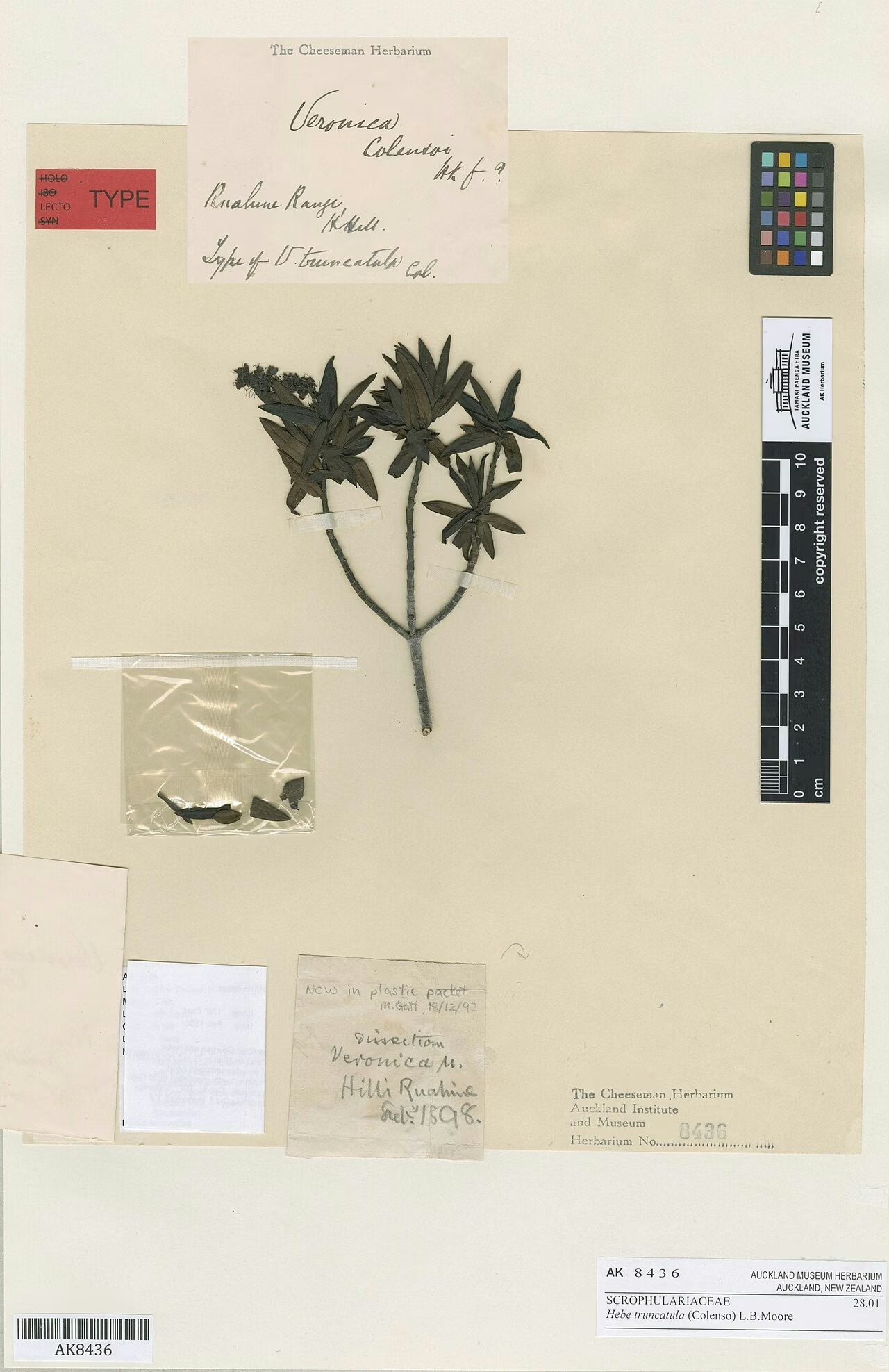
Veronica truncatula
Veronica truncatula
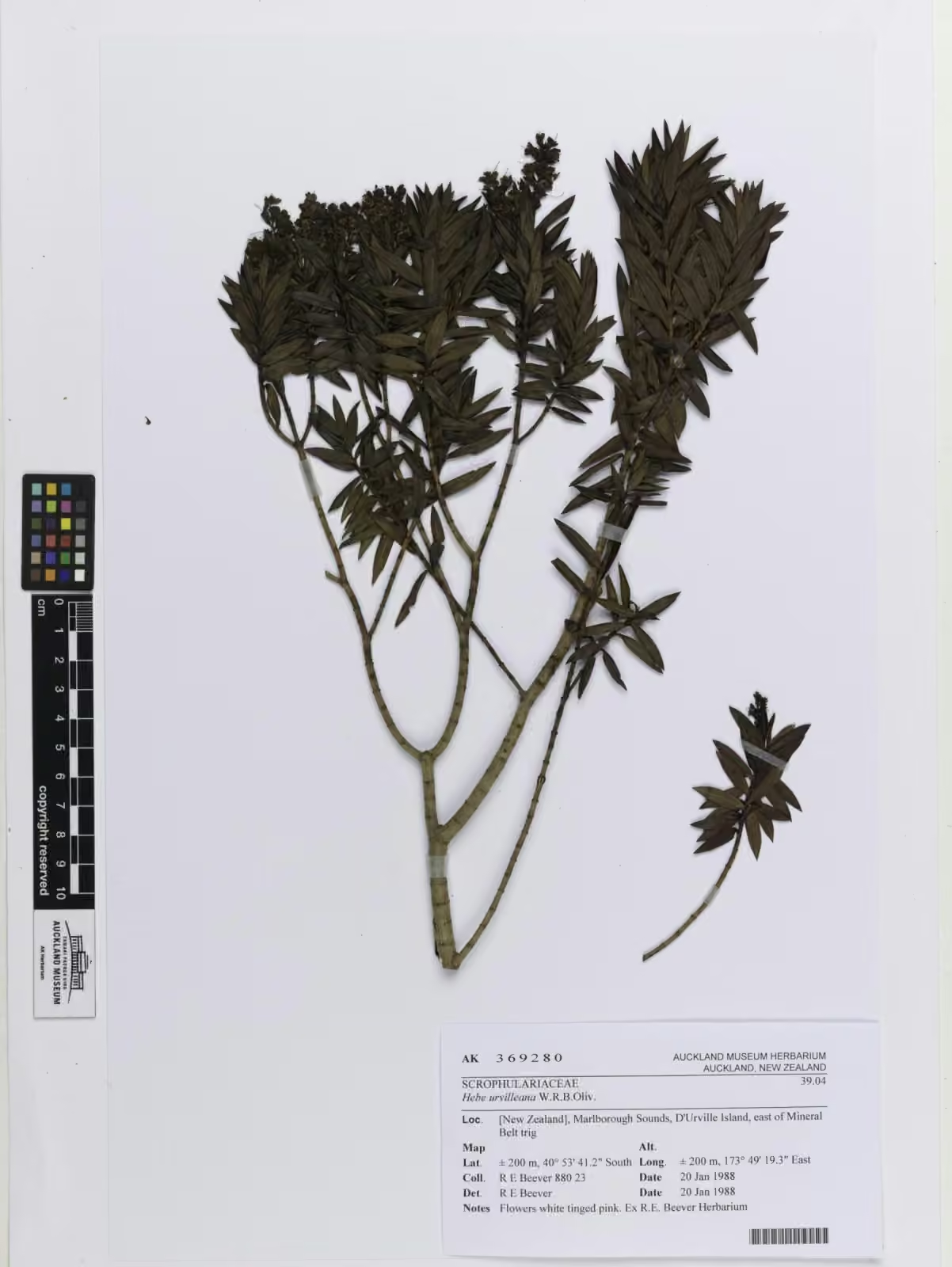
Veronica urvilleana
Veronica urvilleana
Climbing Everlasting
Helichrysum dimorphum
Helichrysum plumeum
Helichrysum plumeum
Plant Conservation
Veronica tairawhiti is ranked At Risk - Naturally Uncommon in the 2023 New Zealand Threat Classification assessment, with the qualifiers Sp (sparse), DPT (data poor, trend) and RR (range restricted), reflecting its natural confinement to the East Cape region.
It tolerates some browsing and colonises disturbed ground, but clearance of coastal shrubland, weed invasion and heavy grazing can reduce populations. Planting eco-sourced stock in East Cape restoration projects helps maintain it in its home region.
Frequently Asked Questions
Where does Wairoa koromiko grow?
It is endemic to the East Cape region of the North Island, from the upper Motu River east and south through Gisborne to Wairoa and Māhia Peninsula, from near sea level to about 550 m.
What does tairawhiti mean?
Tairāwhiti is the Māori name for the Gisborne and East Coast region, where this hebe is found, so the species name records its home district.
How is Veronica tairawhiti different from koromiko, Veronica stricta?
It is most similar to Veronica stricta var. egmontiana but has narrower leaves and an easterly distribution. Veronica stricta generally has broader leaves and hairy calyx lobes.
Is Veronica tairawhiti easy to grow?
Yes. NZPCN notes it is easily grown from semi-hardwood cuttings and fresh seed, and it tolerates some browsing and can even invade pasture in the wild.
Sources and Further Reading
The botanical, growing, and conservation details for Wairoa Koromiko (Veronica tairawhiti) on this page draw on the New Zealand plant references below. Consult them for full technical records and the latest distribution data.