Mountain Koromiko
Veronica subalpina
Last updated:
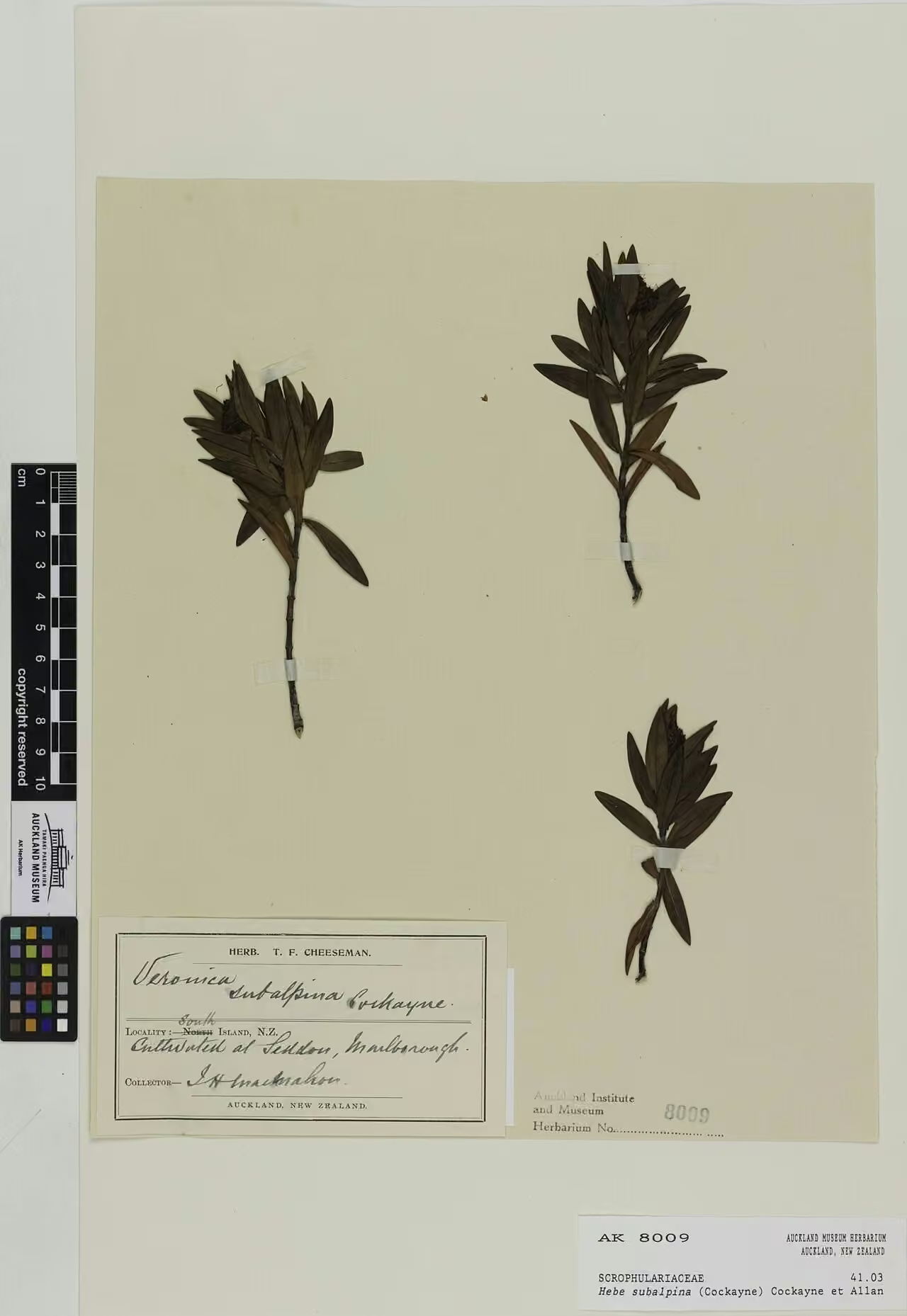
Mountain koromiko (Veronica subalpina, formerly Hebe subalpina) is a bushy, rounded shrub up to about 1.4 m tall, endemic to the wetter mountains of the South Island. It has pairs of narrow, glossy leaves up to about 5 cm long and, from December to February, short spikes of white flowers, sometimes faintly tinged pink or mauve. It is widespread on and west of the Main Divide from the Wairau Valley to the Cameron Mountains, growing in subalpine shrubland, tussock grassland and at beech forest margins between about 180 and 1525 m. It is ranked Not Threatened and is a hardy, easy hebe for cool gardens. Explore more native shrubs in our native plant guide.
Plant Description
Veronica subalpina is a bushy shrub up to about 1.4 m tall with a dense, rounded habit. Its leaves are in opposite pairs, spreading, leathery and glossy, lanceolate to elliptic or oblong-elliptic, 7-51 mm long and 3-11 mm wide, widest towards the base and U-shaped in cross-section, with smooth hairless margins.
The flowers are crowded in lateral racemes 11-60 mm long with 4-32 flowers each. The corolla is 5-10 mm across, white and sometimes faintly tinged pink or mauve. Plants are either female or bisexual. Flowering is from November to February, mainly December to February, and the hairless capsules 3-5 mm long ripen from December to May and persist on the plant.
It closely resembles Veronica urvilleana, with which its measurements overlap, and it can be confused with V. rakaiensis, V. treadwellii, V. calcicola and V. truncatula, which differ in leaf and flower details. Its narrow glossy leaves, wet western mountain habitat and lateral spikes are useful clues.
Quick Facts
| Scientific Name | Veronica subalpina |
|---|---|
| Height | Up to 1.4 m |
| Spread | Dense and rounded; exact spread not recorded |
| Water Needs | Moderate to high; suits wet climates |
| Light | Full sun to partial shade |
| Frost Tolerance | High; subalpine species |
| Salt Tolerance | No reliable information available |
| Growth Rate | Moderate |
| Lifespan | Long-lived perennial shrub |
Climate Best Suited to
Mountain koromiko suits cool, wet, frosty climates like those of the western South Island mountains. It grows well in southern and inland gardens but can struggle in hot, humid northern summers.
Regional Suitability
| City | Climate Suitability |
|---|---|
| Auckland | Low |
| Wellington | Medium |
| Christchurch | High |
| Dunedin | High |
Plant Habitat
Veronica subalpina is endemic to the South Island and widespread on wetter mountains, chiefly on and west of the Main Divide, from the Wairau Valley and Nelson Lakes National Park south to the Cameron Mountains in Fiordland. It is recorded from Westland, Marlborough, Canterbury, Otago and Southland.
It grows in subalpine shrubland and penalpine grassland, and sometimes in beech forest near the treeline or along streams, at recorded elevations of about 182-1525 m. It is often a common component of the shrub belt above the bush line in high-rainfall areas.
Growing Requirements
Soil Requirements
It grows in moist, often peaty or stony mountain soils. In gardens it adapts to most soils that drain reasonably well.
- Moist, well-drained loam
- Tolerates clay, sand and stony soils if not waterlogged
- Copes with acidic to slightly alkaline conditions
- Benefits from organic mulch to keep roots cool
Light Requirements
In the wild it grows in open shrubland and at forest margins, so it handles both sun and light shade.
- Full sun in cool districts for the densest habit
- Partial shade in warmer areas
- Becomes leggy in deep shade
Water Requirements
It comes from high-rainfall mountains and does best with reliable moisture, though established plants have some drought tolerance.
- Water regularly through the first summer
- Mulch to conserve soil moisture
- Water in extended dry spells, especially in eastern districts
Planting and Establishing
Plant in autumn or spring in a sunny or lightly shaded spot with moist, free-draining soil. It makes a good low hedge or informal shrub in cool gardens, and is well suited to restoration planting in subalpine and montane areas within its natural range.
Dig a hole twice the width of the root ball, mix in some compost, plant at pot depth and water thoroughly. Space plants about 70-100 cm apart for a continuous low hedge or mass planting.
Ecological Role
The white flowers provide abundant nectar and pollen for native bees, flies, butterflies and moths in summer. With female and bisexual flowers on separate plants, pollen must be carried by insects to set seed on female plants. Seeds are wind dispersed.
Mountain koromiko is a common shrub of the subalpine belt, helping to form dense shrubland that shelters birds, lizards and invertebrates and recolonises open ground after disturbance near the treeline.
Uses & Significance
Garden Uses
A reliable, hardy hebe with neat glossy foliage and summer flowers, suitable for cool climate gardens.
- Low hedges and borders
- Mass planting on banks
- Native and alpine-themed gardens
- Subalpine restoration within its natural range
Ecological Value
It is a characteristic and abundant shrub of wetter South Island subalpine vegetation.
- Summer nectar and pollen for native insects
- Dense cover for birds, lizards and invertebrates
- Helps stabilise subalpine soils
Landscaping Uses
Use mountain koromiko as a rounded mid-height shrub in native borders, pairing it with tussocks such as Chionochloa and with grey-leaved shrubs for contrast. Its glossy green foliage stays tidy year-round.
Planted in groups, it forms a low informal hedge or a dense ground-covering mass on banks, and its summer flowers fill the gap after spring-flowering natives finish.
Seasonal Care Calendar
Spring
New glossy growth emerges; a good time to plant.
- Plant new shrubs
- Apply compost and mulch
Summer
Main flowering from December to February with white spikes.
- Water in dry spells
- Watch for butterflies and bees
Autumn
Capsules ripen from December to May.
- Trim after flowering
- Take semi-hardwood cuttings
Winter
Fully frost-hardy and tolerates snow.
- Little care needed
- Check for wind damage
When to Prune and How Much
Trim lightly after flowering to remove spent flower spikes and keep the shrub compact. A regular light clip suits it when grown as a low hedge.
If plants become open with age, they can be cut back by up to a third in spring, cutting to just above healthy leaf pairs. Avoid cutting into very old bare wood.
How to Grow Mountain Koromiko
Mountain koromiko is easily propagated from semi-hardwood cuttings, the standard method for shrubby hebes, and can also be grown from seed. No species-specific protocol was found, so these steps follow general hebe practice. Because plants are either female or bisexual, take cuttings from bisexual plants if you want pollen-producing specimens, or from both types for seed production. For restoration within its natural range, eco-source seed or cuttings from local populations.
From Cuttings
Semi-hardwood cuttings taken from late summer to autumn root reliably in a free-draining mix. Choose healthy, non-flowering shoots.
Rooted cuttings grow quickly and can usually be planted out the following spring once they have filled a small pot with roots and been hardened off outdoors.
- Take 8-10 cm cuttings of firm current growth
- Remove the lower leaves and any flower buds
- Insert into a mix of bark and pumice or perlite
- Keep in bright shade and moderate humidity
- Pot on when well rooted, usually after six to eight weeks
From Seed
Capsules ripen from December to May and persist on the plant. Seed from mixed garden plantings may produce hybrids, so collect from isolated plants or wild populations where permitted.
- Collect brown capsules in late summer or autumn
- Dry in a paper bag and shake out the seed
- Sow on the surface of a fine seed-raising mix
- Keep moist in a sheltered, bright spot
- Prick out seedlings when they have two or three leaf pairs
Pests & Diseases
Mountain koromiko is generally healthy in cool gardens. Like other hebes it can be affected by downy mildew and leaf spot in humid weather, and by root rot in waterlogged soils.
Scale insects, mealybugs and aphids occasionally infest stressed plants. An open, airy site with good drainage prevents most problems.
Cultural Significance
Koromiko is a Māori name applied to many hebes, and NZ Flora lists mountain koromiko as a vernacular name for this species. Medicinal uses of koromiko are documented for lowland hebes, but no use specific to Veronica subalpina is recorded.
It was first described by Leonard Cockayne as Veronica subalpina, reflecting his close study of New Zealand subalpine vegetation. It has also been known under the names Hebe monticola and Hebe fruticeti, now treated as synonyms.
Bonus Tip
For a neat, low native hedge in a cold southern garden, mountain koromiko is a good choice: it tolerates hard frost and snow, takes light clipping after flowering, and its narrow glossy leaves stay tidy all year. Source plants from a local nursery that propagates from cuttings so you get uniform plants.
Related Plants
Explore other native plants that share similar characteristics or habitats with Mountain Koromiko (Veronica subalpina), offering further insights into New Zealand's diverse flora. These related species provide context and opportunities for complementary planting in your garden.
Veronica propinqua
Veronica propinqua
Veronica kellowiae
Veronica kellowiae
Veronica rupicola
Veronica rupicola
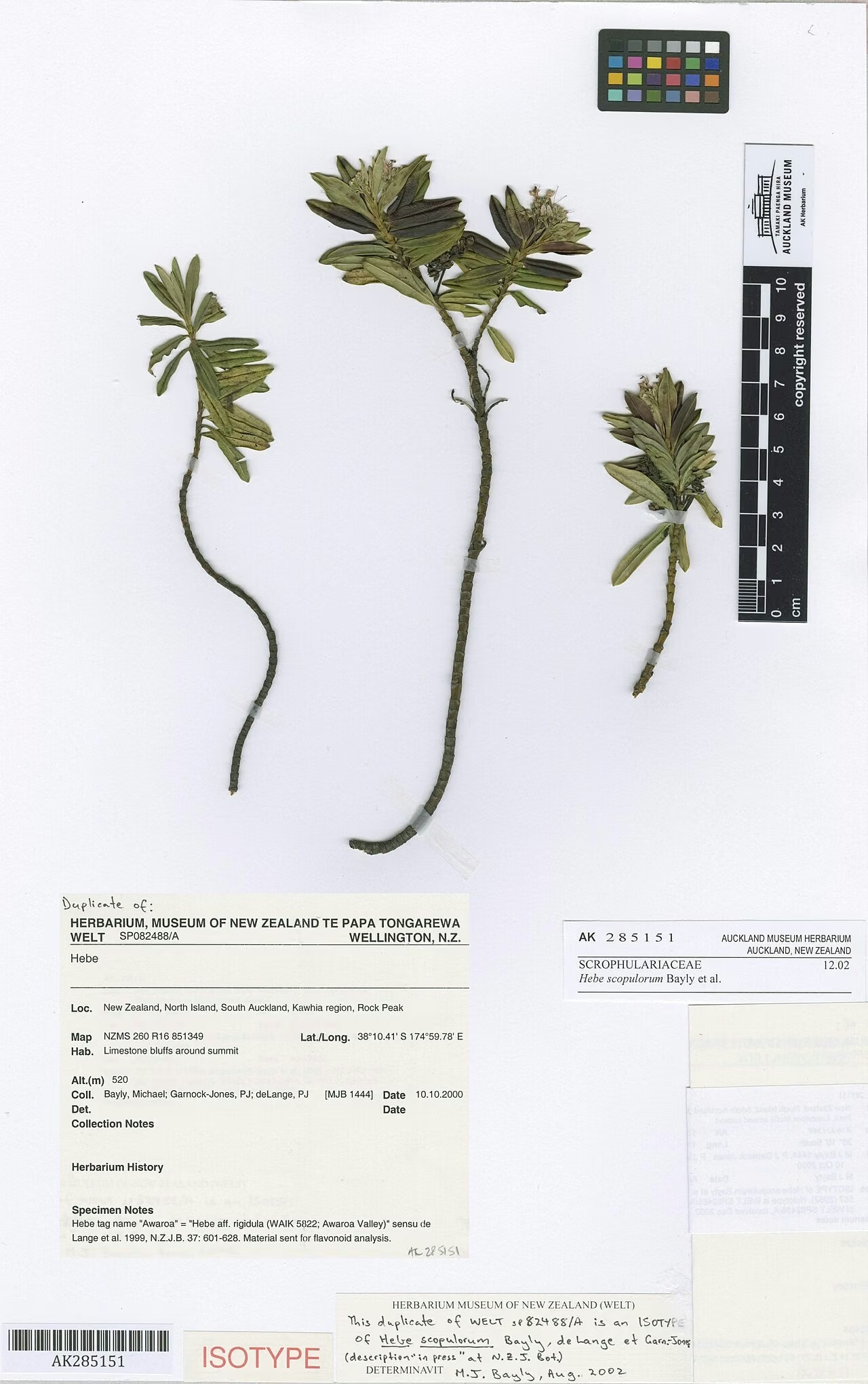
Veronica scopulorum
Veronica scopulorum
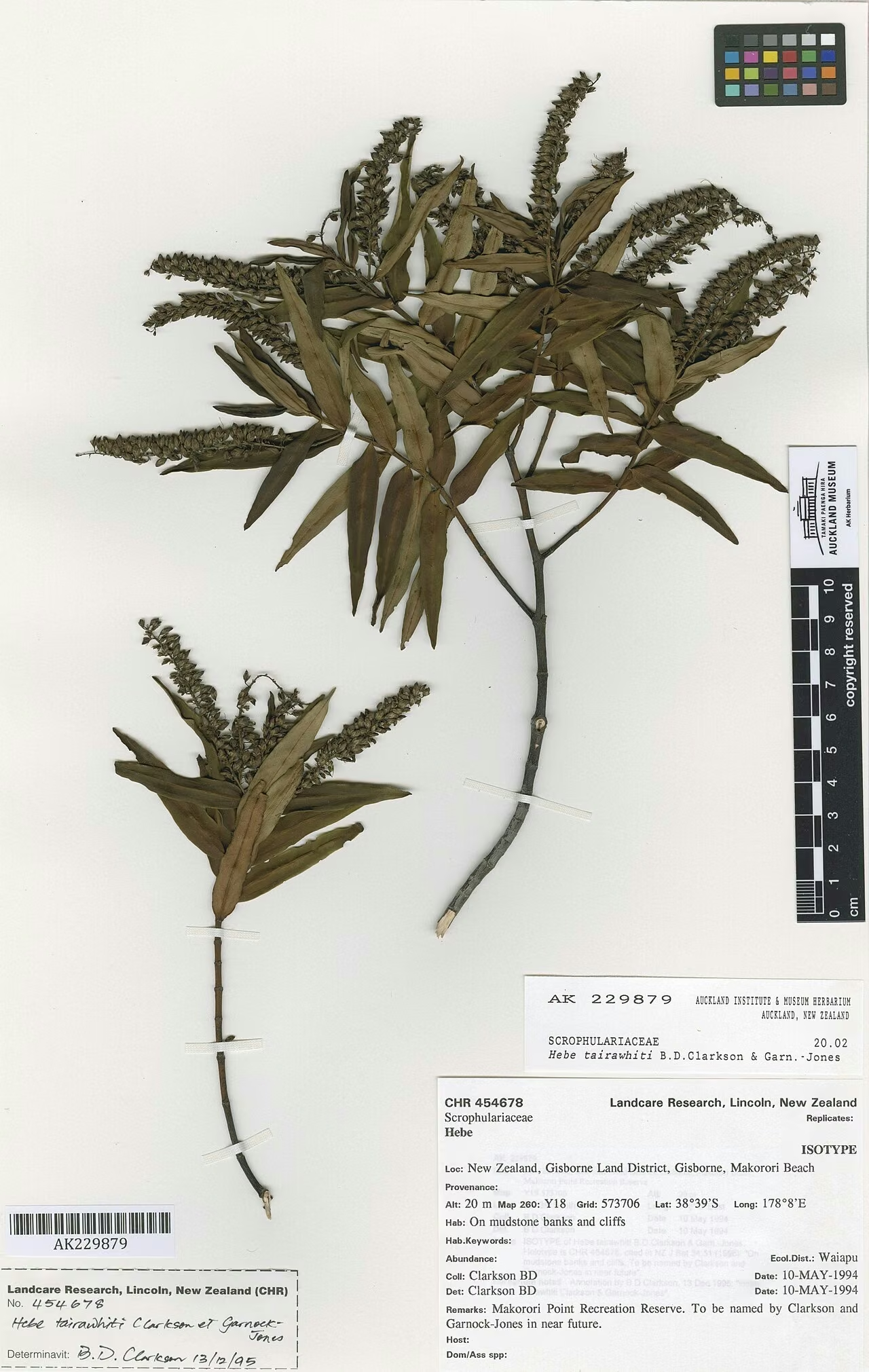
Wairoa Koromiko
Veronica tairawhiti
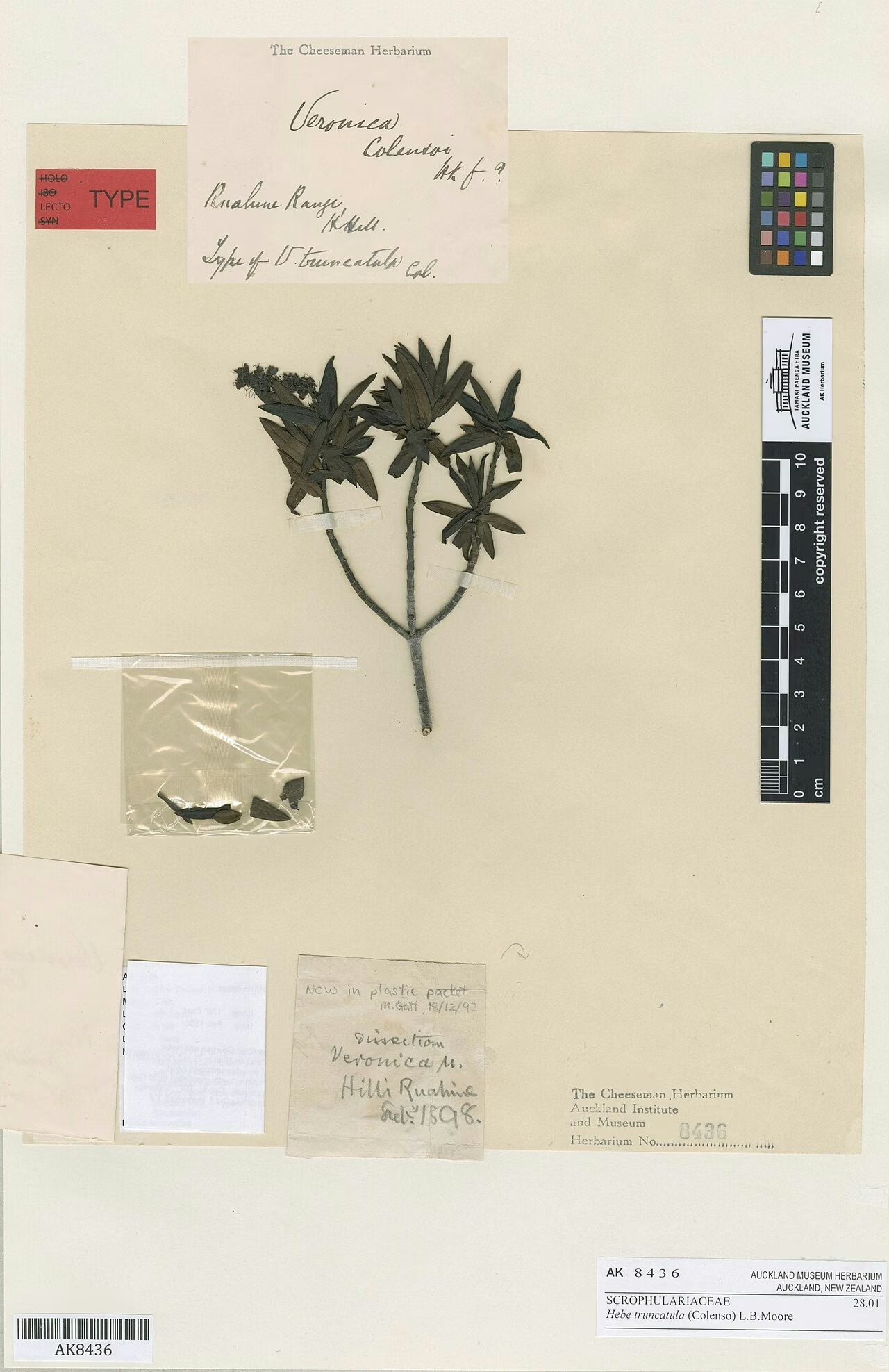
Veronica truncatula
Veronica truncatula
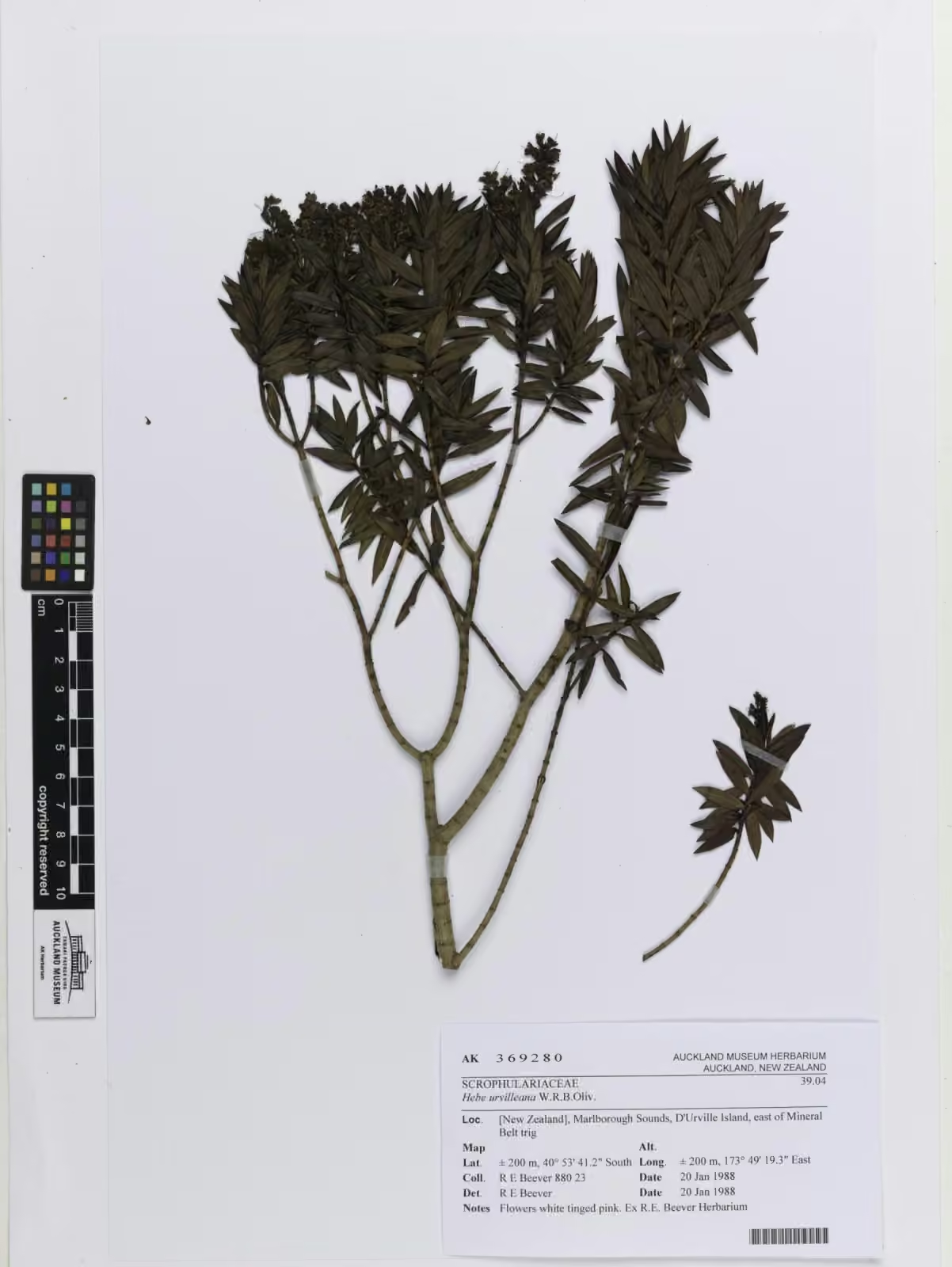
Veronica urvilleana
Veronica urvilleana

Climbing Everlasting
Helichrysum dimorphum
Plant Conservation
Veronica subalpina is ranked Not Threatened in the 2023 New Zealand Threat Classification assessment. It is widespread and often common in subalpine vegetation across much of the western South Island, much of it within national parks.
Local threats include browsing by deer and possums, fire and invasion of subalpine shrubland by wilding conifers. Animal pest control in the high country benefits it along with the wider subalpine flora.
Frequently Asked Questions
What is mountain koromiko?
Mountain koromiko is Veronica subalpina, formerly Hebe subalpina, a white-flowered hebe of wetter South Island subalpine shrubland and grassland that grows into a rounded shrub up to about 1.4 m.
Where does Veronica subalpina grow naturally?
It is widespread in the South Island, chiefly on wetter mountains on and west of the Main Divide from the Wairau Valley to the Cameron Mountains, at about 180-1525 m.
Is Veronica subalpina frost hardy?
Yes. As a subalpine shrub it tolerates hard frost and snow, and the RHS rates it H5, hardy in most of Britain through cold winters.
Does Veronica subalpina have male and female plants?
Its flowers are either female or bisexual, borne on separate plants, so some plants set seed without producing pollen while others have functioning stamens.
Sources and Further Reading
The botanical, growing, and conservation details for Mountain Koromiko (Veronica subalpina) on this page draw on the New Zealand plant references below. Consult them for full technical records and the latest distribution data.