Hebe
Veronica rupicola
Last updated:
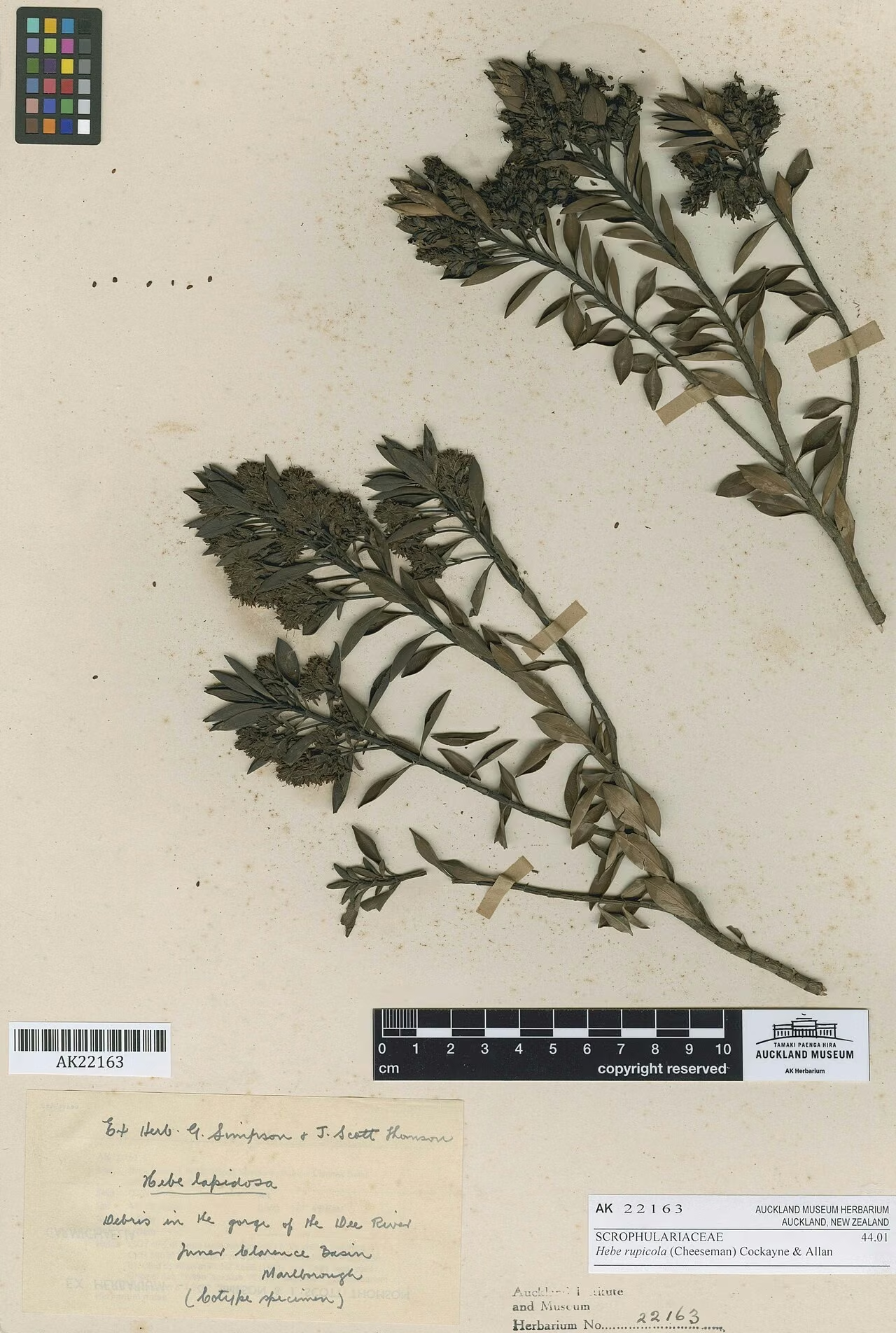
Veronica rupicola, formerly Hebe rupicola, is a low, sprawling shrub endemic to Marlborough and north Canterbury. It usually grows to about 0.8 m tall, occasionally 1.5 m, with glossy, pale or yellowish-green oval leaves 4-24 mm long that are often widest towards the tip. In summer it produces spikes up to about 5 cm long of white flowers whose bases are hidden by large green bracts, a feature that separates it from similar hebes. True to its name, which means rock dweller, it grows mostly on cliffs, rock outcrops and river shingle between about 200 and 1160 m, from the Chalk Range to the Mason Range. It is ranked Not Threatened. Explore more native shrubs in our native plant guide.
Plant Description
Veronica rupicola is a low-growing, sprawling shrub up to about 0.8 m tall, occasionally reaching 1.5 m. Its leaves are in opposite pairs, leathery, elliptic to oblanceolate and often widest towards the tip, 4-24 mm long and 2-9 mm wide on a short stalk. The upper surface is pale or yellowish-green and glossy, while the underside is duller and slightly to distinctly bluish-grey.
The white flowers are crowded in lateral spikes 13-47 mm long, which may be simple or branched into three, each carrying about 5-37 flowers 6-9 mm across. Large bracts overtop and almost completely obscure the calyces, so the base of each flower is hidden by green scales. Flowering is from December to March, and the blunt, hairless capsules 4-5 mm long ripen from January to May and may persist on the plant until October.
It is most often confused with Veronica rigidula, which has smaller bracts, shorter calyces, smaller seeds and glossier upper leaf surfaces. Veronica colensoi has more strongly glaucous leaves and smaller capsules.
Quick Facts
| Scientific Name | Veronica rupicola |
|---|---|
| Height | 0.3-0.8 m, occasionally to 1.5 m |
| Spread | Sprawling; exact spread not recorded |
| Water Needs | Low to moderate; drought-tolerant once established |
| Light | Full sun to light shade |
| Frost Tolerance | Good; grows to about 1160 m |
| Salt Tolerance | No reliable information available |
| Growth Rate | Moderate |
| Lifespan | Perennial shrub |
Climate Best Suited to
It suits the dry, sunny, frosty climate of inland Marlborough and north Canterbury, with hot summers and cold winters. It adapts to most South Island and lower North Island gardens but dislikes high humidity.
Regional Suitability
| City | Climate Suitability |
|---|---|
| Auckland | Low |
| Wellington | Medium |
| Christchurch | High |
| Dunedin | Medium |
Plant Habitat
Veronica rupicola is endemic to the South Island, in Marlborough and north Canterbury between the Chalk Range in the northeast and the Mason Range in the southwest. Records include the Awatere Valley, the Kaikōura Ranges and coastal hills south to the Mason River.
It grows mostly on cliffs, rock outcrops and other rocky places, often near rivers, and sometimes on river-bed shingle. Recorded elevations range from about 198 m to 1159 m.
Growing Requirements
Soil Requirements
It roots into rock crevices and stony ground with little soil, so in gardens it needs sharp drainage rather than rich soil.
- Stony or gritty, free-draining soil
- Suitable for rock walls and banks
- Avoid heavy clay and wet hollows
- Little or no fertiliser needed
Light Requirements
Its cliff habitat is sunny and exposed, though plants on river gorges get some shade.
- Full sun for the most compact habit
- Tolerates light shade
- Avoid deep shade under trees
Water Requirements
Growing in a dry eastern climate on rock, it tolerates dry periods once established.
- Water regularly until established
- Then water only in prolonged drought
- Avoid overwatering, which encourages root rot
Planting and Establishing
Plant in autumn or spring in a sunny, well-drained spot. It is ideal for planting into a rock wall, at the top of a bank or among boulders, where its sprawling stems can spill over stone as they do on natural cliffs.
Dig a hole a little wider than the root ball, add grit if the soil is heavy, set the plant at its pot depth and water in well. Mulch with gravel rather than bark to keep the crown dry.
Ecological Role
The white flower spikes provide nectar and pollen for native bees, flies and butterflies in summer. No pollination study specific to this species was found, but hebes are widely visited by insects. The small seeds are released from capsules that can persist on the plant for months.
On cliffs and outcrops, it is part of a specialised rock community in a region with a high number of endemic plants, and its sprawling stems give cover to lizards and invertebrates in otherwise exposed sites.
Uses & Significance
Garden Uses
A tough, low hebe for dry, sunny, stony sites, valued for its glossy foliage and summer flowers.
- Rock gardens and rock walls
- Dry banks and gravel gardens
- Low informal edging in eastern South Island gardens
- Native plantings in Marlborough and north Canterbury
Ecological Value
It is a characteristic shrub of rock outcrops in Marlborough and north Canterbury.
- Summer nectar for native insects
- Shelter for lizards on rocky sites
- Suitable for eco-sourced restoration near its natural range
Landscaping Uses
Use Veronica rupicola to soften stone in a rockery or retaining wall, letting it trail over the edge. It pairs well with grey-leaved plants, small tussocks and other dryland natives from the eastern South Island.
In a mixed native border, plant it at the front in groups of three for a low, glossy mound that flowers after many spring-flowering shrubs have finished.
Seasonal Care Calendar
Spring
Fresh growth begins; a good time to plant.
- Plant new shrubs
- Apply gravel mulch
Summer
Flowering from December to March with white spikes partly hidden by green bracts.
- Water young plants in dry spells
- Enjoy insect visitors
Autumn
Capsules ripen from January to May.
- Collect seed
- Take semi-hardwood cuttings
Winter
Frost-hardy and largely dormant; capsules may remain on the plant.
- Check drainage after heavy rain
- Avoid hard pruning in cold weather
When to Prune and How Much
Lightly trim after flowering to remove spent spikes and keep the plant compact. This also encourages fresh shoots that will flower the following summer.
Avoid cutting hard into old, leafless wood. If a plant becomes very straggly, it is usually better to replace it with a young plant raised from cuttings.
How to Grow Hebe
Veronica rupicola can be propagated by seed or by semi-hardwood cuttings, the standard methods for shrubby hebes. No protocol specific to this species was found, so these steps follow general hebe practice. Cuttings are quicker and keep the plant true to type, which matters because hebes grown together in gardens can hybridise and seed from mixed collections may not come true. For restoration plantings, use eco-sourced material from Marlborough or north Canterbury.
From Cuttings
Semi-hardwood cuttings taken from summer to autumn generally root well in hebes. Choose healthy, non-flowering shoots.
Take several more cuttings than you need, as rooting success varies between shoots, and grow the young plants on in a sunny spot so they harden off before planting out.
- Take 6-8 cm cuttings of firm current growth in late summer or autumn
- Remove the lower leaves and any flower buds
- Insert into a free-draining mix of bark, pumice or perlite
- Keep in bright shade with moderate humidity
- Pot on once roots appear, usually within a few weeks to two months
From Seed
Capsules ripen from January to May and can stay on the plant for months. Collect brown capsules before they split and sow the small seed fresh.
- Collect ripe capsules and dry them indoors in a paper bag
- Sow on the surface of a fine seed-raising mix
- Cover lightly with fine grit or vermiculite
- Keep moist in a sheltered, bright place
- Prick out seedlings into pots when they have two or three leaf pairs
Pests & Diseases
No pests specific to Veronica rupicola are recorded. Like other hebes it can suffer from hebe downy mildew and leaf spot in humid conditions, and from root rot in poorly drained soils.
Scale insects, mealybugs and aphids occasionally infest hebes in sheltered gardens. Siting it in an open, sunny, well-drained position is the best prevention.
Cultural Significance
No traditional Māori name or use is recorded specifically for Veronica rupicola. Hebes generally are known as koromiko, though that name is most associated with larger lowland species.
Thomas Cheeseman described it as Veronica rupicola, and George Simpson and John Scott Thomson later described plants as Hebe lapidosa (1940), now treated as the same species. Both names, rupicola and lapidosa, refer to its stony habitat.
Bonus Tip
To confirm you have Veronica rupicola rather than the similar V. rigidula, look closely at the flower spike: in V. rupicola the large green bracts almost completely hide the calyx at the base of each flower, giving the spike a scaly look before the white flowers open.
Related Plants
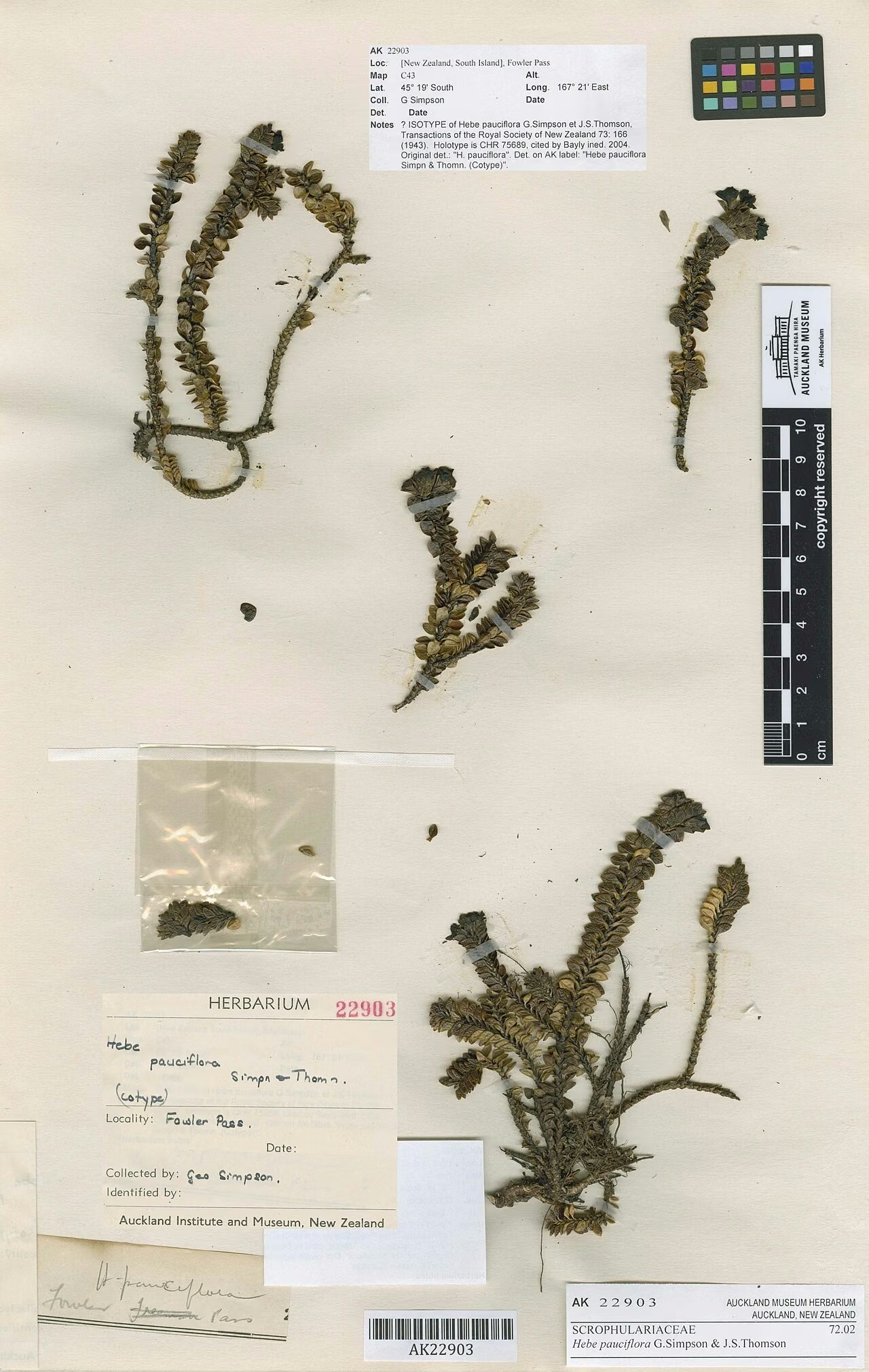
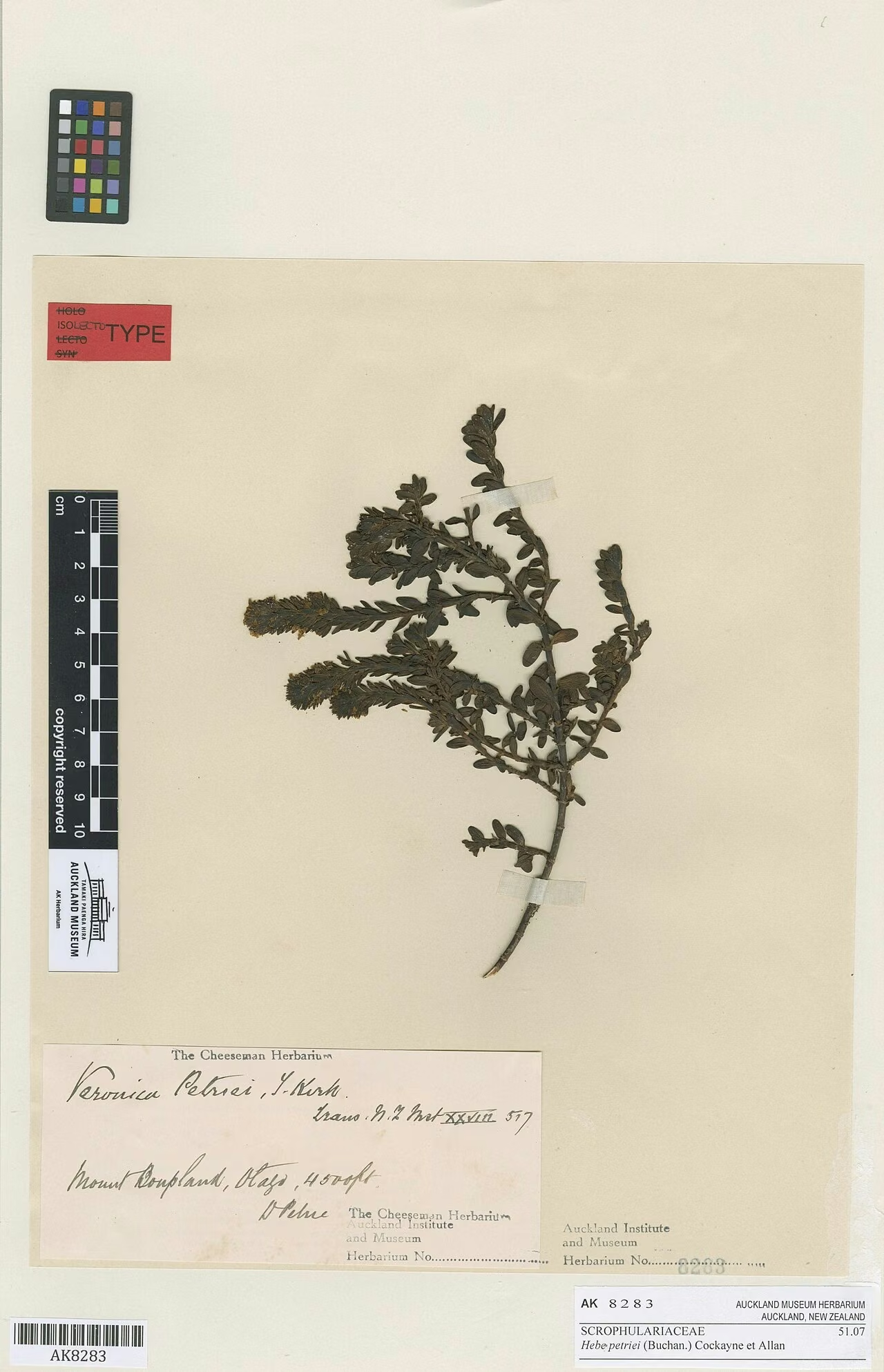
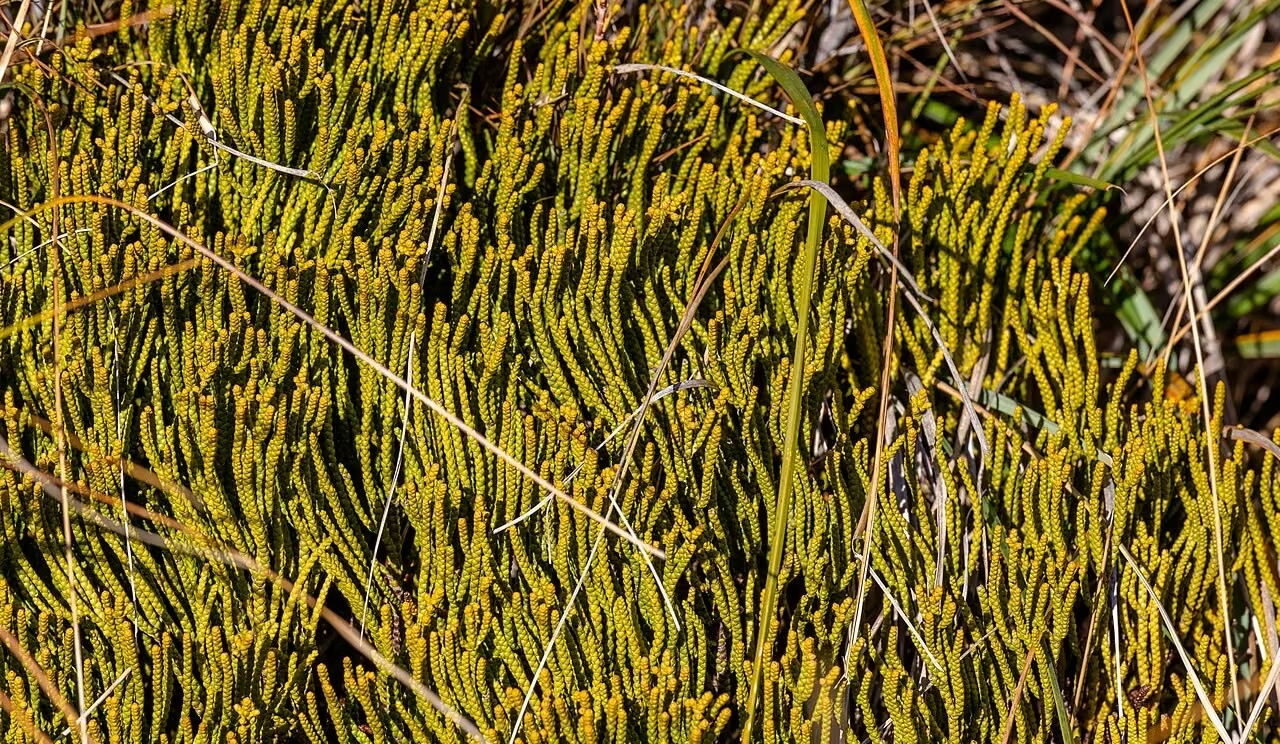
Explore other native plants that share similar characteristics or habitats with Hebe (Veronica rupicola), offering further insights into New Zealand's diverse flora. These related species provide context and opportunities for complementary planting in your garden.
Plant Conservation
Veronica rupicola is ranked Not Threatened in the 2023 New Zealand Threat Classification assessment. Many of its sites are on cliffs and outcrops that are hard for browsing animals and people to reach.
Weeds such as wilding conifers and introduced grasses can still invade rocky habitats, and goats can reach cliff plants. Planting eco-sourced stock in local restoration projects helps maintain the species within its natural range.
Frequently Asked Questions
What does rupicola mean in Veronica rupicola?
Rupicola comes from the Latin rupes, a rock or cliff, and -cola, a dweller. It refers to the plant's habit of growing on cliffs and rock outcrops.
Where is Veronica rupicola found?
It is endemic to Marlborough and north Canterbury, between the Chalk Range in the northeast and the Mason Range in the southwest, including the Awatere Valley and Kaikōura Ranges.
How do you tell Veronica rupicola from Veronica rigidula?
Veronica rupicola has larger bracts that almost hide the calyx, longer calyces of 3-4 mm, larger seeds and duller green upper leaf surfaces than V. rigidula.
Is Hebe lapidosa the same plant as Veronica rupicola?
Yes. Hebe lapidosa, described in 1940, is now treated as a synonym of Veronica rupicola, so plants sold under that name belong to this species.
Sources and Further Reading
The botanical, growing, and conservation details for Hebe (Veronica rupicola) on this page draw on the New Zealand plant references below. Consult them for full technical records and the latest distribution data.