Hebe
Veronica urvilleana
Last updated:
Veronica urvilleana, formerly Hebe urvilleana, is a bushy endemic hebe up to 1.5 m tall named after Rangitoto ki te Tonga / D'Urville Island at the top of the South Island. It grows in manuka scrub and open shrubland on the island and in nearby eastern Nelson and the western Marlborough Sounds, with scattered sites in the Bryant Range, at about 180-1220 m. Its small, glossy, leathery leaves are hairless on the margins, and short spikes of white flowers with purple anthers appear in January and February. It is ranked At Risk - Naturally Uncommon because of its small natural range. Explore more native shrubs in our native plant guide.
Plant Description
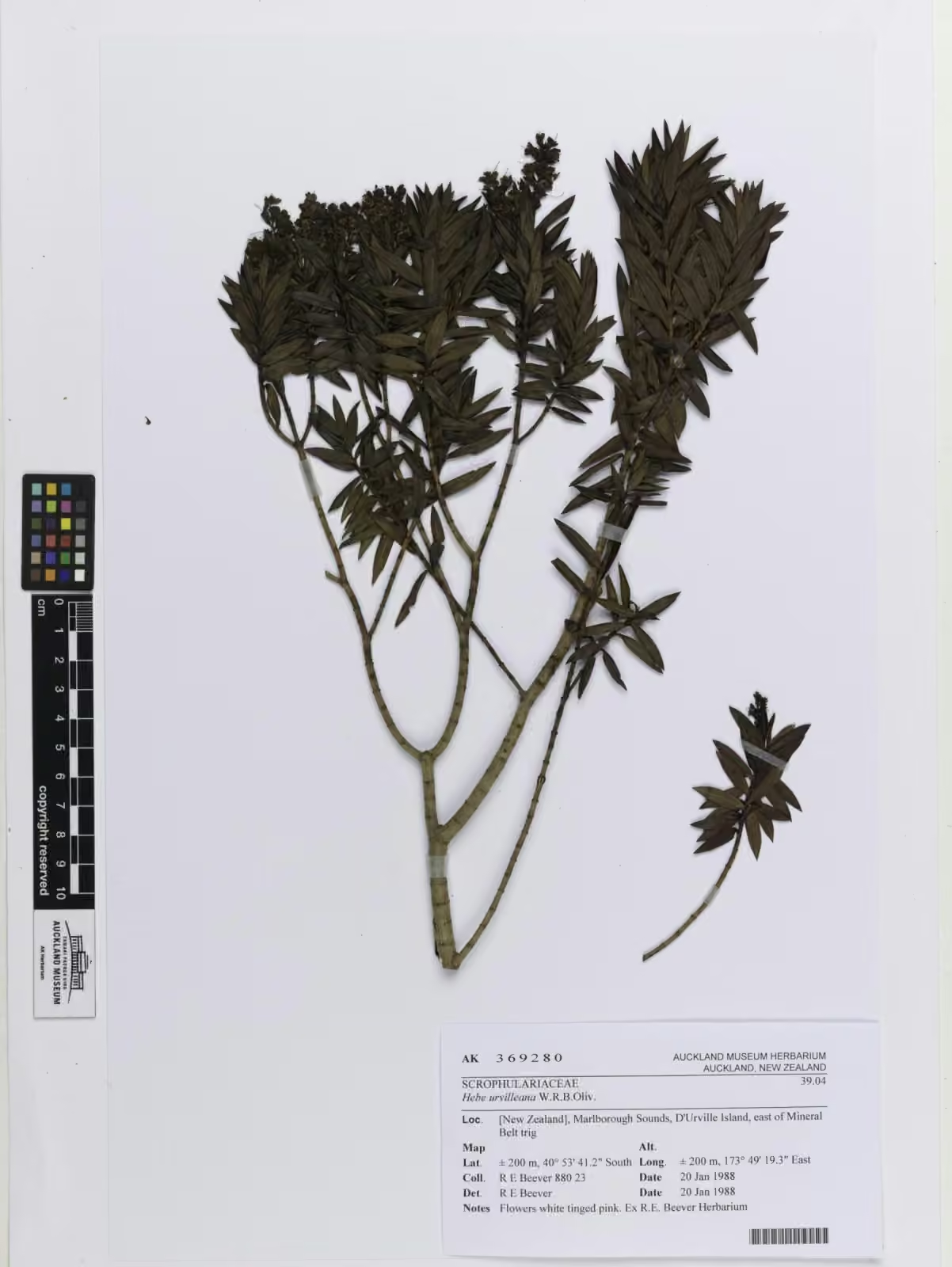
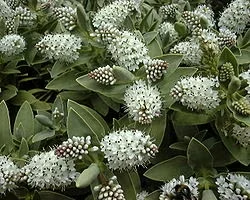
Veronica urvilleana is a bushy shrub up to 1.5 m tall with erect or sometimes prostrate branches. Its leaves are in opposite pairs set at right angles to the next pair, and are leathery, concave, elliptic to lance-shaped, mostly 11-18 mm long and 4-6 mm wide, with an acute to slightly blunt tip. The upper surface is glossy and the leaf margins are hairless.
The white flowers are carried in short, unbranched lateral spikes and have four corolla lobes 2-3 mm long and magenta to purple anthers. Plants may bear bisexual or female flowers. Flowering is in January and February, and the hairless capsules, 2.5-5.3 mm long, ripen from February to April but can persist on the plant until November.
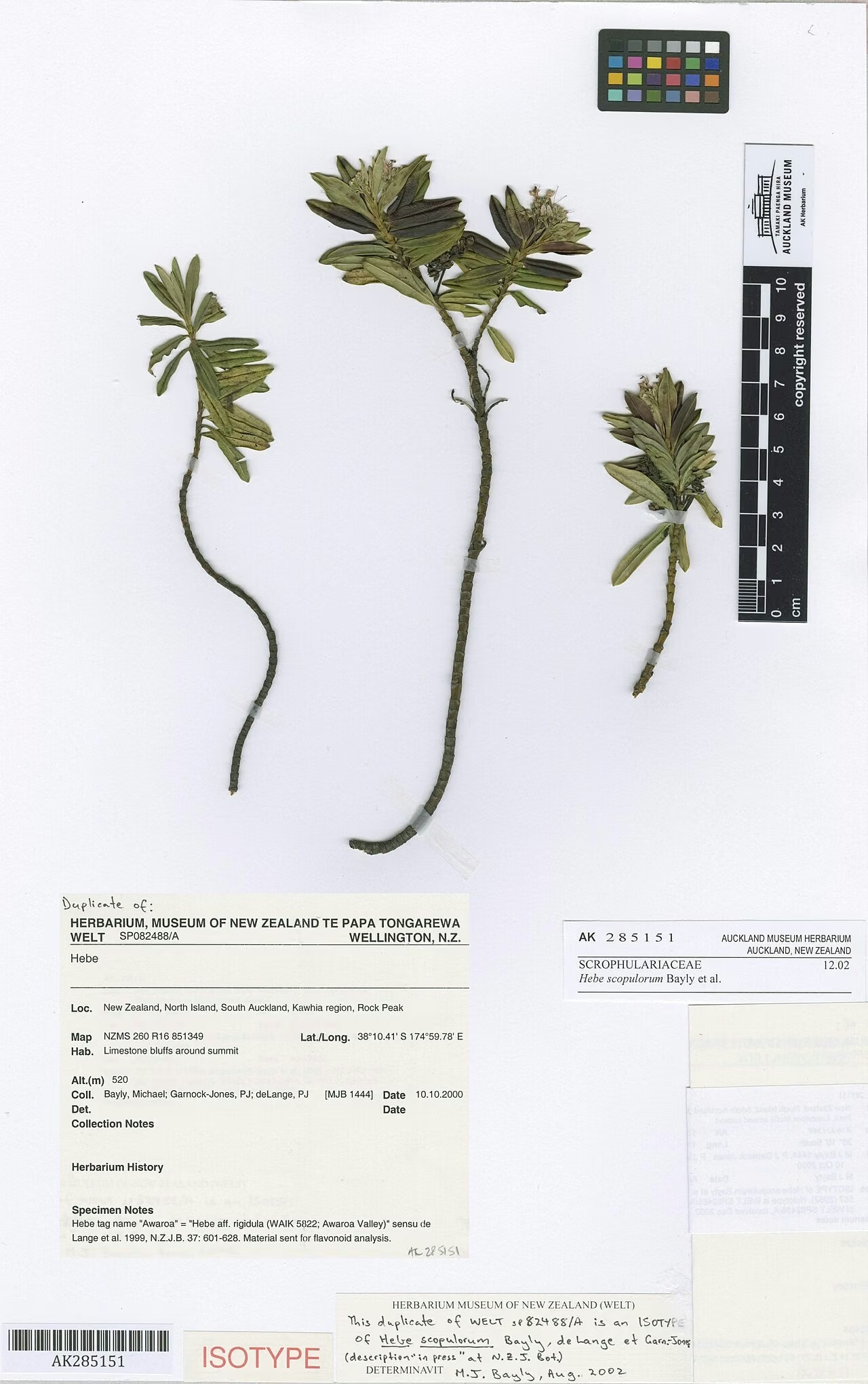
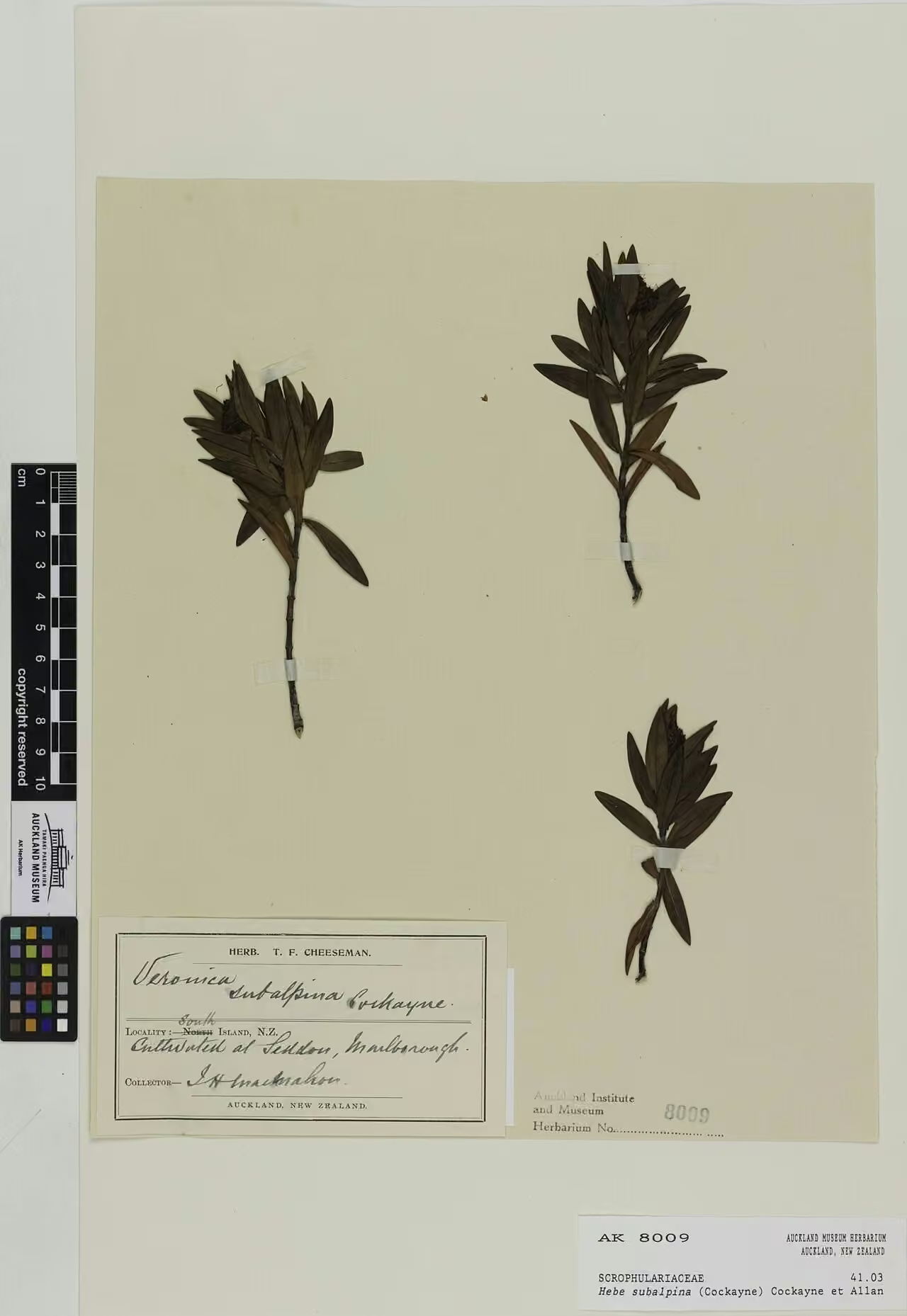
Several related hebes look similar, including V. subalpina, V. treadwellii, V. rakaiensis, V. calcicola and V. evenosa, but none of these share its range. The closest look-alike nearby, V. stenophylla var. oliveri, has less glossy leaves that are clearly pitted near the margins and longer corolla tubes. Glossy leaves, hairless leaf margins, hairless ovaries and fruit, and corolla tubes hairy inside are the key features of V. urvilleana.
Quick Facts
| Scientific Name | Veronica urvilleana |
|---|---|
| Height | Up to 1.5 m |
| Spread | About 1 m; some branches may be prostrate |
| Water Needs | Low to moderate once established |
| Light | Full sun |
| Frost Tolerance | Moderately hardy; grows to about 1220 m |
| Salt Tolerance | Not recorded for this species |
| Growth Rate | Moderate |
| Lifespan | Perennial (shrub) |
Climate Best Suited to
A mild, sunny northern South Island climate with moderate rainfall, ranging from coastal lowland to cooler montane conditions on the Bryant Range.
Regional Suitability
| City | Climate Suitability |
|---|---|
| Auckland | Medium |
| Wellington | High |
| Christchurch | High |
| Dunedin | Medium |
Plant Habitat
This hebe is endemic to the northern South Island. The Flora of New Zealand describes its range as Rangitoto ki te Tonga / D'Urville Island and the western Marlborough Sounds, extending to scattered localities in the Bryant Range, and NZPCN notes it may reach as far south as Mt Starveall.
It grows mainly in lowland to montane manuka (Leptospermum) scrub and open shrubland, from about 180 m to 1220 m above sea level. These are open, sunny shrub communities rather than tall forest, and the hebe grows among the manuka rather than beneath a closed canopy.
Growing Requirements
Soil Requirements
It grows in thin, often stony and infertile soils under open scrub. In cultivation it needs good drainage above all.
- Free-draining gritty or stony soil
- Tolerates low fertility
- Avoid wet, heavy soils that cause root rot
Light Requirements
In the wild it grows in open shrubland and among manuka, so it is used to plenty of light.
- Full sun for compact growth and best flowering
- Tolerates light, dappled shade
- Avoid deep shade, which makes it straggly
Water Requirements
Its natural sites drain freely, so it copes with dry periods once its roots are established.
- Water regularly until established
- Then water only in prolonged drought
- Do not overwater pot-grown plants
Planting and Establishing
Plant in autumn or spring in a sunny, well-drained spot. Dig a hole twice the width of the root ball, add some grit if the soil is heavy, set the plant at its original depth and water in well.
Space plants about 1 m apart for a low informal hedge or group. For restoration around D'Urville Island or the Marlborough Sounds, use plants raised from local seed or cuttings.
Ecological Role
Its summer flowers provide nectar and pollen for insects such as native bees, flies and butterflies, as with most white-flowered hebes. The presence of female plants alongside bisexual ones suggests cross-pollination by insects is important. The small seeds are dispersed by wind.
Within manuka scrub and open shrubland it forms part of a low, mixed shrub community that shelters herbs and orchids and helps hold thin soils on exposed slopes.
Uses & Significance
Garden Uses
Although not widely grown, its compact size, glossy leaves and white flowers suit small native gardens.
- Rock gardens and dry, sunny banks
- Low informal hedges and borders
- Local restoration plantings in the Nelson and Marlborough Sounds area
Ecological Value
As a narrowly endemic hebe, it is part of the unusual flora of D'Urville Island and the northern South Island.
- Midsummer nectar and pollen for insects
- Contributes to open shrubland structure
- Locally distinctive genetic diversity
Landscaping Uses
Grow Veronica urvilleana in front of taller shrubs or among tussocks, where its rounded form and glossy foliage give year-round structure. Its white flowers in January and February come after the spring flush of many natives.
On a sunny bank, plants with prostrate branches can help cover the ground. It also suits large containers filled with gritty mix.
Seasonal Care Calendar
Spring
Fresh shoots develop at the branch tips and the foliage looks its glossiest.
- Plant new shrubs as soils warm
- Lightly mulch around the base
Summer
Flowering peaks in January and February, with short white spikes along the upper branches.
- Water young plants during dry spells
- Enjoy the purple anthers on close inspection
Autumn
Capsules ripen from February to April, and some remain on the plant into the following spring.
- Collect ripe capsules for seed
- Take semi-hardwood cuttings
Winter
Growth slows and the shrub keeps its evergreen leaves through the cool season.
- Check drainage after heavy rain
- Little else is needed
When to Prune and How Much
Prune lightly after flowering, removing spent spikes and shortening long shoots to keep the plant dense.
Do not cut back into old leafless wood. If a plant becomes leggy, renew it gradually over two seasons or replace it with a young plant raised from cuttings.
How to Grow Hebe
No propagation protocol specific to Veronica urvilleana was found in the sources consulted, so the methods below follow standard hebe practice, which is usually successful. Cuttings preserve the features of a particular plant, while seed captures more genetic variation for restoration. Because some plants bear only female flowers, seed is most likely on female or bisexual plants growing near others. The species is range restricted, so do not take material from wild plants without the landowner's or the Department of Conservation's permission, and keep local stock for local plantings.
From Cuttings
Semi-hardwood cuttings from the current season's growth root well in late summer and autumn. Take them from non-flowering side shoots.
- Cut 6-10 cm lengths from healthy non-flowering shoots
- Strip the lower pairs of leaves
- Insert into a free-draining propagation mix with plenty of pumice
- Keep in bright, indirect light with high humidity
- Pot on into gritty mix once roots appear
From Seed
Capsules ripen from February to April. Collect them as they turn brown and before they fully split, since the fine seed is shed on the wind.
Seedlings of hebes grow quickly once established and can be planted out in their second season. Raise several seedlings, because seed from garden plants may have crossed with other hebes and not every seedling will match the parent.
- Dry capsules indoors to release the seed
- Surface sow on fine seed-raising mix
- Keep evenly moist in a sheltered spot
- Prick out seedlings when large enough to handle
Pests & Diseases
No pests or diseases specific to Veronica urvilleana are documented. Like other hebes it may develop downy mildew or leaf spot in damp, still air, and root rot in poorly drained soil.
Scale insects and aphids can appear on new growth. Grow plants in an open, sunny position to keep them healthy.
Cultural Significance
No traditional Māori name or use is recorded specifically for this hebe in the sources consulted. Its name refers to Rangitoto ki te Tonga / D'Urville Island, the island named after the French navigator Jules Sébastien César Dumont d'Urville, who sailed through French Pass in 1827.
The species was first described as Veronica urvilleana by W.R.B. Oliver and later transferred to Veronica by Phil Garnock-Jones, reflecting the move of New Zealand hebes into the genus Veronica.
Bonus Tip
When visiting D'Urville Island or the nearby Sounds, look for a small hebe with shiny, cupped leaves in the manuka scrub. Run a finger along the leaf edge: Veronica urvilleana has smooth, hairless margins, which helps separate it from other small-leaved hebes.
Related Plants
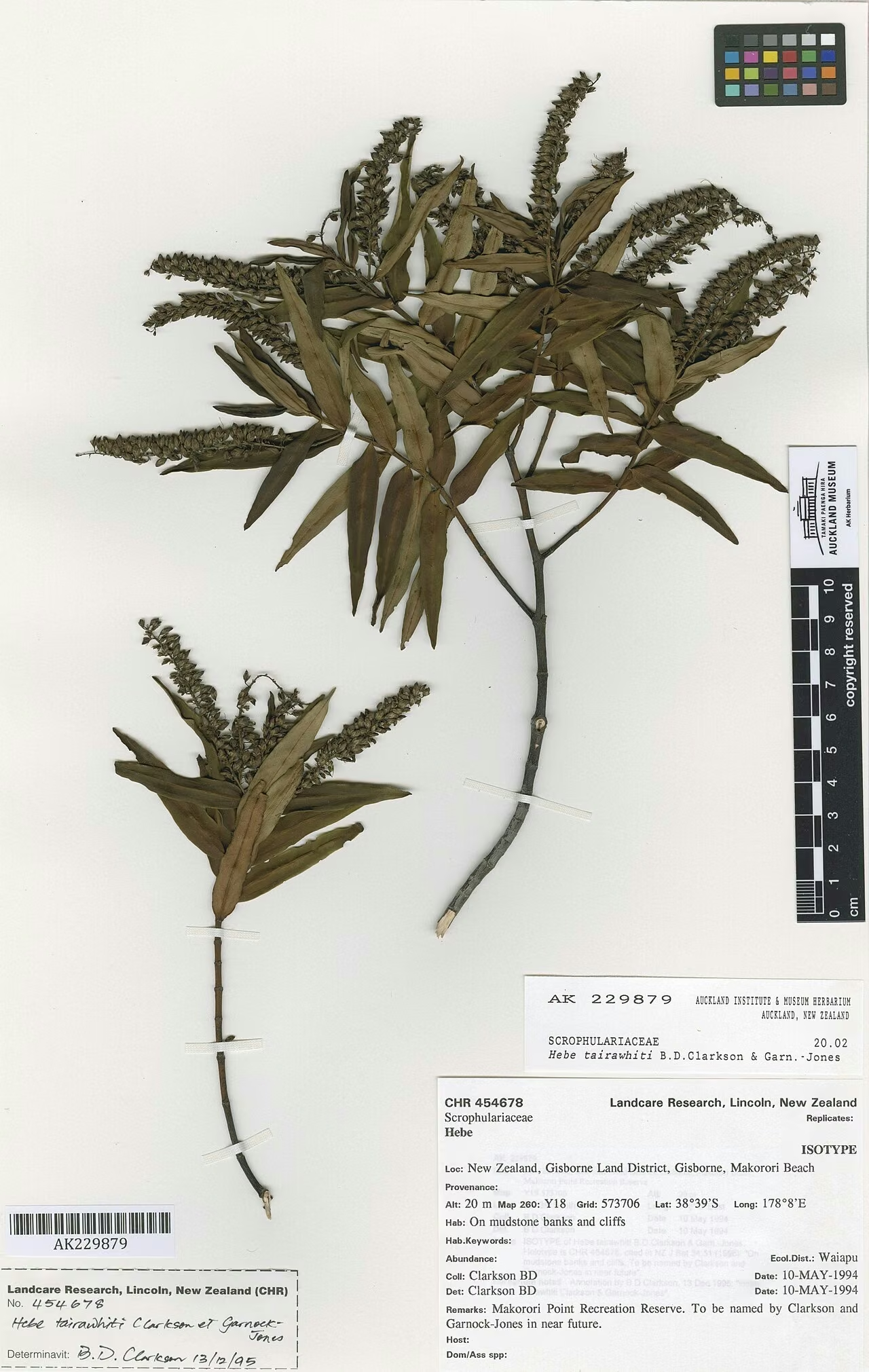
Explore other native plants that share similar characteristics or habitats with Hebe (Veronica urvilleana), offering further insights into New Zealand's diverse flora. These related species provide context and opportunities for complementary planting in your garden.
Plant Conservation
Veronica urvilleana is ranked At Risk - Naturally Uncommon (2023) with the Range Restricted qualifier, a ranking it has held since 2009. Its small natural distribution makes it vulnerable to local events such as fire or habitat clearance.
Protecting manuka scrub and open shrubland from fire, weeds and browsing animals, and not collecting from the wild, are the most useful actions. Growing local stock for nearby restoration helps keep genetic diversity in the area.
Frequently Asked Questions
Where does Veronica urvilleana grow naturally?
It is found on Rangitoto ki te Tonga / D'Urville Island and nearby parts of eastern Nelson and the western Marlborough Sounds, with scattered records in the Bryant Range, possibly as far south as Mt Starveall.
Who is Veronica urvilleana named after?
The name refers to D'Urville Island, where the species grows. The island itself honours the French explorer Jules Sébastien César Dumont d'Urville.
What does Veronica urvilleana look like?
It is a bushy shrub to 1.5 m with small, glossy, concave leaves 11-18 mm long, hairless leaf margins, and short unbranched spikes of white flowers with magenta to purple anthers.
Is Veronica urvilleana threatened?
It is ranked At Risk - Naturally Uncommon with the Range Restricted qualifier, meaning it is naturally confined to a small area rather than known to be declining quickly.
Sources and Further Reading
The botanical, growing, and conservation details for Hebe (Veronica urvilleana) on this page draw on the New Zealand plant references below. Consult them for full technical records and the latest distribution data.