Snow Hebe
Veronica thomsonii
Last updated:
Snow hebe (Veronica thomsonii), long known as Chionohebe thomsonii, is a dense cushion plant endemic to the high mountains of the South Island. Its cushions are only 1 to 8 cm tall, built from tightly packed shoots of leaves under 5 mm long, and are studded with small white flowers in summer. It grows from south Westland and South Canterbury through Central Otago to the Eyre Mountains in Southland, between about 1219 and 2086 m, on exposed ridges, rock tors, crevices and stony fellfield. Male and female flowers are on separate plants. It is classed as Not Threatened. Explore more native ground covers in our native plant guide.
Plant Description
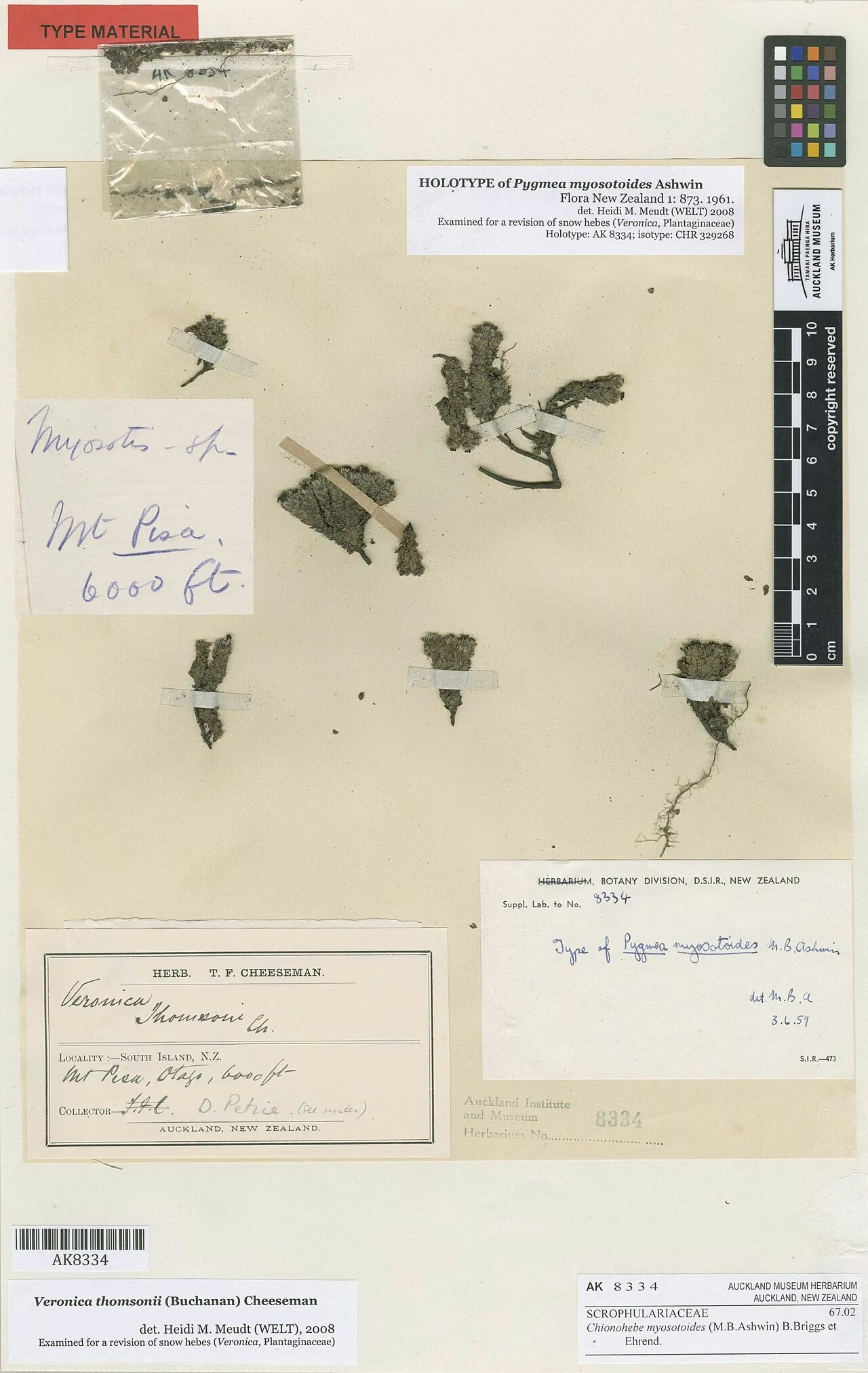
Veronica thomsonii is a perennial cushion plant, rigid to loosely packed, from 1 to 8 cm tall, arising from a woody base up to 7 mm thick. The stems are hairless and upright, crowded with spirally arranged, stalkless leaves pressed against the shoot. Each leaf is oblanceolate to obovate, about 1.7 to 4.7 mm long and 0.7 to 2.6 mm wide, dull green to olive green, with a blunt to slightly pointed tip.
A key feature is the dense band of stiff, flattened hairs near the middle of the inner (upper) leaf surface, together with fringed leaf margins; the outer surface is sometimes densely hairy on its upper part. The plant is dioecious, with male and female flowers on separate plants. The white, salver-shaped flowers are 2.5 to 5 mm across, males larger with coloured anthers and more numerous, females smaller with sterile anthers. Capsules are 1.5 to 3 mm long and hairless to densely hairy.
NZPCN records flowering from November to March and fruiting from December to March, while the Flora of New Zealand gives January to March, sometimes December. Seeds are dispersed by ballistic projection from the capsule, by wind and by water. The very similar Veronica chionohebe of Central Otago lacks the hairs on the upper leaf surface and favours damp snowbank sites.
Quick Facts
| Scientific Name | Veronica thomsonii |
|---|---|
| Height | 0.01 to 0.08 m |
| Spread | Dense cushions (no published width) |
| Water Needs | Low to moderate; dry stony soils in summer |
| Light | Full sun, exposed alpine sites |
| Frost Tolerance | Very high; alpine to high alpine |
| Salt Tolerance | No information available; a high alpine plant |
| Growth Rate | Very slow |
| Lifespan | Perennial |
Climate Best Suited to
Suited to the cold, windy and often dry high alpine climate of the eastern and southern South Island ranges, with snow in winter and strong sun and drying winds on exposed ridges in summer.
Regional Suitability
| City | Climate Suitability |
|---|---|
| Auckland | Low |
| Wellington | Low |
| Christchurch | Low |
| Dunedin | Low |
Plant Habitat
Snow hebe is endemic to the South Island. The Flora of New Zealand records it from south Westland, South Canterbury, Otago on and west of the Rock and Pillar Range, and the Eyre Mountains in Southland; NZPCN summarises its range as Canterbury and central and eastern Otago. It grows between about 1219 and 2086 m above sea level.
Its habitat is alpine and high alpine herbfield, fellfield and cushionfield, where it grows among rocks, in crevices, on rocky outcrops, in dry stony soil and on rock tors and exposed ridges. These are among the harshest plant habitats in New Zealand, drier and windier than the snowbank hollows used by Veronica chionohebe.
Growing Requirements
Soil Requirements
It grows in thin, dry, stony soils and rock crevices on schist and greywacke mountains, with almost no organic matter.
- Mineral, gritty, extremely free-draining soil
- Rock crevices and tors
- No fertiliser
Light Requirements
Exposed ridges and tors receive intense alpine sunlight, and the plant is adapted to full exposure.
- Full sun
- Cool temperatures are as important as light
Water Requirements
Its stony ridges drain instantly and dry out in summer, but receive snow and rain through the year. Constant wetness around the cushion would be harmful.
- Sharp drainage above all
- Avoid water sitting on the cushion
- Cool, moving air helps prevent rot
Planting and Establishing
Snow hebe is not sold and NZPCN advises that it should not be removed from the wild. It is suited only to specialist alpine house growers, who would plant it into a deep clay pot or tufa crevice in a very gritty mineral mix.
For most people the best way to enjoy it is on a summer walk across the high ranges of Central Otago or South Canterbury, taking care not to step on cushions growing among the rocks.
Ecological Role
As a dioecious plant, snow hebe needs pollen transferred between separate male and female plants. Male plants produce more abundant, larger flowers, a pattern that may help attract insect visitors, although its specific pollinators have not been documented.
Its dense cushions trap fine soil, moisture and organic matter on otherwise bare, wind-scoured ridges, creating small sheltered patches used by other alpine plants and invertebrates. Seed is shed explosively from the capsule and then spread by wind and running water.
Uses & Significance
Garden Uses
Snow hebe is not a garden plant. Its value is botanical and scientific, and it is best appreciated in its natural setting.
- Specialist alpine house collections
- Field study of South Island cushionfield vegetation
- Not suitable for lowland gardens
Ecological Value
It is a characteristic cushion plant of the exposed high alpine fellfield and tors of the southern South Island ranges.
- Stabilises stony soil on wind-scoured ridges
- Creates microhabitats for other alpine species
- Provides summer flowers in a sparse landscape
Landscaping Uses
Snow hebe plays no realistic role in landscaping. On the high tors of Central Otago its olive green cushions, pressed into crevices between schist slabs and dotted with white flowers, are a classic part of the alpine scene.
Gardeners wanting a similar effect can use cultivated cushion plants or small whipcord hebes in a trough or crevice garden instead.
Seasonal Care Calendar
Spring
Plants emerge as snow clears from ridges, which on exposed sites may happen earlier than in sheltered hollows.
- Growth resumes after snow melt
- Buds develop in late spring
Summer
Flowering runs from about November or December, with males producing the most flowers. Capsules begin to form from December.
- Main flowering season
- Cushions exposed to sun and wind
Autumn
Flowering ends by March and capsules ripen and release their seed.
- Fruiting until March
- Seed scattered by ejection, wind and water
Winter
Plants lie dormant, often under snow, though wind may strip snow from the most exposed ridges.
- Fully dormant
- Extremely cold tolerant
When to Prune and How Much
Pruning is not appropriate for this tiny cushion. Its slow growth means any damage takes years to repair.
In an alpine house, simply pick off dead material that could encourage rot, using fine tweezers.
How to Grow Snow Hebe
NZPCN describes snow hebe as difficult to propagate and cultivate, states that it should not be removed from the wild, and notes that it requires specialised alpine house conditions. No detailed propagation protocol has been published. What follows reflects the general approach alpine specialists take with cushion-forming Veronica, adapted to this species' biology: it is dioecious, so seed forms only on female plants pollinated by nearby males, and capsules ripen between December and March. Any collection on conservation land requires Department of Conservation permission, and only small amounts should be taken so wild populations are not affected.
From Seed
Seed is the least damaging way to obtain plants. Capsules ripen late in the short alpine summer and release seed quickly.
- Inspect female cushions in late summer for ripening capsules.
- Collect a few capsules just before they split, under permit.
- Sow on the surface of a pure mineral mix such as pumice and grit.
- Provide several weeks of cold, moist chilling before warmth.
- Grow seedlings on in an airy, cool alpine house and keep the foliage dry.
From Cuttings
Some alpine specialists root tiny shoot tips of cushion Veronica, but success with this species has not been documented and losses are likely.
- Use cultivated stock only, never wild cushions.
- Take short shoot tips in late summer.
- Insert into pure pumice and keep cool and lightly moist.
- Pot on very carefully once roots form.
- Expect a low strike rate and keep records of what works.
Pests & Diseases
No pests or diseases specific to snow hebe are documented. In the wild, trampling and disturbance on popular ridges and tors can damage cushions.
In cultivation, rot caused by warmth, humidity and wet foliage is the main danger.
Cultural Significance
No Māori name or traditional use is recorded for this species in the sources consulted. It was described by John Buchanan as Pygmaea thomsonii, transferred to Veronica by Thomas Cheeseman, later placed in Chionohebe by Briggs and Ehrendorfer, and returned to Veronica when Chionohebe was merged into that genus in 2007.
NZPCN says only that the epithet honours a person named Thomson; the individual is not identified in the sources consulted.
Bonus Tip
To tell snow hebe from other tiny cushion plants on the tors, look for the separate male and female plants: male cushions carry more and larger white flowers with coloured anthers, while female cushions have fewer, smaller flowers. A hand lens will also show the band of stiff hairs on the upper leaf surface.
Related Plants
Explore other native plants that share similar characteristics or habitats with Snow Hebe (Veronica thomsonii), offering further insights into New Zealand's diverse flora. These related species provide context and opportunities for complementary planting in your garden.
Plant Conservation
Snow hebe is classed as Not Threatened (2023), and Otago lists it as Regionally Not Threatened. It is widespread across the high ranges of the southern South Island.
Its high alpine habitat faces relatively few direct threats, but trampling on popular summits and long-term climate warming could affect it. Leaving plants in the wild, as NZPCN advises, and staying on established routes across cushionfield help protect it.
Frequently Asked Questions
Is Chionohebe thomsonii the same as Veronica thomsonii?
Yes. Chionohebe was merged into Veronica in 2007, so the accepted name is now Veronica thomsonii. NZPCN also treats Chionohebe myosotoides and Veronica myosotoides as the same species.
Where does the snow hebe Veronica thomsonii grow?
It grows in the South Island mountains of south Westland, South Canterbury, Otago on and west of the Rock and Pillar Range, and the Eyre Mountains of Southland, at about 1219 to 2086 m.
How can you identify Veronica thomsonii?
It forms a dense cushion of tiny overlapping leaves with a band of stiff, flattened hairs near the middle of the upper leaf surface and fringed margins, which separates it from the hairless Veronica chionohebe.
Can you grow snow hebe in a garden?
NZPCN describes it as difficult, says it should not be removed from the wild, and notes it needs specialised alpine house cultivation, so it is not a practical garden plant.
Sources and Further Reading
The botanical, growing, and conservation details for Snow Hebe (Veronica thomsonii) on this page draw on the New Zealand plant references below. Consult them for full technical records and the latest distribution data.