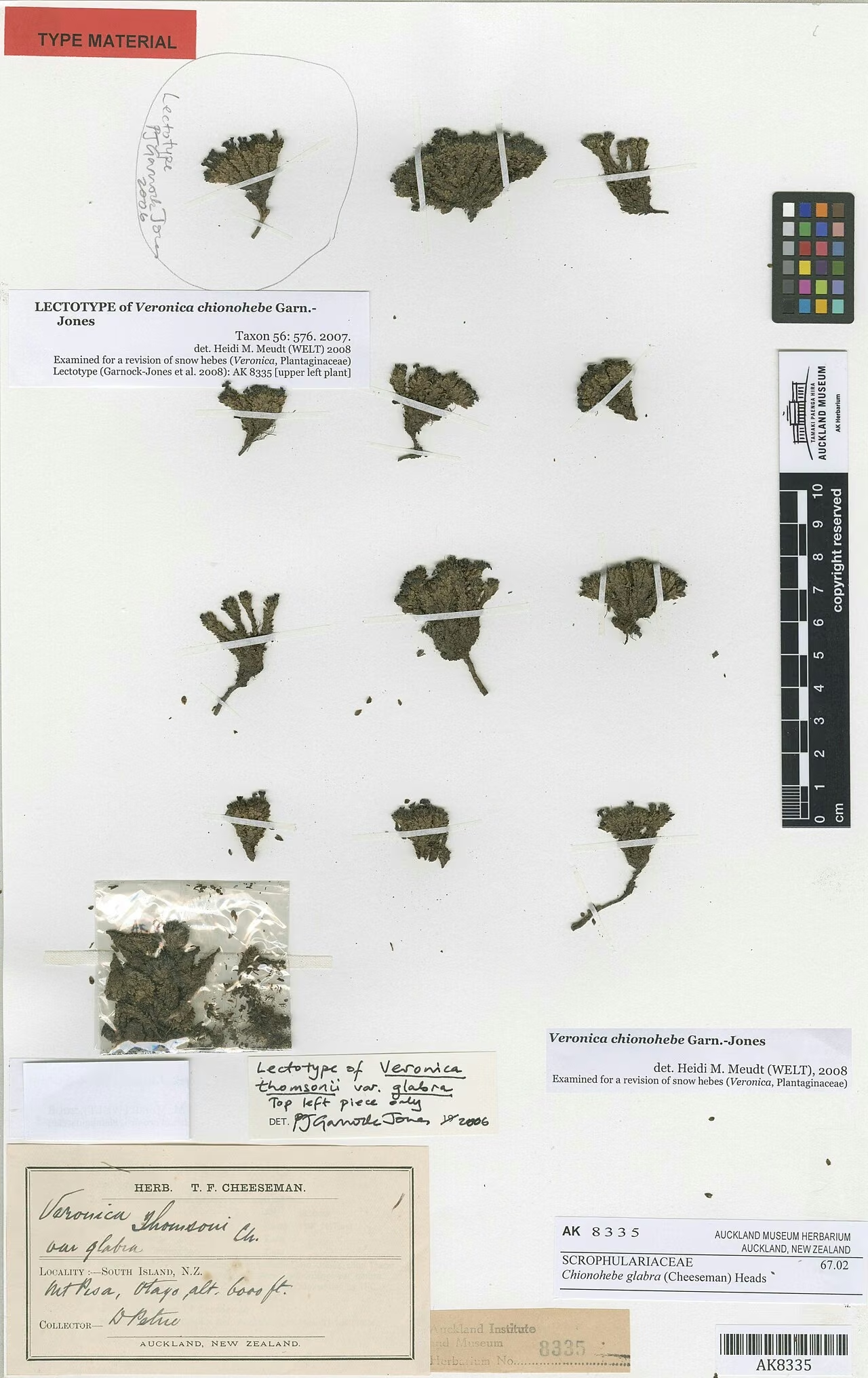
Veronica
Veronica chionohebe
Last updated:
Veronica chionohebe, formerly called Chionohebe glabra, is a tiny cushion-forming snow hebe endemic to the high block mountains of Central Otago. It forms low mats or cushions up to 5 cm tall of minute leaves under 5 mm long and bears single white flowers among the leaves in late summer. It grows in cushionfield and fellfield on the Pisa, Carrick, Old Woman, northern Old Man Range and Garvie Mountains, between about 1360 and 1890 m, usually in damp stony hollows below summer snowbanks. Its entirely hairless stems and leaves set it apart from related snow hebes. It is ranked At Risk - Naturally Uncommon. Explore more native ground covers in our native plant guide.
Plant Description
Veronica chionohebe is a low mat or cushion-forming subshrub up to about 5 cm tall, with hairless stems that lie along the ground or grow upright. Its thin leaves are oblanceolate to obovate, spoon-shaped or occasionally lanceolate to broadly ovate, only 1.8 to 4.6 mm long and 0.7 to 2.3 mm wide, and packed closely along the shoots.
White flowers are borne singly in the leaf axils, each with five petals and a corolla tube 1.6 to 3.5 mm long. The species is dioecious: male and female flowers occur on separate plants, and male flowers have larger corollas and dark anthers. Flowering is mainly from January to March, sometimes from December, and fruit ripens from March. Seeds are spread by ballistic release from the capsule, by wind and by water.
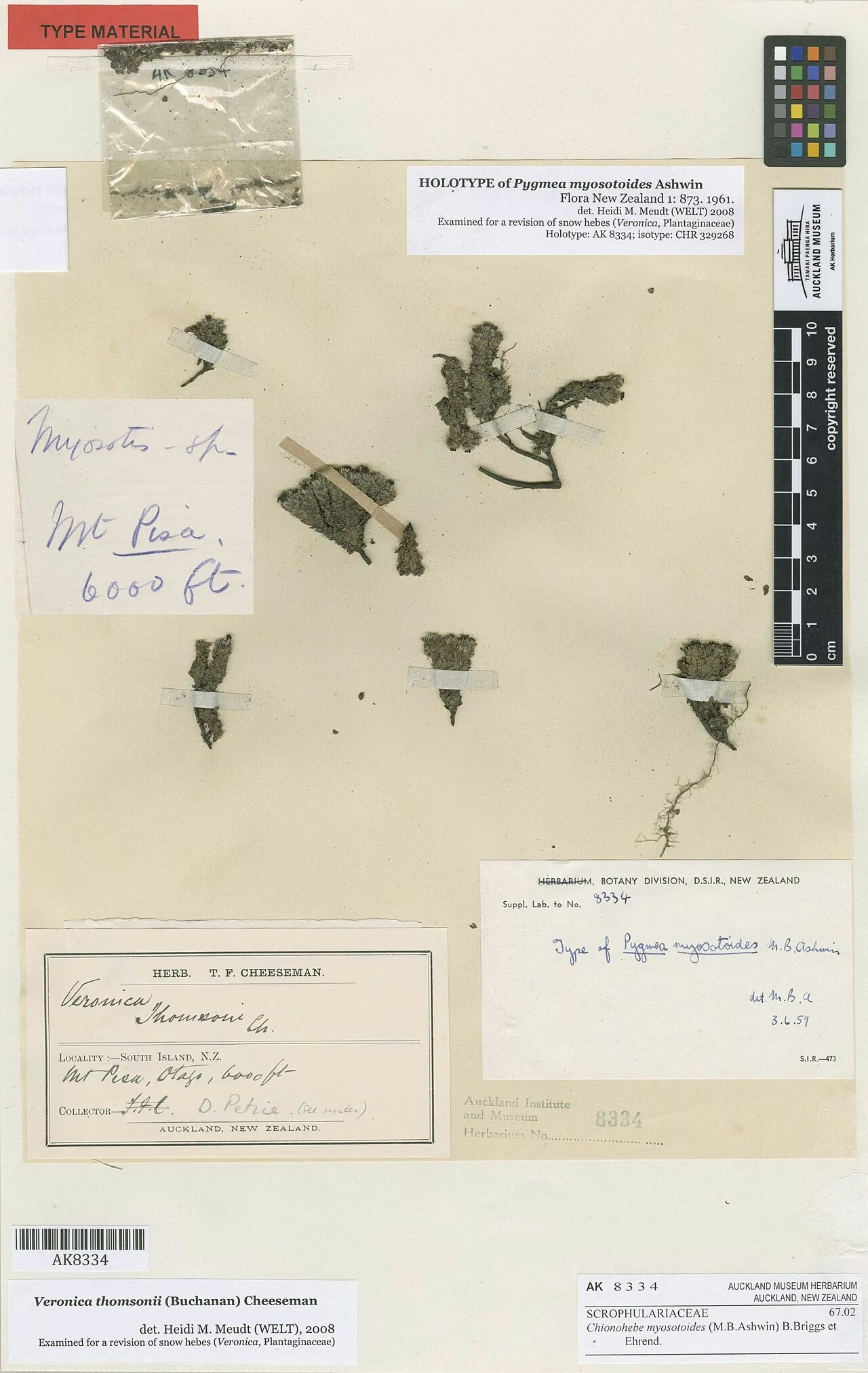
The closely related Veronica thomsonii grows on some of the same ranges, including the Garvie Mountains and the Pisa Range. Veronica chionohebe differs in being entirely hairless, with no hairs on the upper leaf surface and marginal hairs absent or very few, and it favours damper sites. The Flora of New Zealand notes possible hybridisation, and molecular studies have not found clear genetic separation between the two despite their differences in form and habitat.
Quick Facts
| Scientific Name | Veronica chionohebe |
|---|---|
| Height | To 0.05 m |
| Spread | Small mats or cushions (no published width) |
| Water Needs | Moist; grows in snowmelt seepages |
| Light | Full sun, open alpine sites |
| Frost Tolerance | Very high; high alpine |
| Salt Tolerance | No information available; a high alpine plant |
| Growth Rate | Very slow |
| Lifespan | Perennial |
Climate Best Suited to
Suited only to a harsh high alpine climate, with long snow cover, intense cold, strong winds and short summers, where meltwater from late snowbanks keeps the ground damp into summer.
Regional Suitability
| City | Climate Suitability |
|---|---|
| Auckland | Low |
| Wellington | Low |
| Christchurch | Low |
| Dunedin | Low |
Plant Habitat
Veronica chionohebe is endemic to Central Otago in the South Island. It is known from the Pisa Range, Carrick Range, Old Woman Range, northern Old Man Range and Garvie Mountains, the broad schist block mountains of the inland south. Recorded elevations range from 1360 to 1890 m.
It grows in cushion herbfield and fellfield, favouring damp, sheltered sites in gullies and on slopes, often downhill from summer snowbanks where meltwater flows. It also occupies stony seepages and hollows, which are wetter than the exposed ridges and tors where Veronica thomsonii tends to grow.
Growing Requirements
Soil Requirements
It grows in stony, gravelly alpine soils kept moist by snowmelt. No cultivation soil requirements have been published.
- Stony, gritty soil with constant moisture
- Cool roots are essential
- Low fertility, as in its alpine habitat
Light Requirements
In the wild it is exposed to the strong light of open alpine cushionfield, although its gullies and hollows give some shelter.
- Bright light with cool temperatures
- Shade from heat would be essential at low altitude
Water Requirements
Its sites are fed by meltwater from late-lying snowbanks, so the root zone stays damp well into summer.
- Consistently moist but moving water, not stagnant
- Drying out is likely to be fatal
- Cold winter dormancy under snow is part of its natural cycle
Planting and Establishing
Veronica chionohebe is not grown commercially and is not suited to ordinary gardens. Like its relative Veronica thomsonii, which NZPCN describes as difficult and best left in the wild, it would need specialist alpine house conditions to have any chance in cultivation.
Plants should not be dug from the wild. Anyone wanting to see it is better advised to visit its Central Otago ranges in late summer, taking care not to trample the fragile cushions in snowbank hollows.
Ecological Role
Being dioecious, Veronica chionohebe relies on pollen moving from male to female plants. The white, open flowers of snow hebes are typical of New Zealand alpine flowers pollinated by flies, small native bees and moths, though pollinators of this particular species have not been documented.
Its seeds disperse by being flung from the capsule, and by wind and water, which suits a plant of snowmelt seepages where running water can carry seed downslope. As a cushion plant, it helps stabilise gravelly ground in the cushionfield.
Uses & Significance
Garden Uses
It has no practical garden use. It is a plant to appreciate in the wild or in specialist scientific collections.
- Specialist alpine house collections only
- Field study of Central Otago cushionfield flora
- Not suitable for gardens or containers outdoors in lowland areas
Ecological Value
It is part of the distinctive snowbank and cushionfield flora of the Central Otago block mountains, one of New Zealand's most specialised alpine plant communities.
- Contributes to plant cover in snowbank hollows
- Flowers provide food for alpine insects
- A range-restricted endemic of Central Otago
Landscaping Uses
This species has no realistic landscaping role. Its value lies in the natural landscape of the Old Woman, Pisa and Garvie ranges, where its small green cushions dot damp hollows among stones and snowbank vegetation.
Gardeners inspired by it can create a similar look in a scree or trough garden using commercially available cushion plants rather than collecting wild material.
Seasonal Care Calendar
Spring
Plants usually remain under snow well into spring on the high ranges.
- Snow cover protects plants
- Meltwater starts to feed the hollows
Summer
As snowbanks retreat, growth resumes and flowering may start in December, but peaks later.
- Occasional December flowers
- Cushions green up in meltwater
Autumn
Flowering continues from January into March, and capsules ripen from March.
- Main flowering until March
- Seed dispersed by ejection, wind and water
Winter
Plants are dormant beneath snow, insulated from the extreme cold of the open ridges.
- Fully dormant
- Snow cover is essential protection
When to Prune and How Much
No pruning is appropriate. The plant is a tiny cushion whose growth is extremely slow, and any cutting would damage it.
In the rare case of an alpine house specimen, simply remove any dead or rotting shoots carefully with fine tweezers.
How to Grow Veronica
No propagation method specific to Veronica chionohebe has been published, and it is not available in cultivation. NZPCN describes its close relative Veronica thomsonii as difficult to grow, recommending that it should not be removed from the wild and that it needs specialised alpine house cultivation, and the same caution applies here. The notes below describe how specialist alpine growers generally approach snow hebes. Because it is ranked At Risk - Naturally Uncommon and grows mostly on conservation land, any seed collection requires Department of Conservation permission, and it is dioecious, so seed is only produced where male and female plants grow together.
From Seed
Seed is the only method that does not harm wild plants. Capsules ripen from March and open to release seed, so timing is important.
- Check female plants from March for capsules that are beginning to split.
- Collect a small number of capsules under permit, leaving most to seed naturally.
- Sow on the surface of a very gritty alpine mix.
- Give the trays a period of cold, moist chilling to mimic winter snow cover.
- Keep seedlings cool and evenly moist in an alpine house.
From Cuttings
Small shoot cuttings are sometimes used by alpine specialists for cushion-forming hebes, but no success has been recorded for this species.
- Take only from cultivated plants, never from the wild.
- Use tiny shoot tips in pure pumice or grit.
- Keep cool, shaded and humid until rooted.
Pests & Diseases
No specific pests or diseases are recorded. Possible pressures in the wild include trampling by people and stock in accessible snowbank hollows and grazing by hares.
In alpine house culture, snow hebes are prone to rotting in warm, humid air, which is likely to be the main problem for this species.
Cultural Significance
No Māori name or traditional use is recorded for Veronica chionohebe in the sources consulted. It was first named Veronica thomsonii var. glabra by Thomas Cheeseman in 1906, the word glabra meaning hairless.
It was later treated as Chionohebe thomsonii var. glabra and then raised to species as Veronica chionohebe by the botanist Heads. When Phil Garnock-Jones and colleagues merged Chionohebe into Veronica in 2007, it received the new name Veronica chionohebe, preserving the memory of the old snow hebe genus.
Bonus Tip
If you are botanising on the Old Woman or Pisa Range in late summer, look for this species in the wet gravel below lingering snowbanks rather than on the dry ridges. Check the leaves with a hand lens: completely hairless leaves point to Veronica chionohebe, while a band of stiff hairs on the leaf indicates Veronica thomsonii.
Related Plants
Explore other native plants that share similar characteristics or habitats with Veronica (Veronica chionohebe), offering further insights into New Zealand's diverse flora. These related species provide context and opportunities for complementary planting in your garden.
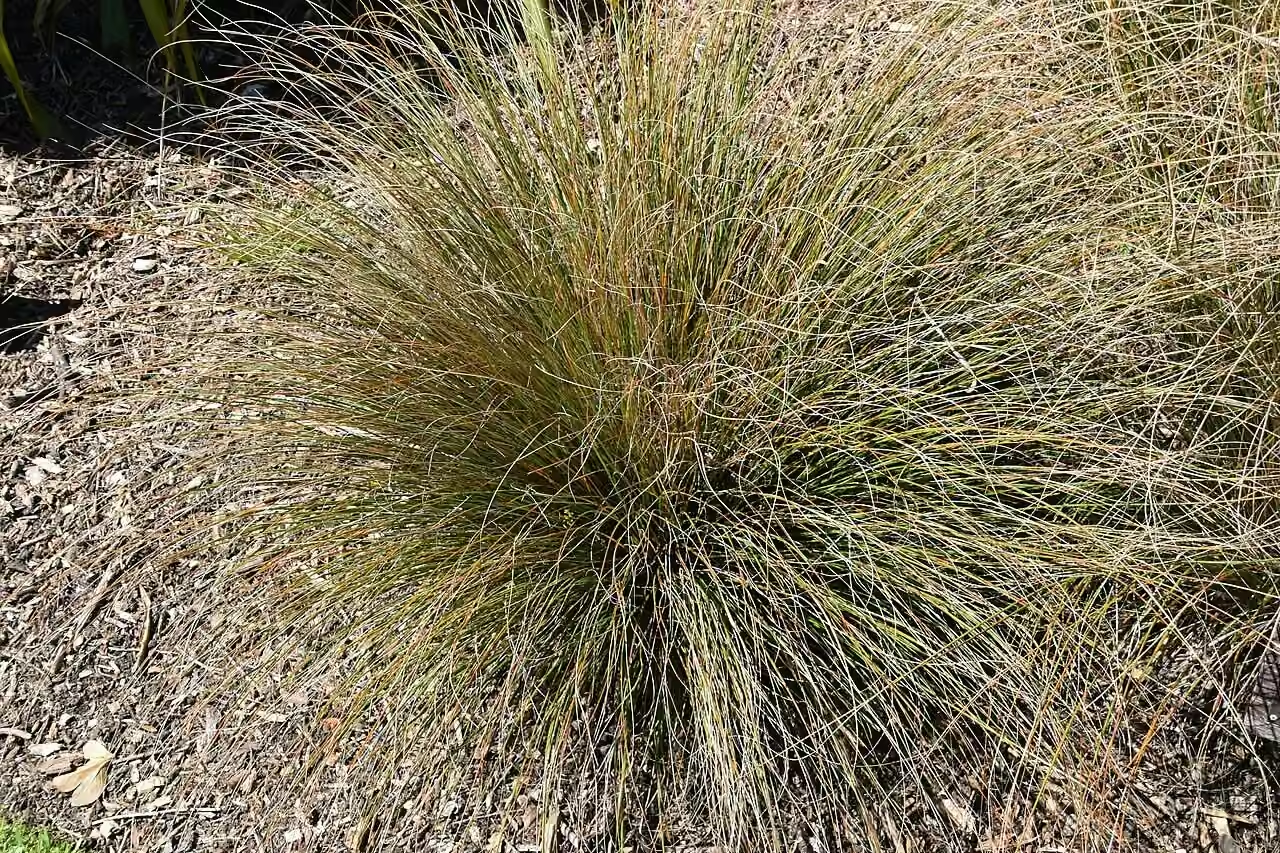
Red Hills Snow Tussock
Chionochloa defracta
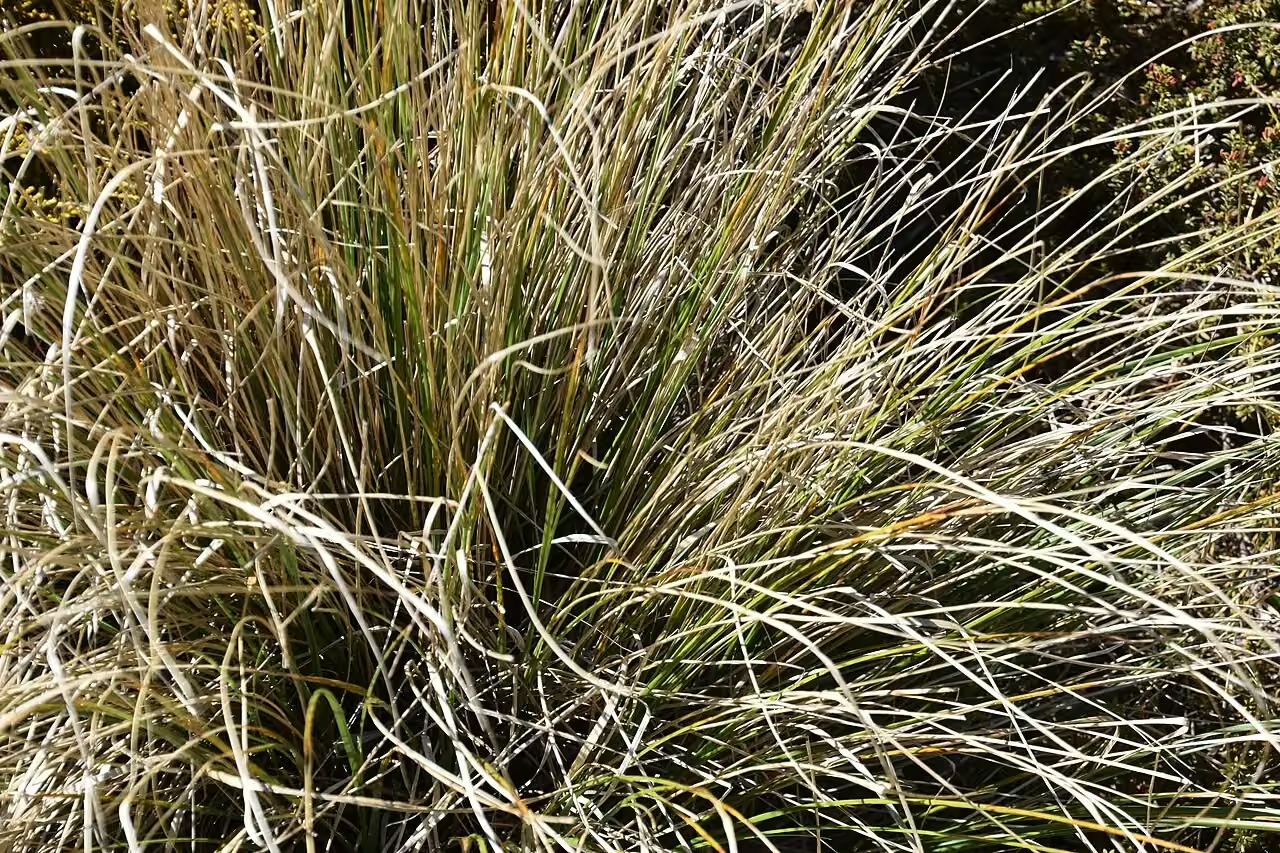
Slim Snow Tussock
Chionochloa macra
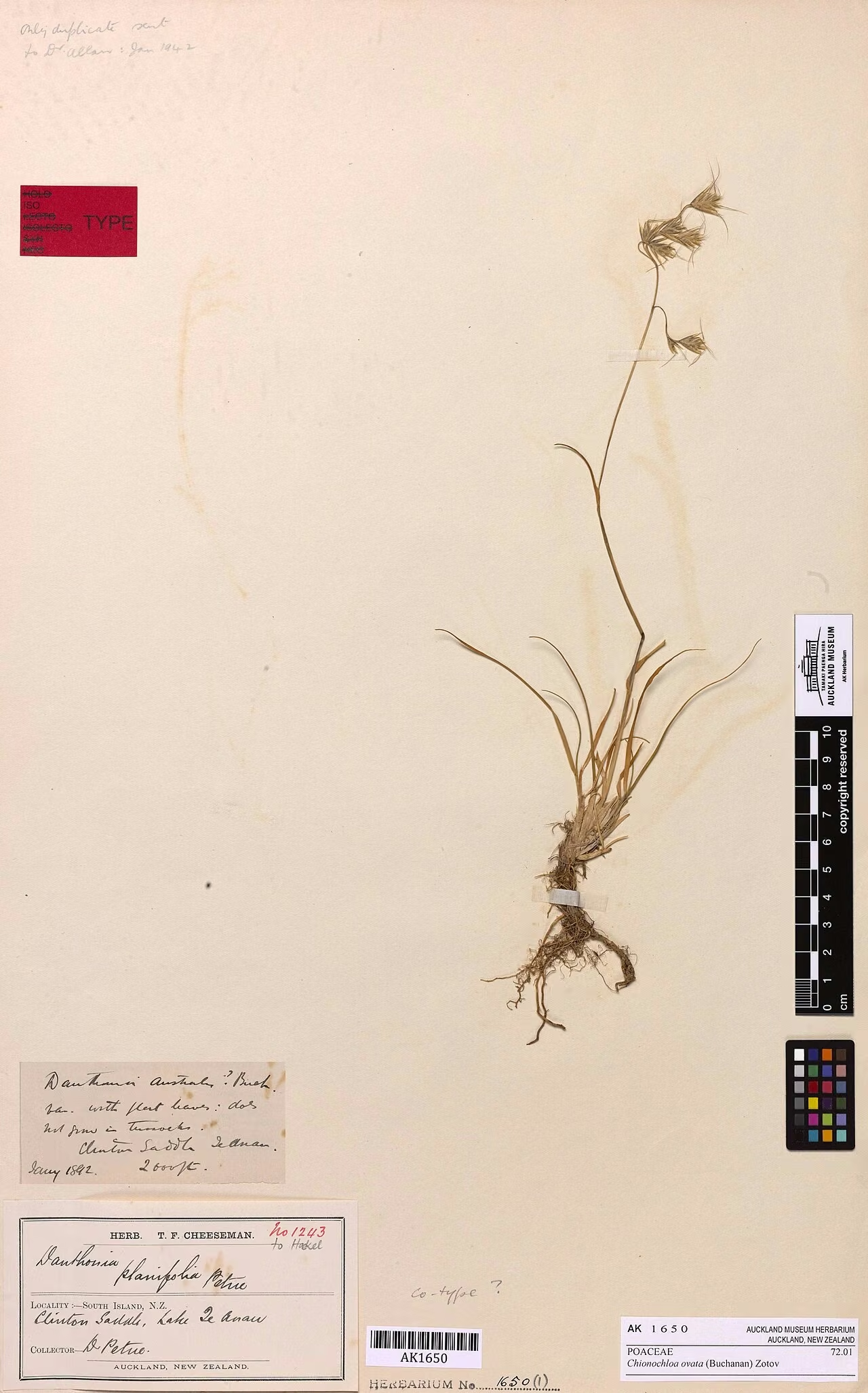
Squat Snow Tussock
Chionochloa ovata
Terete-Leaved Snow Tussock
Chionochloa teretifolia
Veronica thomsonii
Veronica thomsonii
Leafless Clematis
Clematis afoliata
Clematis marata
Clematis marata
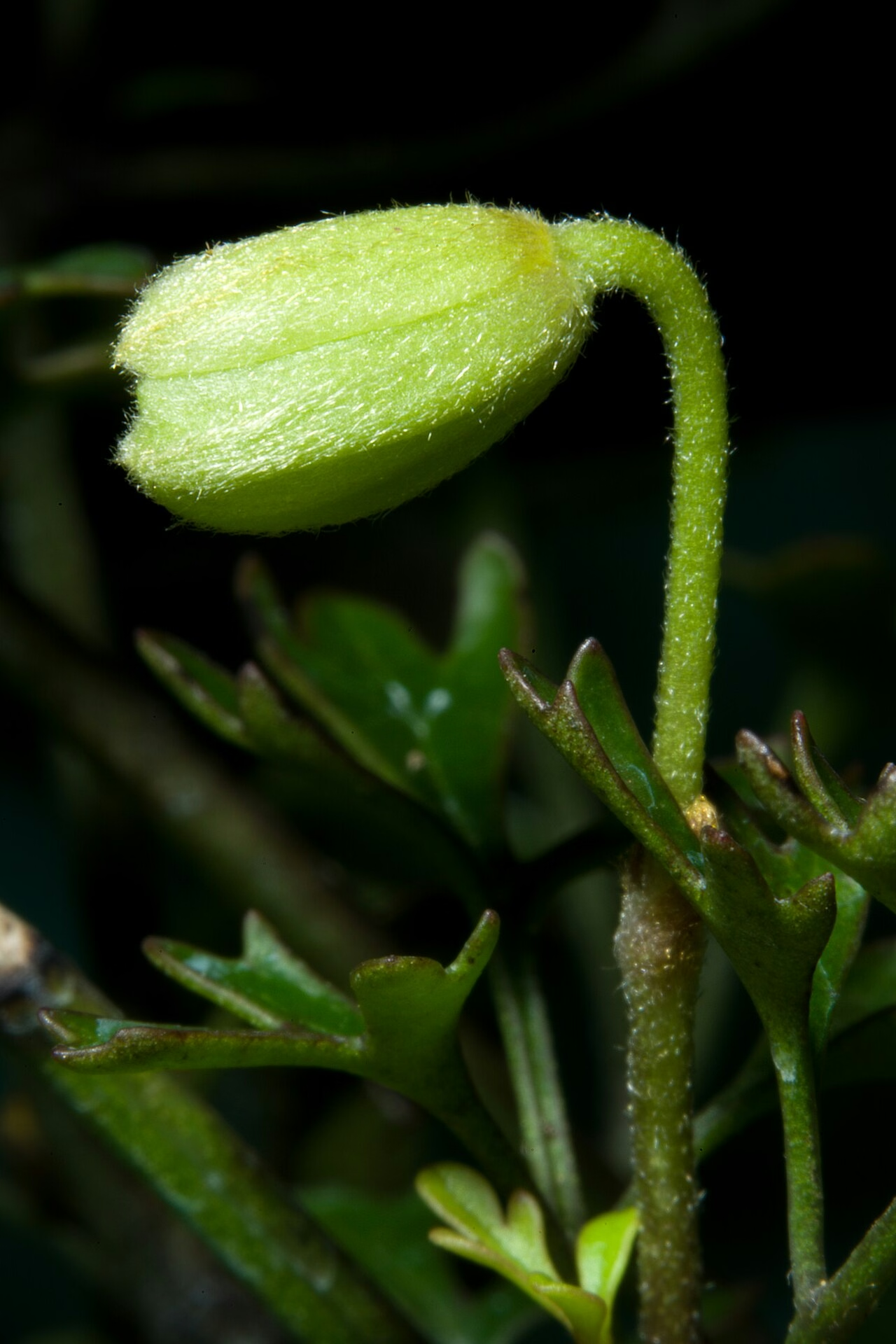
Clematis petriei
Clematis petriei
Plant Conservation
Veronica chionohebe is ranked At Risk - Naturally Uncommon (2023) with qualifiers Range Restricted and Sparse, and it is Regionally Naturally Uncommon in Otago (2025). It has been classed as naturally uncommon or range restricted in every assessment since 2004.
Its habitat on the Central Otago block mountains includes conservation areas. Keeping vehicles and stock out of snowbank hollows, managing recreational access and watching for climate warming, which could shrink the late snowbanks it depends on, are the key concerns for its future.
Frequently Asked Questions
What is the current name for Veronica chionohebe?
It is now Veronica chionohebe. The snow hebe genus Chionohebe was merged into Veronica in 2007, and this species was renamed Veronica chionohebe at that time.
Where does Veronica chionohebe grow?
Only in Central Otago, on the Pisa Range, Carrick Range, Old Woman Range, northern Old Man Range and Garvie Mountains, at about 1360 to 1890 m.
How do you tell Veronica chionohebe from Veronica thomsonii?
Veronica chionohebe has entirely hairless stems and leaves with few or no marginal hairs, while Veronica thomsonii has a dense band of stiff hairs on the upper leaf surface and ciliate leaf margins.
Is Veronica chionohebe rare?
Yes. It is ranked At Risk - Naturally Uncommon because it is range restricted and sparse, confined to a handful of Central Otago mountain ranges.
Sources and Further Reading
The botanical, growing, and conservation details for Veronica (Veronica chionohebe) on this page draw on the New Zealand plant references below. Consult them for full technical records and the latest distribution data.