Koru
Lobelia physaloides
Last updated:
Koru or colensoa (Lobelia physaloides, long known as Colensoa physaloides) is a soft, densely branched shrub up to 1 m tall and wide, endemic to northern New Zealand. It has large, thin, coarsely toothed leaves, clusters of tubular violet or dark blue flowers 3 to 5 cm long, and round berries that are blue, white, or white streaked with blue. Once widespread in coastal and lowland forest from the Three Kings Islands to about Whangārei, it has been browsed out of most mainland sites and is now common mainly on predator- and browser-free islands such as the Poor Knights. It is ranked Nationally Vulnerable. Explore more native shrubs in our native plant guide.
Plant Description
Lobelia physaloides is a densely branched shrub up to 1 m tall and 1 m across, with a woody rootstock and base but soft upper growth. The branches are square in cross-section, green or purple and softly hairy. Leaves are alternate on stout, fleshy stalks up to 10 cm long, and the blades are large and thin, typically 70 to 150 mm long and 40 to 60 mm wide, dark green, broadly ovate to oblong, with coarsely serrated margins and fine hairs mostly on the veins.
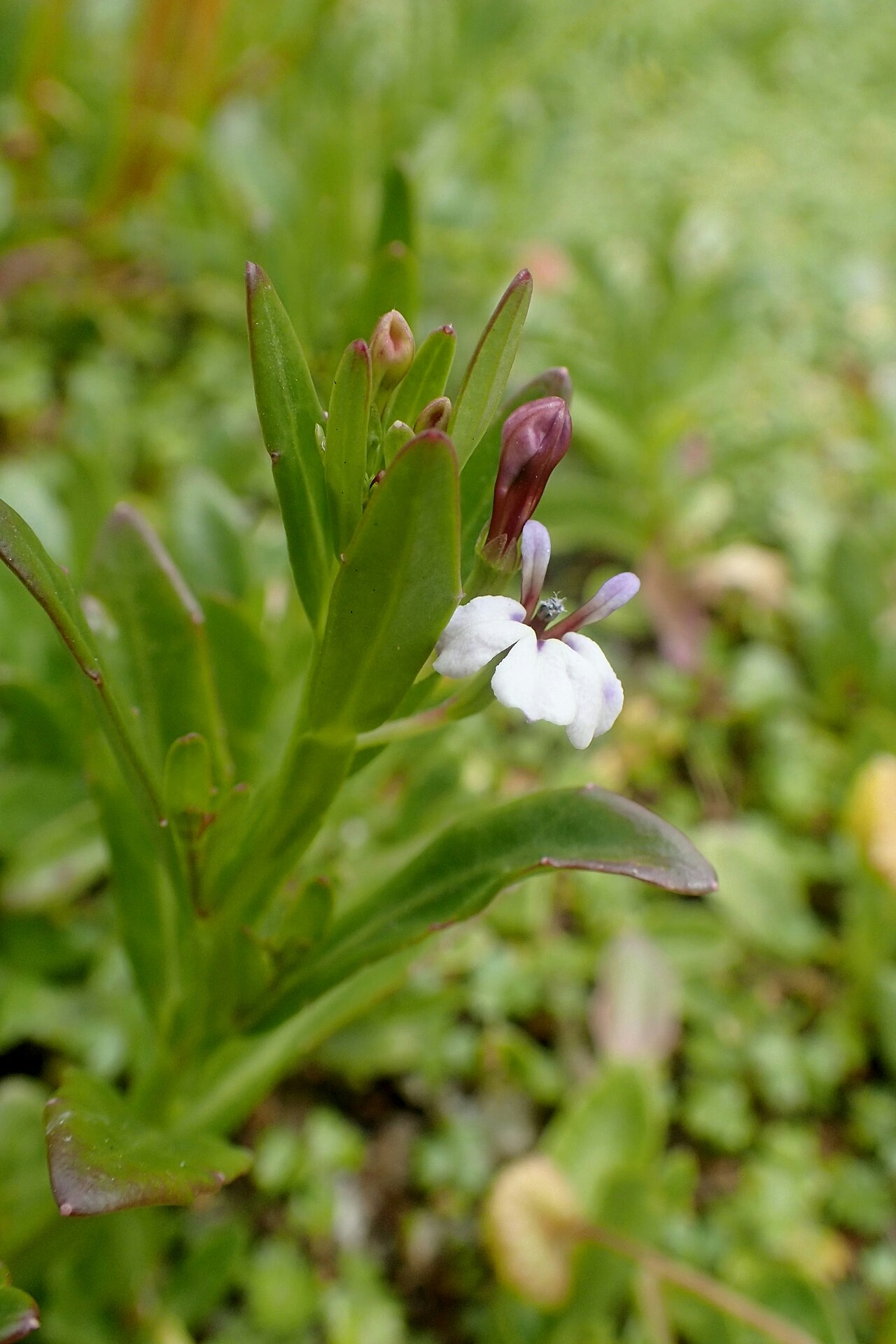
Flowers are borne in terminal racemes of about 10 to 15 flowers on slender, hairy stalks around 20 mm long. The hairy, tubular corolla is 30 to 50 mm long, violet, dark blue or rarely white, with a three-toothed lower lip and a deeply two-cleft upper lip. Plants can flower at any time of year but mostly between August and January.
The fruit is a round berry 10 to 15 mm across, blue, white with blue spots or streaks, or white, containing tiny orange to orange-brown seeds 0.6 to 0.9 mm long. NZPCN lists no similar taxa: the combination of large soft toothed leaves, long tubular blue flowers and fleshy berries is unique in the New Zealand flora.
Quick Facts
| Scientific Name | Lobelia physaloides |
|---|---|
| Height | Up to 1 m |
| Spread | Up to 1 m |
| Water Needs | Moderate to high; likes damp, sheltered sites |
| Light | Semi-shade to shade |
| Frost Tolerance | Low; a northern coastal species |
| Salt Tolerance | No reliable information available |
| Growth Rate | Fast |
| Lifespan | Perennial |
Climate Best Suited to
Suits mild, frost-free, humid northern coastal climates. It needs shelter, shade and consistent moisture rather than heat and sun.
Regional Suitability
| City | Climate Suitability |
|---|---|
| Auckland | High |
| Wellington | Medium |
| Christchurch | Low |
| Dunedin | Low |
Plant Habitat
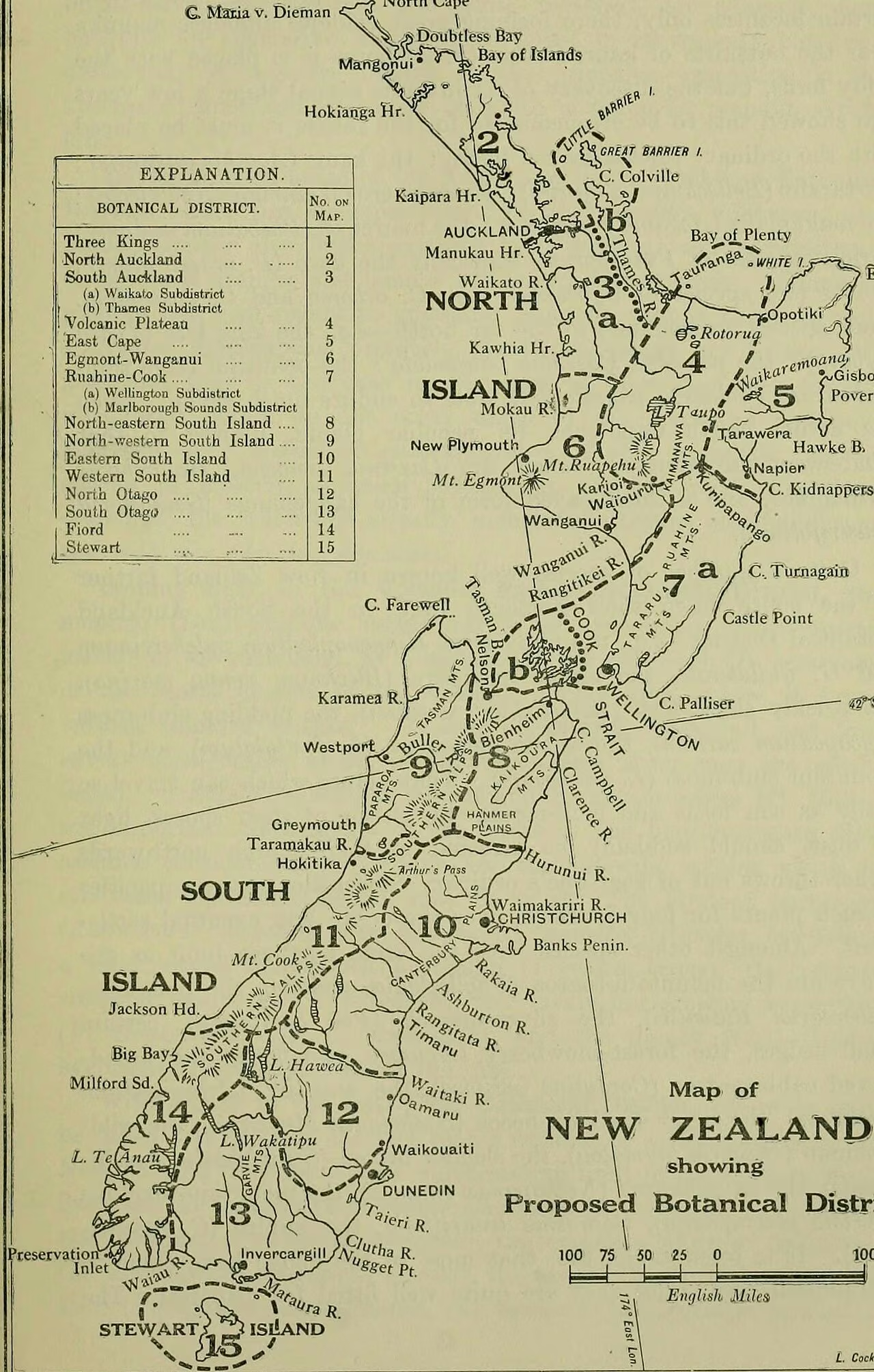
Lobelia physaloides is endemic to northern New Zealand: Manawatāwhi/Three Kings Islands, and the North Island from Te Paki south to about Whangārei and Trounson Kauri Forest, as well as the Poor Knights Islands, Hen Island/Taranga and Rakitu Island. It was once widely distributed in coastal and lowland forest on the mainland but has largely vanished there.
It grows in coastal and lowland forest, often along stream sides or in damp, half-shaded sites. On browser-free offshore islands it can be common, while on the mainland it persists mostly on cliff faces and boulder falls beyond the reach of browsing animals.
Growing Requirements
Soil Requirements
In the wild it grows in moist forest soils along streams and in damp, sheltered hollows.
- Moist, humus-rich soil
- Reasonable drainage despite constant moisture
- Leaf litter mulch helps keep roots cool and damp
Light Requirements
NZPCN recommends semi-shaded to shaded spots under trees, reflecting its forest-floor and stream-side habitat.
- Semi-shade to shade
- Protect from hot afternoon sun, which scorches the thin leaves
Water Requirements
It is a plant of damp places and does best with steady moisture.
- Keep soil moist year round
- Water during dry spells, particularly in summer
- A stream-side or damp shady corner is ideal
Planting and Establishing
Plant in a sheltered, frost-free, shady or semi-shaded spot with moist, organic soil, such as under established trees or beside a stream. It grows very fast and can fill its space within a season or two.
Protect plants from browsing animals: on the mainland, rabbits, hares, possums, goats and other browsers can strip this palatable plant quickly. Snails and slugs may also need controlling around young plants.
Ecological Role
Lobelia physaloides is a plant of the coastal forest understorey in the far north, thriving where browsing animals are absent. Its fleshy, coloured berries suggest dispersal by fruit-eating birds, although the specific dispersers are not documented in the sources consulted.
Its decline on the mainland illustrates how strongly browsing mammals have changed northern forest understoreys. On predator- and browser-free islands such as the Poor Knights and Three Kings it remains common, showing how it recovers once browsing is removed.
Uses & Significance
Garden Uses
A fast, showy native for shady, frost-free northern gardens, and a valuable plant for conservation collections.
- Shady borders and woodland gardens
- Stream-side plantings
- Large pots in sheltered courtyards
- Northland restoration projects with good animal control
Ecological Value
As a Nationally Vulnerable endemic, every cultivated and restored population helps secure its future.
- Long tubular flowers and fleshy berries in the forest understorey
- Indicator of successful browser control in northern forests
- Conservation planting candidate on pest-free sites
Landscaping Uses
Use koru as a lush, leafy understorey shrub beneath trees, where its large toothed leaves and violet-blue flower spikes brighten shade. It combines well with ferns and other moisture-loving forest plants.
Because it grows fast but is soft-wooded, treat it as a filler that can be replaced or renewed from cuttings every few years rather than as a permanent structural shrub.
Seasonal Care Calendar
Spring
Flowering is at its peak from August into spring, with violet-blue tubular flowers on terminal spikes.
- Feed lightly with compost
- Watch for slugs and snails on new growth
Summer
Flowering tapers off by January, and berries are most common from November to March.
- Keep well watered
- Collect ripe berries for fresh seed
Autumn
Late berries ripen and growth remains active in mild districts.
- Take cuttings
- Tidy straggly stems
Winter
In frost-free gardens it stays leafy and may produce occasional flowers, as it can flower at any time of year.
- Protect from frost in cooler areas
- Avoid waterlogging in cold weather
When to Prune and How Much
Trim back after the main flowering flush to keep plants bushy, since soft growth can become leggy in deep shade.
Old, woody or tired plants can be cut back hard or replaced with new plants from cuttings, which root easily.
How to Grow Koru
NZPCN describes Lobelia physaloides as easy from fresh seed and cuttings and very fast growing, which makes it one of the more rewarding threatened plants to raise. The berries ripen mostly between November and March, though fruit can be found at other times of year. Each berry holds many tiny orange seeds, so a single fruit can yield a large number of seedlings. Because this is a Nationally Vulnerable species, collect from cultivated plants rather than wild populations, and keep track of the origin of any plants you raise for restoration so that local genetic stock is respected.
From Seed
Sow seed fresh from ripe berries. The seed is very fine, so it should be sown on the surface.
- Pick fully coloured, soft berries
- Squash the berries and wash the tiny seeds free of pulp
- Sow on the surface of a fine, moist seed mix without covering
- Keep warm, shaded and humid, misting rather than watering from above
- Prick out seedlings into individual pots once they have a few leaves
From Cuttings
Stem cuttings root readily and give flowering plants quickly, which also makes cuttings the simplest way to replace old, leggy plants.
- Take 10-15 cm cuttings of healthy, non-flowering shoots
- Remove lower leaves and reduce large leaves by half
- Insert into a free-draining propagating mix
- Keep in a shaded, humid spot until rooted
- Pot on and grow in shade before planting out
Pests & Diseases
The main threat is browsing: NZPCN describes it as highly palatable, and browsing animals have removed it from most of its former mainland range. In gardens, possums, rabbits and other browsers may need to be excluded.
Slugs and snails can damage the soft leaves of seedlings and young plants, and frost can kill growth in colder districts.
Cultural Significance
NZPCN lists koru as one of its common names, and the missionary botanist Richard Taylor named it Salvia koru in 1855. No details of traditional Māori use were found in the sources consulted.
The former genus name Colensoa honoured William Colenso (1811-1899), the Cornish-born missionary, printer, botanist, explorer and politician. The epithet physaloides means like Physalis, the cape gooseberry, apparently referring to its berries.
Bonus Tip
If you have a shady, frost-free garden in the north, koru is one of the easiest threatened plants to grow and share. Root a few cuttings each year: it grows so quickly that you will always have replacements, and spare plants make good gifts for pest-controlled restoration projects.
Related Plants
Explore other native plants that share similar characteristics or habitats with Koru (Lobelia physaloides), offering further insights into New Zealand's diverse flora. These related species provide context and opportunities for complementary planting in your garden.
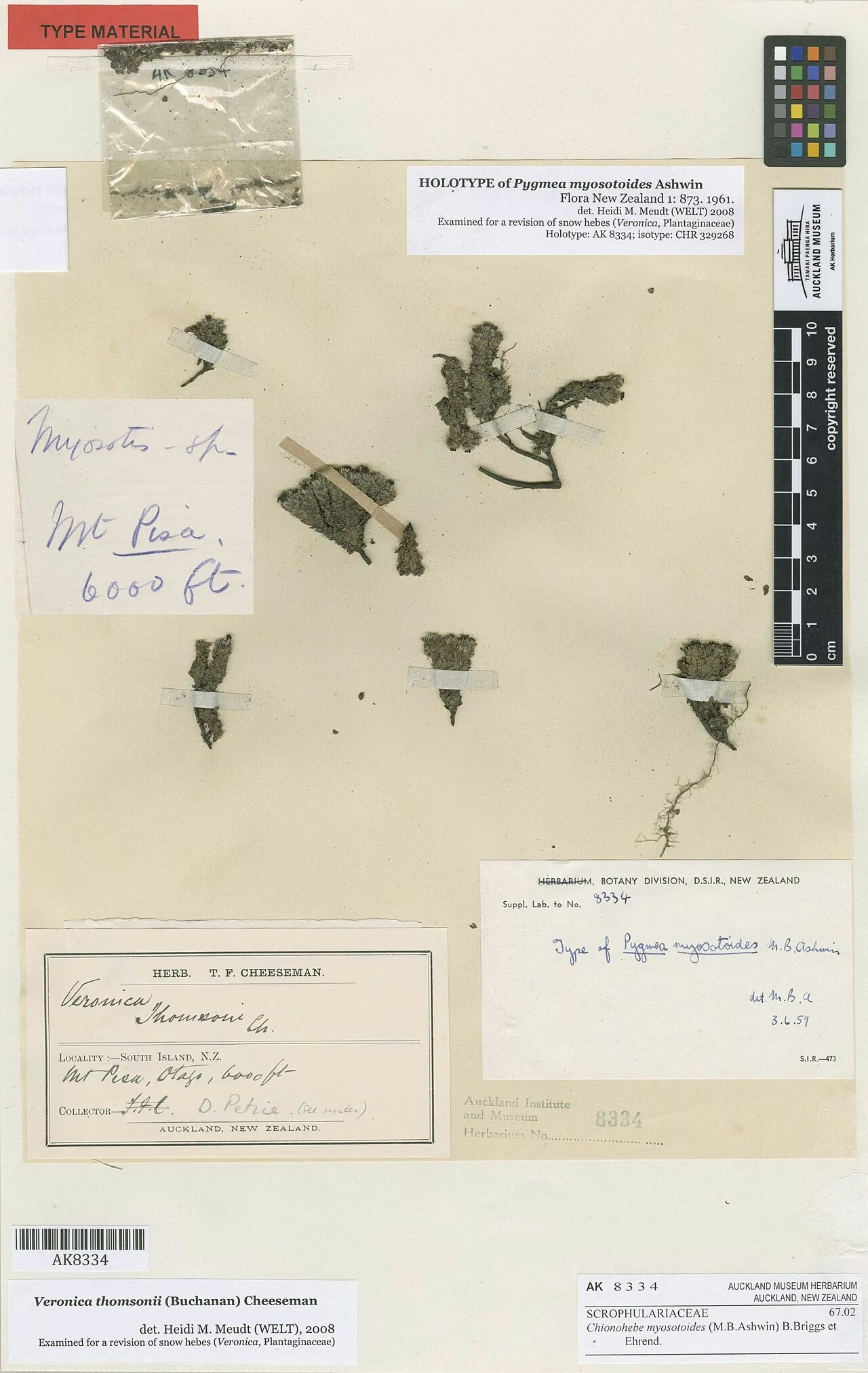
Veronica thomsonii
Veronica thomsonii
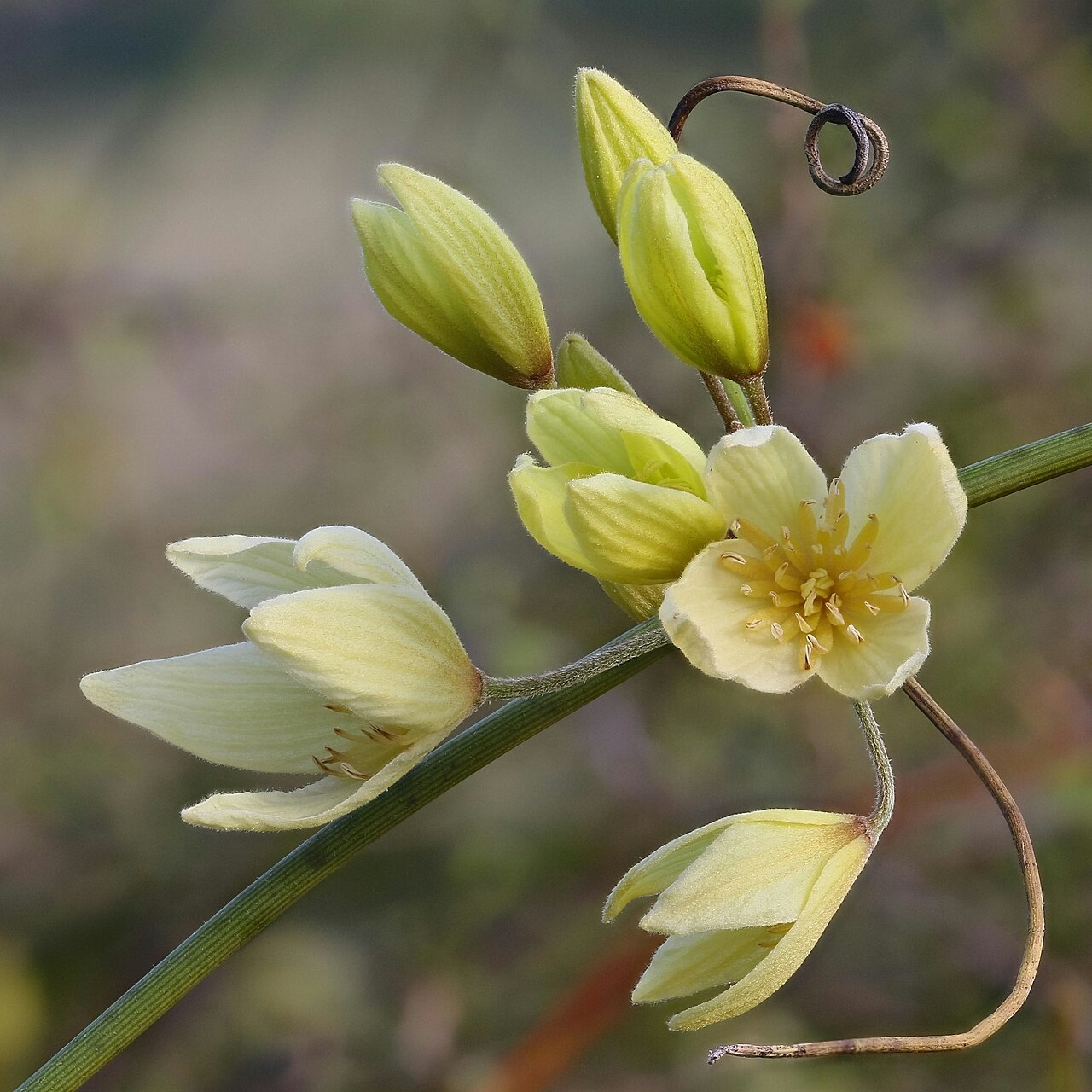
Leafless Clematis
Clematis afoliata
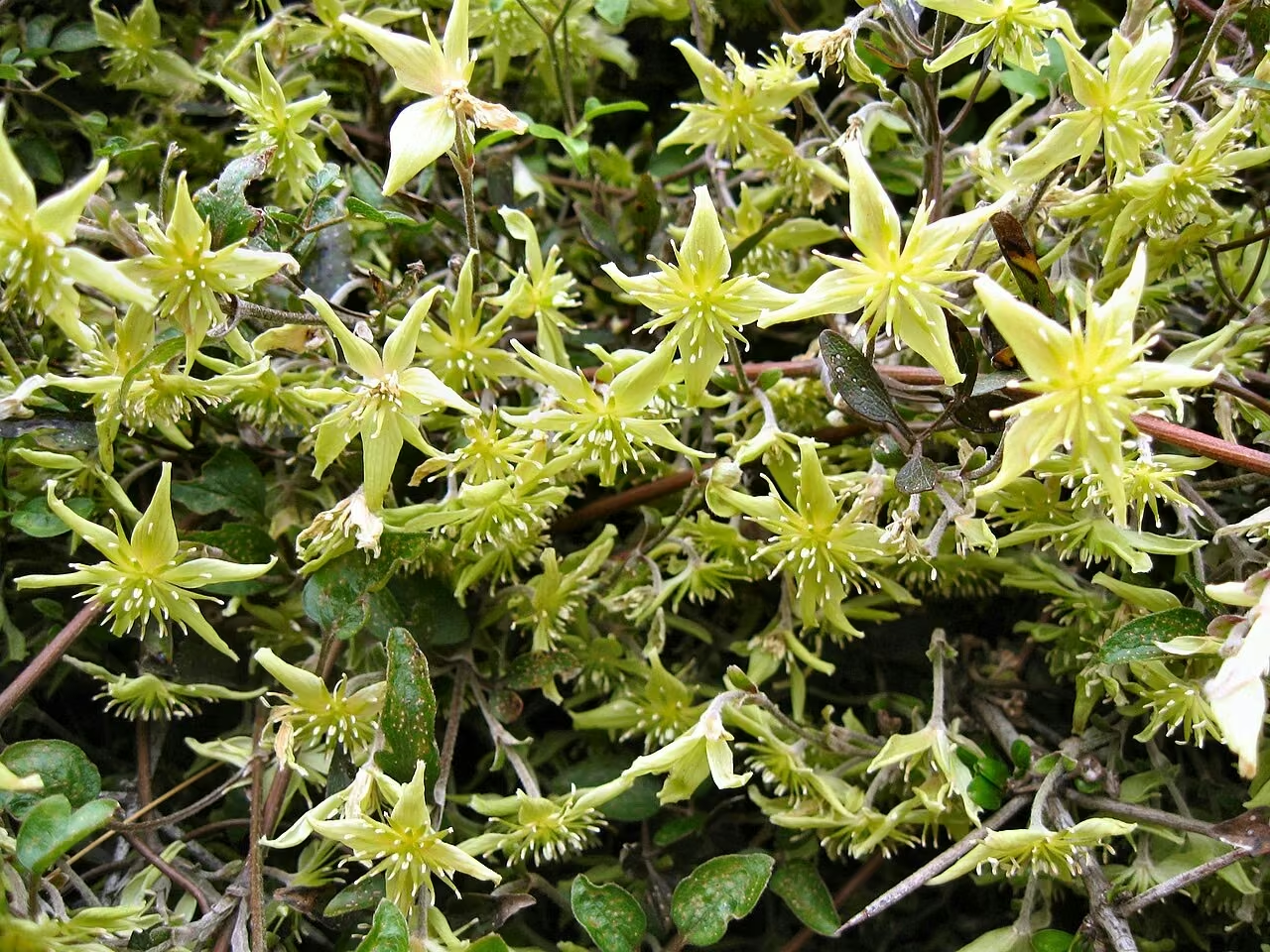
Clematis marata
Clematis marata
Clematis petriei
Clematis petriei
Colobanthus apetalus
Colobanthus apetalus
Colobanthus brevisepalus
Colobanthus brevisepalus
Colobanthus buchananii
Colobanthus buchananii
Shore Lobelia
Lobelia anceps
Plant Conservation
Lobelia physaloides is ranked Threatened - Nationally Vulnerable (2023) with the qualifiers Data Poor Size, Data Poor Trend and Partial Decline. It has virtually vanished from most of its former mainland habitat because it is highly palatable to browsing animals.
It remains common on browser-free islands, and NZPCN notes that it recovers once browsing animals are removed. Animal control in northern forests, cultivation and careful replanting into protected sites are the key actions for its recovery.
Frequently Asked Questions
Is Colensoa physaloides the same as Lobelia physaloides?
Yes. Colensoa physaloides and Pratia physaloides are older names for the same plant. Its genus has long been debated, but current treatments place it in Lobelia as Lobelia physaloides.
Why is koru (Lobelia physaloides) so rare on the mainland?
It is a highly palatable soft plant, and browsing animals have removed it from most of its former mainland habitat. On the mainland it now survives mostly on cliffs and boulder falls that animals cannot reach.
Is Lobelia physaloides easy to grow?
NZPCN says it is easy from fresh seed and cuttings and very fast growing. It suits semi-shaded to shaded spots under trees, especially along stream sides, in frost-free gardens.
What colour are colensoa flowers and berries?
The tubular flowers are violet, dark blue or rarely white. The round berries, 10 to 15 mm across, may be blue, white with blue spots or streaks, or plain white.
Sources and Further Reading
The botanical, growing, and conservation details for Koru (Lobelia physaloides) on this page draw on the New Zealand plant references below. Consult them for full technical records and the latest distribution data.