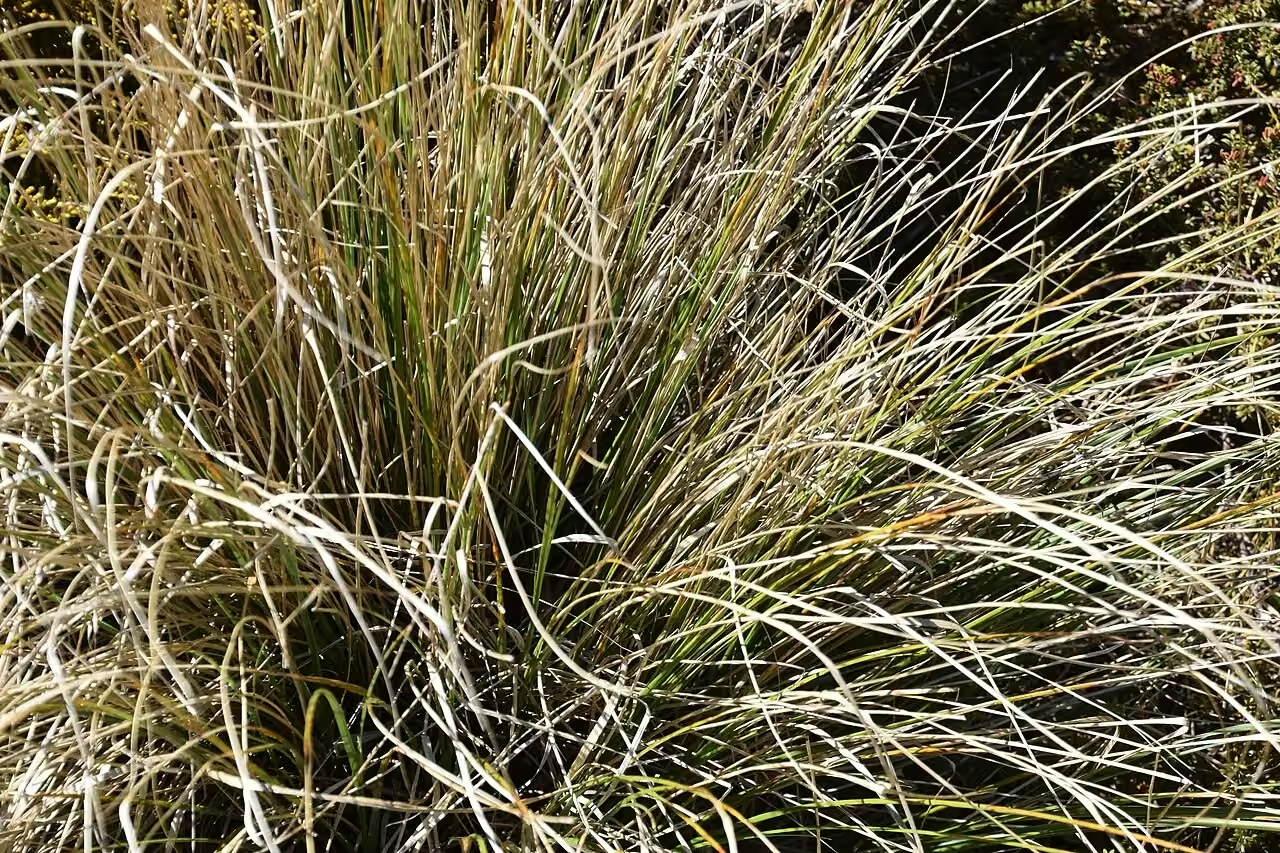
Slim Snow Tussock
Chionochloa macra
Last updated:
Slim snow tussock (Chionochloa macra) is a medium-sized snow tussock grass endemic to the South Island, east of the Main Divide from southern Marlborough to Southland. It has soft, narrow leaves up to 60 cm long, dark brown persistent sheaths and flowering stems to about 60 cm. It forms tussock grassland between roughly 500 and 1700 m, typically at higher altitude than narrow-leaved snow tussock on the drier eastern ranges, and appears on lower ground mainly on shaded slopes. It is a characteristic grass of ranges such as the Old Man Range in Central Otago and is classed as Not Threatened. Explore more native grasses and flaxes in our native plant guide.
Plant Description
Chionochloa macra is a moderate-sized tussock with persistent leaf sheaths up to 15 cm long and dark brown in colour. The leaf blades are soft rather than stiff, up to 60 cm long and 5 mm wide. Old sheaths remain on the plant and give the tussock base a dark appearance.
Flowering stems reach about 60 cm and carry an open flower head up to 25 cm long. Spikelets hold up to seven florets, and the lemmas are about 5 mm long, with dense hairs along the margins and beside the central nerve. As in other snow tussocks, the florets are dispersed by wind. Flowering dates are not given in NZPCN or the Flora of New Zealand.
Slim snow tussock is most likely to be confused with narrow-leaved snow tussock (Chionochloa rigida), which grows on the same eastern ranges at lower altitudes. Position on the slope helps: slim snow tussock takes over higher up, and it is the only one of the two that extends north of the central South Island.
Quick Facts
| Scientific Name | Chionochloa macra |
|---|---|
| Height | Leaves to 0.6 m; flowering stems to about 0.6 m |
| Spread | Medium tussock (no published width) |
| Water Needs | Moderate; tolerates dry eastern mountain climate |
| Light | Full sun; shaded aspects at lower altitude |
| Frost Tolerance | High; subalpine to low alpine |
| Salt Tolerance | No information available; an inland species |
| Growth Rate | Slow |
| Lifespan | Perennial |
Climate Best Suited to
Suited to the continental mountain climate of the eastern South Island, with cold winters, snow cover, strong temperature swings and drier conditions than west of the Main Divide.
Regional Suitability
| City | Climate Suitability |
|---|---|
| Auckland | Low |
| Wellington | Low |
| Christchurch | Medium |
| Dunedin | Medium |
Plant Habitat
Slim snow tussock is endemic to the South Island and grows only east of the Main Divide, from southern Marlborough to Southland. Herbarium collections come from Canterbury and Otago, including the Old Man Range in Central Otago, where it has been recorded in dry open tussock grassland and subalpine shrubland at around 1210 to 1630 m.
The Flora of New Zealand gives its altitude range as about 500 to 1700 m, in grassland, with lower-altitude populations on shaded aspects of rolling terrain. It typically occupies the higher, colder belt of the eastern ranges above narrow-leaved snow tussock, and north of the central South Island it occupies a broader altitudinal zone. It has also been collected from eroded tussock grassland at about 1540 m in Canterbury.
Growing Requirements
Soil Requirements
It grows on the stony, often thin and low-fertility soils of eastern South Island mountain grasslands, derived largely from schist and greywacke.
- Free-draining, stony or gritty soil
- Low fertility; no fertiliser needed
- Avoid heavy, waterlogged clay
Light Requirements
It is a plant of open grassland. At lower altitude it favours shaded aspects, suggesting cool conditions matter as much as sunshine.
- Full sun in cool climates
- A cool, south-facing slope in warmer districts
Water Requirements
The eastern ranges are drier than the west, but slim snow tussock still relies on winter snow and regular rain at altitude. Moderate moisture with good drainage is ideal.
- Water during establishment
- Avoid prolonged drought in lowland gardens
- Do not let roots sit in water
Planting and Establishing
Slim snow tussock is uncommon in nurseries, and most planting is in high-country restoration, such as revegetating tracks, ski-field earthworks or eroded grassland. Use plants grown from seed collected nearby, at a similar altitude, to keep local adaptation.
Plant in spring after the snow has melted, into firm, stony ground. Space plants to mimic the natural tussock cover and protect them from hares and rabbits until established.
Ecological Role
Slim snow tussock is wind pollinated, and its florets are dispersed by wind. Snow tussocks in the genus Chionochloa are well known for mast flowering, flowering heavily in some years and little in others, a strategy thought to swamp specialist seed predators; flowering records specific to this species were not found in the sources used.
Tall tussock grasslands on the eastern ranges, of which slim snow tussock is a key component at higher altitude, trap mist and snow, shade the soil and help maintain water yield to rivers. The tussocks shelter a wide variety of alpine invertebrates, lizards and small herbs.
Uses & Significance
Garden Uses
In cold southern and eastern gardens it can be used as a fine-leaved tussock in alpine-style plantings, though it is seldom available.
- Alpine or tussock garden in cool districts
- High-country restoration and erosion control
- Botanical collections of eastern South Island grasses
Ecological Value
It is a dominant snow tussock in the upper grasslands of the eastern South Island ranges, a vegetation type important for water catchment and alpine biodiversity.
- Helps catchments retain and release water
- Protects thin mountain soils from erosion
- Habitat for alpine invertebrates and lizards
Landscaping Uses
Its soft, slender leaves sway in the wind and give a gentle, flowing texture, suitable for a naturalistic tussock planting among schist rocks. Massed plants create the look of a Central Otago range-top.
Combine it with low alpine shrubs, celmisias and cushion plants, leaving space between tussocks so smaller plants are not shaded out.
Seasonal Care Calendar
Spring
Growth resumes as snow melts on the ranges. Plant out in spring in cold districts.
- Plant into stony ground
- Protect from rabbits and hares
Summer
Flowering stems may appear, especially in mast years for the genus. Check young plants for dryness.
- Water in long dry spells
- Note whether plants flower this year
Autumn
Any seed ripens and sheds from the open heads. Collect ripe florets for sowing.
- Collect seed promptly
- Sow fresh or keep cool and dry
Winter
Plants sit dormant under snow in the wild. In gardens they need no attention beyond good drainage.
- No feeding or pruning
- Check pots drain freely
When to Prune and How Much
Pruning is not needed. The persistent dark brown sheaths are a natural part of the plant and shelter its growing points from cold.
If desired, remove old flowering stems after the seed has shed, cutting them low without damaging the leafy shoots.
How to Grow Slim Snow Tussock
Neither NZPCN nor the Flora of New Zealand gives propagation notes for slim snow tussock. The guidance below follows the general practice for raising eastern South Island snow tussocks for restoration, combined with what is known of this species: it is a perennial tussock with wind-dispersed florets, and like other Chionochloa it may set seed heavily only in some years. That means seed for restoration often has to be collected opportunistically in good flowering seasons. Collect from conservation land only with Department of Conservation permission, and from private high country with the landholder's agreement.
From Seed
Seed is the usual way to raise snow tussocks. In good flowering years the open heads produce plenty of florets.
- Collect ripe heads in late summer or autumn as florets loosen.
- Dry the florets for a few days and remove obvious debris.
- Sow onto a free-draining seed mix and cover lightly with grit.
- Keep trays outdoors or in a cold frame and moist but not wet.
- Pot seedlings individually and grow for one to two seasons before planting out.
By Division
Cultivated tussocks can be divided to multiply a particular plant. Divisions take time to settle and should be handled gently.
- Divide in spring as new growth starts.
- Split the clump into pieces with several shoots and roots each.
- Trim leaves by half, pot into gritty mix and keep cool.
- Plant out once a strong root system has developed.
Pests & Diseases
No specific pests or diseases of slim snow tussock are documented. Introduced rabbits, hares and grazing livestock can damage snow tussock grasslands, and repeated burning historically reduced tussock cover in the eastern high country.
Invasive weeds such as wilding conifers and Hieracium (hawkweed) spread into eastern South Island tussock grasslands, competing with tussocks and smaller native plants.
Cultural Significance
No Māori name or traditional use specific to Chionochloa macra was found in the sources consulted. The genus name Chionochloa means snow grass, and macra means long or large in Greek-derived botanical Latin.
The species was described by Victor Zotov in 1970. Slim snow tussock grasslands form part of the iconic high-country landscapes of Canterbury and Otago that shaped pastoral farming history in the South Island.
Bonus Tip
When walking an eastern South Island range, note where the tussocks change as you climb: the point where slim snow tussock takes over from narrow-leaved snow tussock marks the colder upper belt of the range, and on lower slopes slim snow tussock tends to keep to the shadier, south-facing faces.
Related Plants
Explore other native plants that share similar characteristics or habitats with Slim Snow Tussock (Chionochloa macra), offering further insights into New Zealand's diverse flora. These related species provide context and opportunities for complementary planting in your garden.
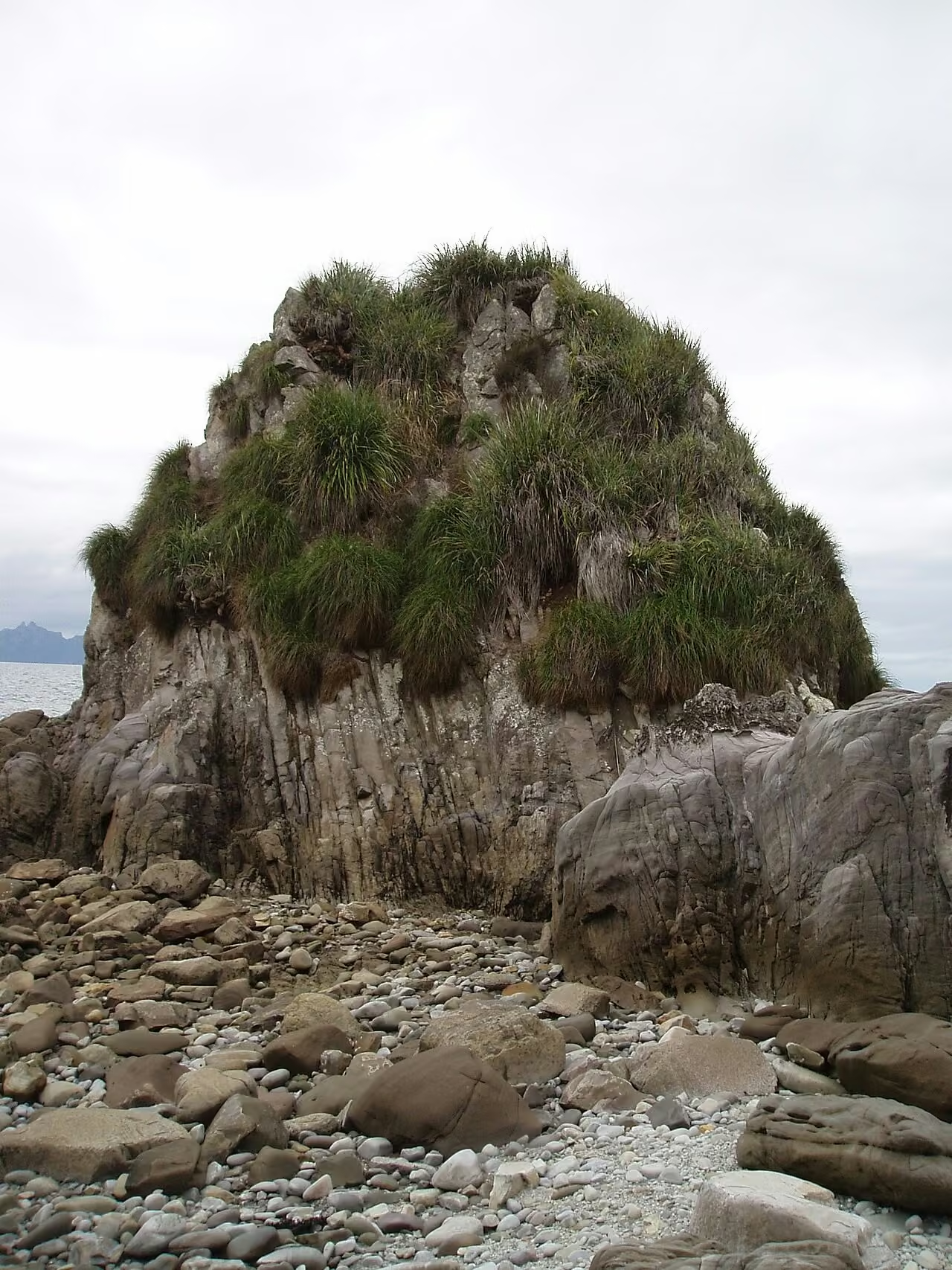
Coastal Tussock
Chionochloa bromoides
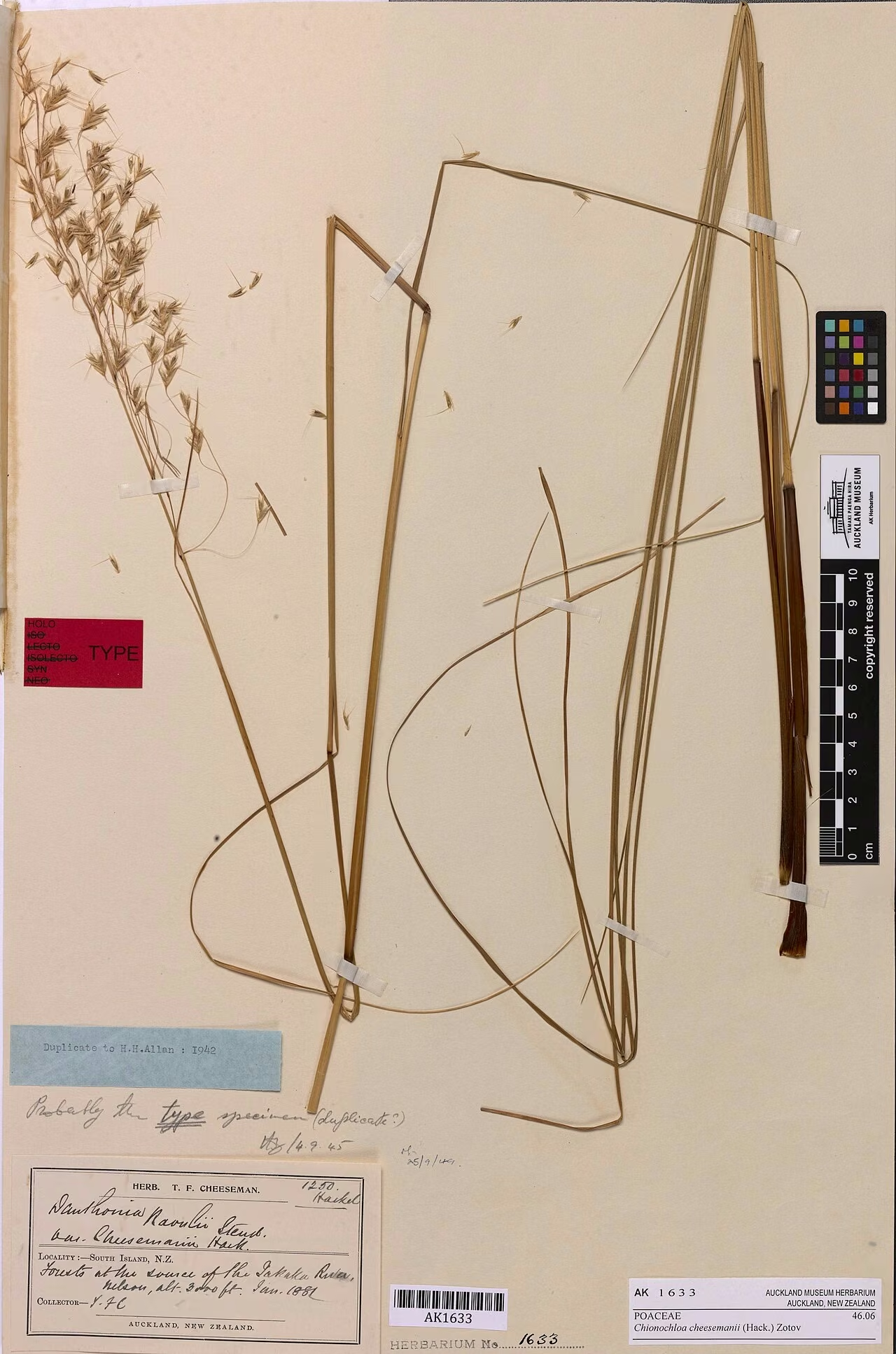
Narrow-Leaved Bush Tussock
Chionochloa cheesemanii
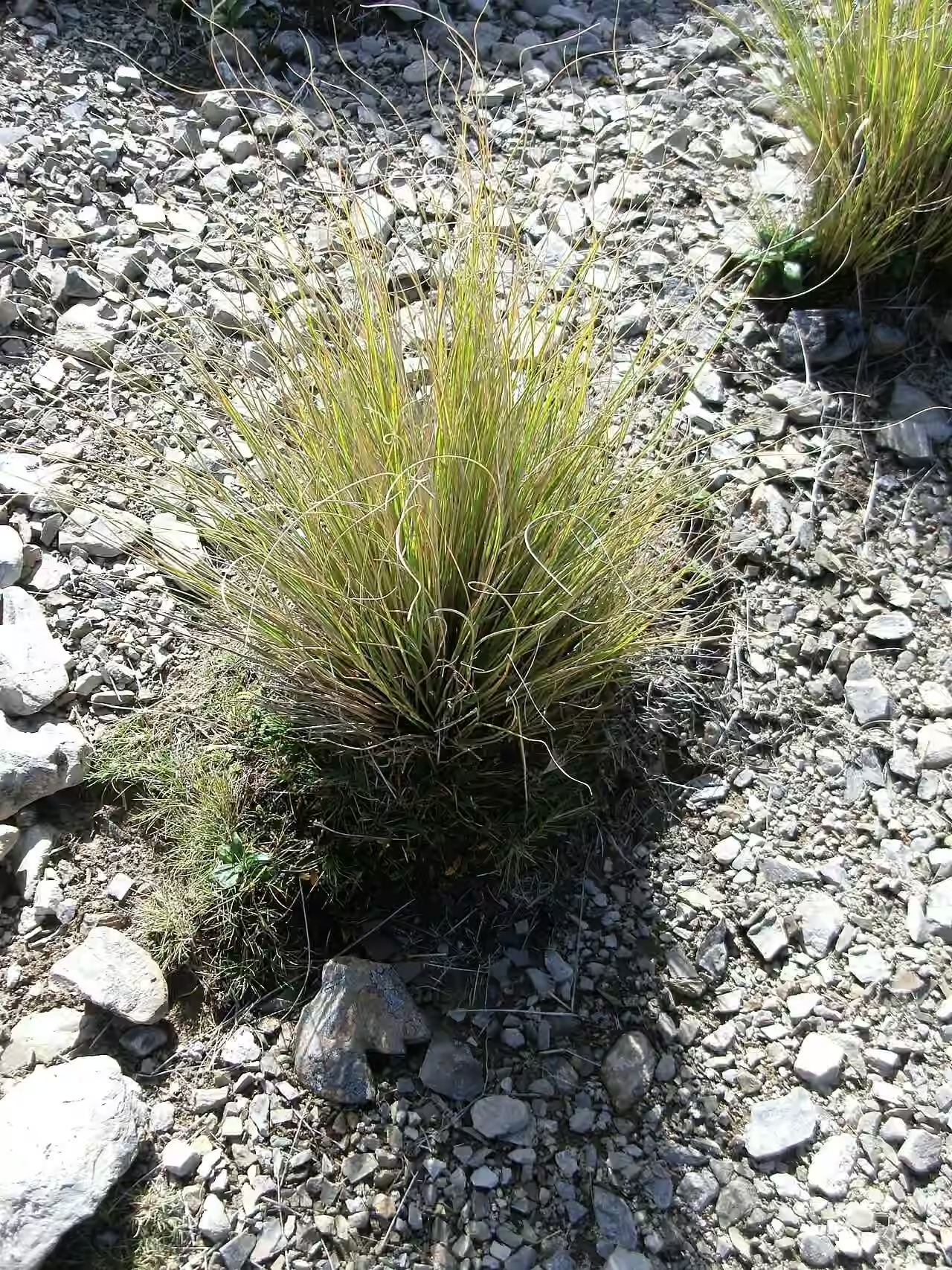
Pungent Snow Tussock
Chionochloa crassiuscula subsp. crassiuscula
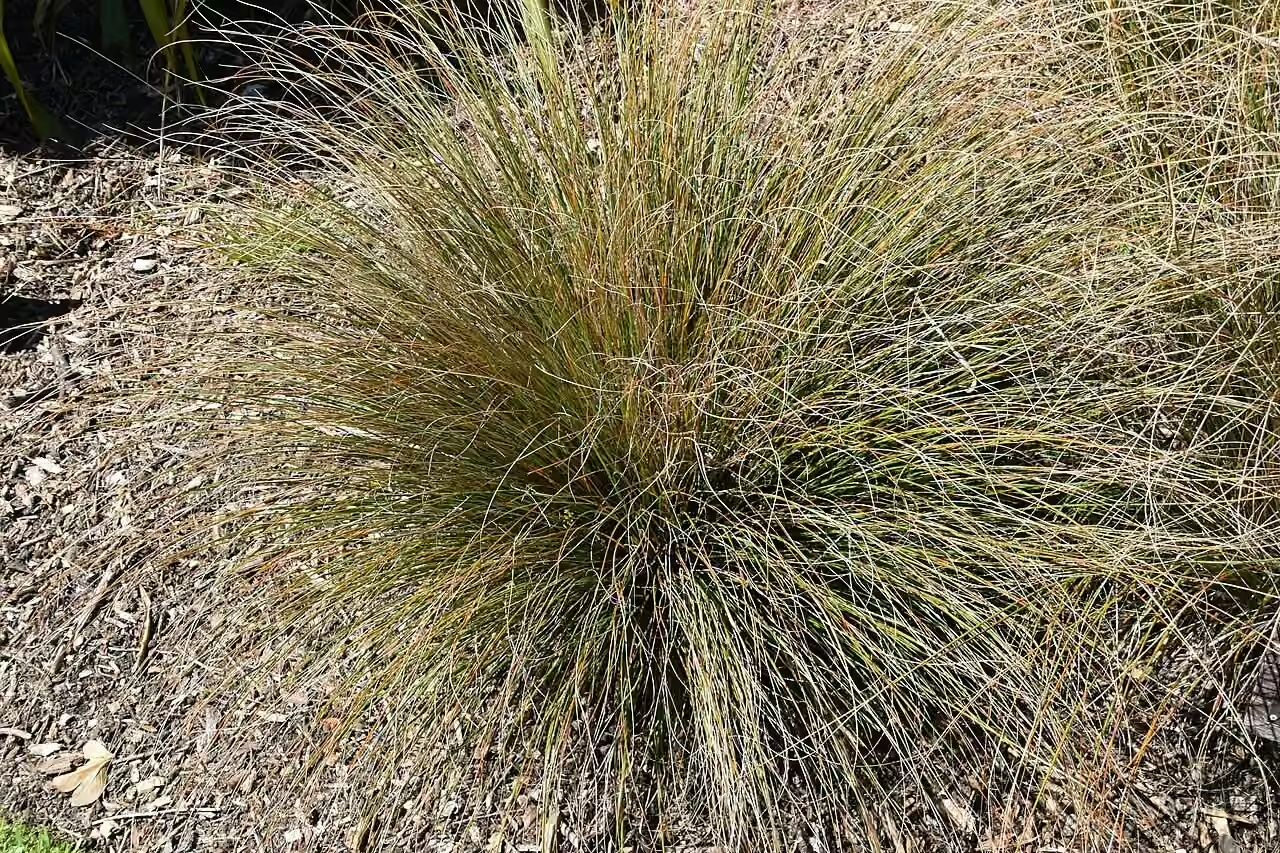
Red Hills Snow Tussock
Chionochloa defracta
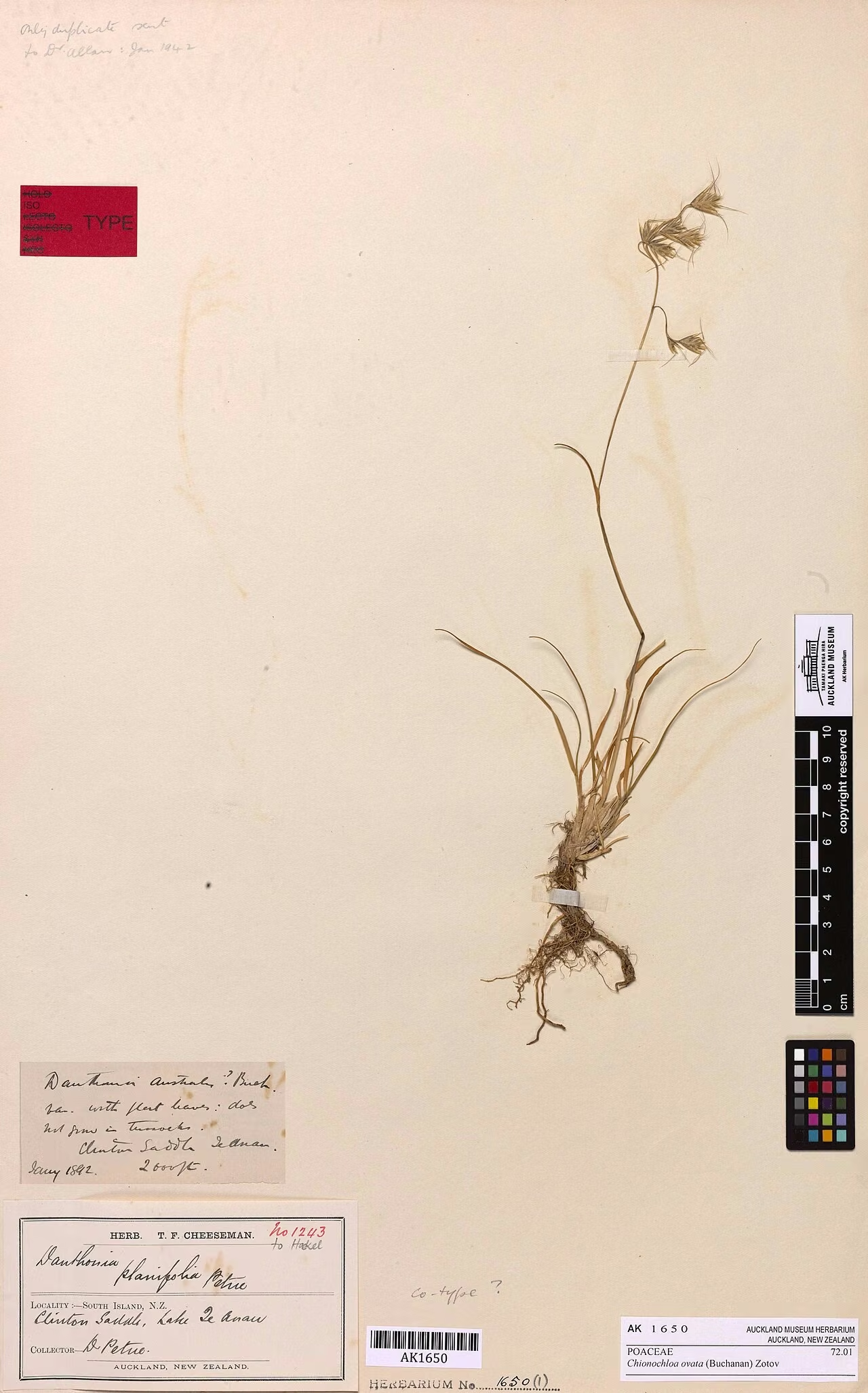
Squat Snow Tussock
Chionochloa ovata
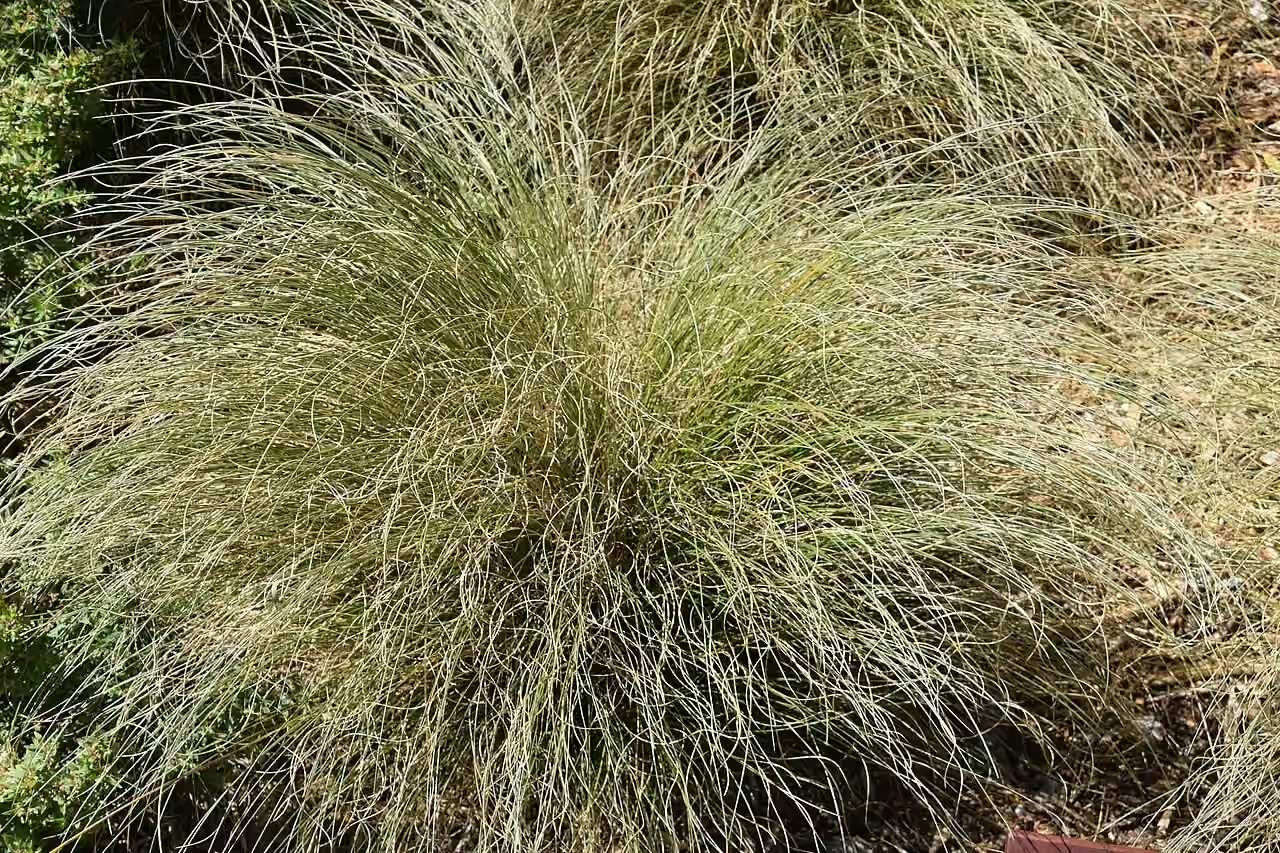
Terete-Leaved Snow Tussock
Chionochloa teretifolia
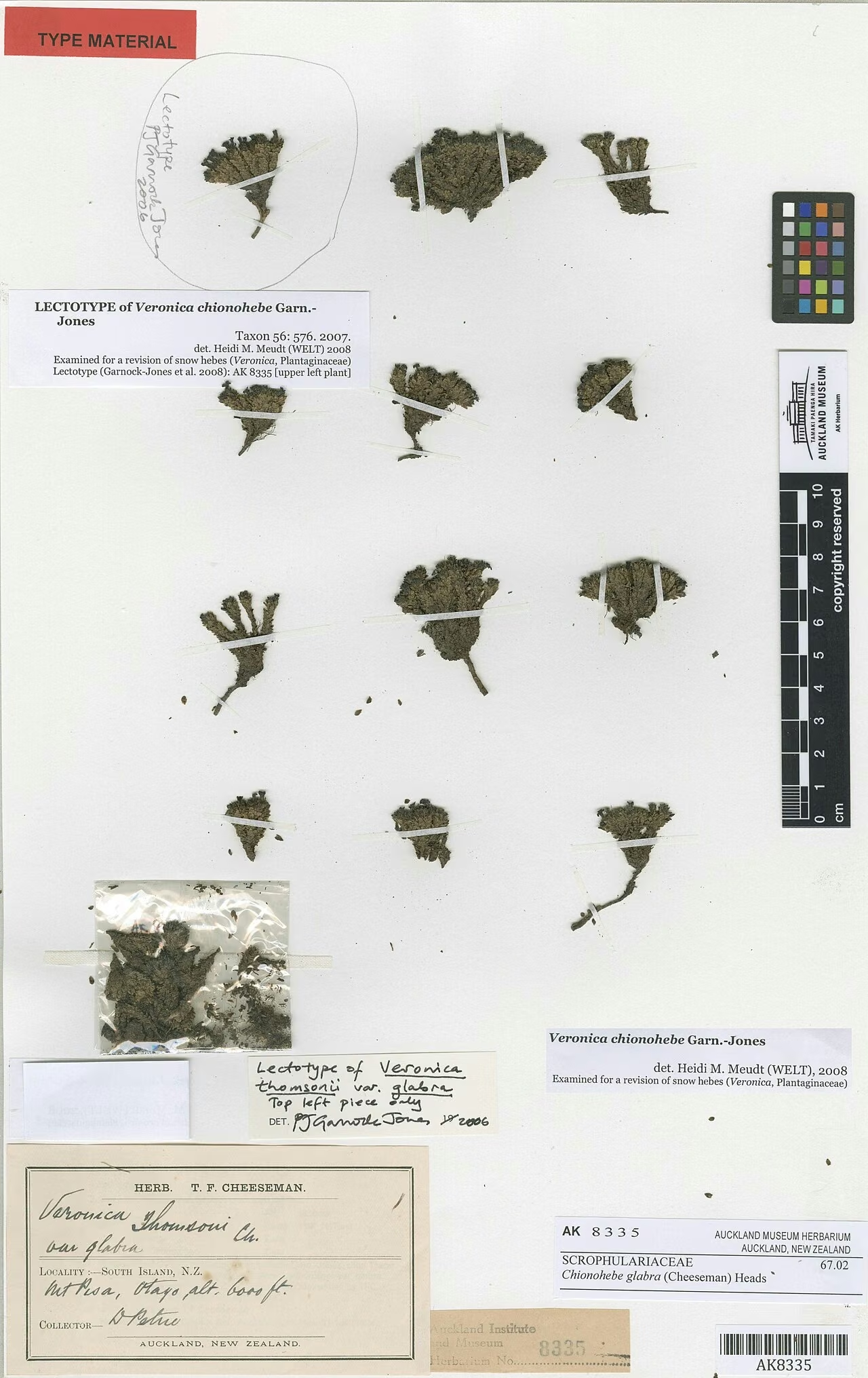
Veronica chionohebe
Veronica chionohebe

Veronica thomsonii
Veronica thomsonii
Plant Conservation
Slim snow tussock is classed as Not Threatened (2023), a ranking it has held in every assessment since 2004, and it is Regionally Not Threatened in Otago. It remains widespread in the eastern South Island mountains.
Protection of high-country tussock grasslands through conservation parks and tenure review, control of wilding conifers, rabbits and hawkweed, and avoiding burning all help maintain healthy slim snow tussock communities.
Frequently Asked Questions
Where does slim snow tussock grow?
It grows only in the South Island east of the Main Divide, from southern Marlborough through Canterbury and Otago to Southland, in mountain grassland between about 500 and 1700 m.
How is slim snow tussock different from narrow-leaved snow tussock?
On the drier eastern ranges slim snow tussock generally grows higher up, replacing narrow-leaved snow tussock (Chionochloa rigida) as altitude increases. It has softer leaf blades and persistent dark brown sheaths.
Is Chionochloa macra endangered?
No. It has been assessed as Not Threatened in every national assessment from 2004 to 2023 and is listed as Regionally Not Threatened in Otago.
Can slim snow tussock be grown in Christchurch or Dunedin?
It could be tried in a cool, well-drained, sunny site, but it is a mountain plant that is rarely sold, so suitability in lowland gardens is largely untested.
Sources and Further Reading
The botanical, growing, and conservation details for Slim Snow Tussock (Chionochloa macra) on this page draw on the New Zealand plant references below. Consult them for full technical records and the latest distribution data.