Hebe
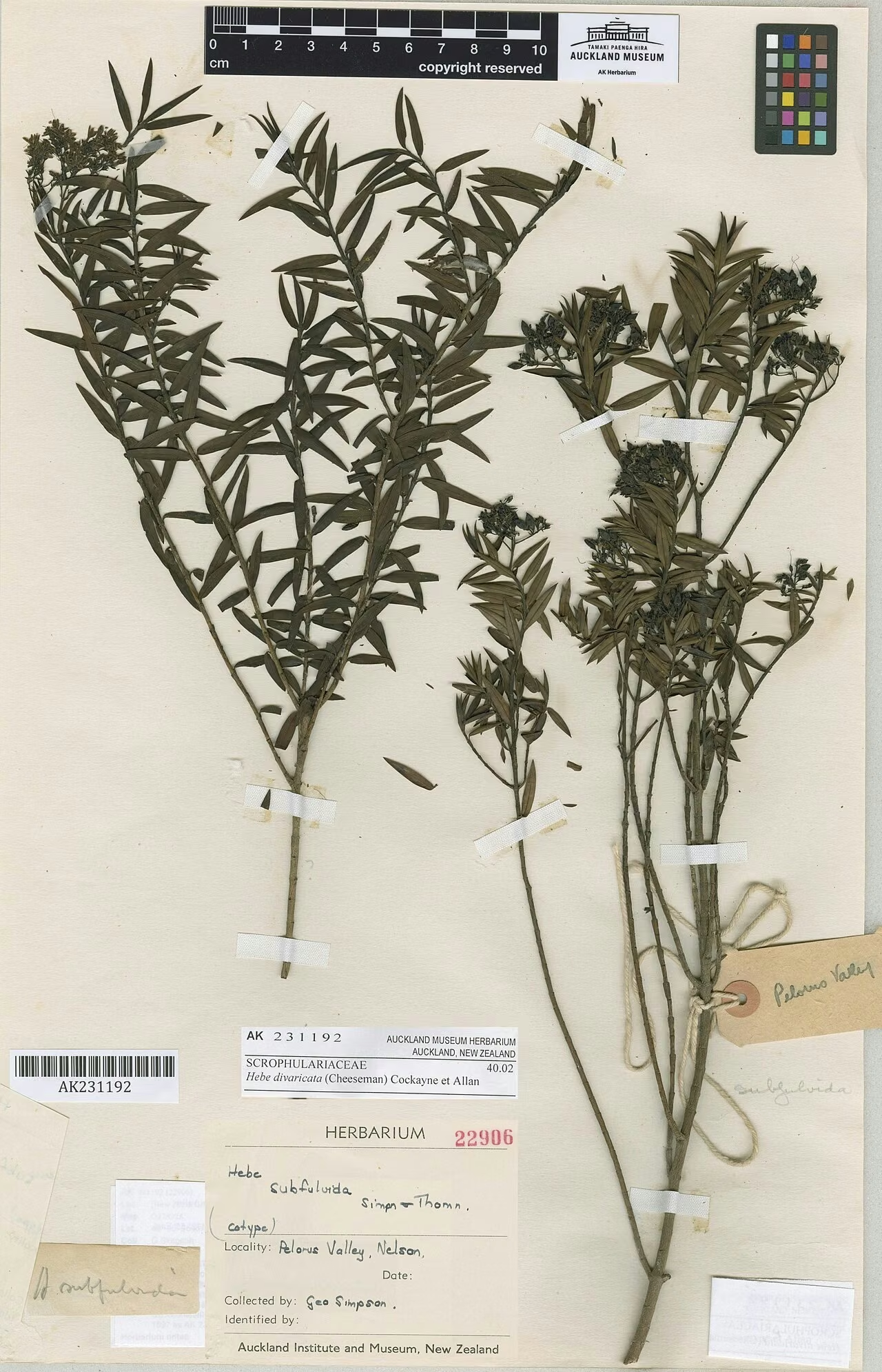
Veronica subfulvida
Last updated:
Veronica subfulvida, which includes the plant formerly called Hebe divaricata, is a densely branched, often rounded shrub up to 1.8 m tall from Nelson and Marlborough. It has pairs of narrow, rigid, pointed leaves 9 to 32 mm long and short, crowded flower heads of 24 to 88 white flowers, often with several branches, in summer. It grows on riverbanks, rock outcrops including ultramafic and limestone rock, scrub and beech forest margins, from near sea level to about 1300 m, ranging from the Aorere Range to Nelson Lakes and D'Urville Island. It is ranked Not Threatened. Explore more native shrubs in our native plant guide.
Plant Description
Veronica subfulvida is a densely branched shrub up to 1.8 m tall with erect, spreading branches that give a bushy, often rounded outline. Its leaves are in opposite pairs at right angles to each other, elliptic to lanceolate, rigid and pointed, mostly 9 to 32 mm long and 3.5 to 6 mm wide. They are not glaucous, and the leaf bud has a small, usually pointed sinus at its base.
The flowers are crowded into short lateral heads 1 to 3.6 cm long containing 24 to 88 flowers, and the inflorescences are usually compound, with several branches. The corolla tube is white, 2.5 to 4.3 mm long, and the lobes are white, pink or pale purplish. The seeds are flattened and brown, 1.2 to 2 mm long. The Flora of New Zealand notes that plants in north-west Nelson are generally larger with more extensively branched flower heads.
It resembles Veronica diosmifolia, Veronica brachysiphon and some populations of Veronica venustula. It differs from Veronica brachysiphon in its rounded habit, usually pointed leaf bud sinus, green rather than glaucous leaves and stalked flowers.
Quick Facts
| Scientific Name | Veronica subfulvida |
|---|---|
| Height | Up to 1.8 m |
| Spread | Not recorded; dense, rounded habit |
| Water Needs | Moderate |
| Light | Full sun to partial shade |
| Frost Tolerance | Good; grows from lowland to subalpine |
| Salt Tolerance | No information available |
| Growth Rate | No published data |
| Lifespan | Long-lived perennial |
Climate Best Suited to
Suits the mild to cool, moist climate of Nelson and Marlborough, from lowland gorges to subalpine margins. It is a hardy, adaptable shrub for most temperate New Zealand gardens.
Regional Suitability
| City | Climate Suitability |
|---|---|
| Auckland | Medium |
| Wellington | High |
| Christchurch | High |
| Dunedin | High |
Plant Habitat
Veronica subfulvida is endemic to the South Island, in Nelson and Marlborough. It ranges from the Aorere Range in north-west Nelson to near the Nelson Lakes, and also grows on Rangitoto ki te Tonga/D'Urville Island. The Flora of New Zealand records it between about 10 and 1300 m.
It grows on riverbanks, in gorges and on rock outcrops of various kinds of rock, including ultramafic and calcareous (limestone) rock, as well as in scrub and along beech forest margins. It is chiefly a lowland to montane plant but occasionally reaches subalpine sites.
Growing Requirements
Soil Requirements
Its natural sites range from river gravels to thin soils on rock outcrops, including ultramafic and limestone rock, showing a tolerance of poor and unusual soils. In gardens it prefers free-draining ground.
- Free-draining loam, gravel or rocky soil
- Tolerates low fertility
- Avoid waterlogged sites
Light Requirements
It grows on open outcrops and riverbanks as well as forest margins, so it suits sun or light shade.
- Full sun keeps it dense and rounded
- Partial shade tolerated at forest edges
Water Requirements
Riverbank and gorge populations enjoy reliable moisture, while outcrop plants cope with drier, free-draining ground.
- Water through the first summer
- Established plants need watering only in long dry spells
Planting and Establishing
Plant in autumn or spring in a sunny, well-drained position. Its naturally rounded shape means it needs little training, so allow room for it to reach its full size.
In Nelson and Marlborough restoration projects it is a good choice for riverbank and forest-edge plantings, using locally sourced plants.
Ecological Role
The crowded heads of white to pale pink flowers in summer attract native insects. NZPCN records that its seeds are wind dispersed.
Growing on riverbanks, in gorges and along forest margins, it is part of the shrubby edge vegetation that shelters regenerating forest and stabilises banks and rocky ground.
Uses & Significance
Garden Uses
A compact, naturally rounded hebe that suits informal native gardens without needing much clipping.
- Low hedges and shrub borders
- Rock gardens and banks
- Riverbank and forest-edge restoration in Nelson
Ecological Value
It adds to the diversity of shrubs on the ultramafic, limestone and riverbank habitats of the northern South Island.
- Summer nectar source
- Grows on challenging ultramafic and calcareous rock
- Endemic to Nelson and Marlborough
Landscaping Uses
Use it as a rounded mid-height shrub in a mixed native border, or plant several as an informal low hedge. The narrow, pointed leaves give a fine texture that contrasts with broad-leaved shrubs.
On sloping sites it can be grouped among rocks to suggest a gorge or outcrop planting.
Seasonal Care Calendar
Spring
New growth extends the rounded crown.
- Plant new shrubs
- Mulch around the root zone
Summer
Flowering from December to February, sometimes into March.
- Water young plants in dry weather
- Trim lightly after flowering
Autumn
Capsules ripen from January to May and can persist into spring.
- Collect seed
- Take semi-hardwood cuttings
Winter
A tidy evergreen with little activity.
- Check drainage
- Plan any shaping cuts for spring
When to Prune and How Much
It naturally forms a dense, rounded bush and needs little pruning. Remove spent flower heads after flowering if a neat appearance is wanted.
Light clipping keeps it compact for use as a low hedge; avoid heavy cuts into old bare wood.
How to Grow Hebe
NZPCN does not give specific propagation notes for Veronica subfulvida beyond recording that its seeds are wind dispersed, so the methods below follow standard practice for small-leaved hebes. Semi-hardwood cuttings root readily in most hebes and preserve the form of the parent, which is useful because this species varies, with north-west Nelson plants tending to be larger. Seed suits restoration plantings where genetic diversity matters, but should be collected from wild plants or isolated garden plants because hebes hybridise readily with each other.
From Cuttings
Take semi-hardwood cuttings from late summer to autumn from healthy, non-flowering shoots. The small, rigid leaves make short side shoots ideal.
- Cut 6 to 10 cm shoots below a leaf pair
- Strip the lower leaves
- Insert into a mix of pumice or perlite and fine bark
- Keep in bright shade and moderate humidity until rooted
- Pot on and harden off in full sun for a few weeks before planting out
From Seed
Capsules ripen from January to May and may stay on the plant until October, giving a long collection window. Older capsules may already have shed much of their seed, so check that seed is still present before collecting large amounts.
- Collect brown, splitting capsules
- Sow the fine seed on the surface of a seed-raising mix
- Keep moist in a sheltered spot
- Prick out seedlings once they have two leaf pairs and grow on for a season
Pests & Diseases
No specific pests are recorded for this species. Like other hebes, it may suffer downy mildew or leaf spot in humid, sheltered spots and scale insects on stressed plants.
An open, sunny position with good drainage helps keep it healthy.
Cultural Significance
No traditional Māori name or use is recorded specifically for this species in the sources consulted.
Its tangled naming history reflects how variable it is. Thomas Cheeseman described it in 1906 as Veronica menziesii var. divaricata, Cockayne and Allan raised it to Veronica subfulvida in 1926, and later botanists described Hebe subfulvida (1943) and Hebe corymbosa (1952) before all were united as Veronica subfulvida.
Bonus Tip
If you have an old label reading Veronica subfulvida, Hebe subfulvida or Hebe corymbosa, they all refer to this one species. Grow it on poor, rocky or gravelly ground where many other shrubs struggle; in the wild it thrives on ultramafic and limestone outcrops that are hostile to most plants.
Related Plants
Explore other native plants that share similar characteristics or habitats with Hebe (Veronica subfulvida), offering further insights into New Zealand's diverse flora. These related species provide context and opportunities for complementary planting in your garden.
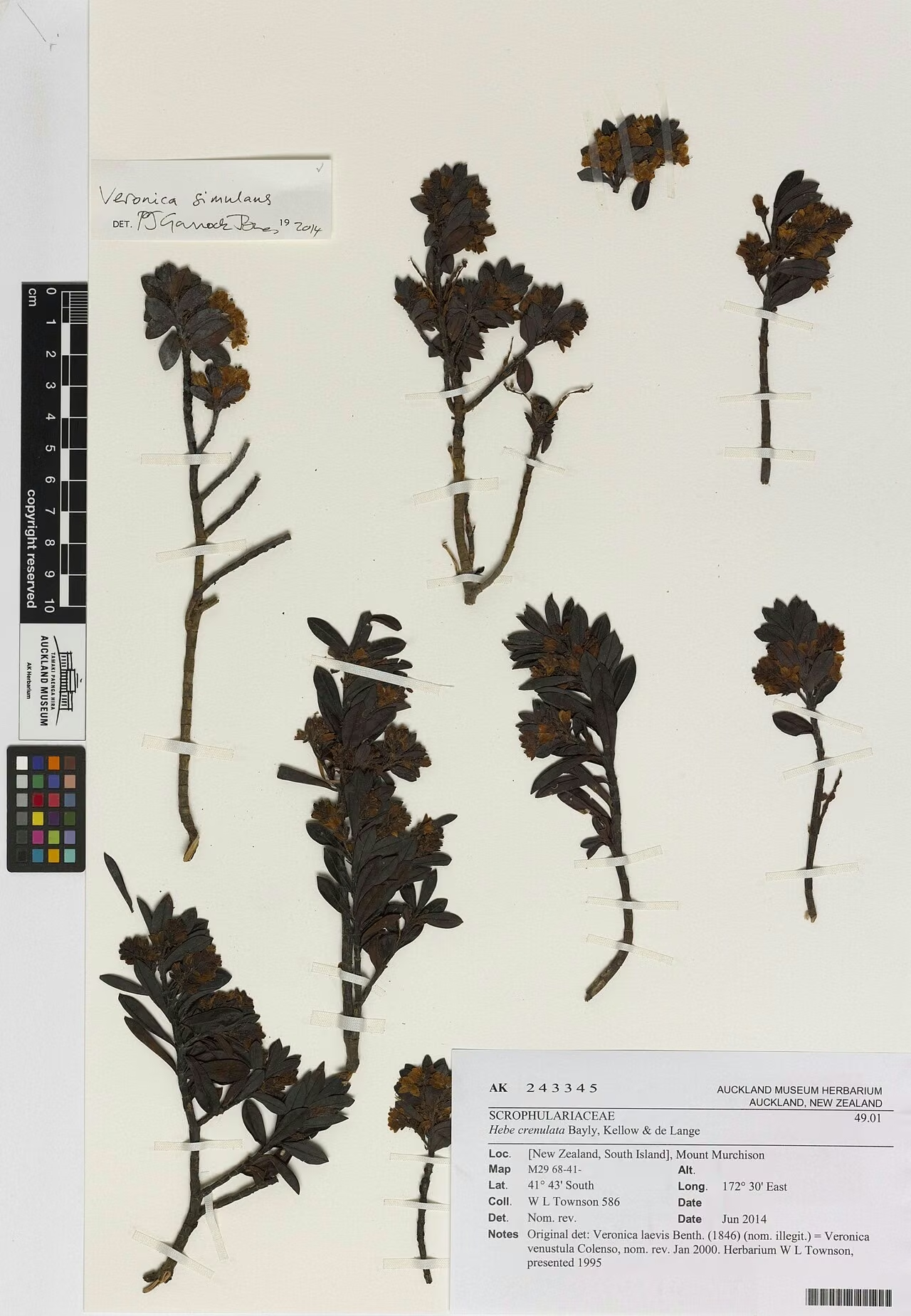
Veronica simulans
Veronica simulans
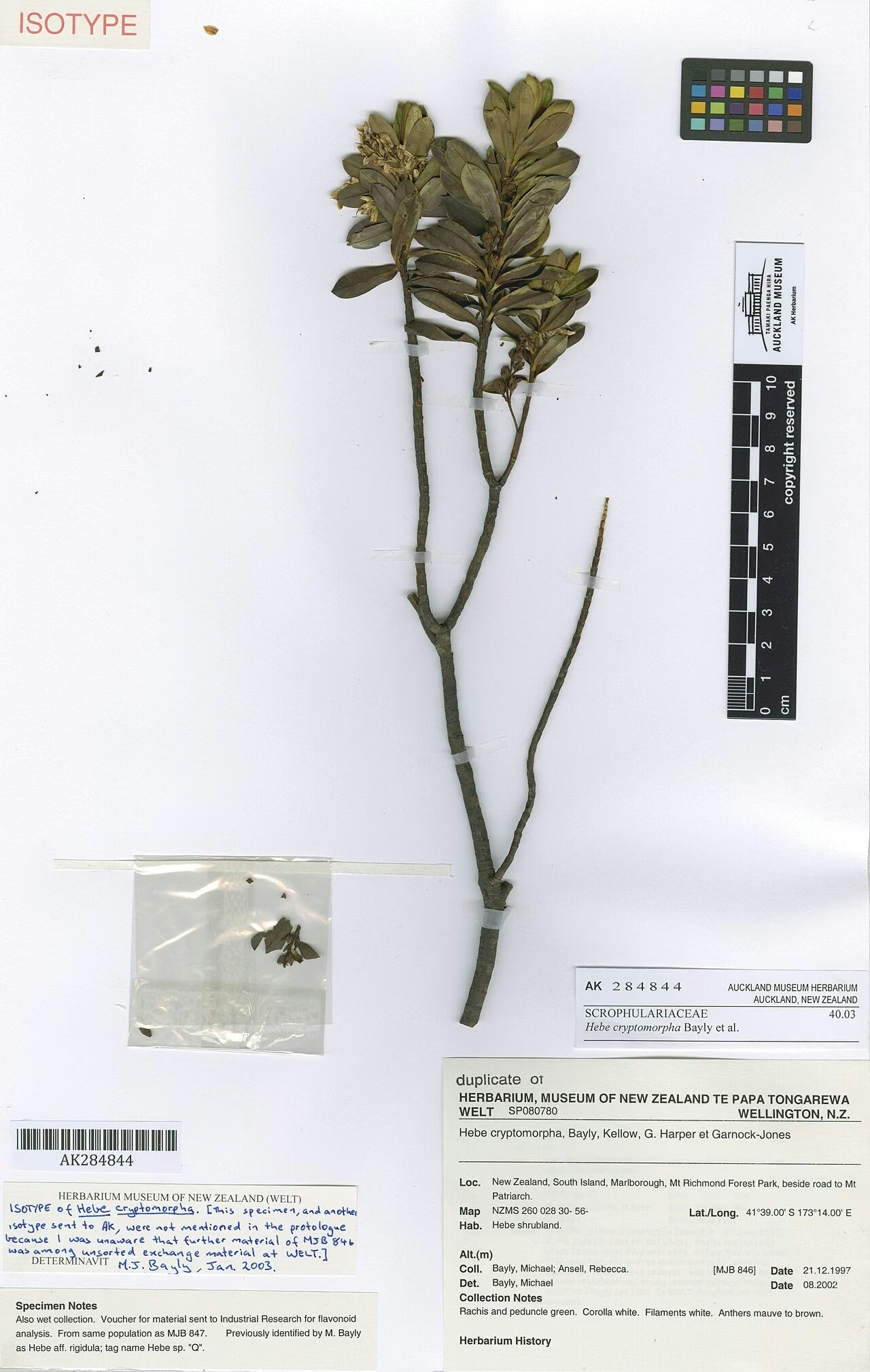
Veronica cryptomorpha
Veronica cryptomorpha
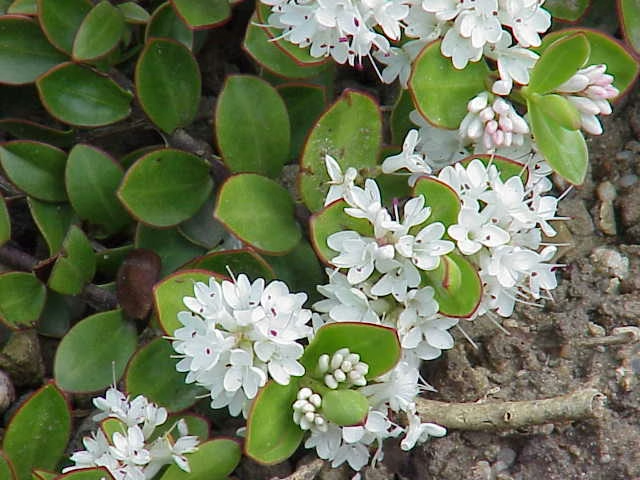
Veronica decumbens
Veronica decumbens
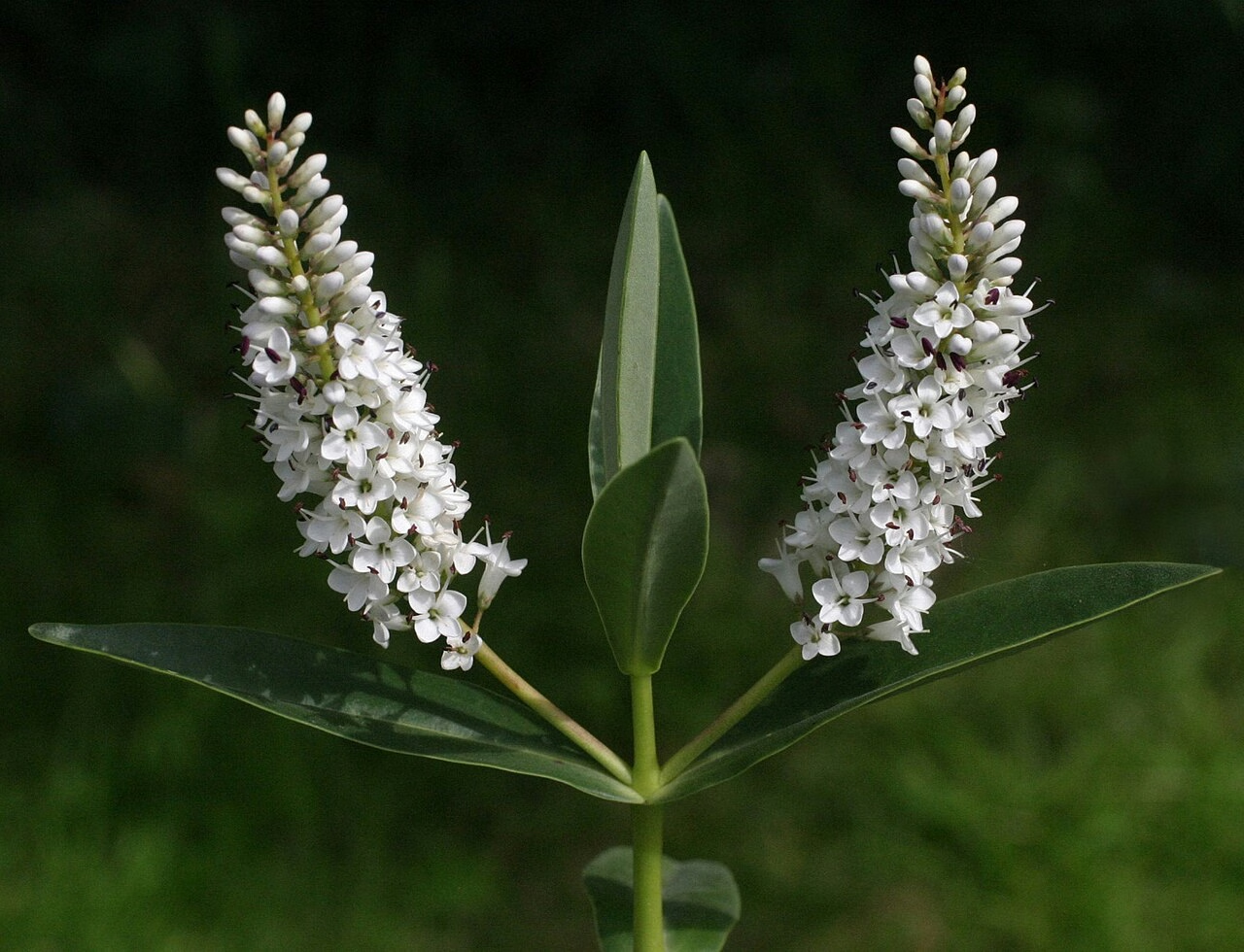
Dieffenbach's Koromiko
Veronica dieffenbachii
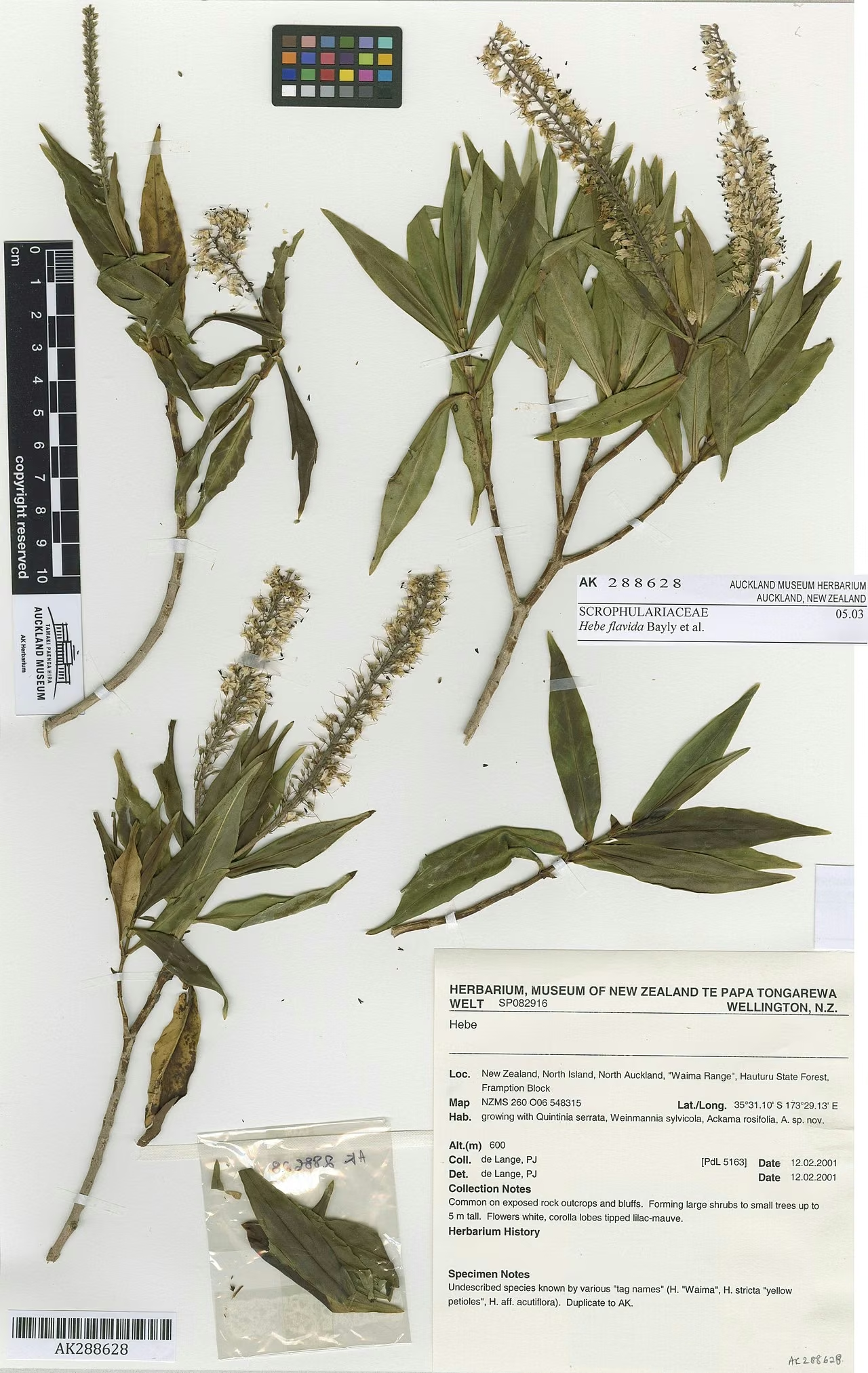
Veronica flavida
Veronica flavida
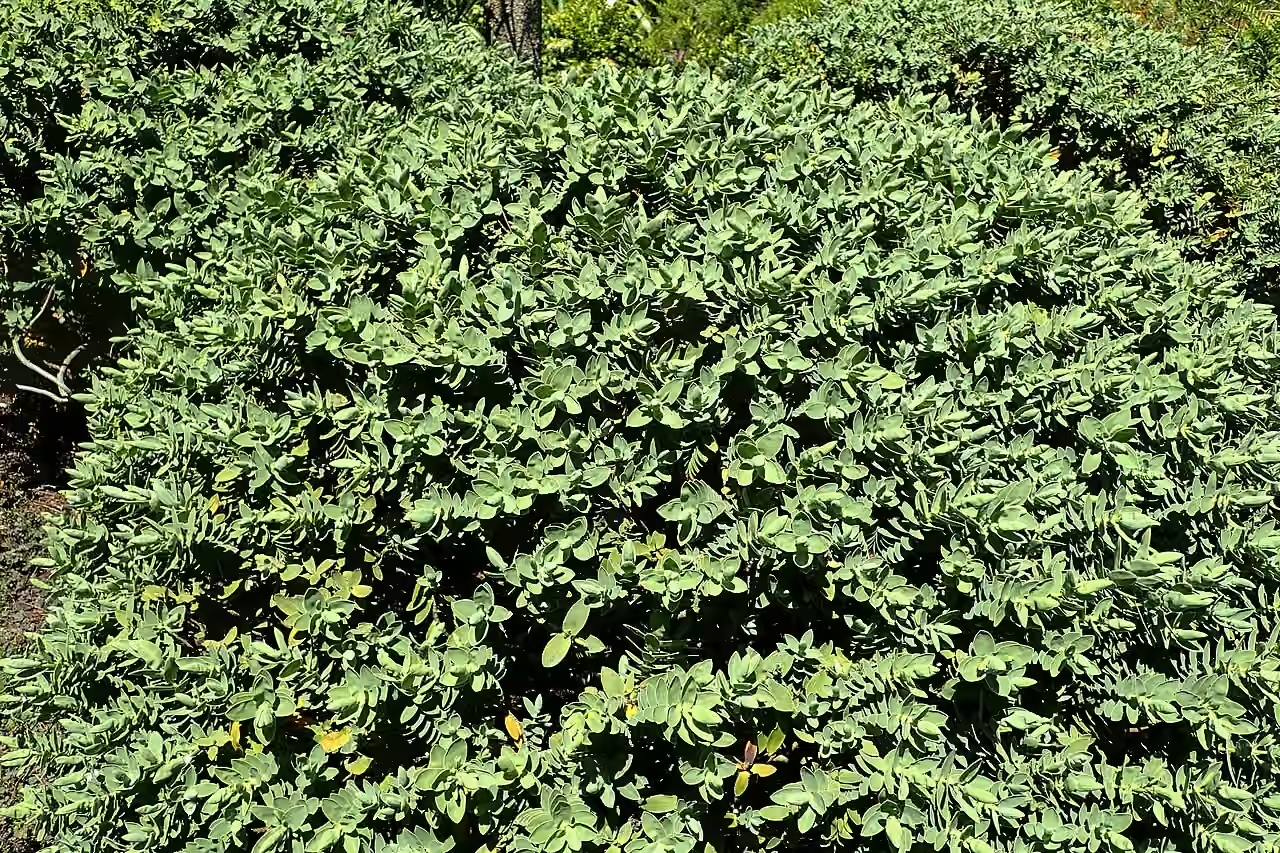
Veronica gibbsii
Veronica gibbsii
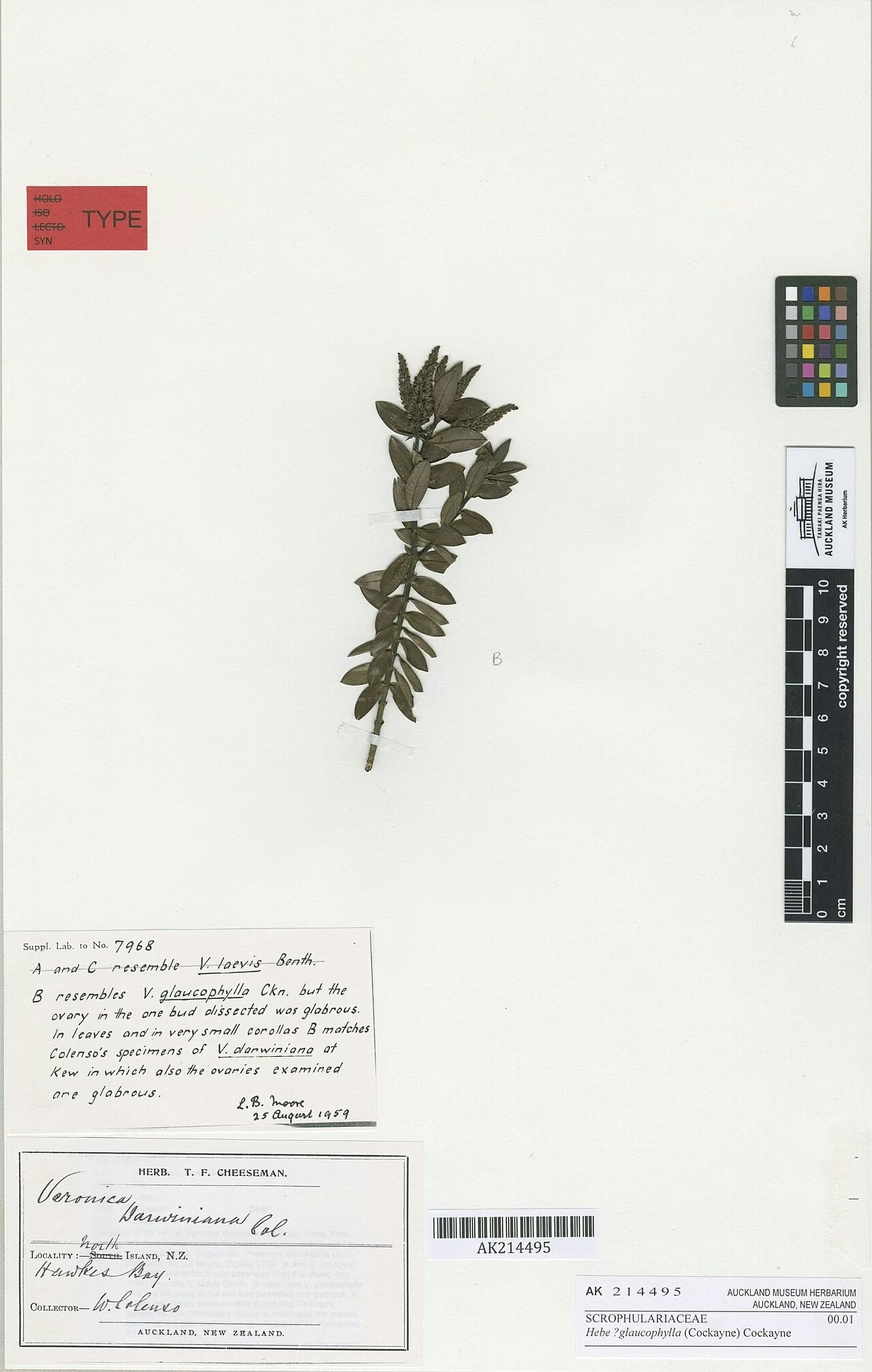
Veronica glaucophylla
Veronica glaucophylla
Three Kings Koromiko
Veronica insularis
Plant Conservation
Veronica subfulvida is ranked Not Threatened (2023) and has been ranked Not Threatened in every assessment since 2004. Much of its range is within Kahurangi and Nelson Lakes National Parks and other conservation land.
No specific threats are recorded. Controlling weeds along riverbanks and browsing animals on forest margins helps maintain its habitat.
Frequently Asked Questions
What is Hebe divaricata now called?
Hebe divaricata is treated as a synonym of Veronica subfulvida. The same plant has also been called Veronica menziesii var. divaricata, Hebe subfulvida and Hebe corymbosa.
Where does Veronica subfulvida grow?
It is endemic to the northern South Island, from the Aorere Range in north-west Nelson to near Nelson Lakes, and on Rangitoto ki te Tonga/D'Urville Island, at about 10 to 1300 m.
How do you tell Veronica subfulvida from Veronica brachysiphon?
Veronica subfulvida has a bushy, often rounded habit, usually pointed leaf bud sinuses, non-glaucous leaves and flowers on short stalks, unlike Veronica brachysiphon.
Sources and Further Reading
The botanical, growing, and conservation details for Hebe (Veronica subfulvida) on this page draw on the New Zealand plant references below. Consult them for full technical records and the latest distribution data.