Hebe
Veronica cryptomorpha
Last updated:
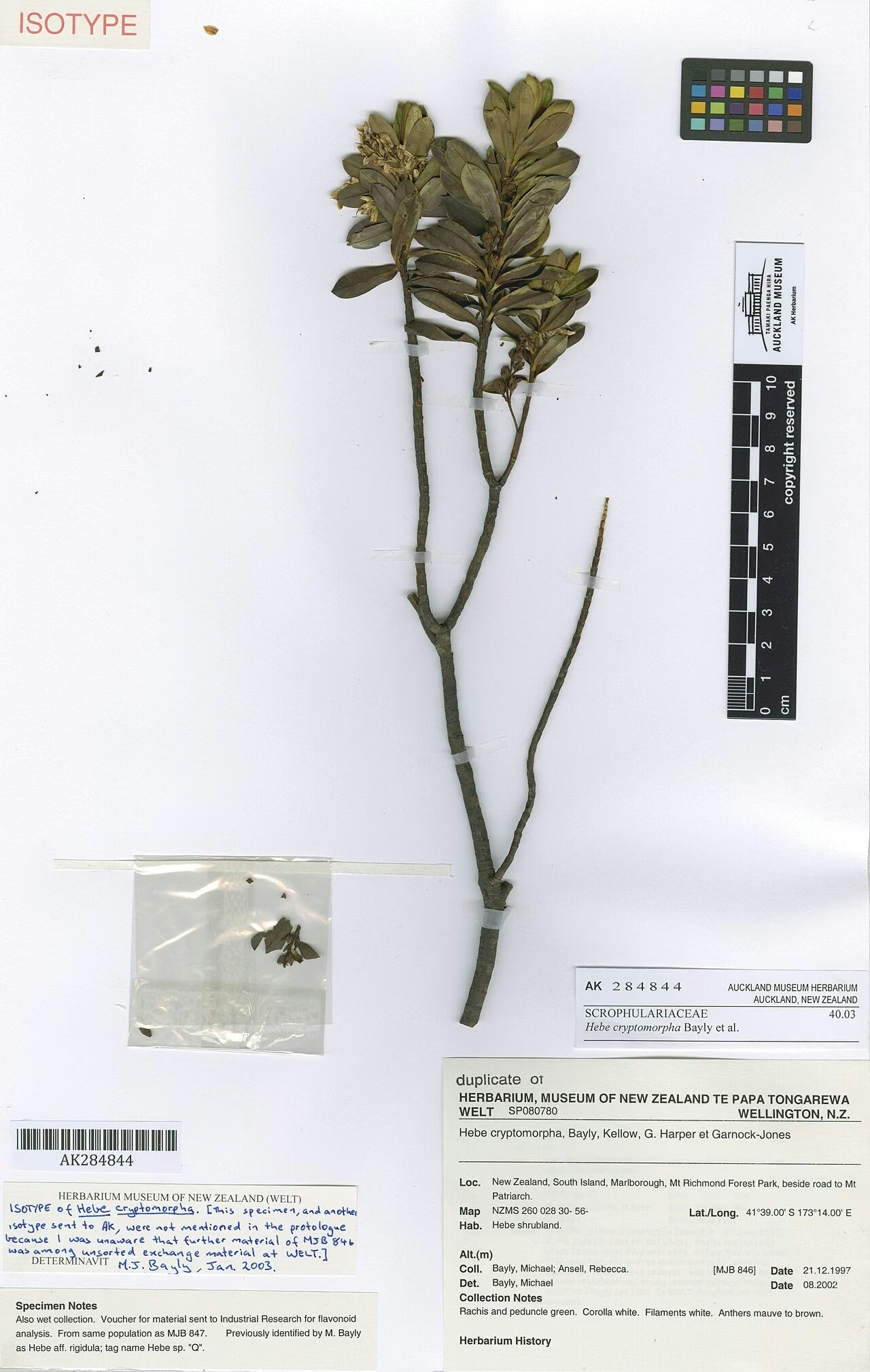
Veronica cryptomorpha, formerly Hebe cryptomorpha, is a bushy, rounded subalpine shrub up to 1.2 m tall from the mountains of Marlborough and Nelson. It has pairs of small oval leaves, green above and pale or bluish beneath, finely hairy twigs and short unbranched spikes of white flowers with dark pink to purplish anthers. It grows mainly on the ranges of the Wairau River catchment, at about 1220 to 1677 m, among rocks, rubble slopes and cliff faces. Its name means hidden form, because it looks almost identical to Veronica simulans and Veronica cockayneana. It is ranked Not Threatened. Explore more native shrubs in our native plant guide.
Plant Description
Veronica cryptomorpha is a bushy, rounded shrub up to 1.2 m tall with erect branches. Older stems are light to very dark brown or reddish-brown, the youngest twigs brown or green, and the twigs carry fine hairs, typically in two bands down opposite sides (bifarious). The leaves are in opposite pairs, oblanceolate to elliptic, about 7 to 33 mm long and 3 to 9 mm wide, with pointed tips. They are dull green above with hairs along the midrib and light green or glaucous below, giving a two-toned look.
The flowers are in unbranched lateral spikes 12 to 37 mm long carrying 5 to 17 flowers. The corollas are white and the long white stamens hold dark pink or purplish-mauve anthers, which stand out against the white petals. The capsules are pale to dark brown, about 3 to 4 mm long.
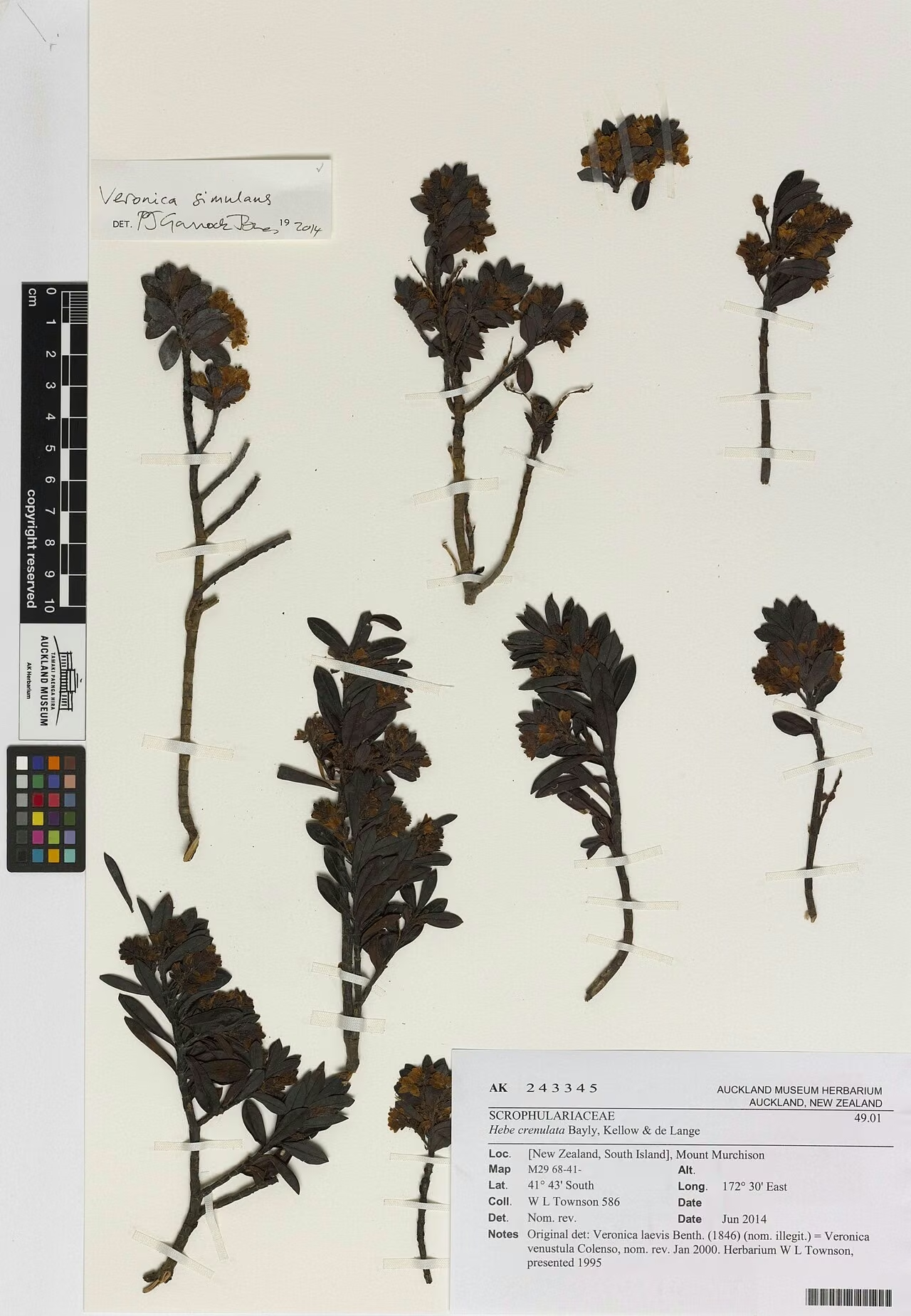
It shares discoloured leaves, pointed leaf bud sinuses, bifarious stem hairs and simple flower spikes with Veronica simulans and Veronica cockayneana. Veronica cockayneana usually has broader leaves, and Veronica simulans tends to have small teeth on the leaf margin. The three are most reliably separated by chromosome number: 2n = 40 in V. cryptomorpha, 80 in V. simulans and 120 in V. cockayneana.
Quick Facts
| Scientific Name | Veronica cryptomorpha |
|---|---|
| Height | Up to 1.2 m |
| Spread | Not recorded; rounded, bushy habit |
| Water Needs | Moderate; must be free draining |
| Light | Full sun |
| Frost Tolerance | High; subalpine at about 1220 to 1677 m |
| Salt Tolerance | No information available; an inland mountain species |
| Growth Rate | No published data |
| Lifespan | Long-lived perennial |
Climate Best Suited to
Suits a cold, continental mountain climate with frosty winters and dry, sunny summers. NZPCN notes it dislikes humidity and often will not flower at lower elevations.
Regional Suitability
| City | Climate Suitability |
|---|---|
| Auckland | Low |
| Wellington | Low |
| Christchurch | Medium |
| Dunedin | Medium |
Plant Habitat
This hebe is endemic to the South Island. It is found mainly on the mountains of the Wairau River catchment in Marlborough and Nelson, namely the Richmond, Raglan, St Arnaud and Crimea Ranges, with further records from Mt Robert, Mt Severn and the upper Saxton Valley. The Flora of New Zealand records it between about 1220 and 1677 m altitude.
It grows in subalpine shrubland and tussock grassland, usually in shallow mountain soils or on rock-strewn ground, rubble slopes, rock outcrops and boulder fields, and on cliff faces within river gorges and ravines.
Growing Requirements
Soil Requirements
In nature it roots into thin soils and crevices among rock, so it needs a very free-draining, stony medium in cultivation.
- Scree mix or gritty loam with plenty of stone
- Low to moderate fertility
- Never waterlogged
Light Requirements
It grows on open subalpine slopes and rocky faces with full exposure to sun and wind.
- Full sun
- Open, airy site to reduce humidity around the foliage
Water Requirements
Moisture comes from rain and snowmelt that drains away quickly through rubble, so the plant expects moist roots but dry, airy foliage.
- Water deeply but infrequently in dry periods
- Avoid overhead watering in warm, still weather
Planting and Establishing
Plant in spring in a raised rock garden, scree or large container filled with a gritty alpine mix. Place a collar of gravel around the base of the stem to keep it dry.
Because it dislikes humidity and may not flower in lowland gardens, it is best suited to cooler inland or southern districts, or to an alpine house with strong ventilation.
Ecological Role
The white flowers with dark pink to purplish anthers are visited by insects on the subalpine slopes in early summer. Its seed is released when the brown capsules split; NZPCN records wind dispersal for related hebes, though no disperser is documented for this species specifically.
On unstable rubble slopes and cliff ledges, its woody roots and branches help hold stones and soil in place and shelter smaller plants growing in its lee.
Uses & Significance
Garden Uses
A neat, rounded shrub for specialist alpine collections in cool climates.
- Rock gardens and scree beds
- Alpine house collections
- Inland South Island native gardens
Ecological Value
It is part of the subalpine shrubland of the Wairau mountains and is of scientific interest as an example of cryptic species in New Zealand hebes.
- Insect nectar source at high altitude
- Binds rubble slopes and ledges
- Shows how chromosome counts can separate near-identical species
Landscaping Uses
In an alpine garden, plant it among large rocks so that its rounded dome contrasts with flat rock faces. The two-toned leaves, green above and pale beneath, show best where wind ruffles the foliage.
Pair it with tussocks and cushion plants from the same mountain ranges to create a small Marlborough subalpine scene.
Seasonal Care Calendar
Spring
Flower spikes develop, with flowering beginning in October according to NZPCN.
- Plant out new stock
- Refresh gravel mulch
Summer
Flowering continues into December, or to February at higher sites, and capsules form from December.
- Water in drought
- Keep foliage dry and well ventilated
Autumn
Capsules ripen and split through to April.
- Collect fresh seed
- Take semi-hardwood cuttings
Winter
Plants are fully dormant and tolerate hard frost and snow.
- Protect from winter wet
- No feeding required
When to Prune and How Much
Very little pruning is needed. Remove spent flower spikes and any dead twigs after flowering to keep the rounded form.
Avoid hard cutting into old wood, which slow-growing alpine hebes may not replace.
How to Grow Hebe
NZPCN states that Veronica cryptomorpha is easily grown from cuttings and fresh seed. Because the species is not commercially available, propagation from an existing cultivated plant is usually the only way to obtain it, and wild collection should only be done with the appropriate permits from the Department of Conservation. Cuttings preserve the identity of the parent, which is valuable given how hard it is to separate this species from Veronica simulans by eye. Young plants should be grown on in cool, well-ventilated conditions, since the species dislikes humidity.
From Cuttings
Take semi-hardwood cuttings in late summer or autumn from non-flowering shoots. Short, firm side shoots from the outside of the bush usually root faster than soft tips or thick older stems.
- Cut 5 to 8 cm shoots below a leaf node
- Remove the lower leaves and any flower buds
- Insert into a very gritty mix such as pumice with a little fine bark
- Keep in bright, cool shade with good ventilation and just moist
- Pot on into an alpine mix when well rooted
From Seed
Capsules ripen from December to April. Collect them as they turn brown and begin to split, and sow the seed fresh.
- Sow thinly on the surface of a gritty seed mix
- Cover with a fine layer of grit
- Keep cool and moist outdoors or in a cold frame
- Prick out seedlings into individual pots when they have two or three leaf pairs
Pests & Diseases
No specific pests are recorded for this species. In humid lowland conditions it is prone to fungal leaf spot, downy mildew and root rot, which reflect its dislike of humidity.
Growing it in a cool, breezy site with sharp drainage prevents most problems.
Cultural Significance
No traditional Māori name or use is recorded for Veronica cryptomorpha in the sources consulted.
The species was described as Veronica cryptomorpha by Bayly, Kellow, Harper and Garnock-Jones, and its recognition rested largely on chromosome counts and flavonoid chemistry rather than obvious visible differences, making it one of New Zealand's best examples of a cryptic plant species.
Bonus Tip
If your plant grows well but refuses to flower, the problem is probably climate rather than care: NZPCN notes this species often will not flower at lower elevations. A colder, brighter, airier position, or a higher-altitude garden, gives the best chance of seeing its pink-anthered white flowers.
Related Plants
Explore other native plants that share similar characteristics or habitats with Hebe (Veronica cryptomorpha), offering further insights into New Zealand's diverse flora. These related species provide context and opportunities for complementary planting in your garden.
Red Hills Hebe
Veronica baylyi
Veronica colensoi
Veronica colensoi
Veronica corriganii
Veronica corriganii
Veronica simulans
Veronica simulans
Veronica decumbens
Veronica decumbens
Dieffenbach's Koromiko
Veronica dieffenbachii
Veronica subfulvida
Veronica subfulvida
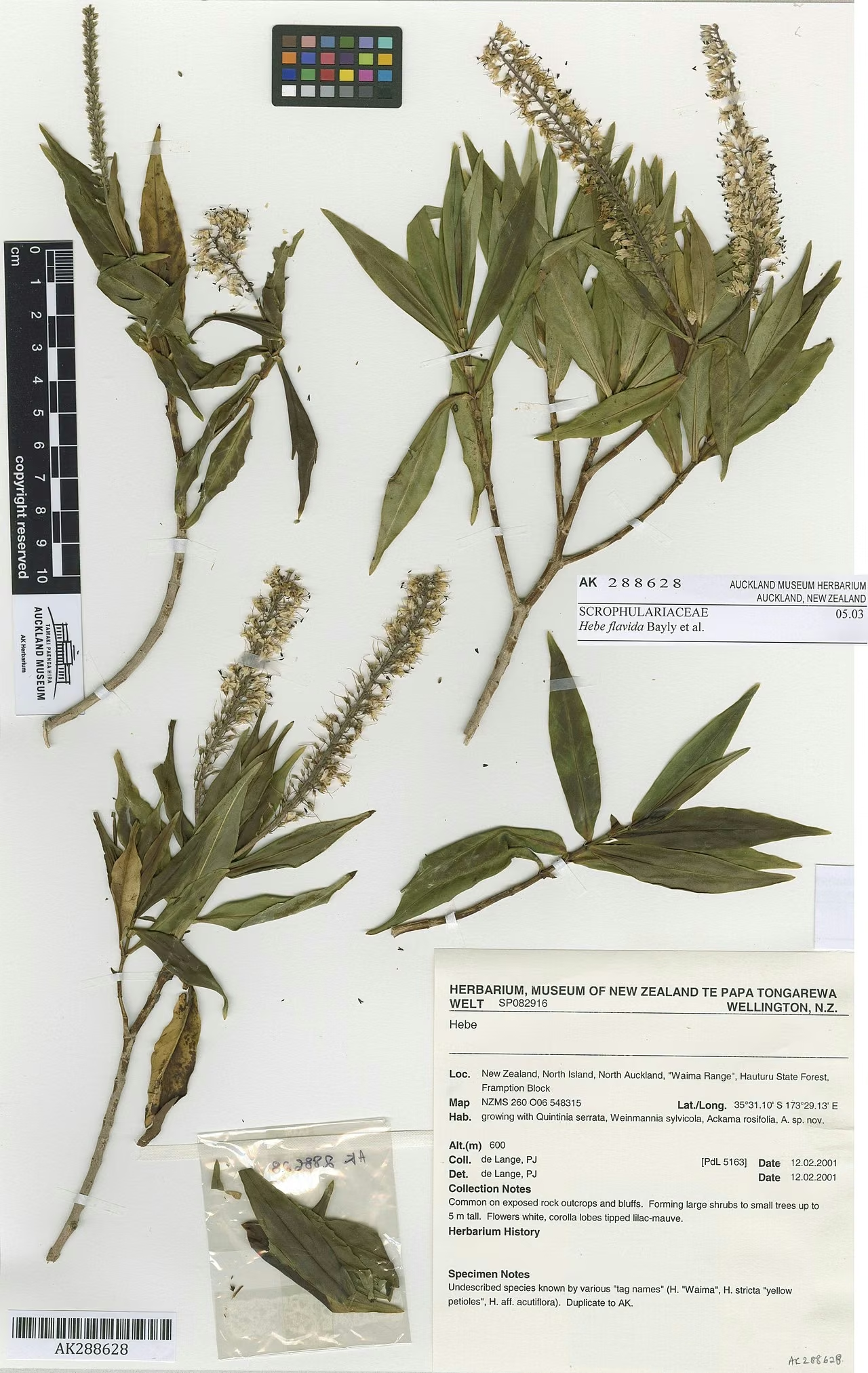
Veronica flavida
Veronica flavida
Plant Conservation
Veronica cryptomorpha is ranked Not Threatened (2023) and has been ranked Not Threatened in every assessment since 2004. Much of its range is on conservation land in the Richmond Range and Nelson Lakes National Park.
Browsing by deer, goats and possums in subalpine shrubland is a general pressure on hebes, so pest control in these ranges helps maintain healthy populations.
Frequently Asked Questions
What does cryptomorpha mean?
Cryptomorpha comes from Greek words meaning hidden and form. It refers to how hard this hebe is to tell apart by eye from its close relatives Veronica simulans and Veronica cockayneana.
Where is Veronica cryptomorpha found?
It is endemic to the South Island, mainly on the Richmond, Raglan, St Arnaud and Crimea Ranges of the Wairau catchment, with outliers on Mt Robert, Mt Severn and the upper Saxton Valley.
How is Veronica cryptomorpha different from Hebe simulans?
Veronica cryptomorpha has almost untoothed leaf margins and 40 chromosomes, while Veronica simulans often has small marginal teeth and 80 chromosomes. Their flavonoid chemistry also differs.
Can you buy Veronica cryptomorpha?
NZPCN lists it as not commercially available, although it notes that it grows easily from cuttings and fresh seed and suits a rock garden.
Sources and Further Reading
The botanical, growing, and conservation details for Hebe (Veronica cryptomorpha) on this page draw on the New Zealand plant references below. Consult them for full technical records and the latest distribution data.