Dieffenbach's Koromiko
Veronica dieffenbachii
Last updated:
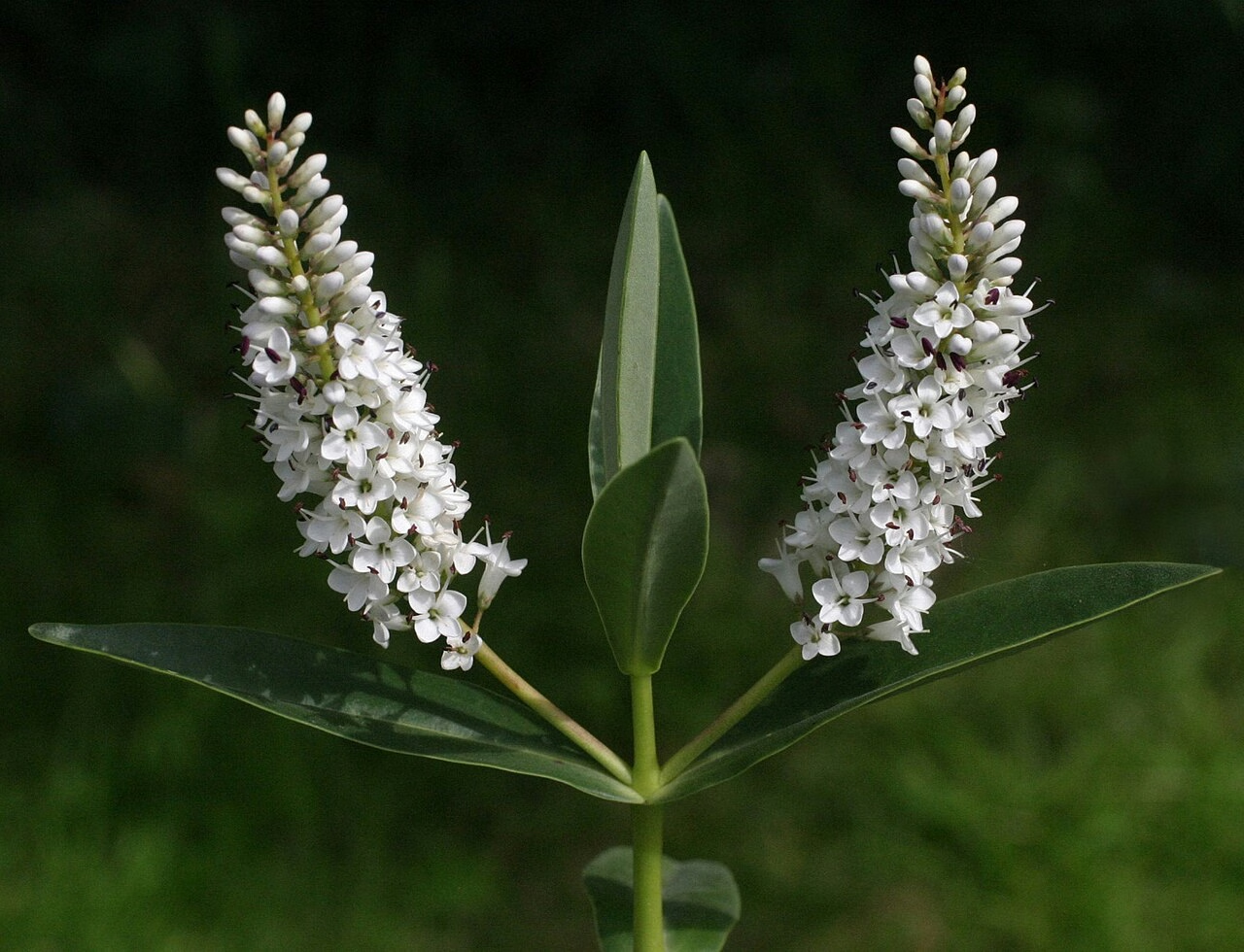
Dieffenbach's koromiko (Veronica dieffenbachii, formerly Hebe dieffenbachii) is a bushy coastal shrub found naturally only on the Chatham Islands. It grows up to 2 m tall and 3 m across, with pairs of leathery, light to dark green leaves up to 11 cm long and long spikes of white to violet flowers with magenta anthers. It grows mostly near the coast and around Te Whanga Lagoon, in shrubland, forest margins and on limestone outcrops. Known to Moriori as kokomuka ma, it is ranked At Risk - Naturally Uncommon as an island endemic. In gardens it makes an excellent wind-tolerant coastal hedge for frost-free areas. Explore more native shrubs in our native plant guide.
Plant Description
Veronica dieffenbachii is an upright, bushy or spreading shrub up to 2 m tall and 3 m wide, with suberect to erect branches. Its leaves are in opposite pairs, elliptic, oblong-elliptic, oblanceolate or obovate, and leathery, 26 to 110 mm long and 4.5 to 25 mm wide. The upper surface is light to dark green and often has a slight bluish bloom, and the underside is lighter green.
The flowers are borne in unbranched lateral spikes 50 to 120 mm long, each holding 34 to 140 flowers on a stalk 9 to 20 mm long. The corolla lobes range from white to violet or purple and the anthers are magenta. The capsules are 3.5 to 5.6 mm long and may be hairless or hairy. The Flora of New Zealand notes the species is very variable in leaf size, stem hairiness, inflorescence features and bracts.
On the Chathams it is most likely to be confused with Veronica chathamica, with which it readily hybridises, and Veronica barkeri. Veronica chathamica is smaller, with smaller, more rounded leaves narrowing to the base, while Veronica barkeri is usually a taller tree with greener leaves.
Quick Facts
| Scientific Name | Veronica dieffenbachii |
|---|---|
| Height | Up to 2 m |
| Spread | Up to 3 m |
| Water Needs | Moderate |
| Light | Full sun to light shade |
| Frost Tolerance | Low; frost sensitive, needs protection in cold areas |
| Salt Tolerance | High; a coastal species suited to exposed seaside sites |
| Growth Rate | No published data |
| Lifespan | Long-lived perennial |
Climate Best Suited to
Suits mild, windy, oceanic climates like that of the Chatham Islands, with cool summers and few hard frosts. It is frost sensitive and needs shelter from frost in colder inland districts.
Regional Suitability
| City | Climate Suitability |
|---|---|
| Auckland | High |
| Wellington | High |
| Christchurch | Medium |
| Dunedin | Medium |
Plant Habitat
Dieffenbach's koromiko is endemic to the Chatham Islands, recorded from Chatham Island, Pitt Island (Rangiauria), Mangere Island and South East Island (Rangatira). It grows from sea level to about 240 m.
It is mostly coastal, growing in mixed shrubland and on forest margins, among rock outcrops and around lagoon shores. It also grows on limestone outcrops and on the limestone cliffs lining Te Whanga Lagoon, and occasionally in coastal forest near seabird (petrel) burrows.
Growing Requirements
Soil Requirements
In the wild it grows on coastal soils, rock outcrops and limestone, including ground enriched by seabird colonies. It is adaptable in gardens provided drainage is reasonable.
- Free-draining loam or sandy soil
- Tolerates limestone and alkaline conditions
- Avoid persistently waterlogged ground
Light Requirements
It grows in open coastal shrubland and on forest edges, so it does best in sun with tolerance of light shade.
- Full sun for dense growth and good flowering
- Light shade tolerated
Water Requirements
The Chatham Islands have a cool, moist climate with frequent light rain, so plants prefer steady moisture without waterlogging.
- Water young hedges through their first summer
- Mulch in drier mainland gardens
Planting and Establishing
Plant in autumn in frost-free coastal gardens, or in spring where light frosts occur. For a hedge, space plants about 0.8 to 1 m apart and water them in well.
Seek plants of documented Chatham Islands origin, as NZPCN notes that some commercial forms may be hybrids with Veronica chathamica.
Ecological Role
The long spikes of white to purple flowers, produced over summer, provide nectar and pollen for insects on islands where flowering shrubs are an important food resource. The small seeds are released from splitting capsules that persist on the plant for much of the year.
NZPCN notes it is actively regenerating in areas fenced off from stock, showing its capacity to recolonise coastal shrubland and forest margins once grazing pressure is removed.
Uses & Significance
Garden Uses
One of the best Chatham Islands shrubs for mainland coastal gardens, valued for hedging and wind shelter.
- Coastal hedges and windbreaks
- Seaside shrub borders
- Chatham Islands plant collections
Ecological Value
It is a key shrub of Chatham Islands coastal shrubland and forest edges and part of the islands' distinctive endemic flora.
- Regenerates readily where stock are excluded
- Summer nectar for island insects
- Endemic to the Chatham Islands
Landscaping Uses
Use it as a clipped or informal hedge in exposed coastal gardens, where its dense leathery foliage stands up to salt wind. Left unclipped, its spreading habit of up to 3 m makes a generous background shrub.
Combine it with other Chatham Islands plants such as Chatham Island forget-me-not, Chatham Island akeake and Chatham Island flax for a themed island planting.
Seasonal Care Calendar
Spring
Active leafy growth before the summer flowering season.
- Plant new hedges once frosts have passed
- Give a light feed of compost
Summer
Main flowering begins in December, with white to purple spikes.
- Water young plants in dry spells
- Enjoy the insect activity on the flowers
Autumn
Flowering can continue into autumn, and capsules ripen and persist.
- Trim hedges after flowering
- Take semi-hardwood cuttings
Winter
Evergreen and wind hardy, but frost sensitive.
- Protect young plants from frost inland
- Collect fresh seed from persistent capsules
When to Prune and How Much
Trim hedges once flowering is finished, usually in late summer or autumn, to keep a dense shape. Regular light clipping is better than occasional hard cuts.
Overgrown plants can be renovated by cutting back in spring after frosts have passed, taking about a third of the old stems each year.
How to Grow Dieffenbach's Koromiko
NZPCN describes Veronica dieffenbachii as easily grown from cuttings and fresh seed. Cuttings are the best way to keep a plant true to type, which matters because this species readily hybridises with Veronica chathamica, and NZPCN warns that some commercial forms may already be hybrids. For restoration work on the Chatham Islands, seed or cuttings should be collected locally with landowner permission, choosing plants that show the typical large, erect habit and longer-than-wide leaves of true Veronica dieffenbachii rather than intermediate forms.
From Cuttings
Semi-hardwood cuttings root readily from late summer to autumn. This is also the easiest way to raise enough plants for a hedge, since a single healthy parent can supply dozens of cuttings in one season without being noticeably thinned.
- Take 10 to 15 cm cuttings from firm, non-flowering shoots
- Remove lower leaves and any flower spikes
- Insert into a free-draining propagating mix
- Keep humid and shaded from strong sun until rooted
- Harden off and pot on before planting out
From Seed
Capsules ripen from January and persist on the plant through the year, so seed can be gathered over a long period. Sow it fresh for the best results.
- Collect brown capsules that are starting to split
- Sow thinly on the surface of a seed-raising mix
- Keep moist in a sheltered, frost-free spot
- Prick out seedlings when large enough to handle and grow them on in pots for a season before planting out
Pests & Diseases
No specific pests are recorded in the sources consulted. In gardens, hebes of this type can be affected by downy mildew and leaf spot in humid weather and by scale insects.
In the wild, browsing by stock has been a major pressure; plants regenerate well once areas are fenced.
Cultural Significance
NZPCN records the Te Reo Moriori name kokomuka ma for this species. No specific traditional uses were found in the sources consulted. The English name Dieffenbach's koromiko borrows koromiko, a Māori name used for several large-leaved hebes.
The species is named after Dr Ernst Dieffenbach, a German naturalist who visited the Chatham Islands in 1840 as naturalist with the New Zealand Company and collected the type specimen there.
Bonus Tip
If you are planting for genuine Chatham Islands character, check the source. Because Veronica dieffenbachii hybridises with Veronica chathamica, buy from nurseries that can tell you where their stock originated, and avoid planting both species together if you want to collect true seed later.
Related Plants
Explore other native plants that share similar characteristics or habitats with Dieffenbach's Koromiko (Veronica dieffenbachii), offering further insights into New Zealand's diverse flora. These related species provide context and opportunities for complementary planting in your garden.
Veronica corriganii
Veronica corriganii
Veronica simulans
Veronica simulans
Veronica cryptomorpha
Veronica cryptomorpha
Veronica decumbens
Veronica decumbens
Veronica subfulvida
Veronica subfulvida
Veronica flavida
Veronica flavida
Veronica gibbsii
Veronica gibbsii
Veronica glaucophylla
Veronica glaucophylla
Plant Conservation
Veronica dieffenbachii is ranked At Risk - Naturally Uncommon (2023) with the qualifiers Island Endemic and Range Restricted. NZPCN notes it has probably declined but is still very widespread on the Chathams and actively regenerating in fenced areas.
The main issues are past habitat loss and grazing, and hybridisation with Veronica chathamica at some sites. Fencing coastal remnants from stock, controlling weeds and planting locally sourced stock all help the species.
Frequently Asked Questions
Where does Veronica dieffenbachii come from?
It is endemic to the Chatham Islands, where it grows on Chatham, Pitt (Rangiauria), Mangere and South East (Rangatira) Islands, mostly near the coast and lagoon shores up to about 240 m.
Is Veronica dieffenbachii good for coastal hedges?
Yes. NZPCN describes it as an attractive shrub that makes an excellent hedge and is ideal for coastal situations, although it is frost sensitive in colder districts.
What is the Moriori name for Dieffenbach's koromiko?
NZPCN records the Te Reo Moriori name kokomuka ma for this species, alongside the English common name Dieffenbach's koromiko.
How is Veronica dieffenbachii different from Veronica chathamica?
Veronica dieffenbachii is a much larger, erect to spreading shrub with bigger leaves that are longer than wide. Veronica chathamica is smaller, often sprawling, with smaller rounded leaves, and the two readily hybridise.
Sources and Further Reading
The botanical, growing, and conservation details for Dieffenbach's Koromiko (Veronica dieffenbachii) on this page draw on the New Zealand plant references below. Consult them for full technical records and the latest distribution data.