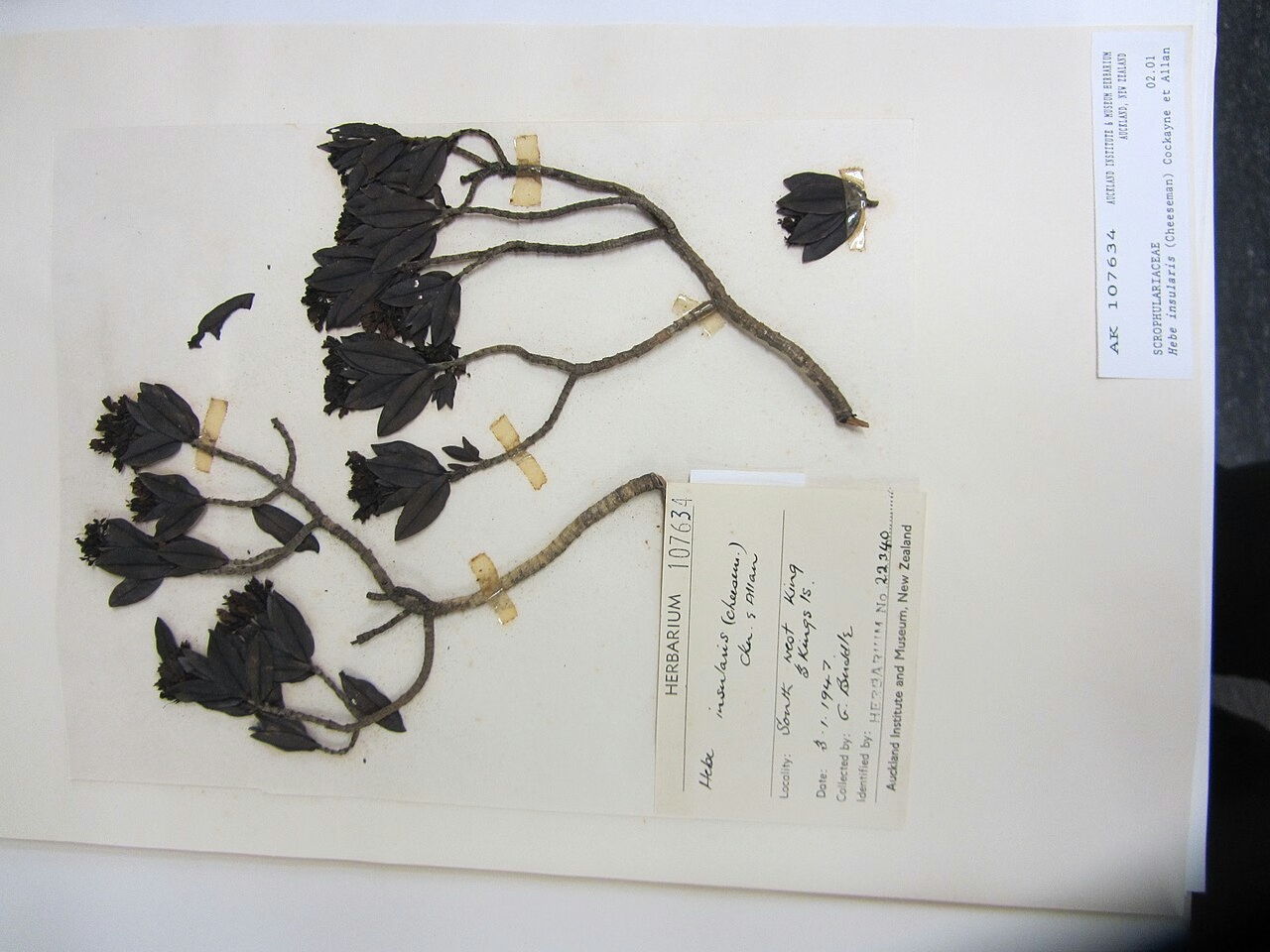
Three Kings Koromiko
Veronica insularis
Last updated:
Three Kings koromiko (Veronica insularis, formerly Hebe insularis) is a low shrub up to 1 m tall found only on Manawatāwhi/Three Kings Islands, off the northern tip of New Zealand. It grows on rock outcrops and cliffs, mostly near the sea, on Great, West, South West and North East islands. Its pairs of leathery, dull, often blue-grey oval leaves and branched heads of white or pale purplish flowers make it distinctive, and it is the only Veronica native to the group. It is ranked At Risk - Naturally Uncommon because its whole natural range is a few small islands. Explore more native shrubs in our native plant guide.
Plant Description
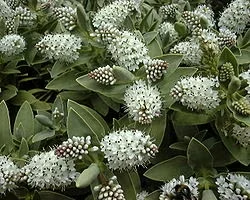
Veronica insularis is a low shrub to 1 m tall with stems that sprawl along the ground or stand erect. The leaves are in opposite pairs at right angles to each other, elliptic to slightly obovate, 7 to 33 mm long and 3 to 14 mm wide. They are leathery and dull, and often glaucous or with a faint blue-grey bloom.
From November to February it produces lateral flower clusters that are branched in threes or more (ternate to compound), each carrying 7 to 46 flowers. The flowers are white or pale purplish and 7 to 10 mm across. The calyx lobes are short, broad, pointed and fringed with hairs. Small flattened capsules follow from December to March and may stay on the plant until August; the seed is wind dispersed.
There is no other Veronica native to the Three Kings, so it cannot be confused there. In cultivation it can be told from mainland coastal hebes by the very narrow or absent gap (sinus) between the young leaves of the leaf bud, a feature the Flora notes is unique among species with branched inflorescences.
Quick Facts
| Scientific Name | Veronica insularis |
|---|---|
| Height | Up to 1 m |
| Spread | Spreading to about 1 m |
| Water Needs | Low once established |
| Light | Full sun |
| Frost Tolerance | Low; from a frost-free subtropical island group |
| Salt Tolerance | High; grows on coastal cliffs exposed to salt spray |
| Growth Rate | Moderate |
| Lifespan | Perennial |
Climate Best Suited to
Suits a mild, frost-free, windy oceanic climate with warm summers. It is best in northern coastal gardens and needs protection from hard frost further south.
Regional Suitability
| City | Climate Suitability |
|---|---|
| Auckland | High |
| Wellington | Medium |
| Christchurch | Low |
| Dunedin | Low |
Plant Habitat
Three Kings koromiko is endemic to Manawatāwhi/Three Kings Islands, a small group off the northern tip of the North Island. It is recorded from Great Island, West Island, South West Island and North East Island.
It grows on rock outcrops and cliffs, especially near the coast, at recorded elevations from about 5 to 207 m. These sites are exposed to wind and salt spray, and the shrub's leathery leaves suit such conditions.
Growing Requirements
Soil Requirements
In the wild it roots into thin soil and crevices on rock outcrops, so it needs sharp drainage.
- Free-draining, gritty or sandy soil
- Rock gardens, banks and walls
- Avoid wet, heavy clay
Light Requirements
It grows on open, sunny cliffs and should be given full sun in cultivation.
- Full sun keeps growth compact and leaves glaucous
- Tolerates exposure to wind
Water Requirements
Its cliff habitat dries out between rains, and established plants cope well with dry periods.
- Water young plants through their first summer
- Avoid overwatering, which encourages root rot
Planting and Establishing
Plant in spring in a warm, sunny spot with excellent drainage, such as a rockery, retaining wall, coastal bank or large container. In frosty districts grow it against a north-facing wall or in a pot that can be moved under cover in winter.
Its tolerance of salt wind makes it useful in exposed coastal gardens in northern New Zealand, where it can be planted among rocks or used as a low edging.
Ecological Role
Hebe flowers are visited by native bees, flies and other insects. The specific pollinators of Three Kings koromiko on the islands are not documented in the sources consulted. The seed is shed from dry capsules and dispersed by wind, which suits colonising cliff ledges.
The Three Kings flora recovered strongly after goats were removed from Great Island in 1946, and shrubs of open rocky sites such as this hebe are part of that unusual, highly endemic island flora.
Uses & Significance
Garden Uses
A low, tough, salt-tolerant shrub with attractive grey-blue foliage for warm coastal gardens.
- Coastal rock gardens and banks
- Low edging in seaside plantings
- Containers and courtyard pots
- Collections of Three Kings and offshore island plants
Ecological Value
As the only Veronica native to the Three Kings, it is a distinctive part of one of New Zealand's most endemic-rich island floras.
- Island endemic found nowhere else
- Colonises cliffs and rock outcrops
- Flowers provide nectar for insects in late spring and summer
Landscaping Uses
Use it to soften rocks and walls in a coastal garden, where its sprawling stems can spill over edges. The blue-grey leaves contrast well with dark rock, green-leaved coastal shrubs and silver plants such as Astelia.
In a native island-themed planting it combines naturally with other Three Kings species often grown in northern gardens.
Seasonal Care Calendar
Spring
Growth resumes, and flowering begins in November.
- Plant new specimens once frosts are over
- Take softwood cuttings
Summer
Flowering continues to February while capsules start to ripen.
- Water young plants in dry weather
- Remove spent flower clusters if a tidier look is wanted
Autumn
Capsules ripen and may persist into winter.
- Collect seed
- Take semi-hardwood cuttings
Winter
In frosty areas the plant needs shelter during cold nights.
- Protect potted plants from frost
- Keep soil on the dry side
When to Prune and How Much
Trim lightly after flowering to remove spent flower clusters and keep the plant compact. Avoid heavy cuts into old bare stems.
Leggy plants can be renewed gradually over two seasons rather than in one hard cut.
How to Grow Three Kings Koromiko
Three Kings koromiko can be propagated from seed or cuttings. Because the wild population lives on protected islands with restricted access, material must not be collected from the wild without permission; garden plants and specialist nurseries are the practical sources. Cuttings reproduce the parent exactly and usually strike well, as with most hebes. Seed-raised plants are genetically varied, but hebes hybridise freely, so seed taken from a garden plant growing near other hebes may not produce true Veronica insularis. When raising plants for a collection, cuttings from a known, well-labelled parent are therefore the safer choice.
From Cuttings
Semi-hardwood cuttings taken from late summer to autumn are the most reliable method. Use non-flowering side shoots.
- Cut 5 to 8 cm lengths of healthy, non-flowering shoot
- Strip the lower leaves and any flower buds
- Insert into a gritty mix of potting mix and pumice
- Keep humid and warm, out of direct sun, until rooted
- Pot on and harden off in full sun
From Seed
Capsules ripen from December to March. Seed from isolated plants is more likely to come true.
Because the plant comes from a frost-free island climate, keep seedlings and young cuttings in a warm, sheltered place through their first winter and plant them out only once they have a good root system and frosts have passed.
- Collect brown, splitting capsules
- Sow on the surface of fine seed-raising mix and cover thinly with grit
- Keep moist and warm until germination
- Prick out seedlings into small pots
Pests & Diseases
No pests specific to this species are recorded. In humid, sheltered gardens hebes can be affected by downy mildew and leaf spot, and in wet soils by root rot; an open, sunny, well-drained site avoids most problems.
Aphids and scale insects may appear on soft growth but are rarely serious.
Cultural Significance
NZPCN gives the name Three Kings koromiko, using koromiko, the Māori name applied to several hebes. No traditional Māori use specific to this island species was found in the sources consulted.
Manawatāwhi/Three Kings Islands were settled by Māori, who grew kūmara there, but have had no permanent settlement since the 1840s. The species name insularis comes from the Latin insula, meaning island.
Bonus Tip
In frost-prone districts, grow Three Kings koromiko in a terracotta pot with a gritty mix. It enjoys the sharp drainage and warmth of the pot in summer, and you can move it under eaves or into a glasshouse on frosty nights.
Related Plants
Explore other native plants that share similar characteristics or habitats with Three Kings Koromiko (Veronica insularis), offering further insights into New Zealand's diverse flora. These related species provide context and opportunities for complementary planting in your garden.
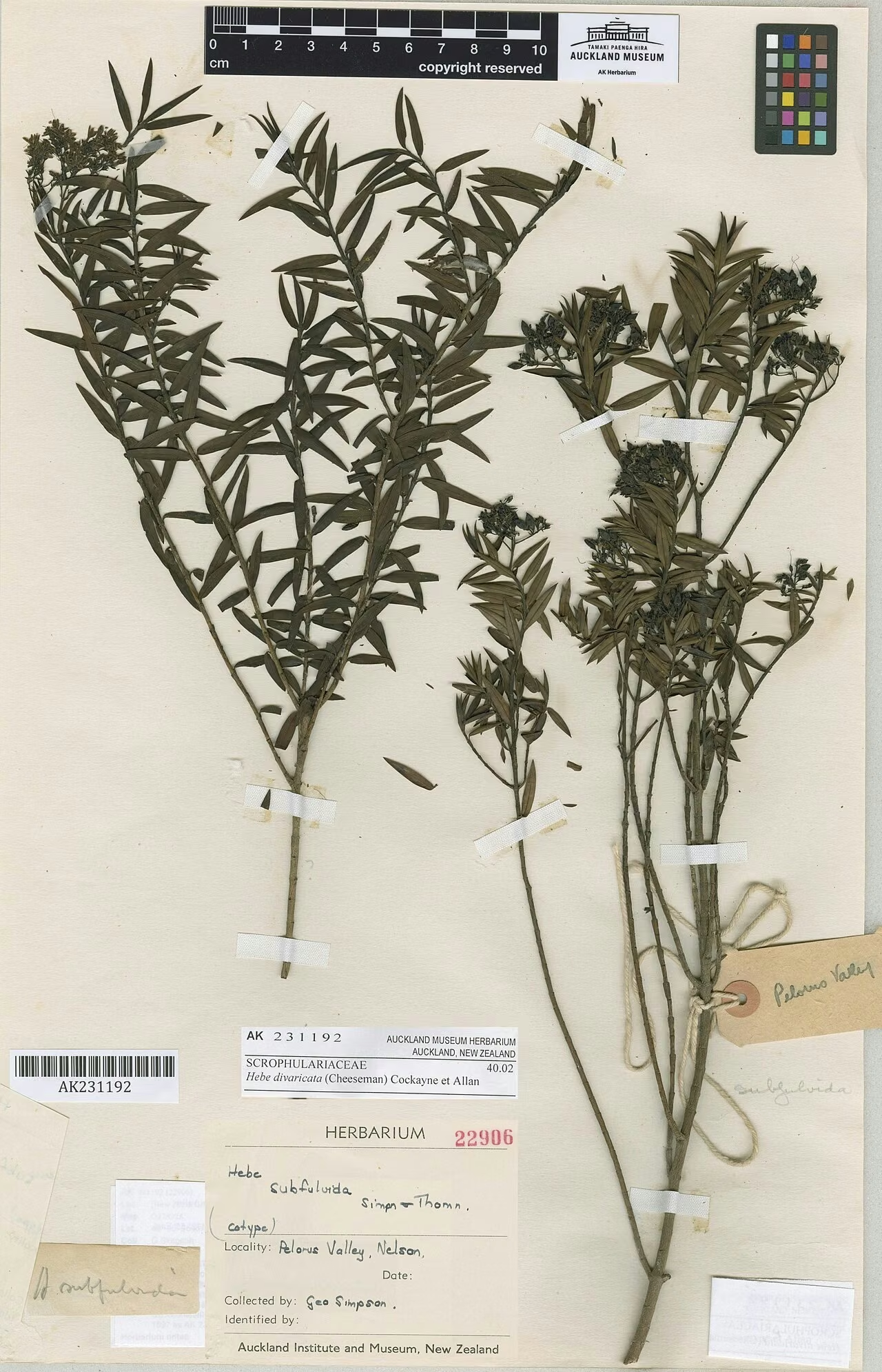
Veronica subfulvida
Veronica subfulvida
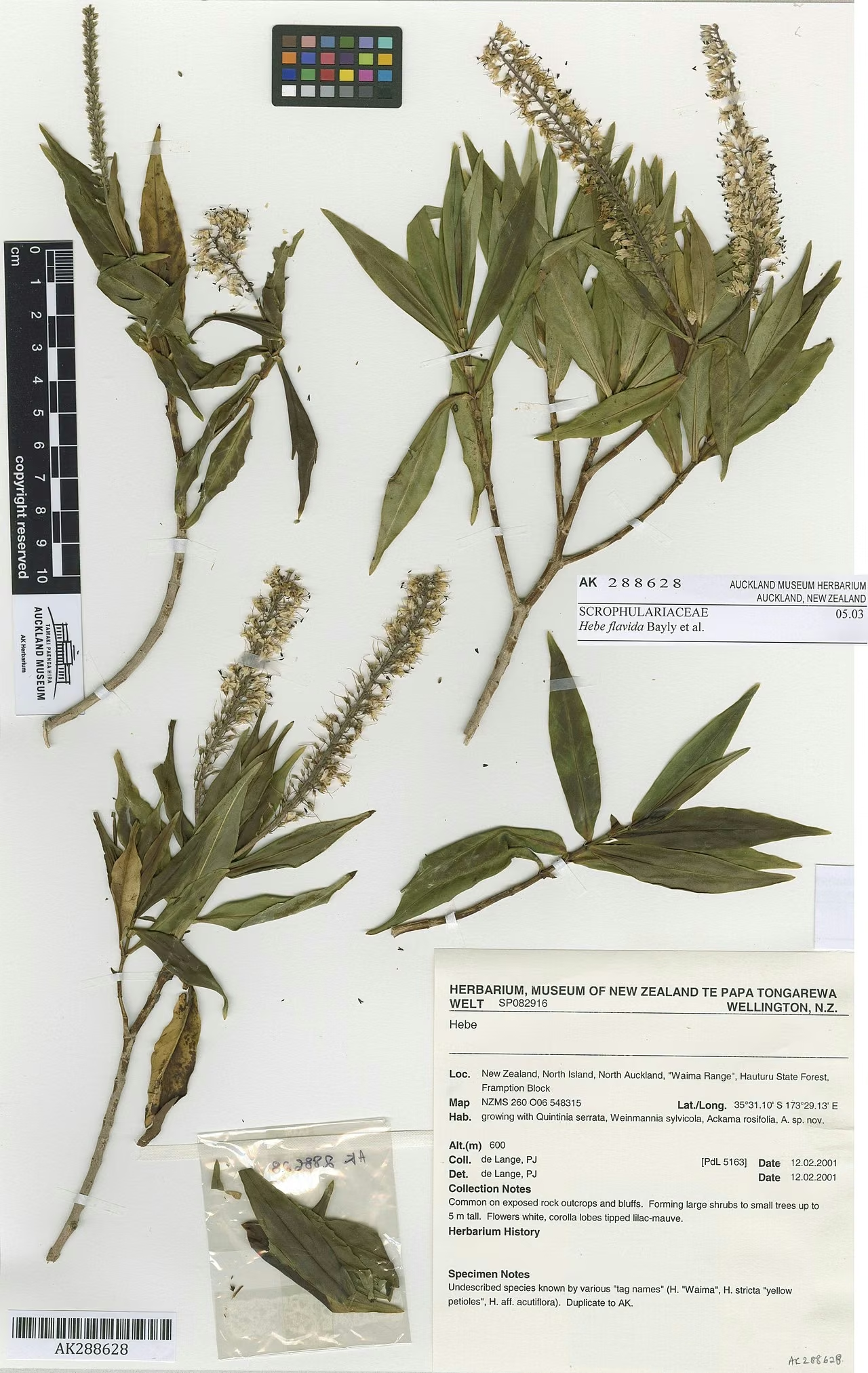
Veronica flavida
Veronica flavida
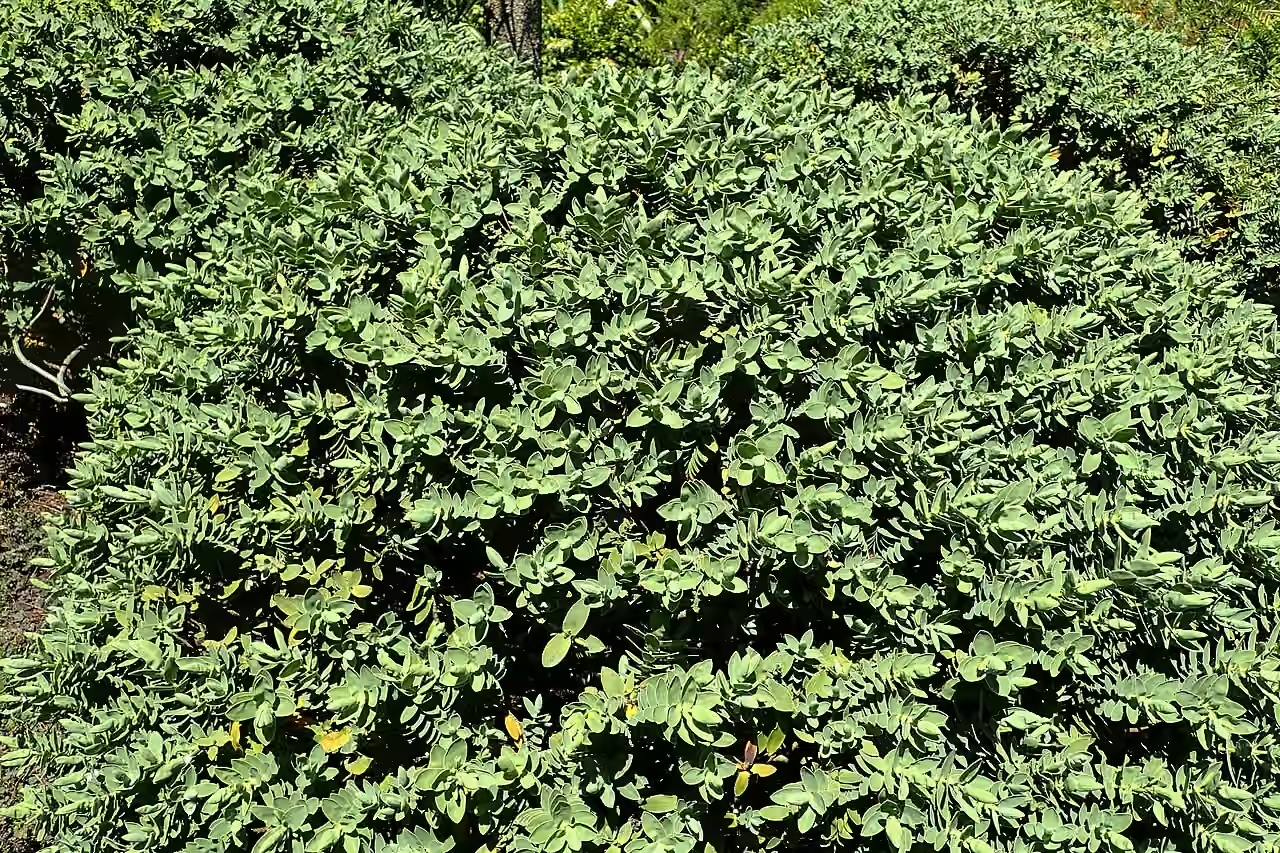
Veronica gibbsii
Veronica gibbsii
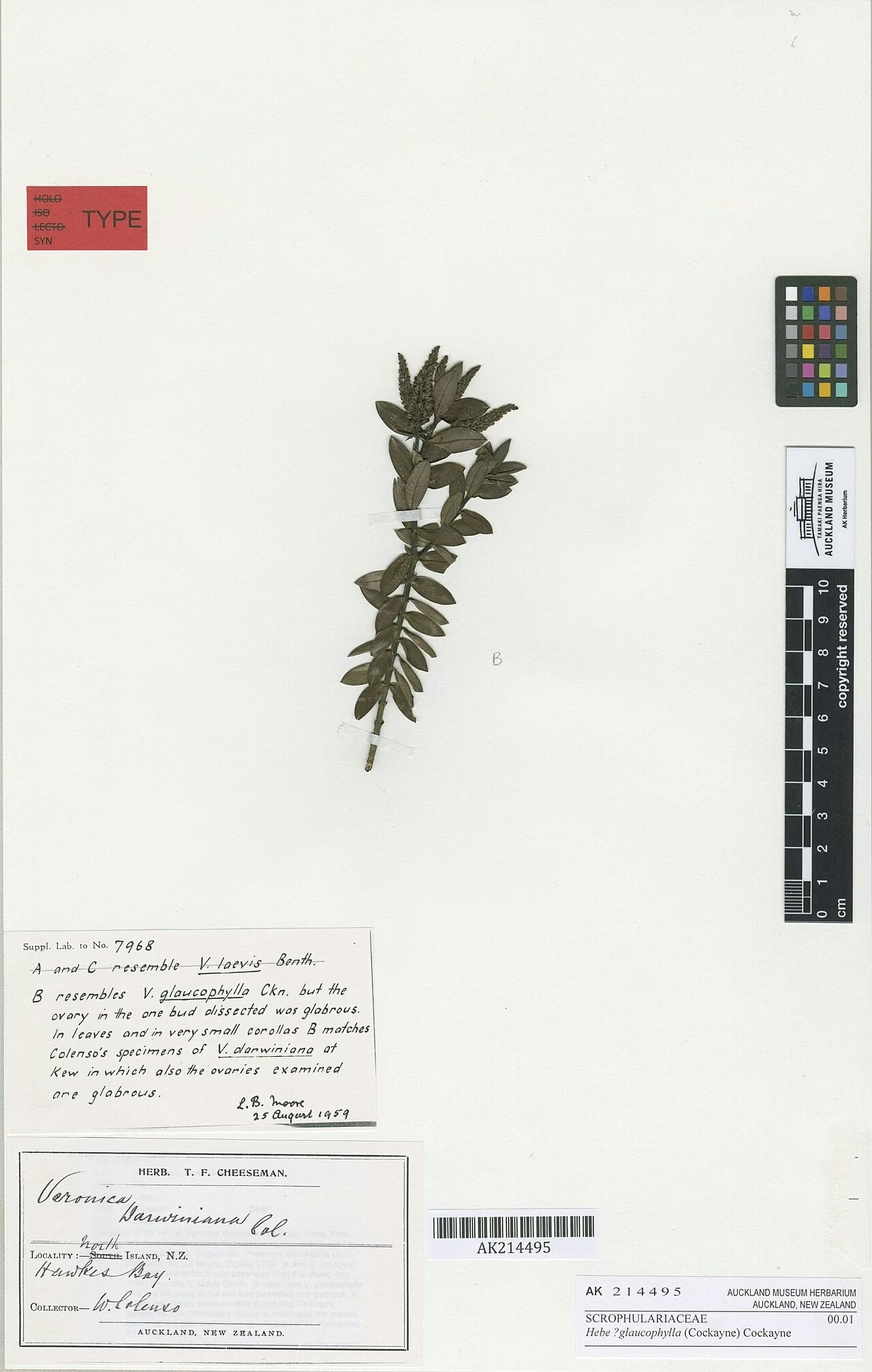
Veronica glaucophylla
Veronica glaucophylla
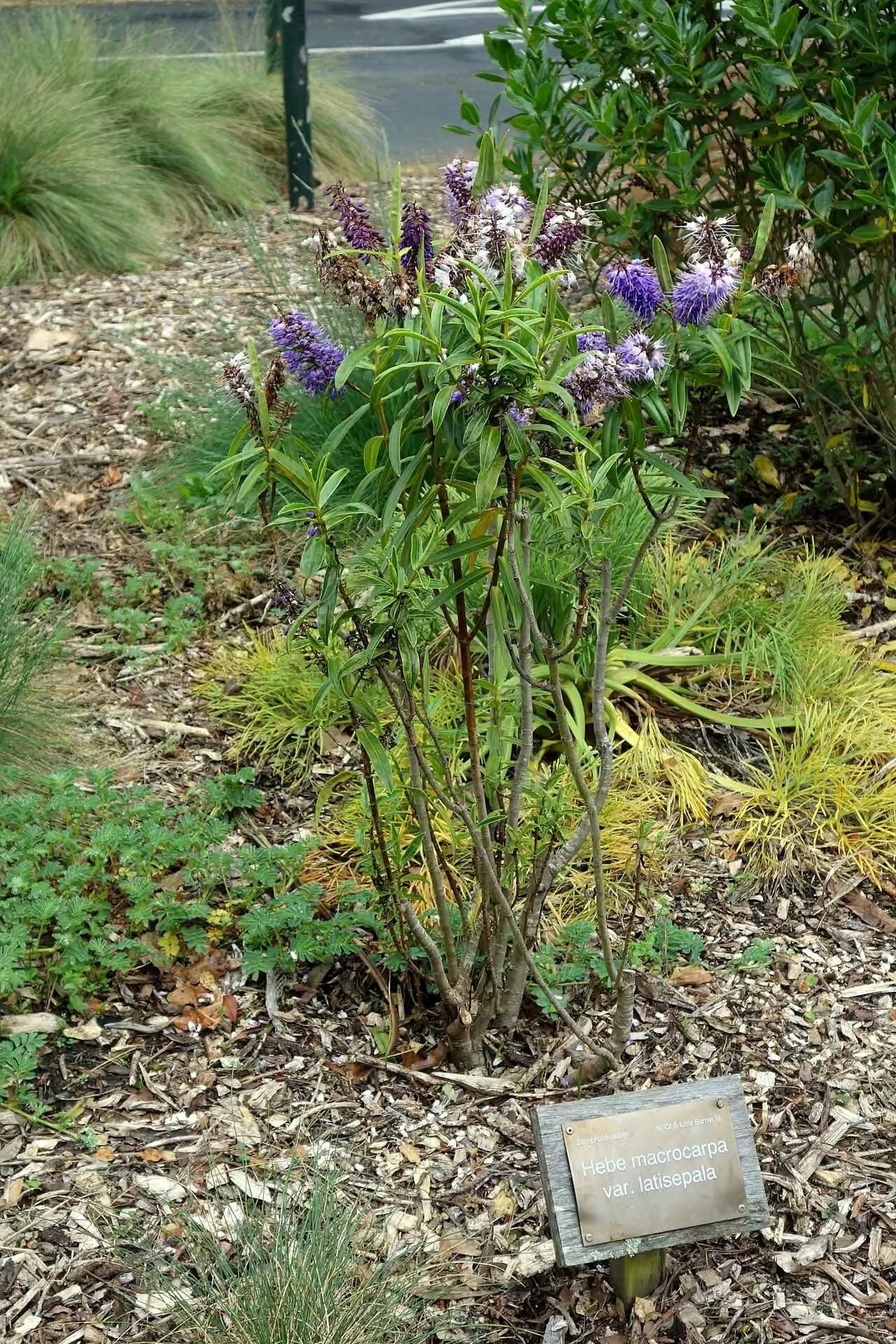
Veronica macrocarpa var. latisepala
Veronica macrocarpa var. latisepala
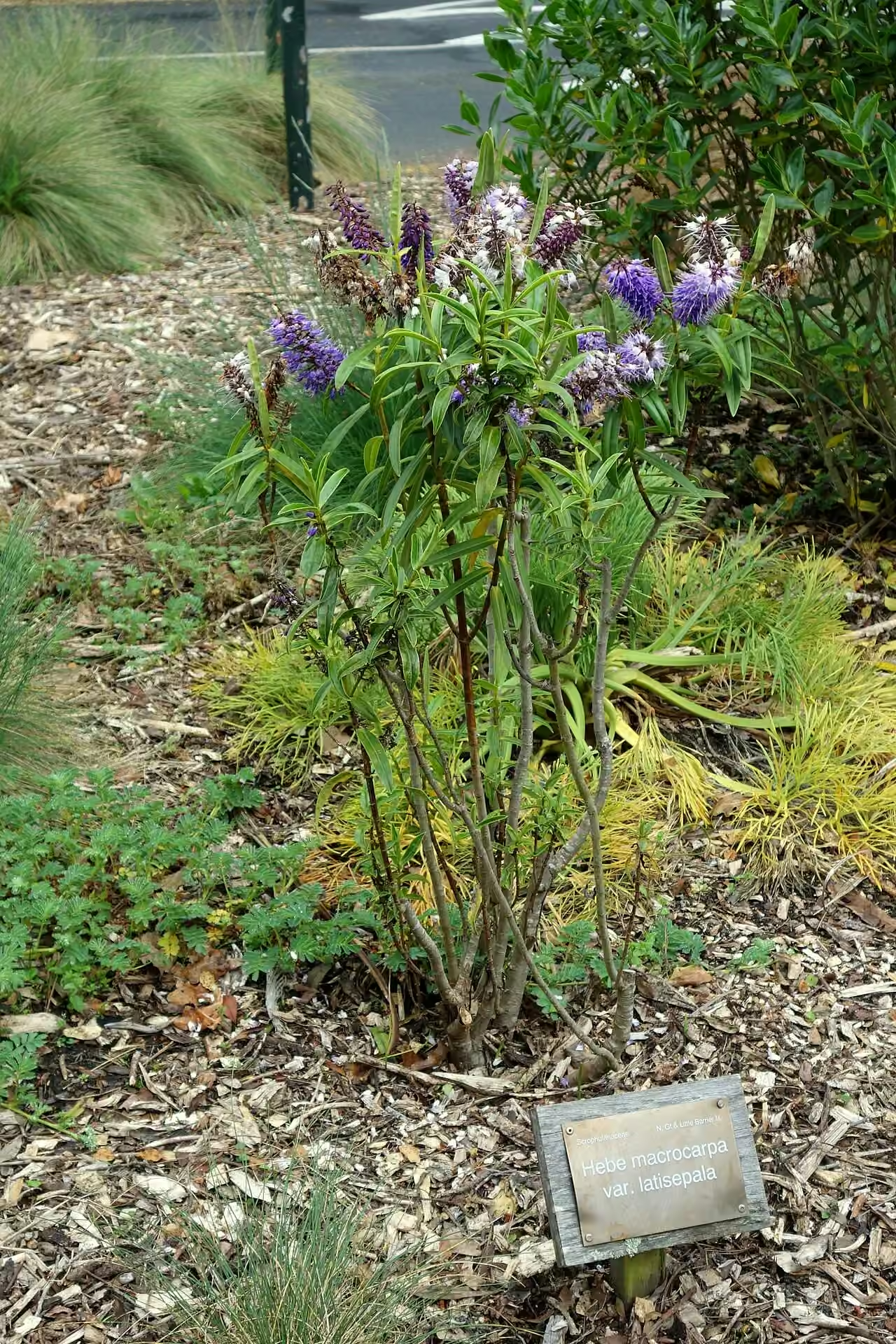
Veronica macrocarpa var. macrocarpa
Veronica macrocarpa var. macrocarpa
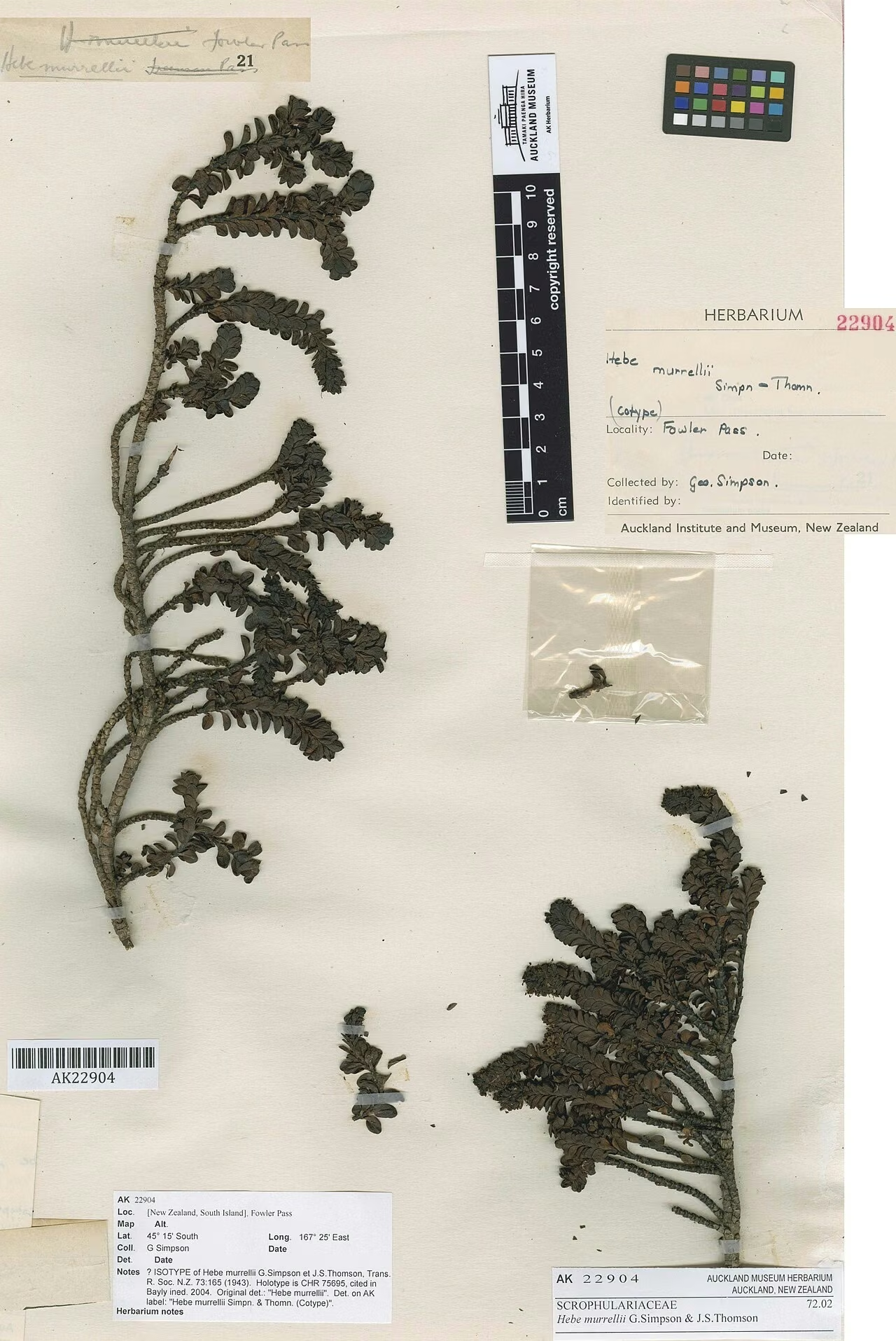
Murrell's Hebe
Veronica murrellii
Snow Hebe
Snow Hebe
Plant Conservation
Veronica insularis is ranked At Risk - Naturally Uncommon (2023) with the qualifiers Island Endemic and Range Restricted. It is naturally confined to a handful of small islands, so any single event affecting the group could affect the whole species.
The Three Kings Islands have been a reserve for the preservation of flora and fauna since 1956 and are administered by the Department of Conservation, which helps protect the habitat from weeds and pests. Keeping cultivated plants of known wild origin also provides a backup for the species.
Frequently Asked Questions
Where is Three Kings koromiko found?
Only on Manawatāwhi/Three Kings Islands, about 55 km north-west of Cape Reinga, where it grows on Great, West, South West and North East islands.
Is Veronica insularis threatened?
It is ranked At Risk - Naturally Uncommon with the qualifiers Island Endemic and Range Restricted, because its entire wild population is confined to the small Three Kings group.
How do you recognise Three Kings koromiko?
It is a low shrub with leathery, dull, elliptic leaves up to 33 mm long that are often blue-grey, and branched flower clusters of white or pale purple flowers. It is the only hebe on the Three Kings.
Can Three Kings koromiko be grown in gardens?
It is occasionally grown by native plant enthusiasts, and as a frost-tender coastal cliff plant it is best suited to warm, sunny, well-drained northern gardens.
Sources and Further Reading
The botanical, growing, and conservation details for Three Kings Koromiko (Veronica insularis) on this page draw on the New Zealand plant references below. Consult them for full technical records and the latest distribution data.