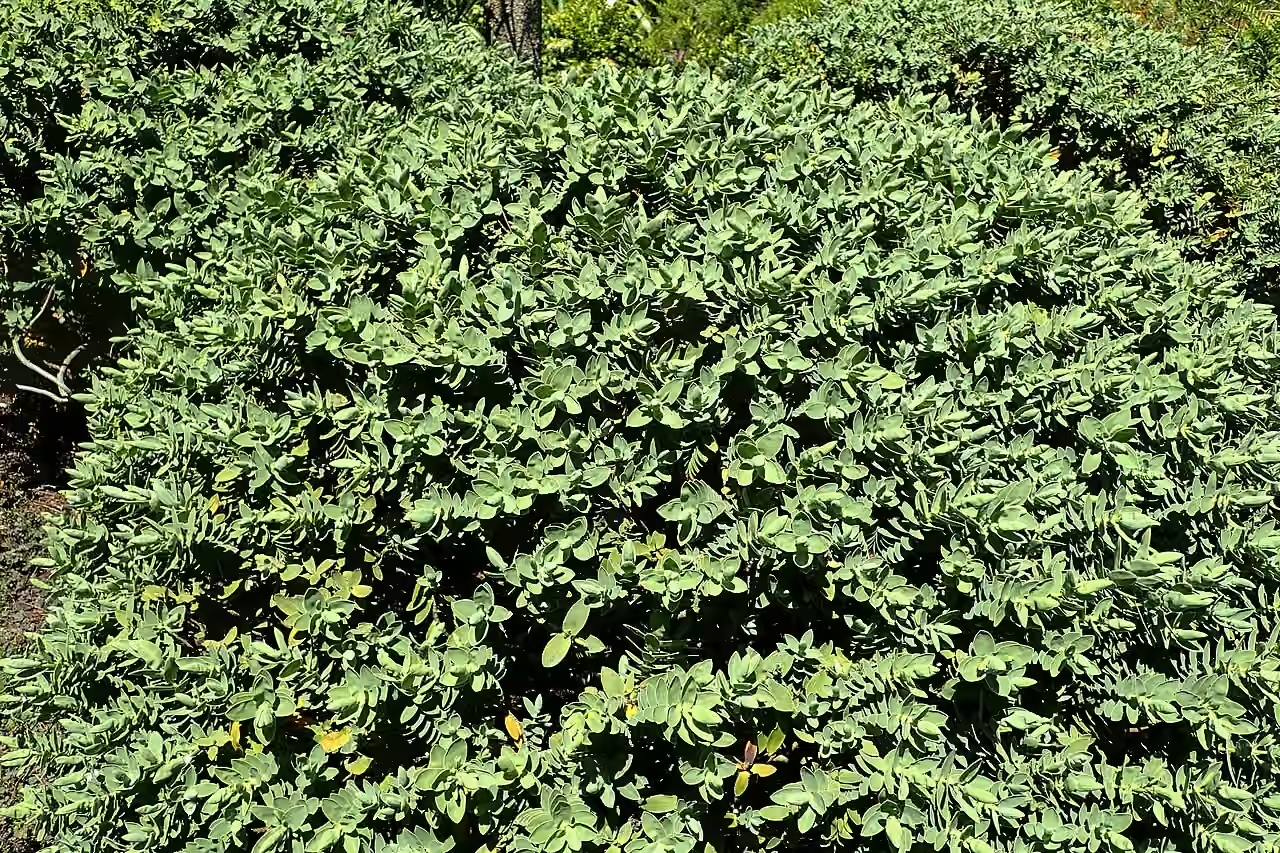
Hebe
Veronica gibbsii
Last updated:
Veronica gibbsii, long known as Hebe gibbsii, is a low, sparsely branched shrub up to 35 cm tall with sprawling stems, found only on a handful of mountains in eastern Nelson and western Marlborough. Its thick, blue-green, oval leaves are fringed with long hairs, a feature that sets it apart from other small glaucous hebes, and it bears short spikes of white flowers at the branch tips from October to March. It grows in open, rocky places mostly above the treeline, at about 850 to 1520 m, on peaks such as Mt Rintoul, Ben Nevis and Mt Starveall. It is ranked At Risk - Naturally Uncommon because of its small range. Explore more native shrubs in our native plant guide.
Plant Description
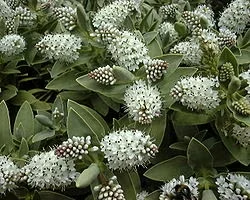
Veronica gibbsii is a sparsely branched, spreading shrub up to 0.35 m tall, with branches that lie along the ground and turn up at the ends. The leaves are erect to spreading, ovate or elliptic, 9 to 20 mm long and 4 to 13 mm wide, thick and leathery, and blue-green (glaucous). Their margins are fringed with long hairs and are sometimes tinged red.
The white flowers are carried in unbranched spikes 1.5 to 3.5 cm long, clustered near the branch tips, each with 6 to 30 flowers. The corolla tube is 2.5 to 4 mm long and the lobes are white. The capsules are 2.5 to 4 mm long and contain small, flattened seeds.
The fringe of long hairs on the leaf margins is the key feature. The Flora of New Zealand notes that the marginal hairs form two rows, at least on dried leaves, and that the margin has a bevelled edge. Unlike some similar species, the hairs are on the margins only, not the leaf surfaces. It is thought to be related to other glaucous-leaved hebes such as Veronica pinguifolia and Veronica buchananii.
Quick Facts
| Scientific Name | Veronica gibbsii |
|---|---|
| Height | Up to 0.35 m |
| Spread | Not recorded; sparse, spreading habit |
| Water Needs | Moderate; sharp drainage essential |
| Light | Full sun |
| Frost Tolerance | High; grows mostly above the treeline |
| Salt Tolerance | No information available; a mountain species |
| Growth Rate | No published data |
| Lifespan | Long-lived perennial |
Climate Best Suited to
Suits the cold, exposed climate of mountain tops in Nelson and Marlborough, with frost, snow and strong winds. It is unsuited to warm, humid lowland conditions.
Regional Suitability
| City | Climate Suitability |
|---|---|
| Auckland | Low |
| Wellington | Low |
| Christchurch | Medium |
| Dunedin | Medium |
Plant Habitat
Veronica gibbsii is endemic to the South Island, where it is confined to the mountains of eastern Nelson and western Marlborough. Recorded sites include Mt Starveall, Ben Nevis, Mt Rintoul (the type locality), Mt Patriarch and the Lake Chalice area. The Flora of New Zealand gives an altitude range of about 854 to 1524 m.
It grows in open, rocky sites, mostly above the timberline, among rock outcrops and stony ground.
Growing Requirements
Soil Requirements
In the wild it grows among rocks and on stony mountain ground, so any cultivated plant needs a very free-draining, gritty mix.
- Gritty scree mix or crushed rock
- Low fertility
- Never waterlogged
Light Requirements
It is a plant of open, treeless mountain tops and needs full sun.
- Full sun
- Open, airy position
Water Requirements
Mountain sites get regular rain and snow but drain rapidly through rock and gravel.
- Water in dry spells, allowing the surface to dry between waterings
- Keep the crown and foliage dry in winter
Planting and Establishing
This rare species is seldom available and is best left in the wild. Any plants grown should come from legitimately propagated stock, never from wild collection.
If grown, plant it in spring in a scree bed, raised rock garden or alpine trough in full sun, with a gravel collar around the stem base.
Ecological Role
Its white flowers are available from October to March, providing nectar for insects on the exposed Nelson tops. NZPCN records that its seeds are wind dispersed.
As a low, sprawling woody plant among rocks, it helps hold thin soils and provides shelter for invertebrates and small herbs on exposed ground. Its specific pollinators are not documented in the sources consulted.
Uses & Significance
Garden Uses
It is mainly of interest to specialist alpine growers and botanic gardens rather than general gardeners.
- Specialist alpine collections using propagated stock
- Botanic garden displays of Nelson mountain flora
- Best appreciated in the wild on Nelson tramping routes
Ecological Value
It is a narrow-range endemic of the Nelson and Marlborough mountains and part of the region's distinctive alpine flora.
- Found on only a handful of peaks
- Flowers over a long season for alpine insects
- Helps stabilise rocky ground above the treeline
Landscaping Uses
Veronica gibbsii is not a landscaping plant. In an alpine collection, place it where its sprawling stems can drape over a rock, so the blue-green foliage and hair-fringed leaf margins can be seen up close.
For a similar low, blue-green effect in ordinary gardens, more widely grown glaucous hebes such as Veronica pinguifolia cultivars are a better choice.
Seasonal Care Calendar
Spring
Flowering begins as early as October on the mountain tops.
- Plant out cultivated stock
- Check drainage after snowmelt
Summer
Flowering continues, with white spikes at the branch tips.
- Avoid trampling plants on open rock
- Water cultivated plants in drought
Autumn
Capsules ripen from January to May.
- Leave wild seed undisturbed
- Collect seed from cultivated plants
Winter
Plants sit out frost and snow on the exposed tops; old capsules may persist until November.
- Keep cultivated plants dry at the crown
- No feeding needed
When to Prune and How Much
No pruning is needed beyond removing dead stems and spent flower spikes. Its sparse, sprawling form is natural and should not be clipped.
Cutting into old, bare wood is best avoided, as small alpine hebes often fail to resprout from it.
How to Grow Hebe
No published propagation notes specific to Veronica gibbsii were found in the sources consulted; NZPCN records only that its seeds are wind dispersed. The methods below describe the general approach used for small alpine hebes rather than a proven protocol for this species. Because it is a naturally uncommon plant with a very restricted range, material should come only from plants already in cultivation or be collected under authority from the Department of Conservation for conservation purposes. Young plants should be grown cool, bright and well ventilated, in a gritty mix, because alpine hebes are prone to rot in warm, humid conditions.
From Cuttings
Short semi-hardwood cuttings from cultivated plants are the most practical method for keeping a plant in collection.
- Take 4 to 6 cm shoot tips in late summer or autumn
- Remove the lowest leaves
- Insert into pure pumice or a very gritty mix
- Keep cool, lightly moist and in bright shade with good air movement
- Pot on carefully into an alpine mix once roots form
From Seed
Fruit ripens from January to May. Collect capsules as they brown and sow the seed fresh. Seed from a garden plant growing near other hebes may produce hybrids, so isolate the parent if true seedlings are wanted.
- Sow thinly on the surface of a gritty seed mix
- Cover lightly with fine grit
- Keep outdoors in a cool, sheltered spot and moist
- Prick out seedlings into individual pots once large enough
Pests & Diseases
No pests are recorded for this species. In cultivation, the main risk is fungal rot and mildew in warm, humid or poorly drained conditions.
In the wild, trampling of plants on rocky tops and browsing by introduced animals are possible pressures on its small populations.
Cultural Significance
No traditional Māori name or use is recorded for Veronica gibbsii in the sources consulted.
The species was described by Thomas Kirk from Mt Rintoul and named in honour of Frederick G. Gibbs (1866 to 1953). It was later placed in Hebe by Cockayne and Allan and is now included in Veronica with the other New Zealand hebes.
Bonus Tip
To see this hebe, walk to the tops of Mt Rintoul or Mt Starveall in the Richmond Range area in early summer and look on open rock above the bushline for low, blue-green plants with hairy-edged leaves. Run a finger gently along a leaf margin to feel the fringe of long hairs that identifies it.
Related Plants
Explore other native plants that share similar characteristics or habitats with Hebe (Veronica gibbsii), offering further insights into New Zealand's diverse flora. These related species provide context and opportunities for complementary planting in your garden.
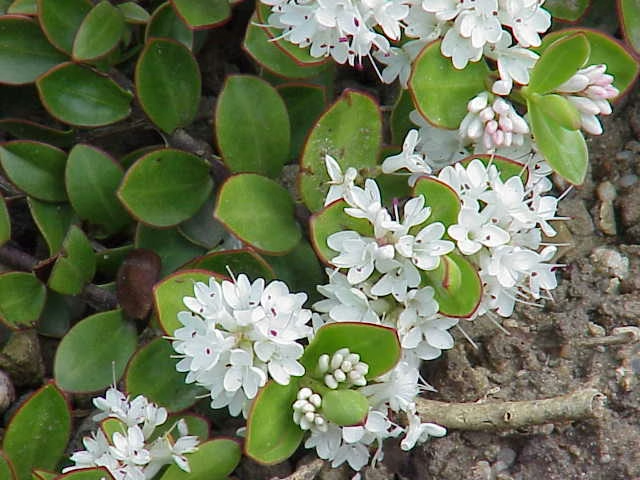
Veronica decumbens
Veronica decumbens
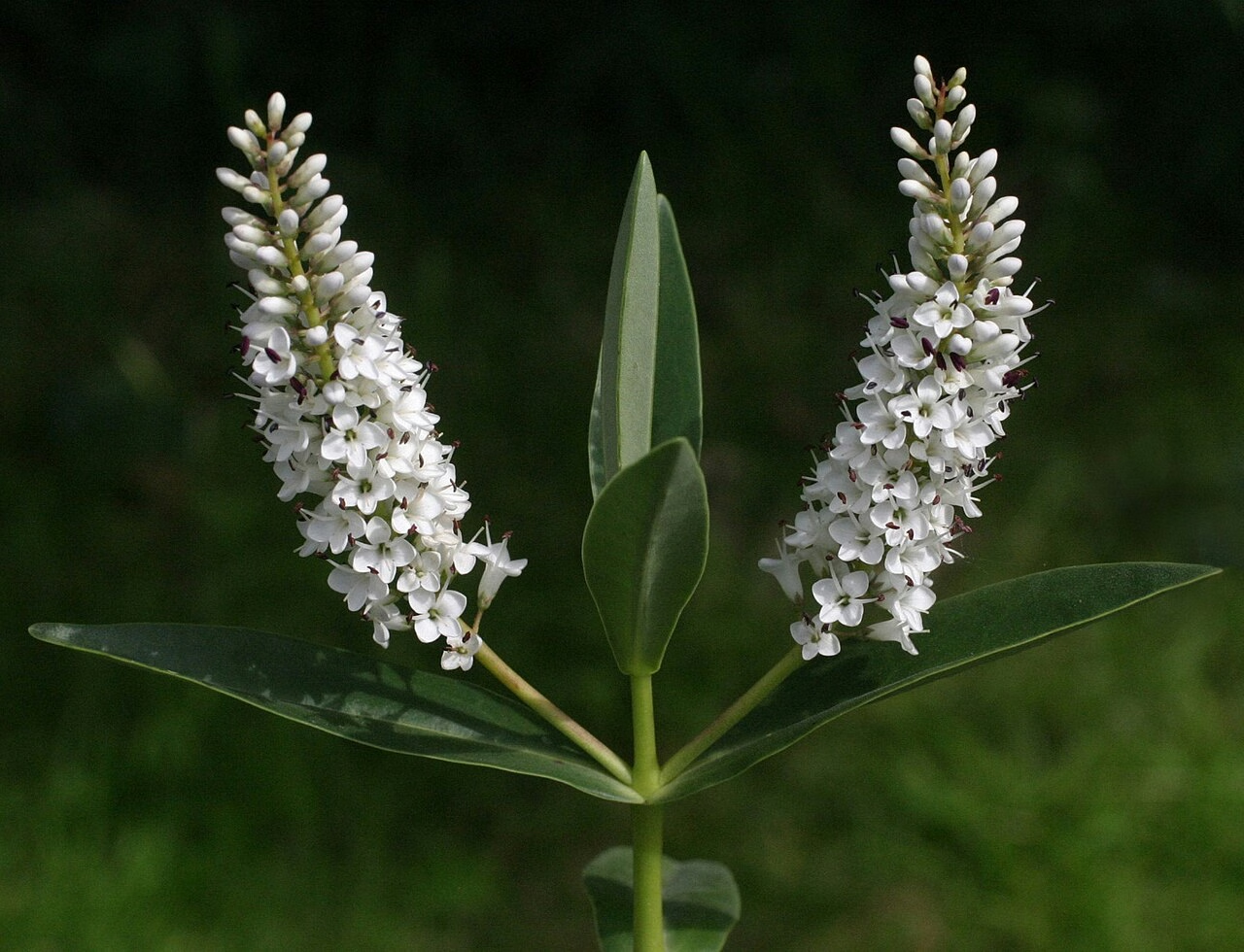
Dieffenbach's Koromiko
Veronica dieffenbachii
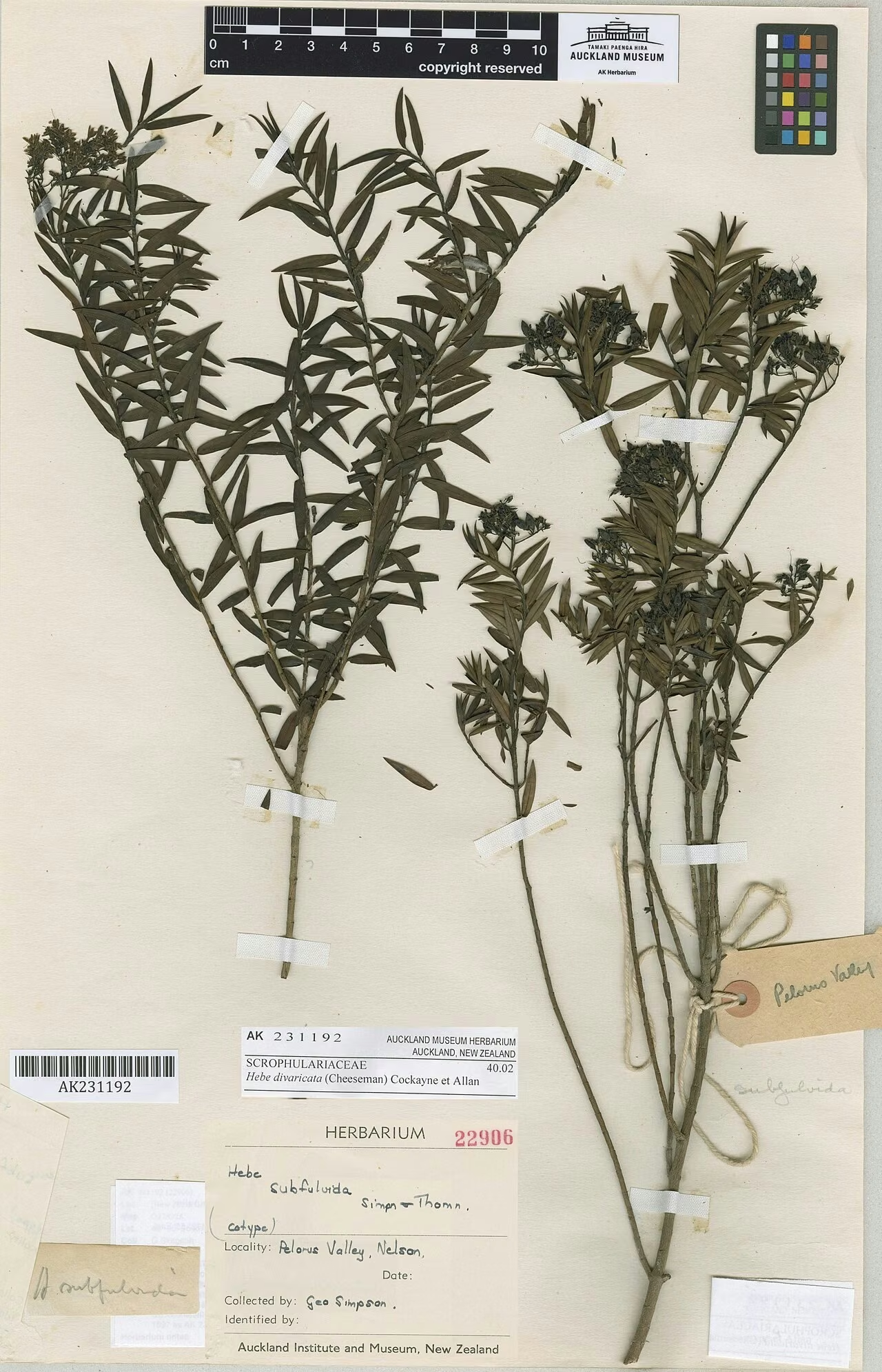
Veronica subfulvida
Veronica subfulvida
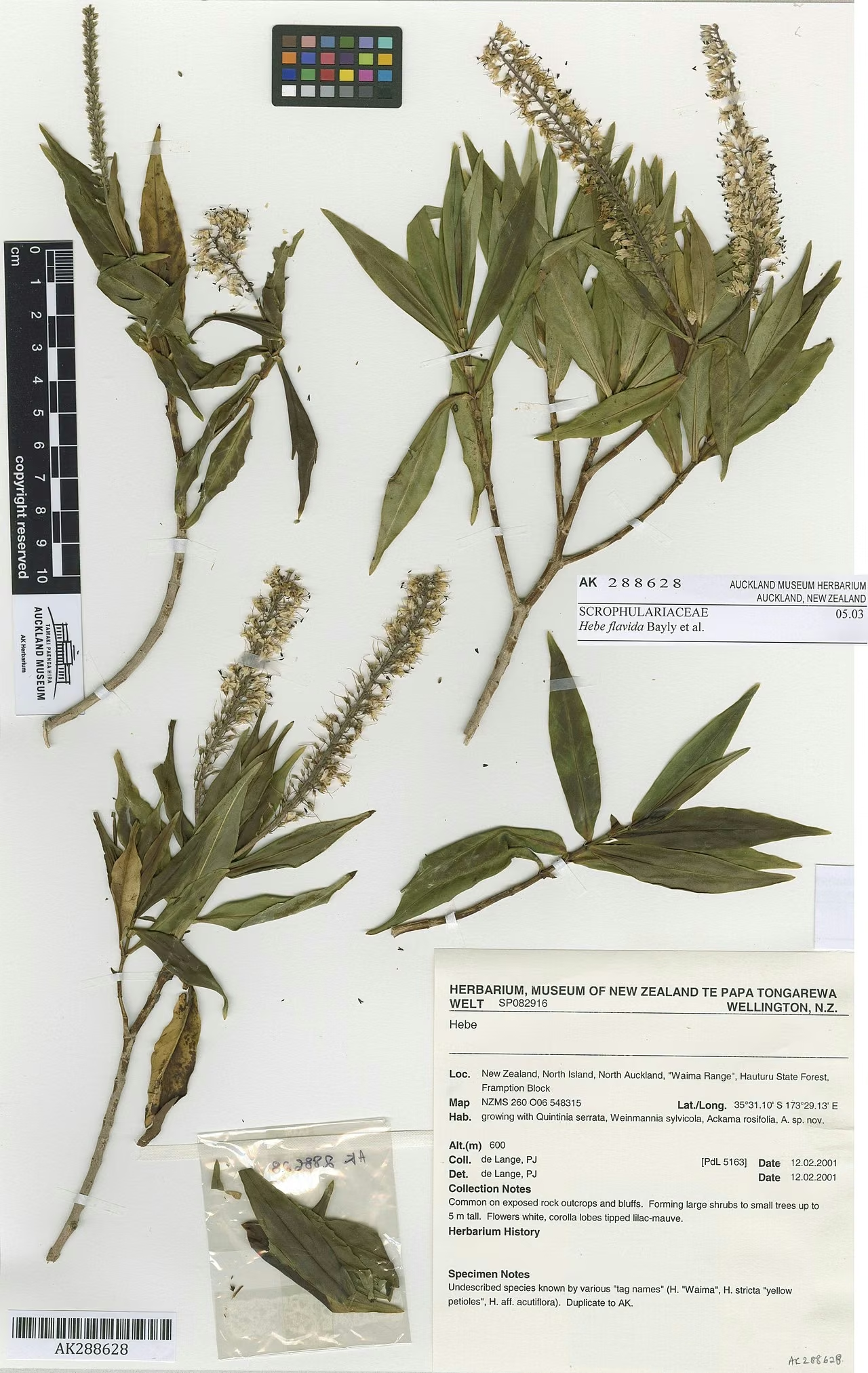
Veronica flavida
Veronica flavida
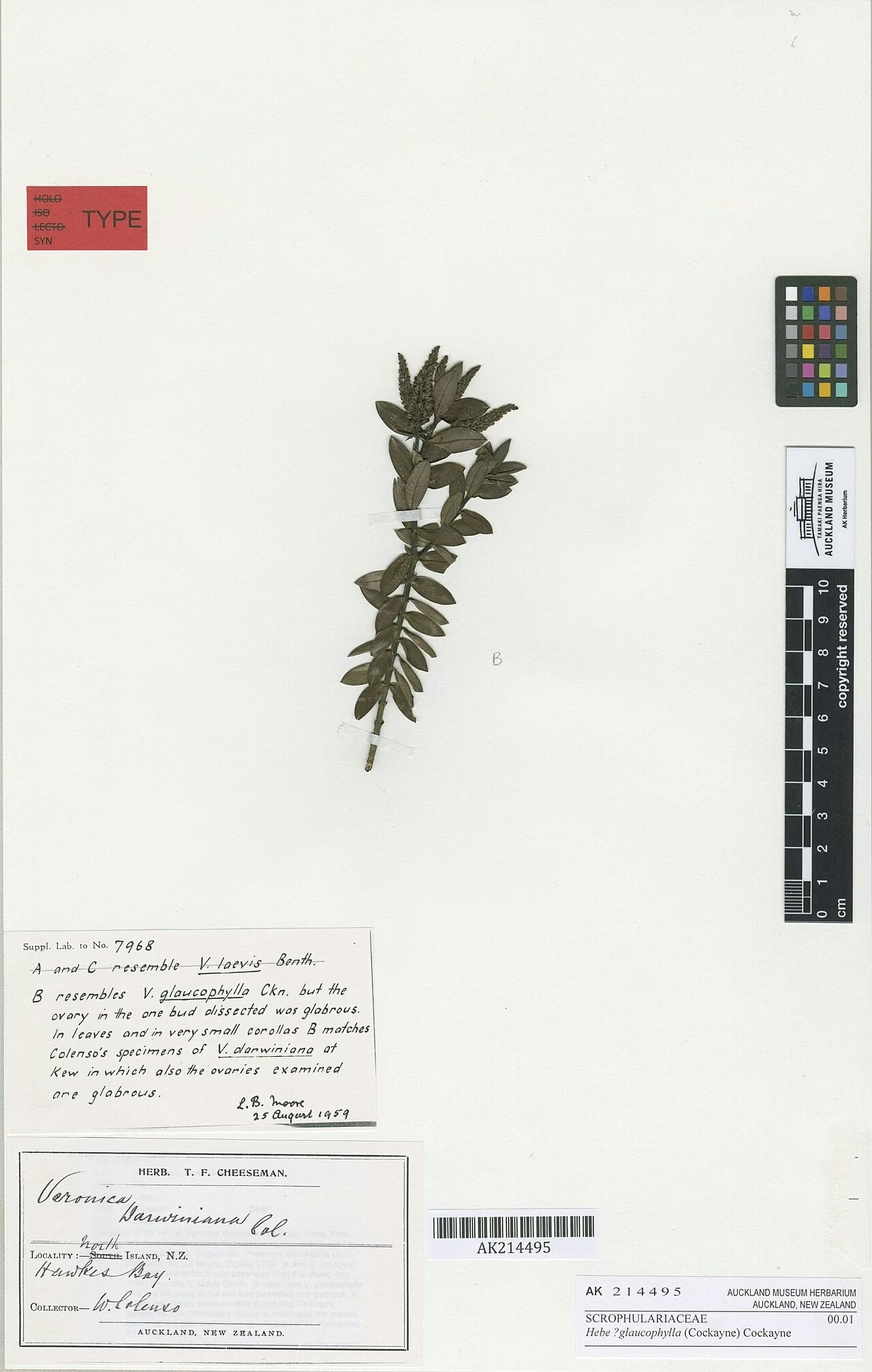
Veronica glaucophylla
Veronica glaucophylla
Three Kings Koromiko
Veronica insularis
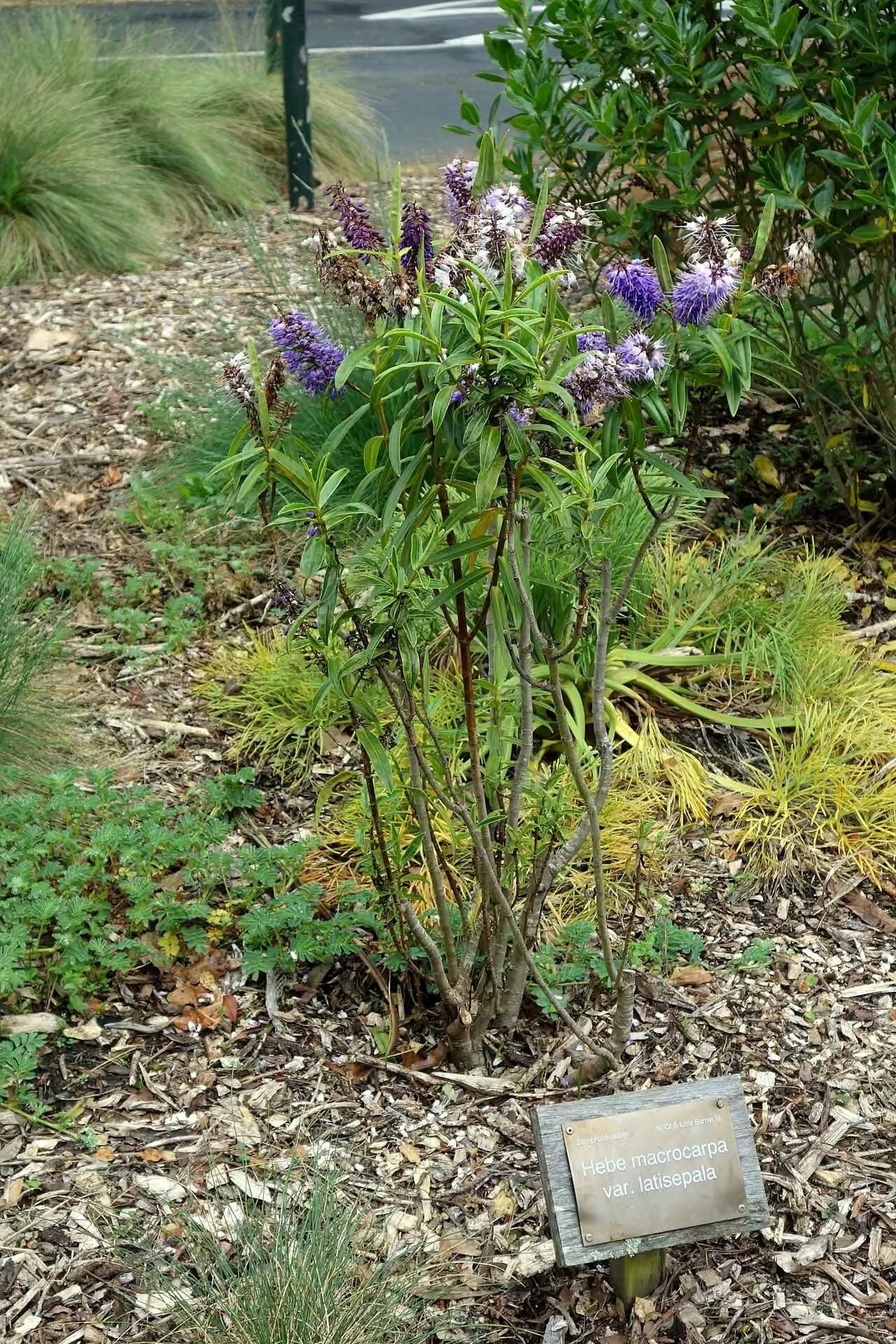
Veronica macrocarpa var. latisepala
Veronica macrocarpa var. latisepala
Snow Hebe
Snow Hebe
Plant Conservation
Veronica gibbsii is ranked At Risk - Naturally Uncommon (2023) with the qualifiers Sparse, Range Restricted, Data Poor Size and Data Poor Trend. Its rarity stems mainly from its naturally small range on a few mountains.
Better information on population size and trends is needed. Keeping to tracks on rocky tops, controlling browsing animals and never collecting plants from the wild all help protect it.
Frequently Asked Questions
Where does Veronica gibbsii grow?
It is confined to the mountains of eastern Nelson and western Marlborough, including Mt Starveall, Ben Nevis, Mt Rintoul, Mt Patriarch and the Lake Chalice area, mostly above the treeline.
How do you identify Veronica gibbsii?
Look for a low, sprawling shrub with thick, blue-green oval leaves whose margins carry a fringe of long hairs, often appearing as two rows of hairs on dried leaves, while the leaf surfaces themselves are hairless.
Is Veronica gibbsii rare?
Yes. It is ranked At Risk - Naturally Uncommon because it has a restricted range and sparse populations, and data on its population size and trend are limited.
Who is Veronica gibbsii named after?
It honours Frederick G. Gibbs (1866 to 1953). The species was described by Thomas Kirk, with Mt Rintoul as its type locality.
Sources and Further Reading
The botanical, growing, and conservation details for Hebe (Veronica gibbsii) on this page draw on the New Zealand plant references below. Consult them for full technical records and the latest distribution data.