Hebe
Veronica decumbens
Last updated:
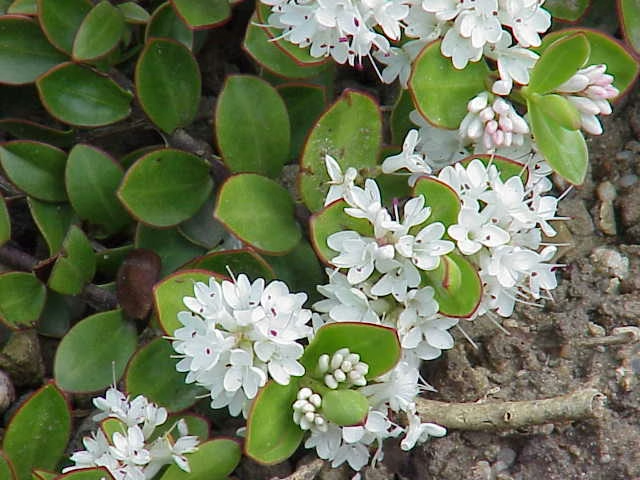
Veronica decumbens, still widely sold as Veronica decumbens, is a low, spreading shrub up to about 35 cm tall from the drier mountains of Marlborough, south-east Nelson and north Canterbury. It is easy to recognise by its purplish-red to almost black stems, often with two broad bands of hair, and its glossy, dark or bronze-green leaves edged in red with a fringe of tiny stiff hairs. Dense clusters of white flowers appear from November to February. It grows in open, rocky grassland and low shrubland at about 600 to 1540 m. It is ranked Not Threatened and is a hardy, attractive rock garden plant. It was previously known as Hebe decumbens. Explore more native shrubs in our native plant guide.
Plant Description
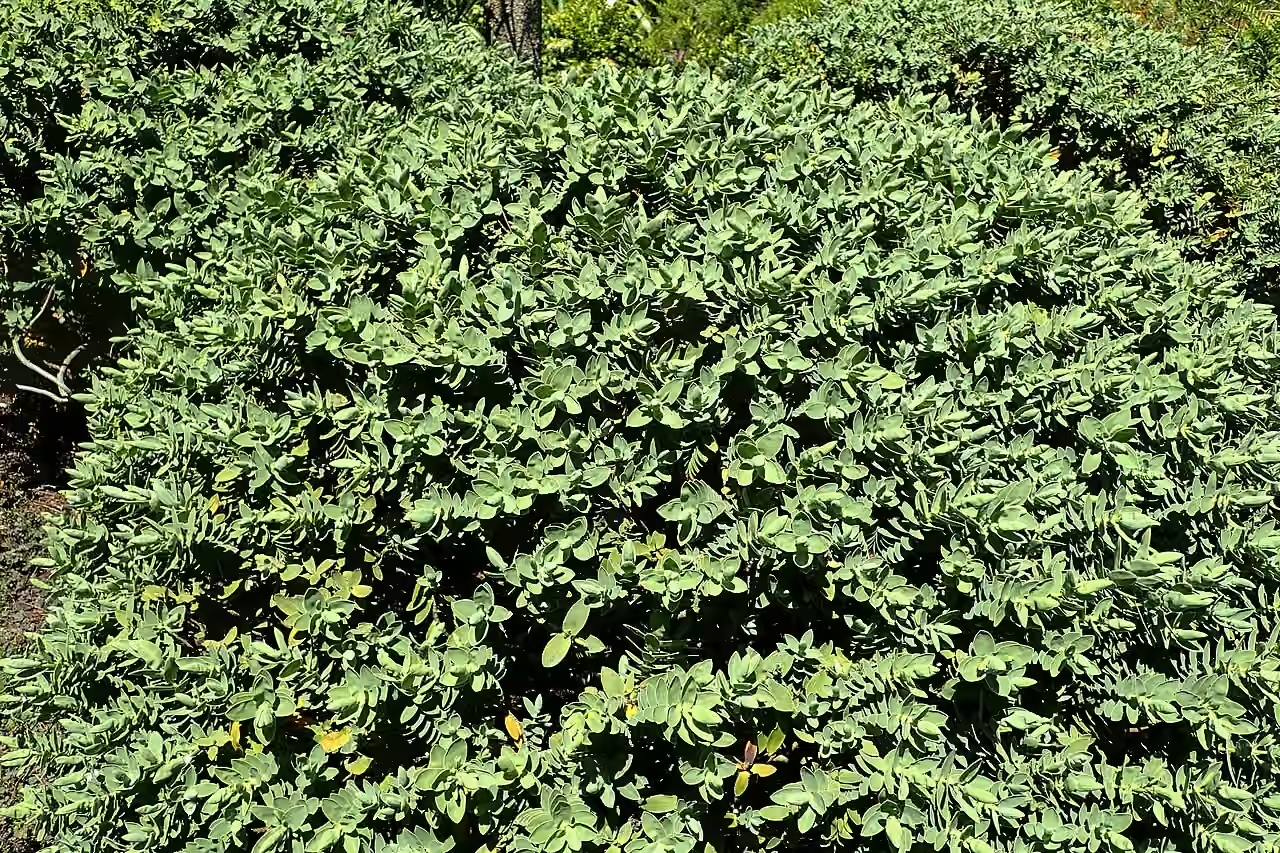
Veronica decumbens is an openly branched, spreading low shrub up to 0.35 m tall. The branches lie along the ground or rise at the tips, and the branchlets are purplish-red to almost black and hairy, usually with the hairs in two broad bands on opposite sides. The leaves are elliptic to obovate, concave, 6.5 to 23.5 mm long and 2 to 13 mm wide, glossy and dark or bronze-green. Their margins are usually tinged red and fringed with very short stiff hairs, especially near the tip.
White flowers are carried in dense, unbranched lateral spikes 0.6 to 3 cm long, each with 2 to 25 flowers. The corolla tube is 3 to 6 mm long, much longer than the calyx, and often slightly curved. The capsules are 2.5 to 5.5 mm long and release small, flattened brown seeds.
The combination of a sprawling habit, dark branches with broad bands of hair, glossy leaves and minutely hairy red margins is distinctive. Dried specimens can resemble Veronica pinguifolia, but that species has glaucous, bluish leaves, shorter corolla tubes and hairy capsules.
Quick Facts
| Scientific Name | Veronica decumbens |
|---|---|
| Height | Up to 0.35 m |
| Spread | Not recorded in NZ sources; low, spreading habit |
| Water Needs | Low to moderate; tolerates dry spells once established |
| Light | Full sun to light shade |
| Frost Tolerance | High; a mountain species from 600 to 1540 m |
| Salt Tolerance | No information available |
| Growth Rate | No published data |
| Lifespan | Long-lived perennial |
Climate Best Suited to
Suits cool, relatively dry mountain and inland climates with cold winters and sunny summers. It is fully frost hardy and tolerates drier conditions better than many hebes.
Regional Suitability
| City | Climate Suitability |
|---|---|
| Auckland | Low |
| Wellington | Medium |
| Christchurch | High |
| Dunedin | High |
Plant Habitat
Veronica decumbens is endemic to the South Island. It occurs mainly on the drier mountains of Marlborough, south-east Nelson and north Canterbury, from the Awatere Valley in the north to the Waiau Valley in the south, and west as far as the Mātakitaki Valley near Mt Baldy. The Flora of New Zealand records it between about 600 and 1538 m.
Its habitat is grassland and low shrubland in open, rocky and stony sites, including the hills around Hanmer Springs.
Growing Requirements
Soil Requirements
It grows in stony, well-drained mountain soils and does well in gardens in most free-draining soils, including those on the alkaline side according to the RHS.
- Free-draining loam, gravel or sandy soil
- Tolerates neutral to alkaline soils
- Avoid heavy, waterlogged clay
Light Requirements
As a plant of open rocky grassland it prefers full sun, which also brings out the red leaf margins and dark stems.
- Full sun for best colour and compact growth
- Light shade is tolerated
Water Requirements
Coming from the drier eastern mountains, it copes with dry summers once established, though it appreciates water in long droughts.
- Water regularly until established
- Occasional deep watering in extended dry spells
Planting and Establishing
Plant in autumn or spring in a sunny, well-drained spot. On heavy soils, build a mound or raised bed with added grit so water drains away from the crown.
Allow space for its sprawling branches to spread over rocks or the edge of a wall, where the dark stems can be seen.
Ecological Role
The Flora of New Zealand records black scree butterflies visiting the flowers at Hanmer Springs, and the dense white flower clusters are also visited by other native insects in summer. NZPCN records that the seeds are wind dispersed.
As a low woody shrub in open, stony grassland it helps stabilise loose ground and provides cover for lizards and invertebrates among the rocks.
Uses & Significance
Garden Uses
One of the more garden-worthy small hebes, valued for its dark stems, glossy red-rimmed leaves and summer flowers.
- Rock and gravel gardens
- Spilling over low walls and banks
- Low-maintenance dry gardens in cooler regions
Ecological Value
It is part of the low shrub and grassland flora of the eastern South Island mountains and a recorded nectar source for alpine butterflies.
- Visited by black scree butterflies
- Stabilises stony slopes
- Endemic to the northern South Island
Landscaping Uses
Use it as a low, sprawling accent among rocks, where the near-black stems and glossy leaves create contrast with grey stone and silver plants such as Raoulia or blue tussocks.
Planted in groups along the front of a dry border or the top of a retaining wall, it forms a low, open groundcover.
Seasonal Care Calendar
Spring
New glossy leaves emerge and flower buds start forming.
- Plant new specimens
- Lightly feed with slow-release fertiliser
Summer
Flowering from November to February, with dense clusters of white flowers.
- Water in long droughts
- Watch for butterflies visiting the flowers
Autumn
Capsules ripen from January to May.
- Collect seed
- Take semi-hardwood cuttings
Winter
Fully hardy, the dark stems are most noticeable in winter.
- Check for waterlogging
- Remove any dead shoots
When to Prune and How Much
Trim lightly after flowering to remove spent flower spikes and keep the plant dense. Pinching back long stems encourages branching.
Avoid cutting hard into bare old wood, as the plant may not regrow from it.
How to Grow Hebe
The RHS lists Veronica decumbens as propagated from seed or semi-hardwood cuttings, and NZPCN notes that its seeds are wind dispersed. Cuttings are the most reliable method for gardeners and keep the distinctive dark stems and red-margined leaves of the parent. Because its sprawling branches often touch the ground, it is also worth checking for stems that have rooted where they lie, which can be detached and potted up as ready-made new plants. Seed is best saved for restoration plantings of known wild origin, as garden seedlings may be hybrids with other hebes.
From Cuttings
Take semi-hardwood cuttings in late summer or autumn from healthy, non-flowering shoots. The shoots are short and wiry, so choose the longest available side shoots and handle them gently, as the dark stems can snap at the nodes.
- Cut 5 to 8 cm lengths just below a leaf pair
- Remove the lower leaves
- Insert into a free-draining mix of pumice and fine bark
- Keep lightly moist in bright shade until rooted
- Pot on and grow in full sun before planting out
By Layering
Decumbent stems that lie along the soil often form roots naturally, and this can be encouraged.
- Pin a low stem to the soil surface with wire
- Cover the pinned section with a little gritty soil
- Leave for several months until roots form
- Sever from the parent in autumn or spring and pot up or replant in a sunny spot
Pests & Diseases
No serious pests are recorded for this species. Like other hebes, it can suffer downy mildew or leaf spot in humid conditions and root rot in poorly drained soil.
Good drainage, full sun and an open position are the best prevention.
Cultural Significance
No traditional Māori name or use is recorded specifically for Veronica decumbens in the sources consulted.
It was described by J.B. Armstrong and later moved to Hebe by Cockayne and Allan as Hebe decumbens, the name under which it has long been grown in gardens in New Zealand and overseas. It is now placed in Veronica, along with all New Zealand hebes.
Bonus Tip
To get the best stem and leaf colour, grow it hard: full sun, lean gritty soil and little fertiliser. Rich, shaded conditions make it soft and green, while a tough position brings out the near-black stems and red leaf margins that make it distinctive.
Related Plants
Explore other native plants that share similar characteristics or habitats with Hebe (Veronica decumbens), offering further insights into New Zealand's diverse flora. These related species provide context and opportunities for complementary planting in your garden.
Veronica colensoi
Veronica colensoi
Veronica corriganii
Veronica corriganii
Veronica simulans
Veronica simulans
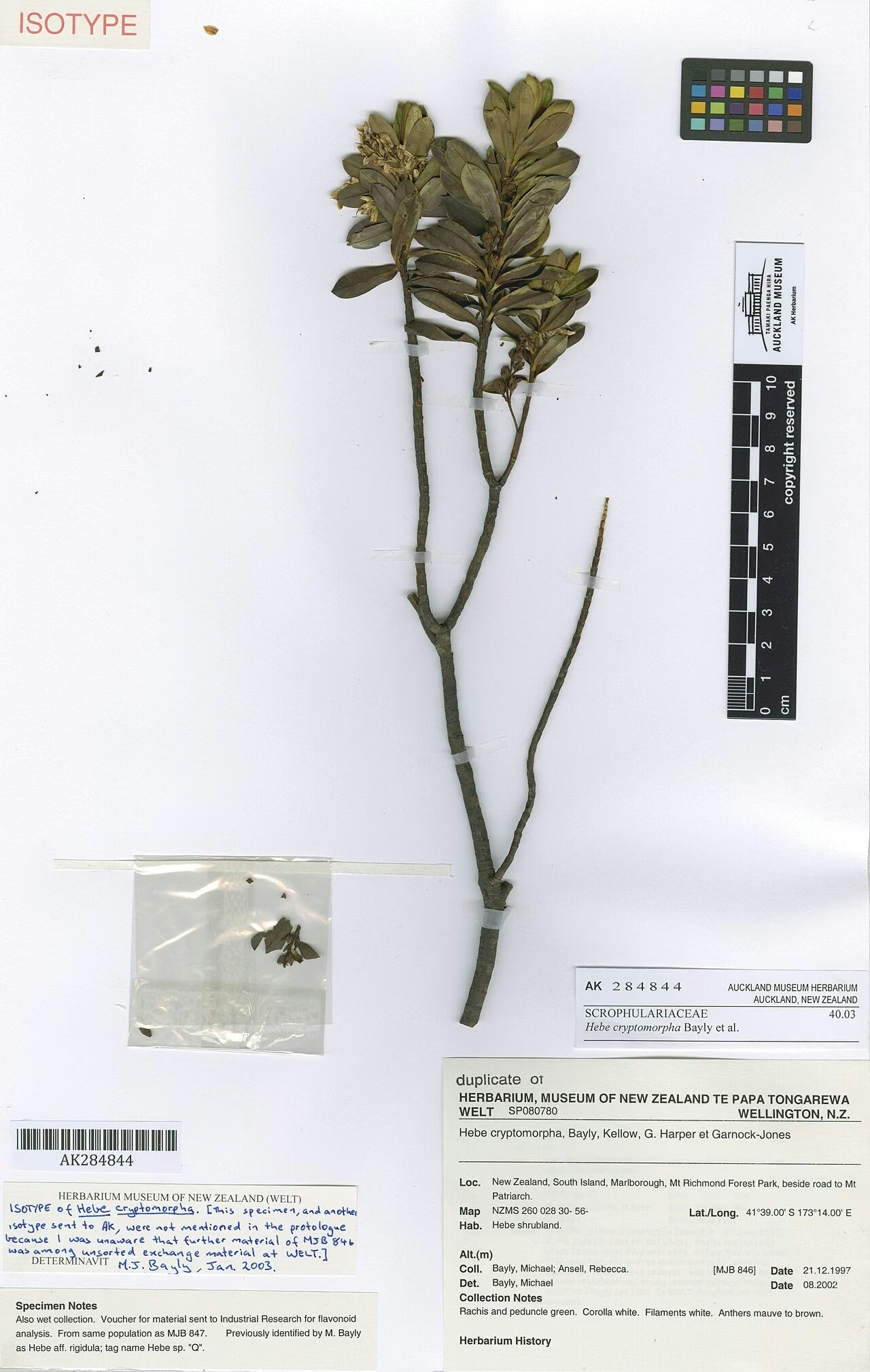
Veronica cryptomorpha
Veronica cryptomorpha
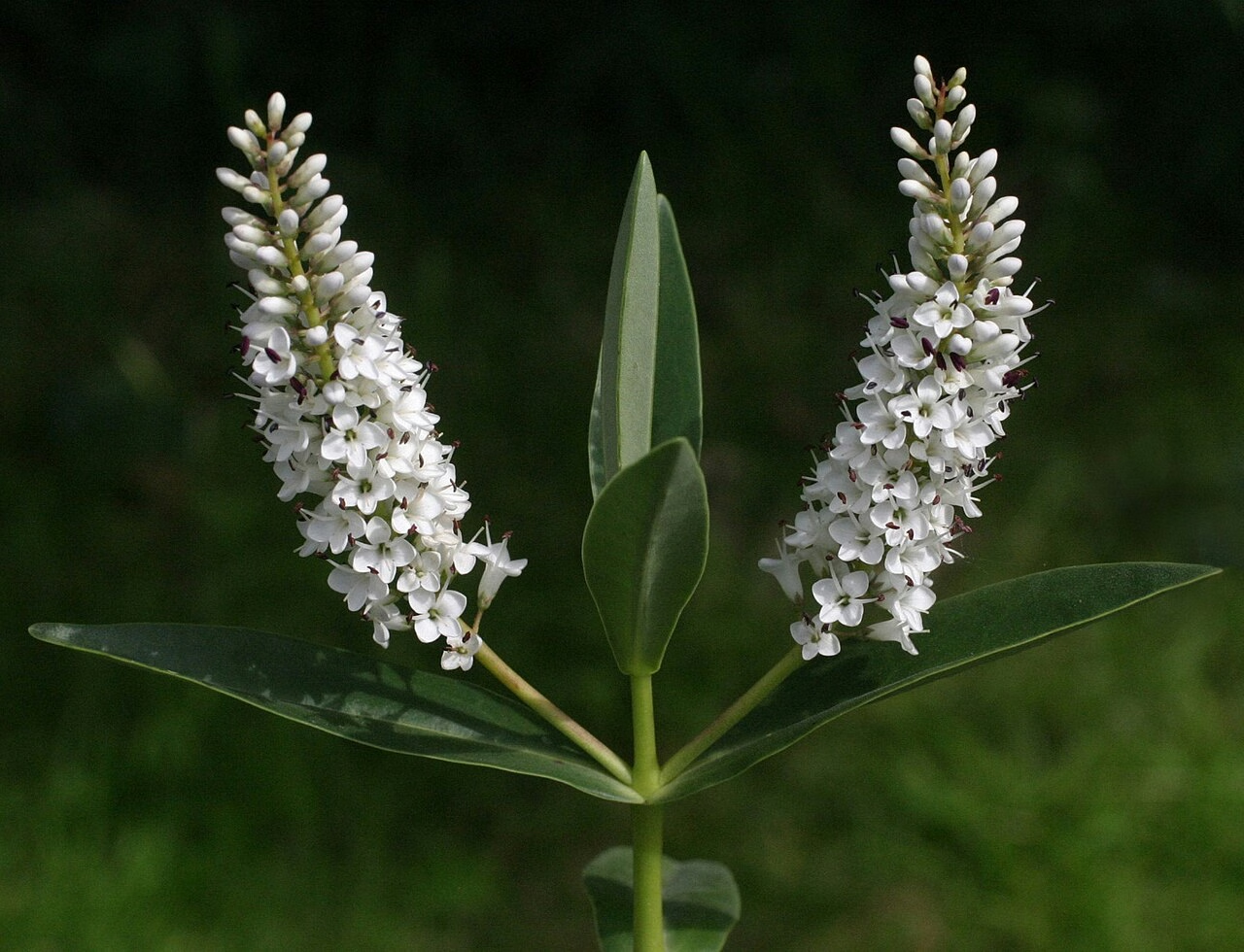
Dieffenbach's Koromiko
Veronica dieffenbachii
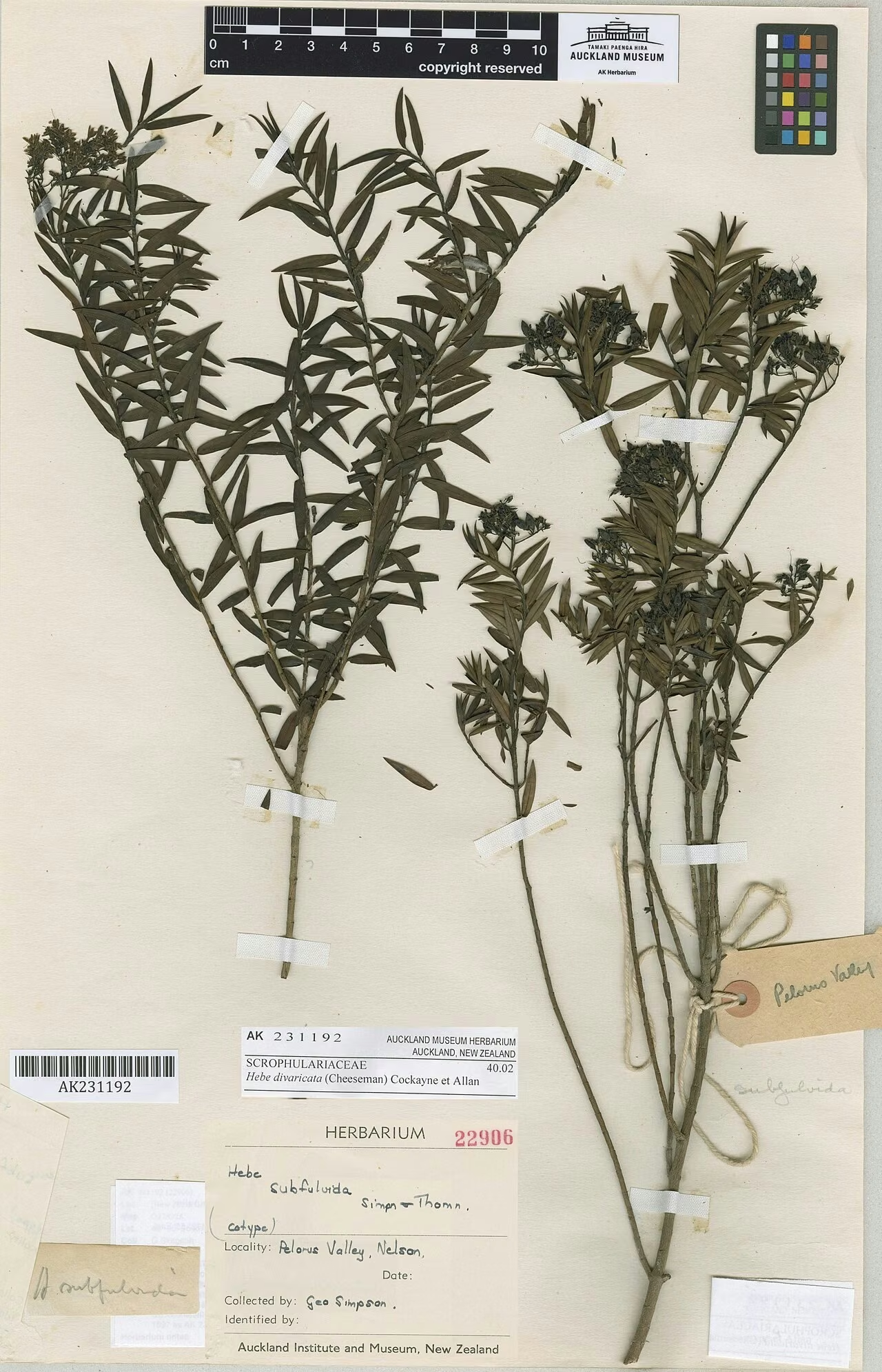
Veronica subfulvida
Veronica subfulvida
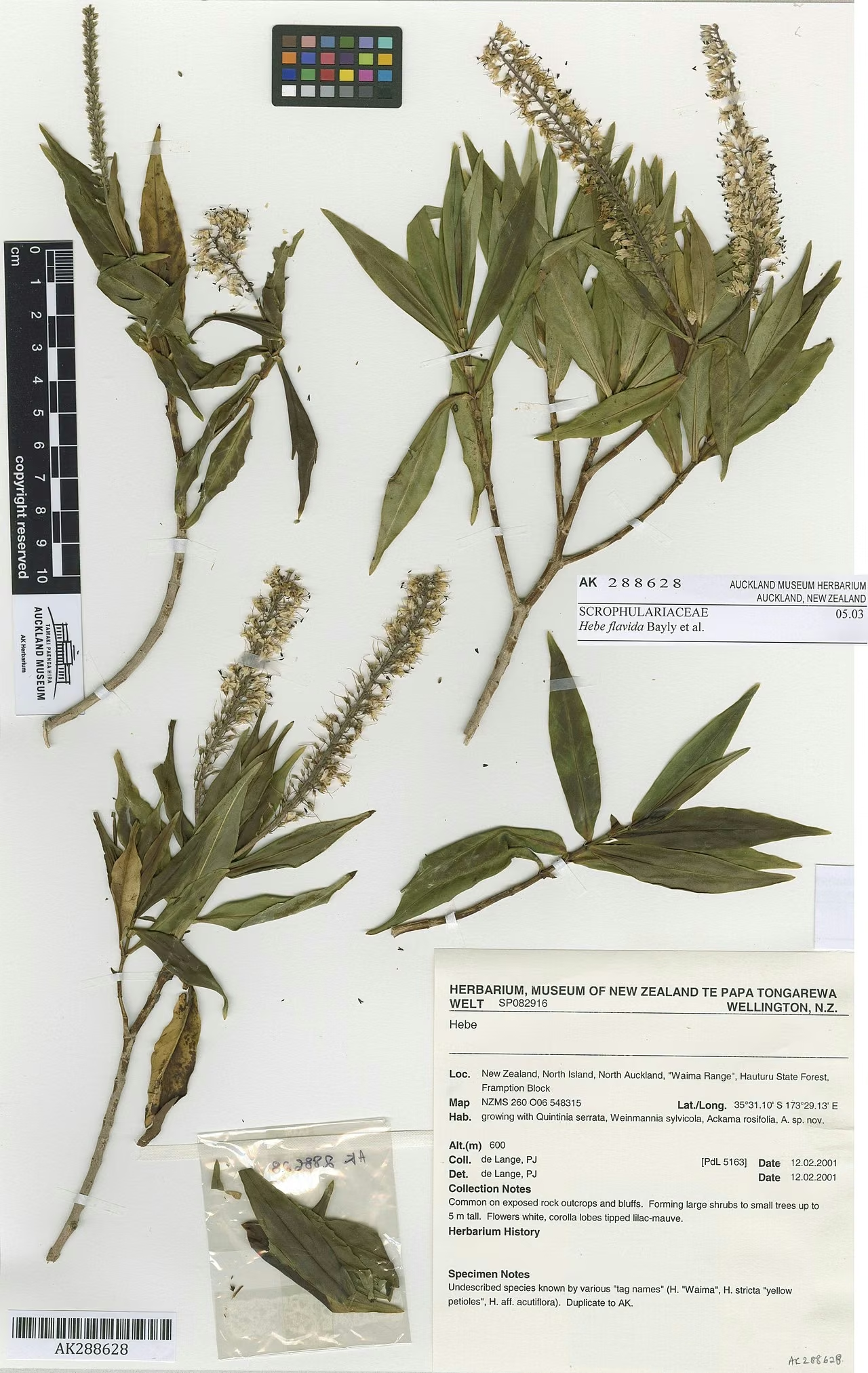
Veronica flavida
Veronica flavida
Veronica gibbsii
Veronica gibbsii
Plant Conservation
Veronica decumbens is ranked Not Threatened (2023), as it has been in every assessment since 2004. It is widespread on the drier mountains of the northern South Island.
No specific threats are documented. General threats to mountain grasslands, such as weed invasion and browsing animals, can affect its habitat.
Frequently Asked Questions
How big does Veronica decumbens grow?
In the wild it is an openly branched, spreading shrub up to about 0.35 m tall, with branches that lie along the ground and turn up at the tips.
Why does Veronica decumbens have black stems?
Its young branchlets are naturally purplish-red to almost black, a key identification feature that also makes it popular in rock gardens, where the dark stems contrast with the glossy red-edged leaves.
What does decumbens mean?
Decumbens comes from the Latin decumbere, to lie down. Botanists use it for plants whose stems lie along the ground but turn upward at the tips.
Where does Veronica decumbens grow naturally?
It grows on the drier mountains of Marlborough, south-east Nelson and north Canterbury, from the Awatere Valley south to the Waiau Valley and west to the Mātakitaki Valley.
Sources and Further Reading
The botanical, growing, and conservation details for Hebe (Veronica decumbens) on this page draw on the New Zealand plant references below. Consult them for full technical records and the latest distribution data.