Hebe
Veronica simulans
Last updated:
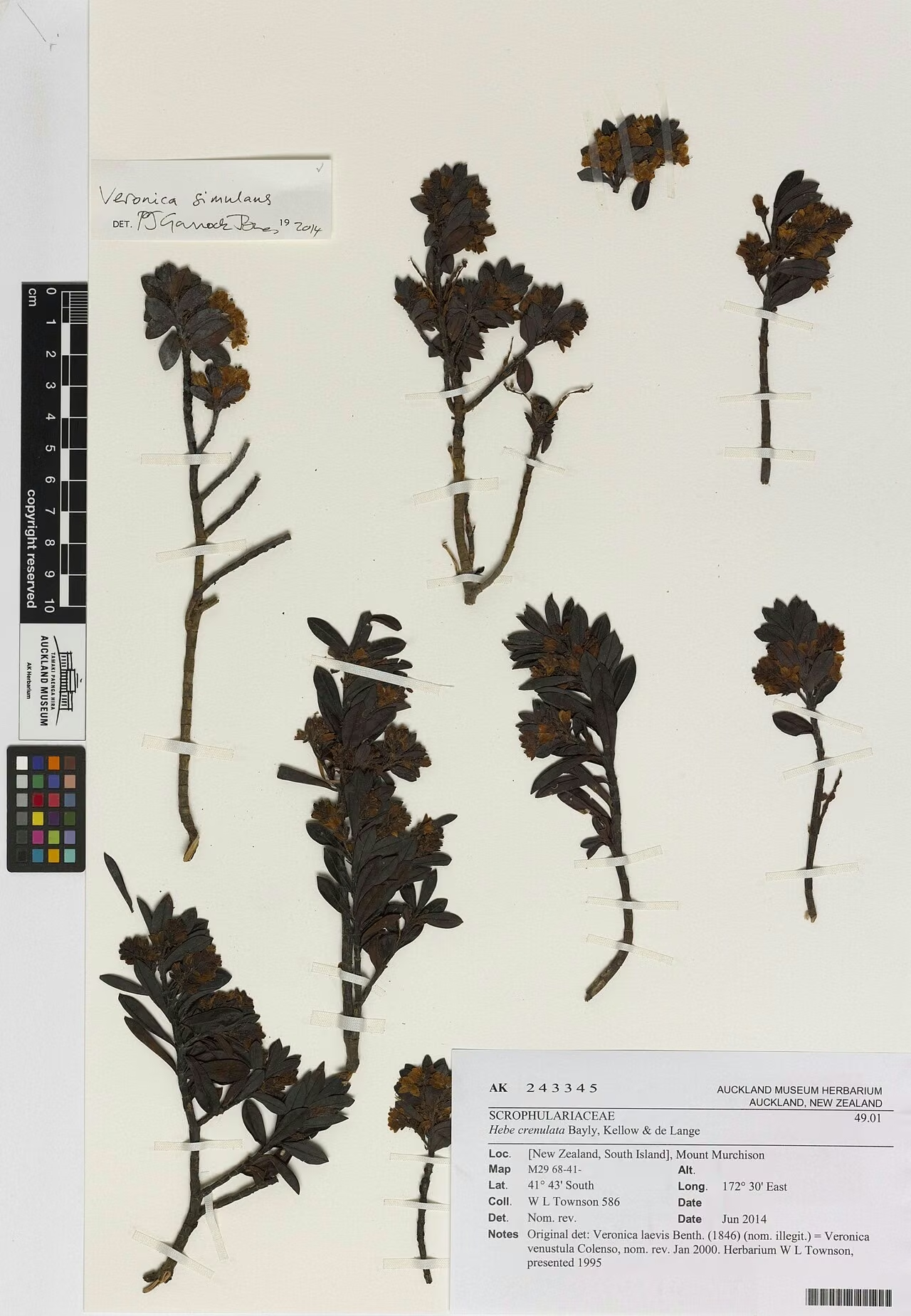
Veronica simulans, described in 2002 as Veronica simulans, is a low to bushy subalpine shrub up to 1 m tall from the mountains of the northern South Island. It has pairs of small, concave, leathery leaves 6 to 20 mm long that are paler beneath and often have small teeth or notches along the margin, the feature that gave it the name crenulata. Short spikes of 4 to 16 white flowers with magenta anthers appear from November to January. It grows in subalpine shrubland and tussock grassland on rocky ground from north-west Nelson to north Canterbury, and is ranked Not Threatened. It was previously known as Hebe crenulata. Explore more native shrubs in our native plant guide.
Plant Description
Veronica simulans is a spreading low shrub or a bushy shrub up to 1 m tall with erect or ascending branches. The leaves are in opposite pairs at right angles to the pairs above and below. They are obovate, oblanceolate or elliptic, about 6 to 20 mm long and 3.5 to 8 mm wide, leathery and concave, green above and paler beneath. The margins are either smooth or shallowly toothed, and the small notches are the most useful field character.
The flowers are carried in short lateral spikes of 4 to 16. They are white, roughly 6 to 9 mm across, with blunt lobes and conspicuous magenta anthers. Flowering is mainly from November to January and fruit follows from December to May.
It belongs to a group of very similar northern South Island hebes. Veronica cryptomorpha and Veronica cockayneana share the discoloured leaves and bifarious stem hairs, but have almost untoothed leaf margins. Veronica simulans is also separated by its chromosome number (2n = 80, against 40 in V. cryptomorpha and 120 in V. cockayneana) and by its flavonoid chemistry, so some plants can only be named with certainty in the laboratory.
Quick Facts
| Scientific Name | Veronica simulans |
|---|---|
| Height | Up to 1 m |
| Spread | Not recorded; low spreading to bushy habit |
| Water Needs | Moderate; sharp drainage essential |
| Light | Full sun |
| Frost Tolerance | High; grows at about 900 to 1660 m |
| Salt Tolerance | No information available; a mountain species |
| Growth Rate | No published data |
| Lifespan | Long-lived perennial |
Climate Best Suited to
Suits cool mountain climates with cold winters, snow and fresh summers. It dislikes warm, humid lowland conditions and is unlikely to thrive in subtropical gardens.
Regional Suitability
| City | Climate Suitability |
|---|---|
| Auckland | Low |
| Wellington | Medium |
| Christchurch | Medium |
| Dunedin | Medium |
Plant Habitat
Veronica simulans is endemic to the South Island. It ranges from north-west Nelson (west of the Motueka River) south-east along the main divide to north Canterbury, with records from the Peel Range, the Braeburn Range and Spenser Mountains, and the St James and Poplars Ranges. The type was collected near the outlet of Lake Peel at 1340 m, and the species is recorded between about 900 and 1660 m altitude.
It grows in subalpine shrubland and tussock grassland, usually on shallow mountain soils, rock-strewn ground, rubble slopes and rock outcrops.
Growing Requirements
Soil Requirements
In the wild it grows in thin, stony mountain soils, so it needs sharp drainage and low to moderate fertility in cultivation.
- Gritty, free-draining mix with plenty of stone or scoria
- Avoid heavy clay and rich, wet soils
- Rock garden pockets and raised beds suit it
Light Requirements
It is a plant of open, treeless subalpine slopes and needs full sun to stay compact and flower.
- Full sun
- Good air movement around the plant
Water Requirements
Mountain sites receive plenty of rain and snowmelt but drain quickly, so the roots are rarely waterlogged.
- Water in prolonged dry spells
- Never let it sit in wet soil, especially in winter
Planting and Establishing
Plant in spring into a sunny rock garden, scree bed or large trough with a gritty, free-draining mix. Set the plant slightly high so water runs away from the stem base, and top-dress with gravel.
Choose an open, breezy position. NZPCN notes that it dislikes humidity, so it is best in cooler southern or inland gardens rather than humid northern ones.
Ecological Role
Its white flowers with magenta anthers are visited by insects in early summer on the subalpine slopes. NZPCN records that the seeds are wind dispersed.
As a low shrub on rocky ground it helps bind shallow soils and provides shelter for smaller alpine herbs and invertebrates among the rubble.
Uses & Significance
Garden Uses
A compact, neat hebe for alpine and rock gardens where the small notched leaves can be seen up close.
- Rock gardens and scree beds
- Large alpine troughs
- Cool-climate native gardens
Ecological Value
It is a characteristic shrub of the subalpine shrublands and tussock grasslands of the northern South Island mountains.
- Early summer nectar for alpine insects
- Stabilises rocky and rubbly ground
- Part of a botanically interesting group of look-alike hebes
Landscaping Uses
Group it with other small alpine natives such as tussocks, Celmisia and smaller Raoulia among rocks, where its rounded form contrasts with spiky or flat neighbours.
In a larger landscape it can be repeated along a gravel bank or dry stone wall to suggest a mountain shrubland.
Seasonal Care Calendar
Spring
New growth begins and flower spikes start forming.
- Plant out new specimens
- Top up the gravel mulch
Summer
Flowering peaks from November to January, followed by green capsules.
- Water deeply during droughts
- Watch for mildew in humid weather
Autumn
Capsules ripen between December and May.
- Collect fresh seed
- Take cuttings from firm shoots
Winter
Dormant and fully cold hardy, it can sit under snow in its natural range.
- Ensure drainage stays open
- No feeding needed
When to Prune and How Much
Little pruning is needed. Trim off spent flower spikes after flowering to keep the shrub tidy and encourage a compact shape.
Avoid cutting hard into bare old wood, as small alpine hebes do not always resprout from it.
How to Grow Hebe
NZPCN describes Veronica simulans as easily grown from cuttings and from fresh seed. Cuttings give plants identical to the parent and are the usual choice, which matters because this species is almost impossible to tell from Veronica cryptomorpha by eye and hebes hybridise readily in gardens. Seed should be sown fresh, as the fine seed of alpine hebes loses viability if stored badly. Whichever method you use, grow young plants in a cool, airy position, since the species dislikes humid conditions and young stock is prone to rotting or mildew in stuffy propagating houses.
From Cuttings
Semi-hardwood cuttings taken in late summer or autumn root readily. Use short, non-flowering shoots.
- Take 5 to 8 cm shoot tips, cutting below a leaf pair
- Strip the lower leaves
- Insert into a gritty mix of pumice and a little peat-free compost
- Keep lightly moist in bright, cool shade with some ventilation
- Pot on into a gritty alpine mix once rooted
From Seed
Fruit ripens from December to May. Gather capsules as they brown and sow the seed promptly. Seedlings from garden plants may be hybrids if other hebes flower nearby, so collect from isolated plants or wild-origin stock where possible.
- Dry the capsules briefly to release the seed
- Surface-sow on a fine, gritty seed mix
- Keep cool, moist and in good light
- Prick out carefully into individual pots once seedlings have several leaf pairs
Pests & Diseases
No specific pests are recorded. In cultivation the main problems come from warm, humid conditions, which can bring downy mildew, leaf spot and root rot.
Keep plants well spaced in an open, breezy position and remove affected shoots promptly.
Cultural Significance
No traditional Māori name or use is recorded specifically for Veronica simulans in the sources consulted.
It was first described as Veronica simulans by Bayly, Kellow and de Lange in 2002. When the New Zealand hebes were transferred to Veronica in 2007, Garnock-Jones gave it the new name simulans, meaning similar, a reference to its close resemblance to Veronica cryptomorpha.
Bonus Tip
If you buy a plant labelled Veronica simulans, Veronica simulans or Veronica cryptomorpha, check its origin: these species are nearly identical to look at and are best told apart by where they were collected. Plants from west of the Motueka River, the Peel Range or the Spenser Mountains are most likely to be true Veronica simulans.
Related Plants
Explore other native plants that share similar characteristics or habitats with Hebe (Veronica simulans), offering further insights into New Zealand's diverse flora. These related species provide context and opportunities for complementary planting in your garden.
Canterbury Hebe
Veronica canterburiensis
Red Hills Hebe
Veronica baylyi
Veronica colensoi
Veronica colensoi
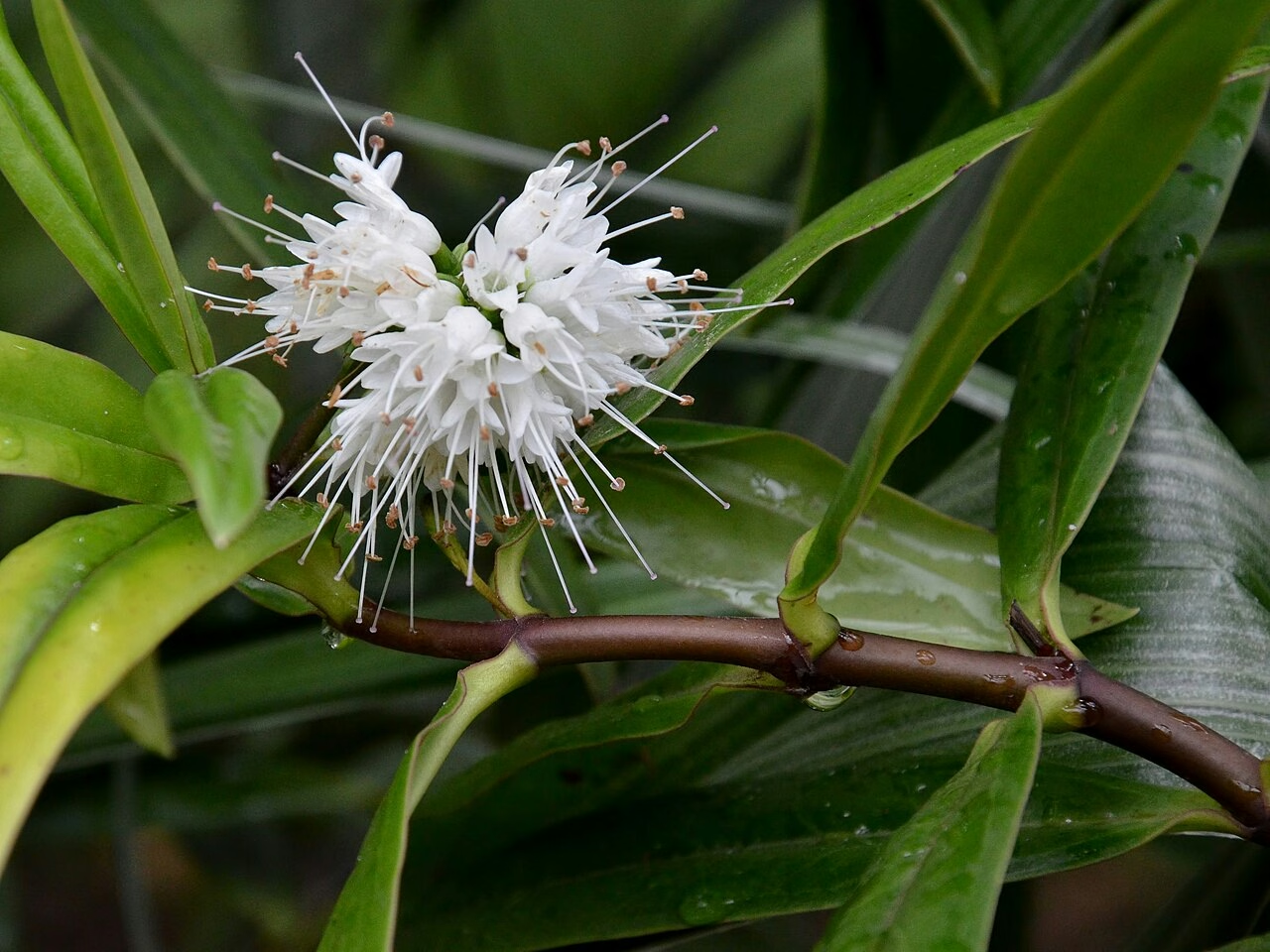
Veronica corriganii
Veronica corriganii
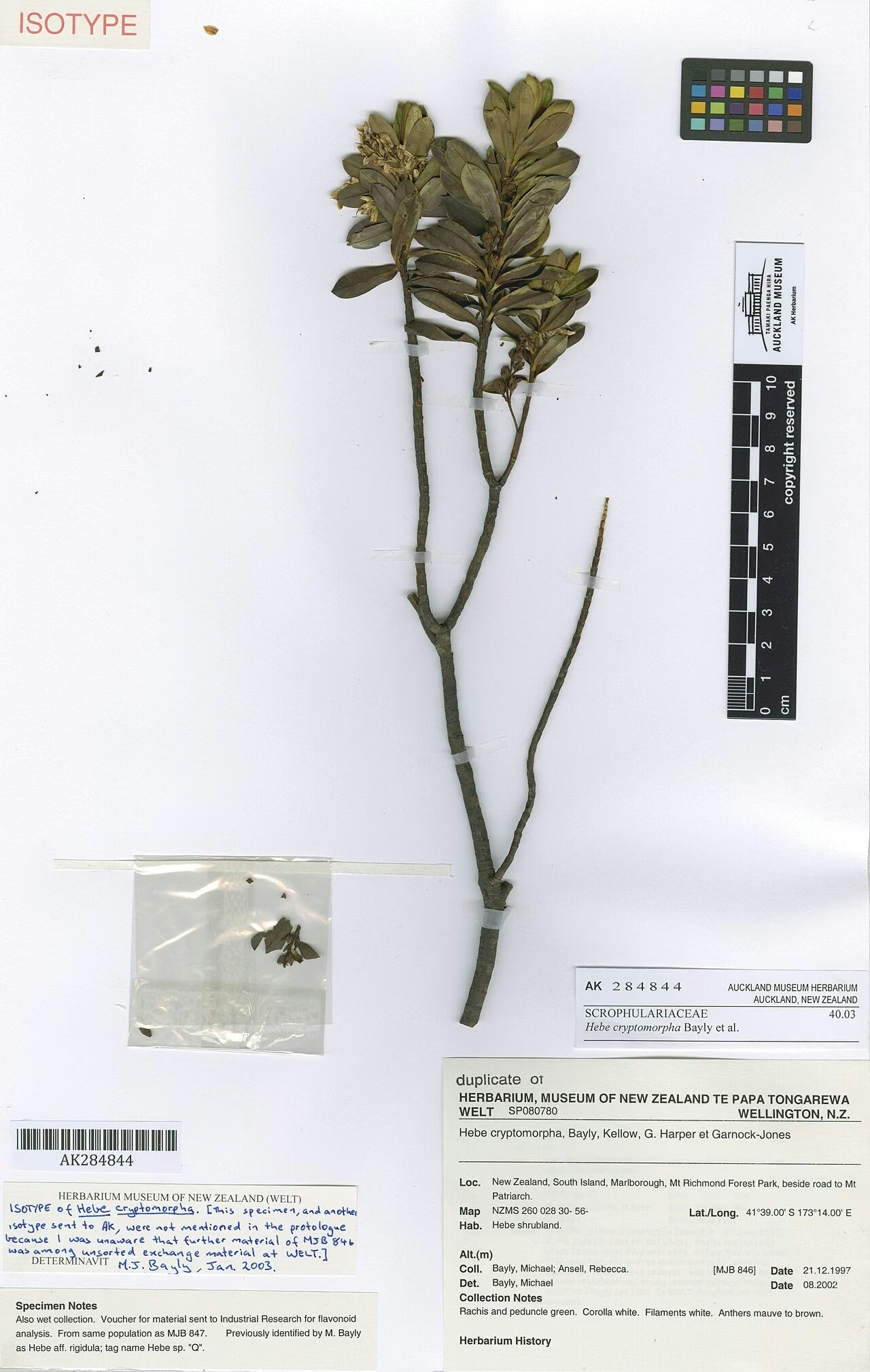
Veronica cryptomorpha
Veronica cryptomorpha
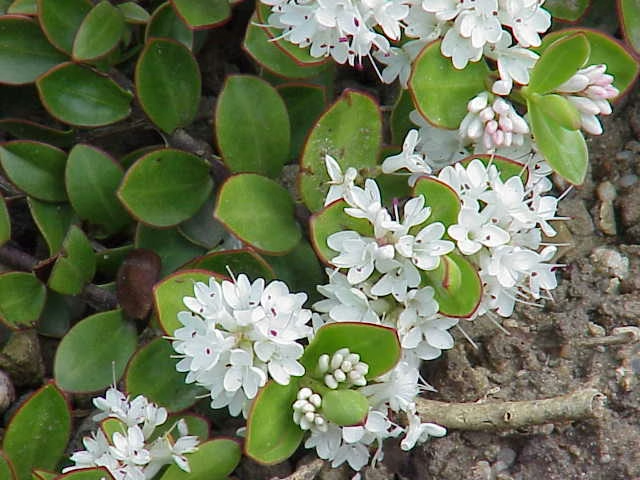
Veronica decumbens
Veronica decumbens
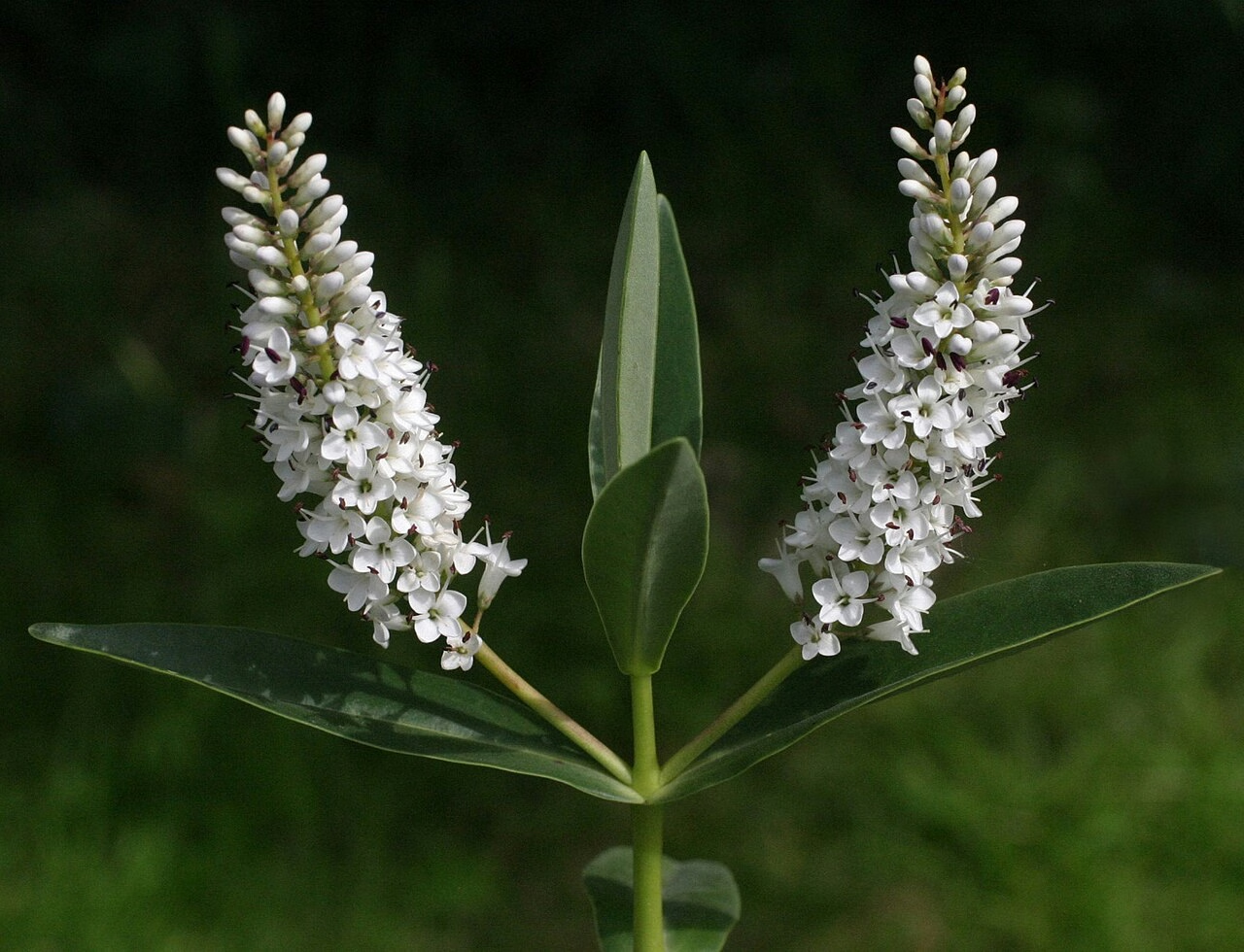
Dieffenbach's Koromiko
Veronica dieffenbachii
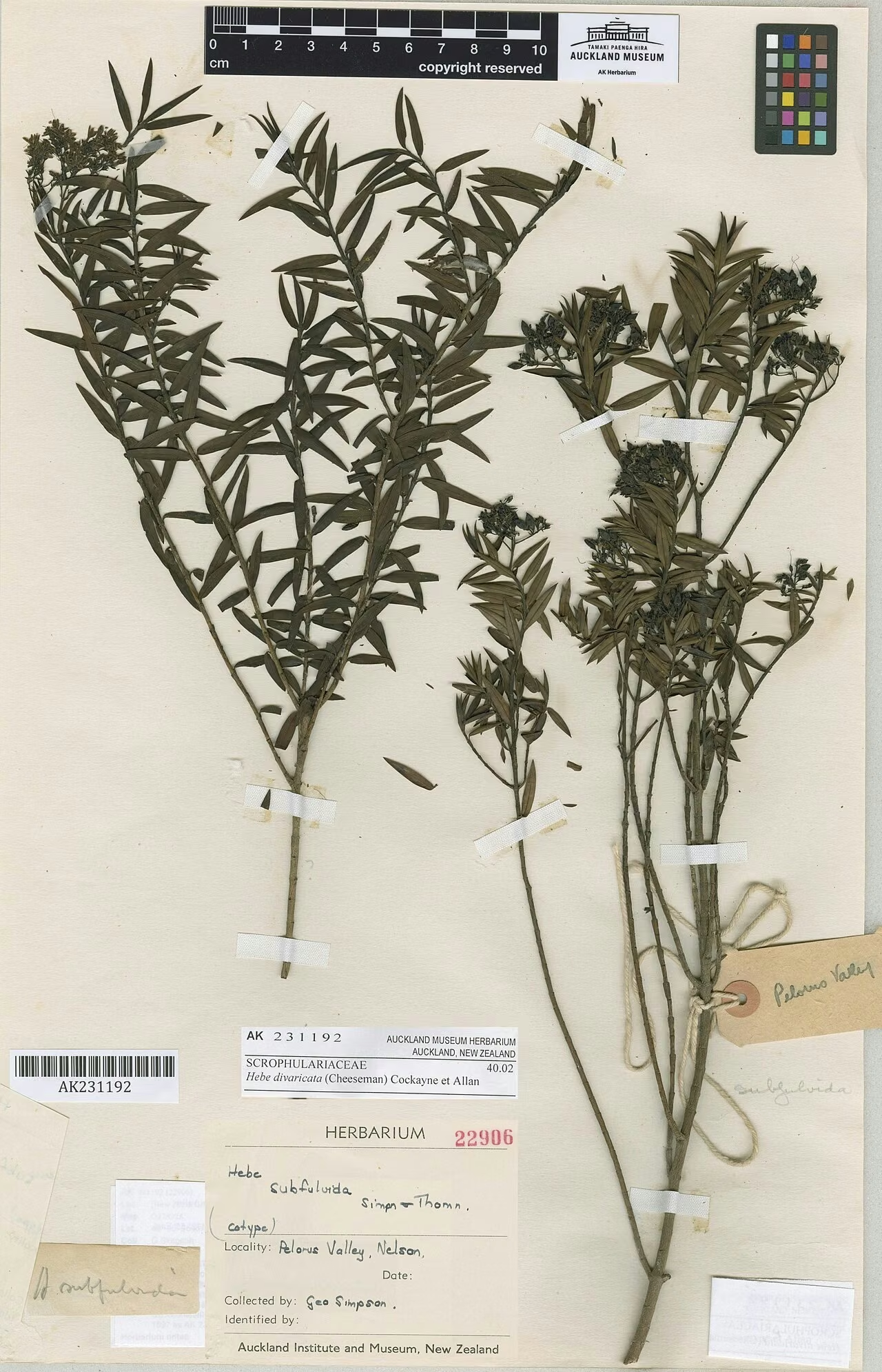
Veronica subfulvida
Veronica subfulvida
Plant Conservation
Veronica simulans is ranked Not Threatened (2023), as it has been in every assessment since 2004. Much of its range lies within conservation land such as Kahurangi and Nelson Lakes National Parks.
Controlling browsing animals such as deer and goats in subalpine shrubland, and staying on tracks around rocky outcrops, helps protect its habitat.
Frequently Asked Questions
What is Veronica simulans called now?
Hebe crenulata is now known as Veronica simulans. When the New Zealand hebes were moved into Veronica, this species received the new epithet simulans, meaning similar, referring to its close likeness to Veronica cryptomorpha.
How do you identify Veronica simulans?
Look for small, concave, leathery leaves that are paler underneath and have tiny teeth on the margin. Its close relatives Veronica cryptomorpha and Veronica cockayneana have leaves with almost entirely smooth edges.
Is Veronica simulans easy to grow?
NZPCN describes it as easily grown from cuttings and fresh seed and an attractive shrub for a rock garden, but notes that it dislikes humidity.
Sources and Further Reading
The botanical, growing, and conservation details for Hebe (Veronica simulans) on this page draw on the New Zealand plant references below. Consult them for full technical records and the latest distribution data.