Whipcord Hebe
Veronica propinqua
Last updated:
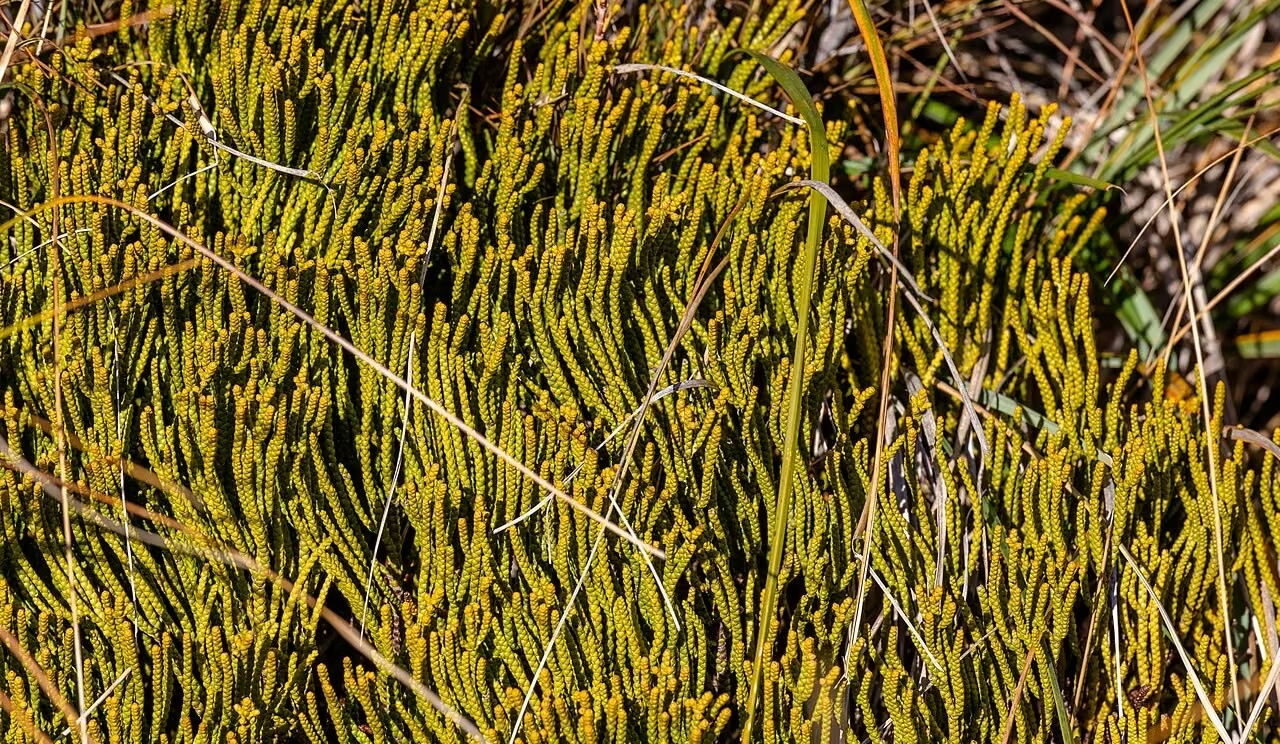
Whipcord hebe (Veronica propinqua, formerly Hebe propinqua) is a dark green, conifer-like shrub endemic to the mountains of Otago, Southland and Fiordland. It grows as a low spreading mat or a bushy shrub up to 1 m tall, with erect stems covered in minute scale leaves that do not overlap, so the joints between leaf pairs stand out as distinct knobbly nodes. Small terminal heads of four to ten white flowers appear mainly from October to February. It grows in subalpine scrub and grassland at about 580-1500 m, from Mount Ida and Maungatua south to the Mararoa Valley, and is nationally Not Threatened. Explore more native shrubs in our native plant guide.
Plant Description
Veronica propinqua is a spreading low shrub or a bushy shrub up to about 1 m tall, with erect or ascending branches. It is a whipcord hebe: its leaves are reduced to tiny, leathery scales, broadly ovate to triangular and only 0.7-1.8 mm long, arranged in opposite pairs and pressed flat against the stem. The leaf margins are shortly fringed with hairs.
Its key feature is that the dark green, rounded, unribbed scales do not overlap the node above, leaving prominent nodal joints exposed so the branchlets look like chains of small beads. In other whipcord hebes the leaves usually overlap and hide the stem. The calyx lobes are free for most of their length, another distinguishing character.
The flowers are white and crowded in short terminal spikes 3-9 mm long, with four to ten flowers each and corollas 4.5-6 mm across. Flowering is from October to February, mainly January and February, and the small hairless capsules ripen from December to March, persisting on the plant, and release wind-dispersed seed.
Quick Facts
| Scientific Name | Veronica propinqua |
|---|---|
| Height | Low mat to 1 m |
| Spread | Spreading; exact spread not recorded |
| Water Needs | Moderate; moist but well drained |
| Light | Full sun |
| Frost Tolerance | High; subalpine to low-alpine species |
| Salt Tolerance | Low; an inland mountain shrub |
| Growth Rate | Slow |
| Lifespan | Long-lived perennial shrub |
Climate Best Suited to
Whipcord hebe suits cool, frosty southern climates with snow in winter and mild summers, typical of the Otago and Southland mountains. It struggles in hot, humid lowland conditions.
Regional Suitability
| City | Climate Suitability |
|---|---|
| Auckland | Low |
| Wellington | Medium |
| Christchurch | Medium |
| Dunedin | High |
Plant Habitat
Veronica propinqua is endemic to the South Island, in the mountains of Otago, Southland and Fiordland, roughly within an area bounded by Mount Ida, Mount Maungatua and the Mararoa Valley. Recorded sites include Mount Maungatua near Dunedin, The Remarkables and the Hector Mountains.
It grows in subalpine scrub and penalpine grassland, the zone just above or around the natural treeline, at about 580-1500 m above sea level. Its lowest sites, such as Maungatua, are on wet, cloud-covered uplands near the coast.
Growing Requirements
Soil Requirements
It grows in moist but well-drained subalpine soils, often peaty or stony. Garden soils must drain freely.
- Free-draining loam with added grit or pumice
- Slightly acidic, peaty soils suit it well
- Avoid compacted clay and waterlogged sites
- Little fertiliser is needed
Light Requirements
Like other whipcord hebes, it needs plenty of light to keep its tight, compact habit.
- Full sun is best
- Tolerates light shade but becomes open and leggy
- Choose an airy site rather than a sheltered, humid corner
Water Requirements
It prefers steady moisture during the growing season but must never sit in wet soil.
- Water deeply during dry summers
- Mulch with gravel to keep roots cool
- Water less in winter
Planting and Establishing
Plant whipcord hebe in spring or autumn into a sunny rock garden, raised bed or trough with sharp drainage. In heavier soils, build up a mound of gritty mix so the roots are above the level of standing water.
Set the plant at the same depth as in its pot, firm in gently, water well and top-dress with gravel. Space it where it will not be shaded or crowded by taller neighbours, since lost lower branches do not regrow easily.
Ecological Role
The small white flowers are open and accessible, providing nectar and pollen for native flies, bees and moths in the subalpine zone, although no pollination study specific to this species was found. The seed is wind dispersed.
As a dense, low woody shrub in tussock grassland and subalpine scrub, it offers shelter for invertebrates and lizards and helps stabilise soils on exposed slopes.
Uses & Significance
Garden Uses
Whipcord hebe is grown for its unusual conifer-like texture rather than its flowers, and makes an interesting feature in an alpine or native-themed garden.
- Rock gardens and scree beds
- Troughs and containers
- Textural contrast in native plantings in cool districts
- Collections of alpine whipcord hebes
Ecological Value
It is a characteristic shrub of southern subalpine scrub and grassland and is regionally uncommon in Otago.
- Nectar and pollen for subalpine insects
- Shelter for invertebrates and lizards
- Helps hold soil on exposed upland slopes
Landscaping Uses
Pair whipcord hebe with small tussocks, such as Festuca or Poa, and grey-leaved alpines to show off its dark green, beaded stems. It also suits Japanese-style or gravel gardens where its form reads like a miniature conifer.
Use it singly as a focal point in a trough or plant several for a low, textured ground cover on a sunny bank in cool districts.
Seasonal Care Calendar
Spring
New growth begins and the first flowers can appear in October.
- Apply a light gravel top-dressing
- Plant new specimens
Summer
Main flowering in January and February, with small white heads at the branch tips.
- Water deeply in drought
- Watch for heat stress in containers
Autumn
Capsules ripen from December to March and persist on the stems.
- Collect seed if wanted
- Take semi-hardwood cuttings
Winter
Fully frost-hardy and tolerates snow.
- Ensure drainage is clear
- Avoid heavy pruning
When to Prune and How Much
Whipcord hebe needs little pruning. Light trimming of shoot tips after flowering helps keep a compact shape.
Avoid cutting back into old, bare wood, as whipcord hebes are slow to regenerate from it. Remove any dead branches cleanly at the base.
How to Grow Whipcord Hebe
Whipcord hebes are usually propagated from cuttings, which root reliably and preserve the form of a good plant. Seed can also be used. No propagation protocol specific to Veronica propinqua was found, so the methods below reflect standard practice for whipcord hebes. Because seedlings of hebes can be variable and some species hybridise in cultivation, cuttings are preferred where plants of known wild origin are wanted.
From Cuttings
Semi-hardwood tip cuttings taken from late summer to autumn are the most reliable method. Whipcord stems are slender, so use short, sturdy pieces and keep them cool while they root.
Over-winter young rooted cuttings in a cold frame or sheltered spot outdoors rather than indoors.
- Cut 4-6 cm tips of firm current growth in late summer or autumn
- Strip the scale leaves from the lowest centimetre
- Insert into a mix of pumice and coarse sand or perlite
- Keep in bright shade, moist but not wet, with good airflow
- Expect roots in six to twelve weeks, then pot into gritty mix
From Seed
Capsules ripen from December to March and remain on the plant for some time. Sow fresh seed outdoors in autumn so it receives natural winter chilling.
- Collect brown capsules and dry them in a paper bag
- Sow on the surface of a gritty seed mix and cover lightly with grit
- Leave the tray outdoors in a cool, sheltered place
- Keep moist and expect germination in spring
- Prick out seedlings when large enough to handle
Pests & Diseases
Whipcord hebes are generally trouble-free outdoors in cool climates. The main problems in cultivation are root rot in wet soils and fungal diseases such as downy mildew in warm, humid weather, which can cause browning of shoots.
Scale insects and mealybugs occasionally colonise stressed plants. Good drainage, an open site and avoiding overhead watering in the evening keep plants healthy.
Cultural Significance
No traditional Māori use or name specific to Veronica propinqua is recorded. Hebes generally are known as koromiko, though that name is mostly applied to larger lowland species.
The species was described by Thomas Cheeseman as Veronica propinqua; the epithet means near or close to, likely referring to its similarity to other whipcord hebes such as V. cupressoides. It has been moved between Veronica, Hebe and Leonohebe before being returned to Veronica.
Bonus Tip
To tell Veronica propinqua from other whipcord hebes at a glance, look along a branchlet: if the joints between the scale leaves are clearly exposed, giving a beaded look, and the leaves are dark green and rounded, it is likely V. propinqua. Planting on a gritty mound in full sun gives it the best chance of keeping that tight form in a garden.
Related Plants
Explore other native plants that share similar characteristics or habitats with Whipcord Hebe (Veronica propinqua), offering further insights into New Zealand's diverse flora. These related species provide context and opportunities for complementary planting in your garden.
Veronica phormiiphila
Veronica phormiiphila
Veronica parviflora
Veronica parviflora
Veronica notialis
Veronica notialis
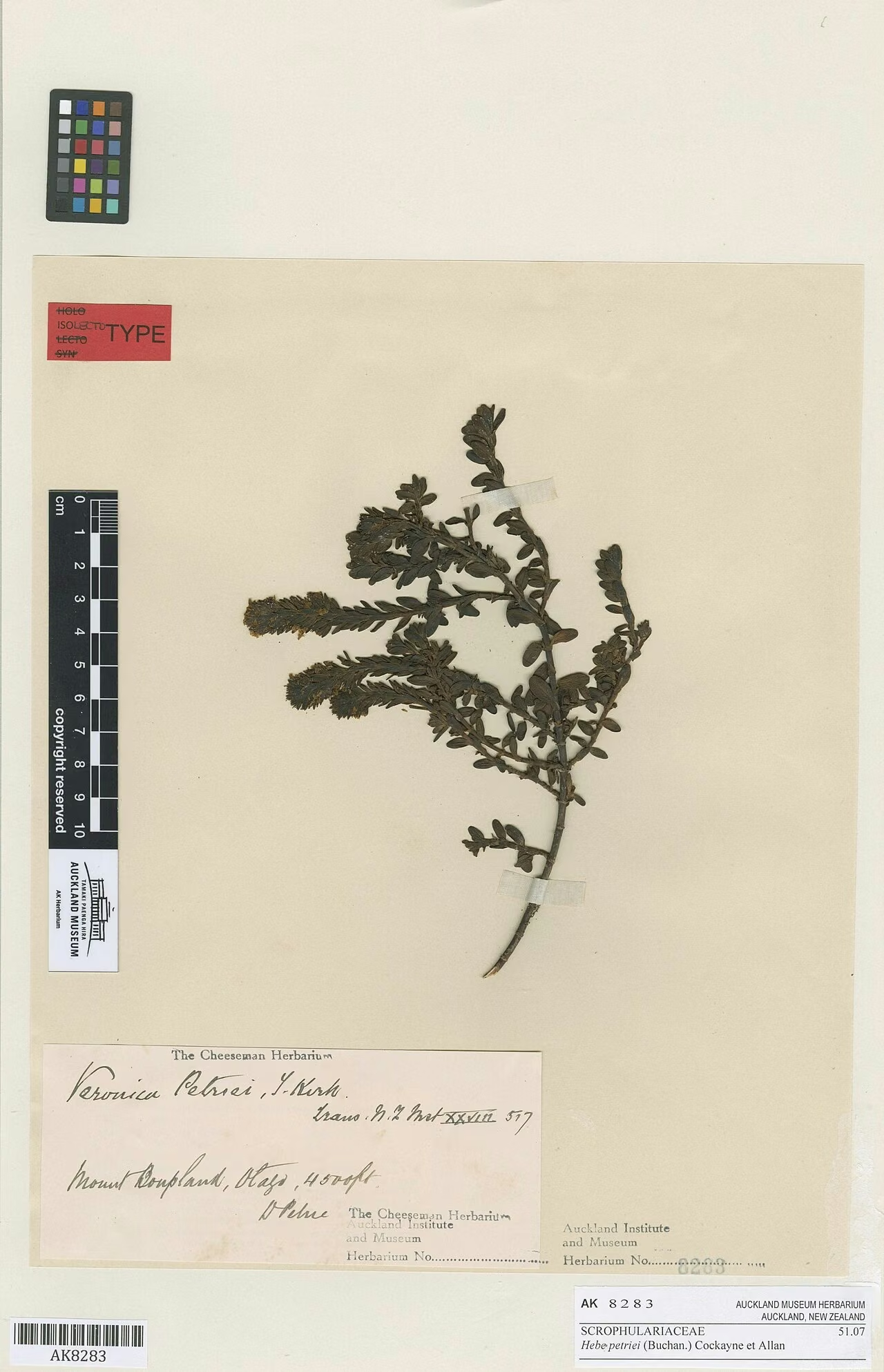
Veronica petriei
Veronica petriei
Veronica kellowiae
Veronica kellowiae
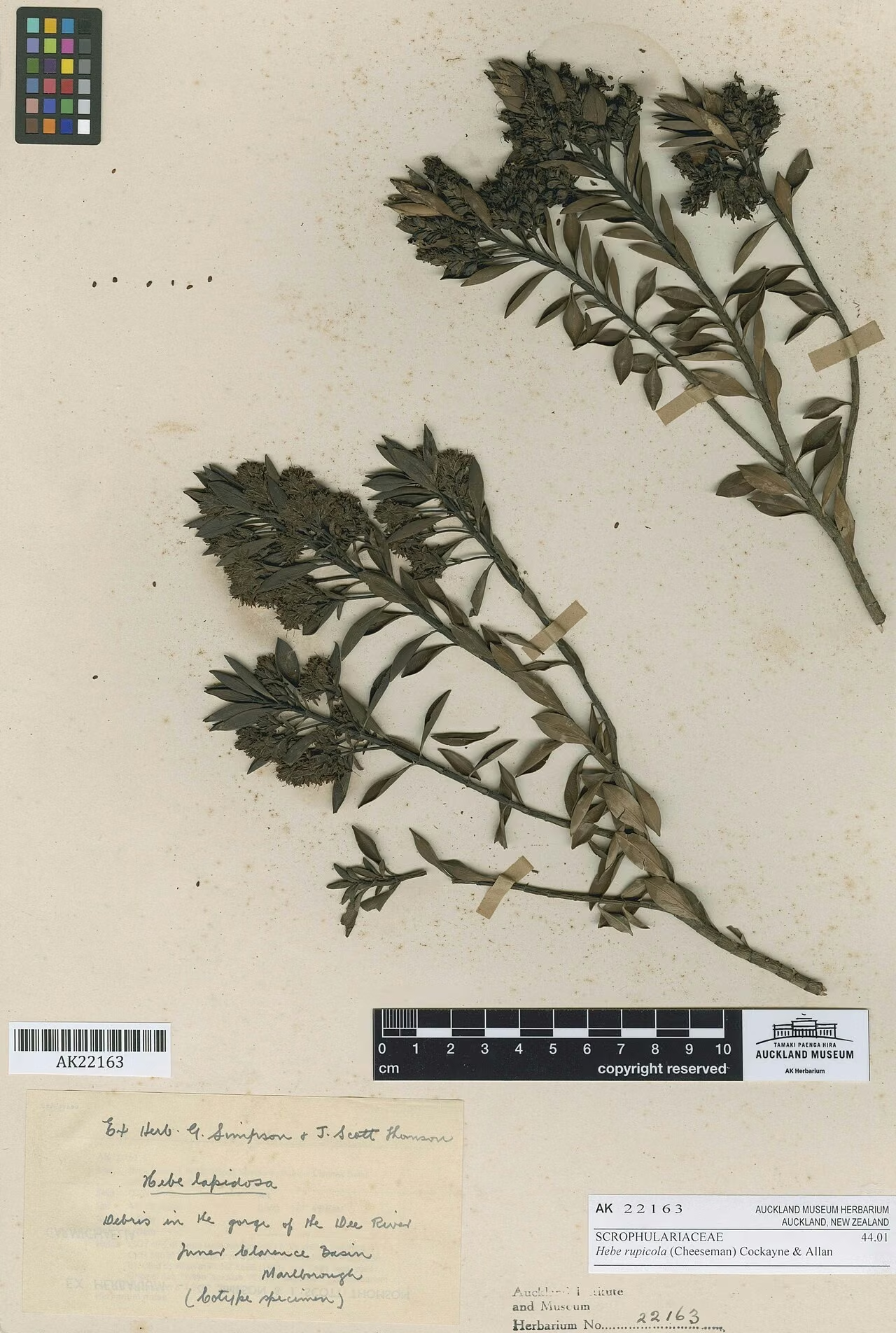
Veronica rupicola
Veronica rupicola
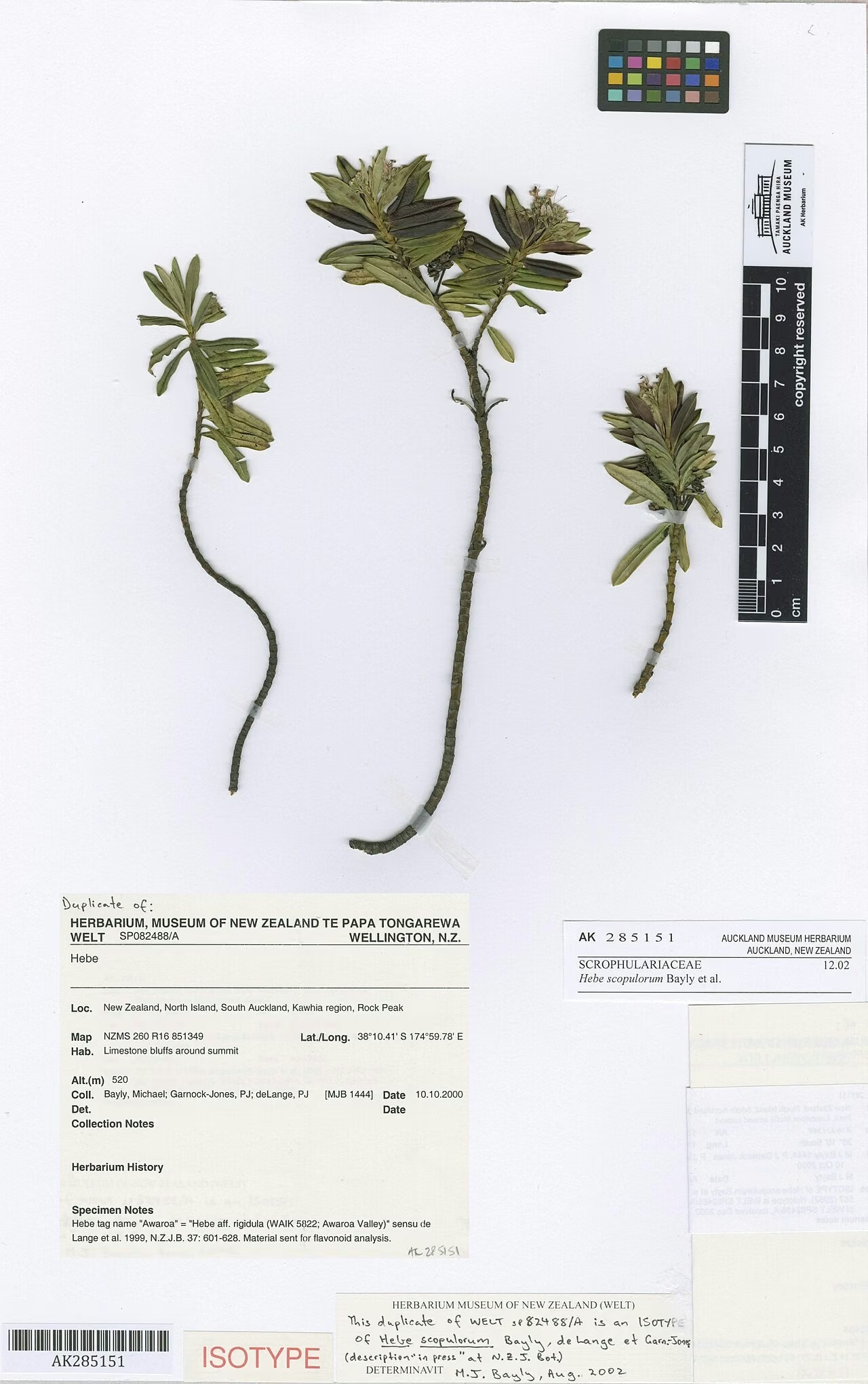
Veronica scopulorum
Veronica scopulorum
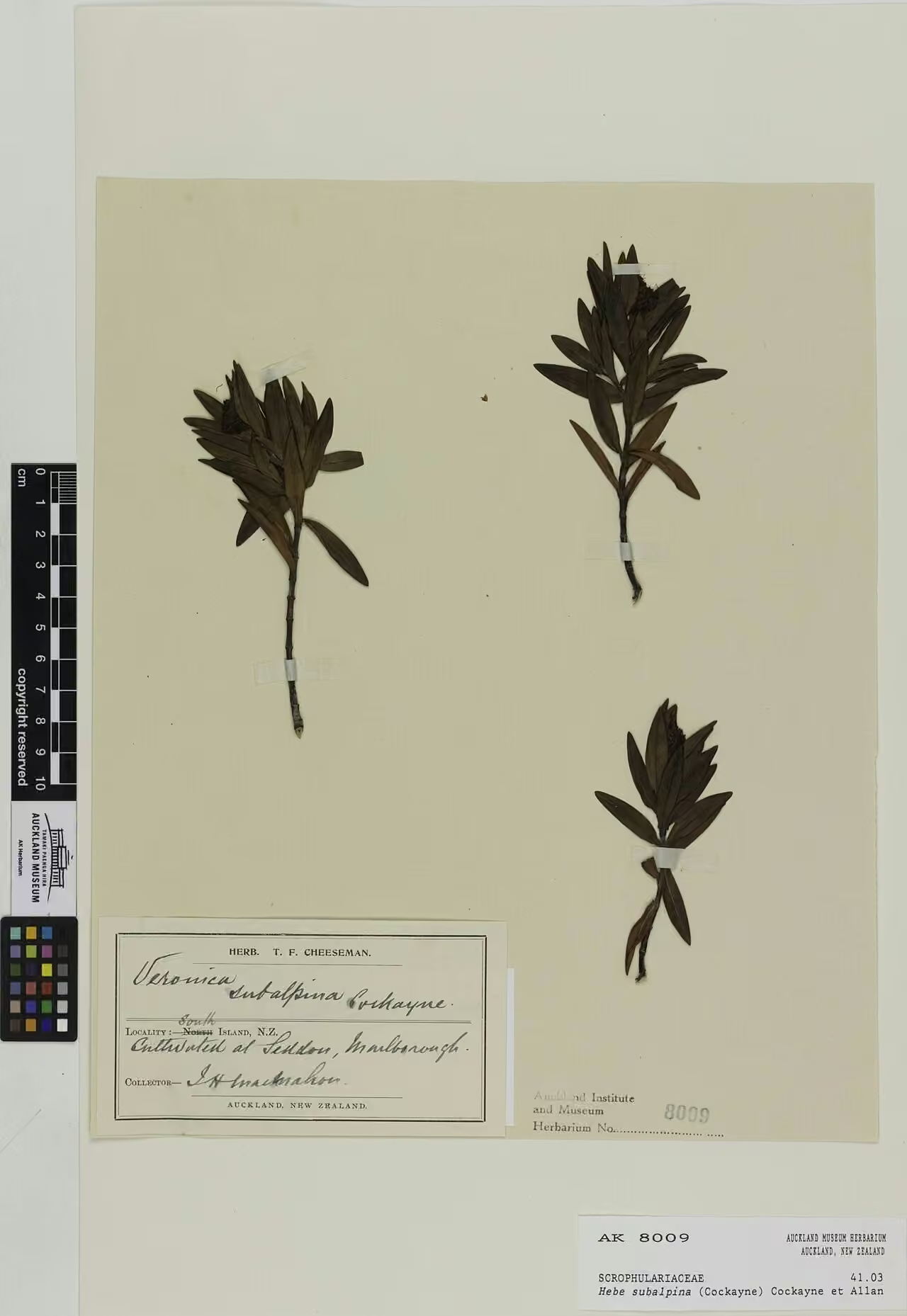
Mountain Koromiko
Veronica subalpina
Plant Conservation
Veronica propinqua is ranked Not Threatened nationally in the 2023 New Zealand Threat Classification assessment. However, the 2025 Otago regional assessment lists it as Regionally At Risk - Regionally Naturally Uncommon, reflecting its limited occurrence in the region.
Its subalpine scrub and grassland habitat can be affected by fire, grazing, wilding conifers and weed invasion. Protecting upland shrubland and controlling wilding pines help conserve it.
Frequently Asked Questions
What is a whipcord hebe?
Whipcord hebes are New Zealand alpine Veronica species whose tiny scale leaves are pressed flat against the stems, making them look like a conifer or a bundle of cords. Veronica propinqua is one of them.
How do you identify Veronica propinqua?
Its dark green, rounded, unribbed scale leaves are closely pressed to the stem but do not cover the node above, so the stems look jointed, and its calyx lobes are free for most of their length.
Where does whipcord hebe Veronica propinqua grow?
It grows in the South Island mountains of Otago, Southland and Fiordland, in subalpine scrub and low-alpine grassland between about 580 and 1500 m, including Mount Maungatua and The Remarkables.
Can you grow whipcord hebe in a garden?
Whipcord hebes suit cool, well-drained rock gardens and troughs in full sun. They dislike heat, humidity and wet soil, so they grow best in southern and inland districts.
Sources and Further Reading
The botanical, growing, and conservation details for Whipcord Hebe (Veronica propinqua) on this page draw on the New Zealand plant references below. Consult them for full technical records and the latest distribution data.