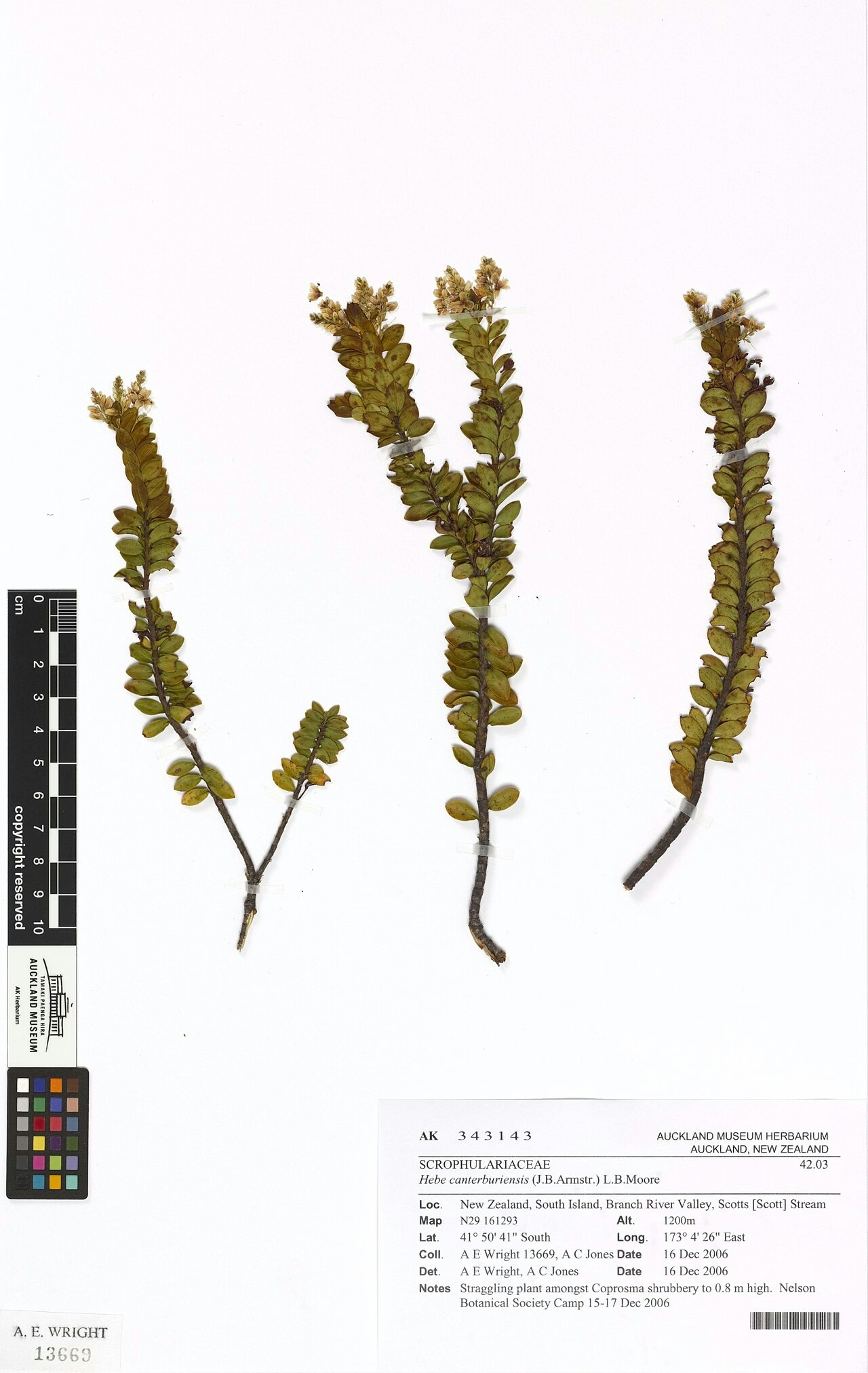
Canterbury Hebe
Veronica canterburiensis
Last updated:
Canterbury hebe (Veronica canterburiensis, now Veronica canterburiensis) is an openly branched, spreading low shrub up to 1 m tall with neat pairs of hard, oval, pointed leaves 8 to 15 mm long and short spikes of white flowers in late spring and early summer. Despite its name, it grows mainly in the mountains of the northern South Island, mostly on or west of the Main Divide from North-West Nelson to Arthur's Pass, with outlying populations in south Westland and on the Tararua Range near Mount Holdsworth. It grows in beech forest near the tree line and in subalpine grassland and shrubland, and is ranked Not Threatened. It was previously known as Hebe canterburiensis. Explore more native shrubs in our native plant guide.
Plant Description
Veronica canterburiensis is an openly branched, spreading low shrub to 1 m tall. Its branches spread, sprawl or ascend, and the young branchlets are green with dark bands at the nodes, or red-brown, with fine hairs. The leaves are arranged in two ranks along the stems, elliptic to ovate or obovate, rigid and concave, 8 to 15 mm long and 3.5 to 6.5 mm wide, with tiny hairs on the margin that usually need a hand lens to see. The leaf bud has a narrow or broad, pointed sinus.
Spikes of 5 to 12 white flowers, 1 to 3 cm long, grow from the leaf axils from October to January, occasionally into April. The corolla tube is 1.4 to 3.5 mm long, equal to or longer than the calyx, and the anthers are magenta or purple. Capsules 3 to 4.9 mm long follow from November to April.
It is most similar to Veronica vernicosa, with which it grows on the Nelson mountains. Flowering or fruiting plants are easy to separate by the corolla tube length, shorter spikes and coloured anthers of V. canterburiensis, but sterile specimens can be difficult to identify. Veronica canterburiensis also occupies a wider range of habitats, extending well out into open grassland and shrubland.
Quick Facts
| Scientific Name | Veronica canterburiensis |
|---|---|
| Height | Up to 1 m |
| Spread | 0.5-1 m |
| Water Needs | Moderate; moist but well-drained |
| Light | Full sun to partial shade |
| Frost Tolerance | High; a subalpine species |
| Salt Tolerance | Low; a mountain plant |
| Growth Rate | Slow to moderate |
| Lifespan | Long-lived perennial shrub |
Climate Best Suited to
It suits cool, wet mountain climates with high rainfall and regular frost and snow, like those of the western South Island ranges. Hot, dry or humid lowland summers stress it.
Regional Suitability
| City | Climate Suitability |
|---|---|
| Auckland | Low |
| Wellington | Medium |
| Christchurch | Medium |
| Dunedin | High |
Plant Habitat
Veronica canterburiensis is endemic. In the North Island it is known only from the Tararua Range near Mount Holdsworth. In the South Island it grows in the mountains, mostly on or west of the Main Divide, from North-West Nelson south to Arthur's Pass, with disjunct populations in south Westland and possibly in Southland.
It grows in or at the margins of beech forest at or near the tree line, and in subalpine grassland and shrubland. NZPCN notes it has a wider ecological range than the similar Veronica vernicosa, which is largely confined to beech forest margins.
Growing Requirements
Soil Requirements
It grows in acidic, humus-rich mountain soils under beech and in tussock grassland. In gardens it prefers moist, well-drained, slightly acidic soil.
- Humus-rich, free-draining soil
- Slightly acidic conditions suit it
- Avoid compacted or waterlogged ground
Light Requirements
Because it grows both at shaded beech forest margins and in open grassland, it accepts sun or partial shade.
- Full sun in cool gardens
- Partial shade in warmer districts
Water Requirements
Its natural range receives high rainfall, so it should not be allowed to dry out for long.
- Keep evenly moist through summer
- Ensure excess water drains away
- Mulch to conserve moisture
Planting and Establishing
Plant in autumn or spring into a cool, moist, well-drained position such as a rock garden with afternoon shade or the edge of a native shrub border. Space plants about 60 to 80 cm apart.
It performs best in cool southern gardens and at higher elevations. In warm lowland areas give it shelter from hot afternoon sun and good air movement.
Ecological Role
Its white flowers with magenta or purple anthers are visited by alpine insects, which feed on the nectar and pollen. NZPCN notes the seeds are wind dispersed.
As a component of tree-line beech forest margins and subalpine shrubland, it forms part of the low woody vegetation that shelters herbs and invertebrates in these cool, wet environments.
Uses & Significance
Garden Uses
A neat, small-leaved hebe for cool gardens, valued for its tidy, two-ranked foliage and early summer flowers.
- Rock gardens and alpine borders
- Low informal edging
- Container plant in cool districts
Ecological Value
It contributes to the shrub layer at the tree line in the northern South Island mountains and provides nectar early in the alpine season.
- Early summer nectar for alpine insects
- Part of tree-line beech margin and subalpine shrubland
- Regionally uncommon in the Wellington region
Landscaping Uses
Combine it with other subalpine plants such as snow tussocks, mountain flax and Celmisia in a cool rockery. Its flat sprays of small leaves give a fine texture that contrasts with broad-leaved alpine daisies.
In larger gardens, use it at the front of a planting of mountain beech or other subalpine shrubs to recreate a tree-line edge.
Seasonal Care Calendar
Spring
Flowering begins from October in mild sites.
- Plant new stock
- Mulch before summer
Summer
Flowering continues into January, and capsules develop.
- Keep the soil moist
- Take semi-hardwood cuttings late in the season
Autumn
Capsules ripen and occasional late flowers may appear in April.
- Collect seed
- Lightly trim to shape
Winter
Fully hardy and evergreen, tolerating snow and hard frost.
- Check drainage after heavy rain
- Little care needed
When to Prune and How Much
Trim lightly after flowering to keep the shrub compact and remove spent flower spikes. It naturally forms an open, spreading shape, so heavy shaping is not needed.
Avoid hard pruning into old wood, which may not regrow. Remove any dead stems in spring.
How to Grow Canterbury Hebe
NZPCN gives no specific propagation notes for Veronica canterburiensis, but like most small hebes it can be grown from semi-hardwood cuttings and from seed. Cuttings are the most reliable way to keep plants true, because hebes grown together in gardens hybridise readily. For restoration in the Tararua Range or northern South Island mountains, use material sourced from the local area to keep regional genetic differences intact.
From Cuttings
Semi-hardwood cuttings taken after flowering usually root well in a cool, humid environment. Choose shoots from the outer, sunnier parts of the plant, which are firmer and less prone to rotting than soft shaded growth.
- In late summer or autumn, take 5 to 8 cm cuttings of firm, non-flowering shoots
- Strip the lower leaves and dip the base in rooting hormone
- Insert into a free-draining mix of pumice, perlite and fine bark
- Keep in a cool, shaded, humid spot until roots form
- Pot on into a moist but well-drained mix and grow on in light shade
From Seed
Capsules ripen from November to April. Fresh seed sown in autumn and left outdoors over winter often germinates well in spring.
- Collect capsules as they turn brown and begin to split
- Sow on the surface of a fine seed mix
- Cover with a thin layer of grit
- Keep the tray outdoors in a cool, sheltered place
- Prick out seedlings in spring once they can be handled
Pests & Diseases
It has few serious pests. In gardens, wet, poorly drained soil can cause root rot, and humid, still air encourages downy mildew and leaf spot.
In the wild, browsing by deer, goats and possums can damage subalpine shrubland, although NZPCN does not identify specific threats to this species.
Cultural Significance
The species name canterburiensis refers to Canterbury, the region associated with its original description, even though most populations are now known to lie in Nelson and the West Coast. It was once treated as a variety of Veronica vernicosa. No Māori name or traditional use specific to this species was found in the sources consulted.
It was described by J.B. Armstrong, an early Canterbury botanist, and its long history of confusion with V. vernicosa illustrates how difficult the small-leaved hebes can be to separate.
Bonus Tip
If you have a hebe that might be either this species or Veronica vernicosa, wait until it flowers and look at the anthers. Magenta or purple anthers and a corolla tube at least as long as the calyx point to Veronica canterburiensis.
Related Plants
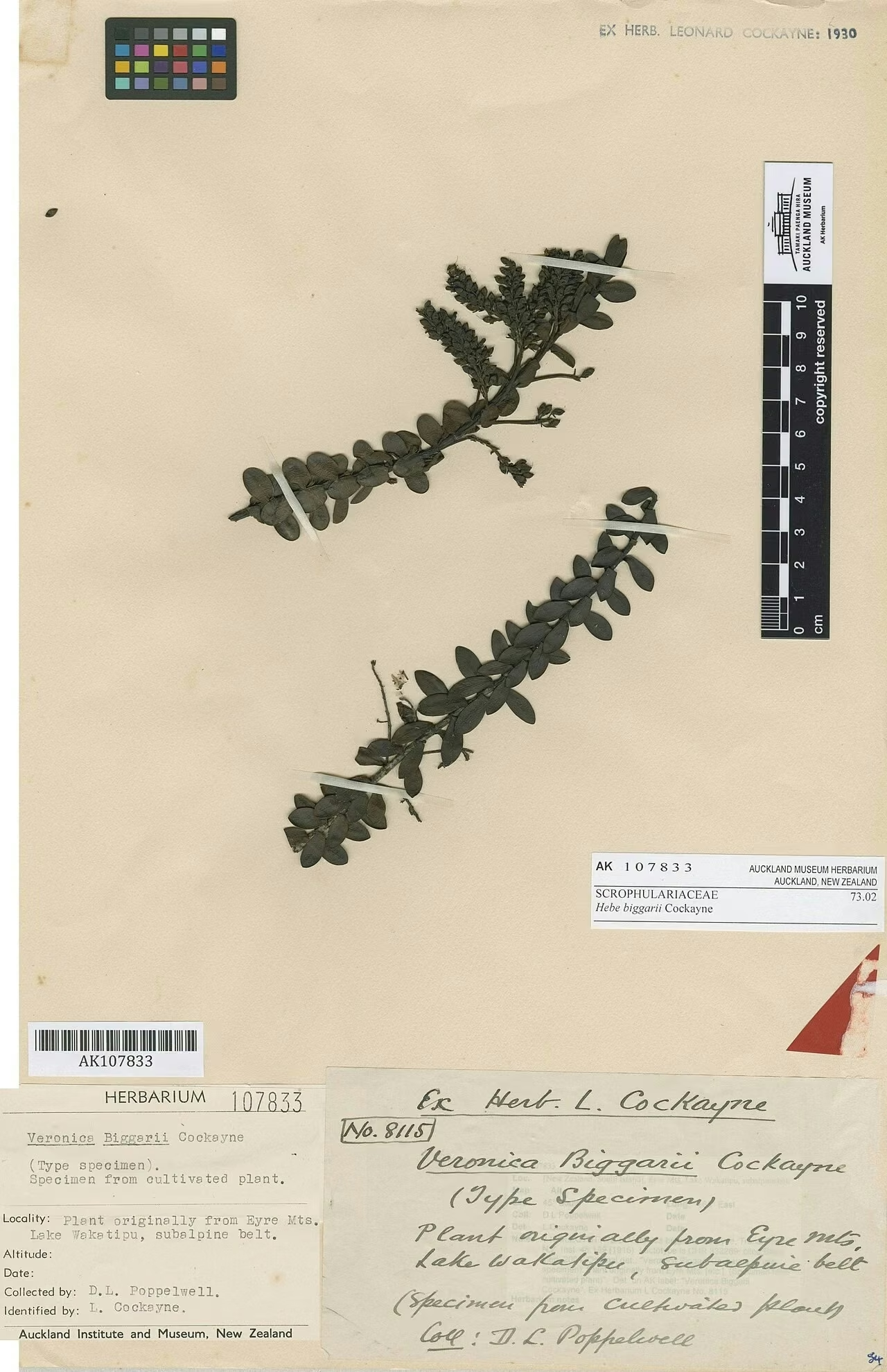
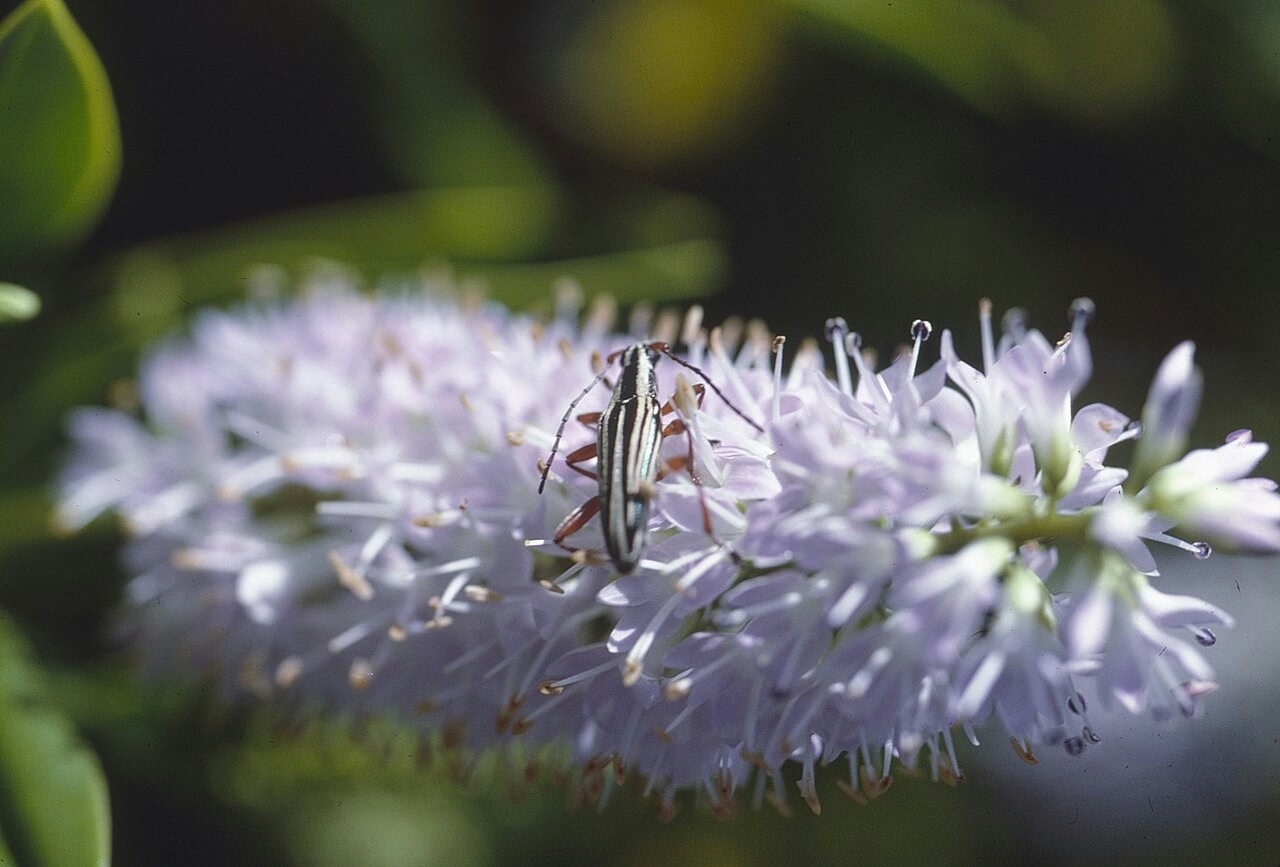
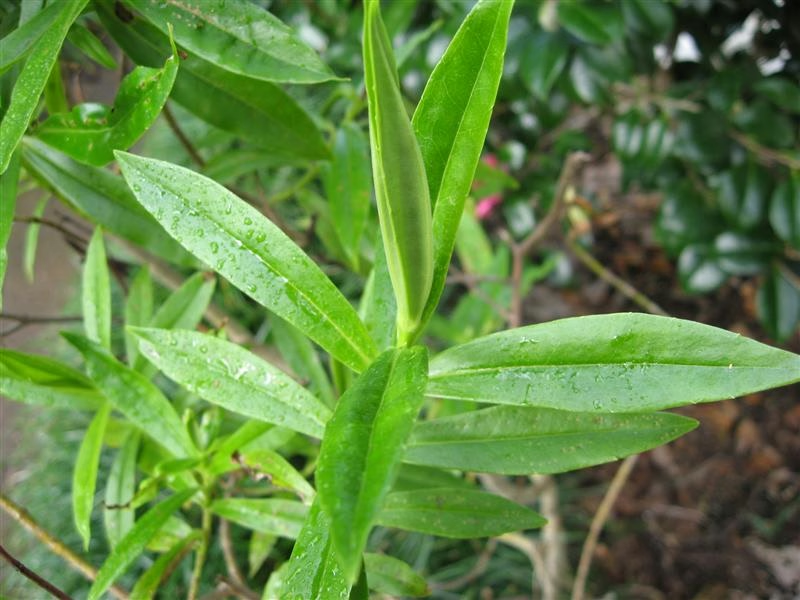
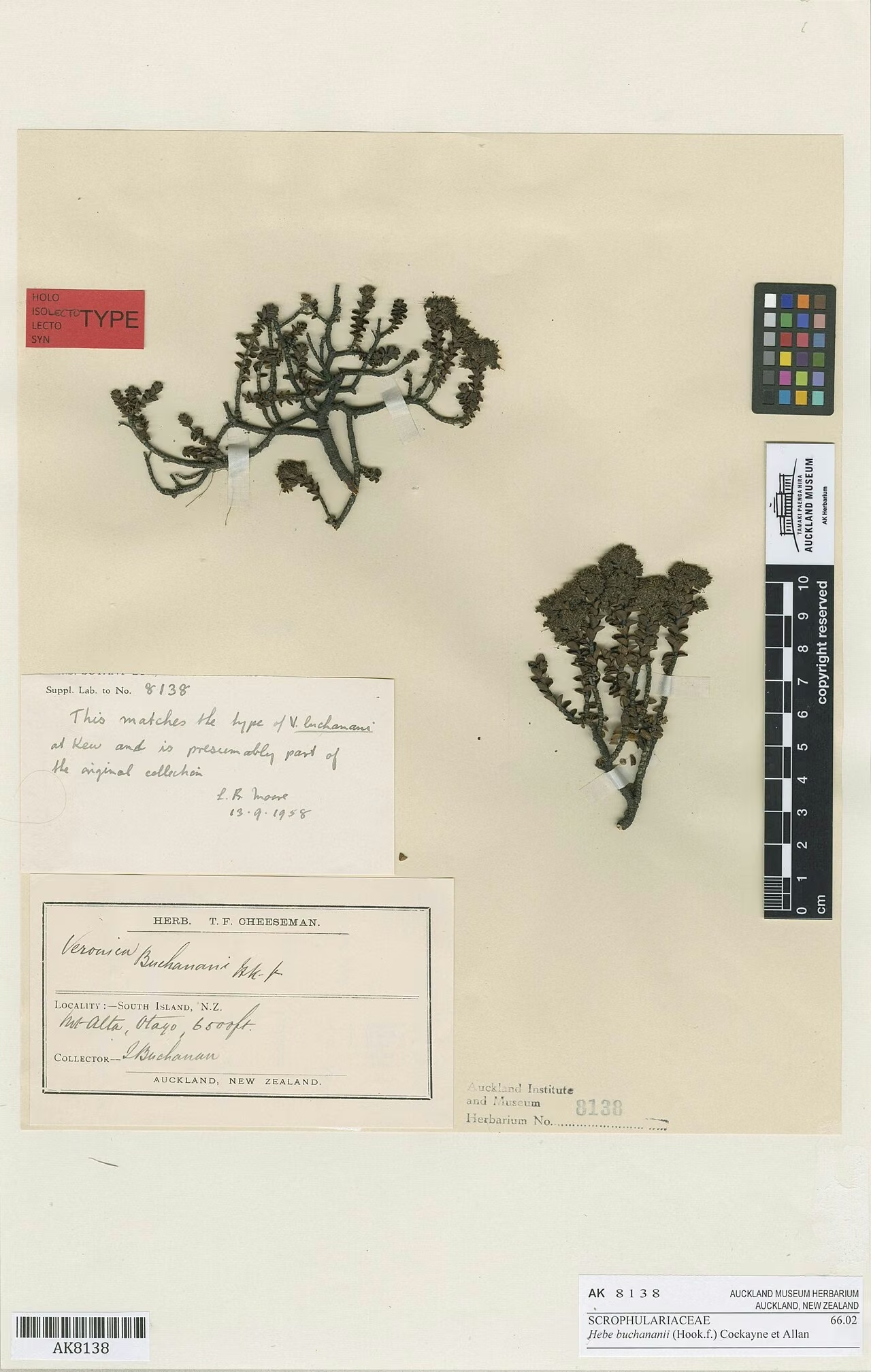
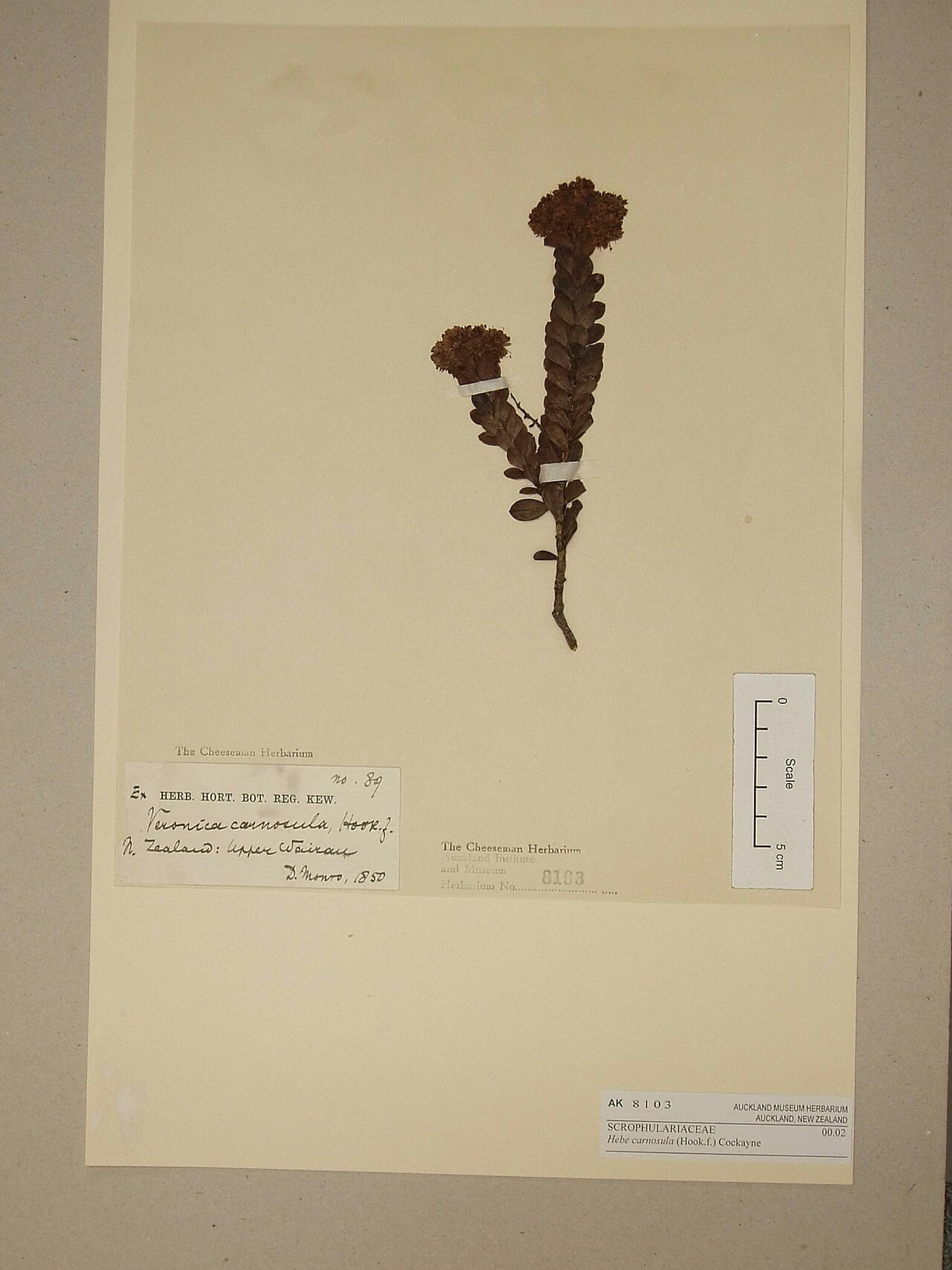
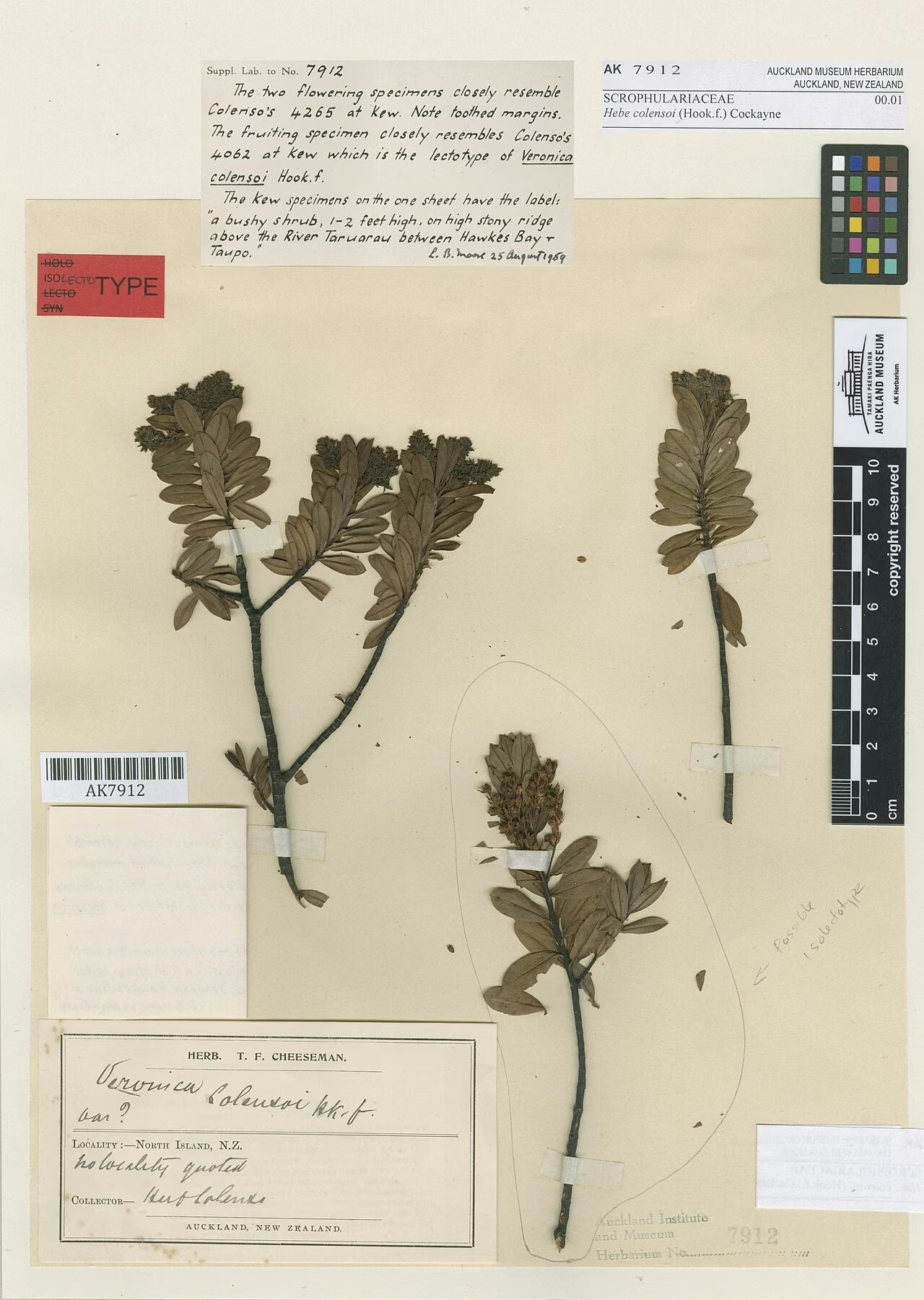
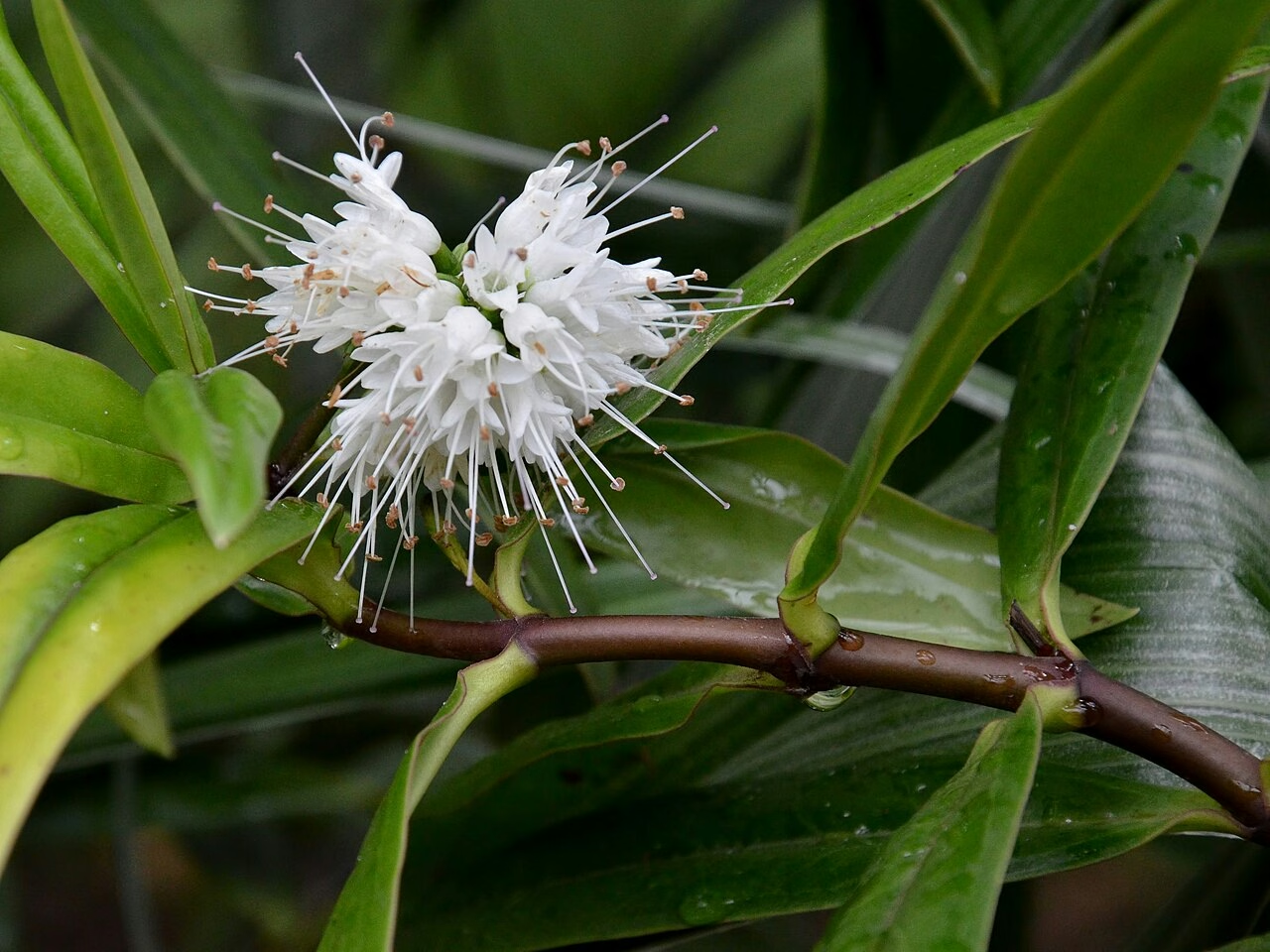
Explore other native plants that share similar characteristics or habitats with Canterbury Hebe (Veronica canterburiensis), offering further insights into New Zealand's diverse flora. These related species provide context and opportunities for complementary planting in your garden.
Plant Conservation
Veronica canterburiensis is ranked Not Threatened (2023) and has been Not Threatened in every assessment since 2004. In the Wellington region it is assessed as Regionally At Risk - Regionally Naturally Uncommon, as its North Island occurrence is limited to the Tararua Range.
Protecting tree-line beech forest and subalpine shrubland from browsing animals and invasive weeds helps maintain its populations, especially the small outlying ones.
Frequently Asked Questions
Does Canterbury hebe grow in Canterbury?
Only marginally. Despite its name it is found mostly on or west of the Main Divide from North-West Nelson to Arthur's Pass, with outliers in south Westland and the Tararua Range.
How do you tell Veronica canterburiensis from Veronica vernicosa?
In flower, Veronica canterburiensis has corolla tubes equal to or longer than the calyx, shorter spikes of 1 to 3 cm and magenta or purple anthers. Sterile plants can be hard to separate.
Is Veronica canterburiensis found in the North Island?
Yes, but only in the southern North Island, where NZPCN records it in the Tararua Range near Mount Holdsworth.
What habitat does Canterbury hebe prefer?
It grows in or at the margins of beech forest close to the tree line, and also more widely in open subalpine grassland and shrubland.
Sources and Further Reading
The botanical, growing, and conservation details for Canterbury Hebe (Veronica canterburiensis) on this page draw on the New Zealand plant references below. Consult them for full technical records and the latest distribution data.