Hebe
Veronica corriganii
Last updated:
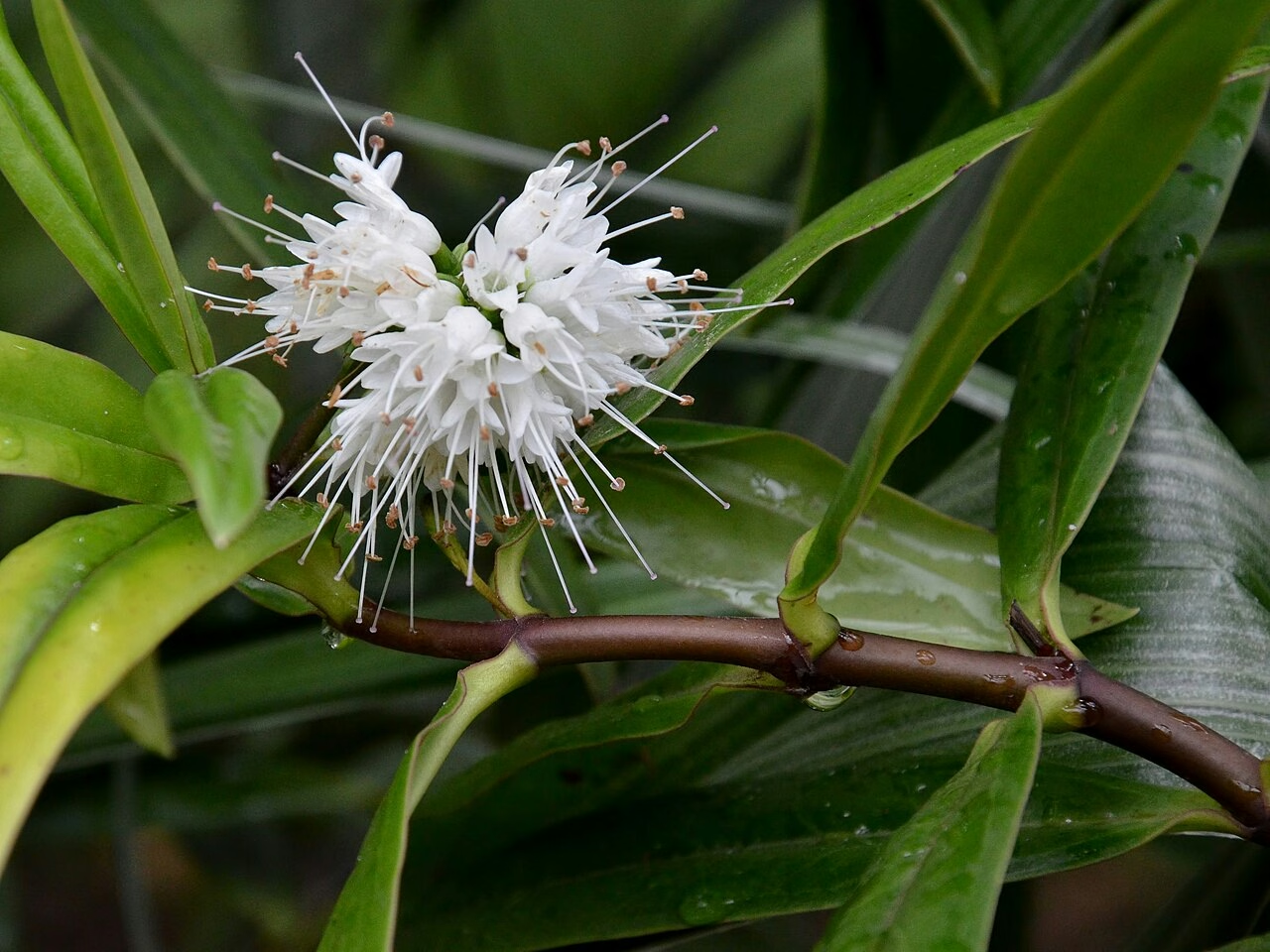
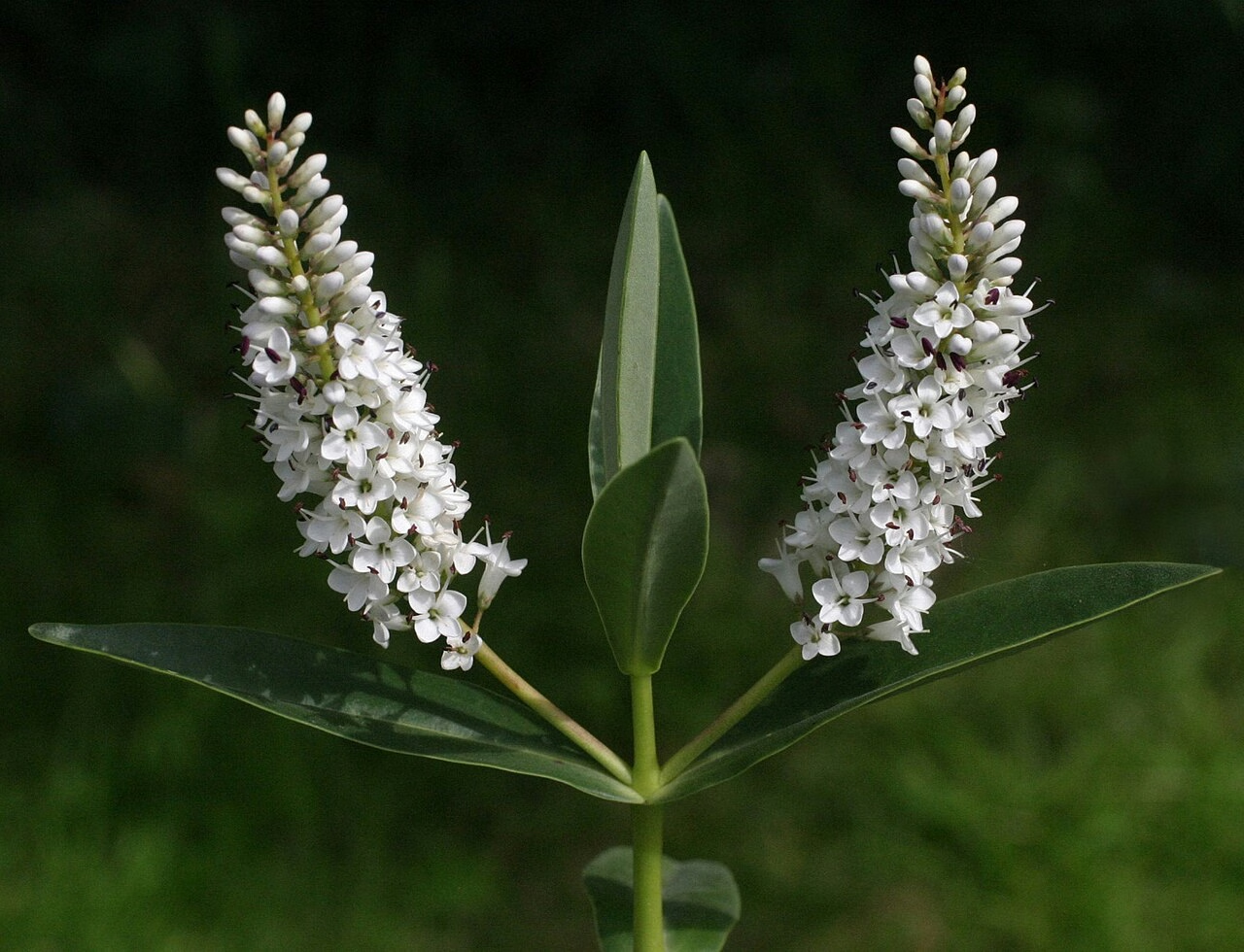
Veronica corriganii, long known as Hebe corriganii, is an erect, bushy shrub up to 2.5 m tall that is found only in the North Island. It carries pairs of long, narrow, leathery leaves, typically 7 to 10.5 cm long, and slender white or mauve-tinged flower spikes 8 to 14.5 cm long, each holding 100 or more flowers. It ranges from the Hunua Ranges south to the north-western Ruahine Range and from the Raukumara Range west to Taranaki, growing in scrub and forest from near the coast to the subalpine zone. It is ranked Not Threatened and has an unusually long flowering season, from late winter into autumn. Explore more native shrubs in our native plant guide.
Plant Description
Veronica corriganii is an erect, bushy shrub up to 2.5 m tall. Its leaves are arranged in opposite pairs and are linear-lanceolate and leathery, mostly 70 to 105 mm long (occasionally to 145 mm) and 7 to 16 mm wide. The upper surface is dark green and may be glossy or dull, and the leaf margins carry minute hairs.
The flower spikes arise from the sides of the branches and are unbranched, 8 to 14.5 cm long, and densely packed with about 100 to 120 flowers. The flowers are white or tinged mauve, and the corolla tube, 3.5 to 5 mm long, is clearly longer than the small green calyx at its base. The capsules are subacute, 4.7 to 6 mm long, and release flattened, pale brown seeds about 1.3 to 2.2 mm long.
In leaf and fruit it resembles Veronica macrocarpa, but it has a small sinus (gap) at the base of the leaf bud, longer leaf stalks and more flowers in each spike. It can also be hard to separate from some forms of Veronica stricta (koromiko), which lacks the leaf bud sinus and has smaller flowers and capsules.
Quick Facts
| Scientific Name | Veronica corriganii |
|---|---|
| Height | Up to 2.5 m |
| Spread | Not recorded; forms an erect, bushy shrub |
| Water Needs | Moderate; grows in moist forest and scrub |
| Light | Full sun to partial shade |
| Frost Tolerance | Good; occurs up to subalpine forest in the central North Island |
| Salt Tolerance | No information available, though it reaches near-coastal lowland scrub |
| Growth Rate | No published data |
| Lifespan | Long-lived perennial |
Climate Best Suited to
Suits the mild to cool, moist climate of the central North Island hill country, from lowland scrub up to subalpine forest. It tolerates cold upland winters but is a plant of reliably damp districts.
Regional Suitability
| City | Climate Suitability |
|---|---|
| Auckland | High |
| Wellington | High |
| Christchurch | Medium |
| Dunedin | Medium |
Plant Habitat
This hebe is endemic to the North Island. NZPCN gives its range as running from the Hunua Ranges in the north to the north-western Ruahine Range in the south, and from the Raukumara Range in the east to the Pouakai Range in Taranaki in the west. The Flora of New Zealand also records it from the Volcanic Plateau, Gisborne and the Kaweka Range, at altitudes from about 46 to 1433 m.
It grows in a wide range of situations, from near-coastal lowland scrub through forest margins to montane and subalpine forest, wherever there is enough light for a shrub to establish.
Growing Requirements
Soil Requirements
In the wild it grows on the moist forest and scrub soils of the central North Island, which are often volcanic in origin. In gardens any reasonably fertile, well-drained soil that does not dry out is suitable.
- Free-draining loam or volcanic soil
- Moist but not waterlogged
- Add leaf litter or compost to light soils
Light Requirements
It is a shrub of scrub and forest edges, so it performs well in sun or light shade but becomes leggy in deep shade.
- Full sun to partial shade
- Avoid heavy shade under a dense canopy
Water Requirements
Its natural range is in high-rainfall hill and mountain country, so regular moisture keeps it dense and flowering well.
- Water young plants through their first summer
- Mulch to hold moisture in drier gardens
Planting and Establishing
Plant in autumn or spring in a sunny or lightly shaded spot with good drainage, spacing plants about 1.5 m apart if growing several together. Dig a hole wider than the root ball, firm the soil around the plant and water it in well.
Because it is not widely sold, look for it at specialist native nurseries, ideally grown from seed or cuttings of local North Island origin if you are planting within its natural range.
Ecological Role
The long white flower spikes are open over many months, from late winter through summer, giving nectar and pollen to native bees, flies, moths and butterflies at times when few other shrubs are flowering. NZPCN notes that the seeds are dispersed by wind.
As a fast-establishing shrub of forest margins and scrub, it is part of the shrubby regrowth that develops in clearings and along edges in central North Island forests.
Uses & Significance
Garden Uses
Its long narrow leaves and long flower spikes make it an attractive, informal shrub for larger native gardens.
- Shelter and screening shrub
- Long-season flowering for pollinators
- Restoration plantings within its North Island range
Ecological Value
Within its range it contributes to the shrub layer of scrub and forest margins and provides a long-lasting nectar source.
- Flowers from about August to March
- Wind-dispersed seed colonises forest edges
- Endemic to the North Island
Landscaping Uses
Use it at the back of a native border or as part of a mixed shrub screen, where its height of up to 2.5 m and narrow foliage give a soft, upright form. The long white spikes show up well against darker foliage such as kawakawa or coprosmas.
In restoration projects in the central North Island it can be planted along forest edges and stream margins with other local shrubs.
Seasonal Care Calendar
Spring
Flowering is well under way in spring, having often started in August.
- Plant new shrubs
- Feed lightly with compost or slow-release fertiliser
Summer
Flowering continues through summer, with the long spikes attracting insects.
- Water young plants in dry spells
- Remove spent spikes if a tidier look is wanted
Autumn
Flowering winds down by about March and capsules ripen from April.
- Collect ripe capsules for seed
- Take semi-hardwood cuttings
Winter
A quieter season, although the first flowers can appear as early as July.
- Check drainage after heavy rain
- Plan any hard pruning for late winter
When to Prune and How Much
Lightly trim after the main flush of flowering to remove spent spikes and keep the shrub compact. This also encourages fresh leafy growth from lower down.
Like most larger hebes, old leggy plants can be cut back into older wood in late winter or spring, but it is safer to do this over two seasons rather than all at once.
How to Grow Hebe
NZPCN does not give specific propagation notes for Veronica corriganii beyond recording that its seeds are wind dispersed, so the methods below follow the standard practice used for other large-leaved North Island hebes. Semi-hardwood cuttings are the quickest and most reliable way to produce plants identical to the parent, which matters because hebes hybridise readily when different species grow together in a garden. Seed is useful for restoration work where genetic diversity is wanted, but it should come from wild or isolated plants to avoid hybrids.
From Cuttings
Take cuttings from firm, current-season shoots in late summer or autumn, after flowering. Choose healthy, non-flowering side shoots where possible.
- Cut 8 to 12 cm lengths just below a leaf pair
- Remove the lower leaves and any flower buds
- Insert into a free-draining mix of bark and pumice or perlite
- Keep humid and out of direct sun until roots form, usually within a few weeks
- Pot on once a good root system has developed
From Seed
Capsules ripen from about April. Collect them when they turn brown and begin to split, before the fine seed is shed on the wind.
- Dry the capsules in a paper bag to release the seed
- Sow on the surface of a fine seed-raising mix and barely cover
- Keep moist and in good light
- Prick out seedlings when large enough to handle and grow them on in individual pots for a season
Pests & Diseases
No pests specific to this species are recorded. Like other hebes it can be affected by downy mildew and leaf spot in humid, crowded conditions, and by scale insects and aphids on soft growth.
Good air flow, avoiding overhead watering in the evening, and trimming out affected shoots are usually enough to keep it healthy.
Cultural Significance
The Flora of New Zealand notes that the Māori names koromiko and kōkōmuka, which are applied to related large-leaved shrub veronicas, may also apply to this species. No specific traditional use of Veronica corriganii itself is recorded in the sources consulted.
The species was named Veronica corriganii by Harry Carse in honour of D.H.L. Corrigan, who discovered it. Like all New Zealand hebes it was transferred to the genus Veronica after DNA studies showed hebes belong within that genus.
Bonus Tip
If you want flowers for as much of the year as possible, this is a good hebe to choose: its recorded flowering season runs from August to March, sometimes starting in July. Plant it where you can see it from the house in late winter, when its white spikes are among the few shrub flowers about.
Related Plants
Explore other native plants that share similar characteristics or habitats with Hebe (Veronica corriganii), offering further insights into New Zealand's diverse flora. These related species provide context and opportunities for complementary planting in your garden.
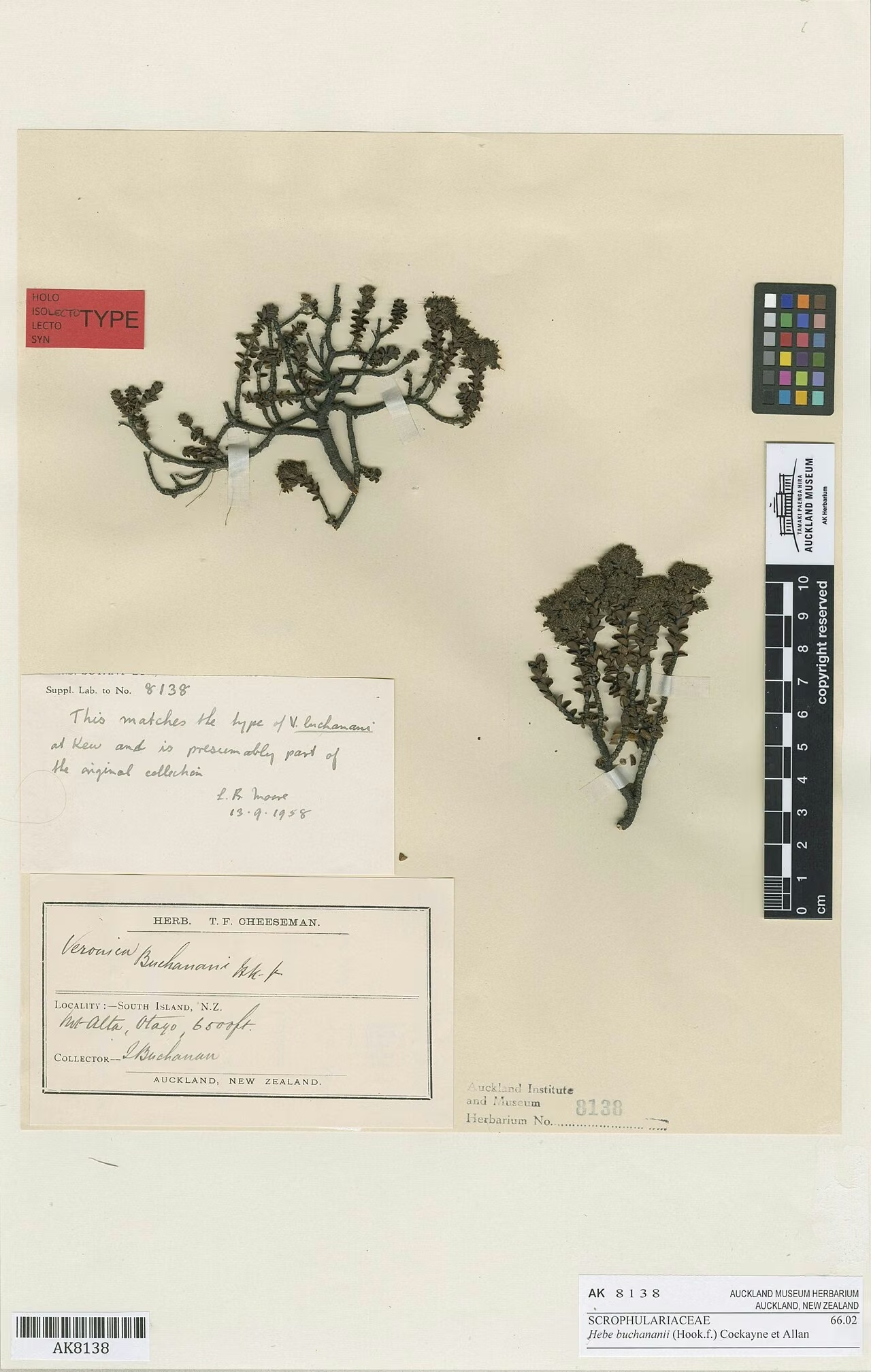
Veronica buchananii
Veronica buchananii
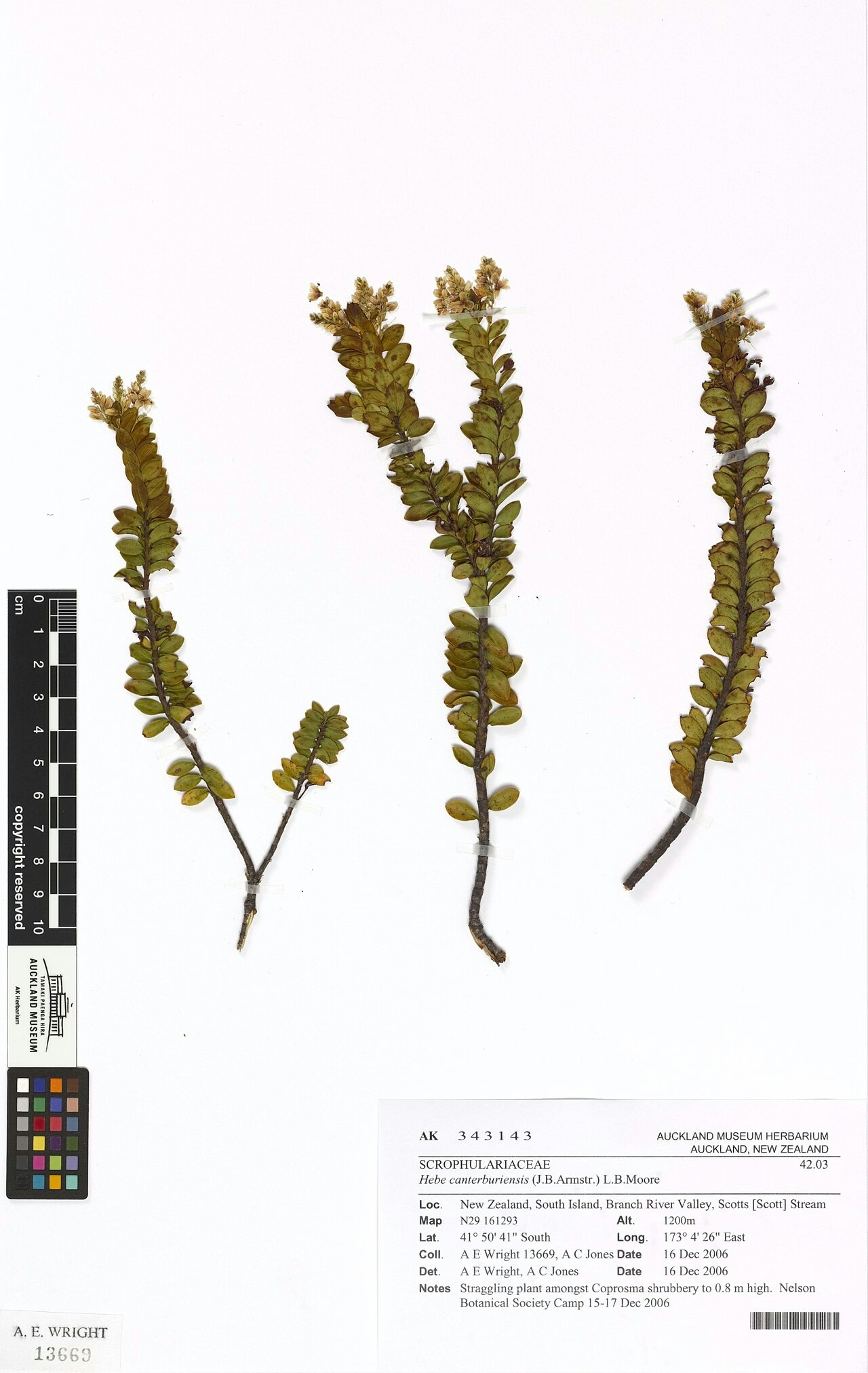
Canterbury Hebe
Veronica canterburiensis
Red Hills Hebe
Veronica baylyi
Veronica colensoi
Veronica colensoi
Veronica simulans
Veronica simulans
Veronica cryptomorpha
Veronica cryptomorpha
Veronica decumbens
Veronica decumbens
Dieffenbach's Koromiko
Veronica dieffenbachii
Plant Conservation
Veronica corriganii is ranked Not Threatened (2023) and has held that ranking in every assessment since 2004. It is widespread through the central and northern North Island and grows in a broad range of habitats.
Protecting forest margins and scrub from clearance and browsing animals helps keep its populations healthy, and planting locally sourced stock in restoration projects avoids introducing hybrids from garden hebes.
Frequently Asked Questions
Where does Veronica corriganii grow naturally?
It is endemic to the North Island, from the Hunua Ranges south through the Volcanic Plateau, Gisborne and Taranaki to the Ruahine and Kaweka Ranges, at about 46 to 1433 m altitude.
How do you tell Veronica corriganii from Veronica stricta?
Veronica corriganii has a small gap, or sinus, at the base of the leaf bud and larger flowers and capsules. Veronica stricta lacks the leaf bud sinus, although some plants can be hard to separate.
When does Veronica corriganii flower?
NZPCN records flowering from August to March, sometimes starting as early as July, with fruit ripening from April and occasionally into June.
Who is Veronica corriganii named after?
The species honours D.H.L. Corrigan, who discovered it. It was described by Harry Carse as Hebe corriganii and is now placed in Veronica.
Sources and Further Reading
The botanical, growing, and conservation details for Hebe (Veronica corriganii) on this page draw on the New Zealand plant references below. Consult them for full technical records and the latest distribution data.