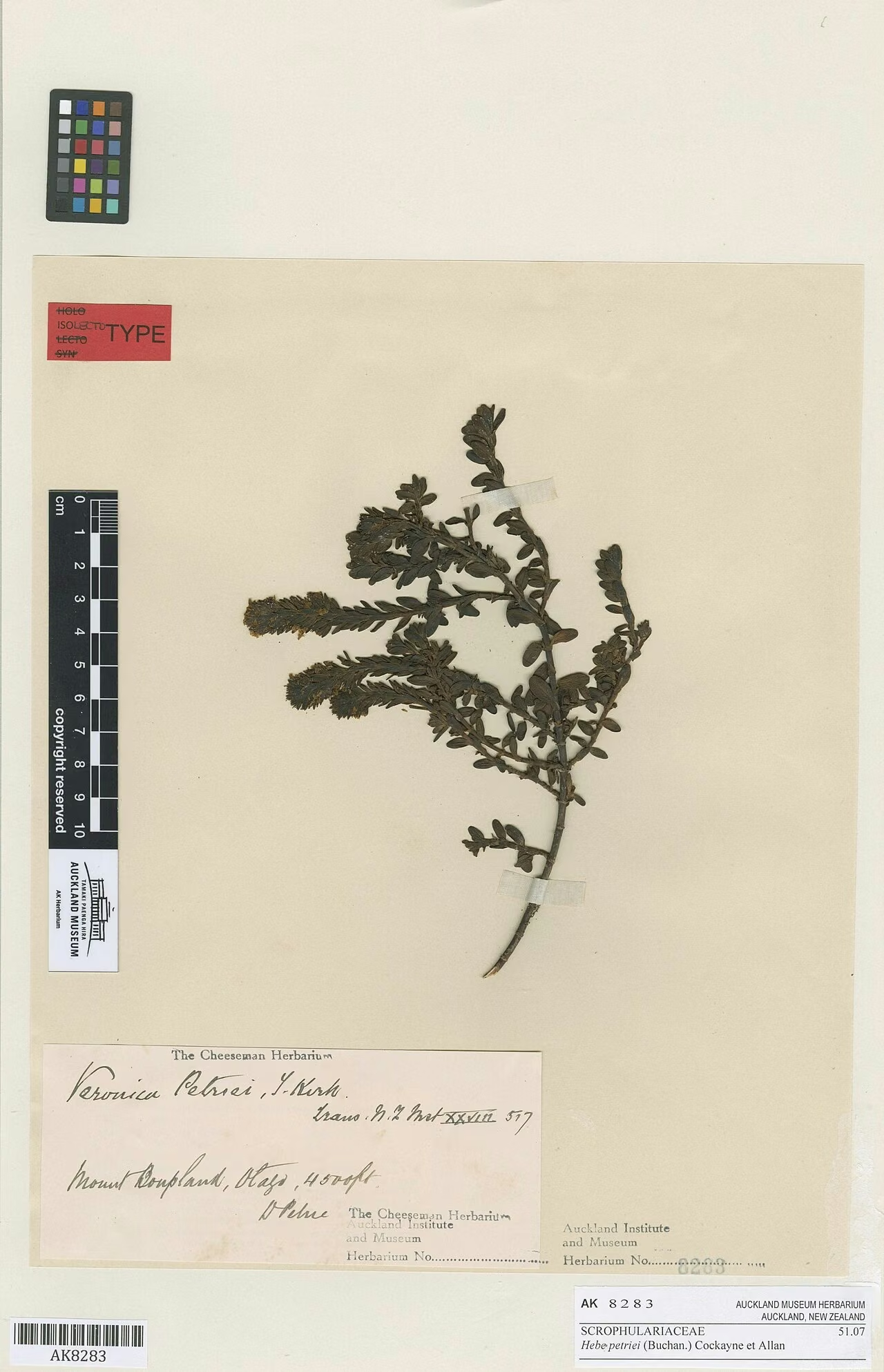
Hebe
Veronica petriei
Last updated:
Veronica petriei, formerly Hebe petriei, is a low, spreading alpine shrub endemic to the mountains of Otago and Southland. It grows to about 30 cm tall, with sprawling branches clothed in pairs of rounded, fleshy green leaves 4-12 mm long. From late spring to late summer it bears conspicuous terminal spikes up to 6 cm long of white flowers, whose magenta anthers sit at the mouth of the tubular corolla. It lives on alpine rocks and scree between about 1040 and 1850 m on ranges such as the Pisa, Garvie, Eyre and Takitimu Mountains, and is ranked At Risk - Naturally Uncommon. Explore more native shrubs in our native plant guide.
Plant Description
Veronica petriei is a low shrub up to about 0.3 m tall with decumbent branches that spread across rock and scree. Its leaves are in opposite pairs, shortly joined at the base so each pair encircles the stem, and are obovate to narrowly elliptic, 4-12 mm long and 2-5.5 mm wide, thick, fleshy and green with blunt, rounded tips.
The flowers are held in a conspicuous terminal raceme up to about 6 cm long carrying 18-62 flowers. The corolla is white with a cylindrical tube 2.5-7 mm long and four white lobes, and the magenta anthers sit at the mouth of the tube, giving the spike a speckled look. Flowering is from October to March, mainly December to February, and the hairless, pointed capsules about 4-4.5 mm long ripen from November to March.
It closely resembles Veronica murrellii and Veronica kellowiae, but those species grow in other parts of the South Island. Veronica murrellii differs in stem hairs, how the leaf bases are joined, the bracts and corolla tube length. Veronica notialis of Fiordland has duller leaves and only two to four flowers per spike.
Quick Facts
| Scientific Name | Veronica petriei |
|---|---|
| Height | Up to 0.3 m |
| Spread | Sprawling, decumbent branches; exact spread not recorded |
| Water Needs | Moderate; moist but sharply drained |
| Light | Full sun on open alpine rock and scree |
| Frost Tolerance | High; grows at 1040-1850 m |
| Salt Tolerance | Low; an inland mountain plant |
| Growth Rate | Slow |
| Lifespan | Perennial |
Climate Best Suited to
It is adapted to the continental alpine climate of the Otago and Southland ranges, with hard frosts, winter snow, strong sun and drying winds in summer. It does not suit warm, humid lowland climates.
Regional Suitability
| City | Climate Suitability |
|---|---|
| Auckland | Low |
| Wellington | Low |
| Christchurch | Medium |
| Dunedin | Medium |
Plant Habitat
Veronica petriei is endemic to the South Island, where it is found on the mountains of Otago and Southland, with records also from Westland. Recorded localities include Mount Repulse, the Pisa Range, Mount Forbes, the Humboldt, Livingstone, Hector, Eyre, Garvie and Takitimu Mountains.
It grows on alpine rocks and scree at about 1040-1846 m above sea level, often rooting among stable rock where its sprawling branches can creep over stones.
Growing Requirements
Soil Requirements
In the wild it roots into stony scree and rock crevices with very little soil. In cultivation it needs an extremely free-draining, gritty mix.
- Scree mix of coarse grit, pumice and a little loam
- Excellent drainage around the crown
- Low fertility; avoid rich garden soil and heavy feeding
- Gravel top-dressing to keep stems off wet soil
Light Requirements
Its scree habitat is open and exposed, so it needs strong light to stay compact and flower well.
- Full sun in cool districts
- Light afternoon shade only in warmer areas
- Good air movement around the plant
Water Requirements
Roots in scree stay cool and moist below the surface even when the surface is dry, so aim for steady moisture at depth with fast drainage.
- Water regularly in dry summer spells
- Never leave the root zone waterlogged
- Reduce watering in winter
Planting and Establishing
Veronica petriei is seldom available from nurseries, and no published cultivation notes specific to it were found. It is best suited to an alpine house, trough or raised scree bed where drainage can be controlled. Use only plants already in legal cultivation rather than collecting from the wild.
Plant in spring into a deep trough or scree bed, setting the plant so its branches can sprawl over rocks. Firm the gritty mix around the roots, top-dress with stone chips and water in well.
Ecological Role
The open white flowers with exposed magenta anthers provide nectar and pollen for alpine insects in summer. No pollination study specific to this species was found, but small hebes like it are generally visited by native flies, bees and moths. The seeds are wind dispersed.
On scree, its sprawling woody stems help trap fine material and give shelter to small invertebrates, and it forms part of the specialised plant community of the Otago and Southland alpine zone.
Uses & Significance
Garden Uses
It is a specialist plant for alpine growers, valued for its fleshy foliage and attractive white spikes with magenta anthers.
- Alpine troughs and containers
- Scree and rock gardens in cool southern districts
- Botanic garden collections of Otago alpine flora
Ecological Value
As an endemic of the Otago and Southland ranges, it contributes to the distinctive flora of southern alpine rock and scree.
- Summer nectar and pollen source for alpine insects
- Part of the specialised scree plant community
- Endemic to a restricted set of southern mountain ranges
Landscaping Uses
In a rock garden, let Veronica petriei sprawl over a sunny stone where its fleshy leaf pairs and white spikes can be seen up close. It associates well with other southern scree plants and small tussocks.
Because it stays under about 30 cm, it suits the front of a raised bed or a trough, where faster-growing neighbours cannot smother it.
Seasonal Care Calendar
Spring
Flowering can begin from October as new growth starts after snow melt.
- Replace gravel mulch
- Check for rotted or dead stems after winter
Summer
The main flowering period is December to February, with spikes of white flowers and magenta anthers.
- Water in dry spells
- Watch for overheating in pots
Autumn
Capsules ripen between November and March and release small wind-borne seeds.
- Collect capsules as they brown
- Take tip cuttings of firm growth
Winter
Fully frost-hardy, but sensitive to wet, airless conditions around the roots.
- Keep drainage free
- Shelter pots from prolonged rain if needed
When to Prune and How Much
No regular pruning is needed. Trim off spent flower spikes after flowering if you do not want seed.
If a plant becomes straggly, lightly shorten the longest shoots after flowering, cutting just above a leaf pair. Avoid cutting into old bare wood, which may not reshoot.
How to Grow Hebe
No propagation protocol specific to Veronica petriei was found, so these methods follow the standard practice for small alpine hebes. Both seed and cuttings can work. Use material from cultivated plants only, since wild populations are small and ranked Naturally Uncommon. Alpine hebes need cool, bright, well-ventilated conditions during propagation, and are quickly lost to rot in warm, humid propagating units.
From Seed
Seed ripens from November to March in small hairless capsules. The seeds are 0.7-1.1 mm long and wind dispersed, so collect capsules as they brown and before they split. Sow fresh and leave the tray outside so it experiences natural cool temperatures.
- Pick browning capsules and dry them in a paper envelope
- Sow seed thinly on a gritty seed-raising mix
- Cover with a thin layer of fine grit
- Keep moist in a cool, bright, sheltered place
- Pot seedlings individually once they are large enough to handle
From Cuttings
Tip cuttings of firm current-season growth root fairly readily in most hebes and keep the plant true to type. Keep the cuttings small and the mix very open.
Cuttings taken in late summer usually have time to form roots before winter; over-winter them in a cold frame rather than a heated propagator.
- Take 3-4 cm tip cuttings in late summer or autumn
- Remove the lowest leaf pairs
- Insert into a mix of pumice and coarse sand
- Keep in bright shade with good ventilation and moderate humidity
- Pot on into gritty alpine mix once roots form
Pests & Diseases
No specific pests are recorded for Veronica petriei. In cultivation, alpine hebes are most often lost to root rot in poorly drained or warm, wet conditions, and may suffer fungal leaf spots or downy mildew in humid, still air.
In the wild, browsing by introduced animals such as hares can damage small alpine shrubs. Good drainage and airflow prevent most problems in gardens.
Cultural Significance
No traditional Māori name or use is recorded for Veronica petriei, which grows on remote high-altitude scree. Larger hebes are widely known as koromiko.
The species honours Donald Petrie (1846-1925), a Scottish-born teacher, school inspector and botanist who worked in Otago and collected plants extensively in its mountains. It was first described by John Buchanan as Mitrasacme petriei before being transferred to Veronica, then Hebe, and back to Veronica.
Bonus Tip
The magenta anthers peeping from the white corolla tubes are the easiest way to recognise Veronica petriei in flower among other small fleshy-leaved Otago hebes. When growing it, a collar of coarse grit around the base of the stems is the single most useful step against collar rot.
Related Plants
Explore other native plants that share similar characteristics or habitats with Hebe (Veronica petriei), offering further insights into New Zealand's diverse flora. These related species provide context and opportunities for complementary planting in your garden.
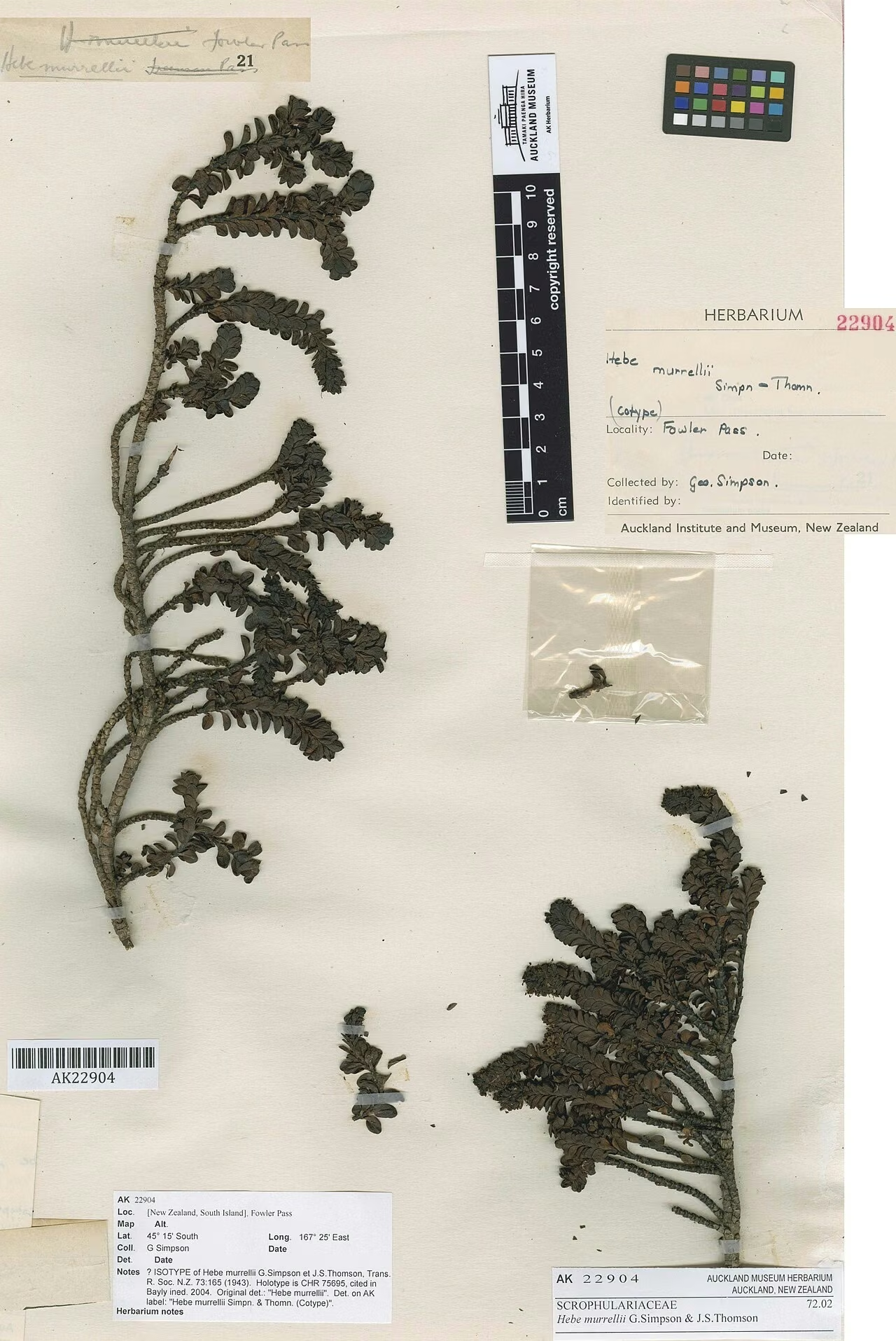
Murrell's Hebe
Veronica murrellii
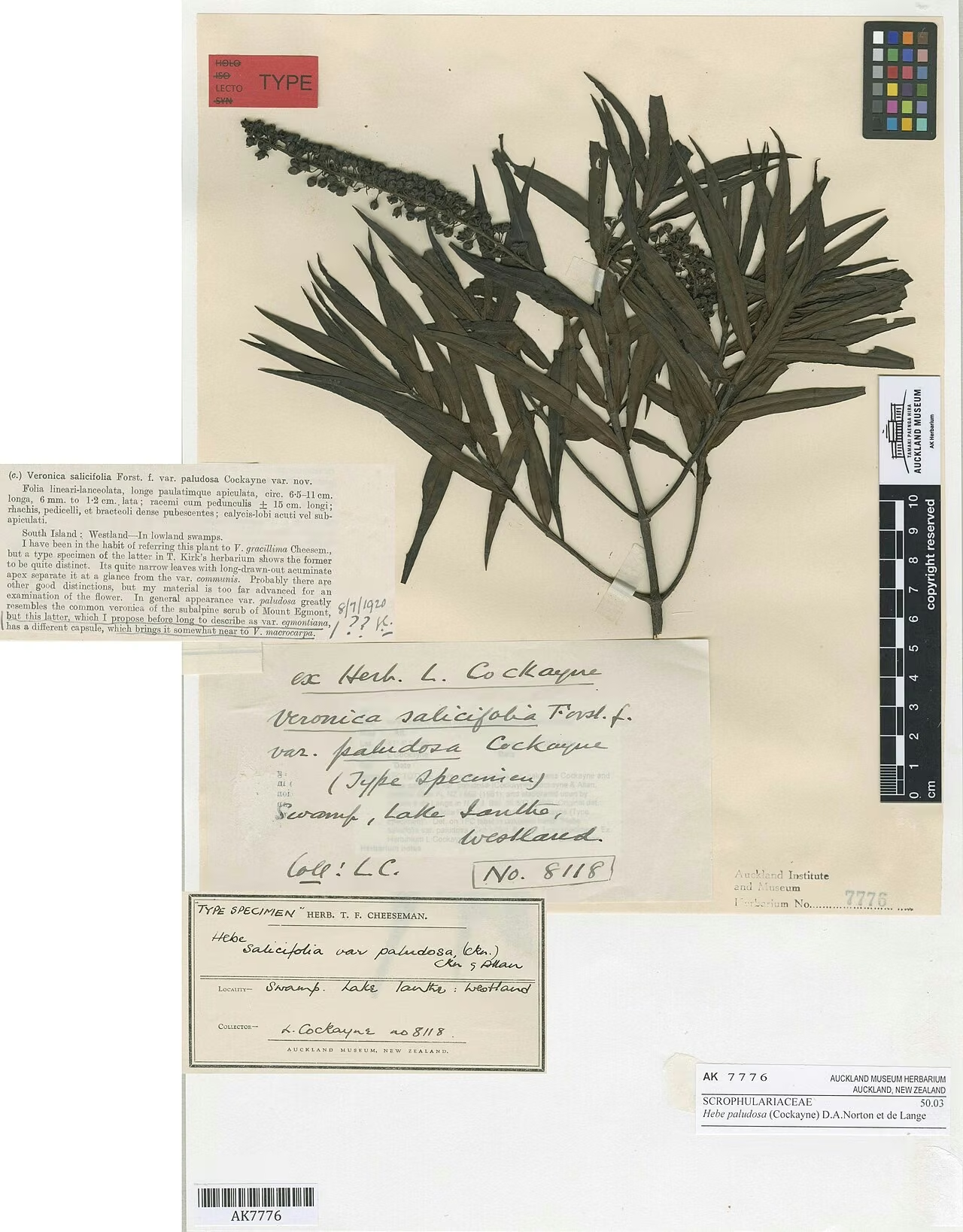
Veronica phormiiphila
Veronica phormiiphila
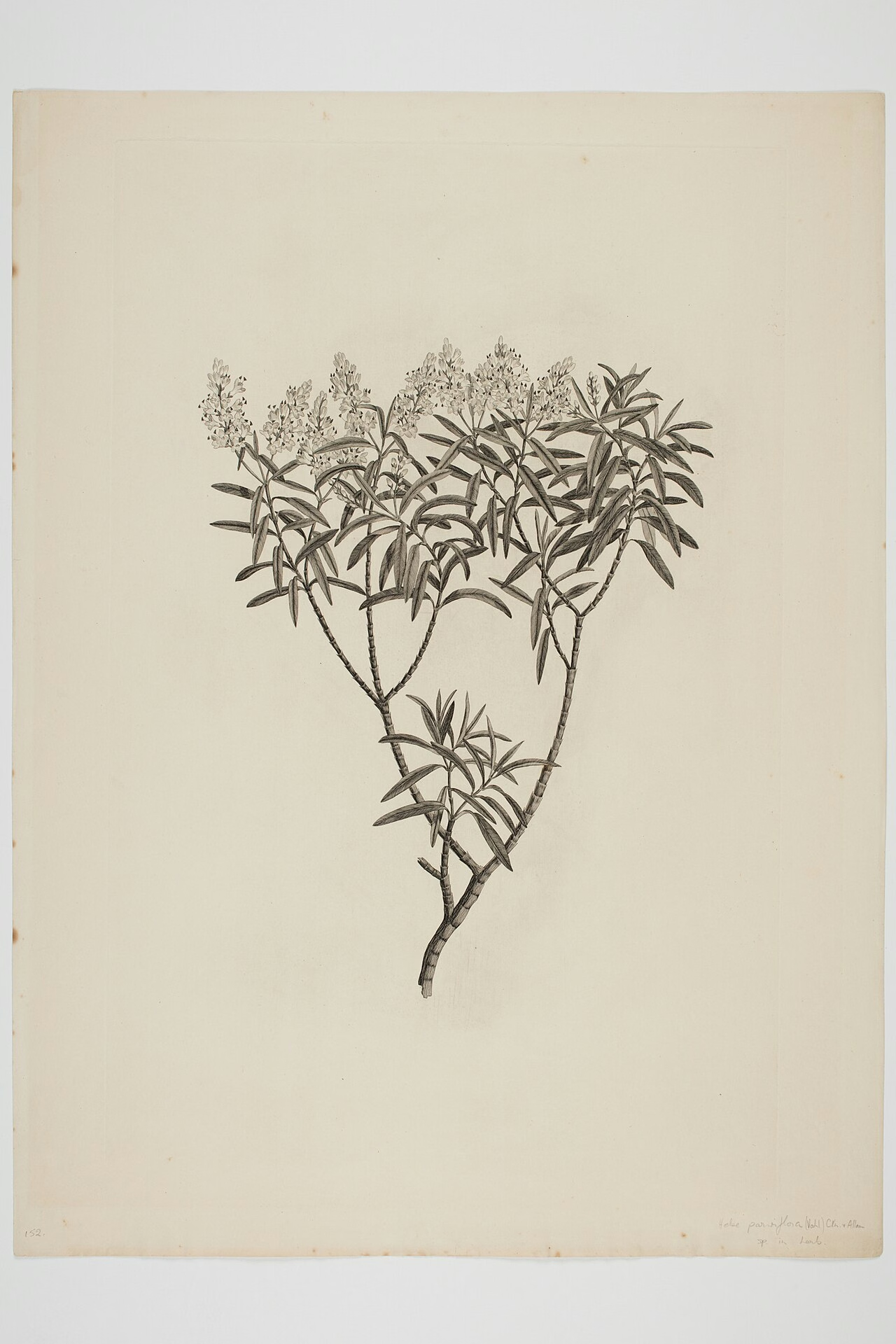
Veronica parviflora
Veronica parviflora
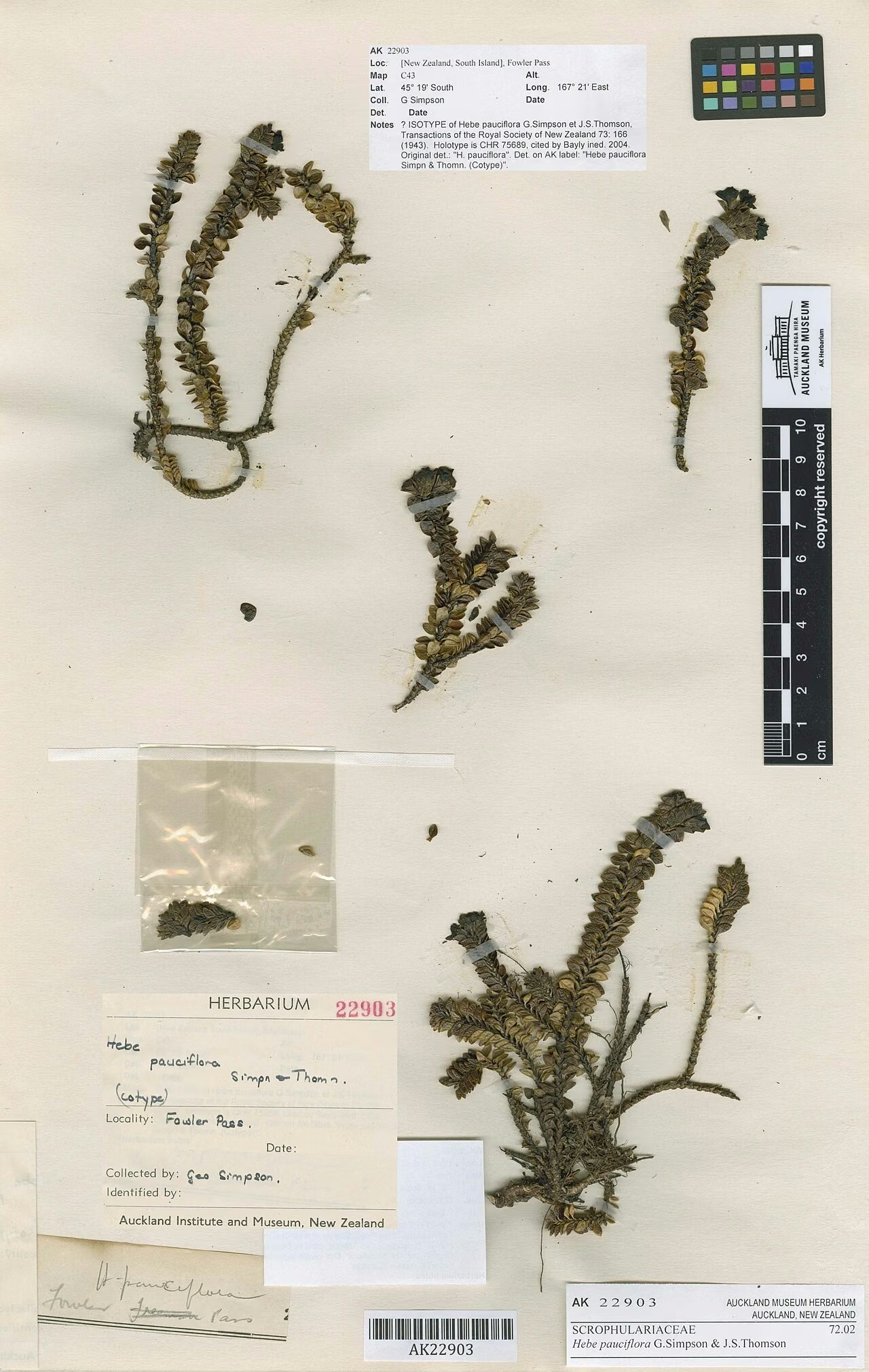
Veronica notialis
Veronica notialis
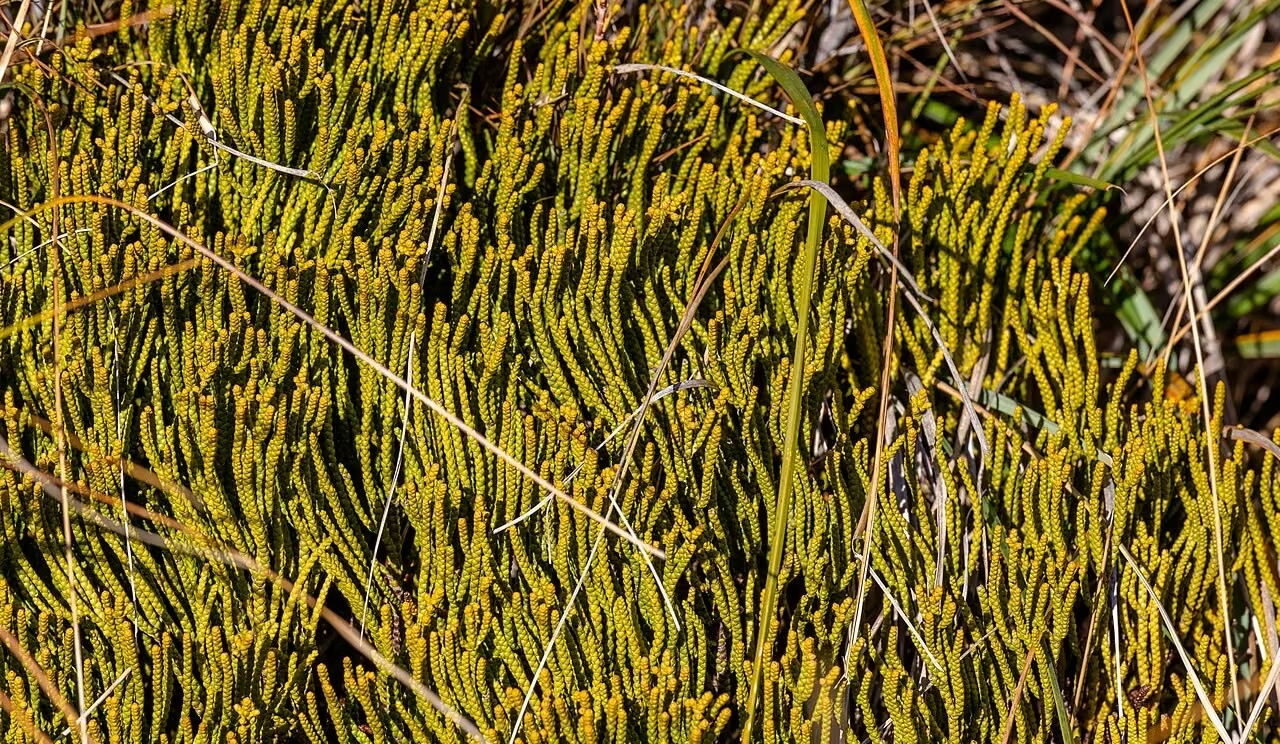
Veronica propinqua
Veronica propinqua
Veronica kellowiae
Veronica kellowiae
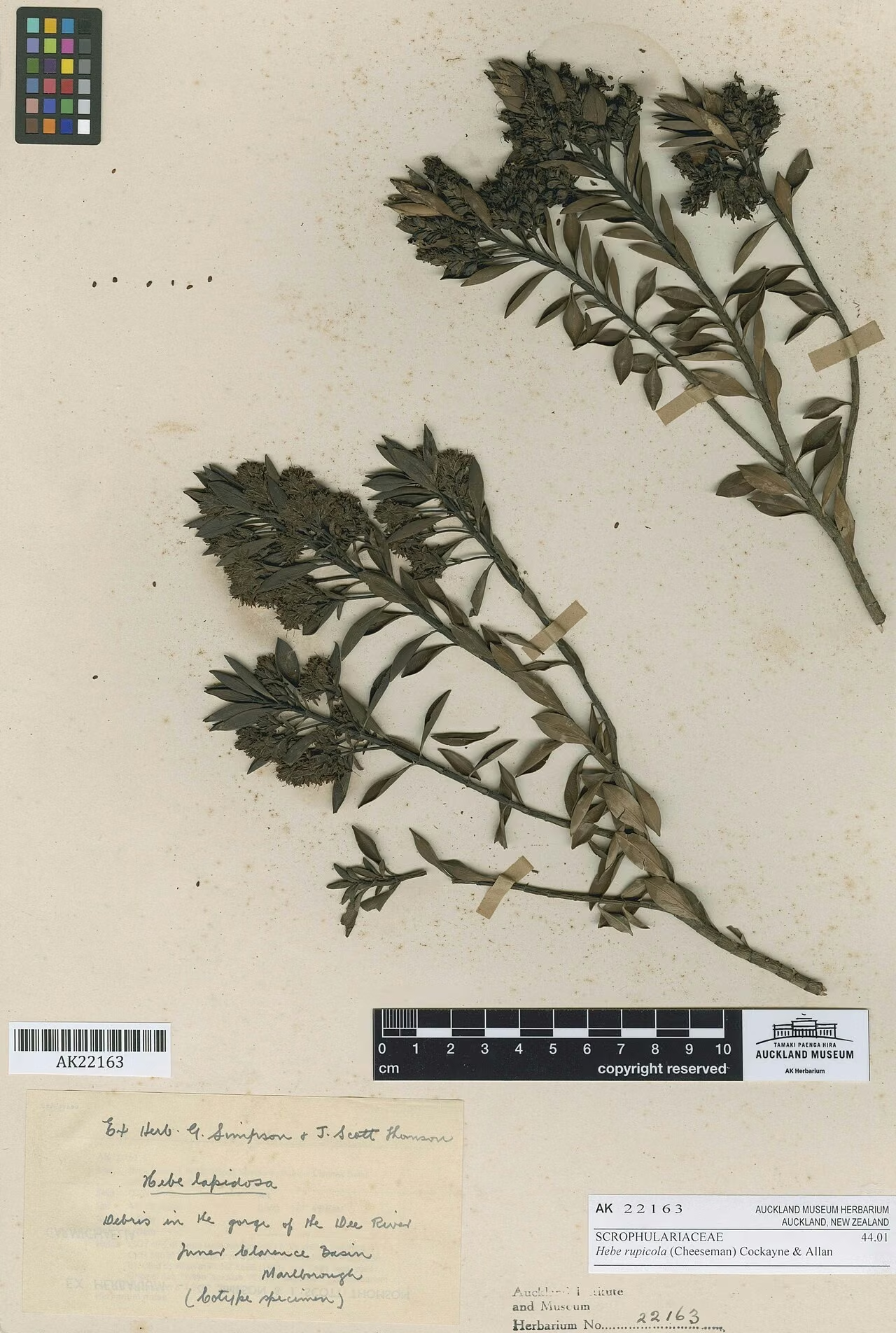
Veronica rupicola
Veronica rupicola
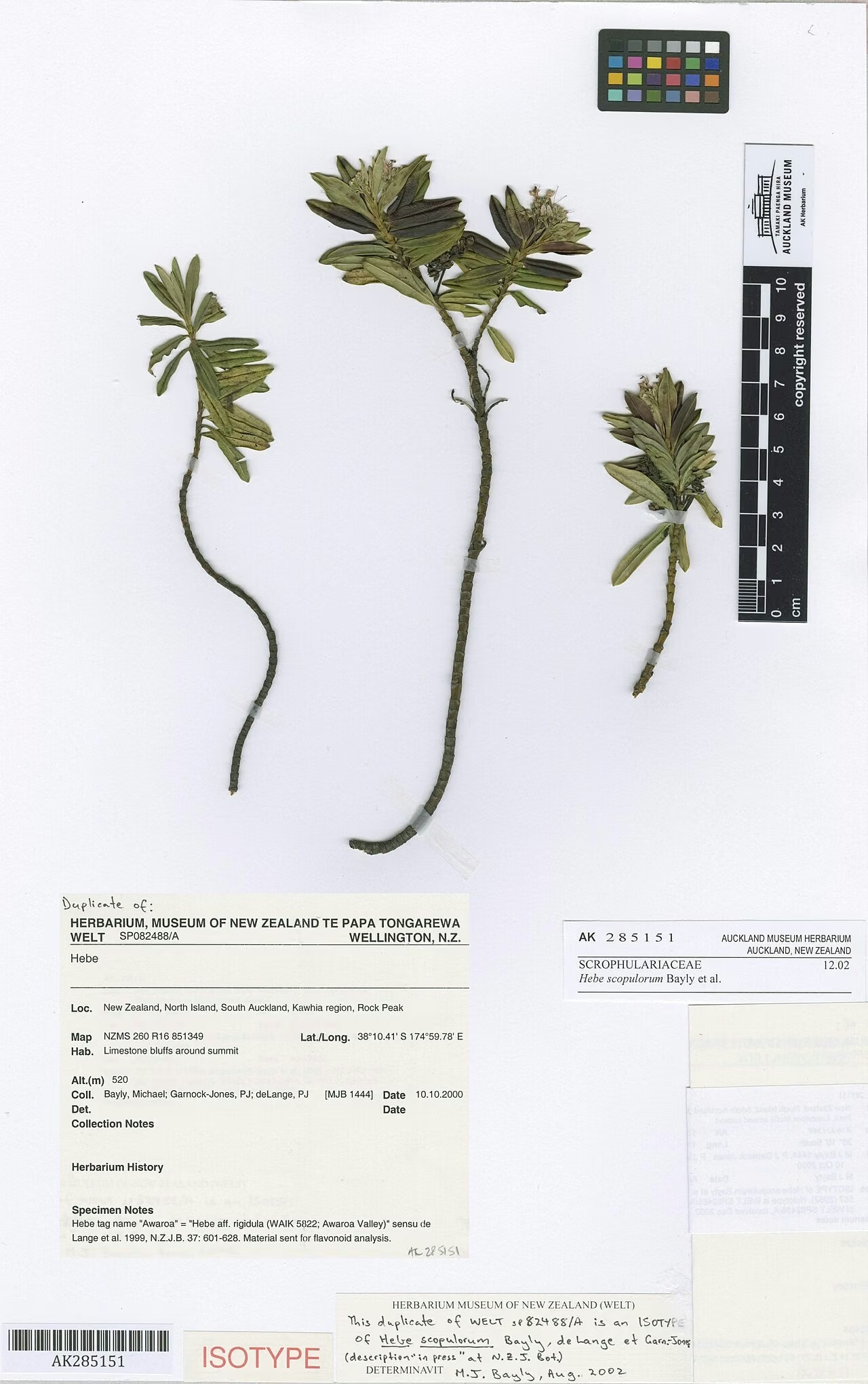
Veronica scopulorum
Veronica scopulorum
Plant Conservation
Veronica petriei is ranked At Risk - Naturally Uncommon in the 2023 New Zealand Threat Classification assessment, with the qualifiers DPS (data poor, size) and DPT (data poor, trend). It was assessed as Not Threatened from 2004 to 2012 and has been listed as naturally uncommon since 2017.
Its small, scattered populations on alpine scree are vulnerable to browsing animals and, potentially, to warming that reduces the area of suitable alpine habitat. Better population data are needed, and photographs posted to iNaturalist NZ with location details help fill that gap.
Frequently Asked Questions
Where does Veronica petriei grow?
It grows only in the South Island on alpine rocks and scree in Otago and Southland, including Mount Repulse, the Pisa Range, Hector, Eyre, Garvie, Livingstone and Takitimu Mountains, at about 1040-1850 m.
Who is Veronica petriei named after?
It honours Donald Petrie (1846-1925), a Scottish-born teacher, school inspector and botanist who worked in Otago and collected widely in its mountains.
How do you identify Veronica petriei?
Look for a low sprawling shrub with rounded, fleshy leaf pairs and terminal spikes of 18-62 white flowers with magenta anthers held at the mouth of a cylindrical corolla tube.
Is Veronica petriei the same as Veronica murrellii?
No. The two look alike but grow in different areas, and they differ in stem hairs, how the leaf bases join, the bracts and the length of the corolla tube.
Sources and Further Reading
The botanical, growing, and conservation details for Hebe (Veronica petriei) on this page draw on the New Zealand plant references below. Consult them for full technical records and the latest distribution data.