Hebe
Veronica notialis
Last updated:
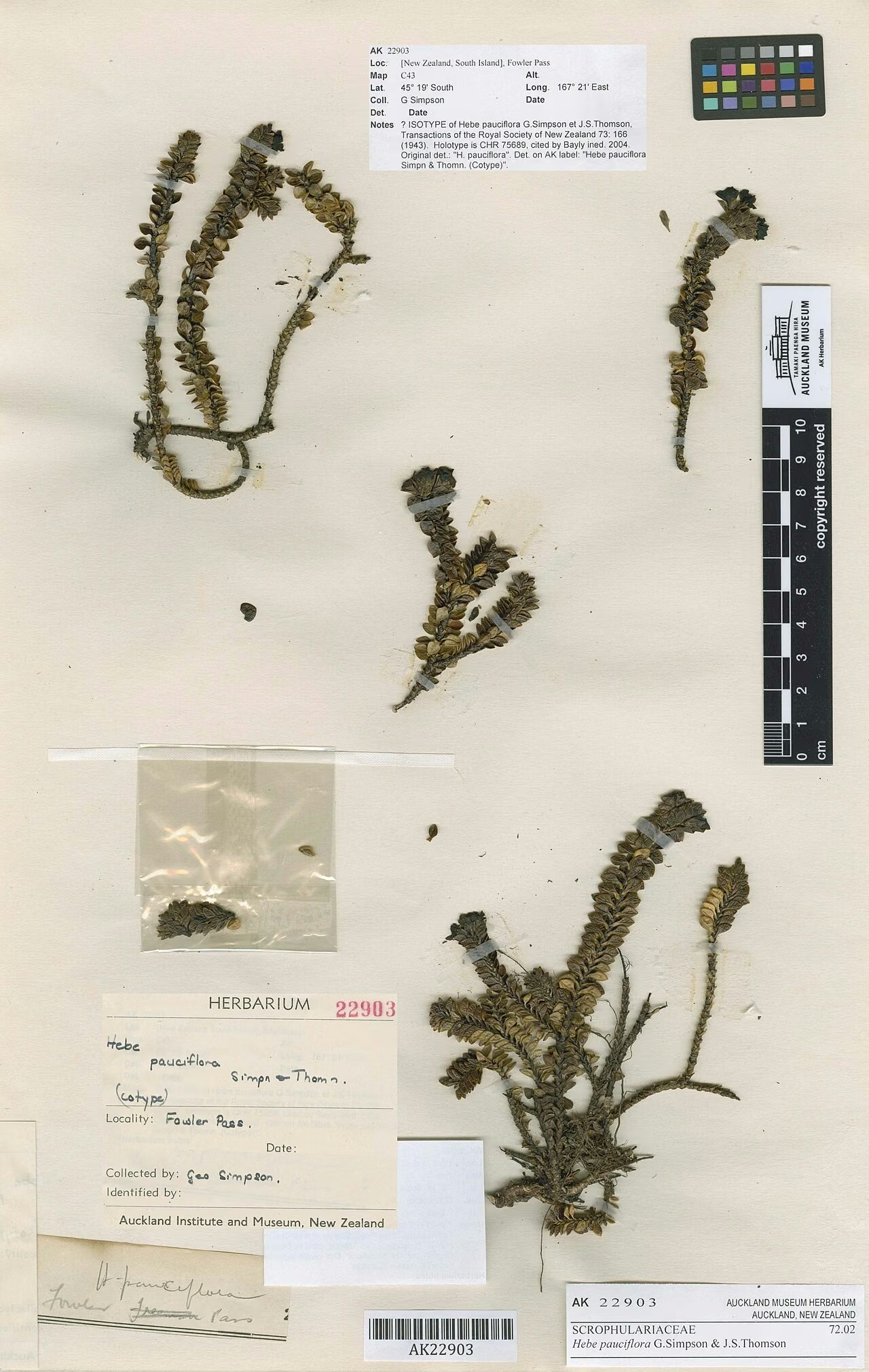
Veronica notialis, long known as Hebe pauciflora, is a tiny alpine hebe endemic to the mountains of western Fiordland. It forms a spreading low shrub only about 20 cm tall, with erect twigs carrying pairs of small, thick, fleshy green leaves just 2-6 mm long. In summer the tips of the twigs bear small clusters of two to four white flowers, which is the source of the old name pauciflora, meaning few-flowered. It grows in alpine grassland and low shrubland at about 1100-1500 m, from Caswell Sound south to near Lake Hauroko. Its new epithet, notialis, means southern: it is one of the southernmost veronicas in the world. Explore more native shrubs in our native plant guide.
Plant Description
Veronica notialis is a spreading dwarf shrub reaching about 0.2 m tall, with stems that range from lying along the ground to erect. The leaves are arranged in opposite pairs, each pair at right angles to the next, and are thick, rigid and leathery, ovate to diamond-shaped and only 2-6 mm long and about as wide. Under a hand lens the leaf margins carry distinctive sinuous, branching hairs, and the leaves have a thick, translucent, cartilaginous cuticle.
The white flowers are 6-9 mm across and are held in very short spikes of two to four flowers, sometimes singly, at the tips of the twigs. They open from December to March, and the small hairless capsules, 4.5-5 mm long, ripen from January to March and release wind-dispersed seed.
It belongs to a group of small fleshy-leaved alpine hebes that includes Veronica petriei and Veronica murrellii. Those two species have glossy leaves, terminal spikes with many flowers and differently shaped capsules, whereas V. notialis has softer, dull leaves and only a few flowers per spike. Its location in western Fiordland also helps with identification.
Quick Facts
| Scientific Name | Veronica notialis |
|---|---|
| Height | Up to 0.2 m |
| Spread | Low spreading patches; exact spread not recorded |
| Water Needs | Moist; adapted to very high Fiordland rainfall |
| Light | Full sun in open alpine grassland |
| Frost Tolerance | High; an alpine species from 1100-1500 m |
| Salt Tolerance | Low; an inland mountain plant with no salt exposure |
| Growth Rate | Slow |
| Lifespan | Perennial |
Climate Best Suited to
Veronica notialis is adapted to the cold, very wet and cloudy alpine climate of western Fiordland, with frequent frost and snow in winter and cool, damp summers. Warm, dry or humid lowland climates are unsuitable.
Regional Suitability
| City | Climate Suitability |
|---|---|
| Auckland | Low |
| Wellington | Low |
| Christchurch | Low |
| Dunedin | Medium |
Plant Habitat
This hebe is endemic to the South Island and is confined to the mountains of Fiordland, mostly near and west of the Main Divide, from Caswell Sound in the northwest to near Lake Hauroko in the southeast. The type specimen was collected in 1942 on the Kepler Mountains near Fowler Pass.
It grows in alpine grassland and low alpine shrubland at about 1100-1500 m above sea level, in open sites among tussock and other low vegetation. Much of its range lies within Fiordland National Park.
Growing Requirements
Soil Requirements
In the wild it grows in thin, peaty or stony alpine soils that stay moist under Fiordland's heavy rainfall but drain quickly. In cultivation it would need a very free-draining, gritty mix.
- Gritty, free-draining mix with added pumice or fine scoria
- Some organic matter to hold moisture between waterings
- Avoid heavy clay or any soil that stays waterlogged
- Low fertility; rich soils encourage soft, short-lived growth
Light Requirements
It grows in open alpine grassland where it receives full light, and would need a bright, open position to stay compact.
- Full sun in cool climates
- Light afternoon shade in warmer districts to keep roots cool
- Avoid deep shade, which causes weak, sprawling growth
Water Requirements
Its home range receives some of the highest rainfall in New Zealand, so it should never be allowed to dry out completely, yet water must drain away freely.
- Keep evenly moist through summer
- Water from below or at the base to keep foliage dry
- Do not let pots sit in saucers of water
Planting and Establishing
Veronica notialis is rarely, if ever, offered for sale and no cultivation records were found for it, so any planting is experimental. Plants should be grown only from material already legally in cultivation; collecting from Fiordland National Park requires a permit and is not appropriate for garden use.
If a plant is obtained, grow it in a deep pot or trough of gritty alpine mix, or in a raised scree bed with a cool root run. Plant it at the same depth as in its container, top-dress around the crown with fine gravel to keep the stems dry, and site it where air moves freely.
Ecological Role
Like other small white-flowered hebes, Veronica notialis has open, nectar-bearing flowers that are visited by generalist insects such as native flies and solitary bees, although no pollinator study specific to this species was found. Its seeds are small and dispersed by wind.
As a low woody plant in alpine grassland, it forms part of the mixed mat of cushion plants, herbs and small shrubs that knit together the thin soils of Fiordland's tops and give shelter to alpine invertebrates.
Uses & Significance
Garden Uses
This is a plant for alpine specialists and botanic garden collections rather than ordinary gardens. Its value lies in its rarity and its compact, fleshy foliage.
- Alpine house or trough collections
- Specialist scree or rock gardens in cool southern districts
- Educational displays of Fiordland alpine flora
Ecological Value
As a narrow-range endemic of Fiordland, its main ecological value is as part of the distinctive alpine flora of the region.
- Contributes to the diversity of Fiordland alpine grassland
- Provides nectar and pollen for alpine insects in summer
- One of the southernmost veronicas in the world
Landscaping Uses
In a trough or alpine bed, Veronica notialis would suit planting beside other small southern alpines with contrasting form, such as cushion-forming Raoulia or small tussocks, where its tiny fleshy leaves can be seen at close range.
Because it stays only about 20 cm tall, it belongs at the front of a raised bed or in a container where it will not be overgrown. Surround it with stone chip to set off the foliage and keep the crown dry.
Seasonal Care Calendar
Spring
New shoots begin to grow as alpine snow melts in its home range.
- Top up gravel mulch around the crown
- Check for winter losses or rot
Summer
Flowering runs from December to March, with clusters of two to four white flowers at the twig tips.
- Keep evenly moist
- Shade pots from hot afternoon sun in warm areas
Autumn
Capsules ripen from January to March and split to release wind-borne seed.
- Collect ripe capsules for sowing
- Reduce watering slightly as growth slows
Winter
Plants are dormant and tolerate hard frost, but cold wet soil around the roots is a risk in cultivation.
- Protect from prolonged waterlogging
- Keep in an open, airy position
When to Prune and How Much
Veronica notialis needs no routine pruning. It is slow-growing and very small, and cutting it back risks weakening the plant.
Remove any dead or browned shoots with fine scissors, and snip off spent flower spikes if you are not collecting seed.
How to Grow Hebe
No published propagation protocol was found for Veronica notialis, so the methods below follow the general approach used for small fleshy-leaved alpine hebes such as Veronica petriei and its relatives. Material should come only from plants already in legal cultivation, because the species grows within Fiordland National Park. Expect slow growth and some losses, and keep everything cool, bright and well ventilated, since alpine hebes rot quickly in warm, stagnant conditions.
From Seed
Capsules ripen from January to March. The seed is small and wind dispersed, so capsules should be picked as they turn brown and before they split open. Fresh seed of alpine hebes generally germinates more reliably than stored seed.
- Collect brown capsules in late summer and dry them in a paper bag
- Sow seed thinly on the surface of a gritty seed mix
- Cover lightly with fine grit and stand the tray outdoors in a cool, bright spot
- Keep moist and wait for germination, which may follow a winter of cold
- Prick out seedlings into individual pots once they have two or three leaf pairs
From Cuttings
Short tip cuttings of firm new growth are the usual way of propagating small alpine hebes and keep plants true to type. Because the shoots of this species are tiny, cuttings will be small and need careful handling.
- Take 2-3 cm tip cuttings of firm current growth in late summer or autumn
- Strip the lowest leaf pairs and insert the cuttings into a mix of pumice and sand
- Keep in a cool, shaded, humid position without overheating
- Check for roots after six to ten weeks
- Pot rooted cuttings into gritty alpine mix and grow on in a cold frame
Pests & Diseases
No pest or disease problems specific to Veronica notialis are recorded. In cultivation, the main risk for small alpine hebes is root and crown rot in warm, poorly drained conditions, and fungal leaf diseases such as hebe downy mildew in humid, still air.
Good drainage, a gravel collar around the crown and free air movement are the best defences. Remove any affected shoots promptly.
Cultural Significance
No traditional Māori name or use is recorded specifically for Veronica notialis, which grows in remote alpine country in Fiordland. Hebes in general are known as koromiko, a name usually associated with larger lowland species.
The species was described as Veronica notialis in 1943 by George Simpson and John Scott Thomson, two Dunedin amateur botanists who named many southern alpine plants, from a specimen collected on the Kepler Mountains near Fowler Pass in 1942. Phil Garnock-Jones later renamed it Veronica notialis when hebes were merged into Veronica.
Bonus Tip
When reading older books, nursery lists or herbarium labels, look for this plant under Veronica notialis or Leonohebe pauciflora as well as Veronica notialis. The few-flowered spikes of two to four flowers at the shoot tips are the quickest field character separating it from other small fleshy-leaved Fiordland hebes.
Related Plants
Explore other native plants that share similar characteristics or habitats with Hebe (Veronica notialis), offering further insights into New Zealand's diverse flora. These related species provide context and opportunities for complementary planting in your garden.
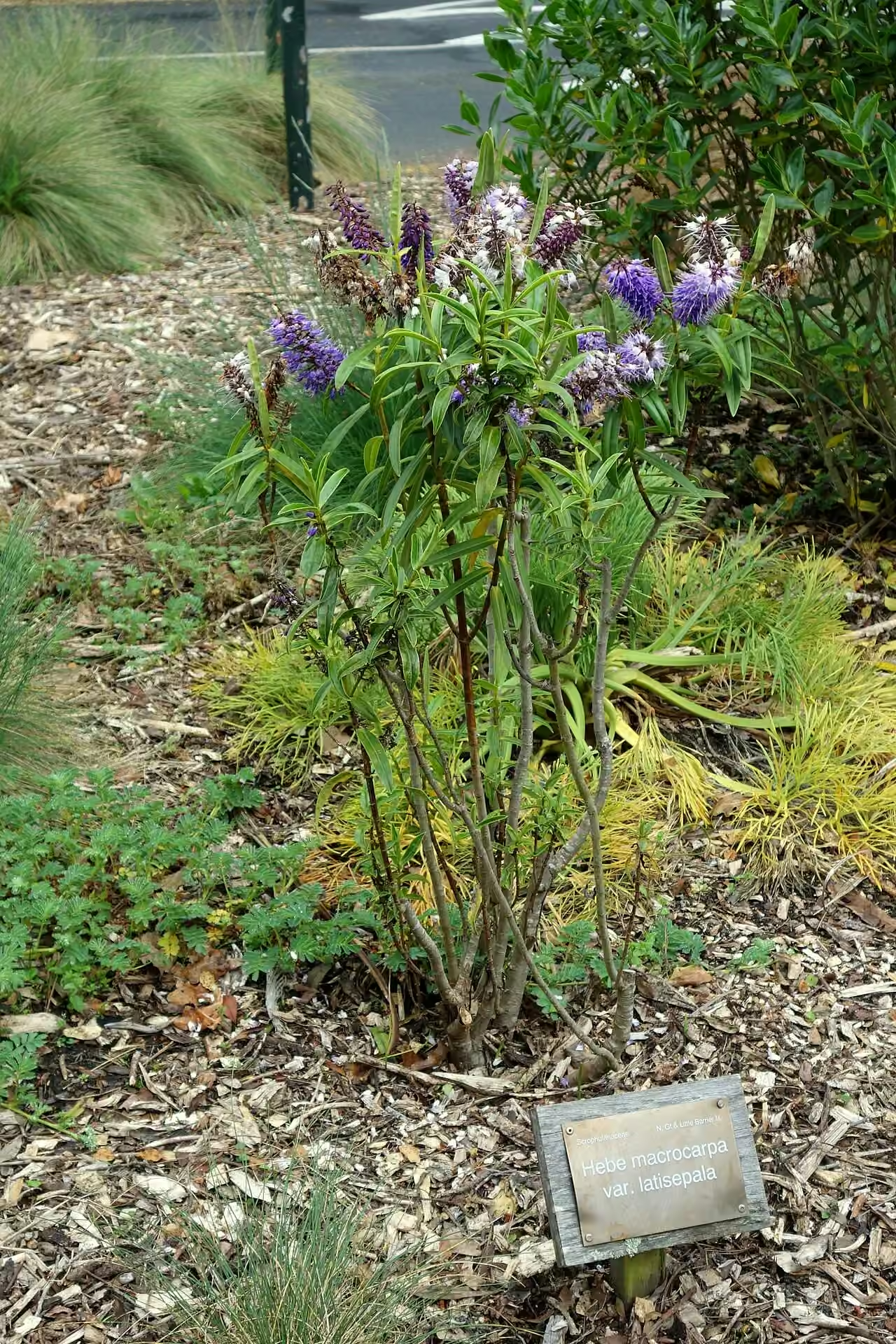
Veronica macrocarpa var. macrocarpa
Veronica macrocarpa var. macrocarpa
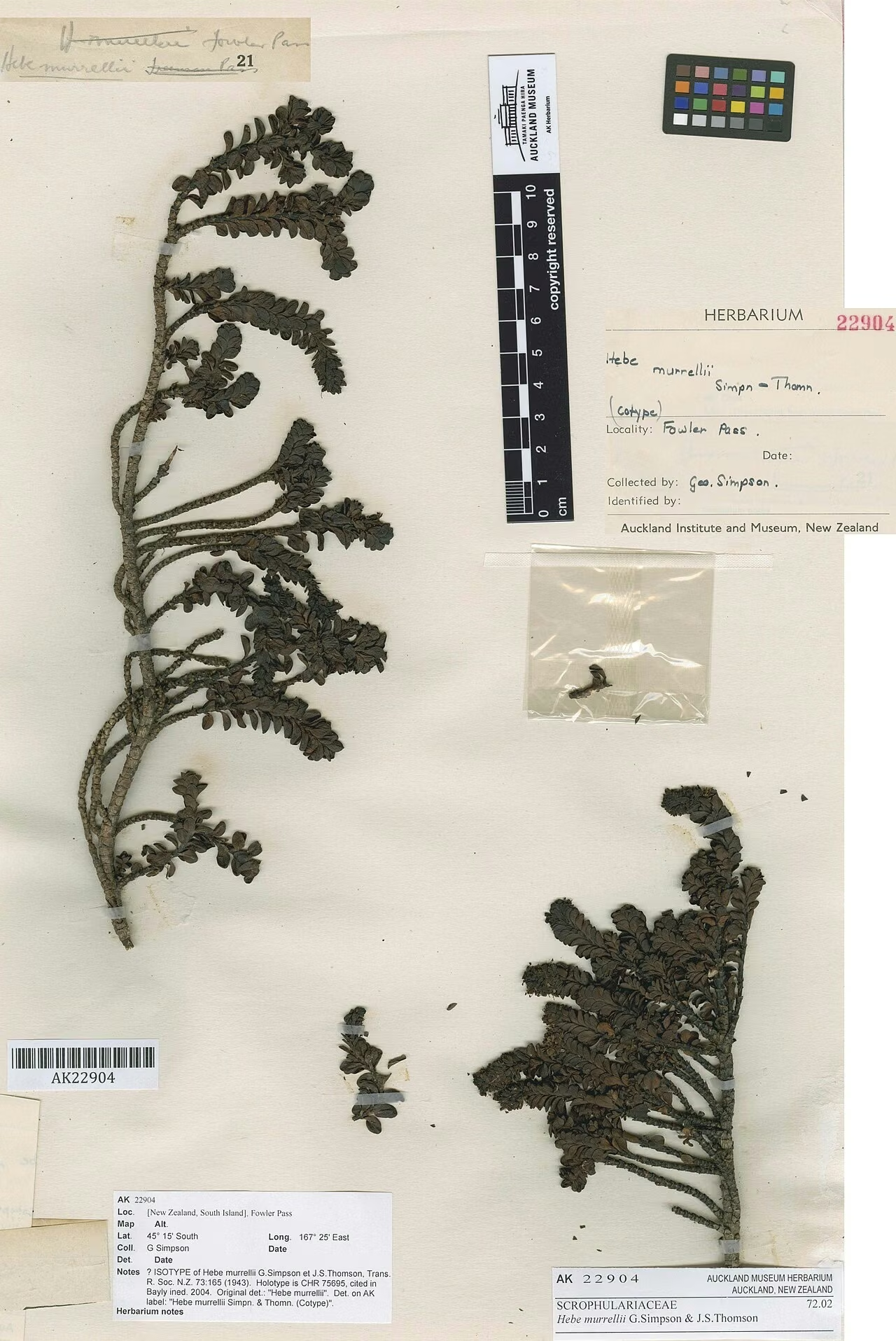
Murrell's Hebe
Veronica murrellii
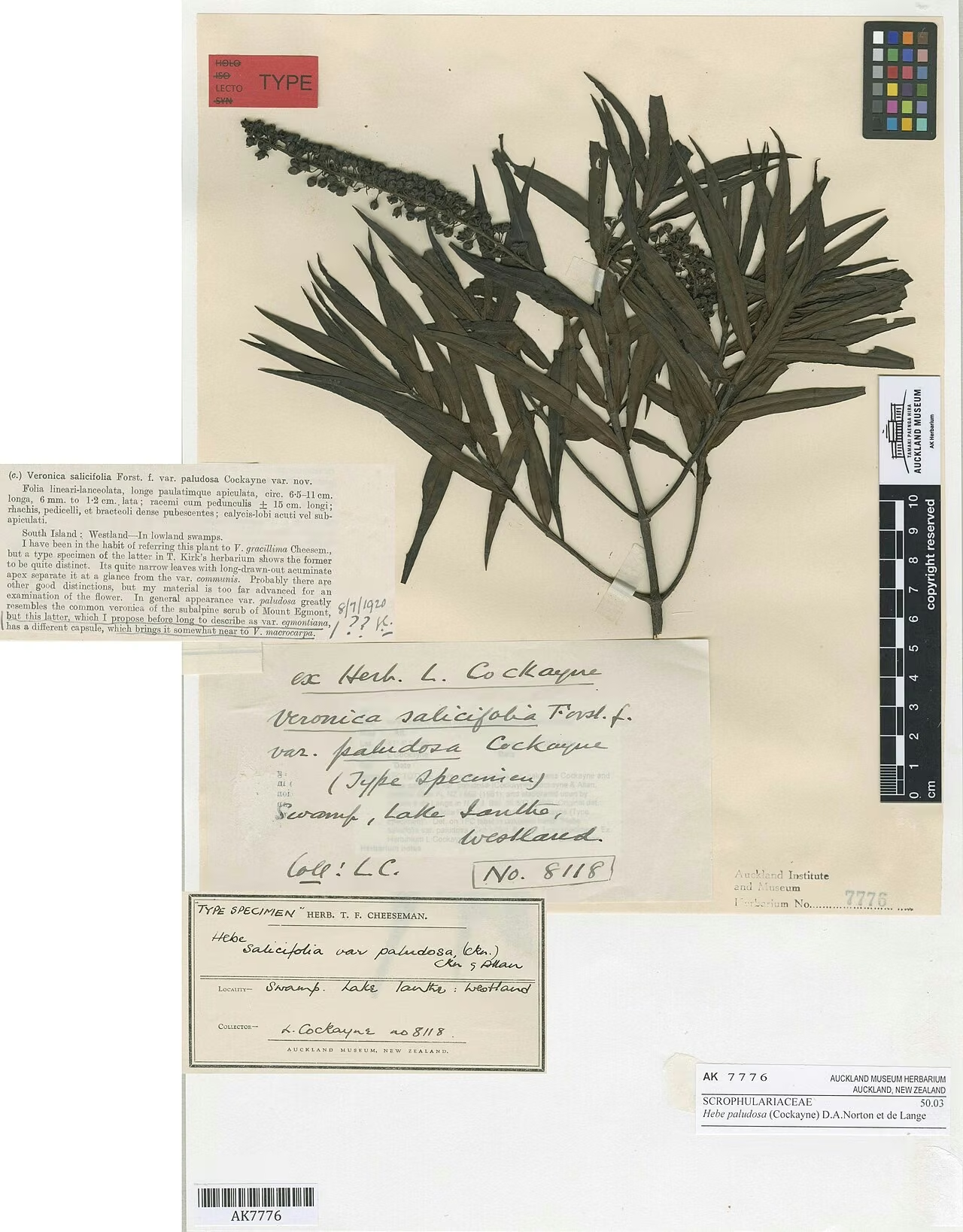
Veronica phormiiphila
Veronica phormiiphila
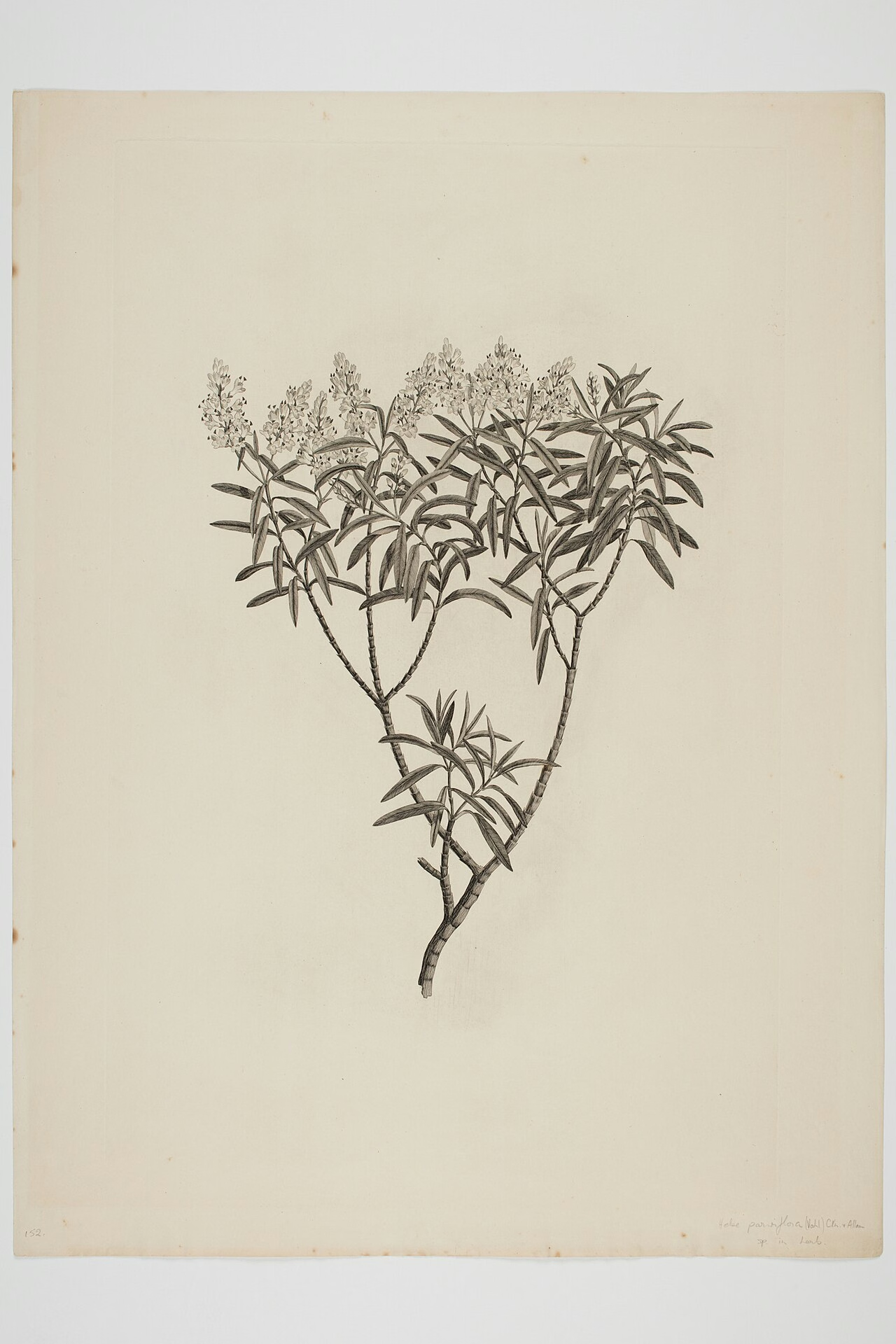
Veronica parviflora
Veronica parviflora
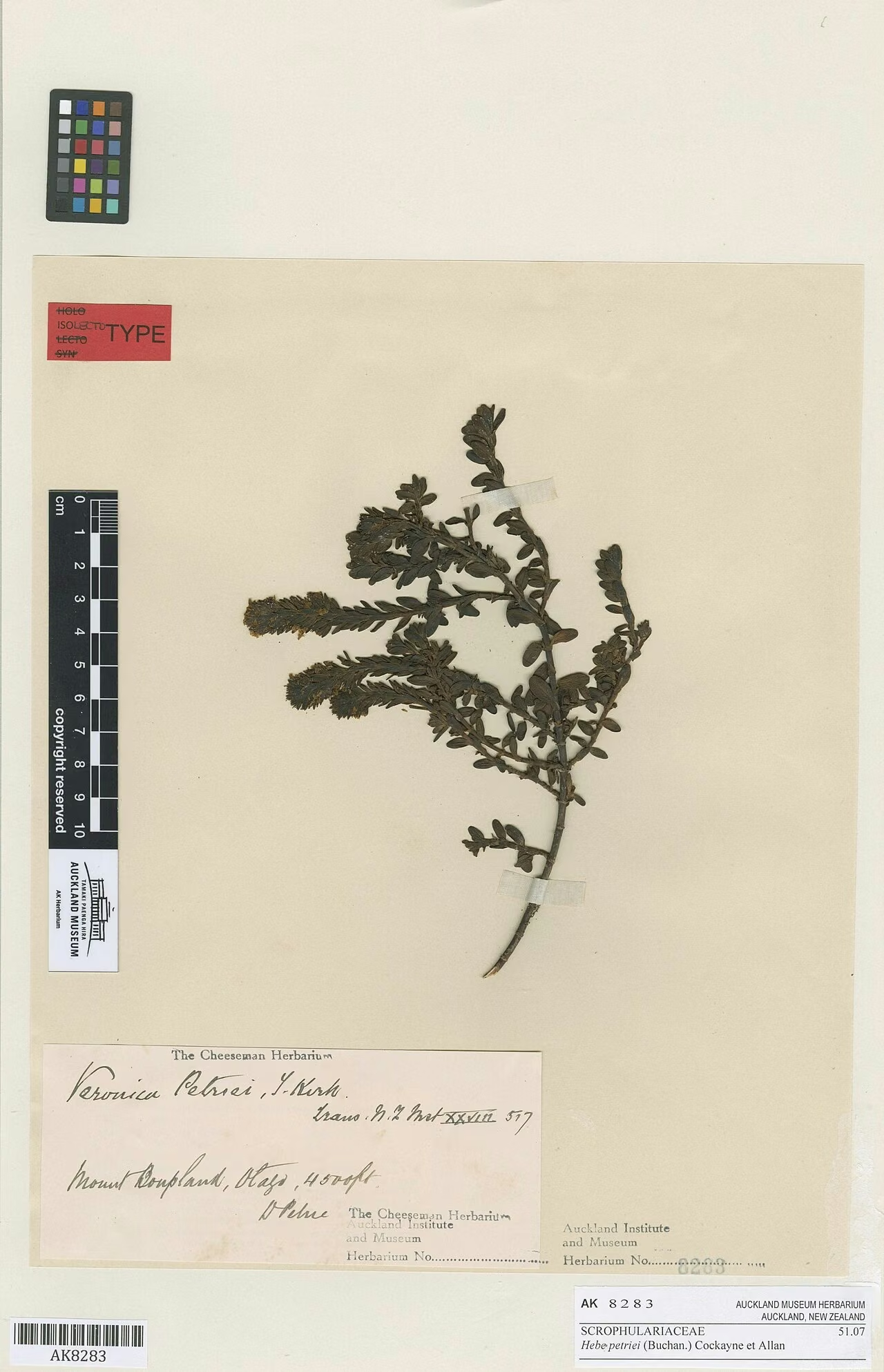
Veronica petriei
Veronica petriei
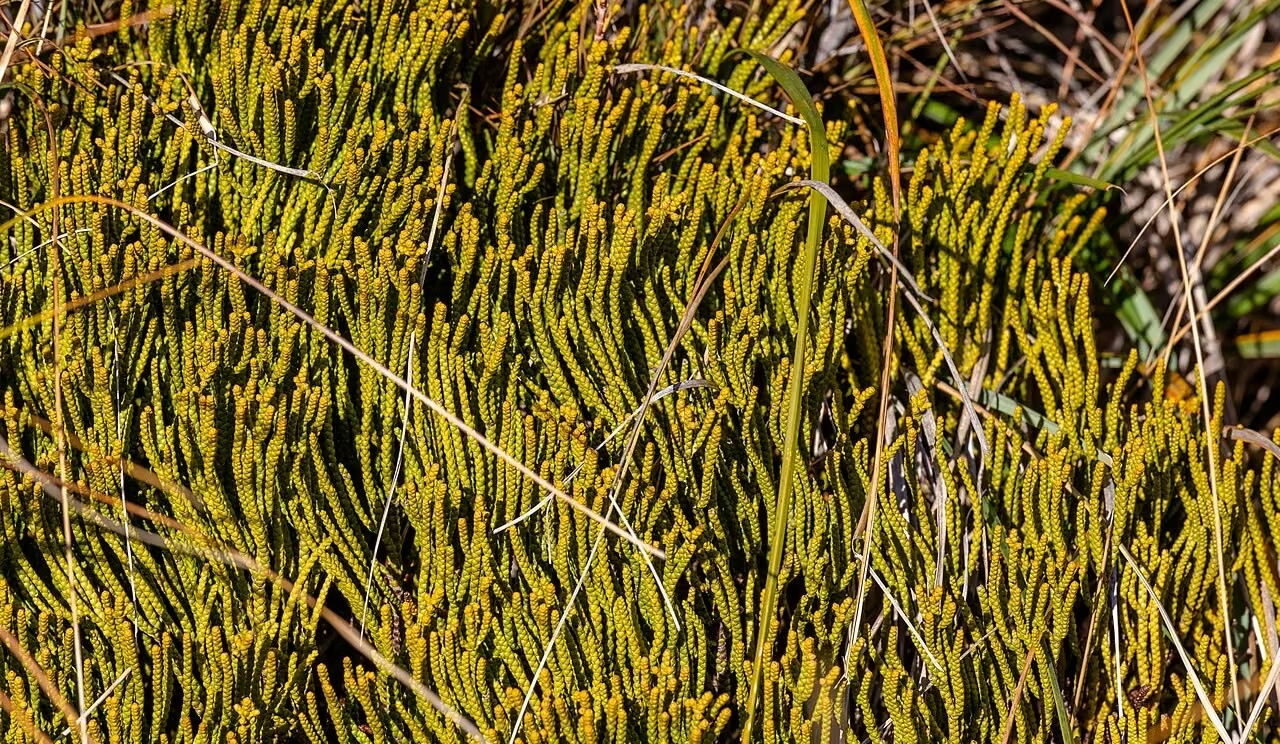
Veronica propinqua
Veronica propinqua
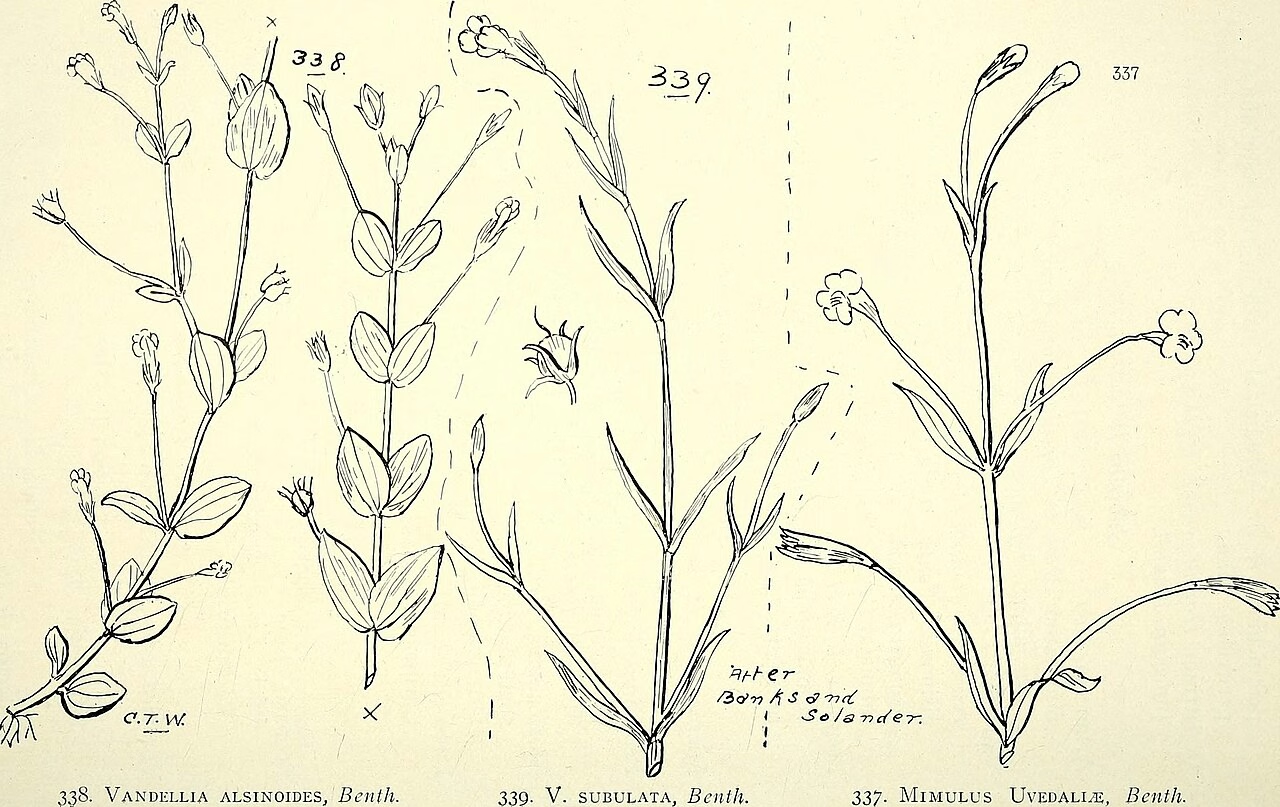
Veronica kellowiae
Veronica kellowiae
Veronica rupicola
Veronica rupicola
Plant Conservation
Veronica notialis is ranked At Risk - Naturally Uncommon in the 2023 New Zealand Threat Classification assessment, with the qualifiers Sp (sparse), DPS (data poor, size) and DPT (data poor, trend). It has been listed as naturally uncommon or range restricted in every assessment since 2004.
Most of its range lies within Fiordland National Park, which offers strong protection. The main uncertainty is a lack of population data, so recording sightings with photographs on iNaturalist NZ helps botanists understand its distribution. Browsing animals such as deer could affect alpine vegetation where they are not controlled.
Frequently Asked Questions
What is Veronica notialis called now?
Hebe pauciflora is now treated as Veronica notialis, after New Zealand hebes were transferred into the genus Veronica. It was also briefly called Leonohebe pauciflora in 1987.
Where does Veronica notialis grow?
It is endemic to the mountains of western Fiordland, mostly near and west of the Main Divide from Caswell Sound to near Lake Hauroko, in alpine grassland at roughly 1100-1500 m.
How do you tell Veronica notialis from Veronica petriei?
Veronica notialis has softer, dull or only slightly glossy leaves and just two to four flowers per spike, while V. petriei has glossy leaves and longer, many-flowered terminal spikes.
Is Veronica notialis threatened?
It is ranked At Risk - Naturally Uncommon because its natural range in remote Fiordland is small, although it is not known to be declining there.
Sources and Further Reading
The botanical, growing, and conservation details for Hebe (Veronica notialis) on this page draw on the New Zealand plant references below. Consult them for full technical records and the latest distribution data.