Hebe
Veronica phormiiphila
Last updated:
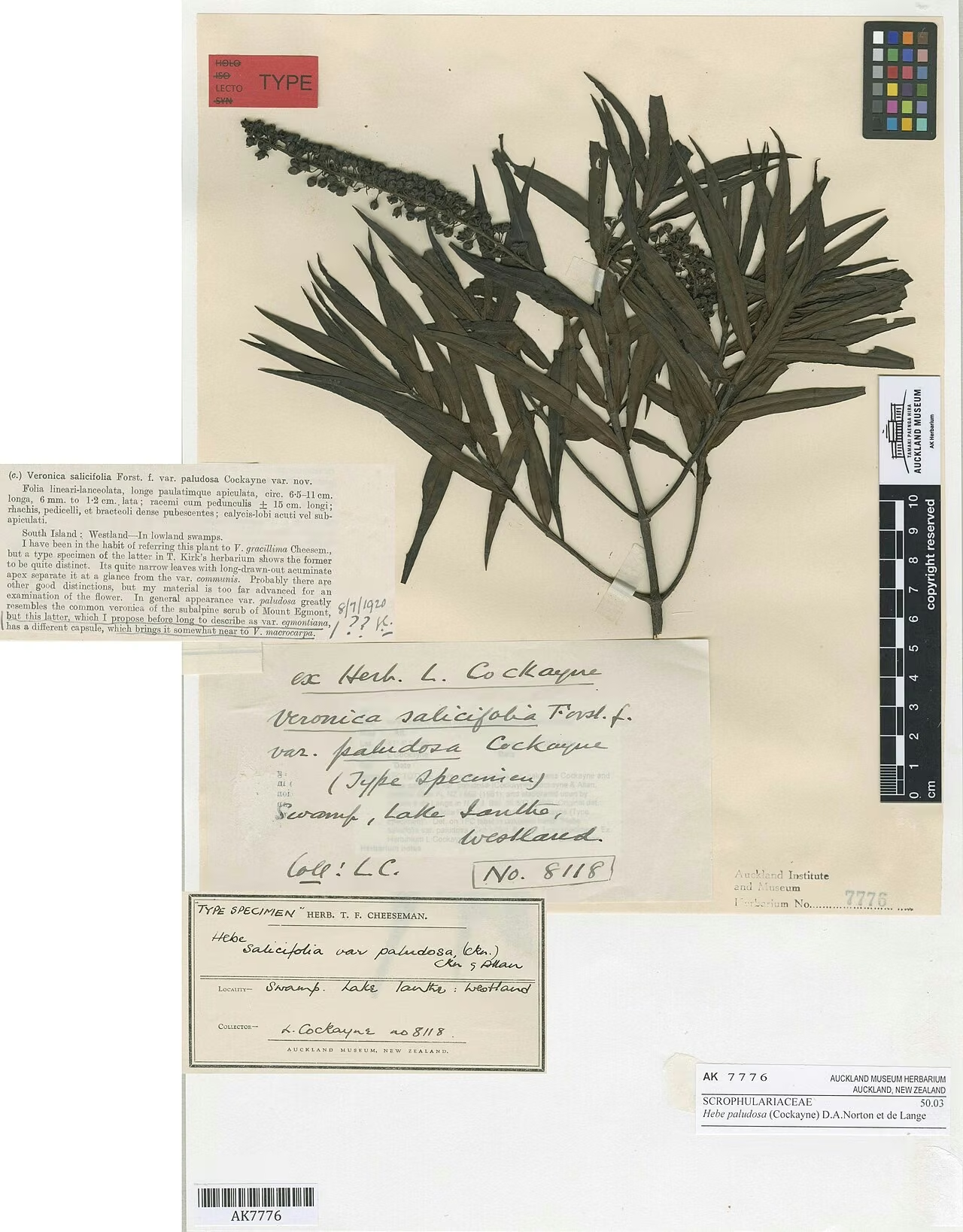
Veronica phormiiphila is the former name of Veronica phormiiphila, a bushy wetland hebe endemic to Westland and north-west Otago. It grows up to 5 m tall, with hairy, brittle branchlets, narrow yellow-green leaves with a twisted, drooping tip, and long spikes of 100 to 150 white flowers from January to March. It lives in lowland swamps and around lakes and lagoons from the Grey Valley south to Big Bay, often beside harakeke (Phormium tenax), which is what its new name phormiiphila, meaning flax-loving, refers to. It is ranked Not Threatened. It was previously known as Hebe paludosa. Explore more native shrubs in our native plant guide.
Plant Description
Veronica phormiiphila is a bushy shrub up to 5 m tall with erect stems and a diffusely branching habit. Its branchlets are conspicuously hairy and brittle. The leaves are in opposite pairs, linear-lanceolate to linear-elliptic, 30 to 86 mm long and 5.5 to 14 mm wide, glossy and yellow-green with a faint glaucous tinge above and paler beneath. The tip narrows to a conspicuous, down-curved and twisted point, and the margins are cartilaginous and minutely hairy.
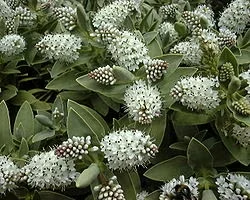
The white flowers are carried in long, unbranched lateral spikes 9 to 19 cm long, each with roughly 100 to 150 flowers. The corolla tube is short and cylindrical, 2.3 to 3.5 mm long, and the pointed lobes project forwards. Flowering is in January, sometimes continuing to March, and small flattened capsules 3 to 4 mm long ripen from March to May.
It resembles koromiko but has narrower, more evenly tapered leaves and hairy branchlets. It differs from Veronica leiophylla mainly in its generally longer leaves, although the two can overlap.
Quick Facts
| Scientific Name | Veronica phormiiphila |
|---|---|
| Height | Up to 5 m |
| Spread | 2-3 m, diffusely branched |
| Water Needs | High; a wetland shrub |
| Light | Full sun to light shade |
| Frost Tolerance | Moderate; a lowland Westland species |
| Salt Tolerance | No information available |
| Growth Rate | Moderate to fast |
| Lifespan | Perennial |
Climate Best Suited to
Suits the mild, very wet, high-rainfall climate of the West Coast lowlands. It needs consistently moist ground and is less suited to dry eastern climates.
Regional Suitability
| City | Climate Suitability |
|---|---|
| Auckland | Medium |
| Wellington | Medium |
| Christchurch | Low |
| Dunedin | Medium |
Plant Habitat
Veronica phormiiphila is endemic to the South Island, in Westland and north-west Otago from the Grey Valley in the north to Big Bay in the south, at elevations from sea level to about 500 m.
It usually grows in lowland, moderately fertile (mesotrophic) wetlands and on the margins of lakes and lagoons, particularly where swamp grades into kahikatea (Dacrycarpus) forest, and often together with harakeke. It is rated a facultative wetland plant, meaning it usually occurs in wetlands.
Growing Requirements
Soil Requirements
In the wild it grows on wet, moderately fertile swamp and lake-margin soils.
- Moist to wet, humus-rich soil
- Tolerates periodically waterlogged ground
- Avoid dry, sandy soils
Light Requirements
It grows in open wetlands and at forest edges, so it does well in full sun or light shade.
- Full sun to partial shade
- Too much shade gives sparse flowering
Water Requirements
This is a wetland shrub that needs reliably moist soil.
- Plant beside ponds, swales or wetland margins
- Water generously in dry weather in garden settings
Planting and Establishing
Plant in autumn or spring in damp ground, such as the margin of a pond, rain garden or restored wetland, alongside harakeke and wetland sedges. Allow 2 m or more for its eventual spread.
For wetland restoration on the West Coast, use ecosourced plants grown from local seed or cuttings.
Ecological Role
Its long spikes of white summer flowers provide nectar for insects in West Coast wetlands; specific pollinators are not documented in the sources consulted. The seed is wind dispersed.
It is a characteristic shrub of the transition from flax swamp to kahikatea forest, providing cover and structure in lowland wetland margins.
Uses & Significance
Garden Uses
A tall, fast-growing hebe for damp ground where many other hebes would rot.
- Pond and stream margins
- Rain gardens and swales
- Wetland restoration in Westland
- Informal screening on wet sites
Ecological Value
It is an endemic component of West Coast lowland wetlands.
- Shrub layer of flax swamps and lake margins
- Summer flowers for insects
- Useful in wetland restoration within its range
Landscaping Uses
Combine it with harakeke, Carex sedges and kahikatea for a naturalistic West Coast wetland planting. The long white flower spikes in mid summer stand out against the strap leaves of flax.
On larger properties, use it as a loose screen along damp boundaries or drainage lines.
Seasonal Care Calendar
Spring
Active new growth with yellow-green foliage.
- Plant new shrubs
- Keep ground moist
Summer
Long white flower spikes appear in January, sometimes into March.
- Water in dry spells
- Enjoy the flowering
Autumn
Capsules ripen from March to May.
- Collect seed
- Trim lightly after flowering
Winter
Growth slows; the shrub tolerates West Coast winter conditions.
- Take hardwood or semi-hardwood cuttings
- Check for storm damage to brittle branches
When to Prune and How Much
Trim lightly after flowering to keep the shrub bushy. Its branchlets are brittle, so remove broken stems cleanly back to a healthy pair of leaves.
Older, leggy plants can be cut back by a third in spring to encourage fresh growth from lower down.
How to Grow Hebe
Veronica phormiiphila can be grown from seed or cuttings, like most large hebes. For wetland restoration on the West Coast, collect seed or cuttings from several local wild plants, with permission, to keep genetic diversity and local adaptation. Because hebes hybridise easily, seed collected from garden plants near koromiko or other hebes may produce hybrids; seed from wild wetland populations or cuttings from known plants are more reliable. Young plants need constantly moist potting mix, which suits their wetland origin, but still need some drainage in the pot to prevent rot.
From Seed
Capsules ripen from March to May. Collect them once brown and split, and sow fresh.
Keep seed pots in a sheltered, bright place and never let the mix dry out; seedlings from a wetland species are quickly checked by drought.
- Collect ripe capsules in autumn
- Sow seed on the surface of a fine seed-raising mix
- Cover lightly and keep moist
- Prick out seedlings into individual pots and keep well watered
From Cuttings
Semi-hardwood cuttings usually root readily. Take them carefully, as the brittle branchlets snap easily.
Cuttings can be rooted in a tray stood in a shallow saucer of water, which keeps the mix evenly moist. Once well rooted, harden plants off before planting them into wet ground.
- Take 8 to 10 cm cuttings of non-flowering shoots in late summer or autumn
- Remove lower leaves and halve long upper leaves
- Insert into a moist mix of potting mix and pumice
- Keep humid until rooted, then pot on and grow in moist conditions
Pests & Diseases
No pests specific to this species are recorded. Hebes can be affected by downy mildew and leaf spot in humid, airless spots, so give plants room and air movement even on damp sites.
Brittle branches may be broken by wind or heavy snow, which can let in decay.
Cultural Significance
No traditional Māori name or use specific to Veronica phormiiphila was found in the sources consulted. The general name koromiko is applied to several lowland hebes, whose leaves were widely used in rongoā Māori as a remedy for diarrhoea, but that use is recorded for koromiko generally rather than this species.
Leonard Cockayne first named it as a swamp variety of koromiko, Veronica salicifolia var. paludosa (now a synonym) (paludosa meaning of marshes). Phil Garnock-Jones later gave it species rank under the new name Veronica phormiiphila.
Bonus Tip
If you have a wet corner where ordinary hebes rot, try this one beside a clump of harakeke. It is one of the few hebes adapted to lowland swamps, and the pairing copies how it grows naturally on the West Coast.
Related Plants
Explore other native plants that share similar characteristics or habitats with Hebe (Veronica phormiiphila), offering further insights into New Zealand's diverse flora. These related species provide context and opportunities for complementary planting in your garden.
Veronica macrocarpa var. latisepala
Veronica macrocarpa var. latisepala
Veronica macrocarpa var. macrocarpa
Veronica macrocarpa var. macrocarpa
Murrell's Hebe
Veronica murrellii
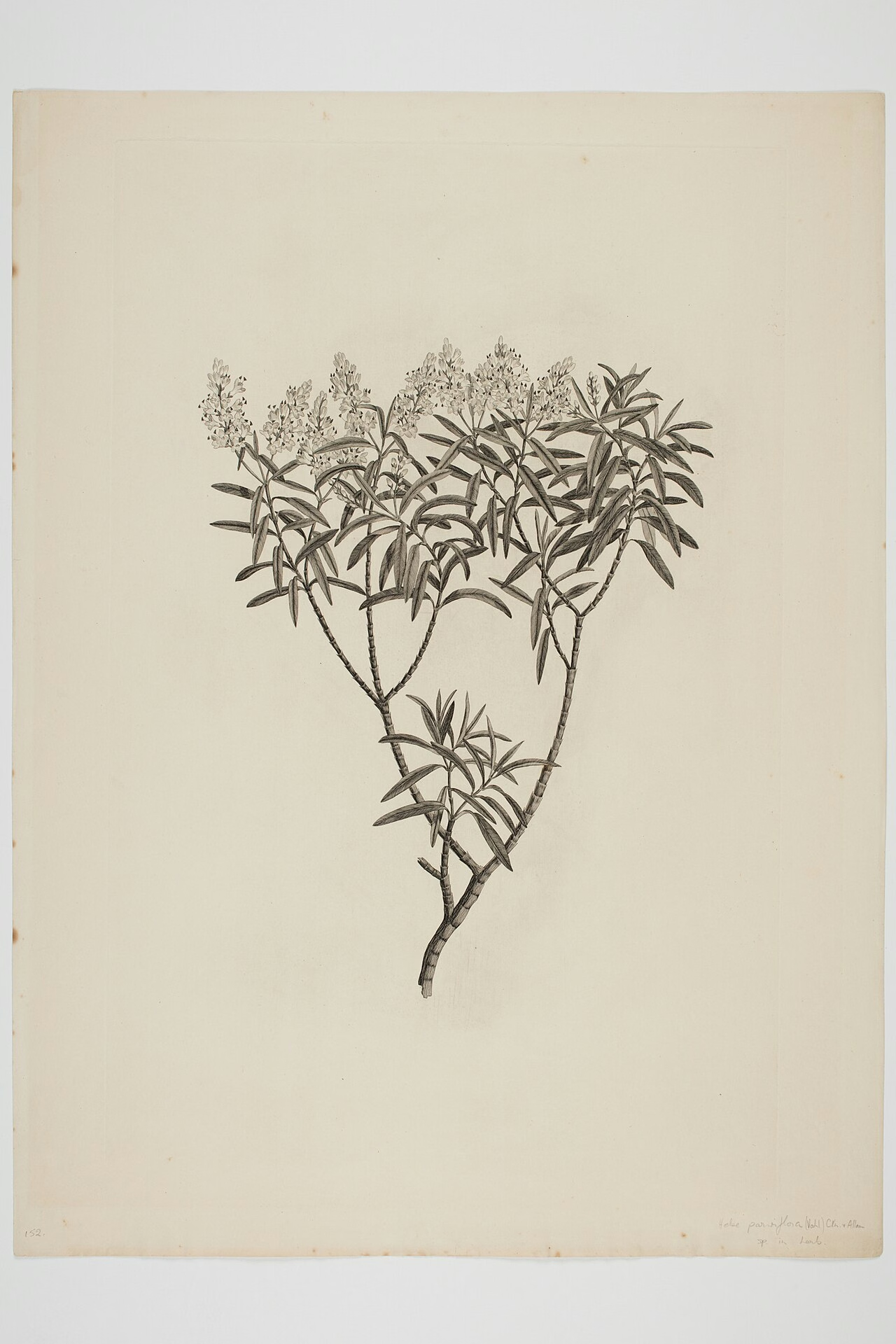
Veronica parviflora
Veronica parviflora
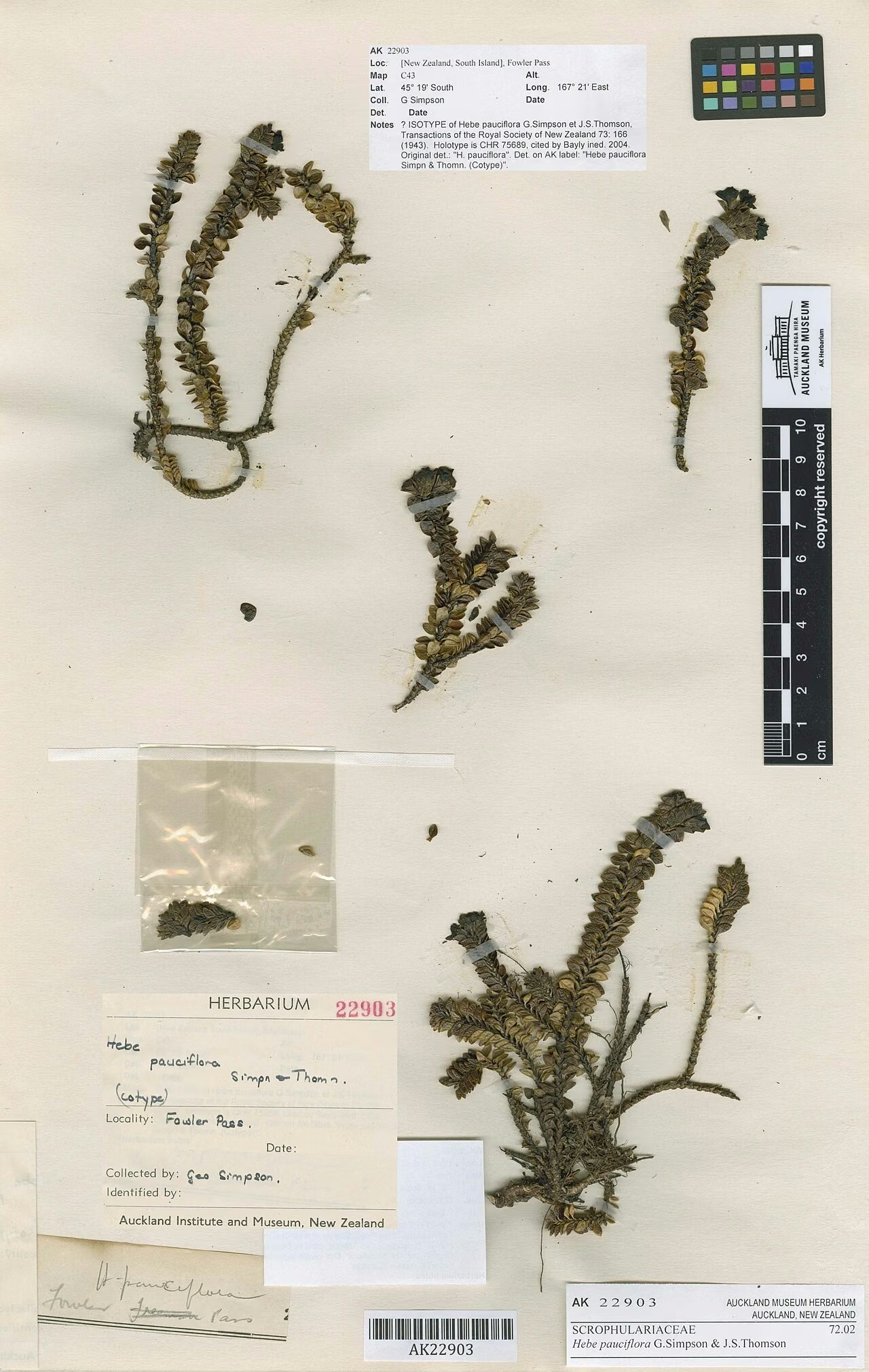
Veronica notialis
Veronica notialis
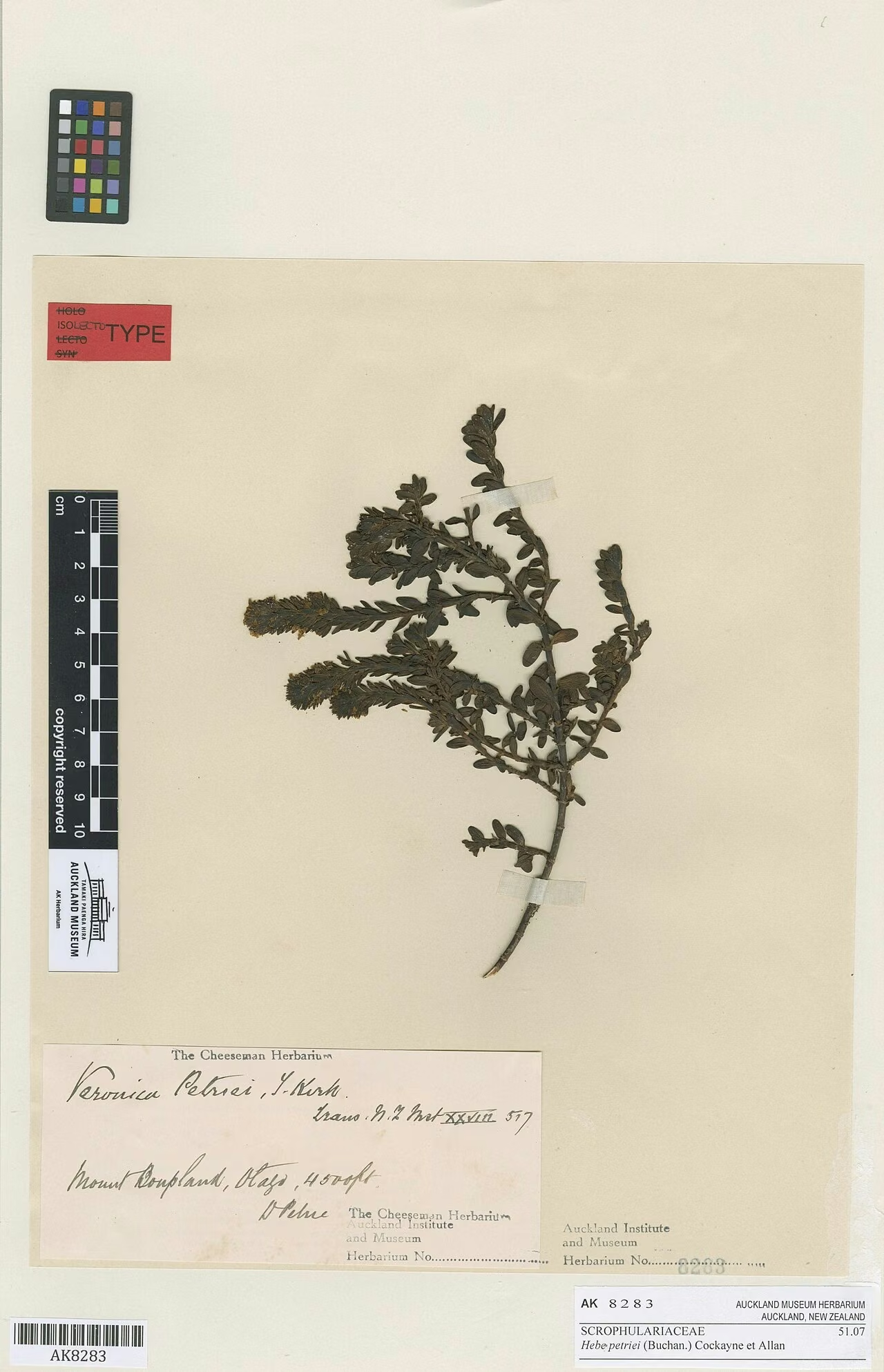
Veronica petriei
Veronica petriei
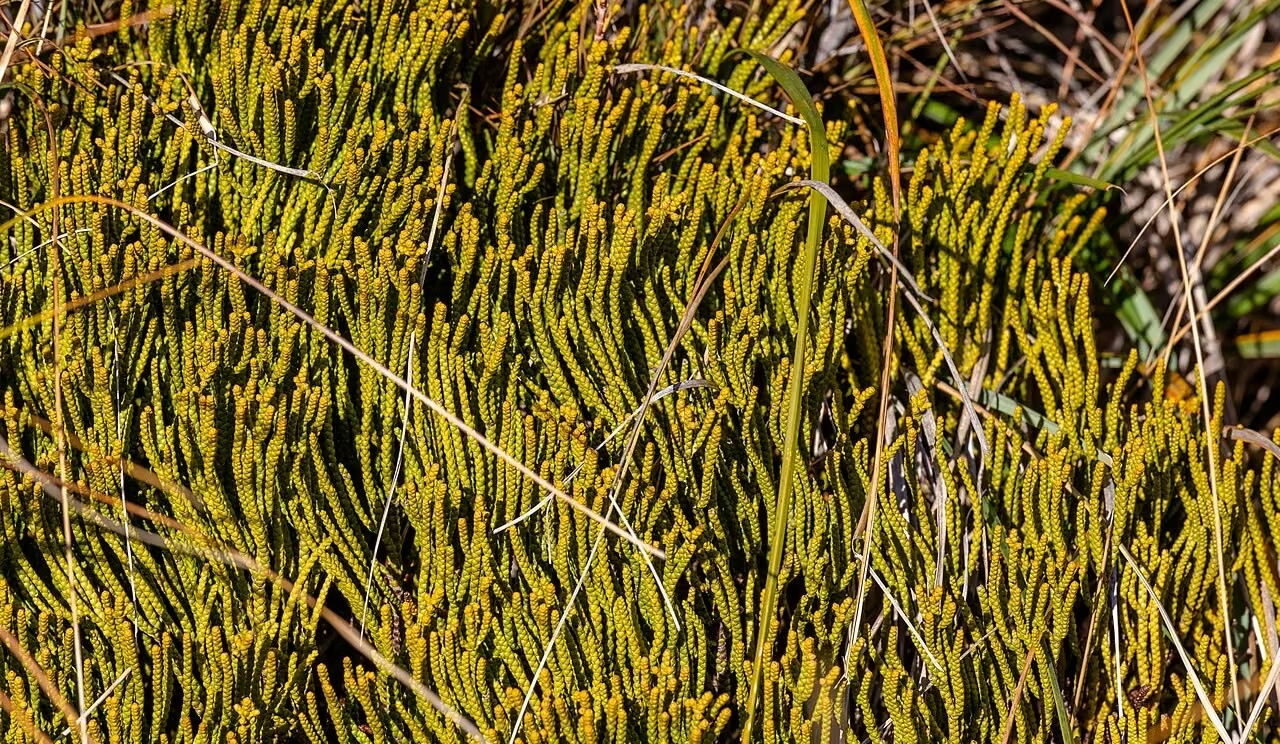
Veronica propinqua
Veronica propinqua
Snow Hebe
Snow Hebe
Plant Conservation
Veronica phormiiphila is ranked Not Threatened (2023).
Drainage of lowland wetlands for farming has reduced swamp and lake-margin habitat on the West Coast, as elsewhere in New Zealand. Protecting and restoring remaining wetlands, and planting ecosourced stock, help secure it.
Frequently Asked Questions
What is Veronica phormiiphila called now?
Its accepted name is Veronica phormiiphila. It was first described as Veronica salicifolia var. paludosa (now a synonym), later called Hebe salicifolia var. paludosa (now a synonym) and then Veronica phormiiphila.
What does phormiiphila mean?
It means Phormium-loving, because this hebe often grows in wet places alongside harakeke (Phormium tenax), especially where wetlands grade into kahikatea forest.
How is Veronica phormiiphila different from koromiko?
It has narrower, more evenly tapered leaves with a twisted, down-curved tip and conspicuously hairy, brittle branchlets, and it grows in lowland wetlands of Westland.
Where does Veronica phormiiphila grow?
It is endemic to Westland and north-west Otago, from the Grey Valley south to Big Bay, in lowland wetlands and lake and lagoon margins from sea level to about 500 m.
Sources and Further Reading
The botanical, growing, and conservation details for Hebe (Veronica phormiiphila) on this page draw on the New Zealand plant references below. Consult them for full technical records and the latest distribution data.