Murrell's Hebe
Veronica murrellii
Last updated:
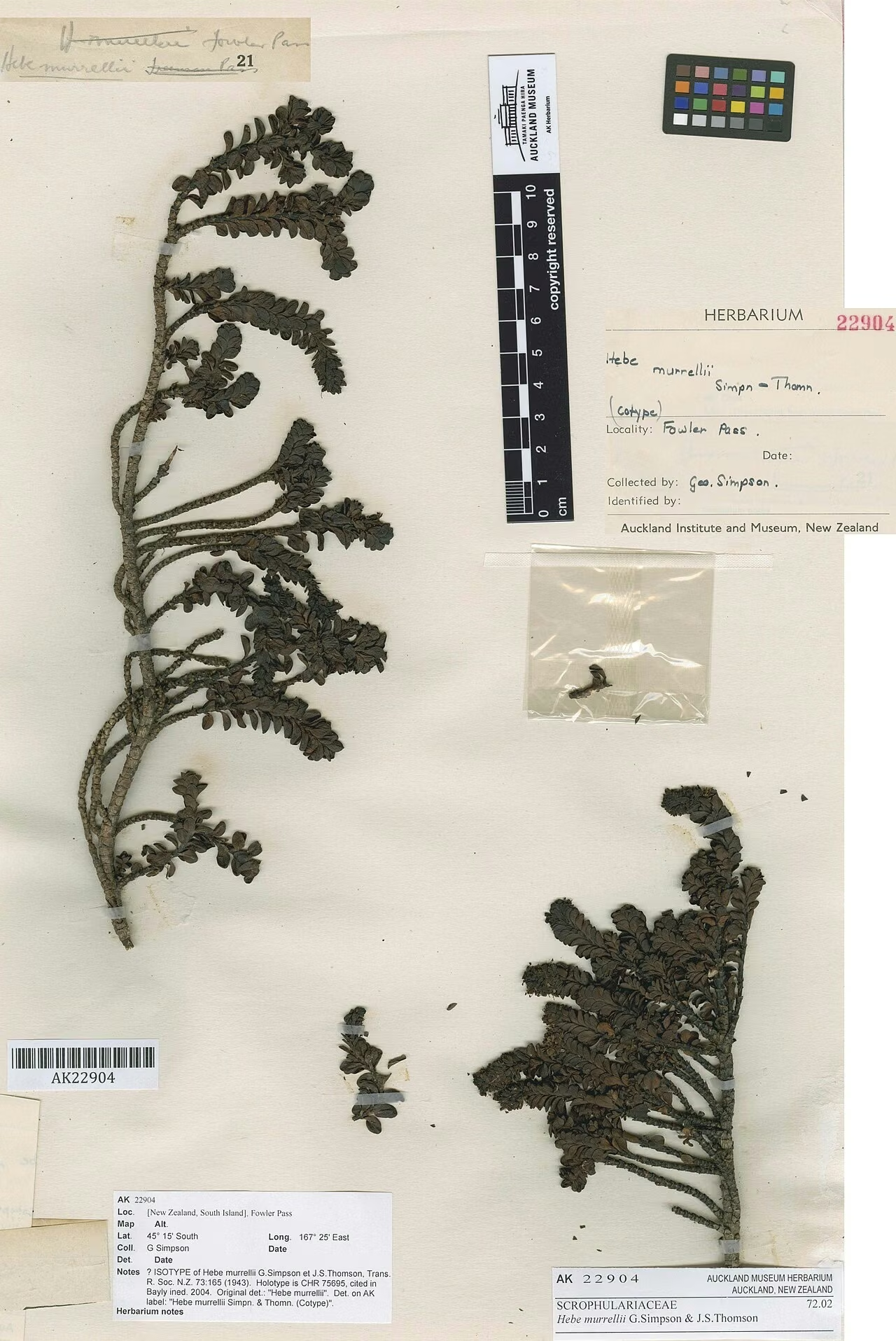
Murrell's hebe (Veronica murrellii, formerly Hebe murrellii) is a low, spreading alpine subshrub no more than about 20 cm tall, found only in the mountains of Fiordland and the Takitimu Mountains of Southland. It grows at about 1100 to 1500 m on scree, talus, boulder fields and sparsely vegetated rock outcrops. Its small paired leaves are pale green, and in summer the branch tips carry short spikes of white flowers with striking purple anthers held outside the throat. It is ranked Not Threatened, but NZPCN describes it as difficult to cultivate. Explore more native shrubs in our native plant guide.
Plant Description
Veronica murrellii is a low subshrub up to 0.2 m tall with stems that lie along the ground or turn upwards, and erect branchlets. The stems are hairless or have broad lines of fine hairs. The leaves are in opposite pairs, spreading and very shortly joined at the base, elliptic to obovate and 3.5 to 9 mm long by 2 to 5 mm wide.
Flowers are produced from December to March in terminal spikes 10 to 30 mm long carrying 12 to 20 flowers. The corolla is white with a funnel-shaped tube 1.5 to 2 mm long, and the purple anthers are held clear of the corolla throat on long filaments, giving the flower heads a speckled look. Small, smooth, flattened capsules 3 to 5 mm long follow from January to April.
It belongs to the informal Connatae group of hebes, whose leaves are joined at the base, and is closest to Veronica petriei. It differs in its more compact growth, paler leaves, shorter floral bracts (3.5 to 5 mm), and the longer filaments that push the anthers outside the corolla.
Quick Facts
| Scientific Name | Veronica murrellii |
|---|---|
| Height | Up to 0.2 m |
| Spread | Low and spreading, to about 0.3 m |
| Water Needs | Moist but sharply drained |
| Light | Full sun |
| Frost Tolerance | High; an alpine plant of 1100-1500 m |
| Salt Tolerance | No information available; an inland alpine species |
| Growth Rate | Slow |
| Lifespan | Perennial |
Climate Best Suited to
Suits a cold, snowy alpine climate with cool summers and high rainfall. It does poorly in warm, humid lowland conditions.
Regional Suitability
| City | Climate Suitability |
|---|---|
| Auckland | Low |
| Wellington | Low |
| Christchurch | Low |
| Dunedin | Medium |
Plant Habitat
Murrell's hebe is endemic to the southern South Island. The Flora of New Zealand records it in Fiordland, on and east of the Main Divide from the Earl Mountains to Mt Burns, and in the Takitimu Mountains of Southland.
It is an alpine plant of rock outcrops, boulder fields, talus and scree, growing on sparsely vegetated ground at about 1100 to 1500 m.
Growing Requirements
Soil Requirements
It roots into loose rock debris and crevices, so it needs a very gritty, sharply drained medium.
- Scree mix of coarse grit or pumice with a little humus
- Constant moisture deep down but a dry surface
- No fertiliser
Light Requirements
It grows on open, unshaded alpine rock and scree.
- Full light in a cool position
- In warm districts, shade from the hottest afternoon sun
Water Requirements
Fiordland's alpine zone is wet, but water drains quickly through scree. The roots need moisture while the crown stays dry and airy.
- Water from below or around the plant, not over the foliage
- Avoid stagnant, humid conditions
Planting and Establishing
Grow it in an alpine house, raised scree bed or trough filled with a gritty mix, and top-dress with stone chips so the stems rest on dry grit. Plant in spring so it can establish before winter.
It is suited only to specialist alpine growers and cool southern gardens. Do not collect plants from the wild; much of its range is within Fiordland National Park.
Ecological Role
As a small, spreading subshrub on scree and talus, it is one of the pioneer plants that colonise unstable alpine rock debris. Its white flowers with exposed purple anthers are presumably visited by alpine insects, but specific pollinators are not documented in the sources consulted.
Like other hebes its seed is shed from small dry capsules. Its role in the wider alpine community has not been studied in detail.
Uses & Significance
Garden Uses
A plant for alpine enthusiasts rather than general gardens.
- Alpine house collections
- Troughs and scree beds
- Collections of Fiordland alpine plants
Ecological Value
It is a narrow endemic of Fiordland and Takitimu alpine scree and rock.
- Colonises unstable scree and talus
- Part of Fiordland's distinctive alpine flora
- Summer flowers for alpine insects
Landscaping Uses
In a trough or scree garden, set it among flat stones where its pale green mats and white flower spikes can spread over the rock. It combines well with small cushion plants and tiny alpine grasses.
Keep taller plants well away so it receives full light and good air movement.
Seasonal Care Calendar
Spring
Growth begins as snow melts on its alpine scree.
- Repot or plant out into fresh gritty mix
- Increase watering gradually
Summer
Flowers appear from December to March.
- Keep cool and well ventilated
- Water around the plant in dry weather
Autumn
Capsules ripen from January to April.
- Collect seed
- Take small cuttings
Winter
In the wild it sits under snow; in cultivation it needs cold but dry conditions.
- Keep the crown dry
- Protect from winter wet
When to Prune and How Much
No pruning is required. Snip off spent flower spikes and pick out any dead shoots to reduce the risk of rot.
Avoid cutting into the woody base.
How to Grow Murrell's Hebe
NZPCN describes Murrell's hebe as difficult to grow, best in an alpine house or rock garden, and notes that it dislikes high humidity. Propagation therefore needs cool, bright and well-ventilated conditions throughout. Small cuttings are the usual approach for alpine hebes, and seed can also be tried. Material should come from cultivated plants, since much of the wild population is within Fiordland National Park, and collecting on conservation land requires permission. Expect slow growth, and grow young plants on in a gritty mix in pots before planting them out.
From Cuttings
Take short tip cuttings from non-flowering shoots in late summer or early autumn, after the main flowering.
Rooting is slow, so leave the cuttings undisturbed for several weeks and remove any that blacken or show mould promptly, before rot spreads to the rest of the pot.
- Cut 2 to 3 cm shoot tips from a healthy plant
- Remove the lowest pair of leaves
- Insert into pure pumice or fine grit with a little peat
- Keep cool, bright and humid but well ventilated, out of direct sun
- Pot on into a scree mix once roots form
From Seed
Capsules ripen from January to April. Sow the seed fresh, as for other alpine hebes, and keep seed pots cool.
- Collect ripe brown capsules
- Surface-sow on gritty seed mix and cover thinly with grit
- Stand pots outdoors in a cool, sheltered spot over winter
- Prick out seedlings carefully when large enough to handle
Pests & Diseases
No pests specific to this species are recorded. In cultivation the main threats are rot and grey mould in humid, stagnant air, which NZPCN warns it dislikes.
Aphids may occasionally attack soft growth in an alpine house.
Cultural Significance
No traditional Māori name or use is recorded for Veronica murrellii in the sources consulted.
The species honours the Murrell family of Manapouri, who were well known in the exploration of Fiordland; the Flora of New Zealand names Leslie Murrell (1893 to 1953), while NZPCN names Robert Murrell. It was described by George Simpson and J. Scott Thomson as Hebe murrellii, later treated as a variety of Hebe petriei, and is now Veronica murrellii.
Bonus Tip
Grow Murrell's hebe in a clay pot plunged into a bed of sand or grit in a cool, airy spot. The plunge keeps the roots evenly cool and moist while the foliage stays dry, which is the balance this humidity-hating alpine needs.
Related Plants
Explore other native plants that share similar characteristics or habitats with Murrell's Hebe (Veronica murrellii), offering further insights into New Zealand's diverse flora. These related species provide context and opportunities for complementary planting in your garden.
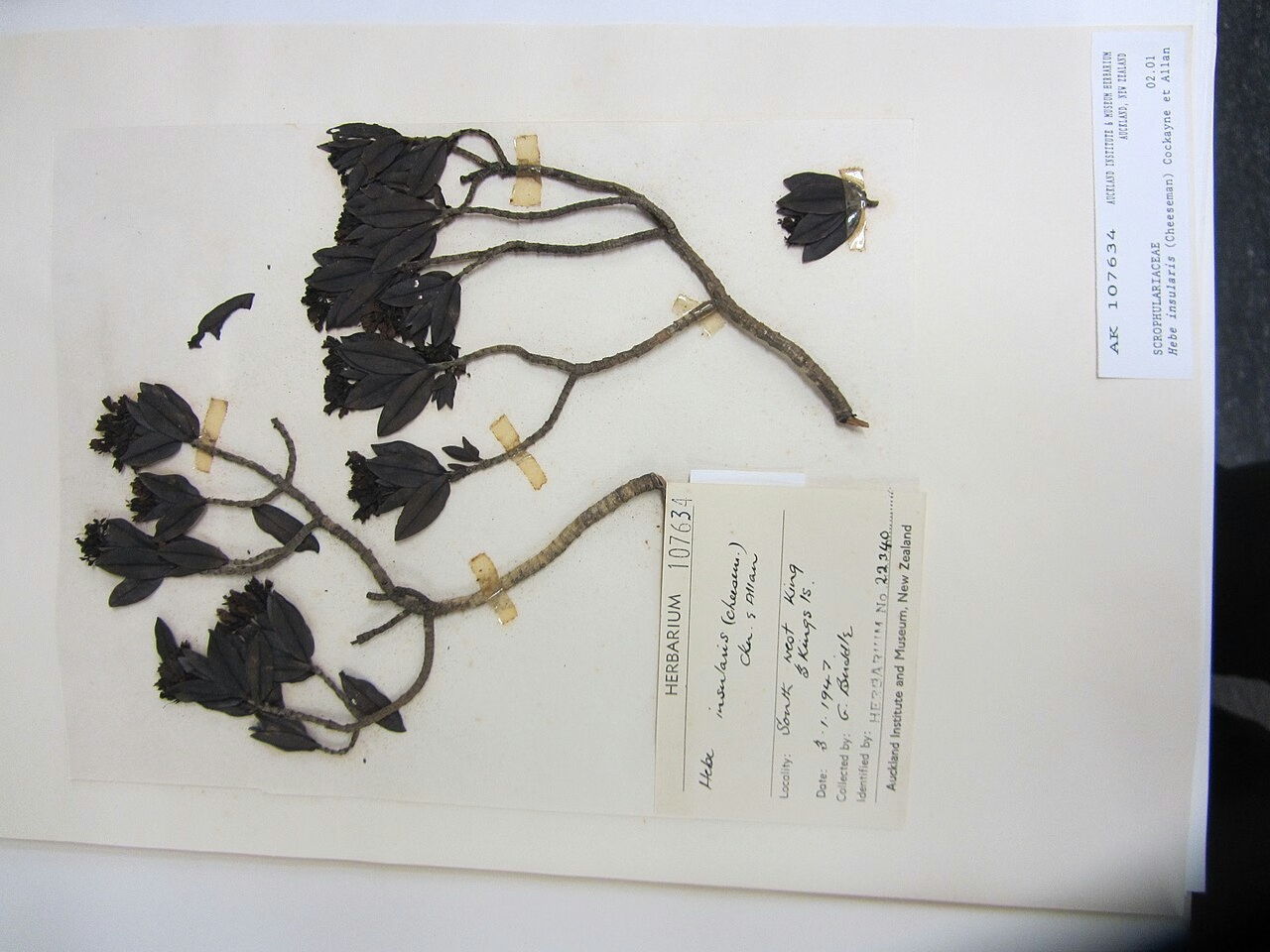
Three Kings Koromiko
Veronica insularis
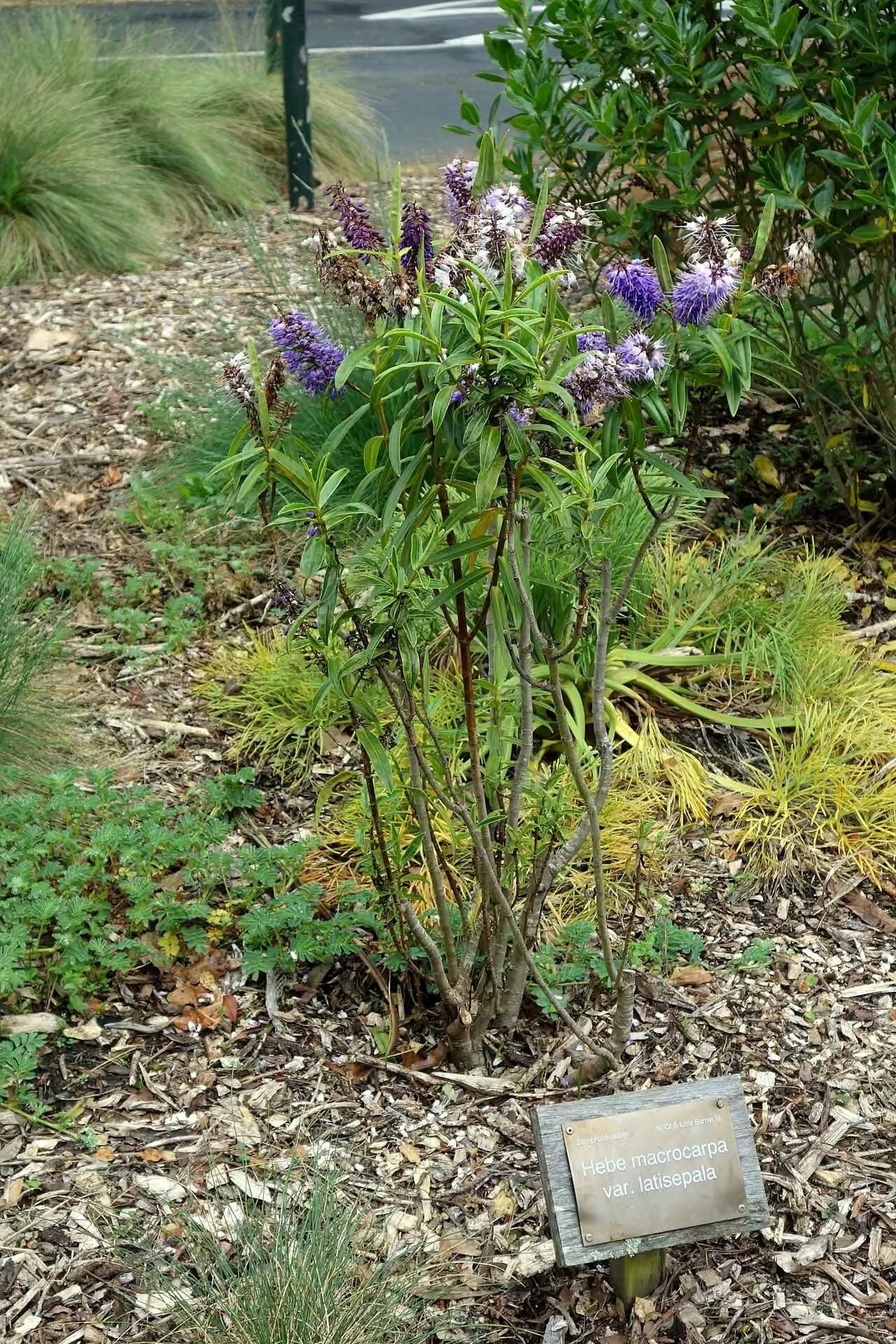
Veronica macrocarpa var. latisepala
Veronica macrocarpa var. latisepala
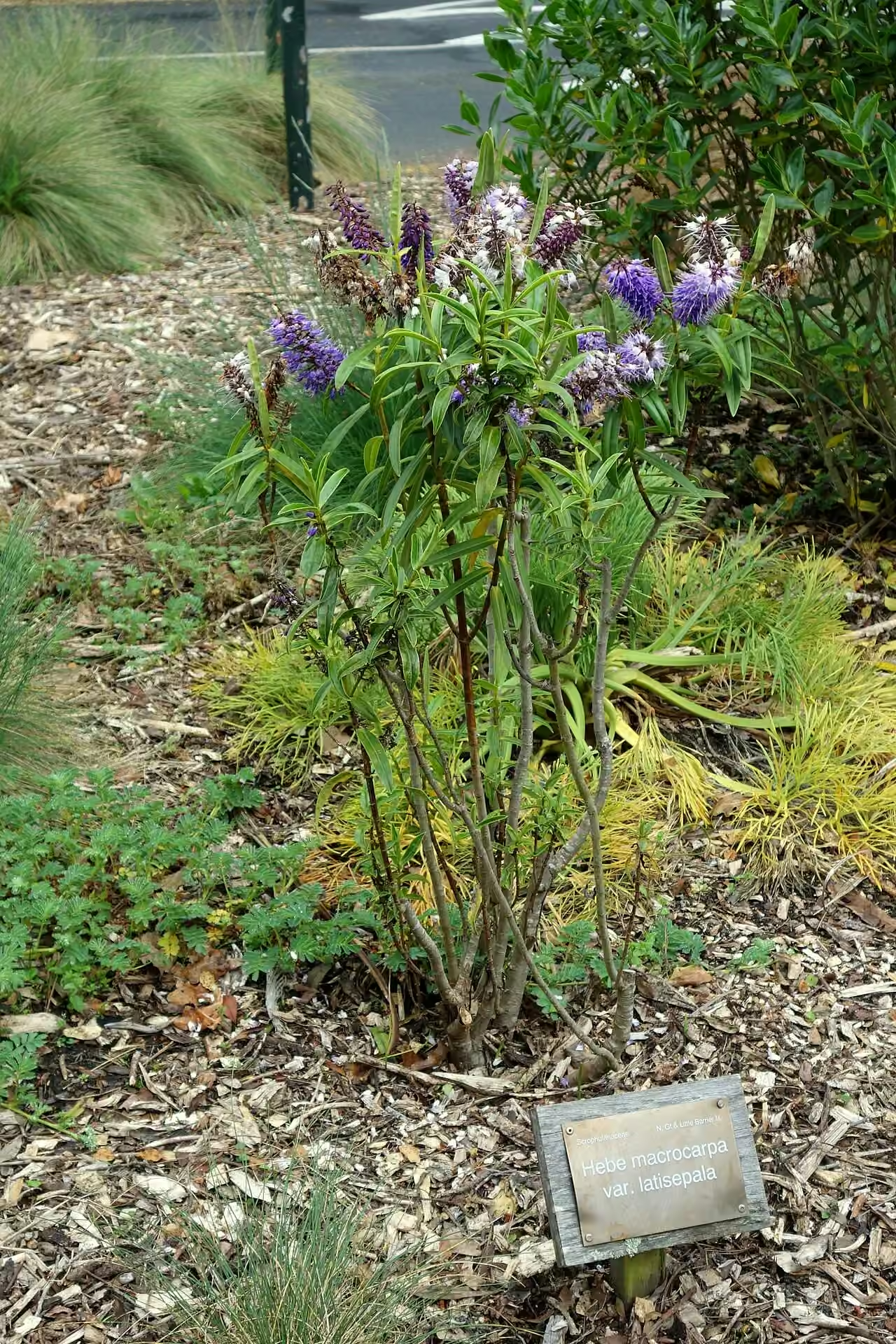
Veronica macrocarpa var. macrocarpa
Veronica macrocarpa var. macrocarpa
Veronica phormiiphila
Veronica phormiiphila
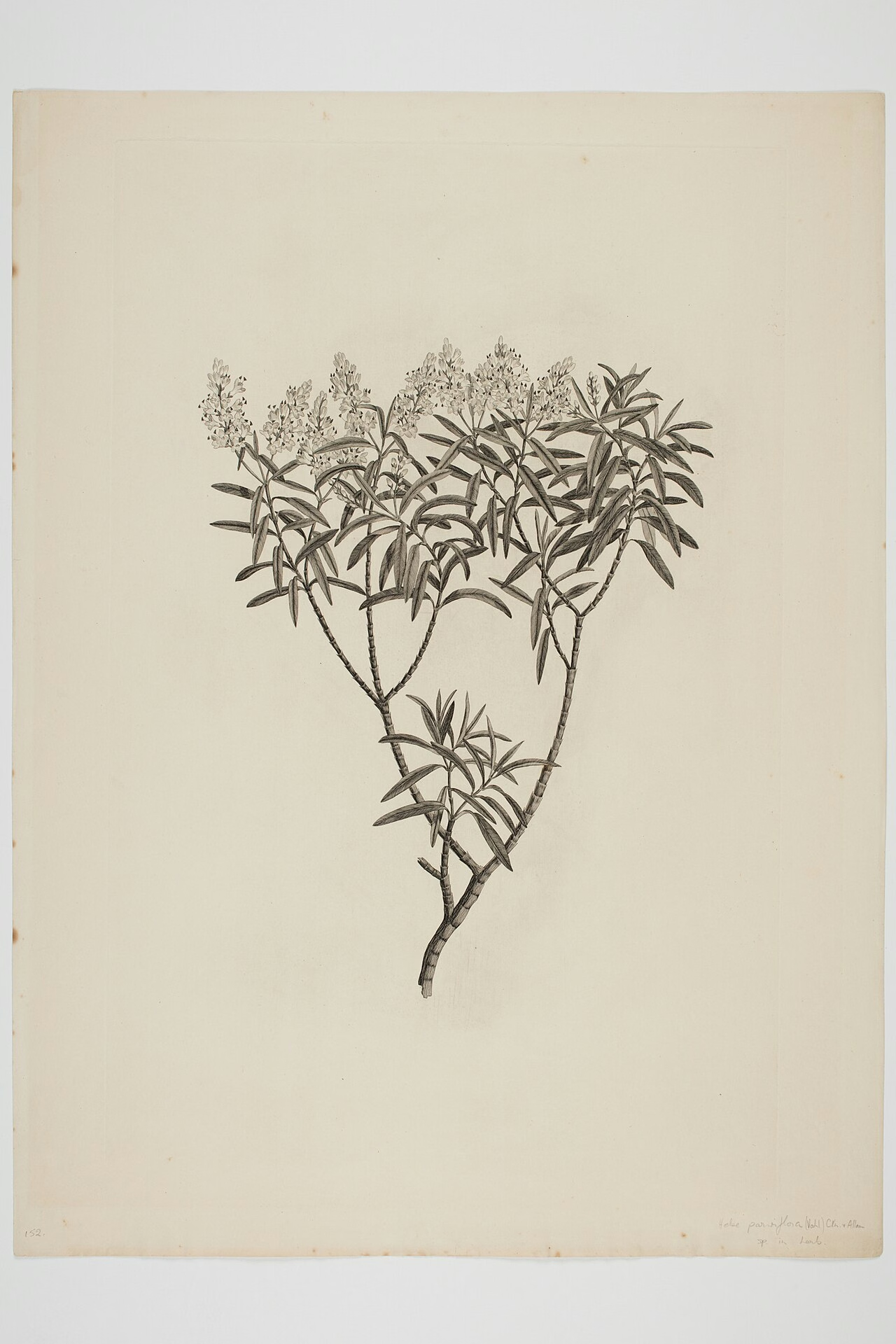
Veronica parviflora
Veronica parviflora
Veronica notialis
Veronica notialis
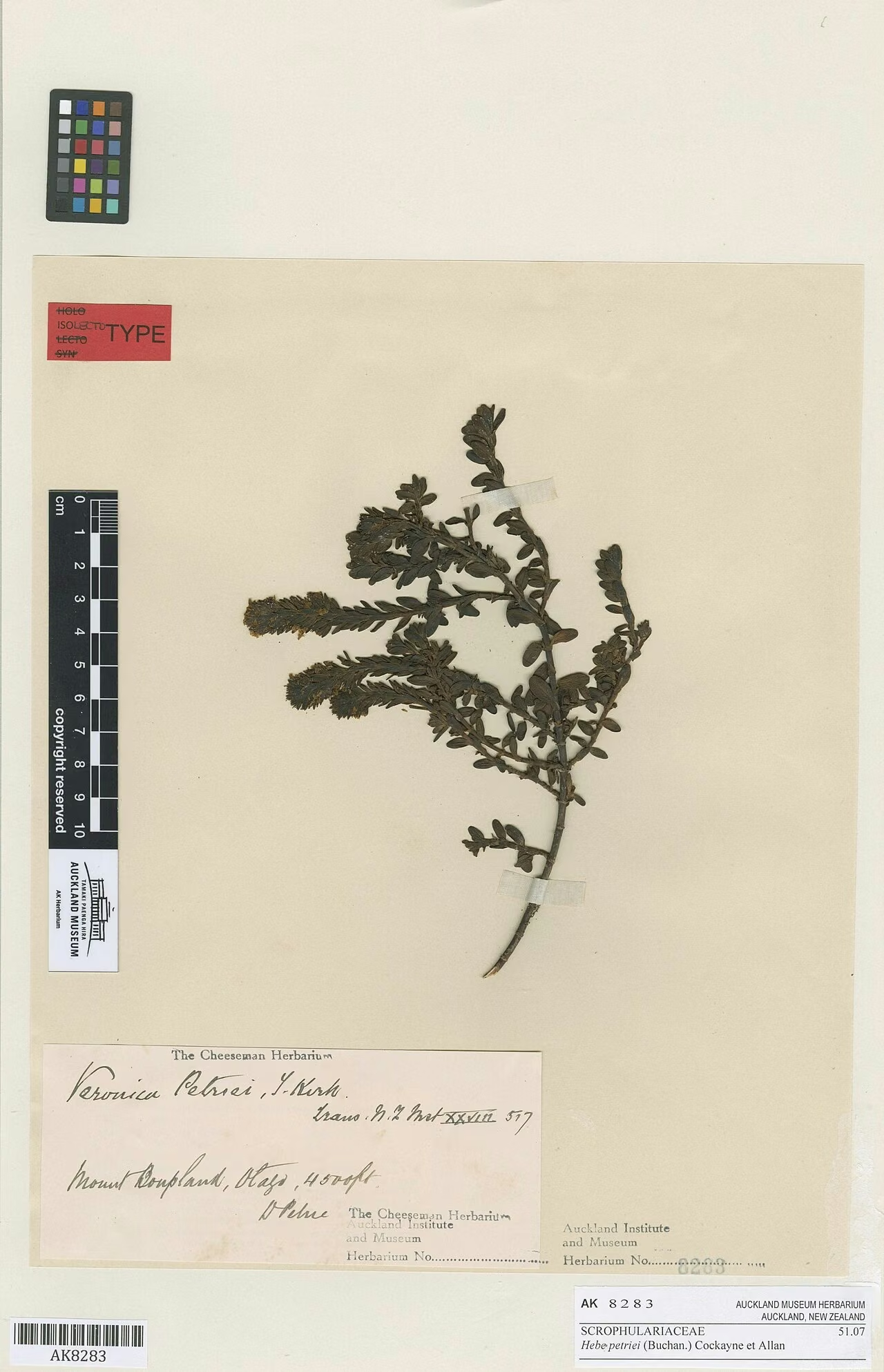
Veronica petriei
Veronica petriei
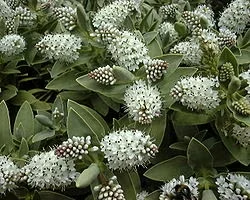
Snow Hebe
Snow Hebe
Plant Conservation
Veronica murrellii is ranked Not Threatened (2023) and has held that ranking since 2004. Its range is small, but its remote alpine habitat is largely within Fiordland National Park.
Trampling of scree and browsing by introduced animals are possible local pressures on alpine plants. Staying on tracks and leaving wild plants undisturbed help protect it.
Frequently Asked Questions
Where does Murrell's hebe grow?
It grows only in the South Island, in Fiordland from the Earl Mountains to Mt Burns and in the Takitimu Mountains of Southland, at about 1100 to 1500 m on alpine scree and rock.
How is Veronica murrellii different from Veronica petriei?
It is more compact with paler leaves, and its longer stamen filaments hold the purple anthers outside the corolla throat. It also has shorter floral bracts and a funnel-shaped corolla tube.
Is Murrell's hebe easy to grow?
No. NZPCN describes it as difficult, best in an alpine house or rock garden, and notes that it dislikes high humidity.
Who is Murrell's hebe named after?
It honours the Murrell family of Manapouri, Fiordland explorers; the Flora of New Zealand names Leslie Murrell, while NZPCN names Robert Murrell.
Sources and Further Reading
The botanical, growing, and conservation details for Murrell's Hebe (Veronica murrellii) on this page draw on the New Zealand plant references below. Consult them for full technical records and the latest distribution data.