Hebe
Veronica macrocarpa var. latisepala
Last updated:
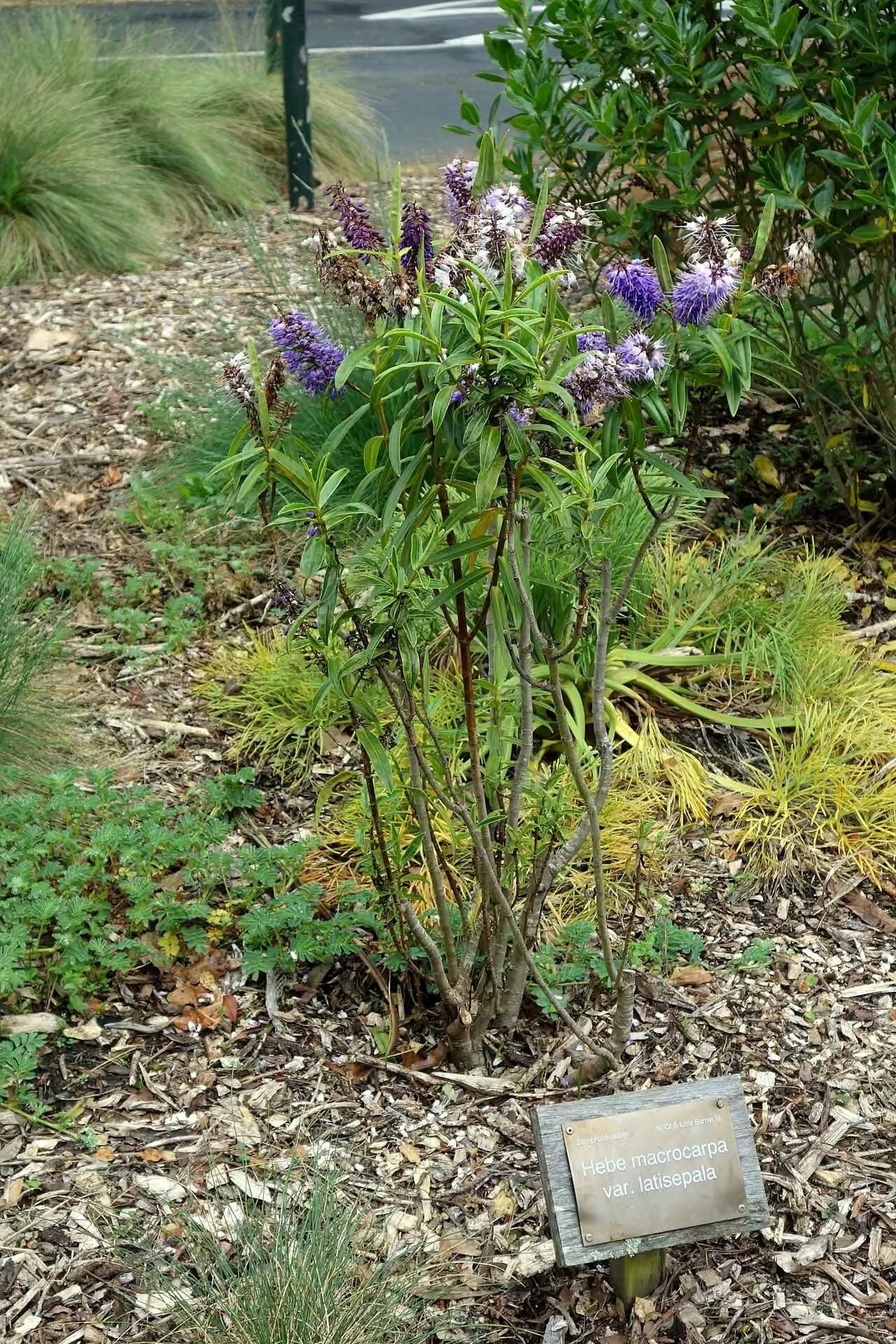
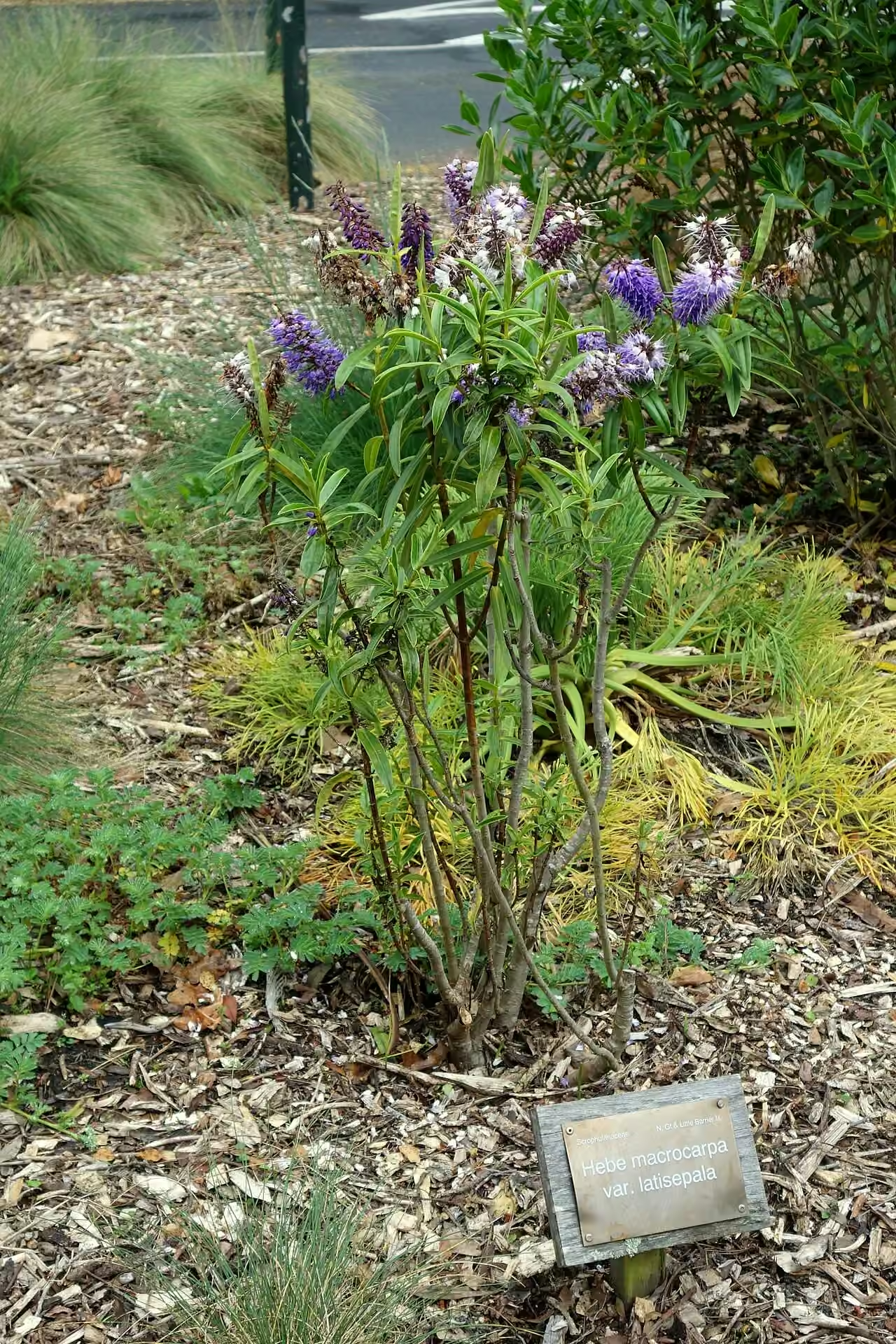
Veronica macrocarpa var. latisepala, long known as Hebe macrocarpa var. latisepala, is a bushy shrub up to 3 m tall with large, leathery leaves and dense spikes of violet flowers. It is the violet-flowered form of a hebe that otherwise has white flowers, and the Flora of New Zealand places it on Aotea/Great Barrier Island and Hauturu/Little Barrier Island in the Hauraki Gulf. Like the rest of its species it flowers mainly from autumn to spring, a time when few other shrubs are in bloom. It is ranked At Risk - Declining, although data on its numbers and trend are poor. Explore more native shrubs in our native plant guide.
Plant Description
This is a bushy shrub to 3 m tall with erect branches and green branchlets. The leaves are in opposite pairs, leathery, glossy green above and lanceolate to oblong or elliptic, ranging from about 23 to 163 mm long. NZPCN describes the leaf cross-section as M-shaped. Compared with var. macrocarpa, var. latisepala has narrower leaves.
The flowers are the key feature. They are carried in compact, one-sided (secund) spikes, with the individual flowers curving back. The corolla lobes are violet, sometimes tinged pink or mauve when they open, and the corolla tube, stamen filaments (5.5 to 12.2 mm) and style are very long. The calyx lobes are brownish and often blunt. Fruits are large, smooth, flattened capsules, a feature that gives the species its name macrocarpa, meaning large-fruited.
Veronica macrocarpa as a whole has no leaf-bud sinus and has large, broad flowers with a corolla tube longer than the calyx. NZPCN notes that var. latisepala is probably worth recognising but can be hard to separate from var. macrocarpa on herbarium specimens because both are variable and their ranges overlap.
Quick Facts
| Scientific Name | Veronica macrocarpa var. latisepala |
|---|---|
| Height | Up to 3 m |
| Spread | 1-2 m |
| Water Needs | Moderate |
| Light | Full sun to light shade |
| Frost Tolerance | Low to moderate; from frost-free northern islands |
| Salt Tolerance | Moderate; grows on coastal islands, though specific tolerance is not documented |
| Growth Rate | Moderate to fast |
| Lifespan | Perennial |
Climate Best Suited to
Suits the mild, humid, almost frost-free climate of the Hauraki Gulf islands. It can be grown in northern coastal gardens but is likely to be damaged by hard frosts.
Regional Suitability
| City | Climate Suitability |
|---|---|
| Auckland | High |
| Wellington | Medium |
| Christchurch | Low |
| Dunedin | Low |
Plant Habitat
According to the Flora of New Zealand, plants recognised as var. latisepala come from Aotea/Great Barrier Island and Hauturu/Little Barrier Island in the outer Hauraki Gulf. Several herbarium specimens of this variety have been collected on Great Barrier Island.
It grows from coastal to upland areas in scrub, at forest margins, in open areas within forest and on rocky sites. The species as a whole ranges from sea level to about 1275 m.
Growing Requirements
Soil Requirements
In the wild it grows on rocky sites, in scrub and at forest margins on the Hauraki Gulf islands.
- Free-draining loam or rocky soil
- Tolerates moderately poor soils
- Avoid sites that stay waterlogged
Light Requirements
It grows in open scrub and forest clearings, so it tolerates both full sun and light shade.
- Full sun gives denser growth and more flowers
- Accepts light dappled shade at forest edges
Water Requirements
It suits a moist, mild climate but its rocky habitats also dry out at times.
- Water young plants during dry summers
- Established plants need little extra water in northern gardens
Planting and Establishing
Plant in autumn or spring in a warm, sheltered, well-drained site. Allow about 1.5 m between plants, as it forms a broad, bushy shrub.
Because its status is uncertain and declining, the most valuable plantings are ecosourced plants on Great Barrier and Little Barrier islands or in collections of known origin. Elsewhere, label garden plants carefully so they are not confused with var. macrocarpa or hybrid hebes.
Ecological Role
Its flowers open from autumn through spring, when nectar is scarcer, and hebe flowers are visited by native bees, flies, butterflies and moths. Specific pollinator records for this variety were not found in the sources consulted. The seed is wind dispersed.
As a shrub of scrub, forest margins and clearings, it is part of the regenerating vegetation of the Hauraki Gulf islands, where it helps to occupy open ground before forest closes over.
Uses & Significance
Garden Uses
A handsome, winter-flowering shrub for warm northern gardens, best grown from material of known origin.
- Winter colour in shrub borders
- Informal screens in sheltered coastal gardens
- Conservation collections of Hauraki Gulf plants
Ecological Value
It is a distinctive local form of an endemic northern hebe, with flowers available to insects in the cooler months.
- Restricted to the outer Hauraki Gulf islands
- Cool-season nectar source
- Part of regenerating island scrub
Landscaping Uses
The deep violet spikes stand out against the glossy green leaves, and look effective among white-flowered shrubs or silver foliage. Use it as a background shrub or a loose informal hedge in a sheltered northern garden.
Plant where its winter flowers can be seen from the house or a path, as it is at its best in the shorter months.
Seasonal Care Calendar
Spring
Flowering continues into spring, with flowering recorded through to November.
- Plant new shrubs
- Take softwood cuttings after flowering
Summer
Mostly a growing season with few flowers and ripening capsules.
- Water young plants in dry spells
- Trim lightly after the main flowering
Autumn
Flowering starts from about April.
- Collect ripe capsules
- Take semi-hardwood cuttings
Winter
Violet flower spikes continue through winter in mild districts.
- Protect young plants from frost
- Enjoy the winter flowers
When to Prune and How Much
Trim lightly after the main flowering in late spring to remove spent spikes and keep the shrub bushy. Do not prune hard in autumn, which would remove the coming flowers.
Older, leggy shrubs can be cut back by about a third in late spring if needed, leaving some foliage on every branch.
How to Grow Hebe
Veronica macrocarpa var. latisepala can be raised from seed or cuttings. Because the variety is defined by violet flowers and is hard to distinguish from var. macrocarpa on preserved specimens, cuttings from a plant of confirmed origin are the best way to keep it true. Hebes hybridise easily, so seed from garden plants grown near other hebes may produce hybrids. For restoration on Great Barrier or Little Barrier islands, any collection must be authorised, and Hauturu/Little Barrier is a nature reserve with restricted access. Raising plants from several parents helps to keep genetic diversity in a variety already ranked as declining.
From Cuttings
Semi-hardwood cuttings usually root readily, as with most large-leaved hebes. Take them after flowering when new growth has firmed.
- Take 8 to 10 cm cuttings of non-flowering shoots in late spring or summer
- Remove the lower leaves and halve large remaining leaves to reduce water loss
- Insert into a mix of potting mix and pumice or perlite
- Keep humid and shaded until rooted, then pot on
From Seed
The large capsules make seed easy to collect. Sow it fresh for the best germination.
Seedlings must reach flowering size before their colour can be checked, so keep records of parentage until then.
- Collect capsules when brown and starting to split
- Sow seed on the surface of a fine seed mix and cover thinly with grit
- Keep moist and warm
- Grow seedlings on and check flower colour before using them as violet stock
Pests & Diseases
No pests specific to this variety are recorded. Large-leaved hebes are prone to downy mildew and leaf spot in humid, sheltered spots, and to root rot in wet soils.
Scale insects and aphids may infest soft growth. Good air movement and drainage reduce most problems.
Cultural Significance
No traditional Māori use specific to this variety was found. The Te Mara Reo etymology site records that Hebe macrocarpa shares the Māori name kōkōmuka, a name also applied to other hebes, but no use of this particular variety is documented in the sources consulted.
The variety was first described by Thomas Kirk as Veronica latisepala. The name latisepala means broad-sepalled.
Bonus Tip
If you want winter colour from a native shrub, give this hebe a warm, sunny spot sheltered from cold southerlies. Its violet spikes appear when most other shrubs are bare, and a light trim after flowering in late spring keeps next season's display coming.
Related Plants
Explore other native plants that share similar characteristics or habitats with Hebe (Veronica macrocarpa var. latisepala), offering further insights into New Zealand's diverse flora. These related species provide context and opportunities for complementary planting in your garden.
Veronica gibbsii
Veronica gibbsii
Veronica glaucophylla
Veronica glaucophylla
Three Kings Koromiko
Veronica insularis
Veronica macrocarpa var. macrocarpa
Veronica macrocarpa var. macrocarpa
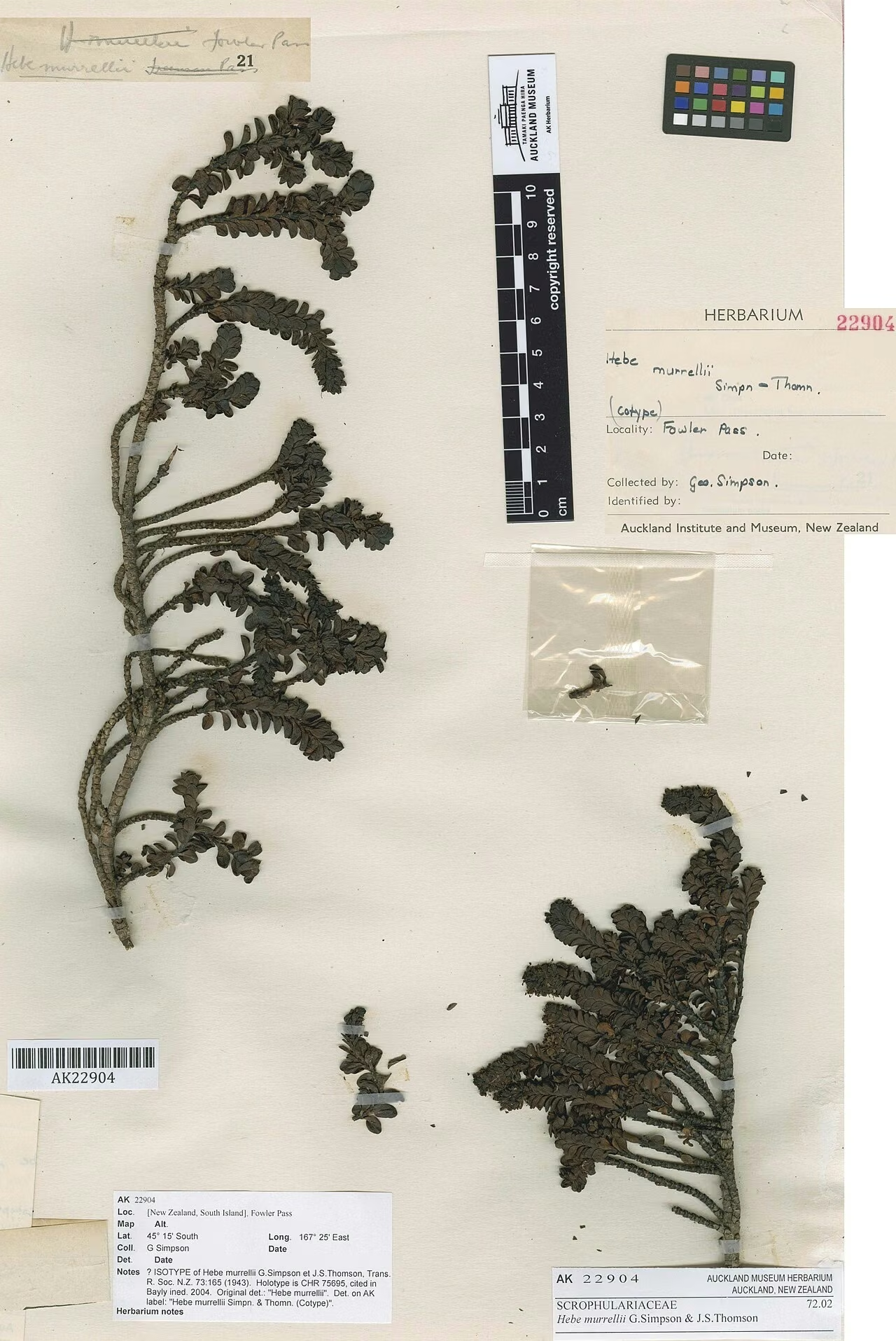
Murrell's Hebe
Veronica murrellii
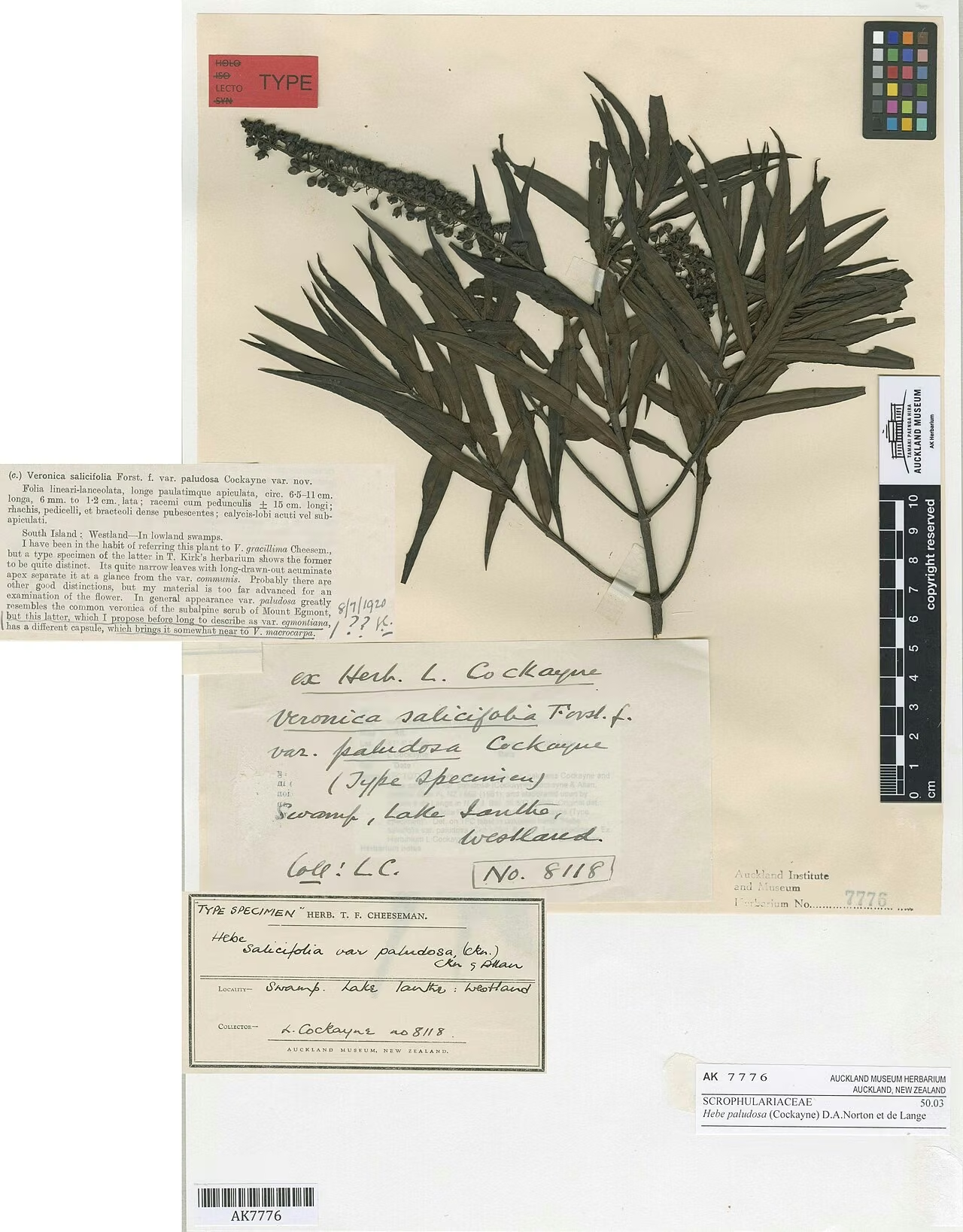
Veronica phormiiphila
Veronica phormiiphila
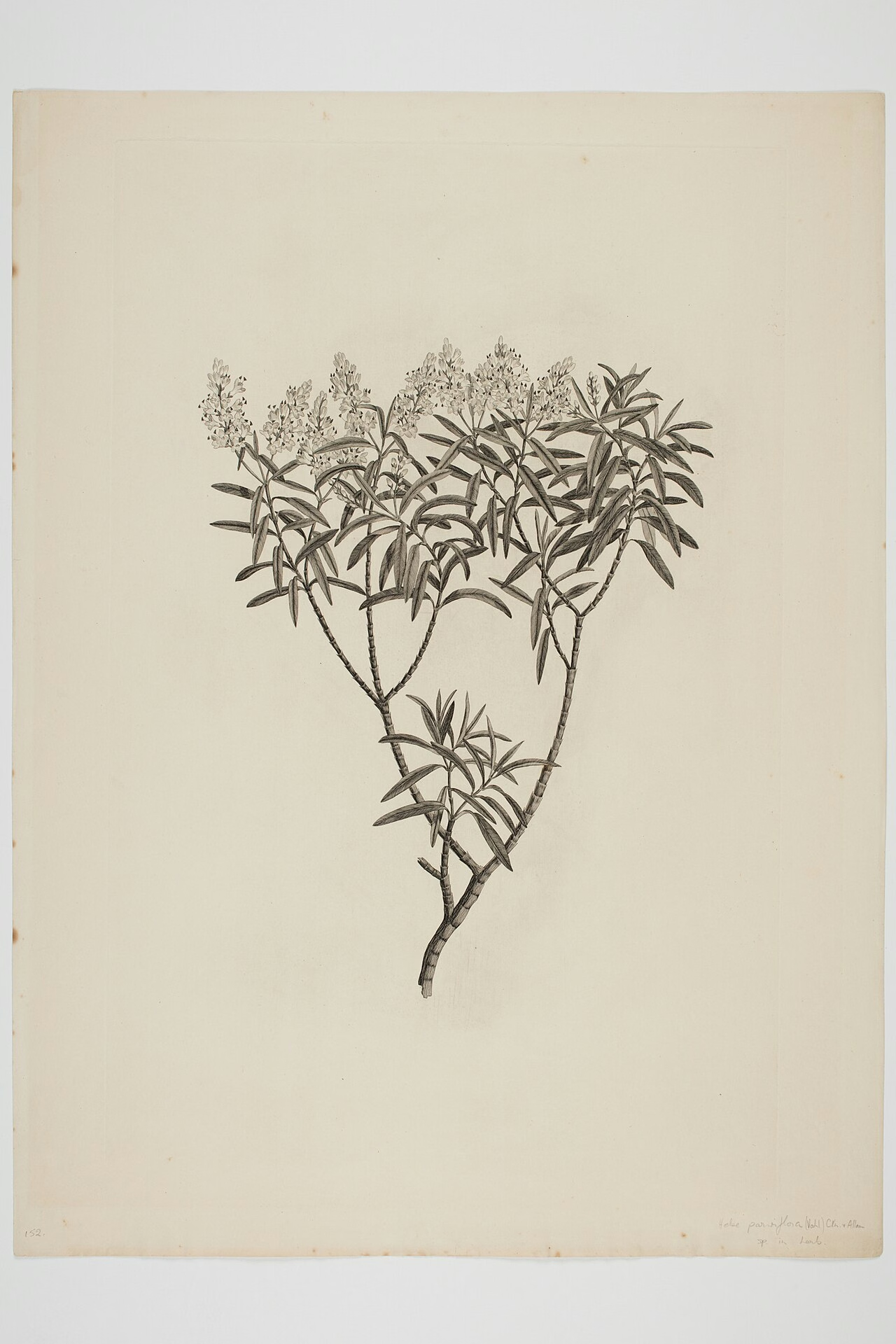
Veronica parviflora
Veronica parviflora
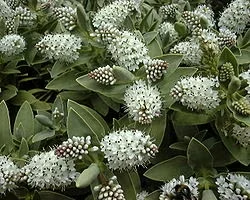
Snow Hebe
Snow Hebe
Plant Conservation
Veronica macrocarpa var. latisepala is ranked At Risk - Declining (2023) with the qualifiers Data Poor: Recognition, Data Poor: Size and Data Poor: Trend. In the Auckland region it is ranked Regionally At Risk - Regionally Declining (2025).
Better survey work on Great Barrier and Little Barrier islands is needed to confirm how many plants exist and how they are faring. Hauturu/Little Barrier Island is a protected nature reserve, and pest control on Aotea/Great Barrier helps protect its habitat.
Frequently Asked Questions
What is the difference between Hebe macrocarpa var. latisepala and var. macrocarpa?
Var. latisepala has violet flowers, narrower leaves and compact one-sided spikes of recurved flowers with brownish calyx lobes and very long corolla tubes, stamens and styles. Var. macrocarpa has white flowers, sometimes tinged pink or mauve.
Where does Veronica macrocarpa var. latisepala grow?
The Flora of New Zealand records it from Aotea/Great Barrier Island and Hauturu/Little Barrier Island, where it grows in scrub, forest margins, forest clearings and rocky sites.
When does Hebe macrocarpa var. latisepala flower?
The species flowers mainly from April to November, occasionally to January, so it can provide colour through late autumn, winter and spring.
Is Veronica macrocarpa var. latisepala threatened?
It is ranked At Risk - Declining (2023), with qualifiers noting that data on its recognition, population size and trend are poor.
Sources and Further Reading
The botanical, growing, and conservation details for Hebe (Veronica macrocarpa var. latisepala) on this page draw on the New Zealand plant references below. Consult them for full technical records and the latest distribution data.