Tarn Speedwell
Veronica lilliputiana
Last updated:
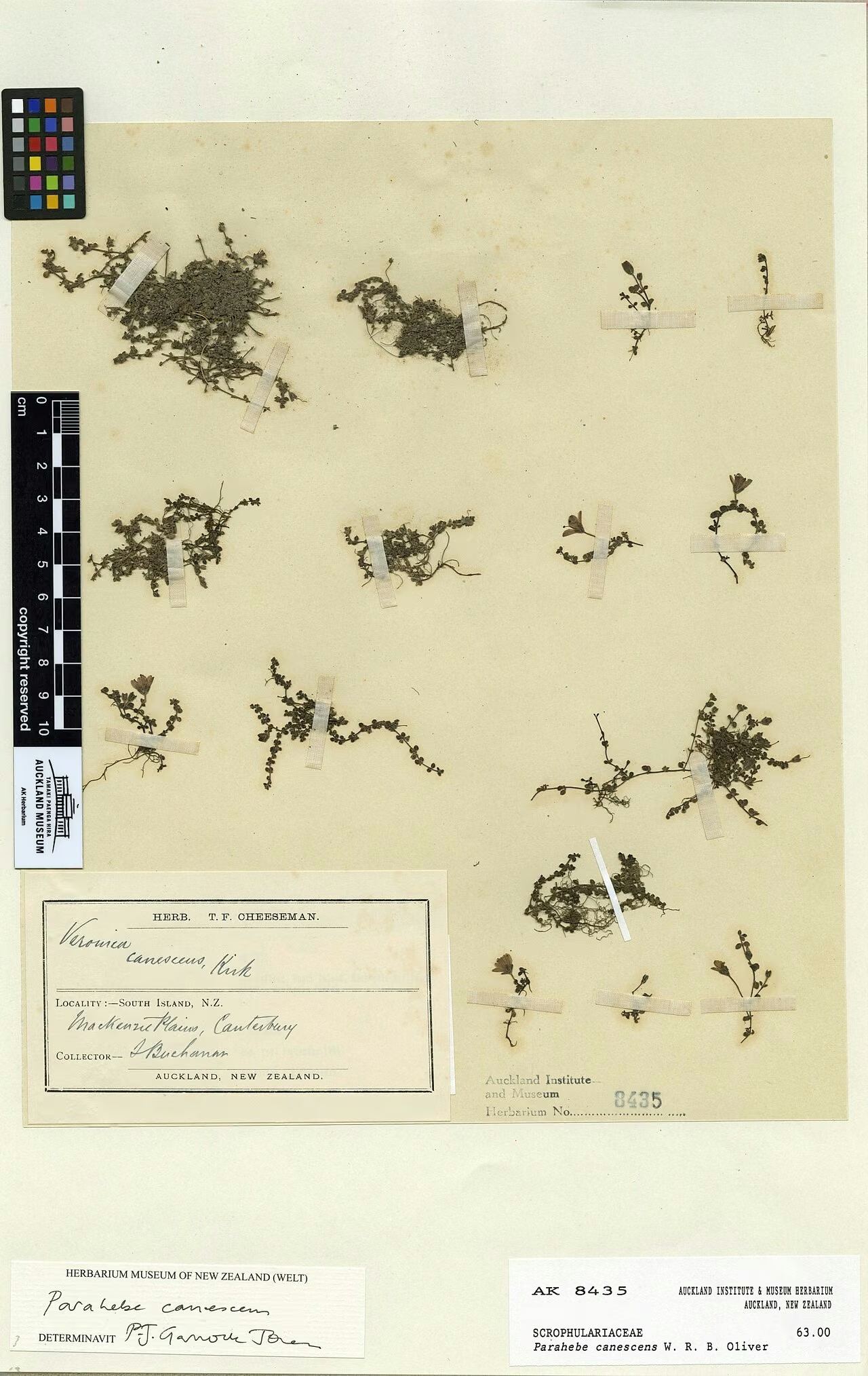
Tarn speedwell (Veronica lilliputiana), long known as Parahebe canescens, is one of New Zealand's smallest flowering plants: a creeping herb only 3 to 10 mm tall that forms grey matted patches 15 to 20 cm across. Its minute rounded leaves are 1 to 3 mm long, and in summer it carries surprisingly large pale to purplish-blue flowers about 10 mm across with dark blue nectar guides. It grows on the seasonally wet margins of lakes, tarns, kettle holes and ponds in Canterbury, Otago and at Lake Manapouri. It is ranked At Risk - Declining. Explore more native ground covers in our native plant guide.
Plant Description
Tarn speedwell is a minute, prostrate, creeping and rooting herb that forms grey matted patches about 15 to 20 cm in diameter. Its thread-like stems are up to about 10 cm long, much branched and sparsely white-hairy, sometimes woody at the base, and produce short upright side shoots. NZPCN describes it as short-lived and only 3 to 10 mm tall.
The leaves are tiny, ovate to almost circular, 1 to 3 mm long and 1 to 2 mm wide, arranged in two rows along the prostrate shoots. They are dull and bluish-grey (glaucous) with a fringe of hairs on the margins and a wedge-shaped base, which gives the patches their grey look. Flowers are mostly solitary on short stalks with two small bracts and are large for the plant, about 10 mm across, with pale to purplish-blue lobes, dark blue nectar guides and a very short corolla tube under 1 mm. Anthers are purplish on white filaments. Capsules are only 1 to 1.8 mm long.
NZPCN gives flowering as October to January and fruiting as November to April, while the Flora of New Zealand gives December to April and January to May; both agree it flowers through summer. Its tiny grey leaves in two rows and comparatively large blue flowers, on the mud of drying tarn margins, make it distinctive among New Zealand speedwells.
Quick Facts
| Scientific Name | Veronica lilliputiana |
|---|---|
| Height | 3-10 mm |
| Spread | Matted patches 15-20 cm across |
| Water Needs | High in the growing season; tolerates seasonal drying |
| Light | Full sun |
| Frost Tolerance | High; grows up to about 1440 m |
| Salt Tolerance | Not recorded; some coastal sites, but grows in fresh water margins |
| Growth Rate | Moderate; spreads by creeping stems |
| Lifespan | Short-lived perennial |
Climate Best Suited to
Suited to the cool, frosty South Island east and south, where tarns and lake margins fill in winter and spring and dry down through summer.
Regional Suitability
| City | Climate Suitability |
|---|---|
| Auckland | Low |
| Wellington | Low |
| Christchurch | Medium |
| Dunedin | Medium |
Plant Habitat
Tarn speedwell is endemic to the South Island, recorded from Canterbury, Otago and, in Fiordland, only Lake Manapouri. Most populations are inland, but there are a few coastal sites. It was collected on Otago Peninsula in 1896 and was rediscovered there in 2011. The Flora of New Zealand gives an altitude range of about 20 to 1441 m.
It lives on the seasonally wet, usually summer-dry margins of coastal to montane lakes, tarns, kettle holes, ponds and depressions in moraines. These ephemeral wetland turfs are flooded for part of the year and exposed as the water recedes, conditions that exclude taller competitors and suit tiny turf plants.
Growing Requirements
Soil Requirements
It grows on the fine silt, mud and gravelly turf exposed around fluctuating water bodies.
- Fine, moist silt or sandy mud
- Low competition from taller plants
- Soil that floods seasonally and then drains
Light Requirements
As a plant of open turf on lake and tarn margins, it needs full light.
- Full sun
- Intolerant of being overgrown by taller grasses or rushes
Water Requirements
Water levels rise and fall through the year at its sites. NZPCN recommends growing it partially submerged in a sunny spot.
- Keep constantly moist to partly submerged
- Tolerates seasonal drawdown
- Do not let pots dry out in cultivation
Planting and Establishing
In cultivation it is best grown in a shallow pan or tray of silty, sandy mix stood in water so it is partially submerged, in full sun. NZPCN notes it is easily grown from rooted pieces and bulbils but difficult to maintain.
It is not a general garden plant. In humid climates it is prone to powdery mildew, so good air movement and an open, sunny position are important. For restoration, plant only into suitable ephemeral wetland sites with expert advice.
Ecological Role
Tarn speedwell is part of the specialised turf flora of ephemeral wetlands, which also includes other tiny herbs adapted to alternate flooding and drying. Its comparatively large blue flowers are presumably insect pollinated, but no pollinator study was found in the sources consulted.
Its survival depends on the natural rise and fall of water levels that keep its margins open. Where this pattern changes, or where taller exotic grasses and weeds invade the turf, the tiny plants are quickly smothered.
Uses & Significance
Garden Uses
A curiosity for specialist growers of wetland and alpine miniatures.
- Shallow bog pans or the edge of a small pond
- Conservation and botanic garden collections
- Not suited to general garden beds
Ecological Value
It is a declining member of a threatened habitat type, ephemeral wetland turf.
- Indicator of healthy seasonally wet turf communities
- Contributes to the diversity of tiny endemic wetland herbs
- Summer flowers for small insects
Landscaping Uses
Tarn speedwell has little place in conventional landscaping, but in a naturalistic wetland garden or a shallow pond margin with open silty edges it can form a grey carpet studded with blue flowers.
In restoration projects, keeping tarn margins open and free of tall weeds is more useful than planting, because the plant spreads by its creeping stems where conditions suit it.
Seasonal Care Calendar
Spring
Water levels are high and plants begin growing as margins warm.
- Take rooted pieces for propagation
- Keep cultivated pans wet
Summer
Main flowering season as tarn margins dry, with blue flowers through summer.
- Look for flowers on exposed tarn and pond edges
- Watch cultivated plants for powdery mildew
Autumn
Late flowers and capsules ripen, with fruiting recorded until April or May.
- Collect bulbils or rooted pieces
- Avoid trampling drying margins
Winter
Margins re-flood and plants persist under water or as small pieces.
- Keep cultivated plants partly submerged
- Protect from hard drying frosts in pots
When to Prune and How Much
No pruning is needed. Remove any competing weeds or mossy growth from pans by hand so the tiny stems stay in the light.
If powdery mildew appears, snip out affected shoots to slow its spread and improve air flow.
How to Grow Tarn Speedwell
NZPCN states that tarn speedwell is easily grown from rooted pieces and bulbils but difficult to maintain. It is short-lived, so new plants should be raised regularly to keep a cultivated population going. Because it is ranked At Risk - Declining and is Regionally Critical in Otago, material should come from existing cultivated stock or be collected only under a conservation programme with permission. Grow propagated plants in full sun, partially submerged in a silty mix, and watch for powdery mildew in humid weather. No published seed germination information was found in the sources consulted.
By Division of Rooted Pieces
The creeping stems root as they grow, so small rooted pieces can simply be lifted and replanted.
- Lift a few rooted stem pieces with a little mud attached
- Press them onto the surface of a pan of moist silty sand
- Stand the pan in a tray of water so the mix stays wet
- Keep in full sun with good air movement
From Bulbils
NZPCN notes that bulbils can also be used. These small propagules can be sown like seed onto wet mix.
- Gather bulbils from cultivated plants
- Scatter on a wet, silty surface
- Keep wet and in good light until they establish
From Seed
The capsules are only 1 to 1.8 mm long, so seed is tiny. No germination results were found for this species, but surface sowing on wet mix is the standard approach for small wetland herbs.
- Collect ripe capsules in late summer
- Sow on the surface of saturated silty mix
- Do not cover the seed
Pests & Diseases
NZPCN notes that it is susceptible to powdery mildew in humid climates. Slugs and snails may also graze the tiny plants in cultivation.
In the wild the greatest threats are not pests but competition from invasive grasses and weeds, changes to water levels, and trampling or pugging of tarn margins by stock.
Cultural Significance
No Māori name or traditional Māori use is recorded for tarn speedwell in the sources consulted.
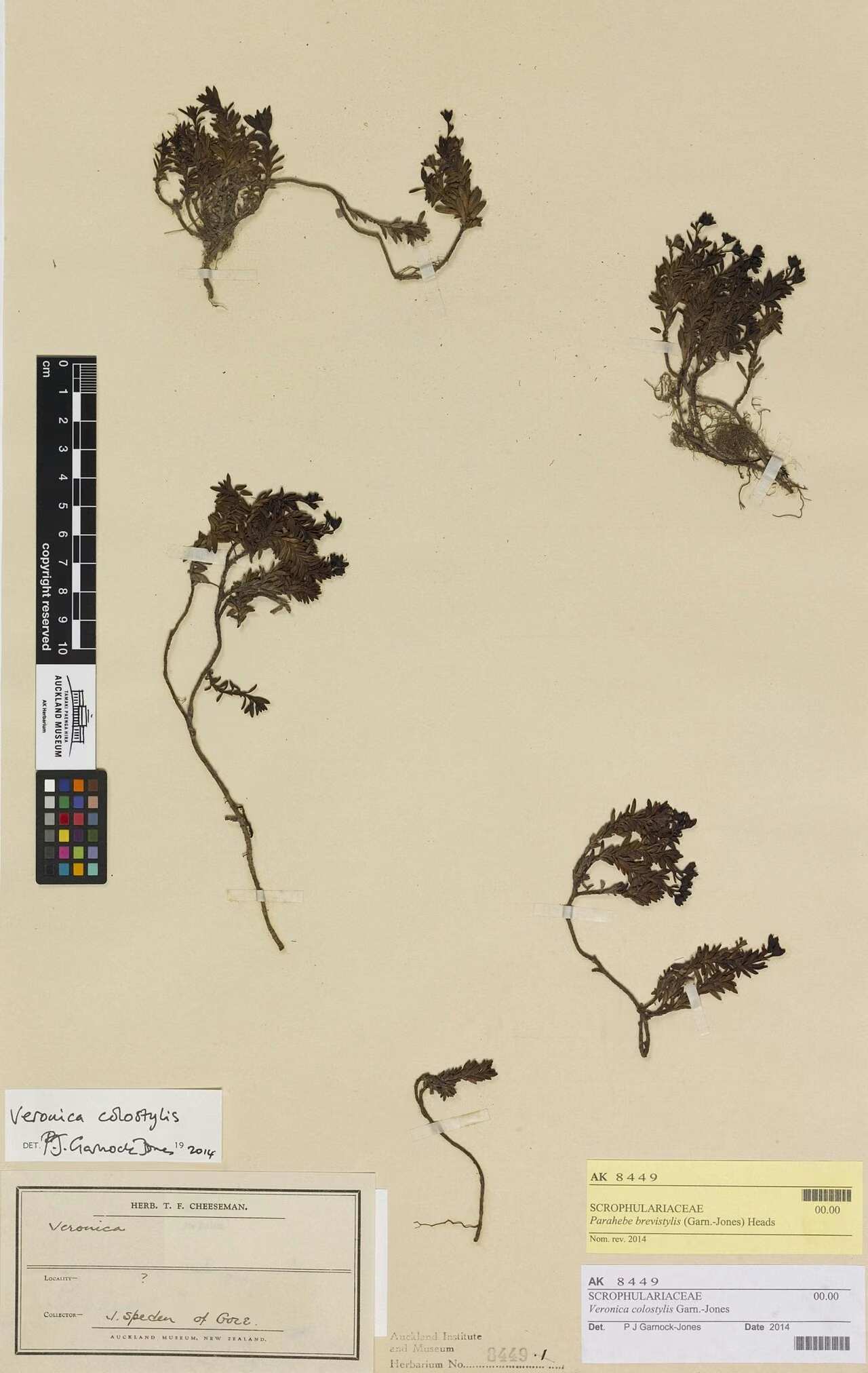
Thomas Kirk named it Veronica canescens in 1877, and it later passed through Hebe canescens and Veronica lilliputiana. Because Kirk's name had already been used in 1803, William Stearn's replacement name Veronica lilliputiana, inspired by Gulliver's Travels, is now used.
Bonus Tip
Look for tarn speedwell in mid to late summer on the drying silt rims of shallow tarns and kettle holes, where its patches look like a grey film on the mud until the blue flowers open. Step carefully: the plants are easily crushed and the habitat is fragile.
Related Plants
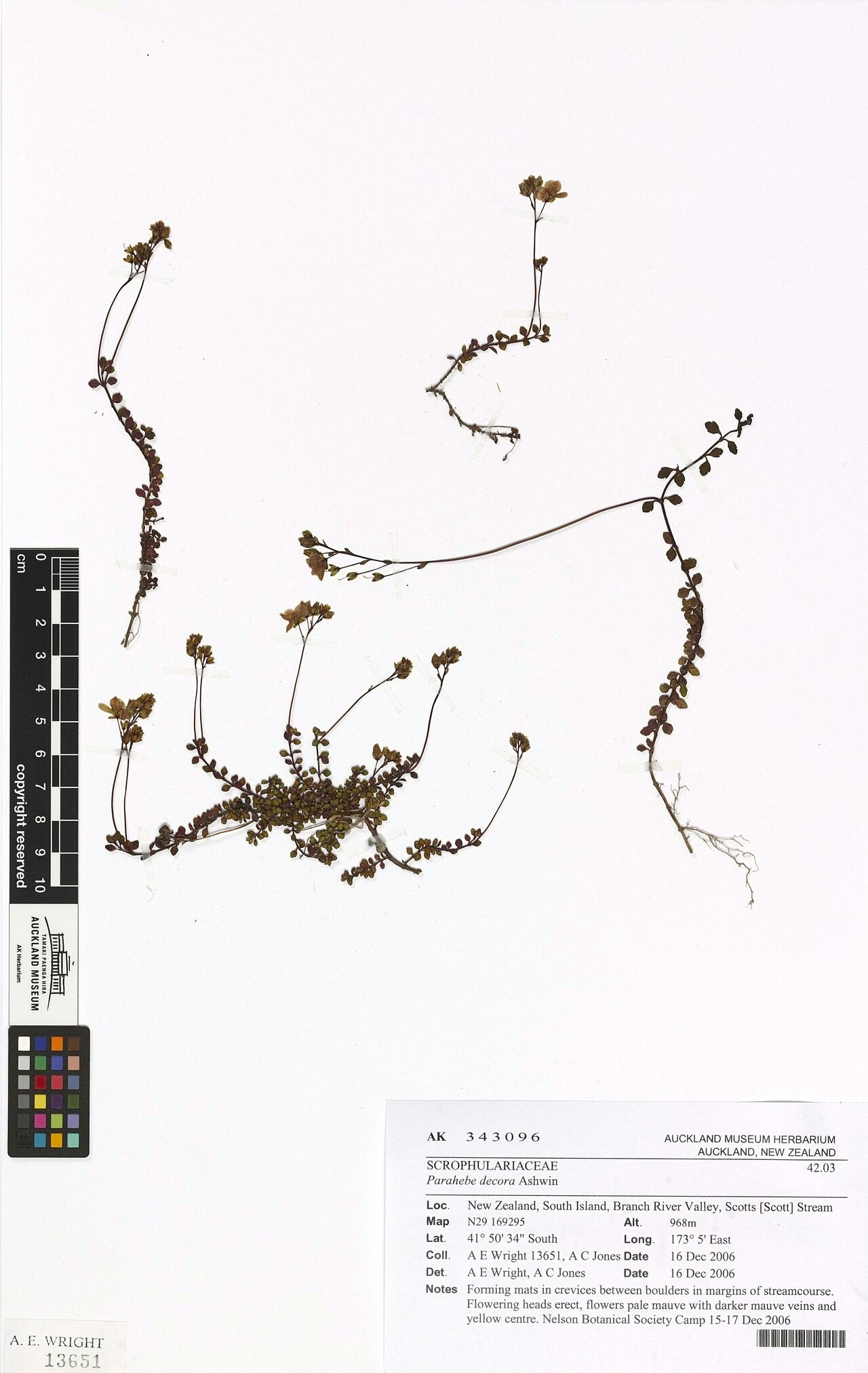
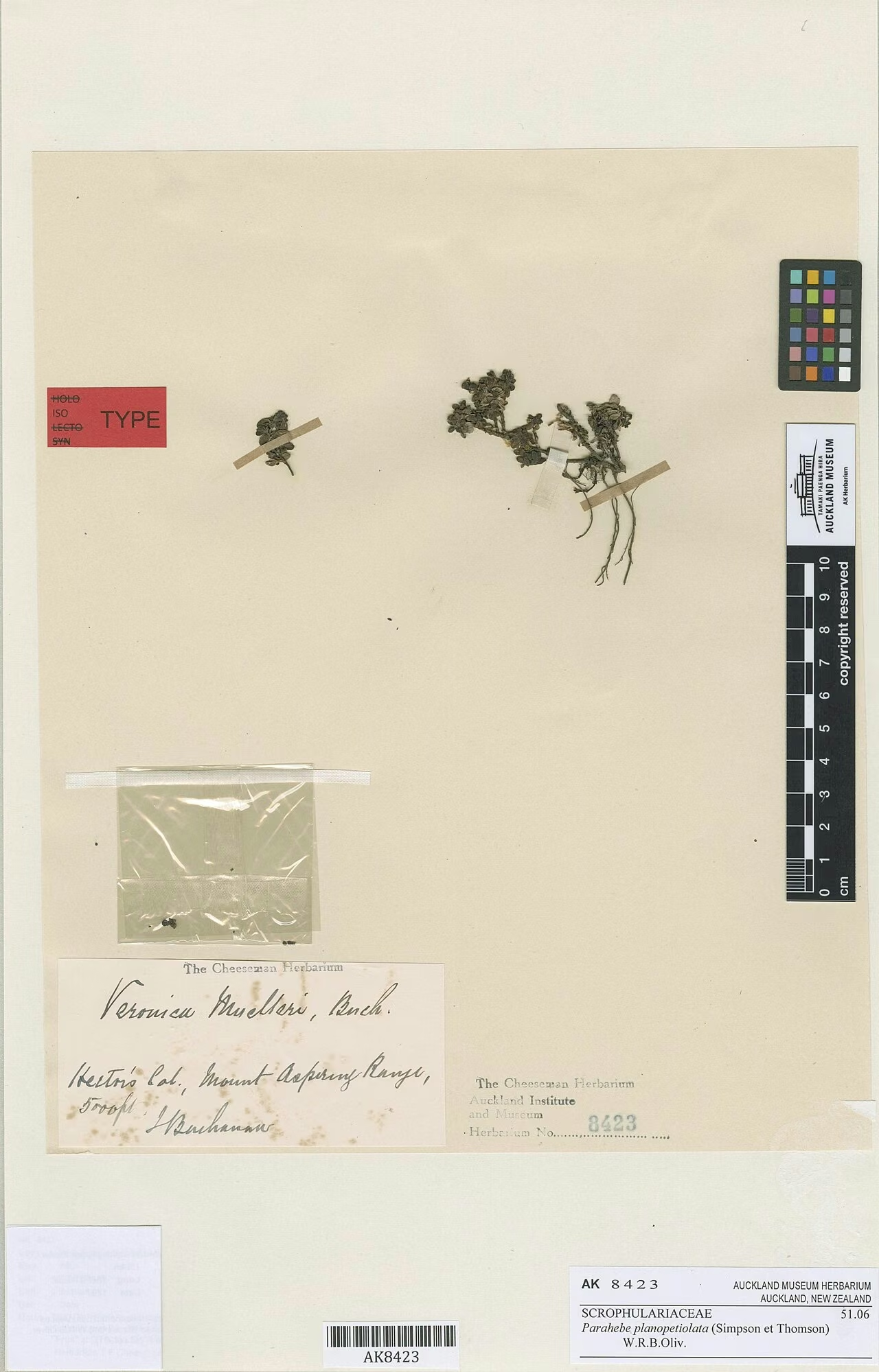
Explore other native plants that share similar characteristics or habitats with Tarn Speedwell (Veronica lilliputiana), offering further insights into New Zealand's diverse flora. These related species provide context and opportunities for complementary planting in your garden.

Plant Conservation
Tarn speedwell is ranked At Risk - Declining (2023), having been classed as Not Threatened as recently as 2009. In Otago it is Regionally Critical (2025), qualified as range restricted and sparse.
Its ephemeral wetland habitat is threatened by drainage, altered water levels, nutrient enrichment, weed invasion and stock trampling. Protecting tarns and lake margins, fencing out stock and controlling invasive grasses are key to its survival.
Frequently Asked Questions
Why is Parahebe canescens now called Veronica lilliputiana?
Kirk's original 1877 name Veronica canescens was illegitimate because the same name had been published for another plant in 1803, so when parahebes returned to Veronica the replacement name Veronica lilliputiana Stearn was used.
Where does tarn speedwell grow?
It is endemic to the South Island in Canterbury, Otago and Fiordland (Lake Manapouri only), on seasonally wet margins of coastal to montane lakes, tarns, kettle holes, ponds and moraine hollows from about 20 to 1441 m.
Why is it named lilliputiana?
The name refers to Lilliput, the land of tiny people in Jonathan Swift's Gulliver's Travels, because the whole plant is only millimetres tall with leaves just 1 to 3 mm long.
Was tarn speedwell rediscovered on Otago Peninsula?
Yes. It was recorded on Otago Peninsula in 1896 and rediscovered there in 2011, as reported by J. Barkla in the NZPCN newsletter Trilepidea.
Sources and Further Reading
The botanical, growing, and conservation details for Tarn Speedwell (Veronica lilliputiana) on this page draw on the New Zealand plant references below. Consult them for full technical records and the latest distribution data.