Parahebe
Veronica lanceolata
Last updated:
Veronica lanceolata, formerly Parahebe lanceolata, is a small endemic subshrub of New Zealand stream and river banks. It grows up to about 45 cm tall with slender stems and glossy or dull, usually lance-shaped leaves that range from green to bronze-green. Over a long season from spring to autumn it produces sprays of white flowers marked with a magenta ring, magenta nectar guides and a yellow throat. It is a rheophyte, growing within the flood line of streams and in river gorges from Coromandel and Waikato south to Wellington, and in North-West Nelson. It is Not Threatened and grows easily from cuttings. Explore more native shrubs in our native plant guide.
Plant Description
Veronica lanceolata is a subshrub up to 450 mm tall. Old stems are brown, red-brown or grey, and the younger growth is slender and often sprawling. Leaves are arranged in opposite pairs and are extremely variable: most are lanceolate, but they can be linear, oblanceolate, ovate, elliptic or even rhomboid, 5-100 mm long and 1.5-25 mm wide. The upper surface is glossy or dull and may be green, light green, dark green or bronze-green, while the underside is dull. Leaves are typically hairless.
Flowers are white at opening with a distinct magenta colour ring, magenta nectar guides and a yellow throat, and some forms lean towards violet. They are carried in open racemes over a long season, with NZPCN recording flowering from September to April and fruit from November to August. The capsules are weakly flattened and notched at the tip, 2.5-4.5 mm long.
This is one of the parahebes formerly lumped within Parahebe catarractae. NZPCN separates it from the similar Veronica senex chiefly by its smaller size, more gracile growth and its green to bronze-green, lanceolate to ovate, usually glabrous leaves.
The Flora of New Zealand describes it as a highly variable species with several regional races, and notes that some plants on the Volcanic Plateau mountains may show introgression with Veronica hookeriana.
Quick Facts
| Scientific Name | Veronica lanceolata |
|---|---|
| Height | Up to 0.45 m |
| Spread | Sprawling to about 0.5 m (estimate from habit; not recorded in sources) |
| Water Needs | Moist to wet; tolerates periodic flooding |
| Light | Full sun to partial shade |
| Frost Tolerance | Moderate to good; ranges from coast to montane |
| Salt Tolerance | Not recorded; a freshwater riverside plant, so assume low |
| Growth Rate | Moderate |
| Lifespan | Perennial |
Climate Best Suited to
Suited to the mild to cool, wet climates of the central North Island and North-West Nelson. It tolerates frost but does best where it never dries out in summer.
Regional Suitability
| City | Climate Suitability |
|---|---|
| Auckland | Medium |
| Wellington | High |
| Christchurch | Medium |
| Dunedin | Medium |
Plant Habitat
Veronica lanceolata is endemic to New Zealand. In the North Island it is found on the Coromandel Peninsula, in Waikato and Taranaki, along the Main Divide from East Cape to Wellington, on the Volcanic Plateau and in Manawatu and Whanganui. In the South Island it is known only from North-West Nelson.
It ranges from coastal to montane elevations, recorded by the Flora of New Zealand from about 10 to 1708 m, and is usually rheophytic, growing within the floodline of streams and rivers or within river gorges. It roots into silt in rock crevices on stream and river banks, and also grows on cliffs, ledges and screes, where flexible stems survive fast-flowing floodwater.
Growing Requirements
Soil Requirements
In nature it roots into rock crevices, gravel and silty stream banks. In gardens it wants a moist but free-draining soil that never bakes hard.
- Gritty loam or gravelly soil is ideal
- Tolerates poor, stony ground
- Avoid stagnant, airless clay
- Mulch with gravel or small river stones
Light Requirements
Streamside plants grow in both open sun and the light shade of gorges. Full sun gives the most compact plants and heaviest flowering, provided roots stay moist.
- Full sun in cool, moist sites
- Partial shade in warmer, drier gardens
- Deep shade makes growth leggy
Water Requirements
This is a moisture-loving plant that copes with periodic inundation. Regular summer watering is essential away from water.
- Keep the root zone moist year round
- Ideal beside ponds, streams and water features
- Tolerates short-term flooding but not stagnant water
Planting and Establishing
Plant at the edge of a stream, pond or rain garden, ideally among rocks where the stems can trail over stone. It is also well suited to a damp rock garden or the front of a moist border.
Plant in autumn or spring, water well in, and keep moist through the first summer. Space plants about 40-50 cm apart if massing them along a bank.
Ecological Role
The white flowers with magenta nectar guides are designed to attract insects; native flies, bees and other small insects are likely pollinators, though no species-specific pollination study was found.
As a rheophyte it is one of the specialised plants that colonise flood-scoured rock and gravel along streams and in gorges, helping hold silt and providing cover in a habitat that is repeatedly reset by floods. Its small seeds are likely carried downstream by water.
Uses & Significance
Garden Uses
A dainty, long-flowering native for wet edges and rock work.
- Stream and pond margins
- Damp rock gardens
- Rain gardens and swales
- Containers kept moist
Ecological Value
It adds nectar for insects over a long season and is suitable for restoring natural streambank vegetation within its native range.
- Long flowering from spring to autumn
- Binds gravel and silt on stream edges
- Appropriate for riparian restoration in its range
Landscaping Uses
Let it spill between boulders along a water feature, where the airy sprays of white flowers soften hard edges. Bronze-leaved forms add contrast against grey rock.
Pair it with other streamside natives such as small sedges, Gunnera species and native ferns. In restoration plantings, use only stock sourced from the local catchment.
Seasonal Care Calendar
Spring
Flowering begins from September and new shoots extend.
- Give a light trim to shape
- Mulch to conserve moisture
Summer
Peak flowering and seed set; plants need reliable moisture.
- Water in dry spells
- Deadhead if seed is not wanted
Autumn
Flowering tails off by April while capsules continue to ripen.
- Collect seed
- Take cuttings
Winter
Growth slows; fruiting capsules may persist into winter.
- Check drainage after heavy rain
- Divide or replant rooted pieces
When to Prune and How Much
Trim lightly after the main flush of flowering to keep plants compact and encourage further flowers. Old woody stems that become bare can be cut back to healthy shoots.
Avoid cutting hard into old wood in winter; plants regrow more reliably from a spring trim.
How to Grow Parahebe
NZPCN describes Veronica lanceolata as easily grown from cuttings, rooted pieces and fresh seed. Semi-hardwood cuttings are the most reliable way to reproduce a particular leaf colour or form, while seed is useful for restoration plantings where genetic diversity matters. Its sprawling stems often root where they touch damp ground, so rooted pieces are a quick extra source of plants.
From Cuttings
Cuttings strike quickly in a moist, free-draining medium. Choose healthy non-flowering shoots.
Because the species is so variable from region to region, cuttings are the best way to keep a particular form true. Label the source locality of each batch, especially if plants are intended for streamside restoration, so that only locally sourced plants go back into each catchment.
- Take 5-8 cm semi-hardwood cuttings in late spring to autumn
- Remove the lower leaves and any flower buds
- Insert into a mix of perlite or pumice and peat-free compost
- Keep humid and out of direct sun until roots form, usually in 3-6 weeks
- Pot on and harden off before planting out
From Seed
Fresh seed from ripe capsules germinates well without special treatment.
Seedlings from different populations may vary in leaf shape and colour. Sowing seed collected from the restoration site's own catchment keeps local genetic character intact.
- Collect capsules as they dry and split
- Sow on the surface of a fine seed mix and press in lightly
- Keep moist in a sheltered, bright place
- Prick out seedlings when large enough to handle
By Rooted Pieces
Stems that sprawl over damp ground often form roots at the nodes. These can be severed from the parent and potted up at almost any time of year except midsummer.
- Cut the rooted stem away from the parent plant
- Pot into a moist, gritty mix
- Keep in light shade until new growth appears
Pests & Diseases
No serious pests are recorded for this species. Aphids and scale may appear on soft growth, and slugs and snails can damage young plants.
Plants allowed to dry out become stressed and are more prone to fungal leaf spots and dieback, so consistent moisture is the best defence.
Cultural Significance
No Māori name or traditional Māori use specific to Veronica lanceolata is recorded in the sources consulted.
The name lanceolata, meaning lance-shaped, was published by George Bentham. The species has a long and tangled taxonomic history, having been treated as Veronica diffusa, Veronica irrigans and as subspecies of Parahebe catarractae before being recognised again as Veronica lanceolata.
Bonus Tip
If you have a stream or pond with a rocky edge, plant it right at the waterline where a seasonal rise in water level will wet its roots. This mimics its natural rheophytic habitat and gives a far healthier, longer-flowering plant than a dry border position.
Related Plants
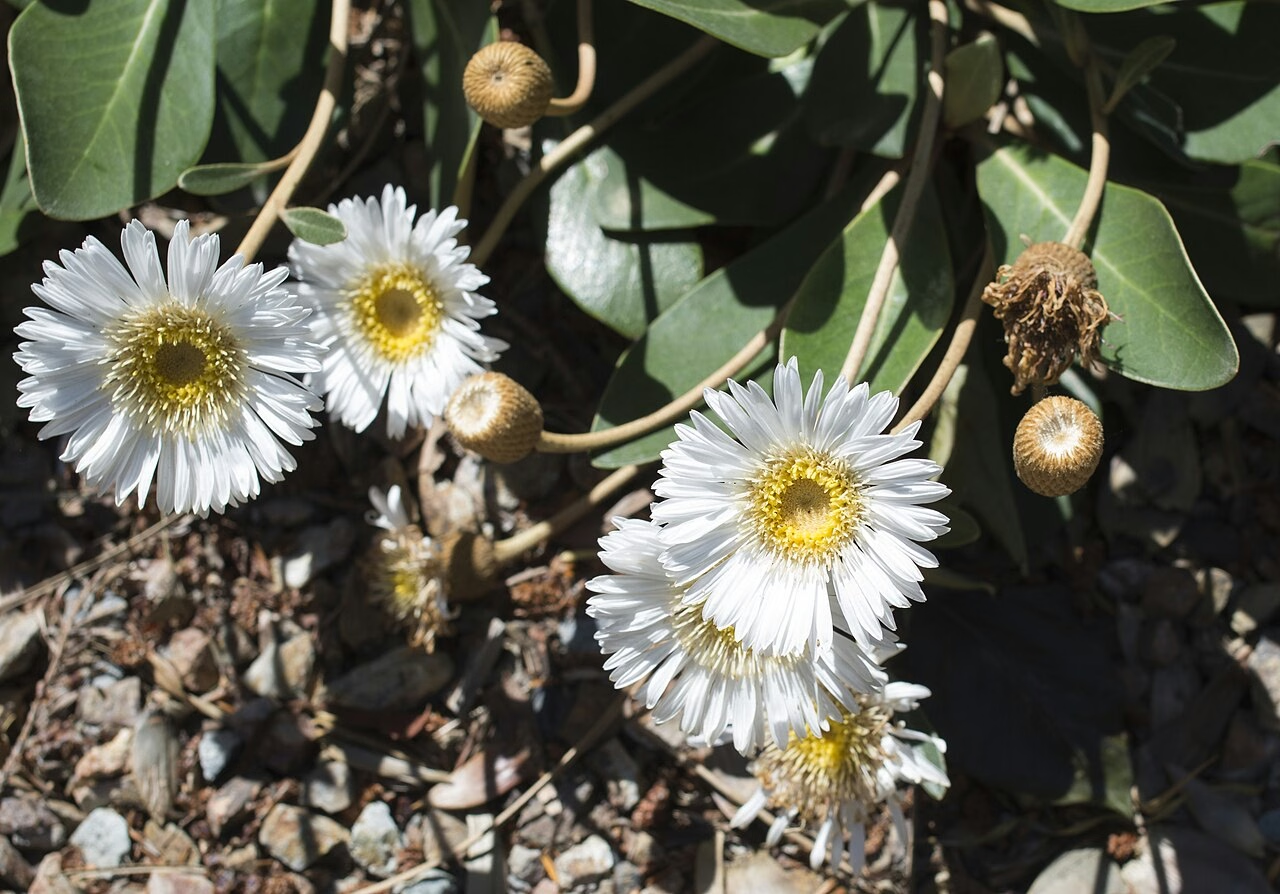
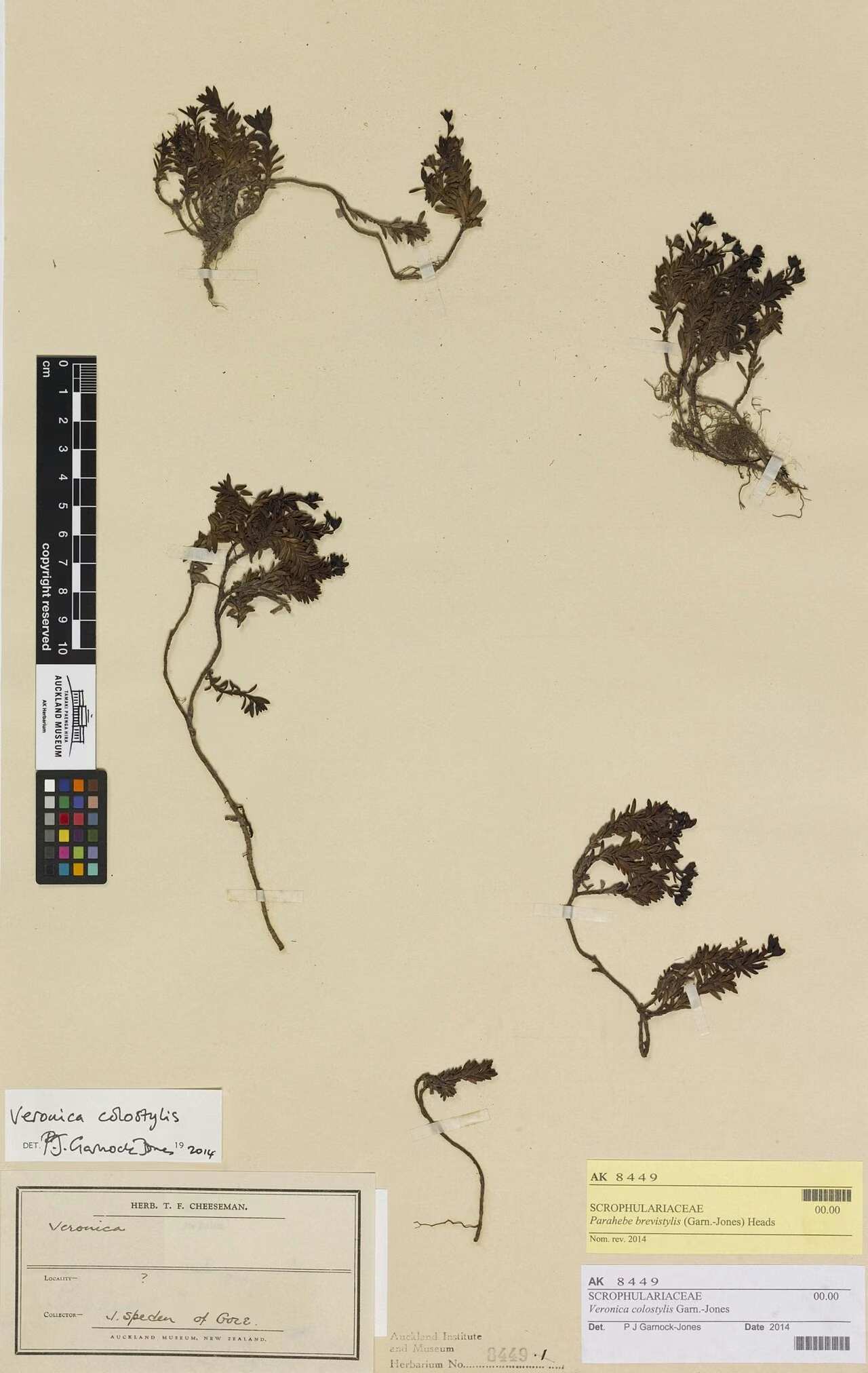
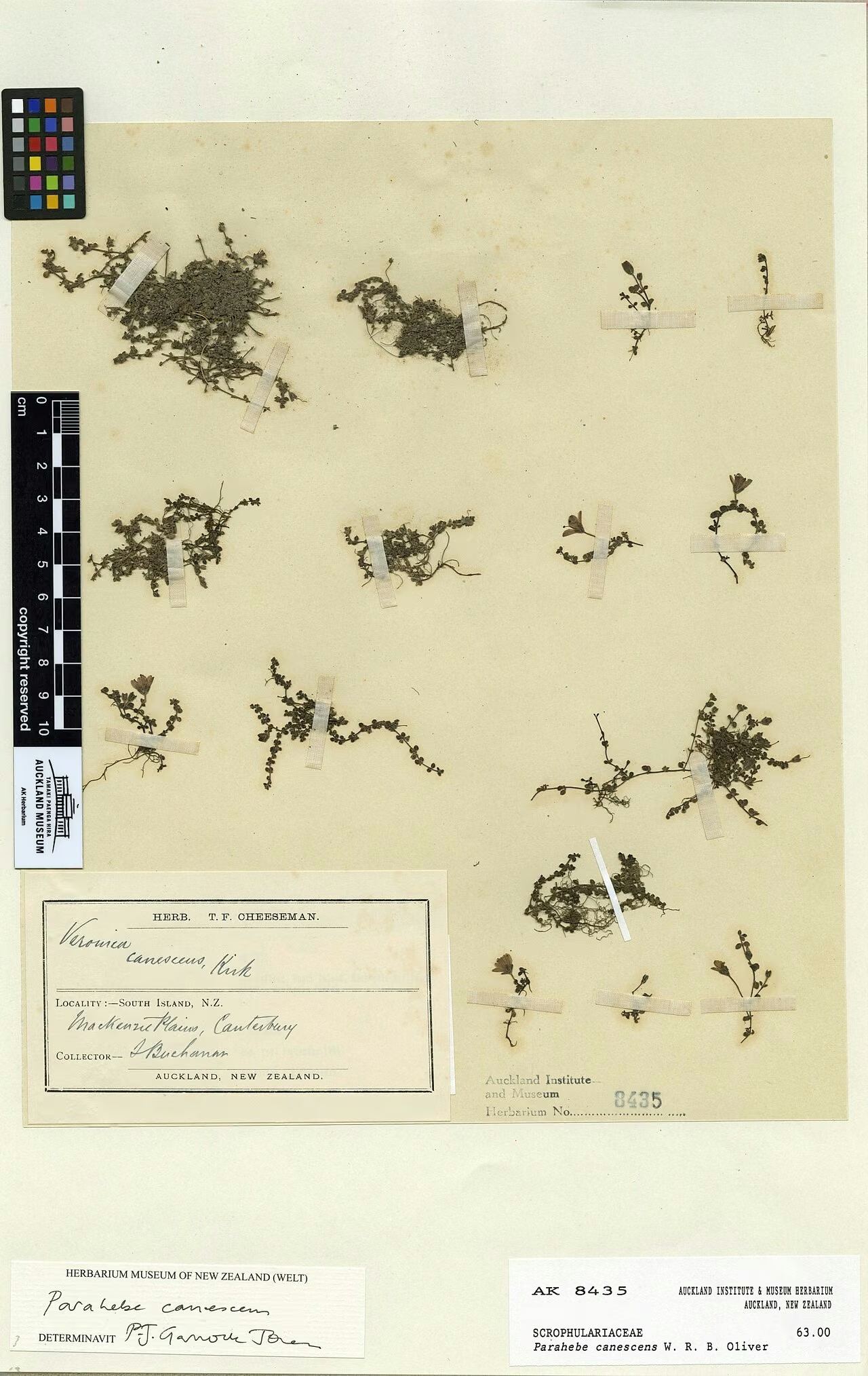
Explore other native plants that share similar characteristics or habitats with Parahebe (Veronica lanceolata), offering further insights into New Zealand's diverse flora. These related species provide context and opportunities for complementary planting in your garden.
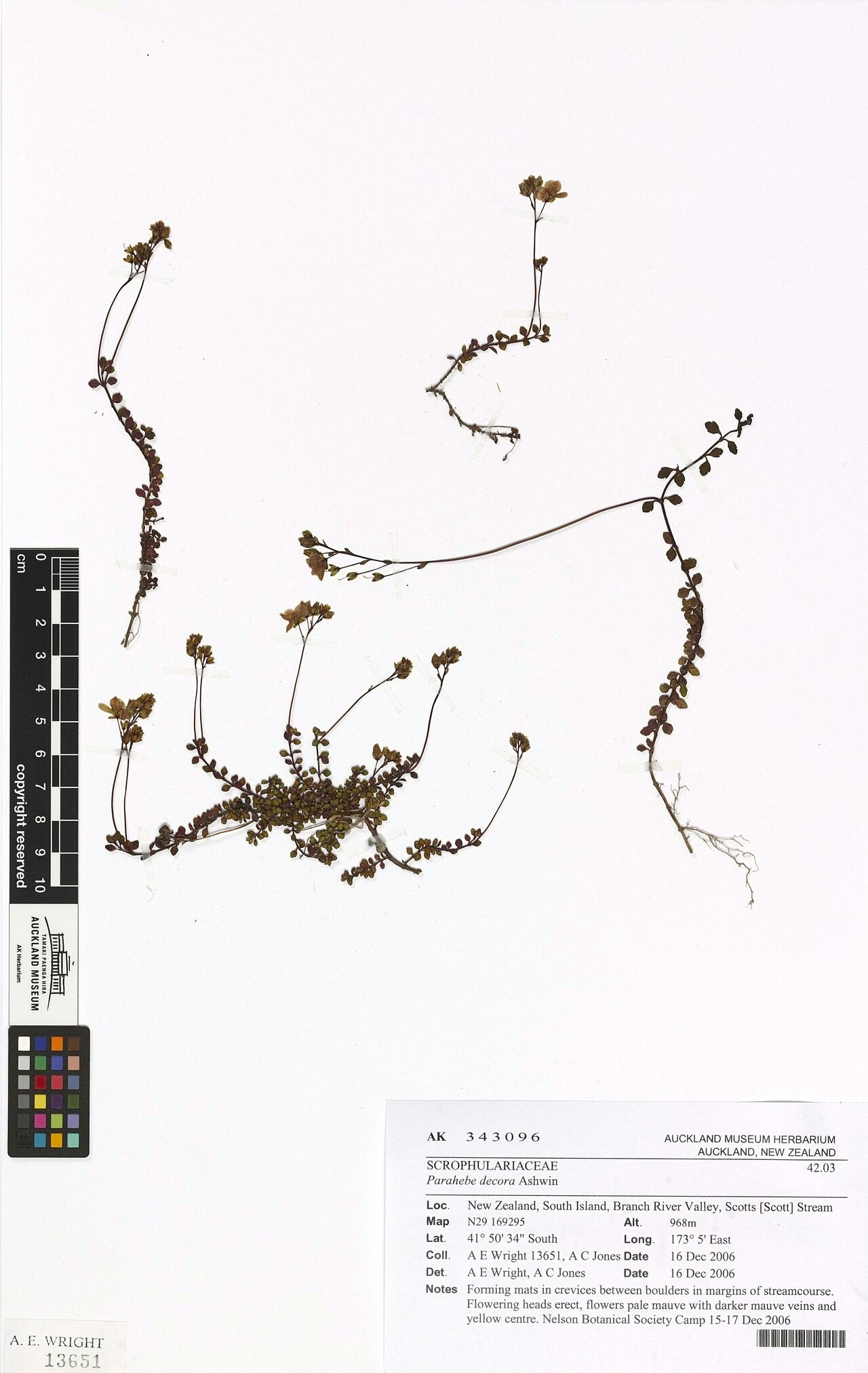
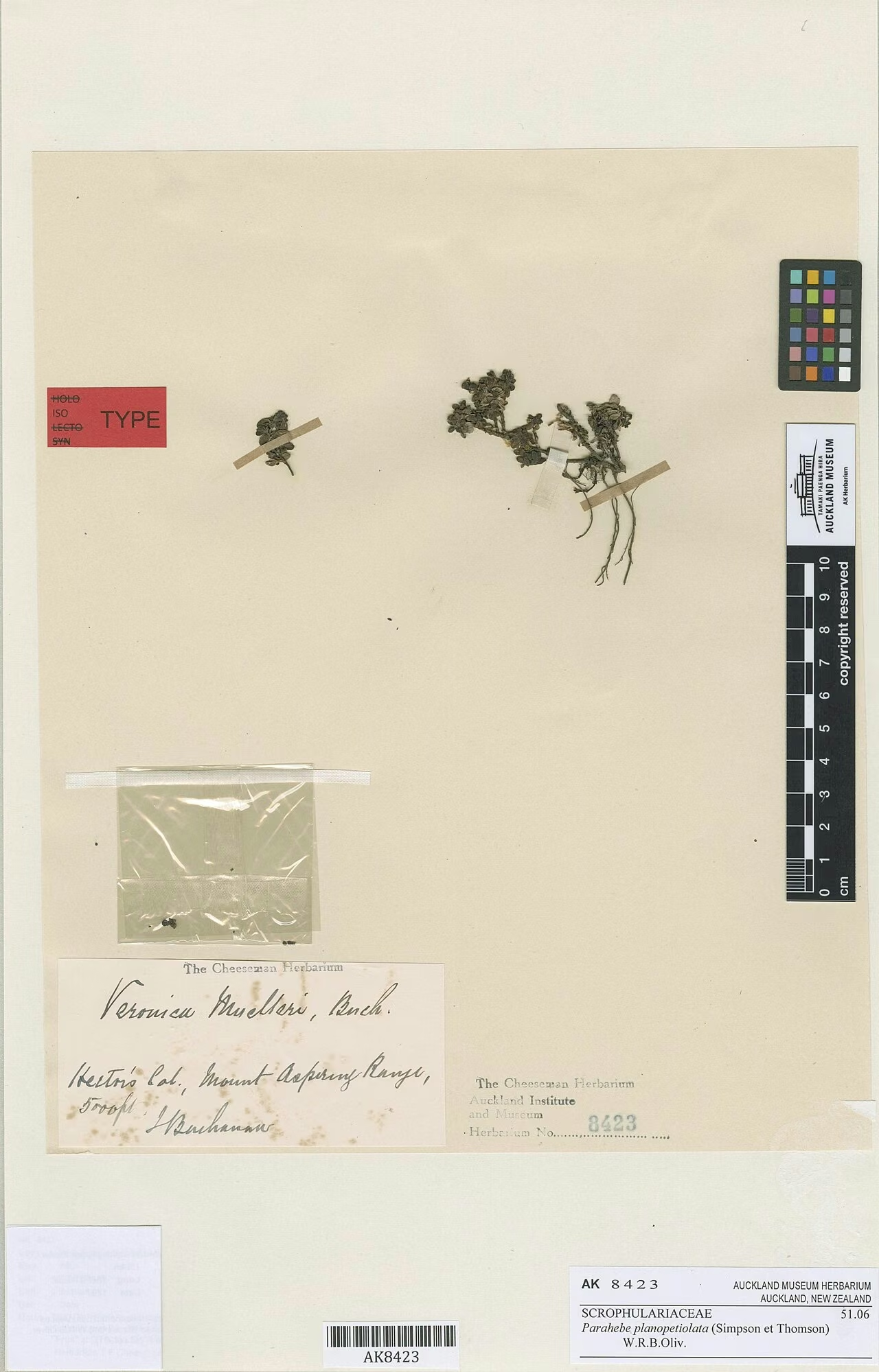
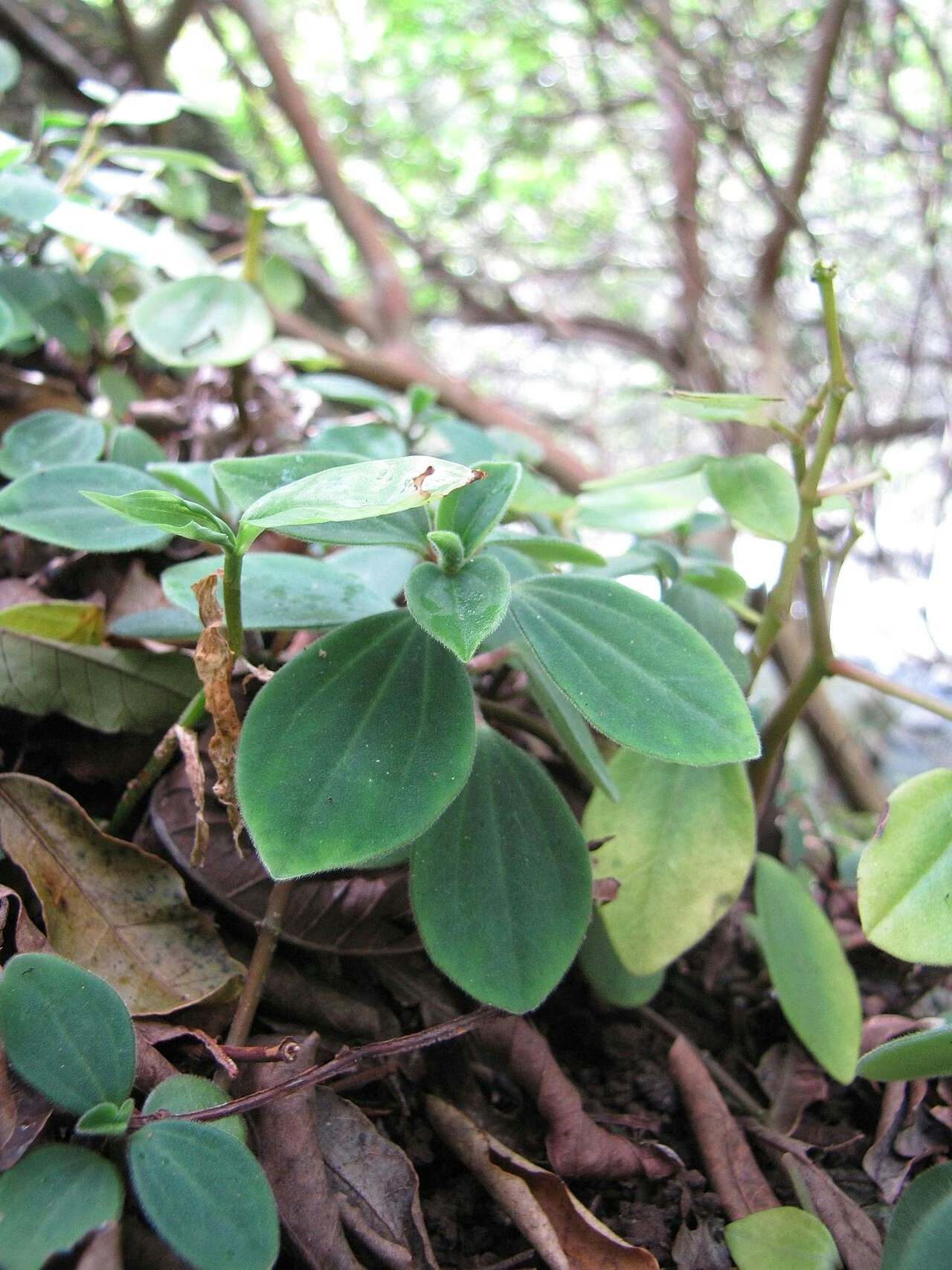
Plant Conservation
Veronica lanceolata is ranked Not Threatened (2023). It is widespread through much of the central and southern North Island.
Riparian weeds, river engineering and changes to natural flood regimes can affect local populations. Protecting natural stream margins and controlling weeds such as willows and exotic grasses benefit it.
Frequently Asked Questions
What is a rheophyte, and why is Veronica lanceolata called one?
A rheophyte is a plant adapted to grow within the flood zone of streams and rivers. NZPCN describes Veronica lanceolata as usually rheophytic, living on banks and rocks that are regularly swept by floodwater.
How is Veronica lanceolata different from Veronica catarractae?
It was once treated as a subspecies of Parahebe catarractae. NZPCN compares it mainly with Veronica senex, from which it differs in its smaller, more gracile habit and typically hairless lance-shaped to ovate leaves.
Where does Veronica lanceolata grow naturally?
It occurs in the North Island from Coromandel, Waikato and Taranaki along the main ranges from East Cape to Wellington, the Volcanic Plateau, Manawatu and Whanganui, and in the South Island only in North-West Nelson.
Can you buy Veronica lanceolata for the garden?
NZPCN notes it is occasionally available from specialist native plant nurseries, and it is easily grown from cuttings, rooted pieces and fresh seed.
Sources and Further Reading
The botanical, growing, and conservation details for Parahebe (Veronica lanceolata) on this page draw on the New Zealand plant references below. Consult them for full technical records and the latest distribution data.