Marlborough Rock Daisy
Shawia minor
Last updated:
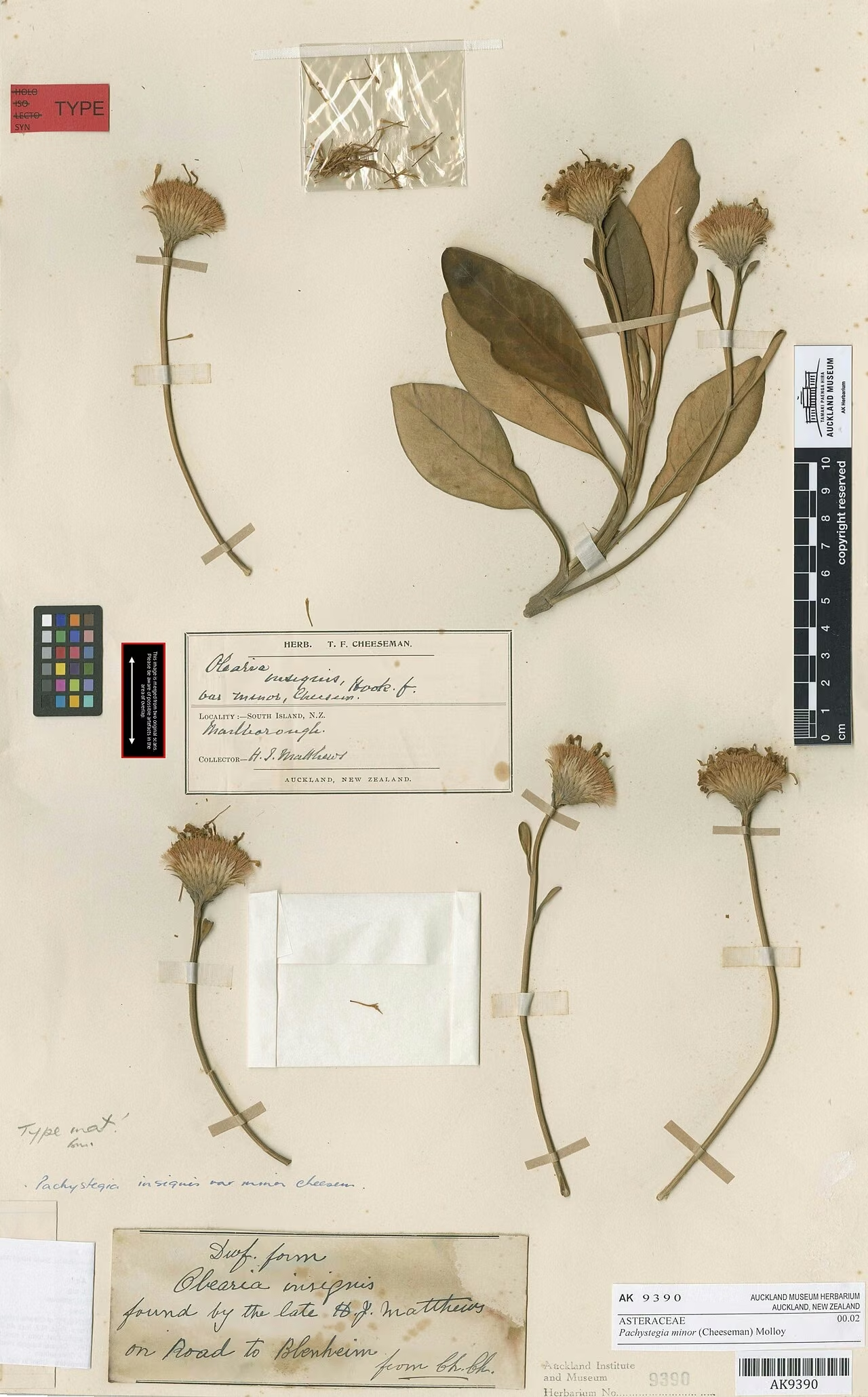
Pachystegia minor, now also known as Shawia minor, is the smaller of the Marlborough rock daisies: a slender, spreading shrub under 1 m tall, endemic to coastal and inland bluffs of south Marlborough between the Clarence and Puhipuhi Rivers. Its leathery diamond-shaped or blunt leaves are 6.5 to 10 cm long with a thin felt of hairs beneath, and from December to February it carries white daisy heads up to 3.5 cm across on slender stalks. It is ranked At Risk - Naturally Uncommon. NZPCN notes it grows easily from fresh seed but is tricky to transplant. Explore more native shrubs in our native plant guide.
Plant Description
Shawia minor is a small, slender, spreading shrub less than 1 m tall. Its thick, leathery leaves are diamond-shaped or blunt-ended, about 6.5 to 10 cm long including the stalk and 2.5 to 4 cm wide, with a thin layer of felted hair on the underside. Molloy recognised two main leaf forms: one with rhomboid (diamond-shaped) leaves that matches Cheeseman's type material, and one with obovate leaves that is prominent on the coast in the Ohau Point area.
The flower heads are white daisies up to 3.5 cm across, carried singly on slender, sometimes leafy stalks about 10 cm long. As in other pachystegias, the buds are enclosed in rows of felty bracts, and each head has a central disc of bisexual florets surrounded by white ray florets. Flowering runs from December to February, the latest of the rock daisies, and the seed is shed from February to April.
It is most easily confused with Pachystegia insignis, the larger and more widespread Marlborough rock daisy. Shawia minor has much smaller, more slender leaves with a thinner felt, and smaller, slender-stalked flower heads that open slightly later. Molloy noted that P. minor tends to make up for smaller heads by producing more of them per plant.
Quick Facts
| Scientific Name | Shawia minor |
|---|---|
| Height | Under 1 m |
| Spread | Slender and spreading; width not recorded in sources consulted |
| Water Needs | Low; highly drought tolerant |
| Light | Full sun |
| Frost Tolerance | Moderate to good; grows in cool-winter Marlborough |
| Salt Tolerance | Good; grows on coastal bluffs on the Kaikōura coast |
| Growth Rate | Slow to moderate |
| Lifespan | Long-lived perennial shrub |
Climate Best Suited to
Suited to the dry, sunny climate of the Kaikōura coast and south Marlborough hills, with warm summers, cool winters, low rainfall and low humidity.
Regional Suitability
| City | Climate Suitability |
|---|---|
| Auckland | Low |
| Wellington | Medium |
| Christchurch | High |
| Dunedin | Medium |
Plant Habitat
Shawia minor is endemic to the South Island, where NZPCN gives its range as from the Clarence River to the Puhipuhi River in south Marlborough. Molloy's DOC report notes it extends from the Puhipuhi River north to the north bank of the Clarence, where it meets Pachystegia insignis, and that its western limits were still poorly known. A large-leaved form grows along the south bank of the Clarence.
It grows on coastal and inland lowland sites, usually confined to steep rocky or stony places, rock faces and slopes. Molloy recorded it on Jurassic sandstone and mudstone, limestone and cemented gravels, and exceptionally on stable riverbed alluvium at Jordan Stream. These base-rich, stable, well-drained rock habitats have few competitors.
Growing Requirements
Soil Requirements
In the wild it grows in crevices of sandstone, mudstone, limestone and cemented gravels that are naturally rich in calcium and phosphorus.
- Very free-draining, stony or rocky ground
- Base-rich soils suit it well
- Avoid heavy, wet clay
Light Requirements
Pachystegias establish best in strong light, although they keep growing slowly in partial shade.
- Full sun is best
- Exposed, windy sites are tolerated
Water Requirements
Its thick leaves and felted undersides make it highly drought resistant, and its roots run deep into cool rock fissures. Plants may wilt in prolonged drought and recover with autumn rain.
- Water only to establish young plants
- Never allow wet feet
- Dislikes humid conditions
Planting and Establishing
Choose the hottest, driest and best-drained spot available, such as a rock wall, bank, raised bed or gravel garden. NZPCN warns that it is tricky to transplant, so plant small, pot-grown specimens and disturb the root ball as little as possible.
Plant in autumn or early spring, firm in with gritty soil, water once or twice to settle, then leave it largely alone. A stony mulch around the base helps keep the collar dry.
Ecological Role
Molloy's studies showed pachystegias are partly self-incompatible and depend on insects to move their sticky, heavy pollen between plants. Recorded visitors to the group include native bees (Leioproctus and Lasioglossum), hover flies and the wheat bug. The seeds are relatively heavy and mostly fall close to the parent; the hygroscopic pappus twists with wetting and drying to work the seed into crevices.
It is part of what J. Wardle termed bluff scrub, a low rupestral community of the Kaikōura coast and hills alongside Brachyglottis monroi and Heliohebe hulkeana. Recruitment onto new rock faces is slow: after roadworks at Ohau Point, seedlings of the obovate-leaved form were recolonising from mature plants left at the top of the bluffs.
Uses & Significance
Garden Uses
A neat, drought-hardy native shrub for dry, sunny sites, and smaller than the familiar Marlborough rock daisy.
- Rock walls, banks and gravel gardens
- Coastal gardens with salt-laden wind
- Low-water and xeriscape plantings
- Smaller gardens where P. insignis would be too large
Ecological Value
It is a key member of a range-restricted bluff flora in south Marlborough.
- Summer nectar and pollen for native bees and hover flies
- Colonises and stabilises bare rock faces
- Carries genetic forms not found in other pachystegias
Landscaping Uses
The thick leathery leaves with felted undersides give year-round texture, and the white daisies with their felted buds are a feature in summer. Grouped in a gravel bed with other dry-country natives such as Heliohebe hulkeana, it evokes the Kaikōura coast bluffs.
Its slender, spreading habit makes it a better scale than Pachystegia insignis for small rock gardens, courtyards and the tops of retaining walls, where it can spill over the edge.
Seasonal Care Calendar
Spring
New leaves expand, and the felted flower buds begin to form at the shoot tips.
- Plant pot-grown specimens before soils dry
- Check that drainage is clear after winter rain
Summer
Flowering runs from December to February, later than Pachystegia insignis.
- Enjoy the white daisies on slender stalks
- Do not water established plants unless drought is severe
Autumn
Seed matures and is shed from February to April.
- Collect seed heads on dry days and sow fresh
- Remove spent stalks if you are not collecting seed
Winter
Growth is slow, and the main risk is prolonged wet around the roots.
- Keep the base free of leaf litter
- Avoid fertilising
When to Prune and How Much
Little pruning is needed. Snip off the old flower stalks after seed has dropped to keep the plant tidy, and remove any dead shoots back to healthy growth.
To be safe, avoid hard cutting into old wood, as no information on how well this species regrows from bare stems was found. Light trimming of the tips after flowering is enough to keep a compact shape.
How to Grow Marlborough Rock Daisy
NZPCN describes Shawia minor as easily grown from fresh seed but tricky to transplant, and notes that it can be grown from cuttings only with extreme difficulty. Molloy's research found that sound seed of all pachystegias germinates readily, usually within two weeks of falling, with germination rates of about 80 to 90 percent, but that it has a short life in storage. Because pachystegias are partly self-incompatible, isolated plants in cultivation often set little sound seed, and those growing near other pachystegia species readily produce hybrids. Collect from several plants of the same species, away from P. insignis, if you want true seedlings.
From Seed
Seed matures from February to April. The heads open on warm sunny days and close in cool wet weather, so collect them when they are dry and fluffy.
- Collect mature seed heads on a dry day in late summer or autumn
- Sow immediately on a free-draining seed mix
- Cover very lightly and keep just moist in a bright spot
- Expect germination within about two weeks
- Pot seedlings individually while small to avoid later root disturbance
From Cuttings
Cuttings are a last resort for this species; NZPCN says they root only with extreme difficulty. If you need to keep a particular form, take several and expect many failures.
- Take short, firm tip cuttings in late summer
- Remove the lower leaves and dip in rooting hormone
- Insert into a gritty, very well drained mix
- Keep in bright light with bottom heat and low humidity
Pests & Diseases
Molloy recorded aphids, thrips and the wheat bug on flowering pachystegias, an inflorescence rot (Phoma) after long periods of rain, and a leaf rust, though their effect appears minimal apart from occasionally reducing seed set.
In the wild, browsing by goats, possums, sheep and rabbits damages many accessible populations. In gardens the biggest threat is root rot in poorly drained or humid sites.
Cultural Significance
No Māori name or traditional Māori use is recorded for Shawia minor in the sources consulted.
Thomas Cheeseman first named it Olearia insignis var. minor in 1916, and Brian Molloy raised it to species rank as Shawia minor in 1987. In 2025 Saldivia and Nicol reinstated the genus Shawia, named after the English scholar Thomas Shaw, and this plant became Shawia minor. Hybrids between P. insignis and P. minor have become popular ornamental shrubs.
Bonus Tip
Rock daisies hybridise freely, so if you collect seed from a garden where Shawia minor grows near Pachystegia insignis, the seedlings may well be hybrids. For true P. minor, collect from plants grown well apart from other rock daisies, ideally sourced from Kaikōura coast stock.
Related Plants
Explore other native plants that share similar characteristics or habitats with Marlborough Rock Daisy (Shawia minor), offering further insights into New Zealand's diverse flora. These related species provide context and opportunities for complementary planting in your garden.
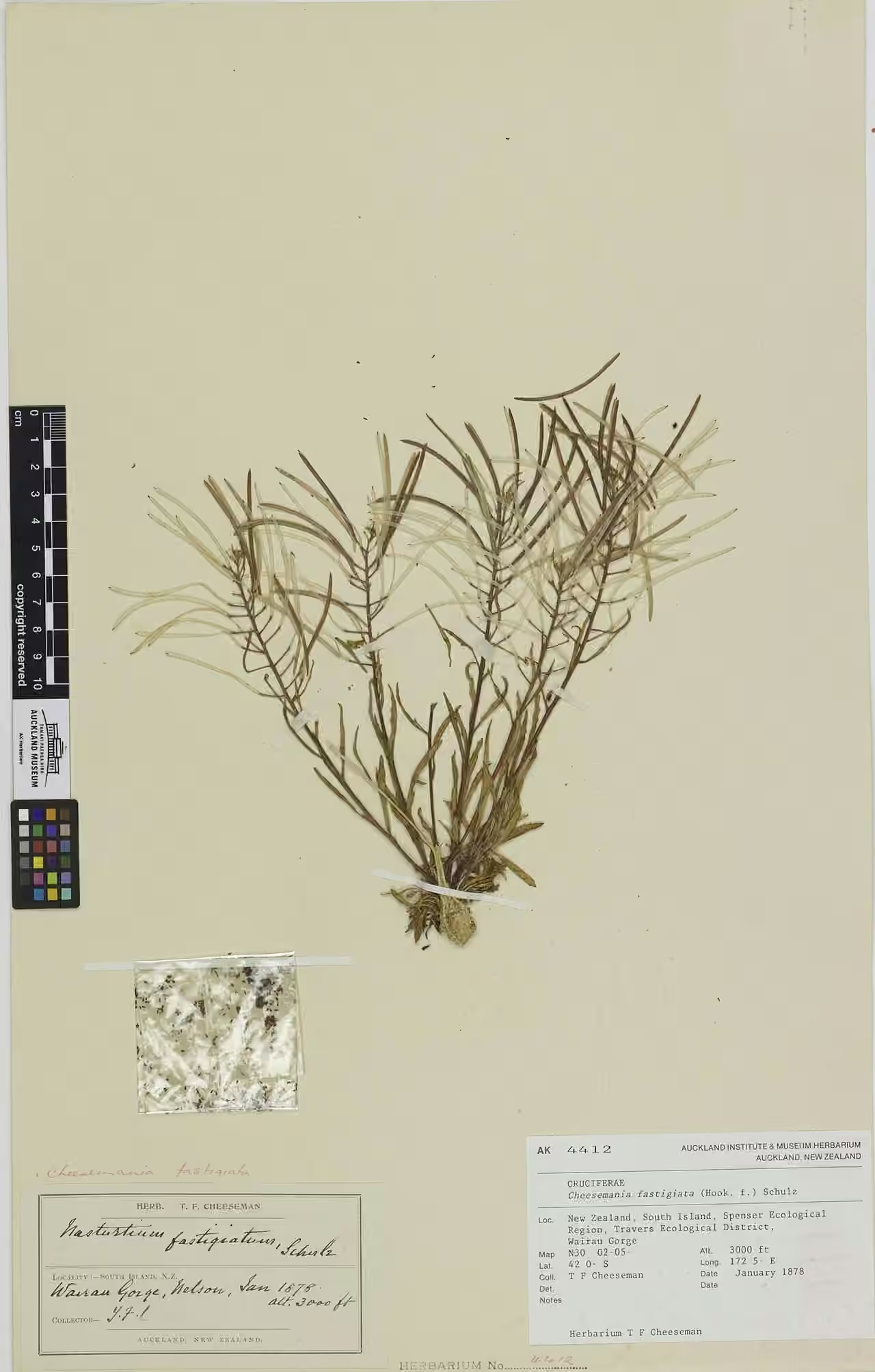
Hairless Cress
Pachycladon fastigiatum
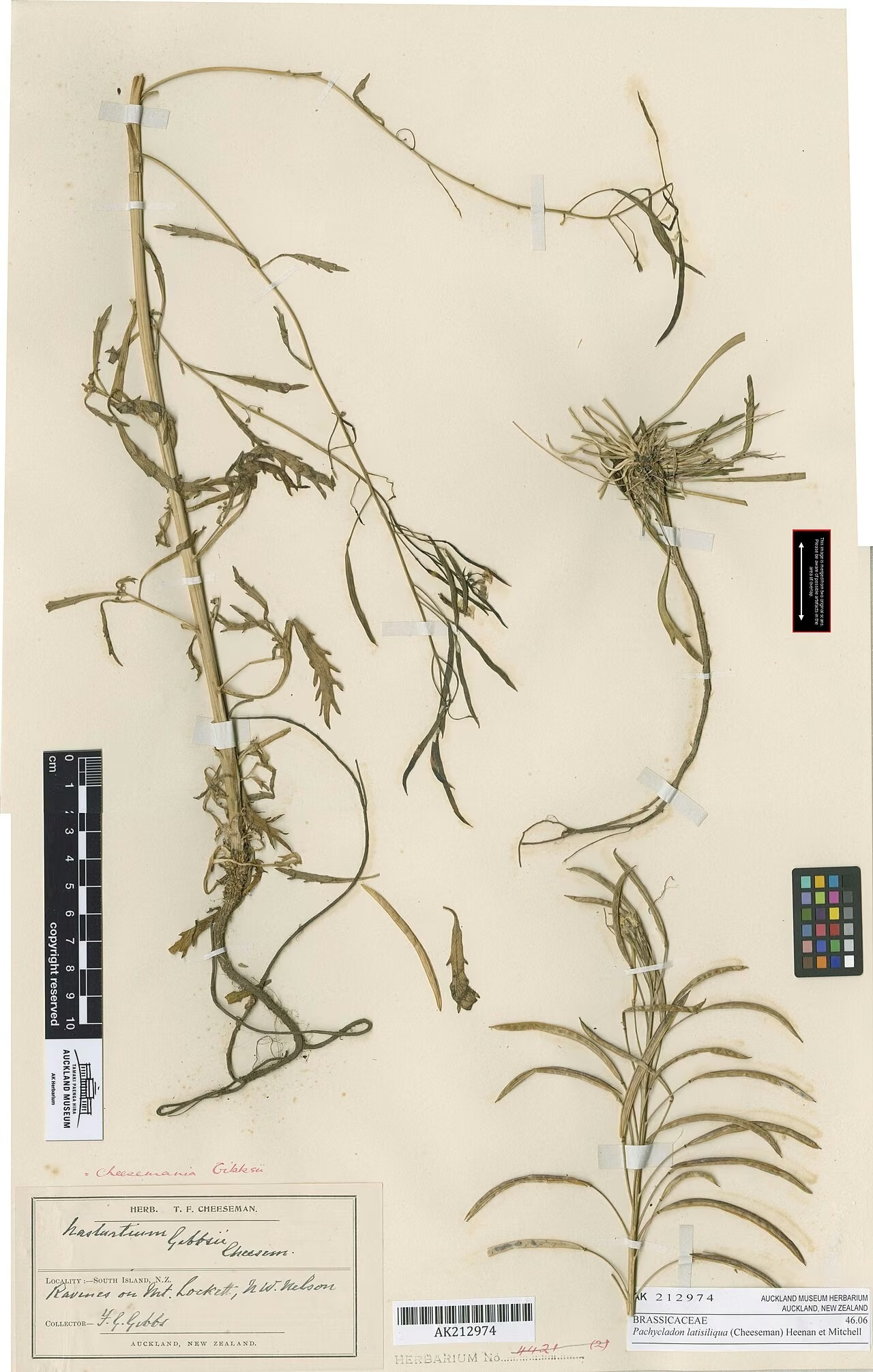
Pachycladon latisiliquum
Pachycladon latisiliquum
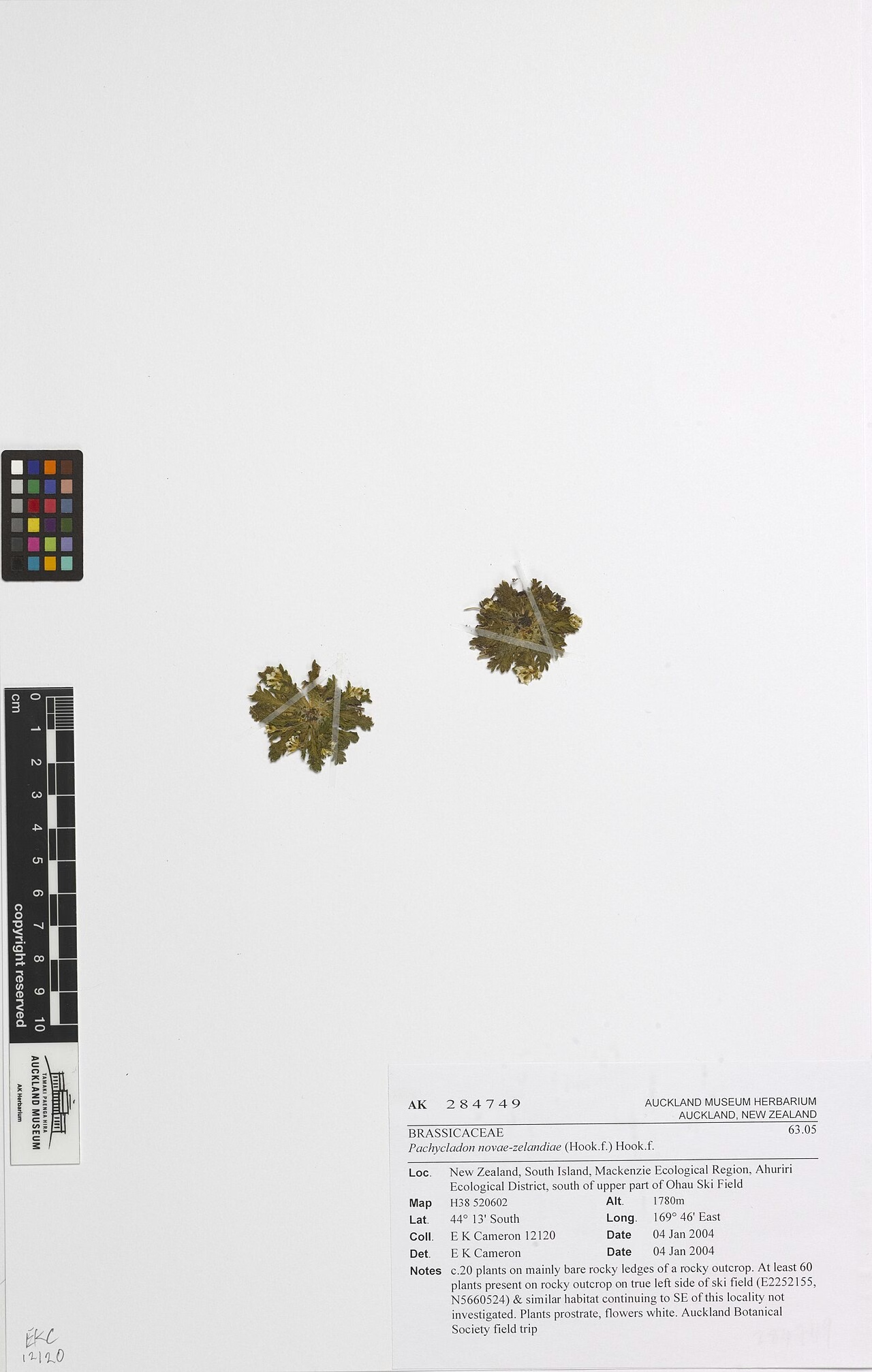
Pachycladon novae zelandiae
Pachycladon novae zelandiae
Pachycladon wallii
Pachycladon wallii
Shawia rufa
Shawia rufa
Veronica colostylis
Veronica colostylis
Tarn Speedwell
Veronica lilliputiana
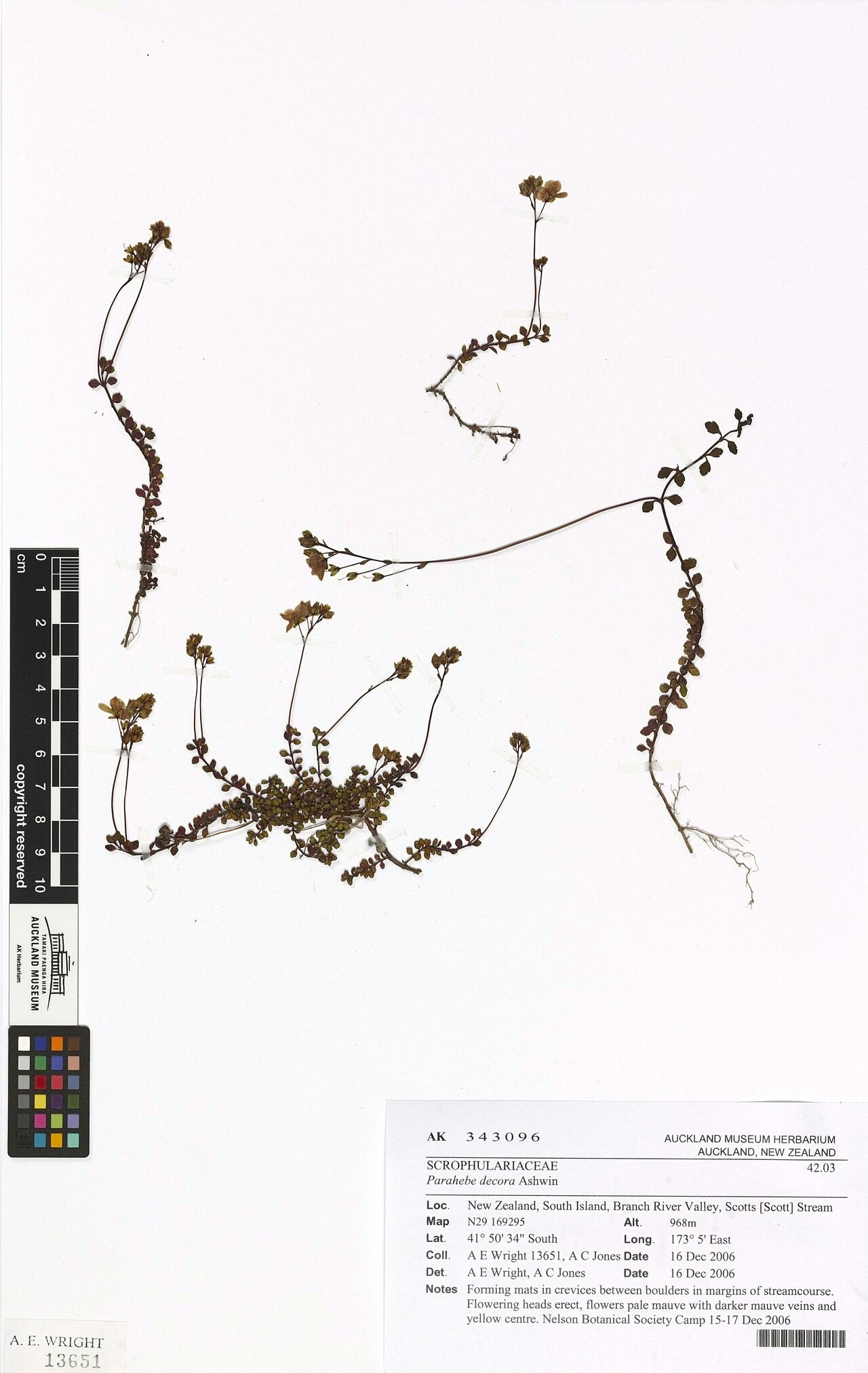
Veronica decora
Veronica decora
Plant Conservation
Shawia minor is ranked At Risk - Naturally Uncommon (2023) with the qualifier range restricted. NZPCN notes it is probably very local in distribution, and that many accessible populations are damaged by browsing animals.
Other threats include roadworks along State Highway 1 (as at Ohau Point), quarrying at Waipapa Bay, fire, and weeds such as gorse, broom and aggressive introduced grasses that occupy the rock crevices seedlings need. Retaining clifftop parent plants as seed sources, controlling browsers and weeds, and planting locally sourced stock help.
Frequently Asked Questions
How is Shawia minor different from the common Marlborough rock daisy?
Compared with Pachystegia insignis it is a smaller, more slender plant with much smaller leaves, a thinner felt beneath, and smaller flower heads on slender stalks about 10 cm long that open slightly later in the season.
Where does Shawia minor grow naturally?
It is endemic to south Marlborough between the Clarence and Puhipuhi Rivers, on steep coastal and inland rock faces, stony slopes and bluffs, including the coastal Ohau Point area.
Is Pachystegia minor the same as Shawia minor?
Yes. A 2025 revision by Saldivia and Nicol merged Pachystegia into the Australasian genus Shawia, so NZPCN now lists this plant as Shawia minor.
Can I grow Shawia minor in my garden?
Yes, in a hot, dry, very well drained spot such as a rock wall. NZPCN says it is easy from fresh seed but tricky to transplant, and cuttings strike only with extreme difficulty.
Sources and Further Reading
The botanical, growing, and conservation details for Marlborough Rock Daisy (Shawia minor) on this page draw on the New Zealand plant references below. Consult them for full technical records and the latest distribution data.