Marlborough Rock Daisy
Shawia rufa
Last updated:
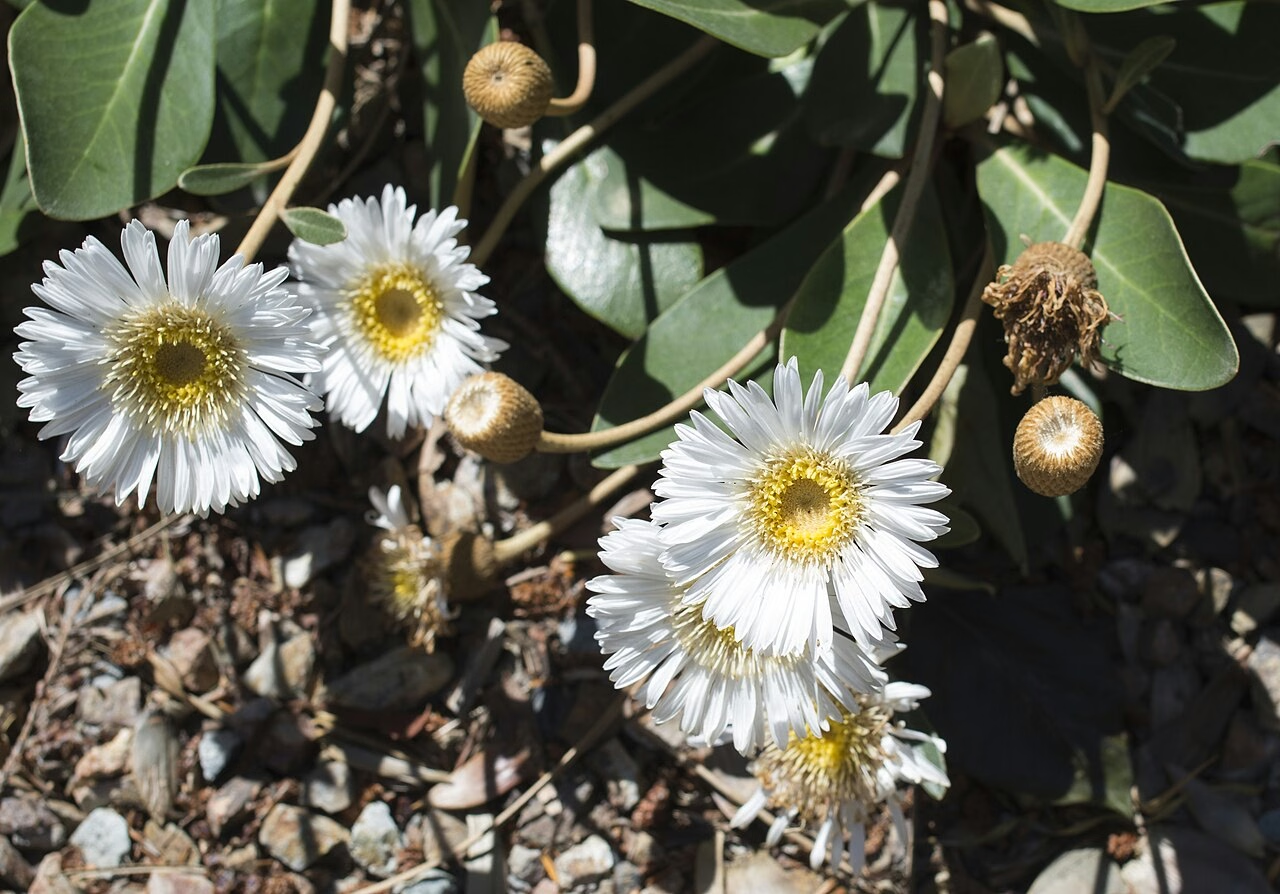
Shawia rufa, now also called Shawia rufa, is the most restricted of the Marlborough rock daisies. This endemic leathery-leaved shrub grows only in the Haldon Hills of Marlborough, where Brian Molloy found it confined to four neighbouring gullies in the fault-bounded Little Haldon Hills, on sandstone, mudstone and cemented gravels. Its name means rusty or red-brown, referring to the coloured felt on its leaves, and it carries large white daisy heads with yellow centres in summer. It is ranked At Risk - Naturally Uncommon, and NZPCN says it grows easily from fresh seed. It was previously known as Pachystegia rufa. Explore more native shrubs in our native plant guide.
Plant Description
Shawia rufa is a low, spreading shrub with the thick, leathery leaves and densely felted young stems, leaf stalks, flower stalks and buds typical of the Marlborough rock daisies. Its distinguishing feature is the colour of that felt: rufa means red-brown or rusty, and it has buff to rusty-toned felt where Pachystegia insignis is white. Molloy noted that its leaf shape and size vary less than in other rock daisies, although plants at Beaumont Creek are smaller than the consistently larger plants in the southern gullies of the Little Haldon Hills.
The flower heads are large white daisies with yellow centres, protected in bud by rows of felty bracts. Molloy found that its heads are the second largest in the group after P. insignis, averaging about 250 disc florets and 100 white ray florets, and up to about 450 florets on cultivated plants. Rock daisies as a group flower from November to February and shed seed from about January to April.
It is separated from Pachystegia insignis mainly by the coloured felt and from Pachystegia minor by its much larger flower heads. Like all pachystegias, it has a chromosome number of 2n = 108. Where it meets P. insignis, fertile hybrids blur the differences, so plants at the edges of its gullies may be intermediate.
Quick Facts
| Scientific Name | Shawia rufa |
|---|---|
| Height | Low spreading shrub; exact height not recorded in sources consulted |
| Spread | Not recorded in sources consulted |
| Water Needs | Low; highly drought tolerant |
| Light | Full sun |
| Frost Tolerance | Moderate to good; native to cool-winter inland Marlborough |
| Salt Tolerance | Not recorded; an inland species |
| Growth Rate | Slow to moderate |
| Lifespan | Long-lived perennial shrub |
Climate Best Suited to
Suited to the dry, sunny inland climate of eastern Marlborough, with warm dry summers, cool winters, low rainfall and low humidity.
Regional Suitability
| City | Climate Suitability |
|---|---|
| Auckland | Low |
| Wellington | Medium |
| Christchurch | High |
| Dunedin | Medium |
Plant Habitat
Shawia rufa is endemic to Marlborough in the South Island and is known only from the Haldon Hills. Molloy described it as confined to four prominent valleys or gullies, all close together, in the fault-bounded Little Haldon Hills. These are bordered by the main Haldon Hills to the east and by outwash and alluvium to the west, both occupied by Pachystegia insignis. He suggested it may be a relatively recent offshoot of P. insignis isolated as the Little Haldon Hills were uplifted and cut by streams.
Like all rock daisies it is a rupestral plant of steep, stable rock faces and stony slopes. It is restricted to Jurassic sandstones and mudstones and cemented gravels derived from them, rock types with relatively high natural fertility, and grows in open sites with good drainage, exposure to sun and wind, and few competing plants.
Growing Requirements
Soil Requirements
In the wild it roots deep into fissures in sandstone, mudstone and cemented gravel, which are naturally rich in calcium-bound phosphorus.
- Very free-draining, rocky or gravelly soil
- Base-rich soils are suitable
- A rock wall or raised scree bed is ideal
Light Requirements
Rock daisies need strong light to establish, though they keep growing slowly in partial shade.
- Full sun
- Open, airy position
Water Requirements
It is highly drought tolerant thanks to its leathery leaves, dense felt and deep roots. NZPCN notes it needs a very dry place and dislikes humidity.
- Water only while establishing
- Never let the roots sit wet
- Avoid humid, sheltered spots
Planting and Establishing
Plant in the driest, sunniest part of the garden, such as the top of a rock wall, a steep bank or a raised gravel bed. Because transplanting is difficult, use young pot-grown plants and handle the root ball gently.
NZPCN notes it is occasionally sold by retail and specialist native plant nurseries. Plant away from other rock daisies if you want to collect true seed later, and use a stone mulch rather than bark to keep the collar dry.
Ecological Role
Rock daisies are partly self-incompatible and rely on insects to carry their sticky, heavy pollen. Molloy recorded native bees (Leioproctus and Lasioglossum), hover flies and the wheat bug as visitors to the group. Seed mostly falls close to the parent, and the hygroscopic pappus twists to drive it into soil and crevices.
Molloy believed all rock daisies once grew on well-lit bluffs within mixed forest, and expanded onto open ground after deforestation. Shawia rufa now forms part of the bluff scrub of the Little Haldon Hills, where it meets and hybridises with P. insignis, making these gullies a natural laboratory for the evolution of the group.
Uses & Significance
Garden Uses
A choice, drought-hardy shrub for specialist native gardeners who want something less common than the familiar Marlborough rock daisy.
- Rock walls and dry banks
- Gravel and xeriscape gardens
- Collections of Marlborough dryland plants
- Conservation planting from known-source stock
Ecological Value
It is a narrow endemic that represents a distinct lineage within the rock daisies.
- Summer nectar and pollen for native bees and hover flies
- Stabilises steep rock faces in the Little Haldon Hills
- Holds genetic diversity found nowhere else
Landscaping Uses
The rusty-toned felt on the leaves and buds gives Shawia rufa a warmer look than the silvery-white P. insignis, and the large white daisies stand out against it in summer. It works well as a single feature plant in a gravel garden or tumbling over the top of a stone wall.
Pair it with other dry-country natives that share its needs for sun and sharp drainage, but keep it apart from other rock daisies if seed purity matters to you.
Seasonal Care Calendar
Spring
New felted shoots and flower buds develop.
- Plant young pot-grown specimens
- Check for aphids on soft new growth
Summer
The large white daisy heads open; rock daisies as a group flower from November to February.
- Watch for native bees visiting the flowers
- Do not water established plants
Autumn
Seed ripens and is shed, generally from January to April in the group.
- Collect dry seed heads on sunny days and sow fresh
- Cut off spent stalks if not saving seed
Winter
Growth slows, and excess wet is the main risk.
- Clear fallen leaves from around the base
- Do not fertilise
When to Prune and How Much
Very little pruning is required. Remove spent flower stalks once seed has fallen and cut out any dead branches to healthy wood.
Light tip trimming after flowering keeps it compact; avoid heavy cuts into old wood, as no information on how well it regrows from bare stems was found.
How to Grow Marlborough Rock Daisy
NZPCN states that Shawia rufa is best grown from fresh seed, which germinates easily, while cuttings are difficult to establish. Molloy's work on the group found that sound rock daisy seed germinates within about two weeks of falling with germination of around 80 to 90 percent, but stores poorly. Rock daisies are partly self-incompatible, so a lone garden plant may set little good seed, and they hybridise readily with other rock daisies grown nearby. For conservation planting, use seed from known Haldon Hills stock and collect from several plants to maintain genetic diversity.
From Seed
The flower heads open fully on warm sunny days to release seed and close in wet weather. Gather them when dry.
Molloy found that rock daisy seed is relatively heavy and is not carried far by wind, so in cultivation it is easy to catch by tying a paper bag over a ripening head. Sow it within days rather than storing it, because viability falls quickly.
- Collect mature seed heads on a dry, sunny day
- Sow straight away on a free-draining seed mix
- Cover lightly and keep just moist in good light
- Expect germination within about two weeks
- Pot seedlings singly while small, as older plants resent disturbance
From Cuttings
NZPCN says cuttings are difficult to establish, so use them only to preserve a particular plant.
- Take firm tip cuttings in late summer
- Trim lower leaves and apply rooting hormone
- Insert into a coarse, gritty mix
- Keep bright and warm with low humidity until rooted
Pests & Diseases
NZPCN notes that some populations have been damaged by goat and possum browse. Molloy also listed sheep and rabbits as browsers of rock daisies, and recorded aphids, thrips, the wheat bug, an inflorescence rot after continuous rain and a leaf rust on the group, although their effects are usually minor.
In gardens, the main problem is rot in humid or poorly drained conditions; the plant dislikes humidity.
Cultural Significance
No Māori name or traditional Māori use is recorded for Shawia rufa in the sources consulted.
Brian Molloy named Shawia rufa in 1987 after studying the rock daisies of Marlborough and North Canterbury from 1978. The largest population grows on the Waterfalls property in the Little Haldon Hills, where a QEII National Trust open space covenant protects it. Since 2025 it has been treated as Shawia rufa, the genus honouring the English scholar Thomas Shaw.
Bonus Tip
If you buy Shawia rufa, check that the leaves and buds have the characteristic rusty or buff felt rather than pure white. Because rock daisies hybridise so freely in cultivation, garden-raised seedlings may be hybrids with P. insignis, so ask the nursery where its stock came from.
Related Plants
Explore other native plants that share similar characteristics or habitats with Marlborough Rock Daisy (Shawia rufa), offering further insights into New Zealand's diverse flora. These related species provide context and opportunities for complementary planting in your garden.
Pachycladon latisiliquum
Pachycladon latisiliquum
Pachycladon novae zelandiae
Pachycladon novae zelandiae
Pachycladon wallii
Pachycladon wallii
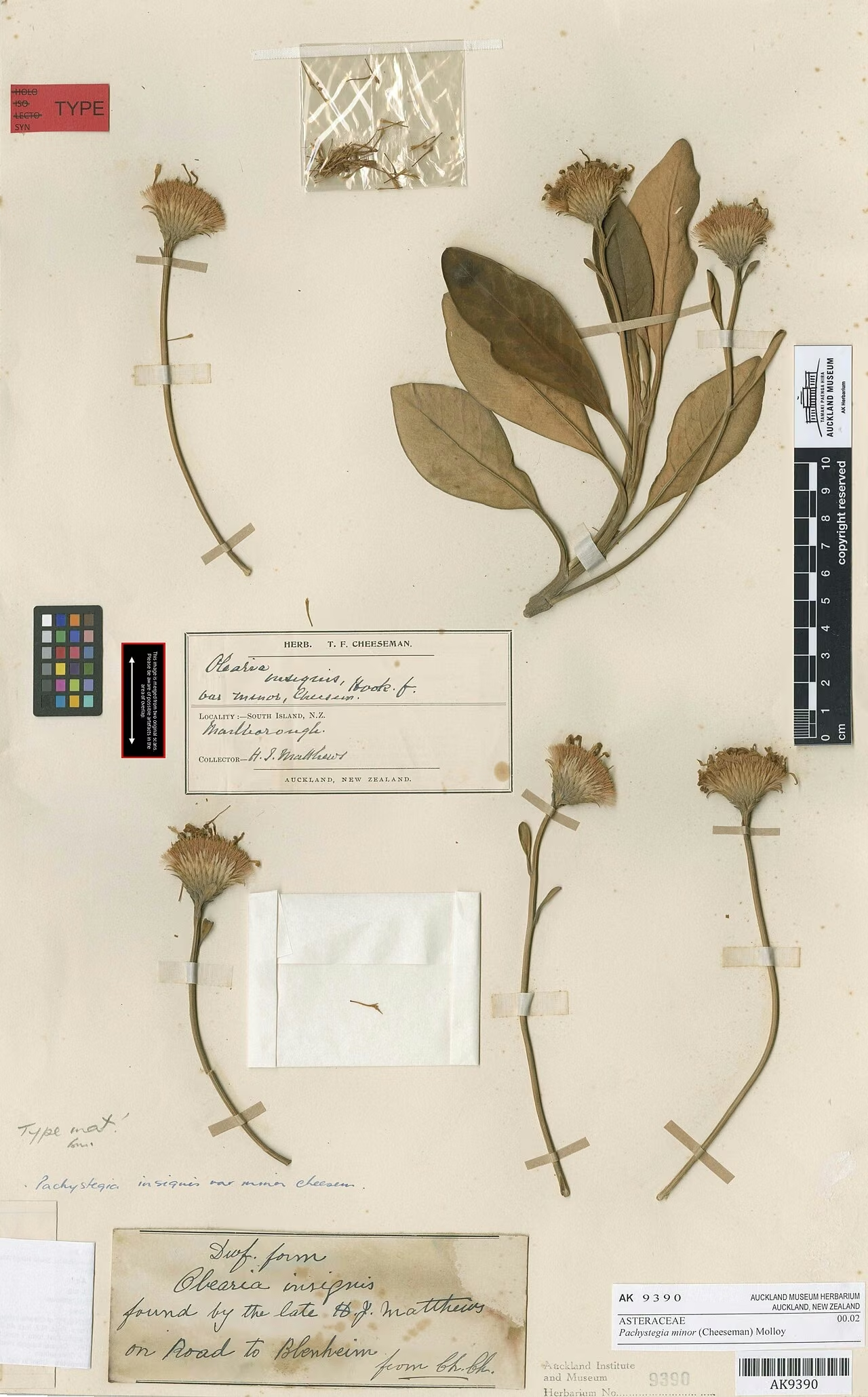
Shawia minor
Shawia minor
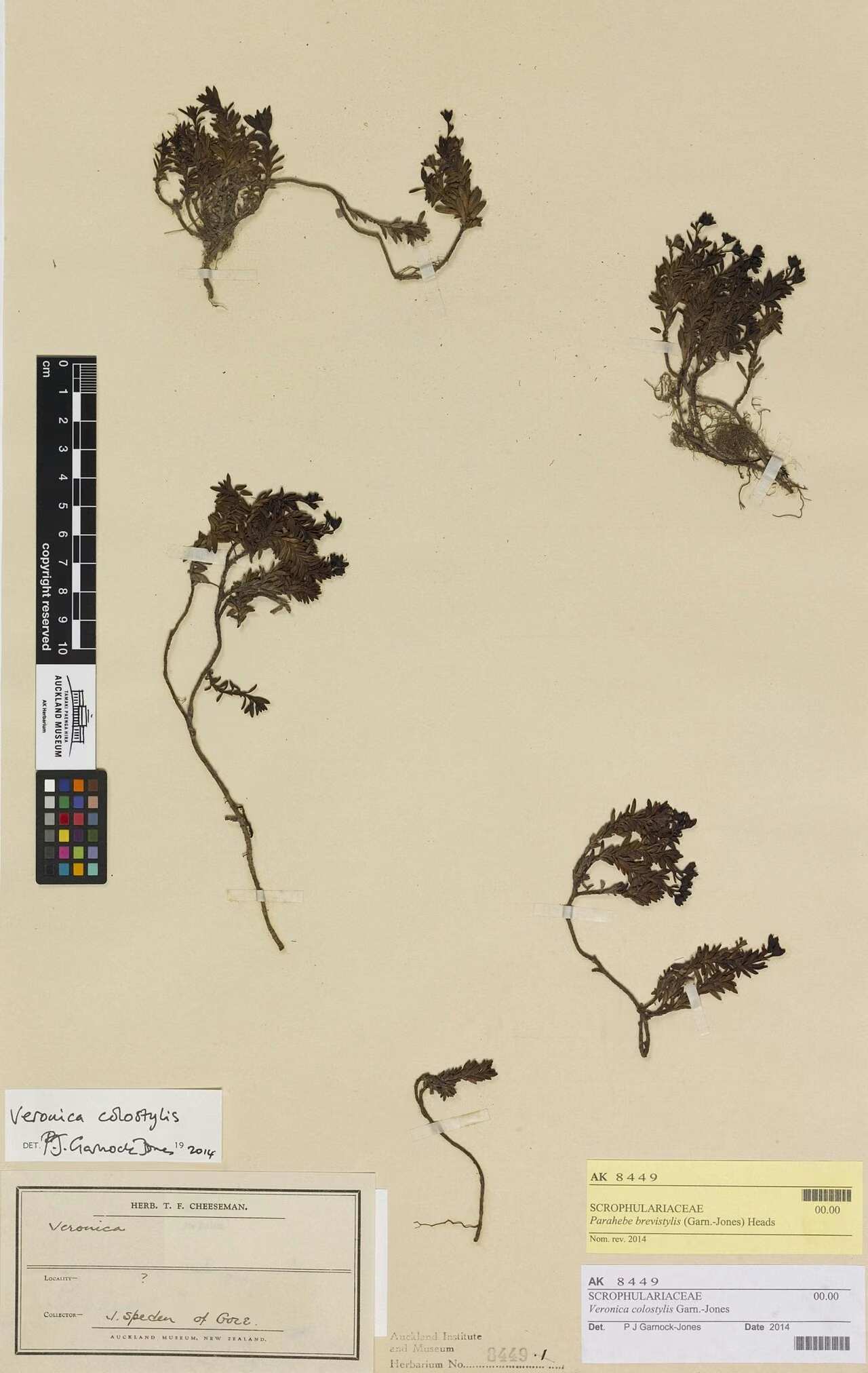
Veronica colostylis
Veronica colostylis
Tarn Speedwell
Veronica lilliputiana
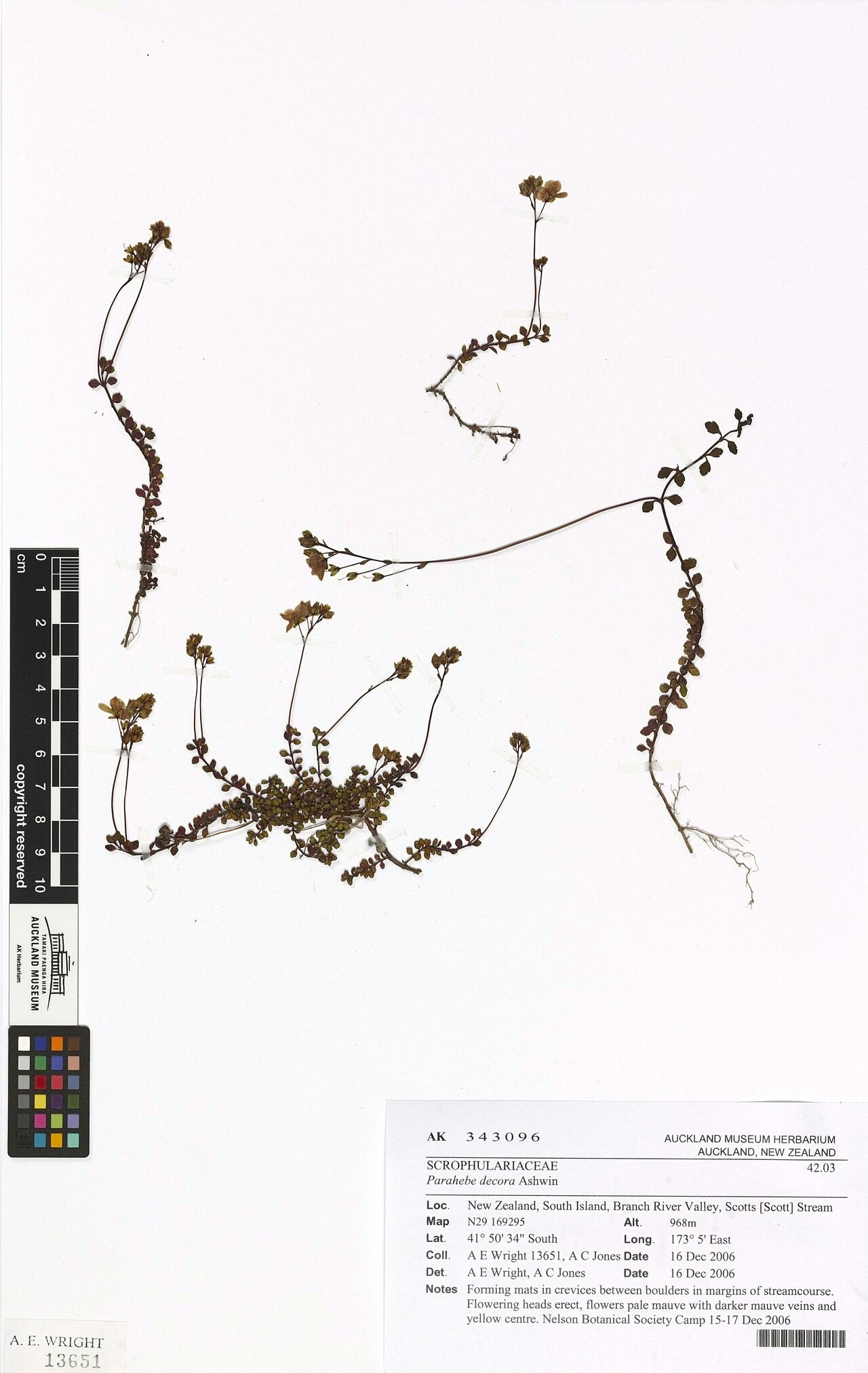
Veronica decora
Veronica decora
Veronica lanceolata
Veronica lanceolata
Plant Conservation
Shawia rufa is ranked At Risk - Naturally Uncommon (2023) with the qualifier range restricted. It was once listed as Declining in 1999, and remains relatively common within its very small range.
Molloy identified quarrying in the Little Haldon Hills, herbicide spraying, wilding trees, broom, animal browsing and the spread of aggressive introduced grasses and weeds such as cocksfoot, hawkweed and stonecrop into rock crevices as threats. The QEII covenant over its largest population, browser control, weed control on bluffs and retaining clifftop seed-bearing plants all help secure it.
Frequently Asked Questions
Where does Shawia rufa grow?
Only in the Haldon Hills of Marlborough. Molloy's DOC report found it confined to four gullies in the fault-bounded Little Haldon Hills, including the type locality at Beaumont Creek, surrounded by populations of Pachystegia insignis.
What does rufa mean in Shawia rufa?
Rufa is Latin for red-brown or rusty coloured, describing the coloured felt on the plant, which distinguishes it from the white felt typical of the common Marlborough rock daisy.
Does Shawia rufa hybridise with other rock daisies?
Yes. Molloy recorded fertile hybrid swarms in at least two places in the Haldon Hills where Shawia rufa meets Pachystegia insignis, and hybrids readily arise when rock daisies are grown close together in gardens.
How do you grow Shawia rufa?
NZPCN advises a very dry, sunny site with free-draining soil, ideally a rock wall. It dislikes humidity and is hard to transplant, and is best raised from fresh seed, which germinates easily.
Sources and Further Reading
The botanical, growing, and conservation details for Marlborough Rock Daisy (Shawia rufa) on this page draw on the New Zealand plant references below. Consult them for full technical records and the latest distribution data.