Pachycladon
Pachycladon wallii
Last updated:
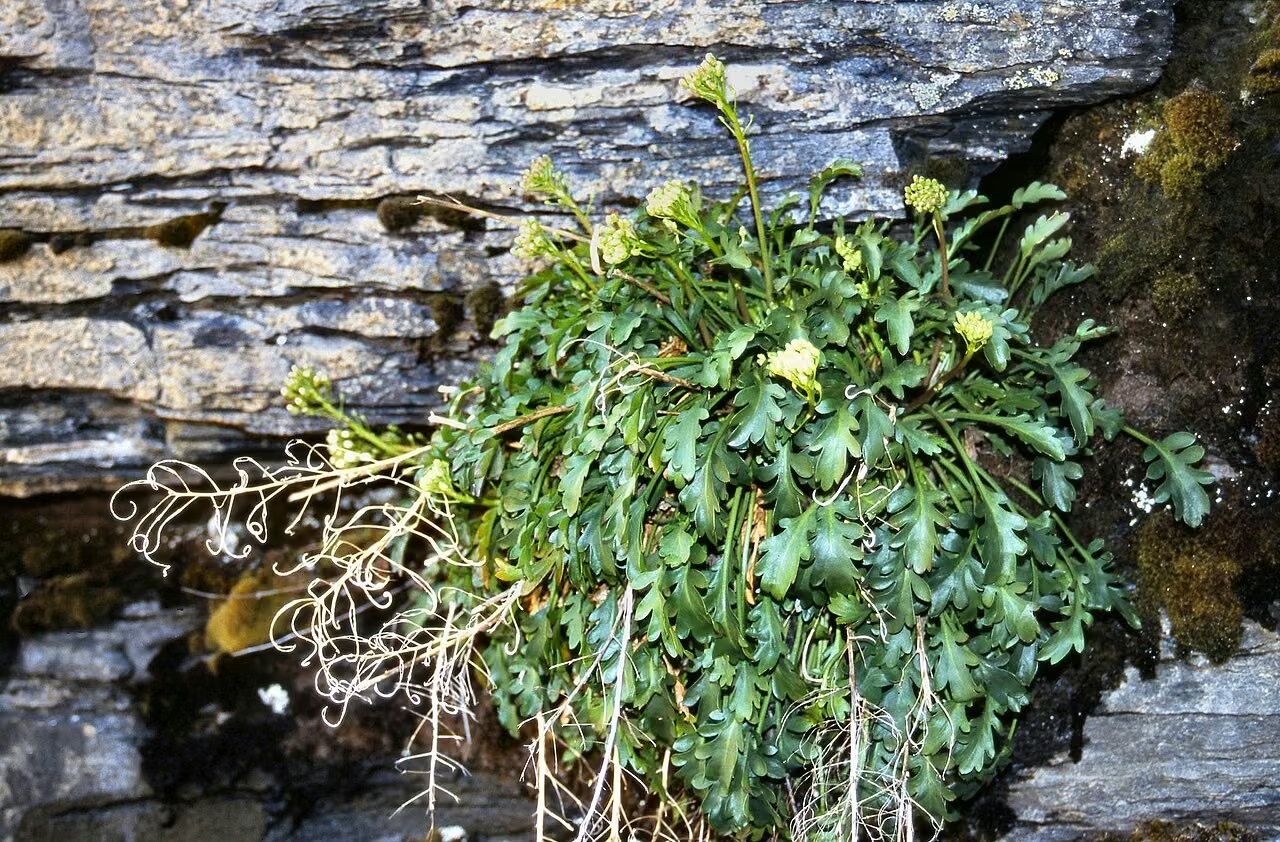
Pachycladon wallii is a rare endemic alpine herb in the cabbage family, found on shaded ledges and crevices of south-facing schist cliffs in the mountains of northern Southland and western Otago, including the Eyre, Hector and Garvie Mountains, mostly above about 1400 m. A stout stock and deep taproot carry a dense rosette of leathery, hairless, very deeply four-lobed leaves up to 18 cm long, and an unbranched spike of white flowers up to 30 cm tall. It is ranked At Risk - Declining and has been studied for its unusual separation of plant genders. Explore more native flowering plants in our native plant guide.
Plant Description
Pachycladon wallii has a stout stock with a deeply descending taproot, crowned by a dense rosette of basal leaves. The leaves are leathery and hairless, lanceolate to spoon-shaped overall and up to 18 cm long including the broad, flat stalk. The blade itself is about 2 to 5 cm long and 1 to 2.5 cm wide and is very deeply cut into four blunt lobes, each tipped with a tiny point. There are no leaves on the flowering stem.
The flowers are carried in an unbranched raceme up to 30 cm tall, many of them clustered towards the top in a flattish group. Sepals are oblong and about 4 to 5 mm long, and the white petals are about 10 mm long, spoon-shaped with a long narrow claw, which makes them large for a New Zealand cress. Fruits are near-erect, narrow linear siliques up to 5 cm long and 3 mm wide containing flattened seeds.
Its large, leathery, deeply four-lobed hairless leaves on long flat stalks, combined with a single unbranched raceme of relatively large flowers, distinguish it from the small hairy rosettes of Pachycladon novae-zelandiae and the toothed fleshy leaves of Pachycladon fastigiatum. A 1991 study by Garnock-Jones documented gender dimorphism in the species, so not every plant carries fully functional male and female parts.
Quick Facts
| Scientific Name | Pachycladon wallii |
|---|---|
| Height | Flowering raceme up to 0.3 m |
| Spread | Rosette of leaves up to 18 cm long |
| Water Needs | Moderate; cool, shaded rock ledges |
| Light | Shade to partial shade on south-facing cliffs |
| Frost Tolerance | High; an alpine species |
| Salt Tolerance | Not recorded; an inland mountain plant, so assume low |
| Growth Rate | Slow |
| Lifespan | Perennial |
Climate Best Suited to
Suited to the cold, snowy alpine climate of the mountains between Lake Wakatipu and northern Southland, growing on cool, shaded cliff faces rather than sun-baked rock.
Regional Suitability
| City | Climate Suitability |
|---|---|
| Auckland | Low |
| Wellington | Low |
| Christchurch | Low |
| Dunedin | Medium |
Plant Habitat
Pachycladon wallii is endemic to the southern South Island. Herbarium collections come from the head of Eyre Creek and Wither Stream in the Eyre Mountains, the Hector Mountains above Wye Creek, and the Garvie Mountains at Lake Laura. NZPCN qualifies it as range restricted and sparse, and Otago lists it as regionally declining.
Its habitat is very specific: shaded ledges and cracks on south or south-west facing schist cliffs and bluffs, recorded from about 1400 m upward. These shady, cool faces stay moist longer than sunny rock and are out of reach of most grazing animals.
Growing Requirements
Soil Requirements
It roots into crevices and ledges in schist bedrock, where small amounts of mineral soil and organic debris accumulate.
- Shallow, gritty crevice soil over schist
- Excellent drainage with a cool, moist root run
- Deep fissures for the descending taproot
Light Requirements
Unlike many alpine cresses it favours shaded, south-facing cliffs.
- Shade or partial shade
- Protection from hot afternoon sun
- Bright indirect light from the open sky
Water Requirements
South-facing cliffs at high altitude hold snow and moisture well into the growing season, so the roots rarely dry out completely.
- Keep roots cool and evenly moist
- Never allow water to sit around the crown
- Avoid both drought and waterlogging
Planting and Establishing
Pachycladon wallii is not available from nurseries and no cultivation notes were found in the sources consulted. As a declining, range-restricted species, it should never be collected from the wild.
For conservation growers, its preferences suggest a deep pot or shaded vertical crevice in an alpine house or rock garden, a gritty mix with some schist, consistent cool moisture, shade from midday sun and careful protection from slugs.
Ecological Role
The 1991 study of gender dimorphism indicates that plants differ in their sexual function, a breeding system that in other plants generally promotes cross-pollination. The large white flowers, clustered at the top of the raceme, are likely visited by alpine flies and native bees, but specific pollinator records were not found in the sources consulted.
Its shaded cliff ledges form a refuge habitat. Plants on these faces escape most browsing and competition, and the species is part of a specialised cliff flora of the Eyre, Hector and Garvie Mountains.
Uses & Significance
Garden Uses
This rare species has no established garden use.
- Conservation collections in botanic gardens
- Specialist shaded alpine crevice culture only
- Not for sale or general planting
Ecological Value
It is a declining endemic with a tiny range and an unusual breeding system.
- Part of the cliff flora of the southern Otago and northern Southland mountains
- Provides early summer nectar and pollen to alpine insects
- Scientifically valuable for its gender dimorphism
Landscaping Uses
In its natural setting, the leathery rosettes and tall white flower clusters on shaded schist ledges are a striking sight, and the best way to see it is on an alpine trip into the Eyre or Garvie Mountains with care to avoid disturbing cliff bases.
It is a reminder that not all alpine rock plants want full sun; for a gardener, a cool south-facing crevice is the niche this kind of plant needs.
Seasonal Care Calendar
Spring
Snow lingers on its south-facing cliffs, and rosettes start into growth late compared with lower-altitude plants.
- Avoid climbing on known cliff sites
- No intervention needed
Summer
The unbranched racemes of white flowers appear in summer; exact months were not recorded in the sources consulted.
- Photograph flowering plants to help document flowering times
- Record locations on iNaturalist NZ
Autumn
Narrow pods up to 5 cm long ripen and shed flattened seeds onto ledges below.
- Leave seed undisturbed in the wild
- Sow any cultivated seed fresh
Winter
The cliffs are cold, shaded and often snow-covered, and plants are dormant.
- No action required
- Keep any cultivated plants cool and not waterlogged
When to Prune and How Much
No pruning is required. On a cultivated plant the spent flowering raceme can be removed at its base once seed has been collected.
Remove any dead leaves that collect in the rosette, as trapped debris in a shady, damp position encourages rot.
How to Grow Pachycladon
No published propagation information for Pachycladon wallii was found in the sources consulted, and it is not in commercial cultivation. The methods below are general approaches for alpine rosette cresses and have not been tested for this species. Because Pachycladon wallii is ranked At Risk - Declining, any propagation should be part of a recognised conservation programme with permission from the Department of Conservation and landholders. Its gender dimorphism also means seed set may depend on having plants of different sexual types present, so seed should be gathered from several individuals to capture genetic diversity.
From Seed
Seed develops in narrow pods up to 5 cm long. Fresh seed sown promptly and exposed to winter cold offers the best chance for most alpine cresses.
- Collect ripe pods from several cultivated or permitted plants
- Sow fresh seed on a gritty mix and cover lightly with grit
- Stand the pot in a cool, shaded spot outdoors over winter
- Move seedlings to deep pots before the taproot lengthens
- Grow on in bright shade with steady moisture
From Cuttings
A rosette with a portion of stock may root if detached from a cultivated plant that has formed more than one crown, but there is little material to work with on a single-rosette plant.
- Take any side rosette with a heel of stock in spring
- Allow the base to dry briefly
- Insert into moist pumice in a cool, shaded frame
- Pot on gently once roots have formed
Pests & Diseases
No specific pest or disease records for Pachycladon wallii were found in the sources consulted. Its cliff habitat protects it from much browsing, but plants on accessible ledges may be grazed by goats, chamois or hares.
In cultivation, slugs, snails and cabbage white butterfly caterpillars would be expected to damage the leaves, and the shaded, moist conditions it needs also raise the risk of rot if air movement is poor.
Cultural Significance
No Māori name or traditional Māori use is recorded for Pachycladon wallii in the sources consulted.
It was described by Harry Carse as Nasturtium wallii, then moved to Cheesemania by Harry Allan, and finally to Pachycladon by Peter Heenan and Anthony Mitchell after molecular study of the group. Garnock-Jones's 1991 paper on its gender dimorphism made it one of the better-studied species in the genus from a reproductive point of view.
Bonus Tip
When looking for this species, ignore sunny rock and search the shaded side: Pachycladon wallii has been collected almost entirely from ledges and cracks on south and south-west facing schist cliffs. Binoculars are often more useful than climbing, which risks dislodging plants.
Related Plants
Explore other native plants that share similar characteristics or habitats with Pachycladon (Pachycladon wallii), offering further insights into New Zealand's diverse flora. These related species provide context and opportunities for complementary planting in your garden.
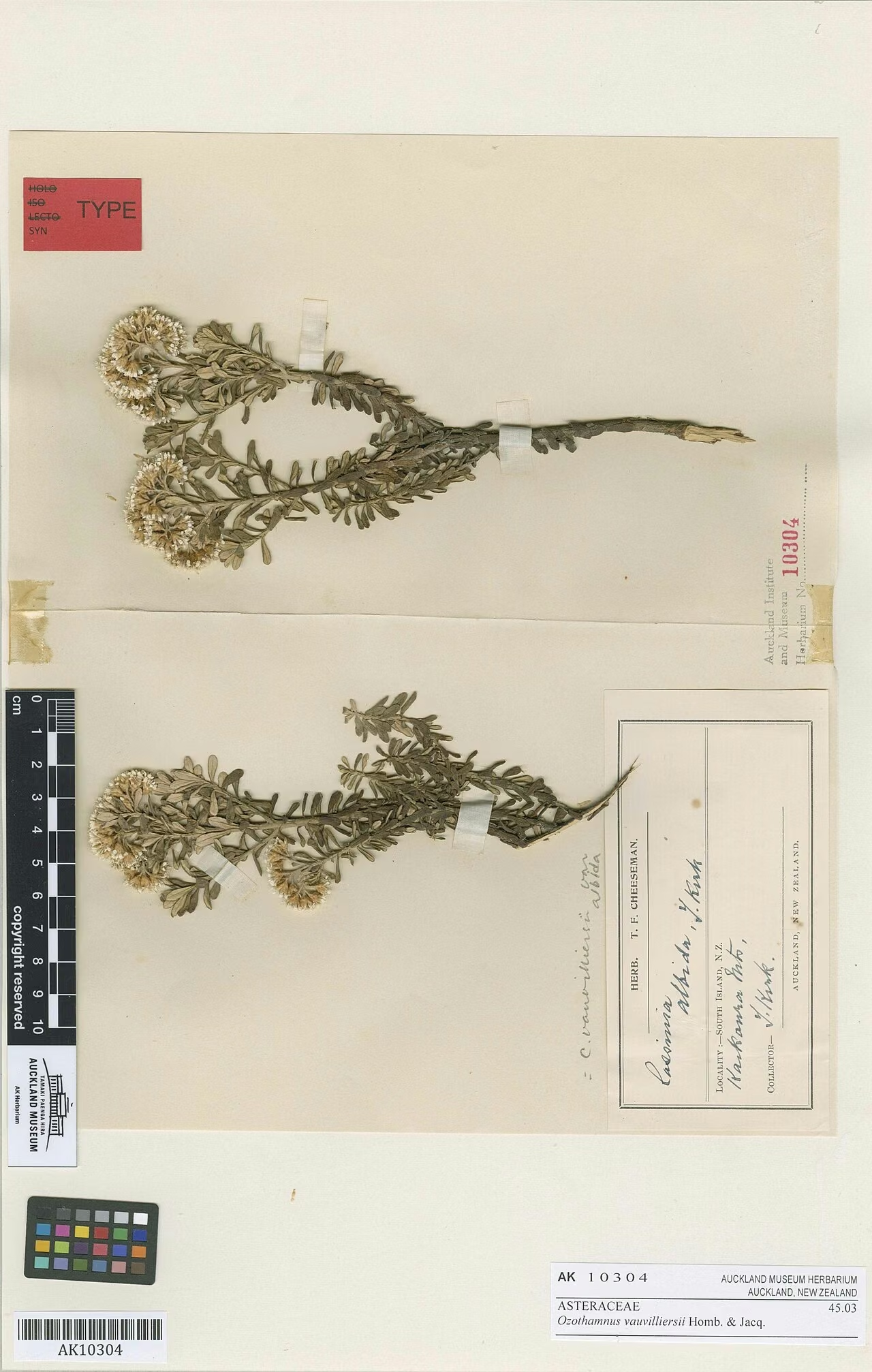
Mountain Tauhinu
Ozothamnus vauvilliersii
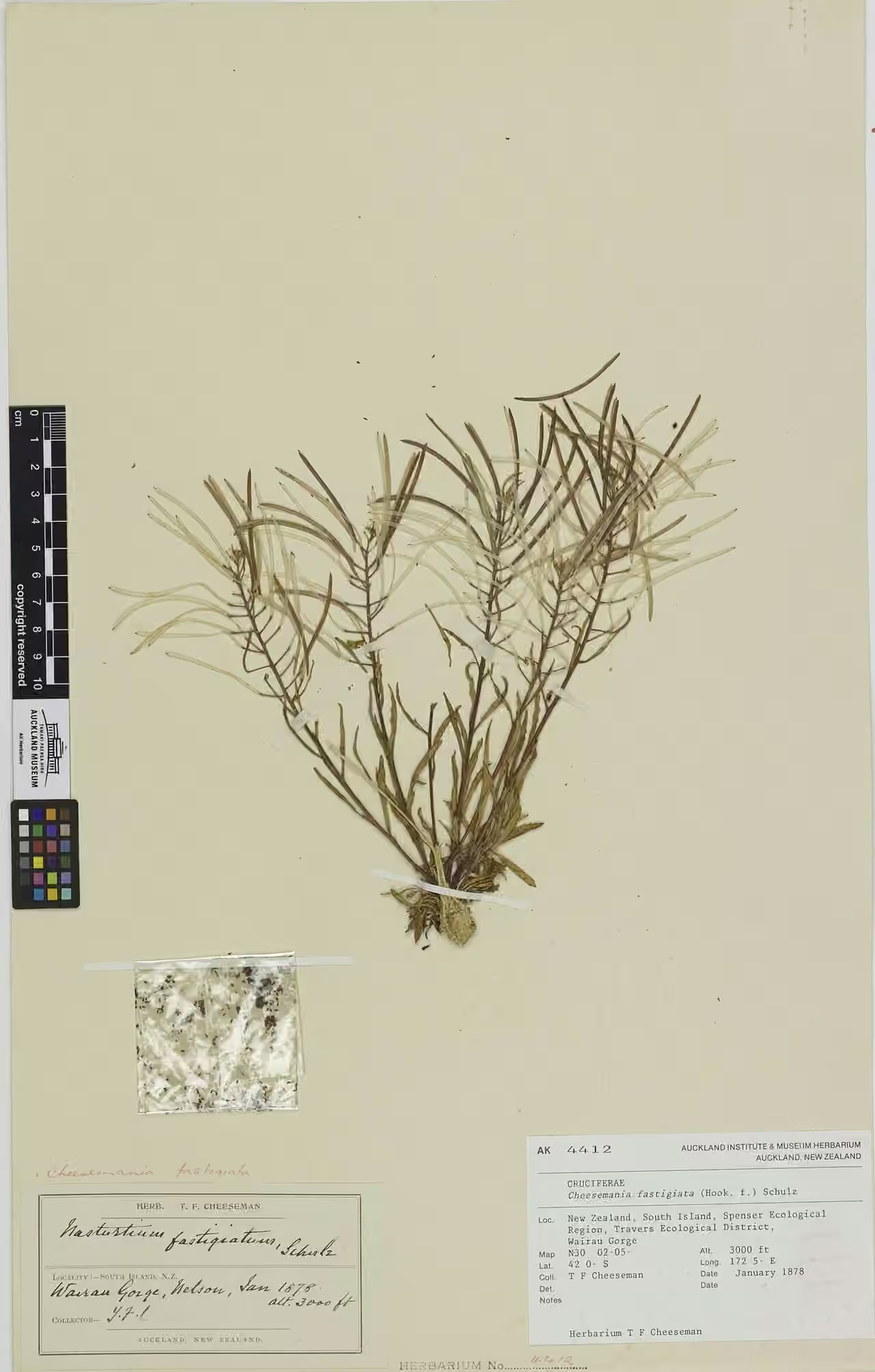
Hairless Cress
Pachycladon fastigiatum
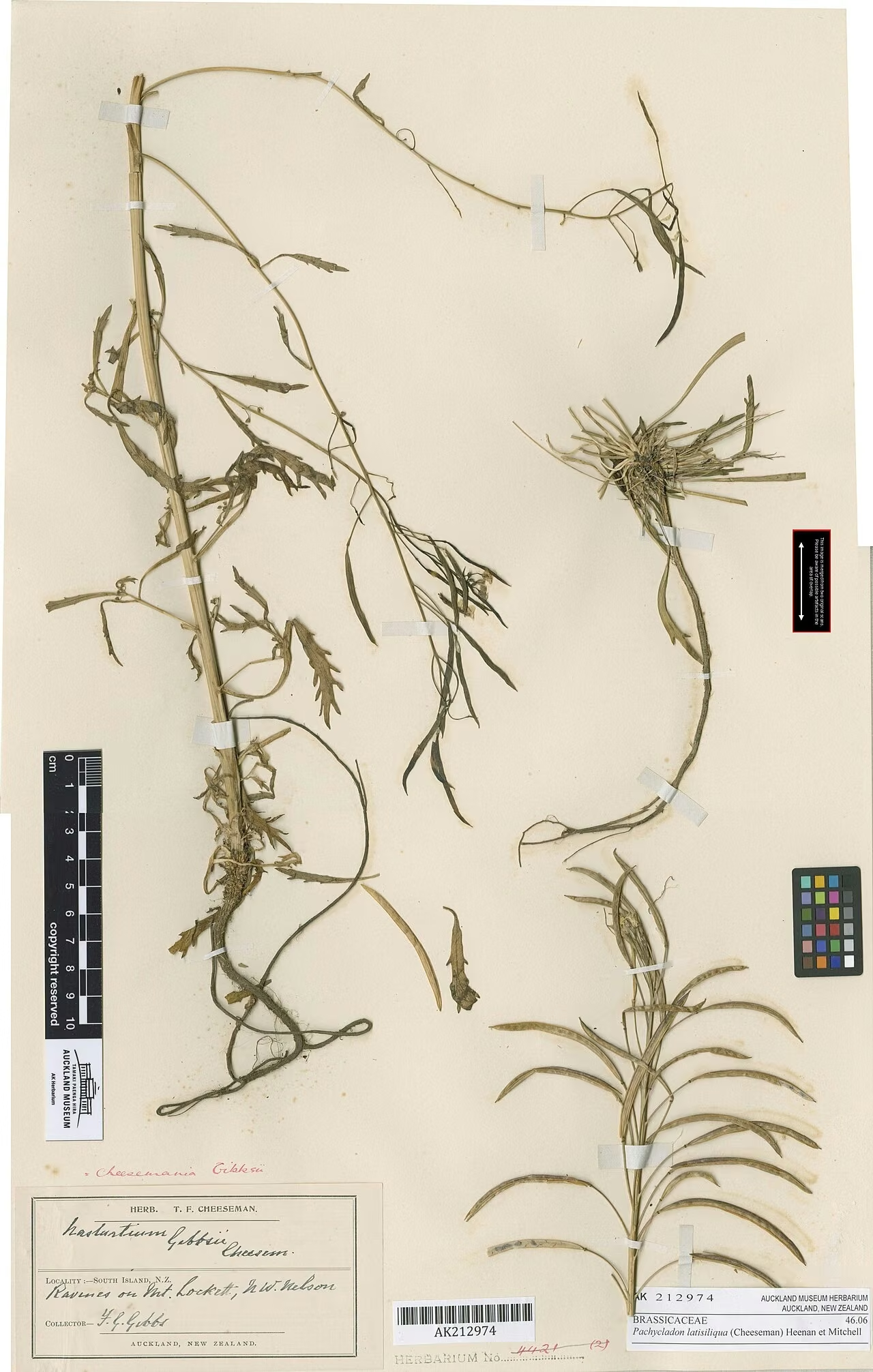
Pachycladon latisiliquum
Pachycladon latisiliquum
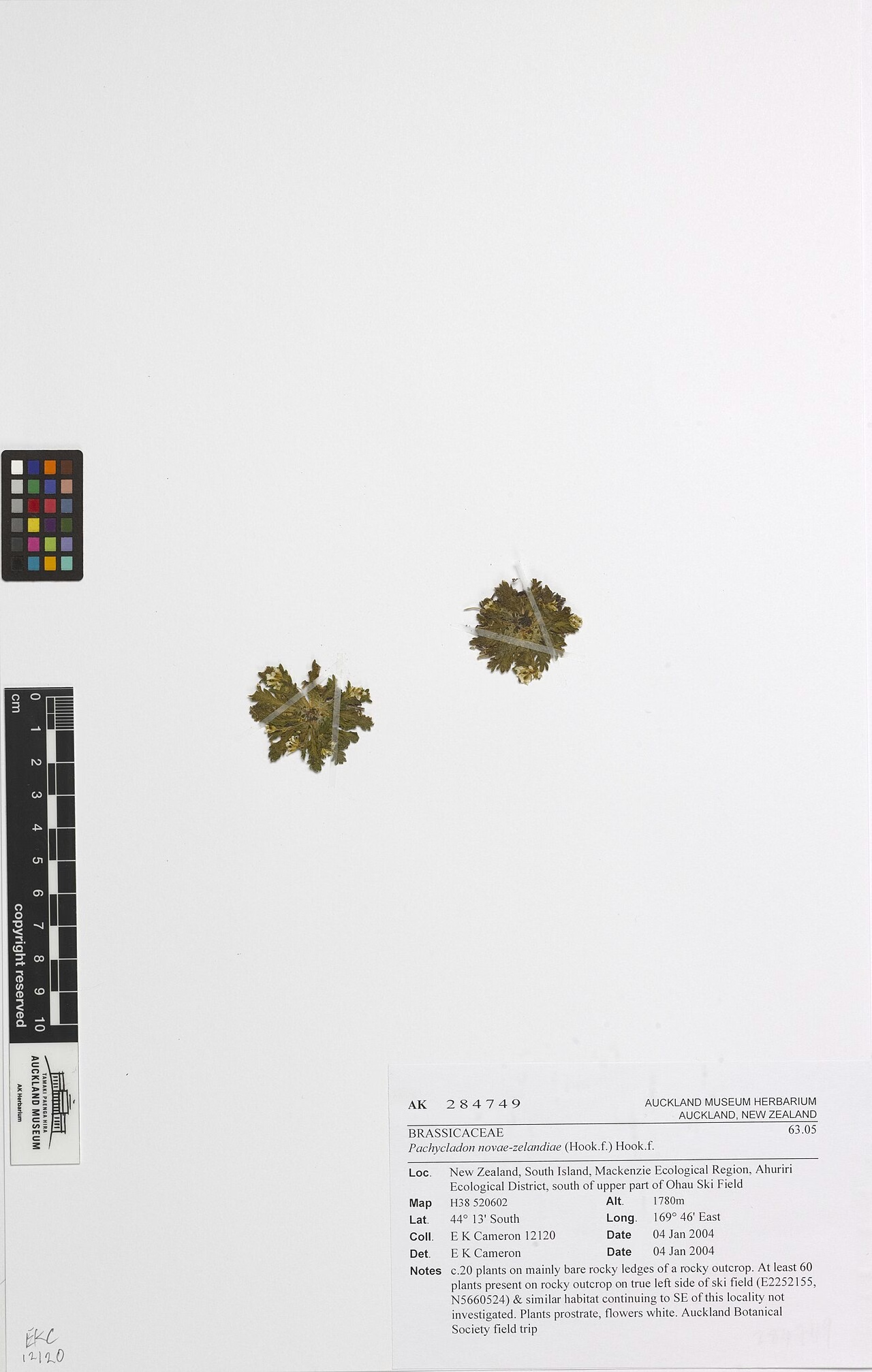
Pachycladon novae zelandiae
Pachycladon novae zelandiae
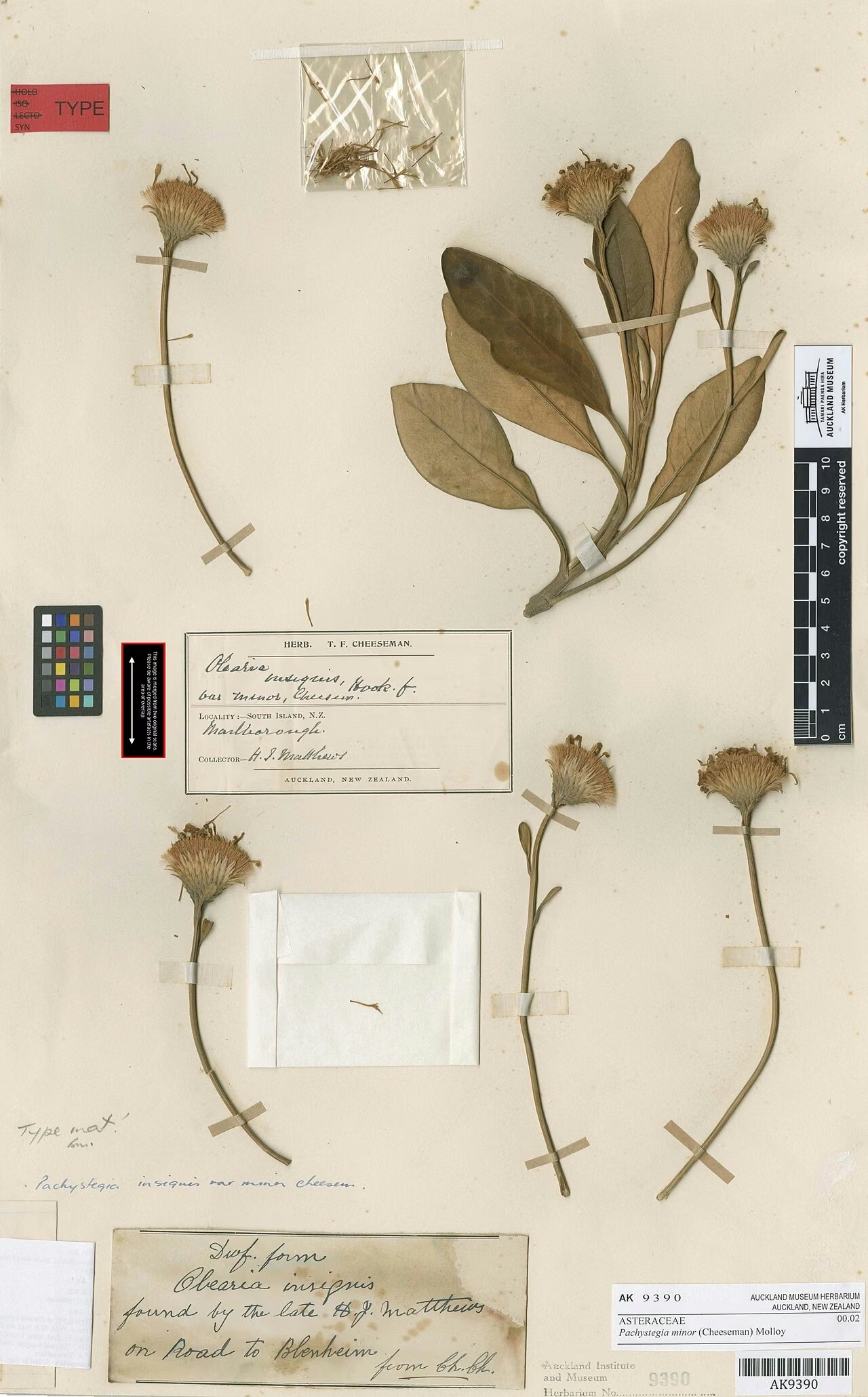
Shawia minor
Shawia minor
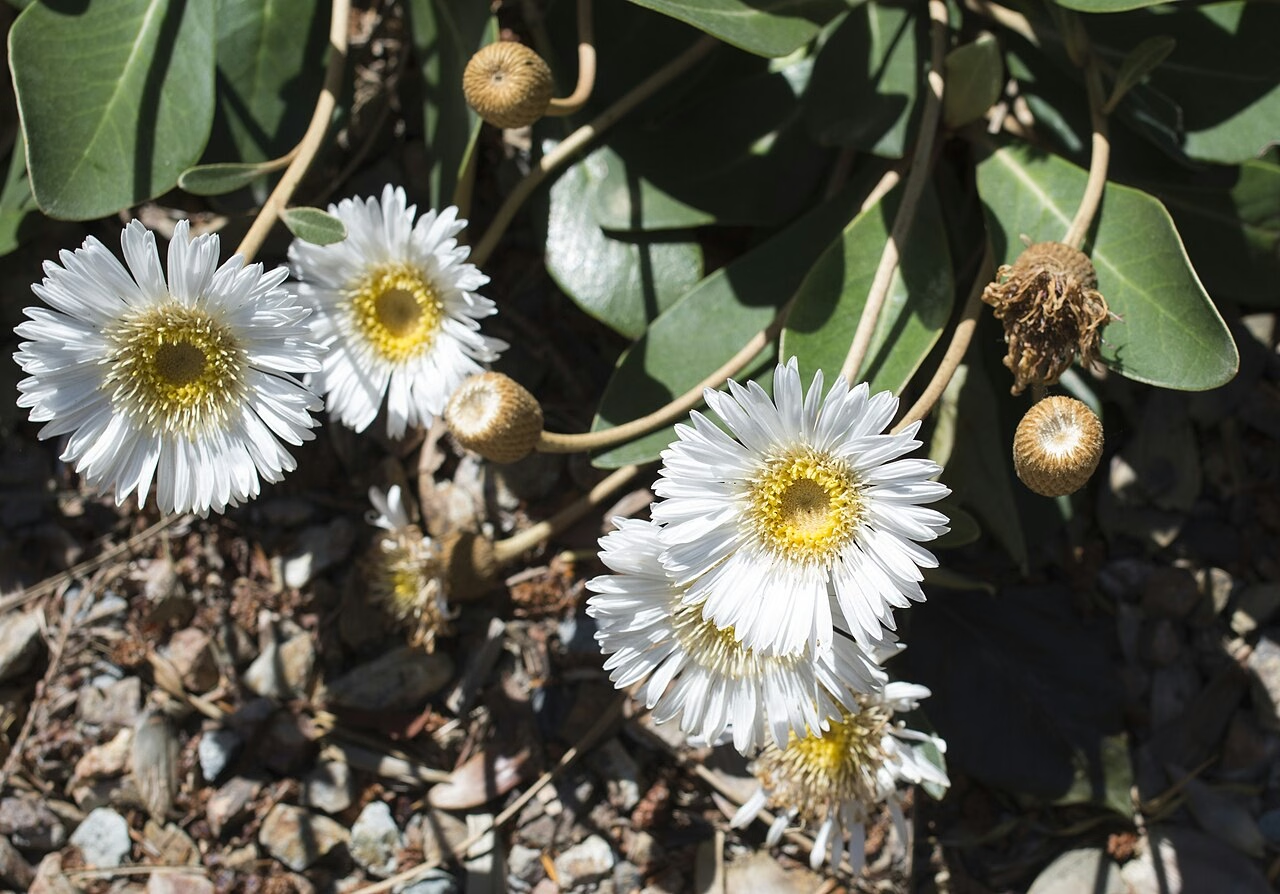
Shawia rufa
Shawia rufa
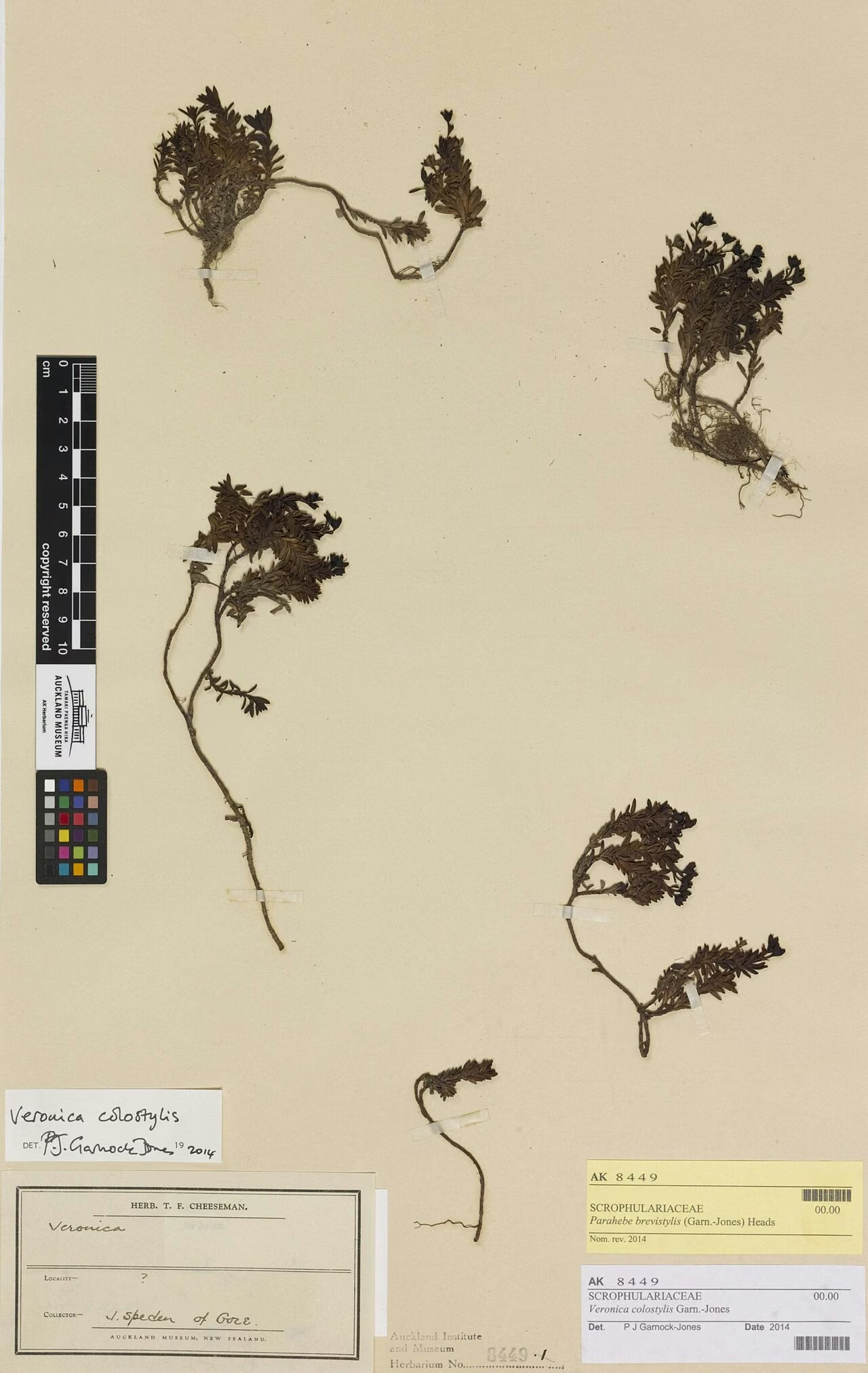
Veronica colostylis
Veronica colostylis
Tarn Speedwell
Veronica lilliputiana
Plant Conservation
Pachycladon wallii is ranked At Risk - Declining (2023), with qualifiers noting it is sparse, range restricted and data poor for population size and trend. Its listing has moved from Range Restricted in 2004 and Naturally Uncommon in 2009 and 2012 to Declining since 2017. In Otago it is Regionally At Risk - Regionally Declining (2025).
Because it is confined to a few mountain ranges, any local loss matters. Monitoring known sites, controlling browsing animals, keeping visitors off cliff bases and banking seed from multiple plants would all help secure the species.
Frequently Asked Questions
Where is Pachycladon wallii found?
Herbarium records place it on south and south-west facing schist cliffs in the Eyre Mountains, the Hector Mountains above Wye Creek and the Garvie Mountains near Lake Laura, at about 1400 to 1500 m and above.
Why is Pachycladon wallii of interest to botanists?
In 1991 Phil Garnock-Jones published a study of gender dimorphism in this species, then called Cheesemania wallii, meaning its plants are not all alike in their sexual function.
Is Pachycladon wallii endangered?
It is ranked At Risk - Declining nationally in 2023 and Regionally At Risk - Regionally Declining in Otago in 2025. It is range restricted and sparse, and its population trend is poorly known.
How do you recognise Pachycladon wallii?
It has a dense basal rosette of leathery, hairless leaves up to 18 cm long with very deeply four-lobed blades on broad flat stalks, no stem leaves, and an unbranched raceme of white flowers about 10 mm long.
Sources and Further Reading
The botanical, growing, and conservation details for Pachycladon (Pachycladon wallii) on this page draw on the New Zealand plant references below. Consult them for full technical records and the latest distribution data.