Parahebe
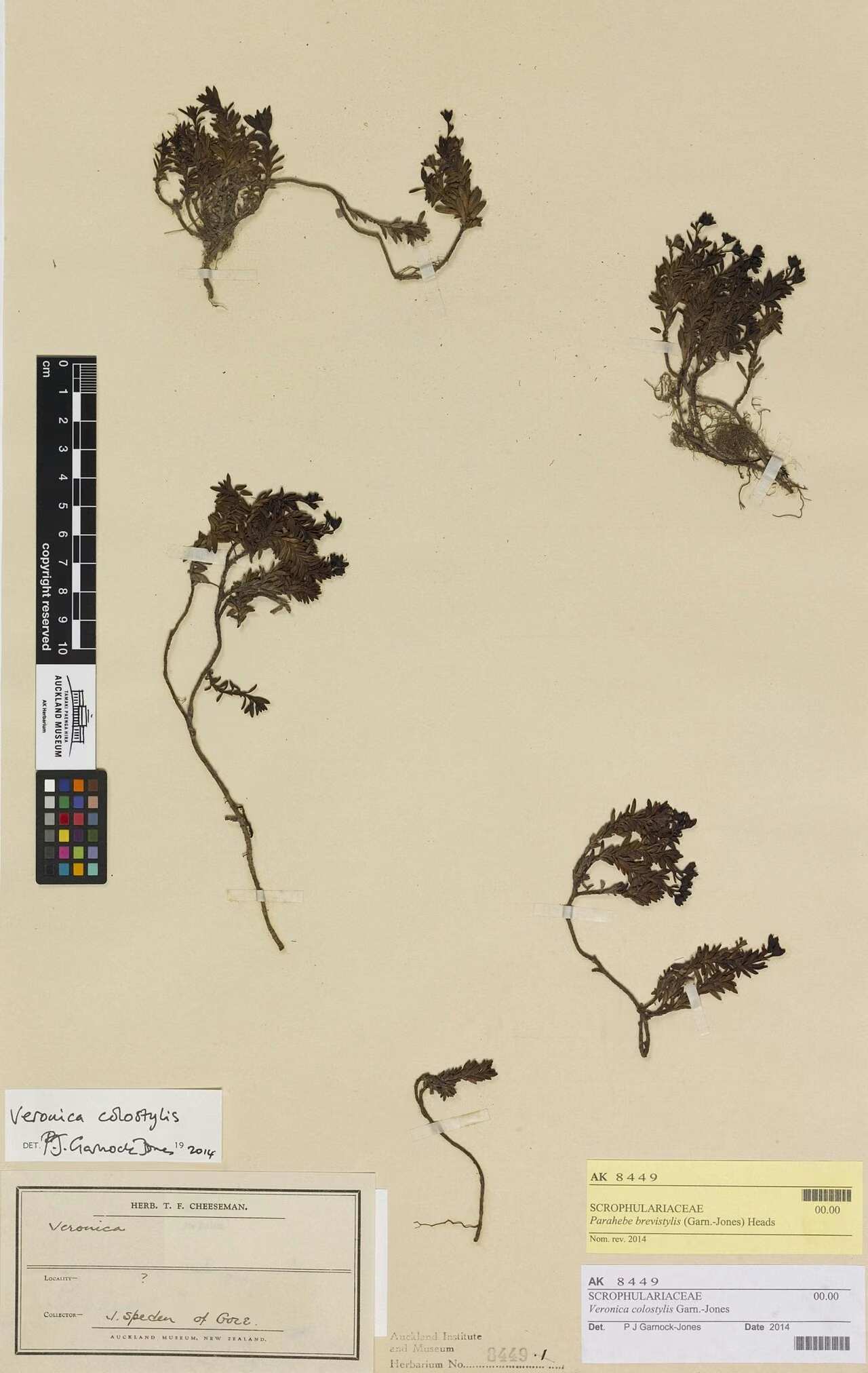
Veronica colostylis
Last updated:
Veronica colostylis, long known as Parahebe brevistylis, is a small endemic subshrub of the southern South Island mountains, rarely more than 15 cm tall. Its trailing to upright stems carry pairs of narrow, glossy, leathery leaves 4 to 15 mm long, and from October to March it bears short sprays of two to six white flowers with pink to magenta anthers. It grows on both sides of the Main Divide from the Rangitata and Whataroa Rivers south to Fiordland and The Hump, on cliffs, rock outcrops, river gravels and moraine. It is Not Threatened and NZPCN describes it as easy to grow from cuttings. Explore more native ground covers in our native plant guide.
Plant Description
Veronica colostylis is a low subshrub up to about 15 cm tall with trailing, decumbent or ascending stems. The stems are hairless or carry hairs in two lines on the upper internodes. Leaves are arranged in opposite pairs at right angles to the pairs above and below; each is narrow, linear to narrowly oblong, 4 to 15 mm long and 1 to 3 mm wide, slightly leathery, glossy green above and dull pale green to purplish beneath, with a few hairs fringing the base.
Flowers are carried in side racemes holding 2 to 6 well-spaced flowers. The four-lobed corolla is white and 5 to 10 mm across, and nectar guides are usually absent or reduced to a few pink lines on the upper lobe. The anthers are pink to magenta on short white filaments. Flowering is from about October to March and fruiting from November to April, the capsules being 3.5 to 4 mm long and hairless, holding flattened brown seeds.
Its closest relative is Veronica linifolia, from which it was split. Veronica colostylis has smaller flower parts, especially shorter styles (2 to 4 mm against 4 to 9 mm) and filaments (1 to 3 mm against 4 to 8 mm), and its white corolla generally lacks the coloured nectar guides. The epithet comes from the Greek kolos, docked or shortened, referring to the short style.
Quick Facts
| Scientific Name | Veronica colostylis |
|---|---|
| Height | 50-150 mm |
| Spread | Low trailing to sprawling patches; width not recorded in sources consulted |
| Water Needs | Moderate; drought intolerant but needs good drainage |
| Light | Full sun to light shade |
| Frost Tolerance | High; a montane to alpine species |
| Salt Tolerance | Not recorded; an inland mountain plant, so assume low |
| Growth Rate | Moderate |
| Lifespan | Perennial |
Climate Best Suited to
Suited to the cool, frosty and often wet mountains of the southern South Island, from the moist western ranges to drier eastern valleys, but not to humid lowland heat.
Regional Suitability
| City | Climate Suitability |
|---|---|
| Auckland | Low |
| Wellington | Medium |
| Christchurch | High |
| Dunedin | High |
Plant Habitat
Veronica colostylis is endemic to the South Island. It ranges on both sides of the Main Divide: in Westland from the Whataroa River south, in western Canterbury from the Rangitata River south, and through western Otago, western Southland and Fiordland to The Hump. The Flora of New Zealand records it from about 220 to 1585 m.
It is a montane to alpine plant of open, rocky ground, growing on cliffs and rock outcrops, river gravels and riverbanks, moraines and in grassland. These sites give it light and freedom from competition, with stony soils that drain well yet keep the roots cool.
Growing Requirements
Soil Requirements
In the wild it grows in shallow, stony soils on rock, gravel and moraine.
- Gritty, free-draining mix
- Moderate fertility; avoid heavy feeding
- Stones around the roots keep them cool and moist
Light Requirements
It grows in open, well-lit habitats such as rock outcrops and riverbeds.
- Full sun in cool climates
- Light shade in warmer gardens
Water Requirements
NZPCN notes it is drought intolerant, so although it needs sharp drainage it should not be allowed to dry right out.
- Keep evenly moist in summer
- Avoid waterlogging
- Water during dry spells
Planting and Establishing
NZPCN recommends growing it in an alpine house or rock garden, and notes that it dislikes humidity and is drought intolerant. Choose a cool, bright spot in a rock garden, scree bed or trough, with gritty soil and stones to keep the roots cool.
Plant in spring or autumn and water well until established. In warm, humid northern gardens it is likely to struggle, so it is best attempted in southern or upland gardens.
Ecological Role
The open white flowers with exposed pink anthers are typical of the insect-pollinated parahebes, likely visited by small native flies and bees, although no specific pollinator study was found for this species. The tiny flattened seeds are released from the capsules and fall onto nearby gravel and rock.
As a coloniser of river gravels, moraines and cliffs, it is part of the low-growing vegetation that establishes on raw and unstable ground in the southern mountains, alongside other small parahebes, cushion plants and herbs.
Uses & Significance
Garden Uses
A dainty alpine plant for specialist growers and rock gardeners.
- Rock gardens and scree beds
- Alpine troughs and alpine houses
- Edging among stones in cool southern gardens
Ecological Value
It adds to the diversity of New Zealand's many endemic Veronica species.
- Flowers over a long season for alpine insects
- Colonises riverbed gravels and moraines
- Part of montane and alpine rock communities
Landscaping Uses
The fine, glossy needle-like leaves and sprays of white flowers give a soft texture against dark rock, and the trailing stems can spill over the edge of a trough or between stepping stones.
Use it in groups among flat stones in a scree-style planting, combined with other small alpine natives that like the same cool, gritty conditions.
Seasonal Care Calendar
Spring
Flowering begins from about October, and new shoots extend.
- Take cuttings of fresh growth
- Top up grit mulch
Summer
Flowering continues into summer, and capsules develop from November.
- Water during dry spells, as it is drought intolerant
- Shade lightly in hot weather
Autumn
Late flowers fade by March and seed is shed through to April.
- Collect and sow fresh seed
- Lift and pot rooted pieces
Winter
Plants are semi-dormant under frost or snow.
- Ensure good drainage
- Protect alpine house plants from damp still air
When to Prune and How Much
Trim back spent flower stems lightly after flowering to keep the plant neat. Older straggly stems can be shortened in spring to encourage fresh growth from the base.
Avoid heavy cutting in winter, and remove any dead patches so air moves freely through the plant.
How to Grow Parahebe
NZPCN describes Veronica colostylis as easily grown from cuttings, rooted pieces and fresh seed, which makes it one of the more straightforward alpine parahebes to raise. It is best grown on in an alpine house or rock garden, as it dislikes humidity and does not tolerate drought. Because its trailing stems often root where they touch the ground, rooted pieces are the quickest way to a new plant, while fresh seed gives more plants and more genetic variety for restoration work. Propagate from cultivated stock or seed collected with permission.
From Cuttings
Softwood or semi-hardwood tip cuttings root readily in a gritty mix with good air movement.
- Take 3 to 5 cm tip cuttings in spring or late summer
- Remove the lower leaves
- Insert into a mix of pumice and fine bark or sand
- Keep cool, bright and lightly moist, avoiding humid closed conditions
- Pot on once roots appear
By Division of Rooted Pieces
Trailing stems that have rooted into the surrounding gravel can be detached and potted.
- Find stems that have rooted at the nodes
- Cut them away from the parent with their roots intact
- Pot into gritty mix and water in
- Keep in light shade until growing strongly
From Seed
Fruiting runs from November to April, and the hairless capsules hold tiny flattened brown seeds. Sow seed fresh rather than storing it.
- Collect capsules as they turn brown
- Sow on the surface of a fine gritty mix
- Keep cool and moist until seedlings appear
Pests & Diseases
No specific pests are recorded for this species in the sources consulted. As with other small parahebes in cultivation, aphids may attack soft growth and slugs can graze young plants.
The main cultivation problems are rot or mildew in humid, still conditions and collapse in drought, both noted by NZPCN as conditions it dislikes.
Cultural Significance
No Māori name or traditional Māori use is recorded for Veronica colostylis in the sources consulted.
Phil Garnock-Jones first described it as Parahebe linifolia subsp. brevistylis. Michael Heads raised it to species rank as Veronica colostylis, and when the parahebes were merged into Veronica, Garnock-Jones provided the replacement name Veronica colostylis, keeping the meaning of the original epithet.
Bonus Tip
To check whether a plant is Veronica colostylis or Veronica linifolia, look closely inside a flower: Veronica colostylis has a style only 2 to 4 mm long and filaments of 1 to 3 mm, and usually no pink nectar lines, whereas Veronica linifolia has a style of 4 to 9 mm and filaments of 4 to 8 mm.
Related Plants
Explore other native plants that share similar characteristics or habitats with Parahebe (Veronica colostylis), offering further insights into New Zealand's diverse flora. These related species provide context and opportunities for complementary planting in your garden.
Pachycladon novae zelandiae
Pachycladon novae zelandiae
Pachycladon wallii
Pachycladon wallii
Shawia minor
Shawia minor
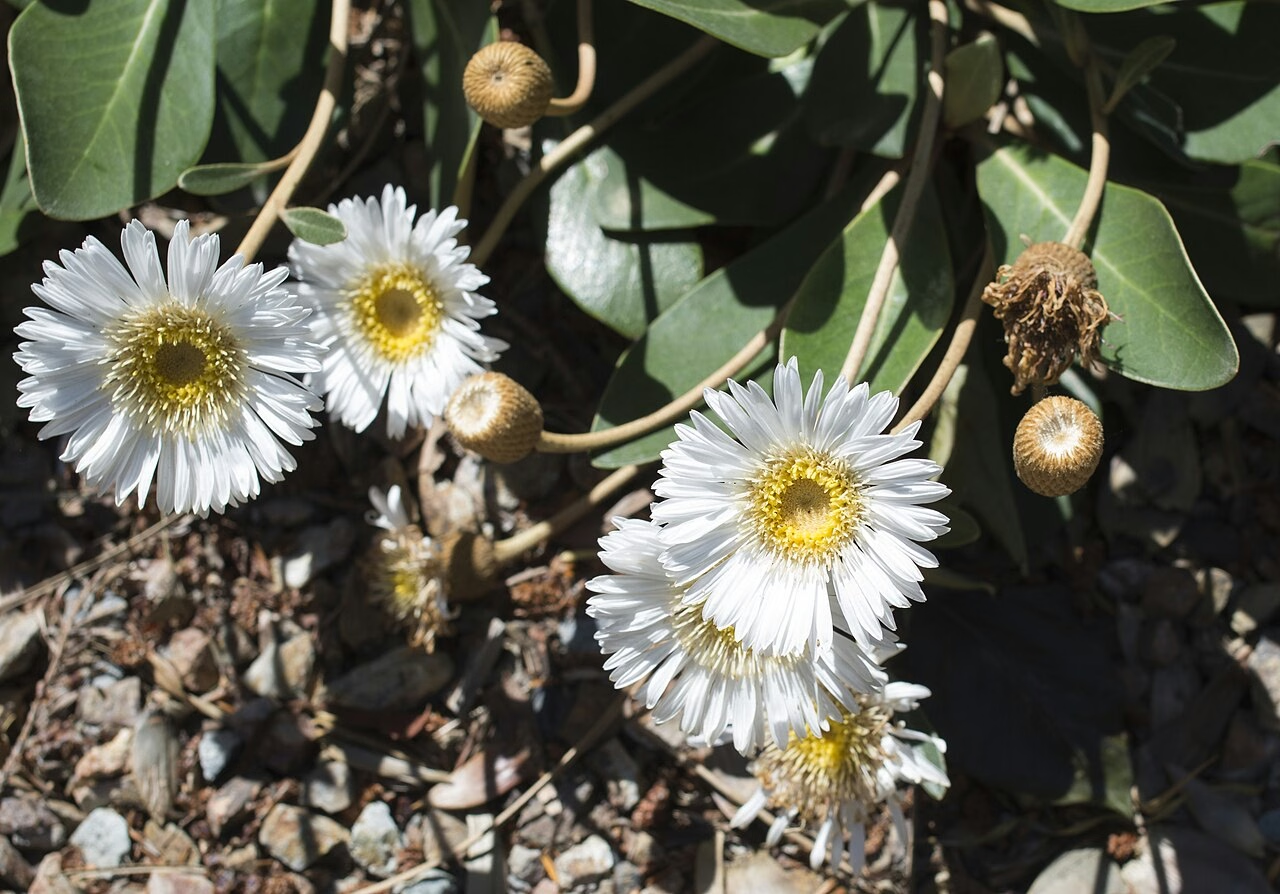
Shawia rufa
Shawia rufa
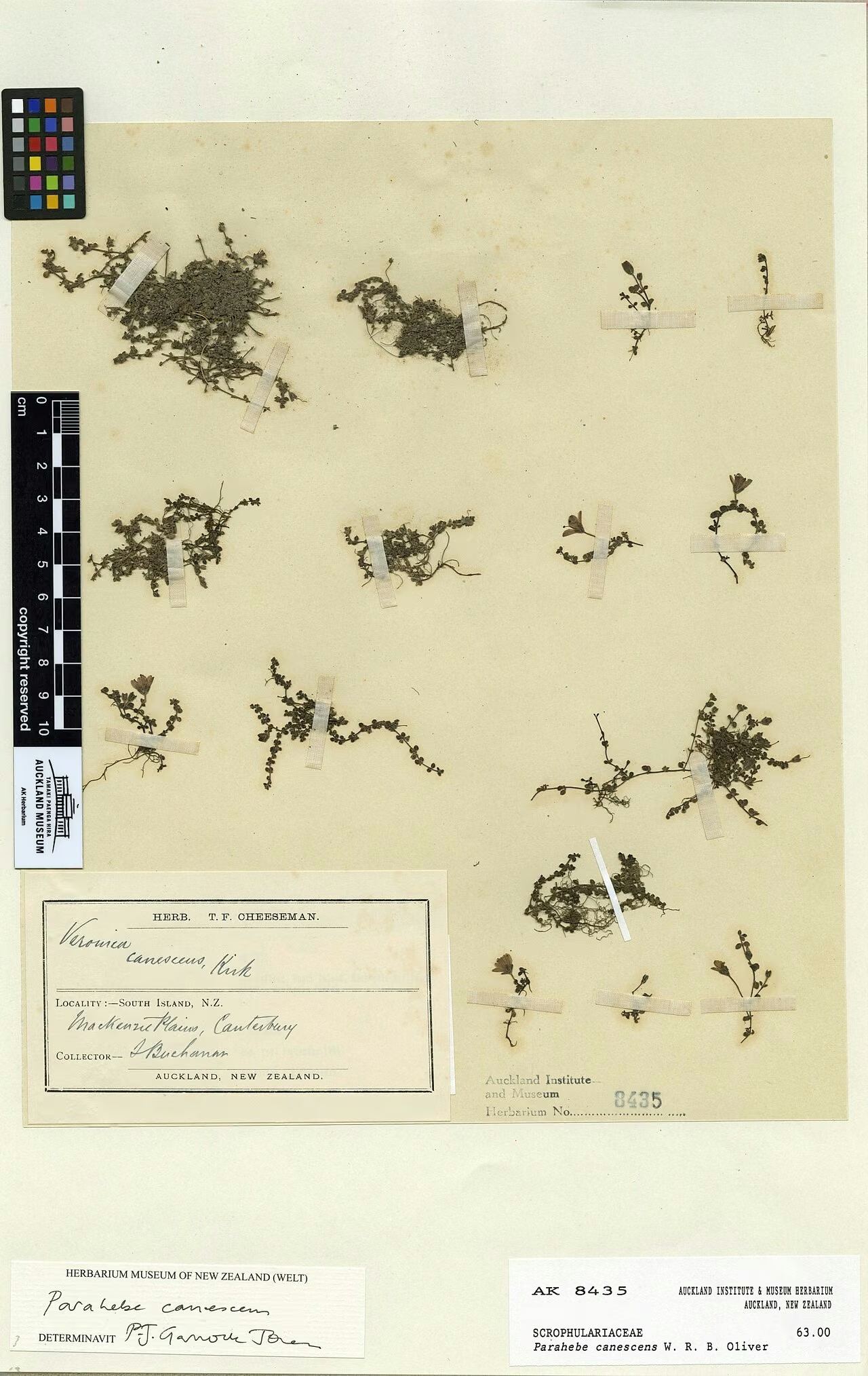
Tarn Speedwell
Veronica lilliputiana
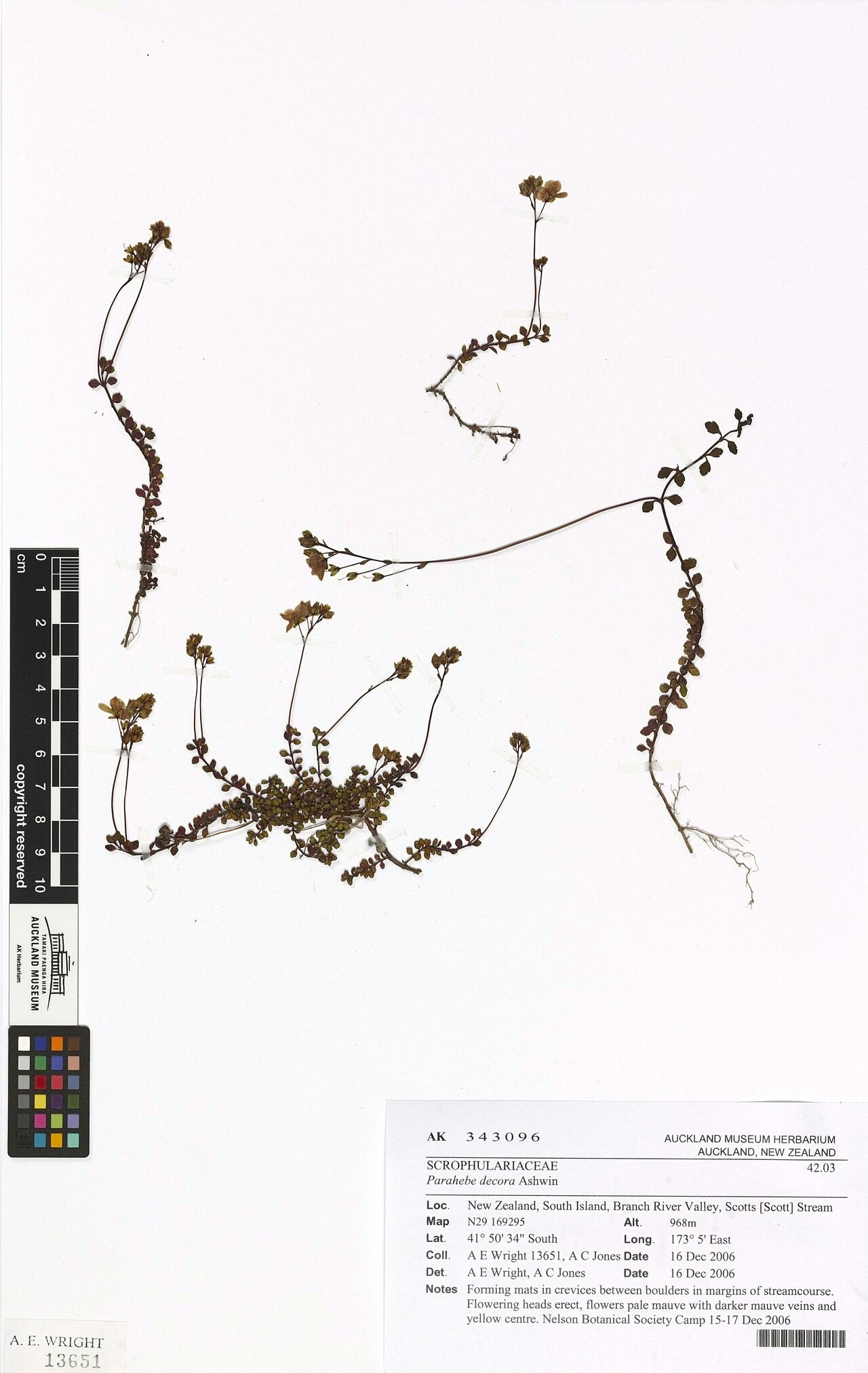
Veronica decora
Veronica decora
Veronica lanceolata
Veronica lanceolata
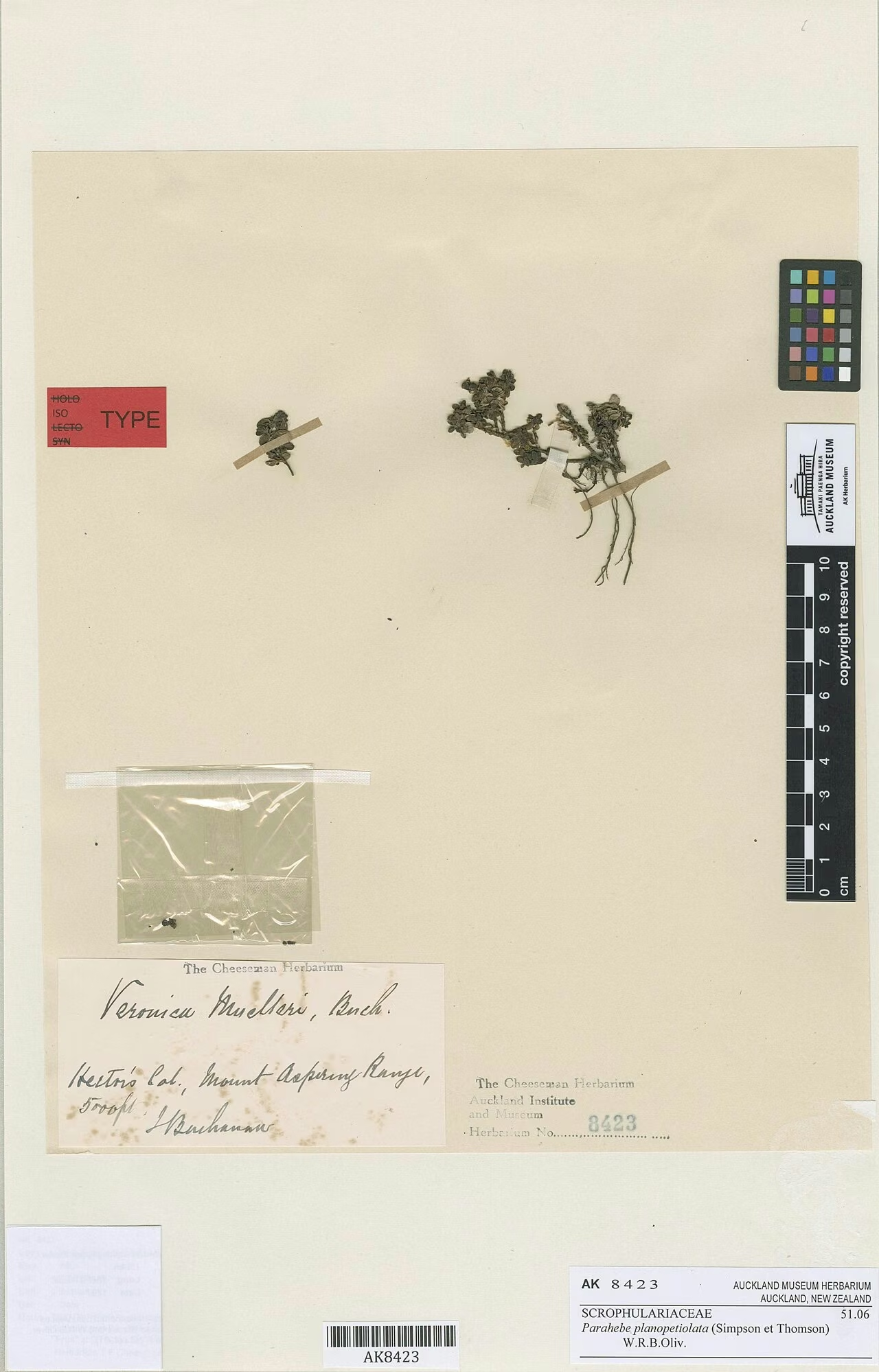
Veronica planopetiolata
Veronica planopetiolata
Plant Conservation
Veronica colostylis is ranked Not Threatened (2023). In the 2025 Otago regional assessment it is listed as Regionally At Risk - Regionally Naturally Uncommon, with qualifiers including data poor and sparse, reflecting that it is uncommon in Otago.
Its riverbed and gravel habitats are vulnerable to weed invasion, especially by introduced shrubs and grasses that close over open gravels. Weed control on braided riverbeds and protection of montane rock habitats help maintain it.
Frequently Asked Questions
What is the current name for Veronica colostylis?
It is now Veronica colostylis. When New Zealand's parahebes were moved into Veronica, Phil Garnock-Jones gave it the replacement epithet colostylis, which, like brevistylis, means short style.
How do you tell Veronica colostylis from Veronica linifolia?
The Flora of New Zealand separates it by its shorter styles of 2 to 4 mm and filaments of 1 to 3 mm, compared with 4 to 9 mm and 4 to 8 mm in Veronica linifolia, and by a white corolla usually lacking coloured nectar guides.
Where does Veronica colostylis grow in the wild?
It grows in the South Island from the Rangitata River and Whataroa River south through western Canterbury, Westland, western Otago and Southland to Fiordland, between about 220 and 1585 m on cliffs, outcrops, river gravels, moraines and grassland.
Sources and Further Reading
The botanical, growing, and conservation details for Parahebe (Veronica colostylis) on this page draw on the New Zealand plant references below. Consult them for full technical records and the latest distribution data.