Parahebe
Veronica decora
Last updated:
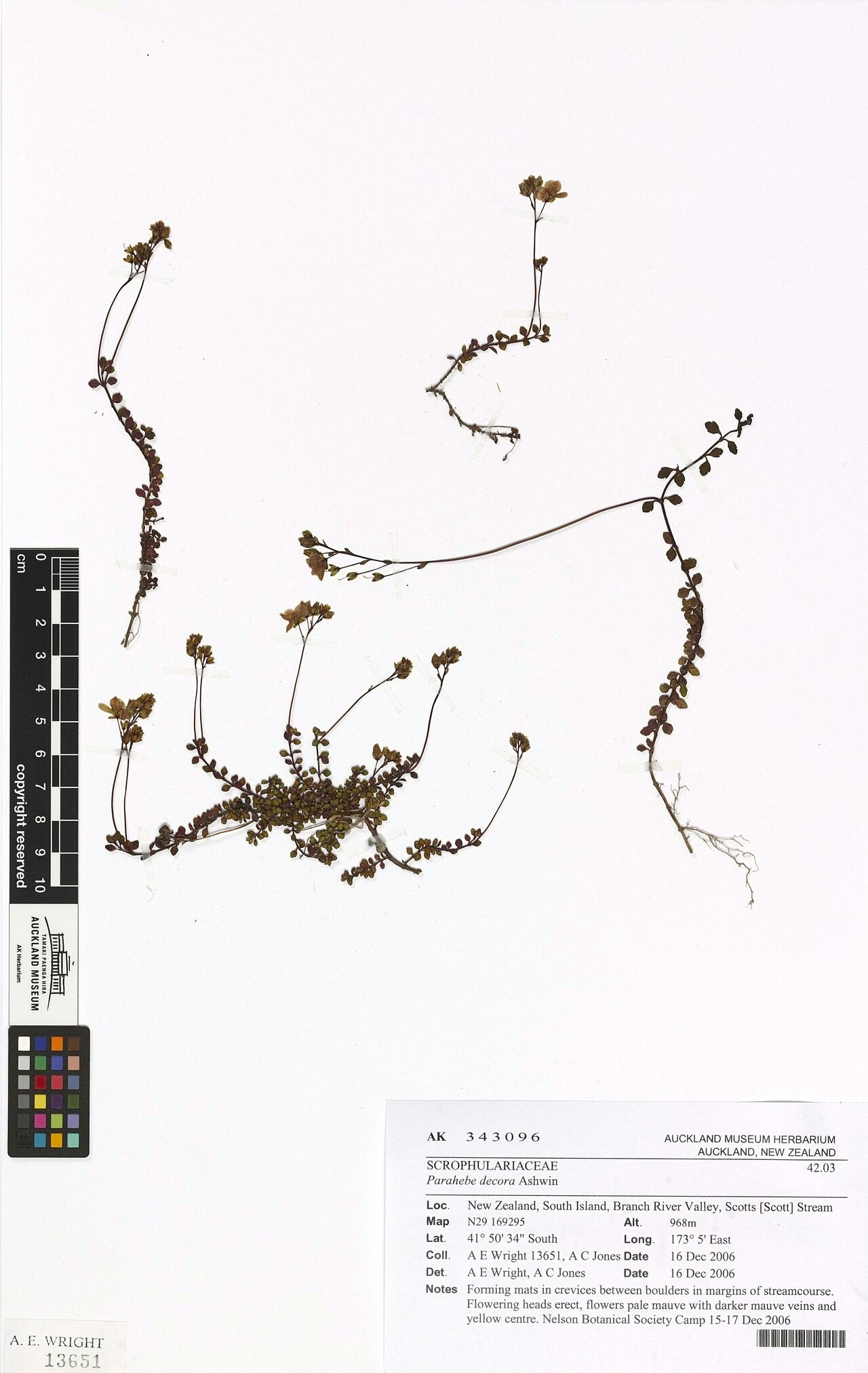
Veronica decora, long known as Parahebe decora, is a tiny mat-forming subshrub endemic to the South Island. Its prostrate dark brown to almost black stems hug the ground, rising only 1 to 3 cm, and carry very small glossy rounded leaves that usually have one pair of lobes. From spring into summer it sends up erect racemes of white or pink flowers marked with magenta nectar guides and a yellow throat. It grows from Nelson and Marlborough south to Southland on braided riverbeds, screes, moraines and stony grassland in montane to subalpine country. It is ranked Not Threatened and is easy to grow in a scree or rock garden. Explore more native ground covers in our native plant guide.
Plant Description
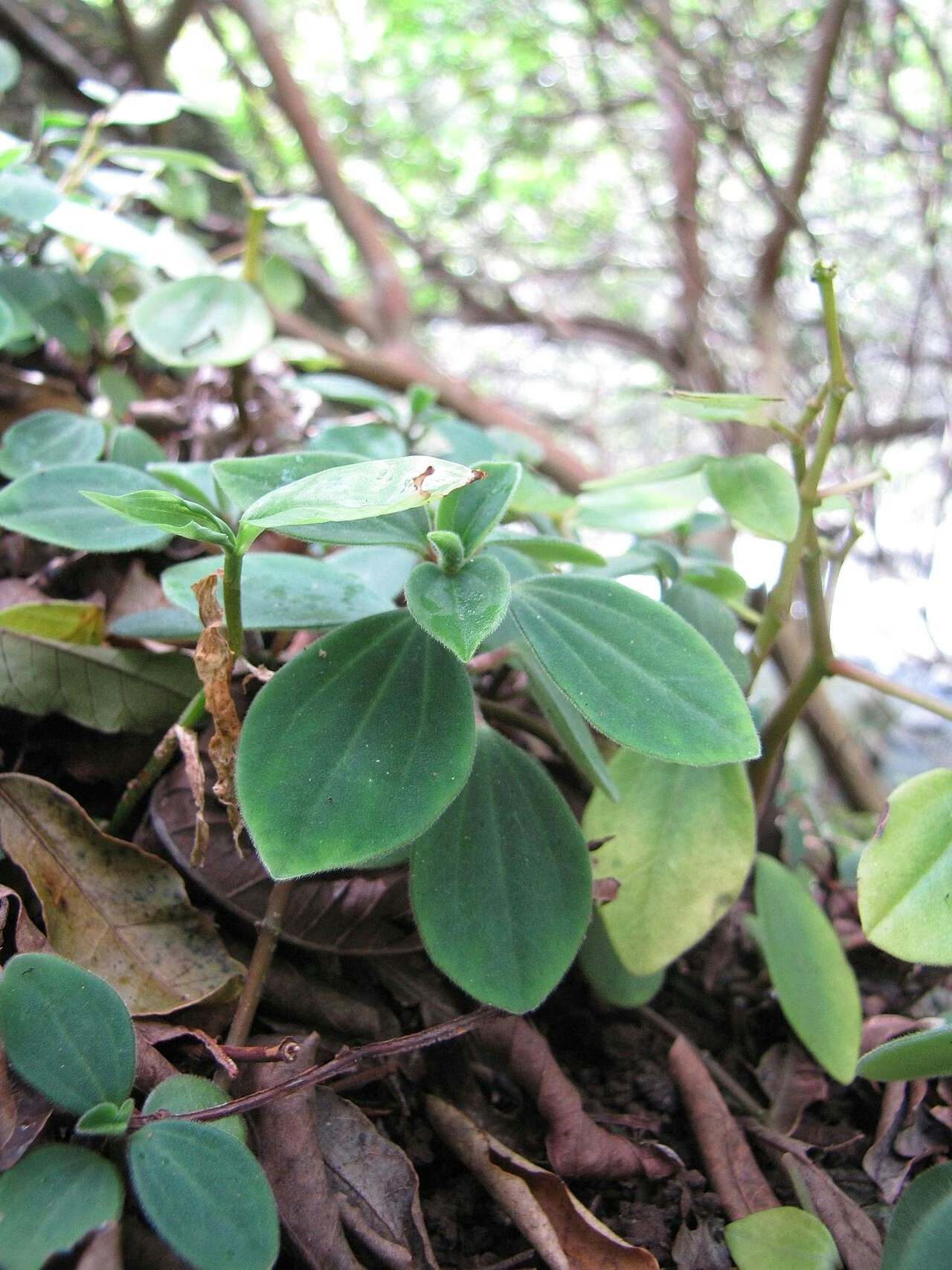
Veronica decora is a miniature subshrub with prostrate or decumbent branches. The branchlets are dark brown to almost black and carry curved, forward-pointing hairs of uniform length. Leaves are arranged in opposite pairs at right angles to the pairs above and below. Each leaf is obovate to orbicular or lyrate, only 1.5-5 mm long and 1-5 mm wide, with a glossy upper surface that is green to dark green and often tinged red. Most leaves have a single pair of small lobes, which gives the foliage a distinctive scalloped look.
Flowers are carried in tall, erect racemes holding 3-20 blooms, and the lowest three flowers on a raceme are often arranged in a whorl. The petals are white or pink at opening, with a yellow throat and magenta nectar guides that lead insects into the flower. NZPCN gives flowering as September to December, and the Flora of New Zealand records flowers from December to February, reflecting differences in altitude. Fruiting capsules follow from November to June.
Among the small mat-forming parahebes it is most easily picked out by its near-black prostrate stems with uniform curved hairs and its tiny, glossy, usually lobed leaves. It is far smaller and more prostrate than the riverside Veronica lanceolata, and its open racemes of several flowers separate it from the high-alpine Veronica planopetiolata, which carries only one or two flowers per inflorescence.
Quick Facts
| Scientific Name | Veronica decora |
|---|---|
| Height | 10-30 mm (flowering racemes stand taller) |
| Spread | Forms low mats; width not recorded in sources consulted |
| Water Needs | Low to moderate; free-draining but not parched |
| Light | Full sun |
| Frost Tolerance | High; a montane to subalpine species |
| Salt Tolerance | Not recorded; an inland species, so assume low |
| Growth Rate | Slow to moderate |
| Lifespan | Perennial |
Climate Best Suited to
Suited to cold, frosty inland South Island climates with clear summers and winter frost or snow. It does best where summers are not humid and the roots stay cool among stones.
Regional Suitability
| City | Climate Suitability |
|---|---|
| Auckland | Low |
| Wellington | Medium |
| Christchurch | High |
| Dunedin | High |
Plant Habitat
Veronica decora is endemic to the South Island, where it ranges through Nelson and western Nelson, eastern Marlborough, Westland near the Main Divide, Canterbury, Otago and Southland. The Flora of New Zealand records it between about 439 and 1554 m above sea level, placing it in montane to subalpine country.
It is a plant of rubbly, unstable ground: shingle and braided riverbeds, screes, moraines, stony places and stone-strewn grassland. These open, well-drained sites have little competition from taller plants, and the low mats creep between stones where the roots find cool moisture beneath the surface.
Growing Requirements
Soil Requirements
In the wild this parahebe roots into gravel, shingle and scree with very little organic matter. In cultivation it needs a gritty, sharply drained mix that never sits wet.
- Use a mix of at least half fine gravel or pumice with some loam
- Avoid heavy clay or rich, wet potting mixes
- A stone mulch keeps the crown dry and the roots cool
- Low fertility is fine; heavy fertiliser makes it lax
Light Requirements
It grows on open riverbeds and screes with almost no shade, so full sun keeps the mats tight and encourages flowering.
- Full sun in cool districts
- Light afternoon shade helps in warm northern gardens
- Shade from taller plants makes the mats sparse
Water Requirements
The stony sites it favours drain quickly but stay moist below the surface. Aim for steady moisture at the roots without waterlogging.
- Water during dry spells in summer, especially in pots
- Let the surface dry between waterings
- Poor drainage in winter is the most common cause of loss
Planting and Establishing
Plant into a raised scree bed, rock garden, trough or crevice where water drains freely. Tuck the plant among stones so the stems can spread across rock and gravel, and top-dress around it with fine shingle. Autumn or early spring planting lets roots establish before summer heat.
Because the mats are so small, keep it away from vigorous neighbours that would smother it. A shallow alpine pan or trough also works well and makes it easy to admire the flowers at close range.
Ecological Role
The white or pink flowers with magenta nectar guides and a yellow throat are typical of insect-pollinated parahebes; native flies, bees and other small insects visiting the flowers are the likely pollinators, though no specific pollinator study for this species was found.
As a colonist of bare shingle, scree and moraine, it is part of the low pioneering vegetation that clothes newly disturbed stony ground in montane and subalpine valleys. Its tiny seeds are released from flattened capsules and are likely spread by water and wind along riverbeds.
Uses & Significance
Garden Uses
This is a plant for enthusiasts of alpine and rock gardening rather than general borders. Its tiny glossy leaves and upright flower spikes give fine detail at close range.
- Scree and rock gardens
- Alpine troughs and pans
- Crevice gardens and gravel path edges
- Riverbed-style plantings with other South Island natives
Ecological Value
In braided riverbed and scree communities it helps stabilise loose gravel and provides nectar for small insects in an otherwise sparse habitat.
- Nectar source for native insects
- Part of endemic braided riverbed plant communities
- Colonises bare stony ground
Landscaping Uses
Use it as a living mosaic between flat stones or across the top of a raised scree. Its dark stems and glossy, often red-tinged leaves contrast well with pale greywacke gravel or schist.
Combine it with other small South Island riverbed and scree natives such as raoulias and small grasses that need the same sharp drainage, and keep the planting open so each mat has room to spread.
Seasonal Care Calendar
Spring
New growth begins and the first racemes appear from September.
- Top up stone mulch
- Check for slugs on new shoots
Summer
Flowering continues into summer at higher altitudes and capsules begin to form.
- Water in prolonged dry spells
- Collect ripe seed as capsules brown
Autumn
Capsules ripen through autumn. A good time to take cuttings or lift rooted pieces.
- Take cuttings
- Plant new mats while soil is warm
Winter
The mats sit quietly through frost and snow. Wet, not cold, is the main risk.
- Keep pots out of standing water
- Remove fallen leaves that trap damp
When to Prune and How Much
Little pruning is needed. Snip off spent flower stalks after seeding if you want a tidier look, and cut back any stems that die back after a wet spell to healthy growth.
If a mat becomes sparse in the centre, layering or replanting rooted edge pieces is a better fix than hard cutting.
How to Grow Parahebe
NZPCN describes Veronica decora as easily grown from cuttings, rooted pieces and fresh seed. Because the prostrate stems often root where they touch gravel, rooted pieces are the quickest way to get new plants, while seed gives a larger number for a scree planting. All methods need a very free-draining, gritty medium and cool conditions to avoid rot.
From Seed
Fresh seed collected from ripe, browning capsules gives the best results. The seed is very small, so sow it on the surface and keep the tray in a cool, bright place rather than in heat.
- Collect capsules as they turn brown between late spring and autumn
- Sow seed thinly on the surface of a fine, gritty seed mix
- Cover with only a dusting of fine grit
- Keep evenly moist in a cool, sheltered spot outdoors
- Prick out seedlings into small pots of gritty mix once they have two pairs of true leaves
From Cuttings and Rooted Pieces
Short tip cuttings and naturally layered stem pieces root readily. Rooted pieces can go straight into pots or a scree bed.
- Take 2-4 cm tip cuttings of non-flowering shoots in spring or autumn
- Strip the lowest pairs of leaves
- Insert into a mix of pumice or coarse sand and a little peat-free compost
- Keep humid and shaded until rooted, usually within a few weeks
- Alternatively, lift stems that have rooted into the gravel and pot them up directly
Pests & Diseases
No specific pest problems are recorded for this species. As with most small parahebes, slugs and snails can graze new shoots in damp weather, and aphids occasionally cluster on soft growth.
The greatest risk in cultivation is rot from wet, poorly drained soil or humid, stagnant air. Good drainage, a stone mulch and an open position prevent most losses.
Cultural Significance
No Māori name or traditional Māori use is recorded for Veronica decora in the sources consulted. It is a tiny, inconspicuous plant of inland riverbeds and screes.
The species was described by the botanist Ashwin as Veronica decora. The epithet decora means beautiful, a fitting name for such a neat little plant. It was later transferred to Veronica when New Zealand's hebes and parahebes were combined with the northern-hemisphere speedwells.
Bonus Tip
Grow it in a trough with a thick layer of fine shingle around the collar. The stems will creep across the gravel and root as they go, giving you a ready supply of rooted pieces to share or to replace an old mat.
Related Plants
Explore other native plants that share similar characteristics or habitats with Parahebe (Veronica decora), offering further insights into New Zealand's diverse flora. These related species provide context and opportunities for complementary planting in your garden.
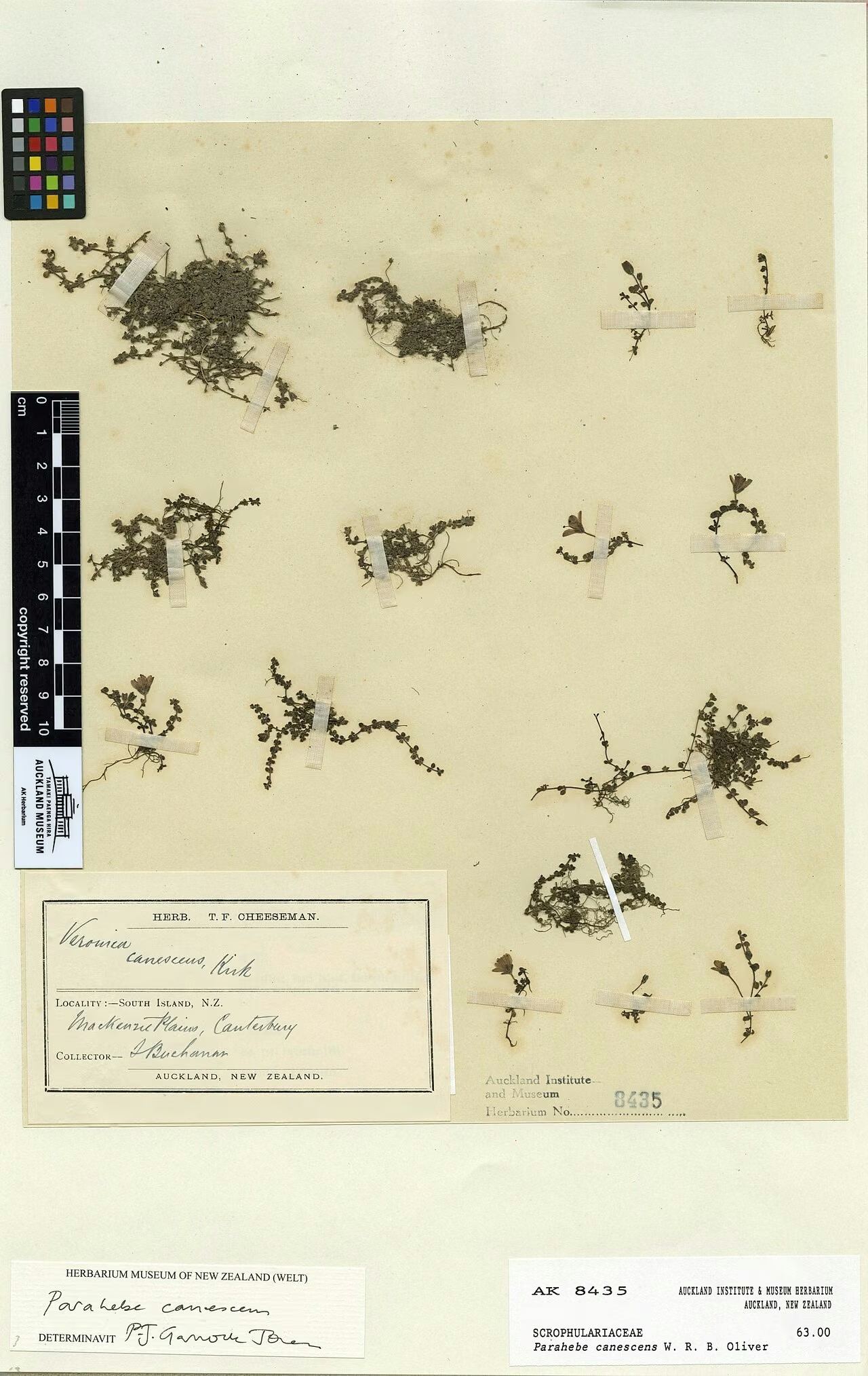
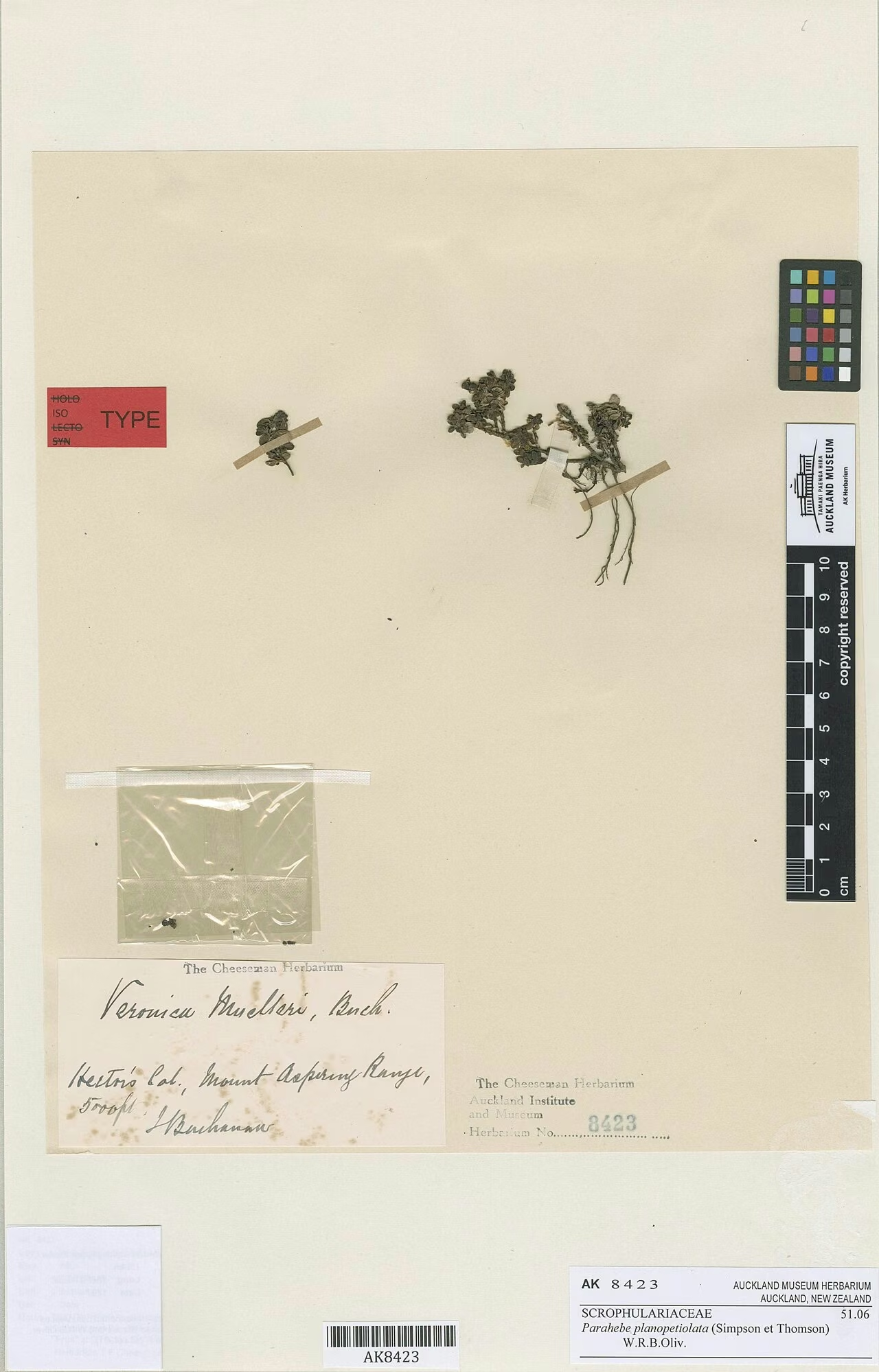
Plant Conservation
Veronica decora is ranked Not Threatened (2023) and has been assessed as Not Threatened in each previous NZTCS assessment. It is widespread across the eastern and central South Island.
Its braided riverbed and scree habitats are, however, vulnerable to invasion by weeds such as broom, gorse, lupins and exotic grasses, and to changes in river flows. Weed control and protection of natural riverbed processes benefit it along with many rarer riverbed species.
Frequently Asked Questions
Is Parahebe decora the same as Veronica decora?
Yes. New Zealand's parahebes were merged into the large genus Veronica, so Parahebe decora Ashwin is now treated as Veronica decora, the name used by NZPCN and the Flora of New Zealand.
Where does Veronica decora grow in the wild?
It is endemic to the South Island, recorded from Nelson, Marlborough, Westland near the Main Divide, Canterbury, Otago and Southland, mostly between about 440 and 1550 m on braided riverbeds, screes, moraines and stony grassland.
How do you propagate Veronica decora?
NZPCN describes it as easily grown from cuttings, rooted pieces and fresh seed, which makes it one of the simpler alpine parahebes to raise for a rock garden.
How can you recognise Veronica decora?
Look for a flat mat of prostrate, almost black stems with tiny glossy leaves, usually with one pair of lobes, and upright racemes of white or pink flowers with magenta lines and a yellow throat.
Sources and Further Reading
The botanical, growing, and conservation details for Parahebe (Veronica decora) on this page draw on the New Zealand plant references below. Consult them for full technical records and the latest distribution data.