Tūtunāwai
Persicaria decipiens
Last updated:
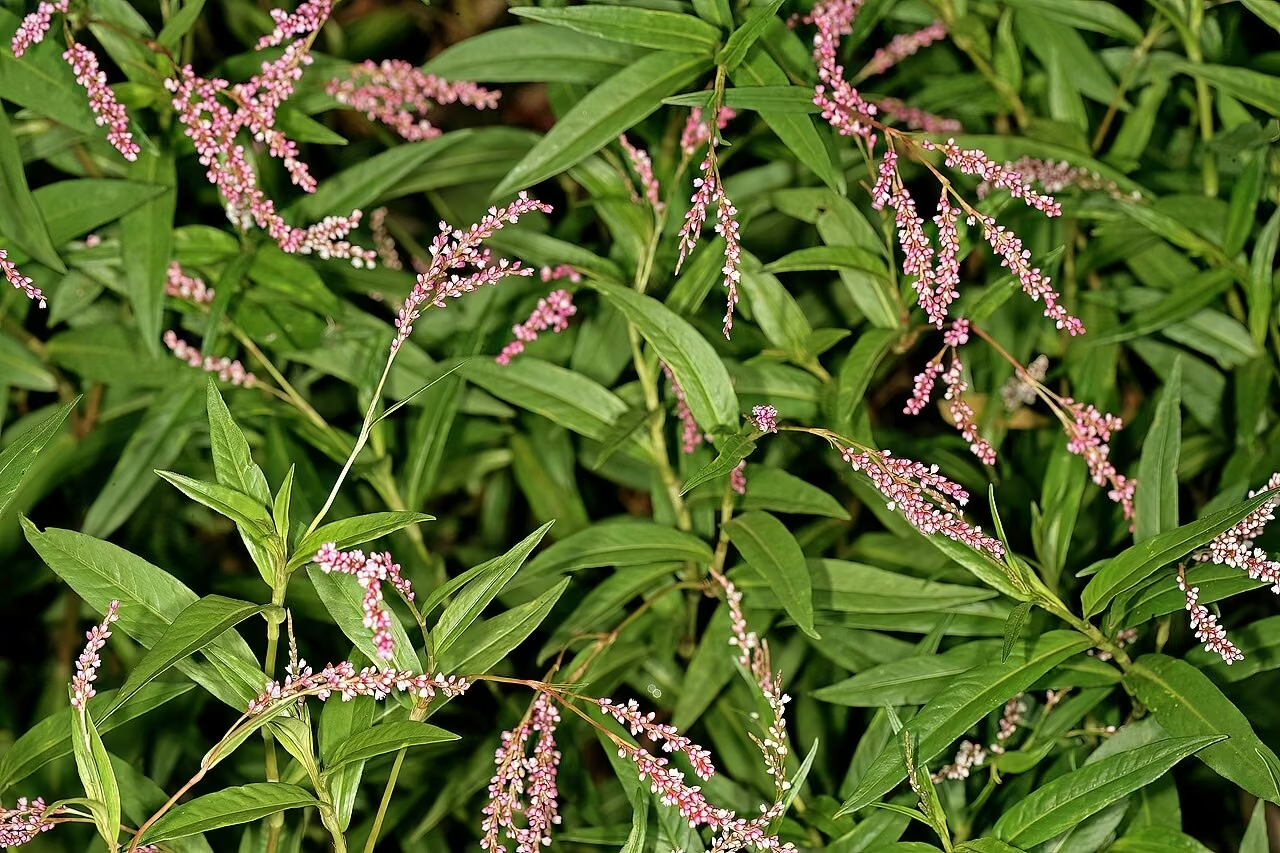
Tūtunāwai, also called swamp willow weed or slender knotweed (Persicaria decipiens), is an indigenous wetland herb found from near North Cape to Southland. Its prostrate or sprawling stems root at the lower nodes and rise to about 30 cm, carrying narrow, willow-like leaves up to 15 cm long, often with dark markings. From late spring into autumn it produces slender spikes of small deep pink to whitish flowers. It grows in swamps and along lake and stream margins in still or slow-moving water. Not endemic, it also occurs across Australia, Asia and Africa, and is ranked Not Threatened in New Zealand. Explore more native flowering plants in our native plant guide.
Plant Description
Persicaria decipiens is an annual or short-lived perennial herb. Its stems are prostrate or decumbent, rooting at the lower nodes, and then turn upward, reaching around 30 cm. The leaves are narrow and lanceolate, like small willow leaves, up to 15 cm long and 4 cm wide, often with dark markings on the upper surface. Stems and leaves are frequently flushed red. As in other knotweeds, each leaf base is wrapped by a papery sheath (ochrea) around the stem.
The small flowers are deep pink to whitish and are carried in slender racemes 1.5-8 cm long at the tips of stems and in the leaf axils. The spikes are not rigid and tend to bend over. The Flora of New Zealand records flowering from November to April, and other sources note flowers into June with a peak in February. The fruit is a small nut.
The Flora of New Zealand describes two forms: a widespread one with very slender spikes and widely spaced flowers, and a northern form with shorter, stouter, densely flowered spikes. Its sprawling stems that root at the nodes, narrow willow-like leaves and slender, lax flower spikes in permanently wet ground help separate it from the weedy introduced willow weeds, though careful checking of flowers and fruit against a flora is advisable.
Quick Facts
| Scientific Name | Persicaria decipiens |
|---|---|
| Height | About 0.3 m |
| Spread | Sprawling stems root at nodes; spreads to form patches |
| Water Needs | High; wet soil or shallow water |
| Light | Full sun to light shade |
| Frost Tolerance | Moderate; dies back in cold winters and regrows |
| Salt Tolerance | Not recorded; a freshwater wetland species |
| Growth Rate | Fast |
| Lifespan | Annual or short-lived perennial |
Climate Best Suited to
A widespread wetland plant that grows from subtropical Northland to cool Southland. It tends to die back in cold winters and regrow in spring.
Regional Suitability
| City | Climate Suitability |
|---|---|
| Auckland | High |
| Wellington | Medium |
| Christchurch | High |
| Dunedin | Medium |
Plant Habitat
Tūtunāwai occurs throughout the North and South Islands, from near North Cape to Southland. Outside New Zealand it is found across Africa and the Mediterranean, south-western Asia, Malesia, all Australian states, Norfolk Island and New Caledonia.
It is an obligate wetland plant, almost always found in wet ground. It grows in swamps, at lakesides and along streamsides where the water is still or slow moving, often trailing out over mud or into shallow water. In the Wellington region it is ranked Regionally Naturally Uncommon.
Growing Requirements
Soil Requirements
It grows in wet mud, silt and peaty swamp soils. Any soil that stays saturated will suit it.
- Wet mud or silty loam
- Peaty swamp soils
- Tolerates low-oxygen waterlogged ground
- No fertiliser needed
Light Requirements
It prefers open wetland margins with plenty of light, but tolerates the light shade of streamside vegetation.
- Full sun for best flowering
- Light shade acceptable
- Heavy shade reduces flowering
Water Requirements
This is a true wetland plant that needs permanently wet soil or shallow water.
- Plant at pond edges or in shallow water
- Never allow it to dry out
- Suits still or slow-moving water
Planting and Establishing
Plant on the margin of a pond, wetland or slow stream, where the stems can spread over mud and into the shallows. Spring planting gives plants a full season to establish.
Because the stems root at the nodes and spread, give it room or plant it where spreading is welcome. For wetland restoration, source plants or seed from the local catchment.
Ecological Role
Wikipedia reports that the flowers are visited by honeybees, native bees, flies, wasps and small butterflies. Nelson Natives notes that its seeds provide food for birds.
As a sprawling herb at the water's edge, it helps bind mud and silt and provides cover for aquatic invertebrates and small fish in shallow margins. It tends to die back in winter and regrow in spring, behaving like an annual in colder districts.
Uses & Significance
Garden Uses
A useful native for wet places where few other flowering plants thrive, though its spreading habit suits informal settings.
- Pond and stream margins
- Constructed wetlands and rain gardens
- Wildlife ponds
- Wetland restoration plantings
Ecological Value
It is part of native wetland edge vegetation and supports insects and birds in these habitats.
- Nectar for bees, flies and butterflies
- Seeds eaten by birds
- Stabilises soft margins of wetlands
Landscaping Uses
Let it weave among sedges and rushes at the water's edge, where the red-tinted stems and slender pink spikes add colour through summer.
It is not suited to formal borders. In a wildlife pond, combine it with other native marginal plants such as Carex and Juncus species to create a layered, natural edge.
Seasonal Care Calendar
Spring
New growth emerges after winter dieback.
- Plant new stock
- Clear old dead stems
Summer
Main flowering season, with a peak around February.
- Keep water levels up
- Watch for spreading beyond where it is wanted
Autumn
Flowering continues into autumn and seed ripens.
- Collect seed
- Lift rooted stems for new plants
Winter
Plants die back, especially in colder areas.
- Leave some stems for cover
- Little care needed
When to Prune and How Much
No formal pruning is needed. Pull out or cut back stems that spread beyond the area you want covered.
Remove dead stems in late winter or early spring to make way for new growth, or leave them as winter cover for wildlife.
How to Grow Tūtunāwai
Tūtunāwai is easily raised from fresh seed, which Nelson Natives says germinates without pre-treatment. Because its stems root at the lower nodes, rooted pieces also give quick new plants. Seed is the better choice for restoration because it captures more genetic variation, while rooted pieces are convenient for establishing a pond margin quickly.
From Seed
Collect seed when the small nuts darken on the spikes in late summer and autumn. Sow fresh and keep the mix wet, as befits a wetland species.
Seedlings grow quickly in warm conditions and can flower in their first season, which reflects the annual or short-lived perennial habit of the species. Raising a fresh batch every year or two keeps a planting going, since individual plants may not live long.
- Collect ripe seed heads from late summer
- Sow on the surface of a moist seed mix
- Cover lightly with fine mix
- Stand the tray in a saucer of water to keep it constantly wet
- Pot seedlings on once they have several leaves
- Plant out at the water's edge in spring
From Rooted Stem Cuttings
The prostrate stems form roots at the lower nodes where they touch wet ground. Sections with roots can be cut off and replanted directly into mud.
- Find stems that have rooted at the nodes
- Cut sections 10-15 cm long, each with roots
- Plant into wet mud or pots standing in water
- Keep wet until new shoots form
Pests & Diseases
No significant pests are recorded. Aphids may cluster on young stems in summer.
In wetlands, the main threat is being overgrown by vigorous exotic species, such as introduced grasses and weedy willow weeds.
Cultural Significance
The New Zealand Organisms Register records tūtunāwai as a Māori name for this plant. No traditional Māori uses specific to it were found in the sources consulted. The Flora of New Zealand notes it is possibly poisonous.
Botanically, it was first collected by Joseph Banks and Daniel Solander at Botany Bay in 1770 and described by Robert Brown as Polygonum decipiens in 1810. Karen Wilson moved it to Persicaria in 1988. The epithet decipiens means deceptive. Wikipedia notes it is used as a famine food in parts of Africa.
Bonus Tip
Before pulling a willow weed out of a pond edge, check what it is. The native tūtunāwai has slender, drooping pink spikes and sprawling stems rooting in the mud, whereas common weedy willow weeds are usually more upright with denser, stouter spikes in drier ground.
Related Plants
Explore other native plants that share similar characteristics or habitats with Tūtunāwai (Persicaria decipiens), offering further insights into New Zealand's diverse flora. These related species provide context and opportunities for complementary planting in your garden.
Veronica lanceolata
Veronica lanceolata
Veronica planopetiolata
Veronica planopetiolata
Scrobic
Paspalum orbiculare
Peperomia leptostachya
Peperomia leptostachya
Phyllachne clavigera
Phyllachne clavigera

Phyllachne rubra
Phyllachne rubra
Pygmy Clubmoss
Phylloglossum drummondii
Picris burbidgeae
Picris burbidgeae
Plant Conservation
Persicaria decipiens is ranked Not Threatened (2023) with the qualifier Secure Overseas (SO). It is Regionally Not Threatened in Northland and Auckland, but Regionally Naturally Uncommon in the Wellington region.
Loss and drainage of wetlands, and invasion of wetland margins by exotic plants, are the main pressures. Protecting and restoring wetlands benefits it along with many other native wetland species.
Frequently Asked Questions
Is swamp willow weed native to New Zealand?
Yes. Persicaria decipiens is indigenous to New Zealand, although it also grows naturally in Australia, Asia, Africa and the Mediterranean. Several other willow weeds in New Zealand, such as Persicaria maculosa, are introduced weeds.
What is the Māori name for Persicaria decipiens?
The New Zealand Organisms Register records tūtunāwai as a Māori name for this plant, under its older name Polygonum decipiens.
Is Persicaria decipiens poisonous?
The Flora of New Zealand describes it as possibly poisonous, so it should not be eaten or fed to stock, even though it has been used as a famine food in parts of Africa.
Where does tūtunāwai grow?
It is an obligate wetland plant found in swamps, at lakesides and along streams with still or slow-moving water, from near North Cape to Southland.
Sources and Further Reading
The botanical, growing, and conservation details for Tūtunāwai (Persicaria decipiens) on this page draw on the New Zealand plant references below. Consult them for full technical records and the latest distribution data.