Peperomia
Peperomia leptostachya
Last updated:
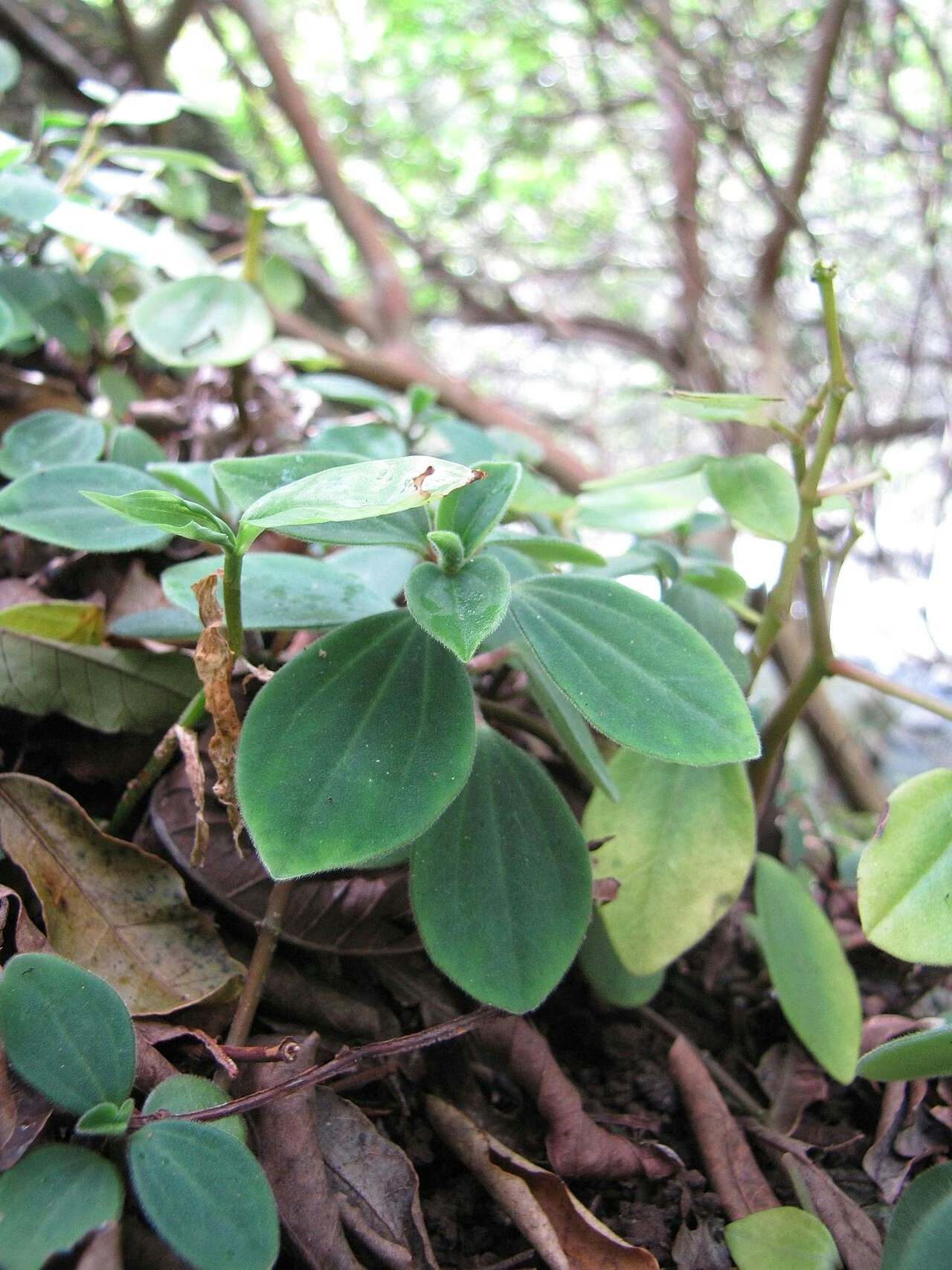
Peperomia leptostachya, long known in New Zealand as Peperomia leptostachya var. floribunda, is a perennial herb of the pepper family. It forms branched, succulent shrublets up to about 50 cm tall and 60 cm wide, with opposite or whorled, hairy, elliptic leaves and numerous slender flower spikes up to 13 cm long. Within New Zealand it grows only on Raoul Island in the Kermadec group, as a low epiphyte on Kermadec pōhutukawa, on cliff faces and among rocks and rubble. It is common across Pacific islands and is ranked a recent natural coloniser of New Zealand territory. It makes an excellent pot plant for a warm, shaded spot. It was previously known as Peperomia blanda. Explore more native ground covers in our native plant guide.
Plant Description
Peperomia leptostachya is a succulent perennial herb that forms branched shrublets up to 500 mm tall and 600 mm across. Its stems are light yellow-green to reddish-green. The leaves are opposite or sometimes in whorls of three, elliptic-obovate to elliptic, 15-60 mm long and 12-30 mm wide, and dark green to yellow-green. The leaves are uniformly hairy, which separates it from the other peperomia on Raoul Island.
The tiny flowers are crowded onto slender spikes, which is what the name leptostachya, meaning slender-spiked, describes. The spikes are numerous, 20-130 mm long, and arise from leaf axils or the tips of the stems. NZPCN records flowering and fruiting from October to July.
NZPCN notes that it is not closely allied to the other Peperomia species found in New Zealand. On Raoul Island it grows alongside Peperomia urvilleana, from which it is easily told apart by its larger, uniformly hairy leaves.
Quick Facts
| Scientific Name | Peperomia leptostachya |
|---|---|
| Height | Up to 0.5 m |
| Spread | Up to 0.6 m |
| Water Needs | Moderate; let the mix dry slightly between waterings |
| Light | Partial to bright indirect shade |
| Frost Tolerance | None; cold sensitive |
| Salt Tolerance | Not recorded; grows on an oceanic island but in sheltered sites |
| Growth Rate | Moderate |
| Lifespan | Perennial |
Climate Best Suited to
A subtropical plant of the Kermadec Islands, which are frost free. On mainland New Zealand it can only be grown outdoors in the warmest frost-free sites and is best treated as an indoor or sheltered pot plant.
Regional Suitability
| City | Climate Suitability |
|---|---|
| Auckland | Medium |
| Wellington | Low |
| Christchurch | Low |
| Dunedin | Low |
Plant Habitat
In New Zealand this peperomia is known only from Raoul Island, the largest of the Kermadec Islands, about 1000 km north-east of the North Island. It is common on islands throughout the Pacific, and the broader Peperomia leptostachya group is widespread across the tropics.
On Raoul Island it grows as a low epiphyte on Kermadec pōhutukawa (Metrosideros kermadecensis), on cliff faces, and among rocks and rubble beneath cliffs and in ravines. These are moist, sheltered, often shaded sites with little soil.
Growing Requirements
Soil Requirements
As an epiphyte and rock dweller it needs an open, free-draining mix rather than ordinary garden soil.
- Use a free-draining potting mix with added bark or pumice
- Avoid heavy, wet soil, which causes stem rot
- Low fertility is adequate; feed lightly in the growing season
Light Requirements
It grows in shaded and semi-shaded spots on cliffs, rubble and tree trunks. NZPCN recommends a warm, shaded site in cultivation.
- Bright indirect light indoors
- Dappled shade outdoors in frost-free areas
- Avoid hot direct afternoon sun
Water Requirements
Its succulent stems and leaves store water, so it tolerates brief dry periods but dislikes being waterlogged.
- Water when the top of the mix is dry
- Reduce watering in winter
- Ensure pots drain freely
Planting and Establishing
Grow it in a pot indoors or on a sheltered, shaded patio in the warmest northern districts. A wide, shallow container suits its branching habit.
Outdoors in frost-free gardens, plant it in a rock pocket or among stones under a canopy, where drainage is sharp and it is protected from cold winds.
Ecological Role
Peperomia flowers are tiny and crowded onto spikes; no study of its pollinators on Raoul Island was found. The small fruits are sticky in many peperomias and are thought to be spread by birds, which may explain how this species reached the Kermadecs, but this has not been confirmed for this population.
NZPCN classes it as a coloniser: a species that has established in New Zealand naturally in recent times. Field surveys in 2004 and 2009 suggest it is actively increasing its range on Raoul Island.
Uses & Significance
Garden Uses
Mainly an indoor or sheltered pot plant, valued for its soft hairy foliage and many slender flower spikes.
- Indoor pot plant
- Shaded patios in frost-free areas
- Terrariums or plant collections of Kermadec flora
- Hanging baskets in sheltered sites
Ecological Value
It adds to the small and distinctive flora of the Kermadec Islands, where it occupies cliffs, rubble and pōhutukawa trunks.
- Part of the Raoul Island epiphyte and cliff flora
- Example of natural colonisation of New Zealand territory
- Spreading naturally on Raoul Island
Landscaping Uses
Group it with ferns and other shade-loving pot plants for a lush subtropical display. Its hairy, soft green leaves contrast with glossy foliage.
In a frost-free garden, it can be tucked into a mossy rock wall or the fork of a tree to mimic its epiphytic habit on Raoul Island.
Seasonal Care Calendar
Spring
Active growth resumes and flowering begins from October.
- Repot if crowded
- Start light feeding
Summer
Plants grow strongly and carry many flower spikes.
- Water regularly
- Keep out of hot direct sun
Autumn
Flowering and fruiting continue into autumn.
- Take cuttings
- Move outdoor pots to shelter before cold nights
Winter
Growth slows. Cold is the main danger.
- Keep above frost
- Water sparingly
When to Prune and How Much
Pinch out stem tips to encourage a bushier shape. Leggy stems can be cut back in spring and the prunings used as cuttings.
Remove any soft, blackened stems promptly, as they indicate rot from overwatering or cold.
How to Grow Peperomia
NZPCN describes Peperomia leptostachya as easy to grow from rooted pieces, stem cuttings and, if available, fresh seed. Stem cuttings are the most practical method because the succulent stems root readily, and many of the branching stems already have roots where they touch the ground or a moist surface. Seed is seldom available in cultivation. Wild plants on Raoul Island are within a nature reserve and should not be collected.
From Stem Cuttings
Stem cuttings root easily in warm conditions. Allow the cut end to dry briefly before planting, as with many succulent plants, to reduce the risk of rot.
- Cut 6-10 cm stem tips with two or three nodes in spring or summer
- Remove the lowest pair of leaves
- Leave the cuttings for a few hours to let the cut ends dry
- Insert into a free-draining mix of perlite and potting mix
- Keep warm and lightly moist in bright shade until roots form
- Pot on once new growth appears
By Rooted Pieces
Branches that have rooted at the nodes can be separated and potted up directly. This gives a larger plant more quickly than a cutting.
- Identify stems with roots at their lower nodes
- Cut them from the parent plant with clean secateurs
- Pot into a free-draining mix and water lightly
From Seed
Fresh seed, if available from cultivated plants, can be sown on the surface of a fine, moist mix in warmth. Seedlings are tiny and need careful watering.
- Sow fresh seed on the surface of a fine seed mix
- Keep warm and humid under cover
Pests & Diseases
No pests specific to this species are recorded. In cultivation, mealybugs, scale and fungus gnats can affect peperomias, especially indoors.
Overwatering and cold, wet conditions cause stem and root rot, the most common reason for failure.
Cultural Significance
No Māori name or traditional Māori use is recorded for this plant, which in New Zealand grows only on remote Raoul Island.
The genus name Peperomia comes from the Greek peperi, pepper, and homoios, resembling, reflecting its membership of the pepper family, Piperaceae. The taxonomy of this plant has been confused, and it has been referred to as Peperomia leptostachya var. floribunda before the name Peperomia leptostachya was revived in 2020.
Bonus Tip
Keep a few rooted cuttings on a warm windowsill over winter. Because the plant is so cold sensitive, a spare indoors guarantees you will not lose it if an outdoor pot is caught by an unexpected cold night.
Related Plants
Explore other native plants that share similar characteristics or habitats with Peperomia (Peperomia leptostachya), offering further insights into New Zealand's diverse flora. These related species provide context and opportunities for complementary planting in your garden.
Plant Conservation
Peperomia leptostachya is ranked Non-resident Native - Coloniser (2023), with qualifiers OL (One Location) and SO (Secure Overseas). It arrived naturally in New Zealand territory and is common elsewhere in the Pacific.
NZPCN notes it was still uncommon on Raoul Island, but field surveys in 2004 and 2009 suggest it is actively increasing its range. Raoul Island is a nature reserve, and pest eradication there has benefited its native flora.
Frequently Asked Questions
Is Peperomia blanda the same as Peperomia leptostachya?
In New Zealand, yes. The Kermadec plant has been referred to as Peperomia leptostachya var. floribunda, but NZPCN and the Flora of New Zealand now use the name Peperomia leptostachya, following a 2020 revision by Mathieu.
Where does Peperomia leptostachya grow in New Zealand?
It is known only from Raoul Island in the Kermadec Islands, where it grows as a low epiphyte on Kermadec pōhutukawa, on cliff faces, and among rocks and rubble below cliffs and in ravines.
How is it different from the native Peperomia urvilleana?
Both grow on Raoul Island, but NZPCN says Peperomia leptostachya is easily distinguished by its larger, uniformly hairy leaves.
Can you grow Peperomia leptostachya as a houseplant?
NZPCN describes it as cold sensitive but an excellent pot plant for a warm, shaded site, and easy to propagate from rooted pieces and stem cuttings.
Sources and Further Reading
The botanical, growing, and conservation details for Peperomia (Peperomia leptostachya) on this page draw on the New Zealand plant references below. Consult them for full technical records and the latest distribution data.