Hebe
Veronica buchananii
Last updated:
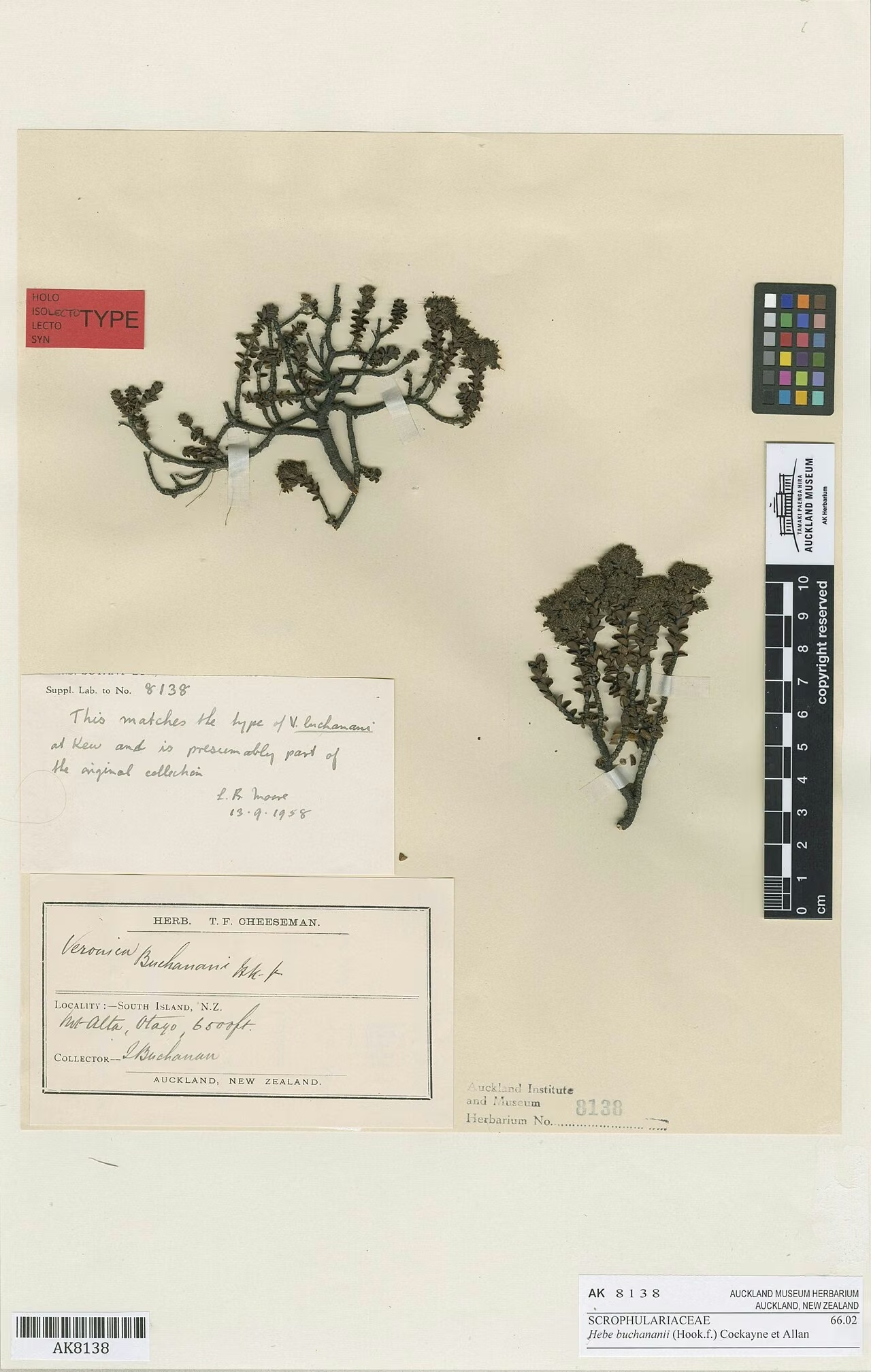
Veronica buchananii (formerly Hebe buchananii) is a low, sprawling alpine shrub, usually under 0.3 m tall, that can spread to form patches up to 3 m wide. It bears pairs of tiny, rounded, blue-green leaves only 3 to 6 mm long and short spikes of white flowers in summer. It is endemic to the South Island mountains, mostly east of the Main Divide, from the Malte Brun Range in Aoraki/Mount Cook National Park south to the Longwood Range in Southland, growing on rocks, debris slopes and in low shrubland. It is ranked Not Threatened and is a tough, compact plant for rock gardens. Explore more native shrubs in our native plant guide.
Plant Description
Veronica buchananii is a spreading low shrub, often more or less mat-like but sometimes more upright, to about 0.3 m tall. Its branches are usually decumbent, with old stems dark grey, brown or black, and red-brown branchlets with lines of fine hairs. The internodes are short, so the leaves are closely packed along the stems.
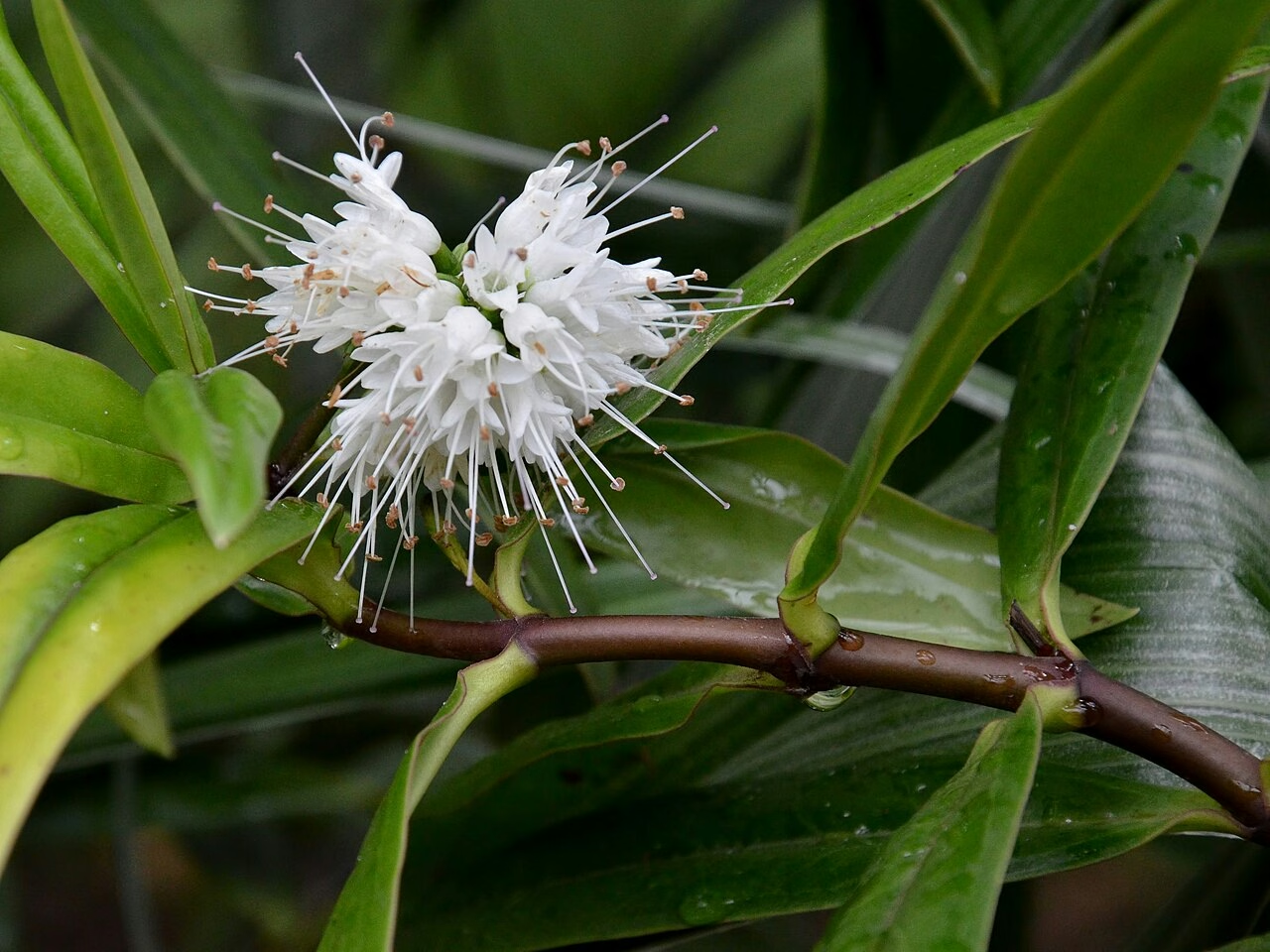
The leaves are fleshy to rigid, concave, obovate to broadly elliptic or almost circular, mostly 3 to 6 mm long and 3 to 5 mm wide, blue-green, and slightly keeled beneath. The leaf bud is tightly surrounded by recently opened leaves and has no sinus. Short spikes of 3 to 12 white flowers, about 0.7 to 1.5 cm long, appear from December to March, followed by small hairy capsules from February to April.
It is most likely to be confused with Veronica pinguifolia. Veronica buchananii is more mat-forming and lower growing, with smaller, keeled leaves and leaf buds closely surrounded by the most recent leaf pairs.
Quick Facts
| Scientific Name | Veronica buchananii |
|---|---|
| Height | Usually 0.1-0.3 m |
| Spread | 0.5-3 m |
| Water Needs | Low to moderate; sharp drainage |
| Light | Full sun |
| Frost Tolerance | High; a subalpine to penalpine species |
| Salt Tolerance | Low; an inland mountain plant |
| Growth Rate | Slow |
| Lifespan | Long-lived perennial shrub |
Climate Best Suited to
A cold, dry-summer mountain climate east of the Main Divide suits it, with hard frosts, snow and strong sun. It dislikes humid, warm lowland conditions.
Regional Suitability
| City | Climate Suitability |
|---|---|
| Auckland | Low |
| Wellington | Medium |
| Christchurch | High |
| Dunedin | High |
Plant Habitat
Veronica buchananii is endemic to the South Island, where it grows in the mountains mostly east of the Main Divide, from the Malte Brun Range in Aoraki/Mount Cook National Park south through Otago to the Longwood Range in western Southland.
It grows in open penalpine and subalpine places on rocks and debris slopes, in low shrubland and sometimes in grassland. Its low, sprawling form lets it hug the ground on exposed, wind-swept sites.
Growing Requirements
Soil Requirements
It grows on rocky ground and scree in the wild, so in gardens it needs gritty, sharply drained soil of low to moderate fertility.
- Add plenty of grit or pumice
- Avoid heavy clay or wet sites
- Mulch with stone chip, not bark
Light Requirements
It is a plant of open mountain slopes and needs full sun to remain compact and blue-green.
- Full sun
- Open, airy position
Water Requirements
Eastern South Island mountains have dry spells in summer, and established plants cope with drought better than with wet roots.
- Water new plants until established
- Water only in long dry spells after that
- Drainage matters more than frequent watering
Planting and Establishing
Plant in spring or autumn in a rock garden, raised scree bed, wall top or large trough. Allow room for it to spread sideways, as old plants can cover a wide patch.
In warm, humid northern districts it is best in a container of gritty mix placed where breezes keep the foliage dry.
Ecological Role
Its small white flower spikes supply nectar and pollen to alpine insects in summer. NZPCN notes that its seeds are wind dispersed, which helps it colonise rock and debris slopes.
Its dense, low mats help bind loose stony ground on debris slopes and create sheltered microsites in otherwise exposed subalpine habitats.
Uses & Significance
Garden Uses
A durable, low, blue-green groundcover for cold and dry gardens, valued for its fine texture.
- Rock gardens and scree beds
- Edging and wall tops
- Alpine troughs
Ecological Value
As a widespread mat-forming shrub of eastern South Island mountains, it contributes to the stability and diversity of subalpine shrubland and rocky habitats.
- Summer nectar for alpine insects
- Ground cover on unstable debris slopes
- Part of eastern subalpine shrubland communities
Landscaping Uses
Use it as a low, spreading foil to upright tussocks such as Chionochloa and Festuca, or let it drape over rocks in a dry alpine garden. The blue-green leaves contrast well with bronze and golden foliage.
It works well in gravel gardens in Canterbury and Otago, where it handles frost and dry summers with little care.
Seasonal Care Calendar
Spring
New shoots appear and it is a good time to plant.
- Plant or divide rooted layers
- Topdress with fresh grit
Summer
Short white flower spikes appear from December to March.
- Water in prolonged dry spells
- Take cuttings in late summer
Autumn
Small capsules ripen from February to April.
- Collect seed
- Tidy spent flower stalks
Winter
Fully hardy and evergreen, often under snow in its natural habitat.
- Keep drainage clear
- Shelter potted plants from constant rain
When to Prune and How Much
Very little pruning is needed. Trim off spent flower stalks after flowering, and cut back any shoots that spread beyond their space.
Avoid cutting into bare old wood at the centre, which regrows slowly. If old plants become open, take cuttings to replace them.
How to Grow Hebe
NZPCN does not give specific propagation notes for Veronica buchananii, but small alpine hebes are generally propagated from semi-hardwood cuttings, and its low sprawling stems also root where they touch the ground. Seed is possible but garden-collected seed may produce hybrids, because hebes cross readily when grown together. Cuttings or rooted layers are the most dependable ways to reproduce a particular plant.
From Cuttings
Small cuttings from firm, current season's growth are the most practical method. Use short side shoots, as the leaves are tiny and closely spaced.
- In late summer or autumn, take 3 to 5 cm side shoots with a small heel if possible
- Remove the leaves from the lower third
- Dip in rooting hormone and insert into a gritty mix of pumice and fine bark
- Keep cool, lightly shaded and just moist until rooted
- Pot on into gritty alpine mix and grow on in full sun
By Layering
Decumbent stems in contact with soil often form roots on their own. These can be separated to give a quick new plant that is identical to the parent and already sized for planting out.
- In spring, find a stem that has rooted where it touches the ground, or pin one down with a wire hoop
- Wait until roots are well formed, usually a few months
- Cut the rooted section from the parent
- Pot up or replant directly in a gritty, sunny position
Pests & Diseases
Few pests trouble it. The main garden problem is root rot or collar rot in wet, poorly drained soil, particularly during winter.
Downy mildew and leaf spot can affect hebes in humid, still air, and browsing by rabbits may damage plants in rural gardens.
Cultural Significance
The species name honours John Buchanan (1819-1898), a New Zealand botanist. No Māori name or traditional use specific to this species was found in the sources consulted.
It has been described under several varieties in the past, including var. exigua and var. major, which are now included in Veronica buchananii, reflecting how much its size varies across its mountain range.
Bonus Tip
Give it a stone-chip mulch rather than bark. The gravel keeps the woody collar dry and mimics the debris slopes where it grows naturally, greatly reducing the risk of rot.
Related Plants
Explore other native plants that share similar characteristics or habitats with Hebe (Veronica buchananii), offering further insights into New Zealand's diverse flora. These related species provide context and opportunities for complementary planting in your garden.
Chatham Island Tree Hebe
Veronica barkeri
Biggar's Hebe
Veronica biggarii
Veronica bollonsii
Veronica bollonsii
Kermadec Koromiko
Veronica breviracemosa
Canterbury Hebe
Veronica canterburiensis
Red Hills Hebe
Veronica baylyi
Veronica colensoi
Veronica colensoi
Veronica corriganii
Veronica corriganii
Plant Conservation
Veronica buchananii is ranked Not Threatened (2023) and has held that status in every assessment since 2004. The Otago regional assessment (2025) also lists it as Regionally Not Threatened.
Grazing, weed invasion of subalpine shrubland and wilding conifers can degrade its habitat locally, so protecting open rocky subalpine areas helps maintain it.
Frequently Asked Questions
How big does Veronica buchananii grow?
It usually stays below 0.3 m tall but spreads widely, with old plants forming low, often mat-like patches up to about 3 m across.
Where does Veronica buchananii grow in the wild?
In South Island mountains, mostly east of the Main Divide, from the Malte Brun Range in Aoraki/Mount Cook National Park to the Longwood Range, in open subalpine and penalpine places.
How is Veronica buchananii different from Veronica pinguifolia?
Veronica buchananii is lower and more mat-forming, with smaller, keeled leaves, and its leaf buds are tightly surrounded by the most recently opened leaf pairs.
Sources and Further Reading
The botanical, growing, and conservation details for Hebe (Veronica buchananii) on this page draw on the New Zealand plant references below. Consult them for full technical records and the latest distribution data.