Red Hills Snow Tussock
Chionochloa defracta
Last updated:
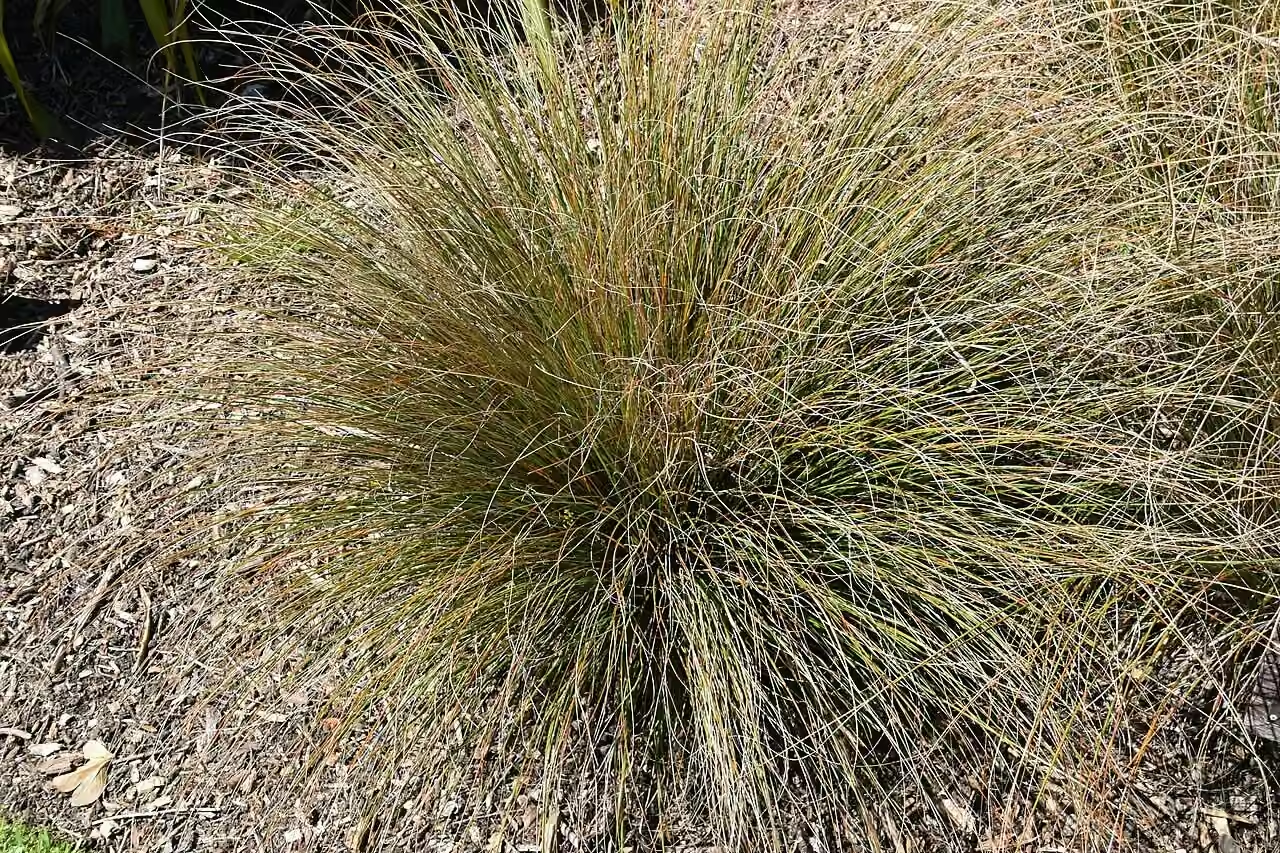
Red Hills snow tussock (Chionochloa defracta) is a snow tussock grass found only on the ultramafic rocks of the Nelson and Marlborough mineral belt, including Dun Mountain and the Red Hills. Plants vary from robust tussocks with leaves up to 75 cm long to slender forms with shorter, narrower leaves, and flowering stems reach about 65 cm. Its name comes from its leaf sheaths, which break into short segments. It often dominates grassland on these toxic, magnesium-rich soils and also grows in scrub, open forest and scree. It is ranked At Risk - Naturally Uncommon because of its narrow range. Explore more native grasses and flaxes in our native plant guide.
Plant Description
Chionochloa defracta forms tussocks of variable stature. Some plants are robust with long leaves, while others are slender with shorter, narrow leaves. The leaves are stiff, rough (scabrid) and deciduous, up to about 75 cm long and rolled to a diameter of around 1.3 mm. Hairs on the leaves are sometimes shed and cannot be detected on older material.
The most distinctive feature is the leaf sheath, which has a shining light brown base and fractures into short segments, giving the species its name. Flowering stems reach 65 cm and carry a narrow, upright flower head up to 20 cm long, with spikelets of up to six florets and a central awn around 11 mm long. Plants from the Red Hills in Marlborough lack the hairy culm internodes found elsewhere. Florets are dispersed by wind.
Within the mineral belt it can be recognised by its fracturing sheaths and stiff, narrow, rough leaves. Its restriction to ultramafic rock also helps, as neighbouring snow tussocks on ordinary greywacke and schist soils belong to other species.
Quick Facts
| Scientific Name | Chionochloa defracta |
|---|---|
| Height | Leaves to 0.75 m; flowering stems to 0.65 m |
| Spread | Variable; slender to robust tussocks |
| Water Needs | Moderate; tolerates dry, stony ground |
| Light | Full sun to light shade |
| Frost Tolerance | High; upper montane to alpine |
| Salt Tolerance | No information available; an inland species |
| Growth Rate | Slow |
| Lifespan | Perennial |
Climate Best Suited to
Suited to the cool montane to alpine climate of the Nelson and Marlborough ranges, with cold winters, snow and frost, and periodic summer dryness on exposed stony ground.
Regional Suitability
| City | Climate Suitability |
|---|---|
| Auckland | Low |
| Wellington | Low |
| Christchurch | Medium |
| Dunedin | Medium |
Plant Habitat
Red Hills snow tussock is endemic to the South Island and confined to the mineral belt of Nelson and Marlborough, a band of ultramafic rock that includes Dun Mountain near Nelson and the Red Hills in Marlborough. The holotype was collected on open slopes of Dun Mountain at about 2600 ft (roughly 790 m), between Windy Point and Coppermine Saddle.
It ranges from the upper montane to the alpine zone, with the Flora of New Zealand recording it in grassland, scrub and forest on ultramafic rocks and soils at elevations up to about 1000 m. NZPCN describes it as often the dominant species in grassland on these sites, and it also grows in open forest and on ultramafic scree, filling spaces between shrubs in the stunted vegetation typical of the mineral belt.
Growing Requirements
Soil Requirements
Ultramafic soils are thin, stony, high in magnesium, nickel and chromium and low in calcium and other nutrients. This tussock is adapted to them, and in cultivation a lean, gritty mix is likely to suit it far better than rich garden soil.
- Stony, gritty, low-fertility soil
- Excellent drainage
- Do not add fertiliser or compost
Light Requirements
It grows in open grassland and among the sparse, stunted scrub and forest of the mineral belt, so it takes full sun and copes with light shade.
- Full sun preferred
- Tolerates light shade among shrubs
Water Requirements
Its stony natural sites drain freely and can dry out in summer, but they receive regular rain and snow. Moderate, even moisture with sharp drainage is the aim.
- Water to establish, then sparingly
- Avoid waterlogged soil
- Mulch with stones rather than organic matter
Planting and Establishing
Red Hills snow tussock is not a nursery plant, and planting is mainly relevant to restoration on the mineral belt, for example after track or mine-site disturbance. Use plants raised from seed collected on the same ultramafic site, because populations are adapted to their particular soils.
Plant in autumn or spring into bare stony ground, firm the roots in well and water once. Do not import topsoil, which would favour weeds over the specialised ultramafic flora.
Ecological Role
Like other snow tussocks it is wind pollinated, and its florets are dispersed by wind. Its ability to tolerate ultramafic soils lets it dominate open ground where many common grasses and weeds struggle.
As a dominant grass of mineral belt grasslands, it shapes the structure of a rare ecosystem, sheltering small herbs and invertebrates between its tussocks. Landcare Research lists ultrabasic hills as a naturally rare ecosystem type in New Zealand. Detailed studies of the insects associated with this species were not found.
Uses & Significance
Garden Uses
This is a specialist plant for restoration and botanical collections, not a common garden tussock. Enthusiasts could try it in a lean scree or rock garden in cool districts.
- Restoration of disturbed mineral belt sites
- Scree and rock gardens with lean, gritty soil
- Collections illustrating ultramafic plants
Ecological Value
It is a characteristic and often dominant plant of the ultramafic grasslands of Nelson and Marlborough, one of New Zealand's naturally rare ecosystems.
- Dominant tussock of a naturally rare ecosystem
- Binds stony, erosion-prone ultramafic soils
- Provides cover for small herbs and invertebrates
Landscaping Uses
In a scree or gravel garden its stiff, narrow, upright leaves give a fine-textured, wiry look that suits a dry, rocky composition. Pair it with other mineral belt or low-nutrient specialists rather than lush garden plants.
Group several tussocks of mixed sizes across a bed of reddish or grey gravel to evoke the open slopes of Dun Mountain and the Red Hills.
Seasonal Care Calendar
Spring
New shoots emerge as the snow melts. A good time for planting in cold districts.
- Plant into stony ground
- Water newly planted tussocks
Summer
Flowering stems develop, though published flowering dates for this species were not found.
- Watch for flower heads
- Water only in prolonged drought
Autumn
Seed ripens on the narrow heads and can be collected before it blows away.
- Collect ripe florets
- Autumn planting in milder sites
Winter
Growth stops and plants may be under snow at higher altitudes.
- No maintenance needed
- Ensure pots drain freely
When to Prune and How Much
No pruning is required. The leaves are deciduous and fall from their sheaths, and the fracturing old sheaths at the base are a natural feature of the species.
Spent flowering stems can be removed after seed has shed, if desired, but leave the tussock base intact.
How to Grow Red Hills Snow Tussock
No published propagation guidance specific to Chionochloa defracta was found, and NZPCN gives no propagation notes for it. The approach below is based on how other snow tussocks are raised and on the species' wind-dispersed florets and tussock habit. Because it is adapted to ultramafic soils, seedlings and divisions are best grown in a lean, gritty mix rather than a rich potting medium. Most of the mineral belt lies in conservation land or reserves, so seed collection requires permission from the Department of Conservation or the landowner, and seed should be sourced from the same site where plants will be returned.
From Seed
Seed is the best method for restoration, as it preserves the genetic variation between robust and slender forms found in the wild.
- Collect ripe heads when florets begin to fall from the narrow panicles.
- Sow fresh onto a gritty, low-nutrient seed mix and cover thinly with grit.
- Keep trays outdoors or in a cold frame where they receive winter chilling.
- Water to keep the mix just moist; avoid waterlogging.
- Pot seedlings individually into lean, stony mix and grow on for a season before planting.
By Division
Established cultivated tussocks can be split into rooted sections, though this produces few plants and is less suited to restoration.
- Divide in early spring or autumn in cool weather.
- Separate sections with several shoots and plenty of roots.
- Trim leaves back by half and pot into a gritty mix.
- Keep sheltered and lightly moist until new growth appears.
Pests & Diseases
No specific pests or diseases are documented. In the wild, feral goats, deer and hares browse in the Nelson and Marlborough ranges and may graze tussocks.
Weeds such as wilding conifers can invade mineral belt grassland, and in cultivation overly rich or wet soils are a likely cause of decline.
Cultural Significance
No Māori name or traditional use specific to Chionochloa defracta was found in the sources consulted. The name defracta refers to its fracturing leaf sheaths, and the common name refers to the Red Hills of Marlborough, part of the same ultramafic belt as Dun Mountain.
The species was described by Henry Connor, whose type specimen came from Dun Mountain near Nelson, a site also known for the historic copper mining that gave Coppermine Saddle its name.
Bonus Tip
To pick Red Hills snow tussock in the field, pull back the old growth at the base and look at the sheaths: if the shiny light brown sheaths have broken into short pieces, and the plant is on reddish or greenish ultramafic rock, you have almost certainly found Chionochloa defracta.
Related Plants
Explore other native plants that share similar characteristics or habitats with Red Hills Snow Tussock (Chionochloa defracta), offering further insights into New Zealand's diverse flora. These related species provide context and opportunities for complementary planting in your garden.
Beddie's Tussock
Chionochloa beddiei
Coastal Tussock
Chionochloa bromoides
Narrow-Leaved Bush Tussock
Chionochloa cheesemanii
Pungent Snow Tussock
Chionochloa crassiuscula subsp. crassiuscula
Slim Snow Tussock
Chionochloa macra
Squat Snow Tussock
Chionochloa ovata
Terete-Leaved Snow Tussock
Chionochloa teretifolia
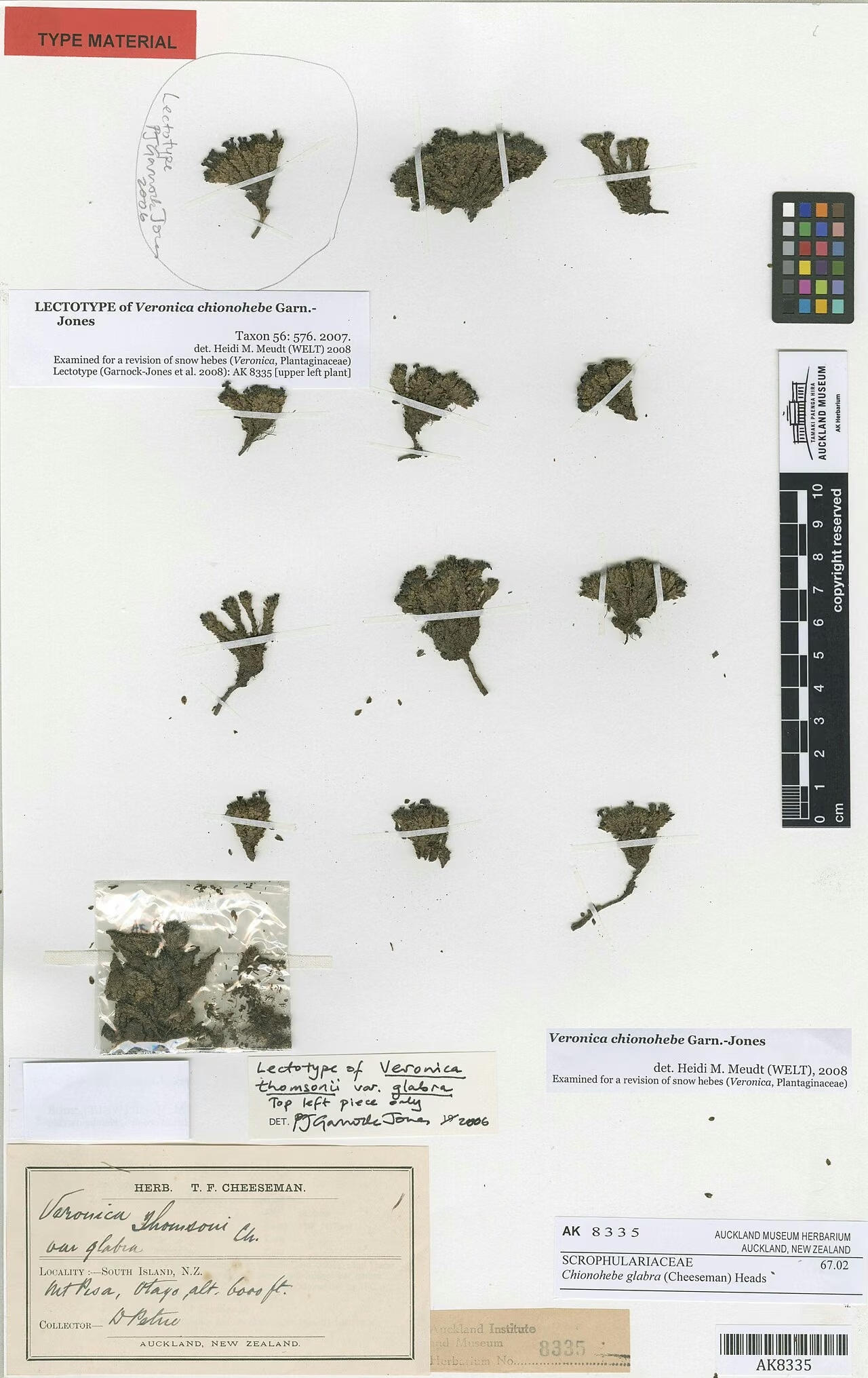
Veronica chionohebe
Veronica chionohebe
Plant Conservation
Red Hills snow tussock is ranked At Risk - Naturally Uncommon (2023) with qualifiers Range Restricted and Stable. It is confined to the narrow ultramafic belt but is often dominant within it.
Much of its habitat lies within Mount Richmond Forest Park, the Dun Mountain area and other conservation land. Controlling wilding conifers and browsing animals and limiting disturbance from tracks and vehicles on the mineral belt are the main actions that protect it.
Frequently Asked Questions
What does defracta mean in Chionochloa defracta?
It refers to the leaf sheaths, which fracture into short segments, a feature the Flora of New Zealand highlights as distinctive for this tussock.
Where does Red Hills snow tussock grow?
It is restricted to the ultramafic mineral belt of Nelson and Marlborough, such as Dun Mountain and the Red Hills, from upper montane to alpine country.
Why does Chionochloa defracta only grow on ultramafic soils?
It is an ultramafic endemic, adapted to soils high in magnesium and heavy metals and low in key nutrients, conditions that exclude many other plants.
Is Red Hills snow tussock threatened?
It is ranked At Risk - Naturally Uncommon because of its restricted range, though its populations are considered stable and it is often dominant where it grows.
Sources and Further Reading
The botanical, growing, and conservation details for Red Hills Snow Tussock (Chionochloa defracta) on this page draw on the New Zealand plant references below. Consult them for full technical records and the latest distribution data.