Hebe
Veronica bollonsii
Last updated:
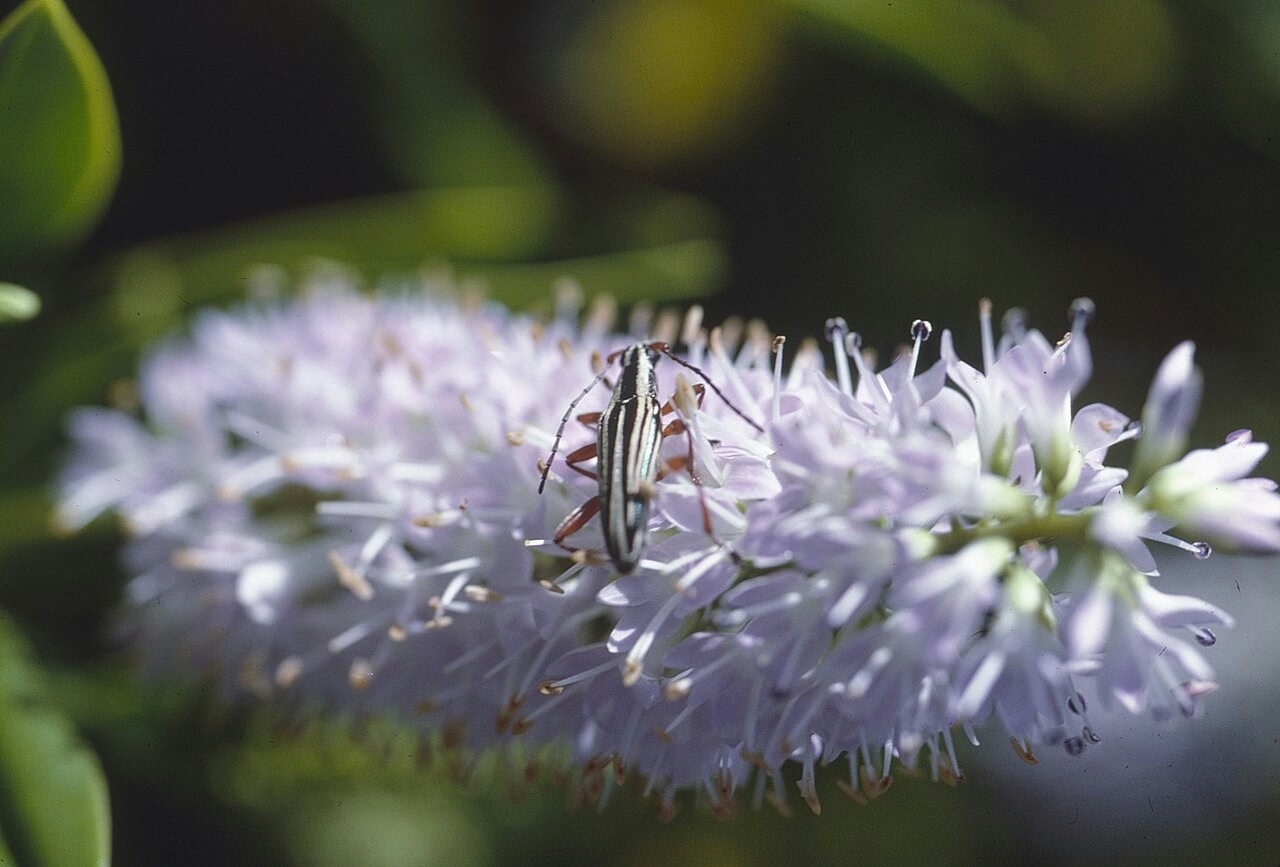
Veronica bollonsii (formerly Hebe bollonsii) is a heavily branched coastal shrub up to 2 m tall and 3 m wide, with dark green, glossy, leathery leaves up to 13 cm long and long sprays of flowers that open very pale mauve and quickly fade to white. It is endemic to northern New Zealand, found mainly on the Poor Knights Islands and the Hen and Chickens Islands off eastern Northland, with a few populations on rock stacks and headlands between Tutukākā and Mimiwhangata. It grows in wind-shorn petrel scrub and coastal forest and is ranked At Risk - Naturally Uncommon because of its small range. Explore more native shrubs in our native plant guide.
Plant Description
Veronica bollonsii is a heavily branched shrub up to 2 m tall and 3 m across with erect branches and green branchlets. Its stems and leaves are hairless or only minutely hairy. The leaves are 14 to 130 mm long and 8 to 42 mm wide, oblanceolate to obovate, oblong or elliptic, thick and leathery, dark green and usually glossy above and paler beneath. The leaf bud has no sinus (gap) between the young leaves.
The flowers are carried in unbranched sprays 35 to 150 mm long from the leaf axils, each with 24 to 125 flowers. They are tinged very pale mauve when they open and soon fade to white. Flowering is from September to February, often sporadically, and fruit can be found throughout the year. The capsules are 2.5 to 5.5 mm long and release straw-yellow, flattened, slightly winged seeds.
It is most similar to Veronica pubescens subsp. sejuncta, which also grows on northern offshore islands. Veronica bollonsii differs in its nearly hairless stems and foliage, consistent lack of a leaf bud sinus, usually much broader leaves and uniformly lighter coloured flowers.
Quick Facts
| Scientific Name | Veronica bollonsii |
|---|---|
| Height | Up to 2 m |
| Spread | Up to 3 m |
| Water Needs | Low to moderate once established |
| Light | Full sun to light shade |
| Frost Tolerance | Low; a frost-tender northern coastal species |
| Salt Tolerance | High; grows on exposed shore platforms |
| Growth Rate | Moderate to fast |
| Lifespan | Perennial shrub |
Climate Best Suited to
A warm-temperate, frost-free coastal climate suits it best, with mild, humid winters and salt-laden winds. It is not suited to cold inland districts.
Regional Suitability
| City | Climate Suitability |
|---|---|
| Auckland | High |
| Wellington | Medium |
| Christchurch | Low |
| Dunedin | Low |
Plant Habitat
Veronica bollonsii is endemic to northern New Zealand. It is mainly found on the Poor Knights Islands and the Hen and Chickens Islands off the east coast of Northland, and is also local on rock stacks and headlands of the mainland coast from Tutukākā north to about Mimiwhangata.
It grows in petrel scrub, low wind-shorn shrubland, open coastal forest and on rock stacks, often in low, wind-shaped scrub on exposed shore platforms where seabirds burrow and the soil is enriched by guano.
Growing Requirements
Soil Requirements
On the islands it grows in thin, rocky, seabird-enriched soils that drain freely. In gardens it tolerates most free-draining soils.
- Free-draining loam, sand or volcanic soil
- Tolerates fertile soils
- Avoid heavy, waterlogged ground
Light Requirements
It grows in open scrub and forest margins, so it accepts full sun or light shade.
- Full sun gives the most compact growth
- Tolerates light shade under coastal canopy
Water Requirements
Exposed island headlands dry out in summer, so established plants handle moderate drought.
- Water young plants through their first summer
- Established plants need little extra watering
Planting and Establishing
Plant in autumn or spring, 1.5 to 2 m apart for hedging or massed plantings. It handles strong salt winds, so it can go into front-line coastal positions in northern gardens.
In districts with frost, plant it in a sheltered, sunny spot near the sea or against a warm wall, as it comes from frost-free islands.
Ecological Role
On the Poor Knights and Hen and Chickens Islands it forms part of petrel scrub, low vegetation shaped by wind and by the burrowing seabirds that nest beneath it. Its abundant, long flower sprays supply nectar and pollen to insects; no specific pollinator studies for this species were found.
The small winged seeds are released from capsules year-round and dispersed by wind and gravity across cliffs and shore platforms.
Uses & Significance
Garden Uses
A vigorous, glossy-leaved hebe for northern coastal gardens, useful where few plants tolerate salt spray.
- Coastal shelter and low hedging
- Bank and cliff-top planting
- Long-flowering shrub for pollinators
Ecological Value
It is a structural part of the unique island vegetation of the Poor Knights and Hen and Chickens, both of which are important nature reserves.
- Shelter for burrowing seabird colonies
- Nectar for insects over a long season
- Range-restricted Northland endemic
Landscaping Uses
Use it as a broad, rounded shrub in coastal borders with pōhutukawa, flax and coastal karo, where its large glossy leaves give a lush look. It can also be clipped into a low, informal hedge.
Because flowering is sporadic over a long season, mass several plants together for a better display of pale mauve to white spikes.
Seasonal Care Calendar
Spring
Flowering begins from September, sometimes sporadically.
- Plant new shrubs
- Feed lightly with slow-release fertiliser if growth is poor
Summer
Flowering continues into February with pale mauve sprays fading to white.
- Water young plants
- Deadhead to tidy plants if desired
Autumn
A good time for semi-hardwood cuttings and for collecting seed.
- Take cuttings
- Trim after the main flowering
Winter
Evergreen and attractive in frost-free gardens; capsules may still be present.
- Protect from frost in colder areas
- Check drainage after heavy rain
When to Prune and How Much
Lightly trim after flowering to keep the shrub dense and to remove old flower stalks. It responds well to regular light clipping when grown as a hedge.
Avoid hard cutting into thick old wood, as regrowth can be slow; renew old plants gradually over two seasons instead.
How to Grow Hebe
NZPCN describes Veronica bollonsii as easy to propagate from semi-hardwood cuttings and fresh seed. Cuttings are preferred for garden use because they keep plants true to type, while seed is valuable for restoration where genetic diversity matters. Wild plants grow mostly on protected island nature reserves, so collect material from cultivated plants of known origin rather than from the islands.
From Semi-Hardwood Cuttings
Cuttings strike readily, particularly in late summer and autumn when the current season's growth has firmed. Because the leaves are large, trimming them reduces wilting while the cutting forms roots.
- Take 10 to 15 cm cuttings from firm, non-flowering shoots
- Remove lower leaves and reduce large remaining leaves by half to limit water loss
- Dip in rooting hormone and insert into a free-draining propagation mix
- Keep humid and shaded; roots usually form within 6 to 8 weeks
- Pot on and harden off in full sun before planting out
From Seed
Fruit is present throughout the year, so seed can be collected in most seasons. Seed from isolated plants is most likely to come true, as hebes hybridise readily in gardens.
- Collect brown capsules as they begin to split
- Sow seed on the surface of moist seed-raising mix
- Cover with a light dusting of fine sand or vermiculite
- Keep warm and moist; germination usually occurs within a few weeks
- Prick out when seedlings have two pairs of true leaves
Pests & Diseases
In the wild it is under no obvious threats according to NZPCN, as it grows mostly on pest-free offshore island reserves.
In gardens it can suffer from downy mildew or leaf spot in humid, still conditions, and from scale insects or aphids on soft growth. Good air flow and avoiding overcrowding reduce problems.
Cultural Significance
The species was named after Captain John P. Bollons (1862-1929). No Māori name or traditional use specific to this species was found in the sources consulted, although the Poor Knights and Hen and Chickens Islands themselves are of great significance to Ngātiwai and other Northland iwi.
Several northern coastal hebes are known as koromiko in Māori, a name applied broadly to hebes, but there is no record that it was used specifically for this species.
Bonus Tip
If you are trying to buy the true species, check the leaf bud: Veronica bollonsii has young leaves pressed together with no gap at the base of the bud, while the similar Veronica pubescens subsp. sejuncta shows a small window or sinus there. Nursery plants sold under this name may be hybrids, and this check helps catch them.
Related Plants
Explore other native plants that share similar characteristics or habitats with Hebe (Veronica bollonsii), offering further insights into New Zealand's diverse flora. These related species provide context and opportunities for complementary planting in your garden.
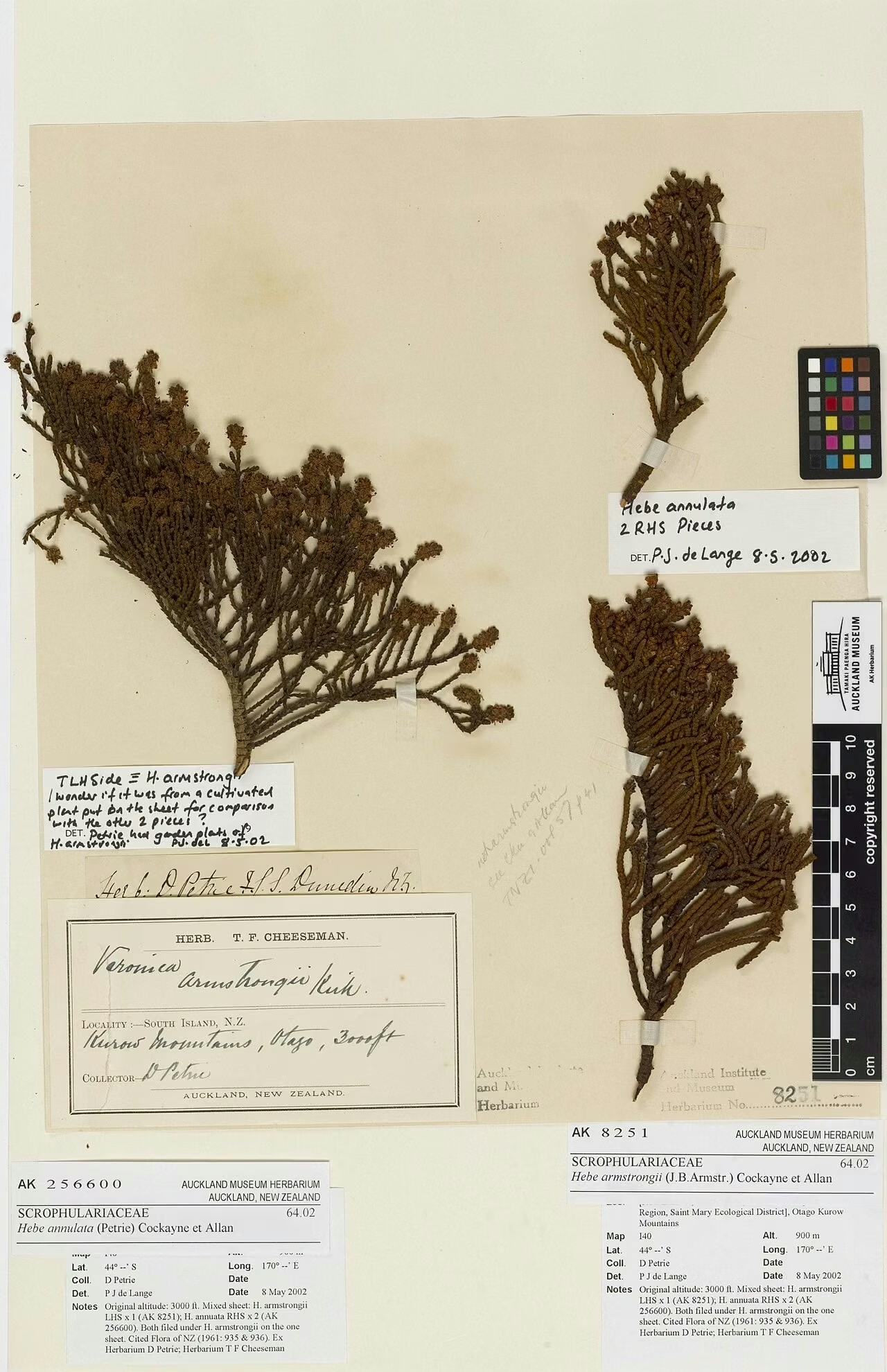
Veronica annulata
Veronica annulata
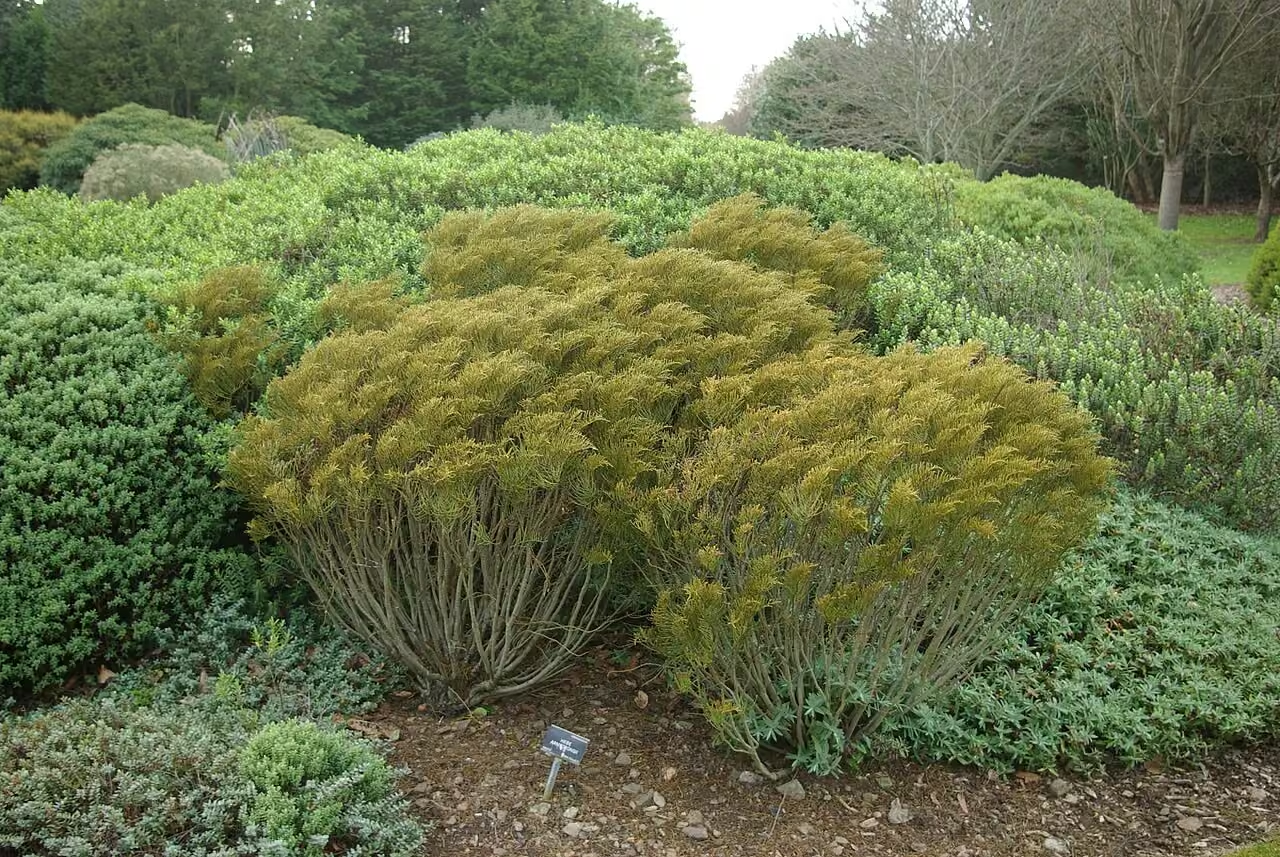
Armstrong's Whipcord
Veronica armstrongii
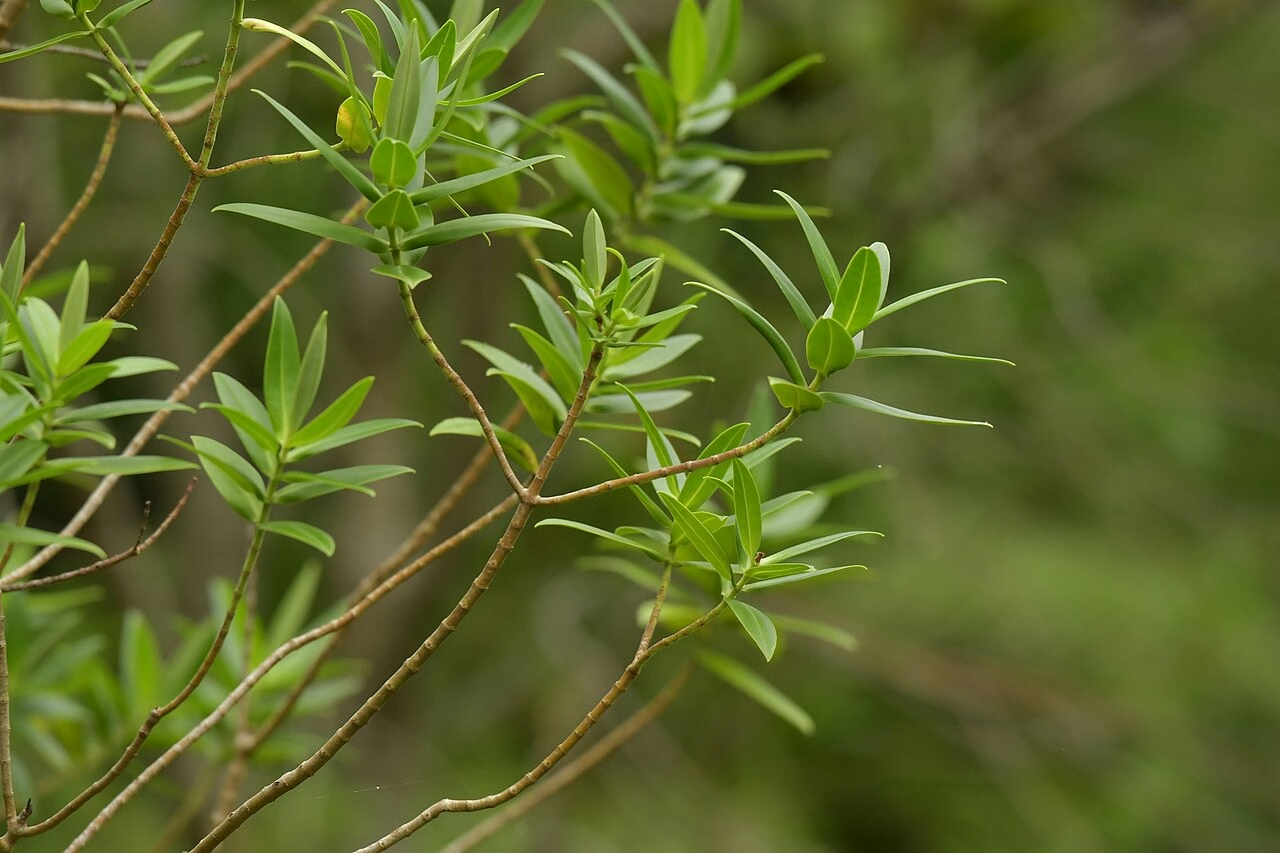
Chatham Island Tree Hebe
Veronica barkeri
Biggar's Hebe
Veronica biggarii
Kermadec Koromiko
Veronica breviracemosa
Veronica buchananii
Veronica buchananii
Canterbury Hebe
Veronica canterburiensis
Red Hills Hebe
Veronica baylyi
Plant Conservation
Veronica bollonsii is ranked At Risk - Naturally Uncommon (2023) with the qualifier RR (range restricted), and Regionally At Risk in Northland. NZPCN describes it as a naturally uncommon species virtually confined to offshore islands where it faces no obvious threats.
Keeping the Poor Knights and Hen and Chickens Islands free of introduced pests and weeds is the key to its security. Mainland headland populations benefit from weed control and protection from browsing animals.
Frequently Asked Questions
Where does Veronica bollonsii grow naturally?
It is mainly found on the Poor Knights and Hen and Chickens island groups off eastern Northland, and locally on rock stacks and headlands from Tutukākā north to about Mimiwhangata.
How is Veronica bollonsii different from Veronica pubescens?
Compared with Veronica pubescens subsp. sejuncta it has almost hairless stems and leaves, no gap (sinus) in the leaf bud, usually much broader leaves and paler flowers.
Is Veronica bollonsii a good coastal garden plant?
Yes. It grows naturally in exposed, salt-laden petrel scrub and is easy to propagate from semi-hardwood cuttings and fresh seed, making it suited to warm coastal gardens.
Who is Veronica bollonsii named after?
It honours Captain John P. Bollons (1862-1929), a ship's captain, honoured by Leonard Cockayne when he named the species.
Sources and Further Reading
The botanical, growing, and conservation details for Hebe (Veronica bollonsii) on this page draw on the New Zealand plant references below. Consult them for full technical records and the latest distribution data.