Kermadec Koromiko
Veronica breviracemosa
Last updated:
Kermadec koromiko (Veronica breviracemosa, now Veronica breviracemosa) is a spreading shrub up to 2 m tall with firm, fleshy leaves and short sprays of pale lilac flowers whose petals curl sharply back. It is found naturally only on Raoul Island in the Kermadec Islands, about 1000 km north-east of New Zealand's North Island, on coastal cliffs and headlands under sparse Kermadec pōhutukawa and ngaio forest. Once presumed extinct, it was rediscovered as a single plant in 1983 and later found in small numbers on volcanic cliffs. It is ranked Threatened - Nationally Vulnerable, with weed invasion of its cliff habitat the main threat. It was previously known as Hebe breviracemosa. Explore more native shrubs in our native plant guide.
Plant Description
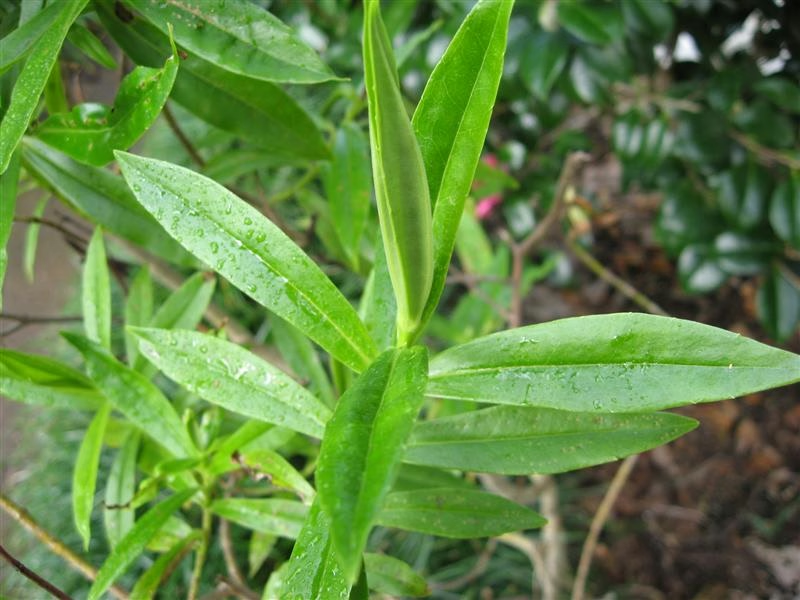
Veronica breviracemosa is a shrub up to 2 m tall and 1.5 m wide with spreading branches. Its leaves are firmly fleshy, 30 to 150 mm long and 15 to 30 mm wide. The leaf bud has a sinus, a small gap at the base between the young leaves.
The flowers are borne in lateral racemes 20 to 30 mm long (occasionally to 50 mm), shorter than the surrounding leaves, which gives the species its name, meaning short raceme. The flowers are pale lilac with a very short corolla tube of 1 to 1.5 mm, and the lobes curl strongly backwards almost to the calyx lobes. In warm places it can flower all year, but further south it mostly flowers in summer. Fruit can be found year-round and is most common in summer.
Without flowers it could be confused with koromiko (Veronica stricta), but Kermadec koromiko is less hairy and has a sinus in the leaf bud. Flowering material is easy to separate because of the distinctive short, sharply recurved flowers.
Quick Facts
| Scientific Name | Veronica breviracemosa |
|---|---|
| Height | Up to 2 m |
| Spread | Up to 1.5 m |
| Water Needs | Low to moderate; free-draining soil |
| Light | Full sun to light shade |
| Frost Tolerance | Low; a subtropical island species |
| Salt Tolerance | High; grows on coastal cliffs |
| Growth Rate | Moderate to fast |
| Lifespan | Perennial shrub |
Climate Best Suited to
A subtropical to warm-temperate, frost-free oceanic climate suits it, like that of Raoul Island. It grows well in northern coastal gardens but struggles with frost.
Regional Suitability
| City | Climate Suitability |
|---|---|
| Auckland | High |
| Wellington | Medium |
| Christchurch | Low |
| Dunedin | Low |
Plant Habitat
Veronica breviracemosa is endemic to Raoul Island, the largest island of the Kermadec Islands group, which lies about 1000 km north-east of the North Island.
It grows on coastal cliffs and headlands under sparse Kermadec pōhutukawa (Metrosideros kermadecensis) and Kermadec ngaio forest. Its remaining wild plants are on steep, unstable volcanic cliffs, out of reach of the goats that once browsed Raoul Island heavily.
Growing Requirements
Soil Requirements
Its natural habitat is loose, free-draining volcanic soil on cliffs. In gardens it needs good drainage but is not fussy about soil type.
- Free-draining loam, sand or volcanic soil
- Avoid waterlogged clay
- Moderate fertility is ideal
Light Requirements
It grows under sparse coastal canopy and on open cliffs, so it handles sun or light shade.
- Full sun in mild coastal gardens
- Light shade is tolerated
Water Requirements
Cliff-face plants rely on rain and sea mist with fast drainage, so established plants tolerate dry periods.
- Water regularly during establishment
- Avoid prolonged wet feet
Planting and Establishing
Plant in spring in a warm, sunny, frost-free site with good drainage. It is well suited to coastal banks, rock walls and seaside gardens in the north of the North Island.
In cooler districts grow it against a warm wall or in a large container that can be moved under cover in frosty weather.
Ecological Role
On Raoul Island it is part of the cliff and headland vegetation alongside Kermadec pōhutukawa and Kermadec ngaio. Its pale lilac flowers provide nectar for insects, and the tiny seeds are spread by wind and gravity down cliff faces.
Its survival on cliffs reflects past browsing by feral goats, which were eradicated from Raoul Island in the 1980s; now the main pressure is from invasive weeds that colonise unstable volcanic slopes.
Uses & Significance
Garden Uses
An unusual, fleshy-leaved hebe for frost-free coastal gardens, and an important conservation plant.
- Coastal banks and seaside shrub borders
- Collections of rare and threatened plants
- Long flowering season in warm gardens
Ecological Value
As one of Raoul Island's few endemic shrubs, it represents a unique lineage of hebe isolated far to the north of mainland New Zealand.
- Island endemic with a very small wild population
- Nectar source on coastal cliffs
- Garden plantings act as an insurance population
Landscaping Uses
Use it in a seaside planting with other Kermadec and northern coastal species such as pōhutukawa, ngaio and coastal flax. Its fleshy leaves and pale lilac sprays add texture to a mixed coastal border.
Because the flower sprays are shorter than the leaves, it is a foliage plant first; position it where its thick, glossy leaves can be seen up close.
Seasonal Care Calendar
Spring
Growth picks up and flowering begins in warm gardens.
- Plant new shrubs
- Take softwood cuttings
Summer
The main flowering and fruiting season in most of New Zealand.
- Water young plants
- Remove spent flower sprays
Autumn
Flowering may continue in warm northern gardens.
- Take semi-hardwood cuttings
- Lightly trim to shape
Winter
Plants may flower through winter in frost-free sites, but are at risk from frost elsewhere.
- Cover or move potted plants on frosty nights
- Ensure good drainage
When to Prune and How Much
Lightly trim after the main flowering to keep the shrub compact. Remove any frost-damaged growth in spring once new shoots appear.
Avoid heavy cutting into old wood; it is better to shape plants gradually over several seasons.
How to Grow Kermadec Koromiko
NZPCN describes Kermadec koromiko as easily grown from seed and cuttings, but in practice cuttings are recommended. Seed is not freely produced by garden stock, which is dominated by male clones, and the species hybridises easily in cultivation, so seedlings from garden plants may not be true Veronica breviracemosa. Cutting-grown plants of known Raoul Island origin are the most reliable way to keep the true species in cultivation.
From Cuttings
Semi-hardwood cuttings strike readily in spring, summer or autumn and are the preferred method because they reproduce the parent exactly. In cooler regions, root them under cover with gentle bottom heat.
- Take 10 to 12 cm cuttings from healthy, non-flowering shoots
- Remove the lower leaves and trim large leaves to reduce moisture loss
- Dip the base in rooting hormone and insert into free-draining propagation mix
- Keep warm, humid and out of direct sun until roots form, usually 4 to 8 weeks
- Pot on and harden off before planting in a frost-free site
From Seed
Seed is useful where it comes from wild-collected or carefully isolated plants, for example in conservation programmes. Garden-sourced seed should be treated with caution because of hybridisation.
- Collect brown capsules, most often in summer
- Sow on the surface of fine, moist seed-raising mix
- Cover lightly with fine grit or vermiculite
- Keep warm and moist until seedlings appear
- Grow on and check flowers for true species characteristics before distributing
Pests & Diseases
The main threat in the wild is invasive weeds overrunning its unstable volcanic cliff habitat. Introduced browsers have been removed from Raoul Island, but weeds remain a major management problem there.
In gardens, hebe downy mildew and leaf spot may appear in humid weather, and scale insects or aphids can attack new growth. Good air movement and healthy growing conditions limit these problems.
Cultural Significance
Its common name uses koromiko, the Māori name for hebes such as Veronica stricta, whose leaves were traditionally used as a remedy for stomach complaints. No Māori name or use specific to this Kermadec species is recorded in the sources consulted.
Its story of near extinction and rediscovery has made it a symbol of conservation work on Raoul Island, where goat eradication and weed control have aimed to restore the island's native vegetation.
Bonus Tip
If you want to contribute to keeping this species in cultivation, propagate only from cuttings and label plants with their source. Seed from garden plants is likely to give hybrids with other hebes, which could confuse future conservation collections.
Related Plants
Explore other native plants that share similar characteristics or habitats with Kermadec Koromiko (Veronica breviracemosa), offering further insights into New Zealand's diverse flora. These related species provide context and opportunities for complementary planting in your garden.
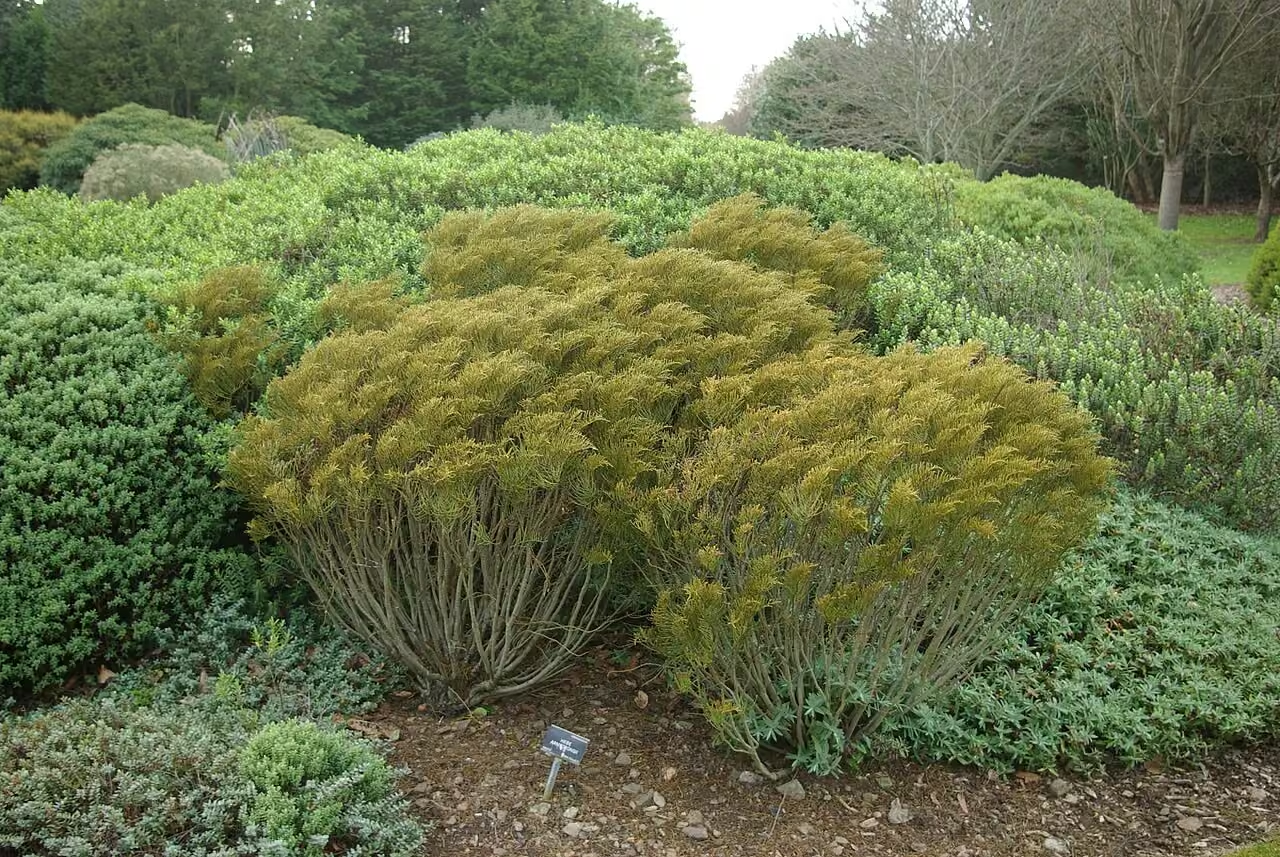
Armstrong's Whipcord
Veronica armstrongii
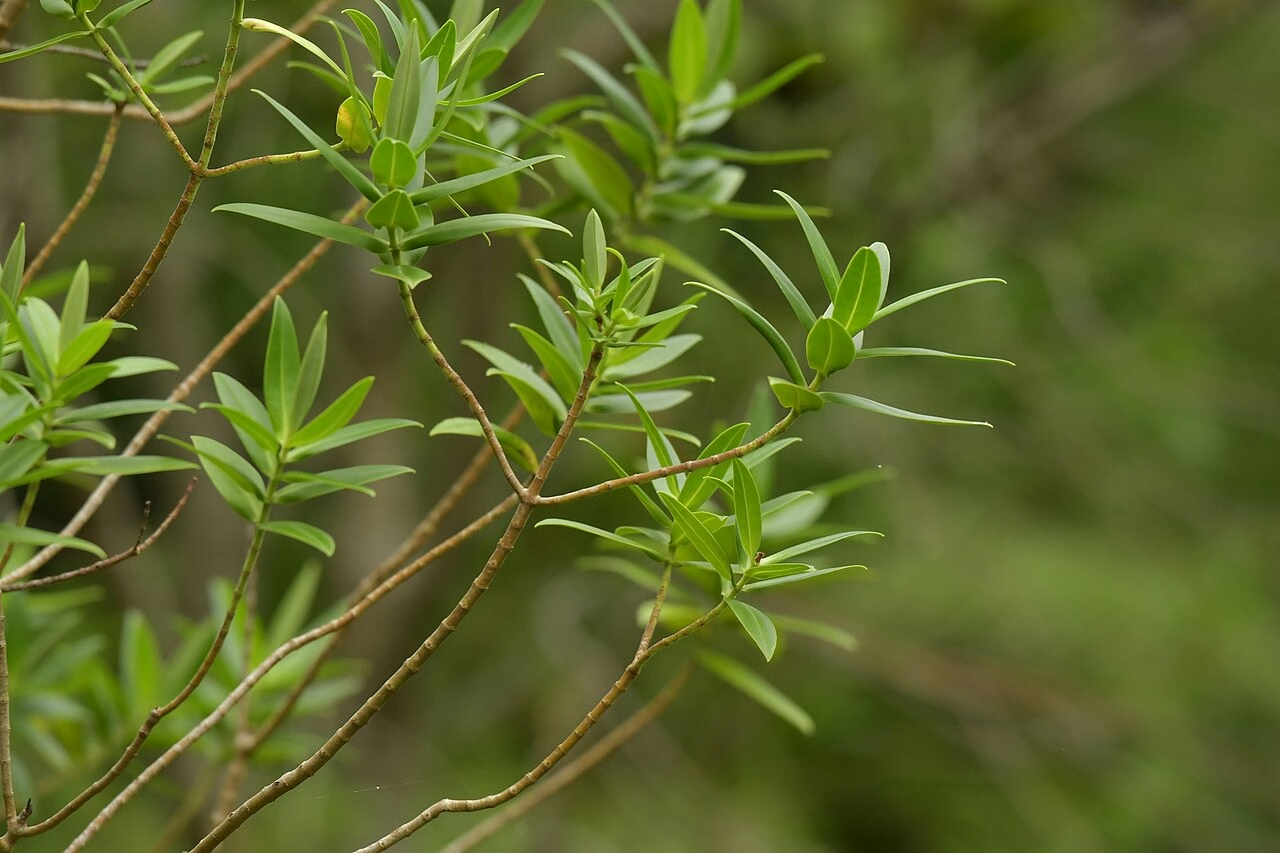
Chatham Island Tree Hebe
Veronica barkeri
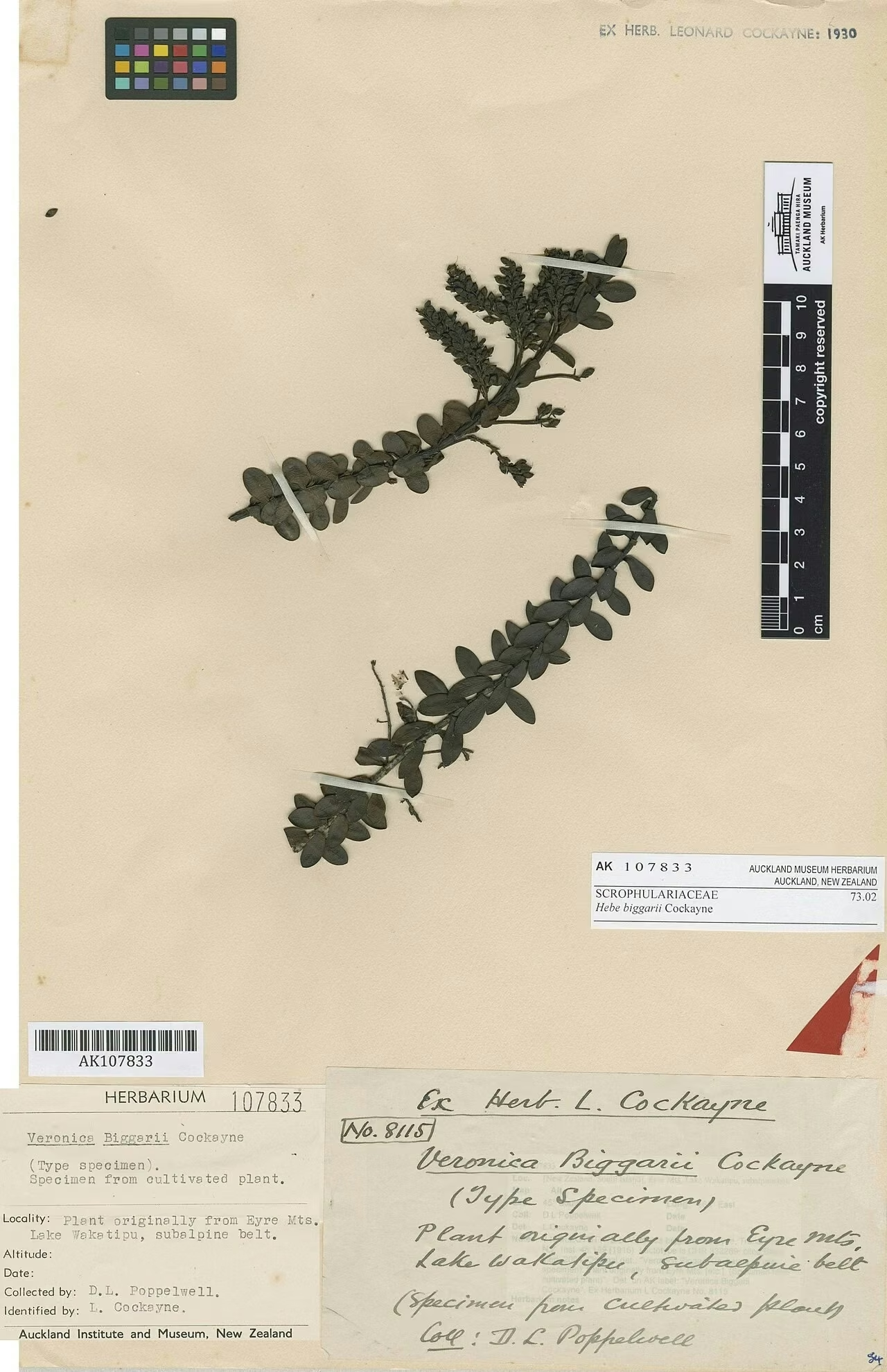
Biggar's Hebe
Veronica biggarii
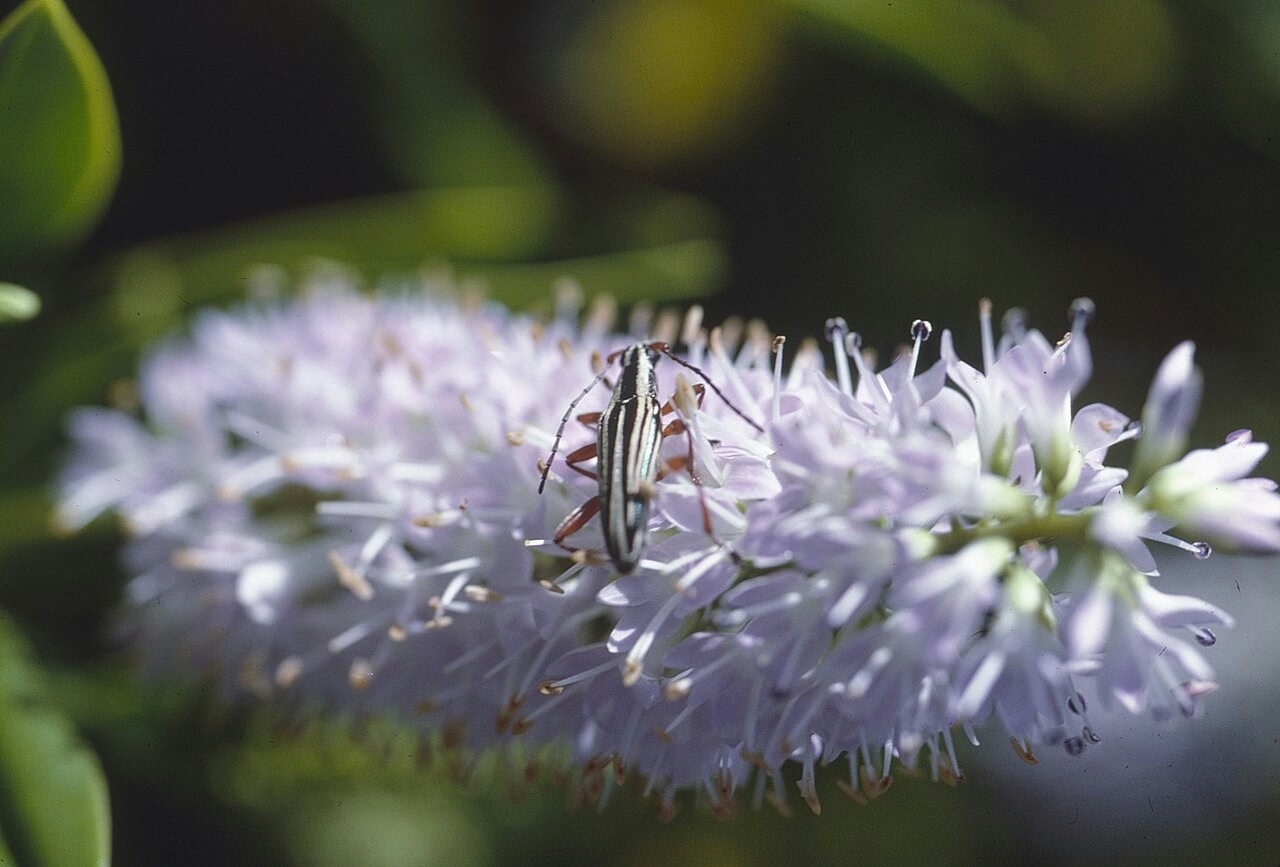
Veronica bollonsii
Veronica bollonsii
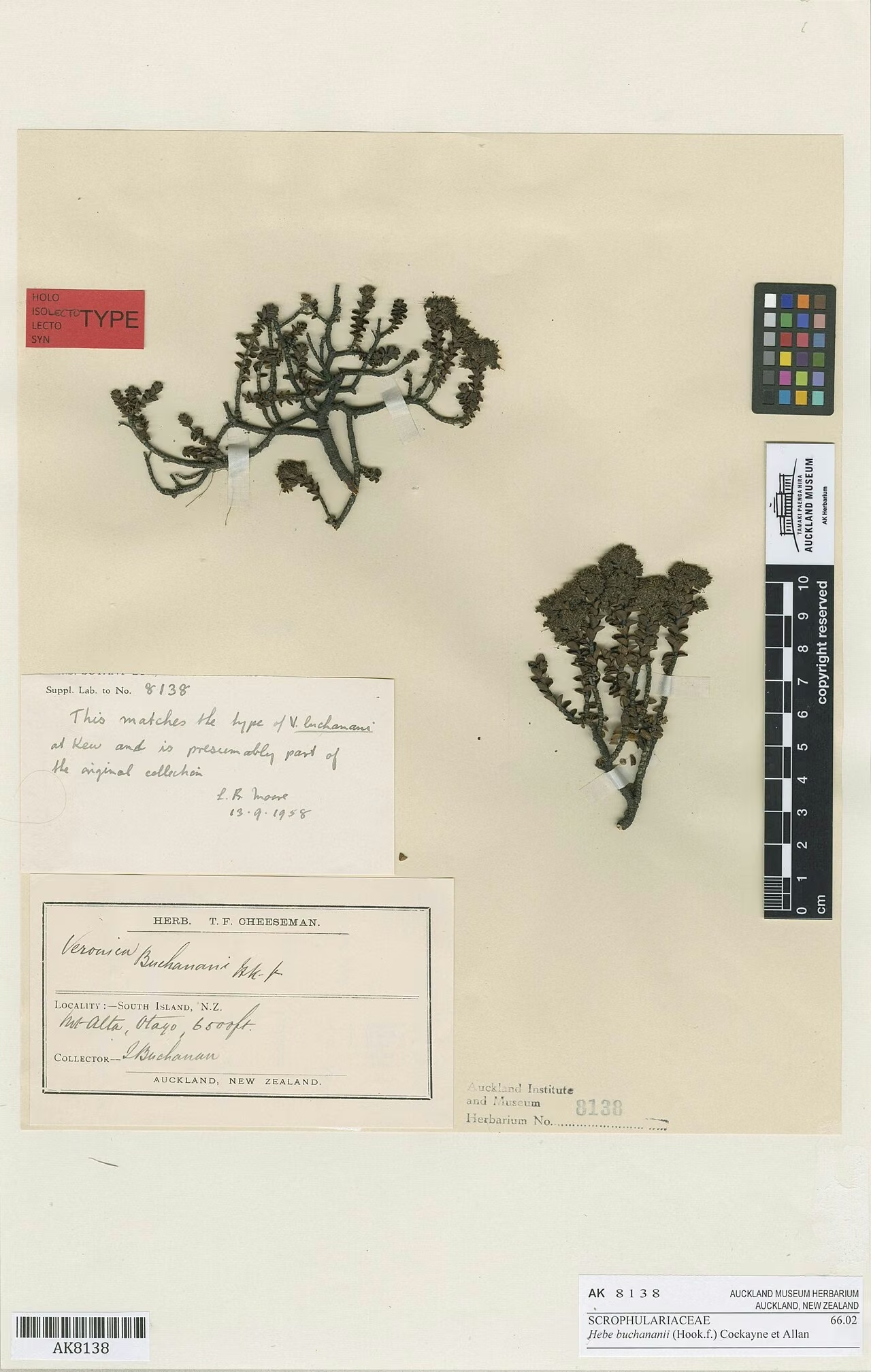
Veronica buchananii
Veronica buchananii
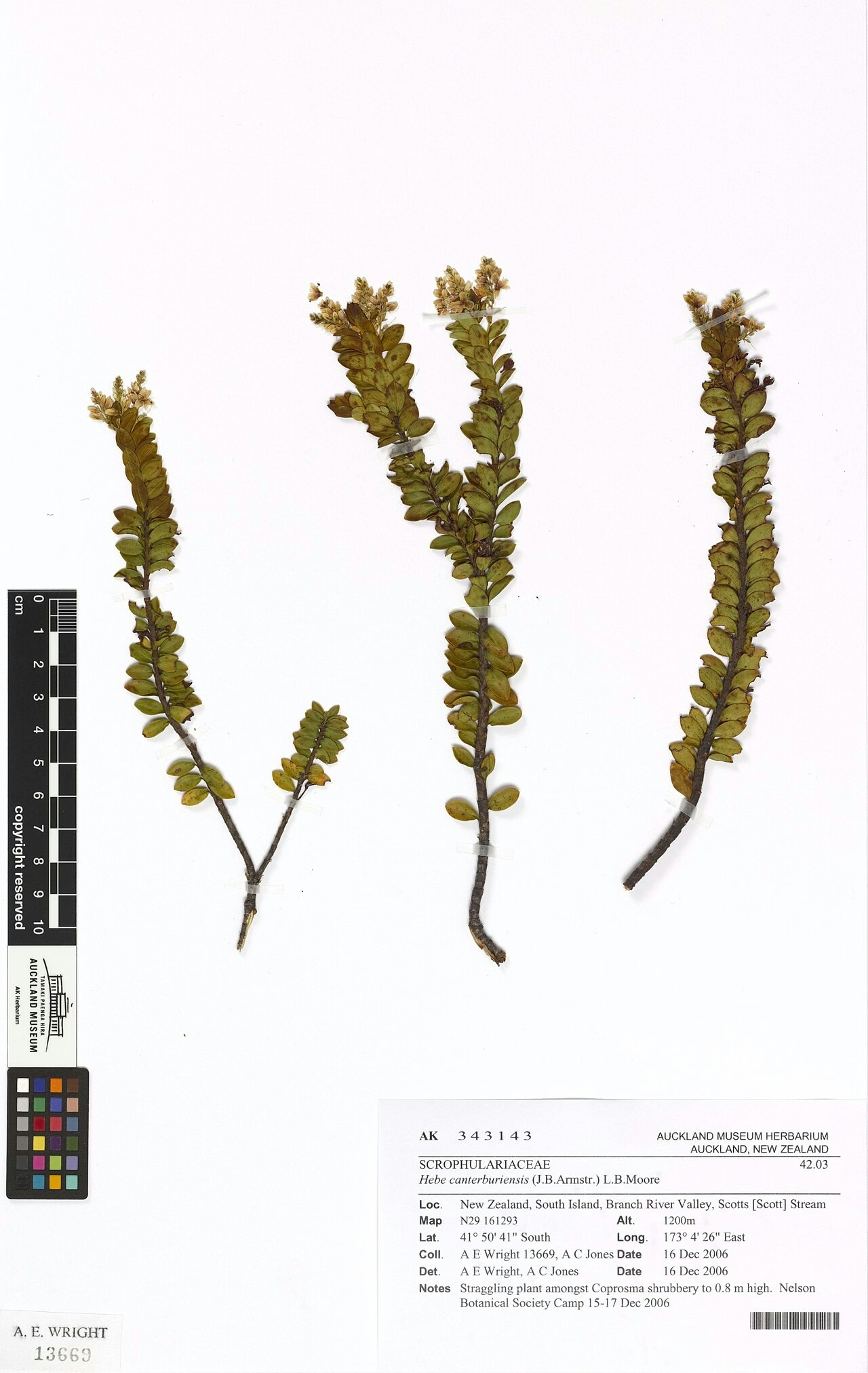
Canterbury Hebe
Veronica canterburiensis
Red Hills Hebe
Veronica baylyi
Veronica colensoi
Veronica colensoi
Plant Conservation
Veronica breviracemosa is ranked Threatened - Nationally Vulnerable (2023) with the qualifiers CD (conservation dependent), EF (extreme fluctuations), IE (island endemic) and OL (one location). It was ranked Nationally Critical in 2004 and 2009. Once presumed extinct, it was rediscovered as a single plant in 1983; NZPCN notes only one wild plant was known by 1997, after which searches of the cliffs found about 50 more.
Weed control on Raoul Island's cliffs and the reintroduction of nursery-raised plants are the main conservation actions, and Wikipedia notes that cuttings and seedlings from wild plants have been used to re-establish it on the island.
Frequently Asked Questions
Is the Kermadec koromiko extinct?
No. It was once presumed extinct, but a single plant was rediscovered on Raoul Island in 1983, and later surveys of the island's cliffs found around 50 more plants.
Where does Veronica breviracemosa grow?
It is endemic to Raoul Island in the Kermadec Islands, growing on coastal cliffs and headlands under sparse Kermadec pōhutukawa and Kermadec ngaio forest.
How do you tell Kermadec koromiko from ordinary koromiko?
It is less hairy than koromiko and has a sinus in the leaf bud. In flower it is unmistakable: the short corolla tube and pale lilac lobes curl back almost to the calyx.
Why is seed from garden Kermadec koromiko unreliable?
NZPCN notes that garden stock is largely male-dominant clones that produce little seed, and the species hybridises easily in cultivation, so cuttings give the most reliable plants.
Sources and Further Reading
The botanical, growing, and conservation details for Kermadec Koromiko (Veronica breviracemosa) on this page draw on the New Zealand plant references below. Consult them for full technical records and the latest distribution data.