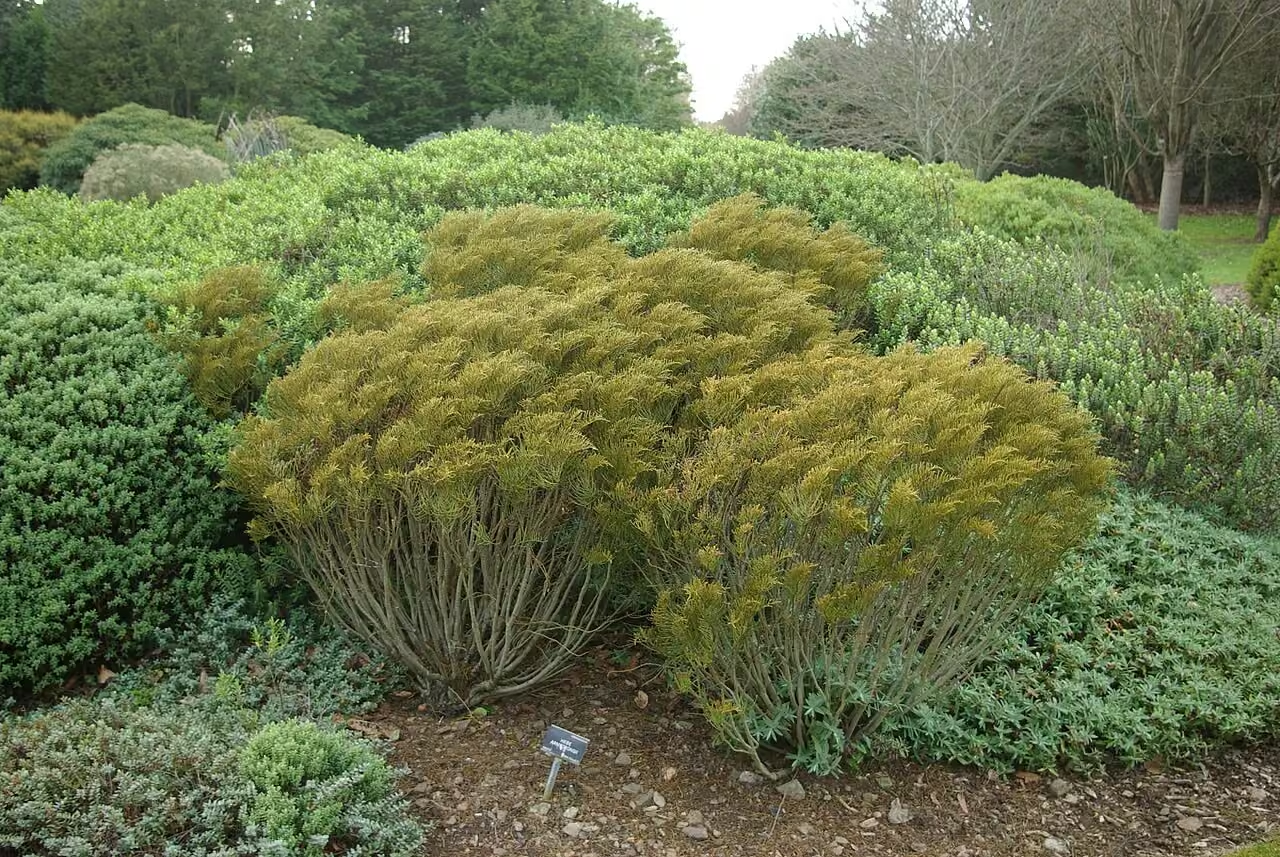
Armstrong's Whipcord
Veronica armstrongii
Last updated:
Armstrong's whipcord (Veronica armstrongii, formerly Hebe armstrongii) is a bushy whipcord shrub up to about 1 m tall, endemic to inland Canterbury. Its slender branches are clothed in tiny, pointed scale leaves with hairy margins, giving a dull yellowish-green, conifer-like look, and when not in flower it is easily mistaken for bog pine, with which it grows. Small clusters of white, sometimes mauve-tinged flowers appear at the branch tips in early summer. It is ranked Threatened - Nationally Critical: it survives near Castle Hill and in the Pukio Valley, and the Rangitata population where it was first collected is thought to be extinct. Explore more native shrubs in our native plant guide.
Plant Description
Veronica armstrongii is a bushy, spreading whipcord shrub, usually up to about 1 m tall, with erect or ascending branches. The twigs are 1.5 to 2 mm wide. The leaves are reduced to scales that clasp the stem in opposite pairs; each is broadly triangular, about 1 to 1.5 mm long and 2 to 3 mm wide, pointed, with a finely hairy margin. Trees and Shrubs Online, drawing on the original description, gives the foliage colour as a dull yellowish green.
The flowers are white, sometimes tinged mauve, and borne in small terminal spikes of about 2 to 10 at the tips of the twigs. Each has four calyx lobes. Flowering is from October to January, and the capsules ripen from December to May and may persist on the plant.
It belongs to the whipcord group of New Zealand Veronica and is closely related to Veronica annulata and V. salicornioides, and has historically been confused with V. ochracea. It is tetraploid, unlike the diploid V. annulata, and has more slender branchlets with less tightly overlapping leaves. When not flowering it can resemble bog pine (Halocarpus bidwillii), but it lacks the resinous smell of bog pine when crushed.
Quick Facts
| Scientific Name | Veronica armstrongii |
|---|---|
| Height | Usually up to 1 m |
| Spread | Up to about 1 m |
| Water Needs | Moderate; free-draining soil |
| Light | Full sun |
| Frost Tolerance | High; grows at 700-1220 m |
| Salt Tolerance | No information available; an inland mountain plant |
| Growth Rate | Slow |
| Lifespan | Long-lived perennial shrub |
Climate Best Suited to
Suits the continental climate of inland Canterbury basins, with cold, frosty winters and hot, dry summers. NZPCN notes it dislikes humidity and needs cold winters and hot, dry summers to flower well in cultivation.
Regional Suitability
| City | Climate Suitability |
|---|---|
| Auckland | Low |
| Wellington | Low |
| Christchurch | Medium |
| Dunedin | Medium |
Plant Habitat
Armstrong's whipcord is endemic to the South Island and restricted to Canterbury. Its recorded range covered the Waimakariri and Rangitata valleys at about 700 to 1220 m. It is now known from near Castle Hill and from the Pukio Valley; the Rangitata headwaters population, from where the species was first described, is considered extinct.
It grows on old river terraces, moraines and bog margins, especially on strongly leached, free-draining terraces, and is often found with bog pine (Halocarpus bidwillii). These bog pine terrace communities are themselves classed as a critically endangered ecosystem type.
Growing Requirements
Soil Requirements
In the wild it occupies strongly leached, infertile terrace and moraine soils.
- Free-draining, stony or gravelly soil
- Low fertility; avoid fertiliser
- Tolerates acidic, leached soils
Light Requirements
Its terrace habitat is open, low shrubland with full exposure to sun.
- Full sun
- Open, airy site with good air movement
Water Requirements
Wild plants grow on terraces and near bogs where moisture is available, but they also endure hot, dry summers. In gardens, keep soil evenly moist but never stagnant.
- Water in prolonged drought
- Avoid humid, poorly ventilated sites
Planting and Establishing
Plant in autumn or spring in full sun in a gritty, well-drained bed, rock garden or raised bed. Dry eastern South Island districts with cold winters give the best results; in humid northern gardens it is likely to sulk and rarely flower.
If you want to grow the true species, buy from a native specialist who can confirm the source, as plants labelled Veronica armstrongii are often a different whipcord.
Ecological Role
It is part of the bog pine shrubland that develops on old, leached glacial terraces in inland Canterbury, a community that is now classed as critically endangered. Its seeds, like those of related whipcords, are small and released from dry capsules.
The white flowers are typical of hebes visited by native insects, although no specific pollinator records for this species were found. NZPCN notes evidence of recruitment at one site, a hopeful sign for its survival.
Uses & Significance
Garden Uses
A neat, slow-growing whipcord for rock gardens and native collections in cool, dry districts, and an important species for conservation plantings.
- Rock gardens and gravel gardens
- Native and alpine collections
- Ex situ conservation of a Nationally Critical plant
Ecological Value
As a Nationally Critical endemic of a critically endangered ecosystem, every population has high conservation value.
- Component of bog pine terrace shrubland
- Endemic to inland Canterbury
- Genetic diversity held in few remaining plants
Landscaping Uses
Its yellowish-green, conifer-like texture works well alongside bog pine, small tussocks and other dryland natives to recreate the look of an inland Canterbury terrace. Plant it in groups among stones for a natural effect.
In a smaller garden it makes a tidy, low focal plant in a gravel bed, where its whipcord stems contrast with broad-leaved plants.
Seasonal Care Calendar
Spring
New growth starts and flowering begins in October.
- Plant new stock
- Weed around plants
Summer
Flowers continue to January, followed by capsules. Hot, dry summers encourage flowering.
- Water deeply in long dry spells
- Take semi-hardwood cuttings
Autumn
Capsules ripen from December into autumn, through to about May. Collect seed when capsules turn brown.
- Sow fresh seed
- Plant out rooted cuttings
Winter
Dormant and frost-hardy. Cold winters suit it and help it flower the following summer.
- Ensure drainage stays clear
- No feeding needed
When to Prune and How Much
Very little pruning is needed. A light trim after flowering can keep a garden plant compact, but avoid cutting into old, leafless wood.
Remove dead or damaged branches in spring.
How to Grow Armstrong's Whipcord
NZPCN describes Veronica armstrongii as easily grown from fresh seed and semi-hardwood cuttings, although it dislikes humidity. Because it is Nationally Critical, propagation from wild plants should only be done as part of an authorised recovery effort with permission from the Department of Conservation or the landowner. Gardeners should use cuttings from verified cultivated stock. Where possible, record the origin of each plant so that conservation collections retain known provenance. NZPCN adds that in northern regions it needs a cold winter and a very hot, dry summer to flower.
From Cuttings
Semi-hardwood cuttings taken in summer or early autumn root readily. Thin whipcord shoots can be bundled several to a pot.
- Choose firm, current-season shoots about 5 to 8 cm long
- Remove scale leaves from the bottom 1 to 2 cm
- Use a semi-hardwood rooting hormone if available
- Insert into a free-draining mix of pumice or coarse sand with some peat
- Keep in a bright, well-ventilated position, avoiding enclosed humid conditions
- Pot on when well rooted and harden off in full sun
From Seed
Fresh seed from brown capsules, ripening between December and May, germinates readily. Seed-raised plants are preferred for restoration because they carry more genetic variety than cuttings.
- Collect capsules as they turn brown
- Sow seed on a gritty seed mix and cover lightly
- Keep evenly moist outdoors in a cool, bright spot
- Prick out seedlings into individual pots once large enough
Pests & Diseases
No specific pests are recorded. In humid climates, whipcord hebes are prone to fungal problems and decline, so good air movement and drainage are important.
In the wild, NZPCN lists habitat loss as the primary threat, and its threat listing also carries a qualifier for pressure from pest or feral animals or plants.
Cultural Significance
No Māori name or traditional Māori use is recorded for Veronica armstrongii in the sources consulted.
John Beattie Armstrong described the species in 1879 from specimens collected about a decade earlier in the upper Rangitata. It is named after either Joseph Francis Armstrong, curator of Christchurch's Botanic Gardens, or his son John Beattie Armstrong, both early Canterbury botanists.
Bonus Tip
Before buying, check the foliage: true Veronica armstrongii has thin, unkeeled, dull yellowish-green scale leaves, while the golden-green whipcord widely sold under this name has keeled leaves with sharply pointed tips. Buying verified stock helps keep the real species in cultivation.
Related Plants
Explore other native plants that share similar characteristics or habitats with Armstrong's Whipcord (Veronica armstrongii), offering further insights into New Zealand's diverse flora. These related species provide context and opportunities for complementary planting in your garden.
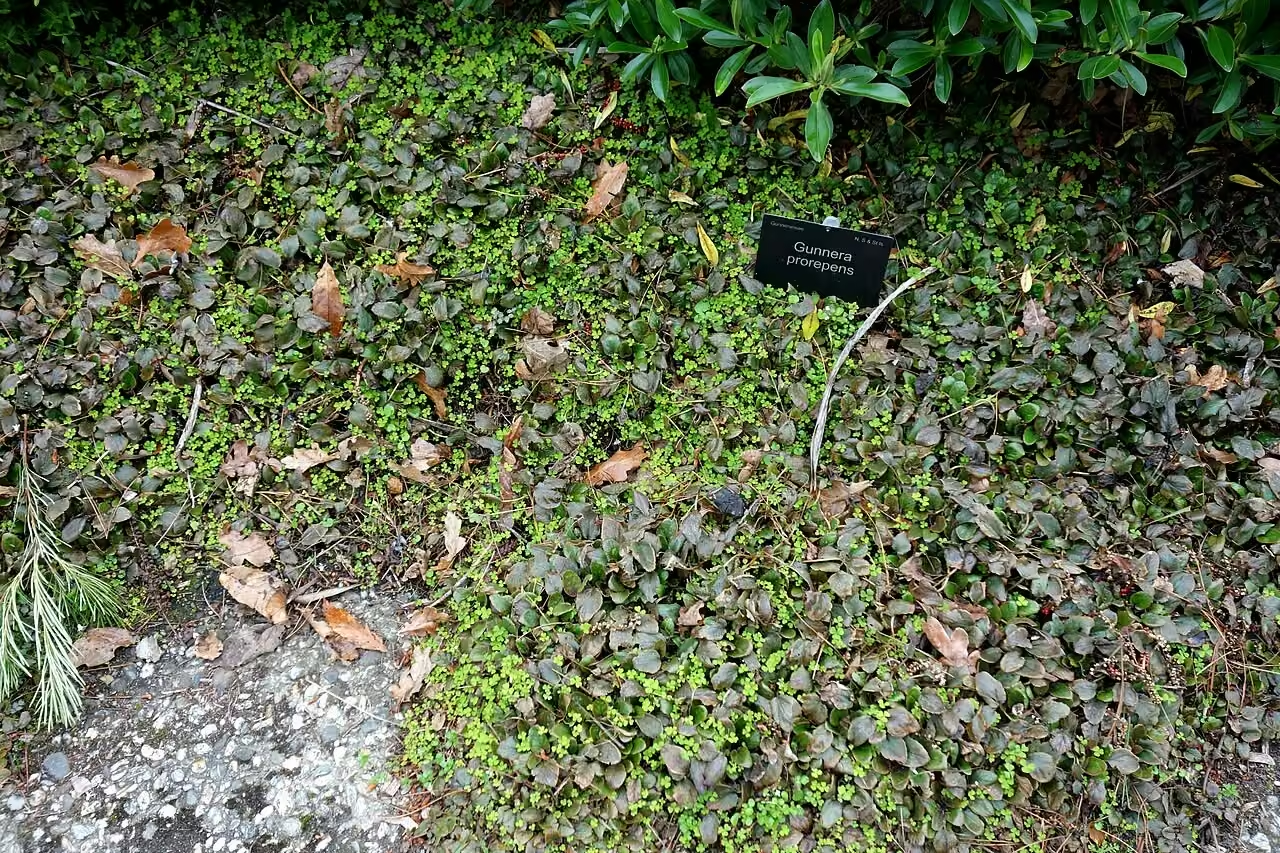
Creeping Gunnera
Gunnera prorepens
Haastia recurva var. recurva
Haastia recurva var. recurva
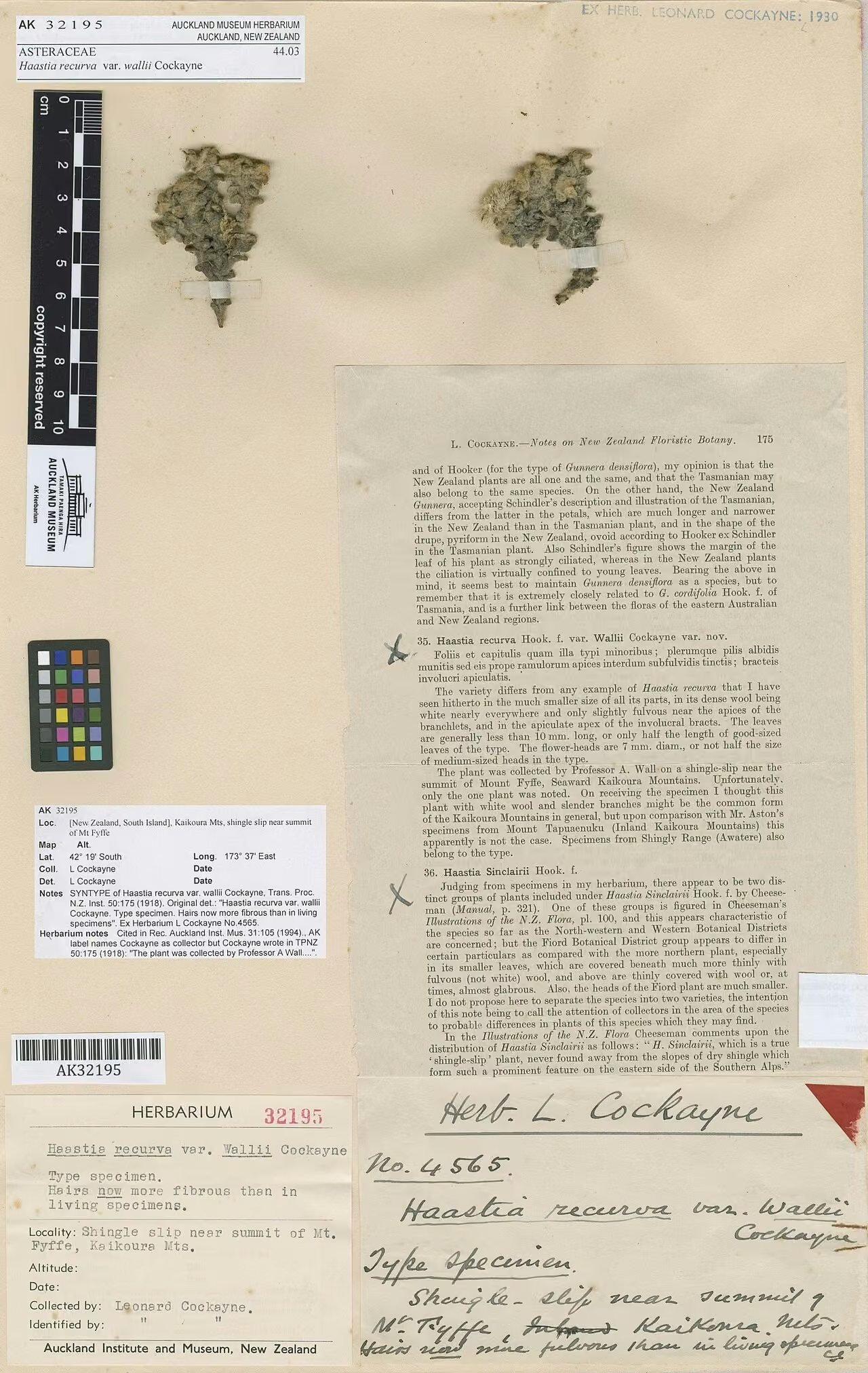
Haastia recurva var. wallii
Haastia recurva var. wallii
Veronica annulata
Veronica annulata
Chatham Island Tree Hebe
Veronica barkeri
Biggar's Hebe
Veronica biggarii
Veronica bollonsii
Veronica bollonsii
Kermadec Koromiko
Veronica breviracemosa
Plant Conservation
Veronica armstrongii is ranked Threatened - Nationally Critical (2023), having been Nationally Endangered in 2017. It is range restricted and known from very few sites, and its bog pine terrace habitat is a critically endangered ecosystem type. The Rangitata population is thought to be extinct.
One population is on public conservation land with active management, and another on Crown pastoral lease shows evidence of recruitment. Protecting the remaining terraces from development, fire and weeds, and maintaining well-documented plants in cultivation, are key to its survival.
Frequently Asked Questions
Is Veronica armstrongii endangered?
Yes. Under its accepted name Veronica armstrongii it is ranked Threatened - Nationally Critical (2023), the highest threat category, because it is known from only a couple of Canterbury sites in a critically endangered ecosystem.
How can you tell Armstrong's whipcord from bog pine?
The two look alike when the whipcord is not flowering. Armstrong's whipcord lacks the resinous smell of crushed bog pine foliage and shows characteristic rings at the stem nodes, and it bears white hebe flowers in early summer.
Are the Veronica armstrongii plants sold in garden centres the real species?
Not always. Trees and Shrubs Online reports that a golden-green whipcord with keeled leaves has long circulated in cultivation under this name but does not match Armstrong's type specimen.
Sources and Further Reading
The botanical, growing, and conservation details for Armstrong's Whipcord (Veronica armstrongii) on this page draw on the New Zealand plant references below. Consult them for full technical records and the latest distribution data.