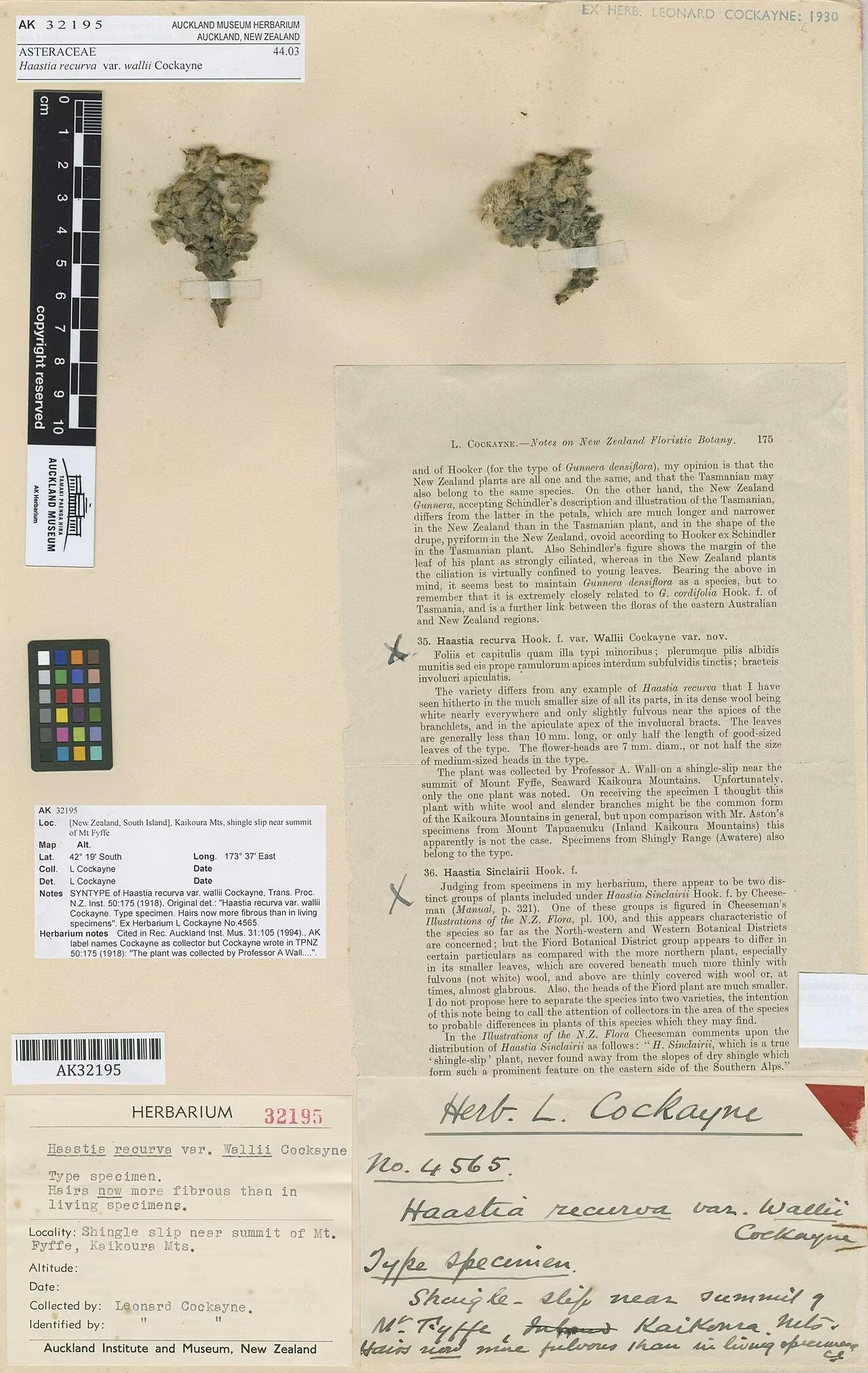
Haastia
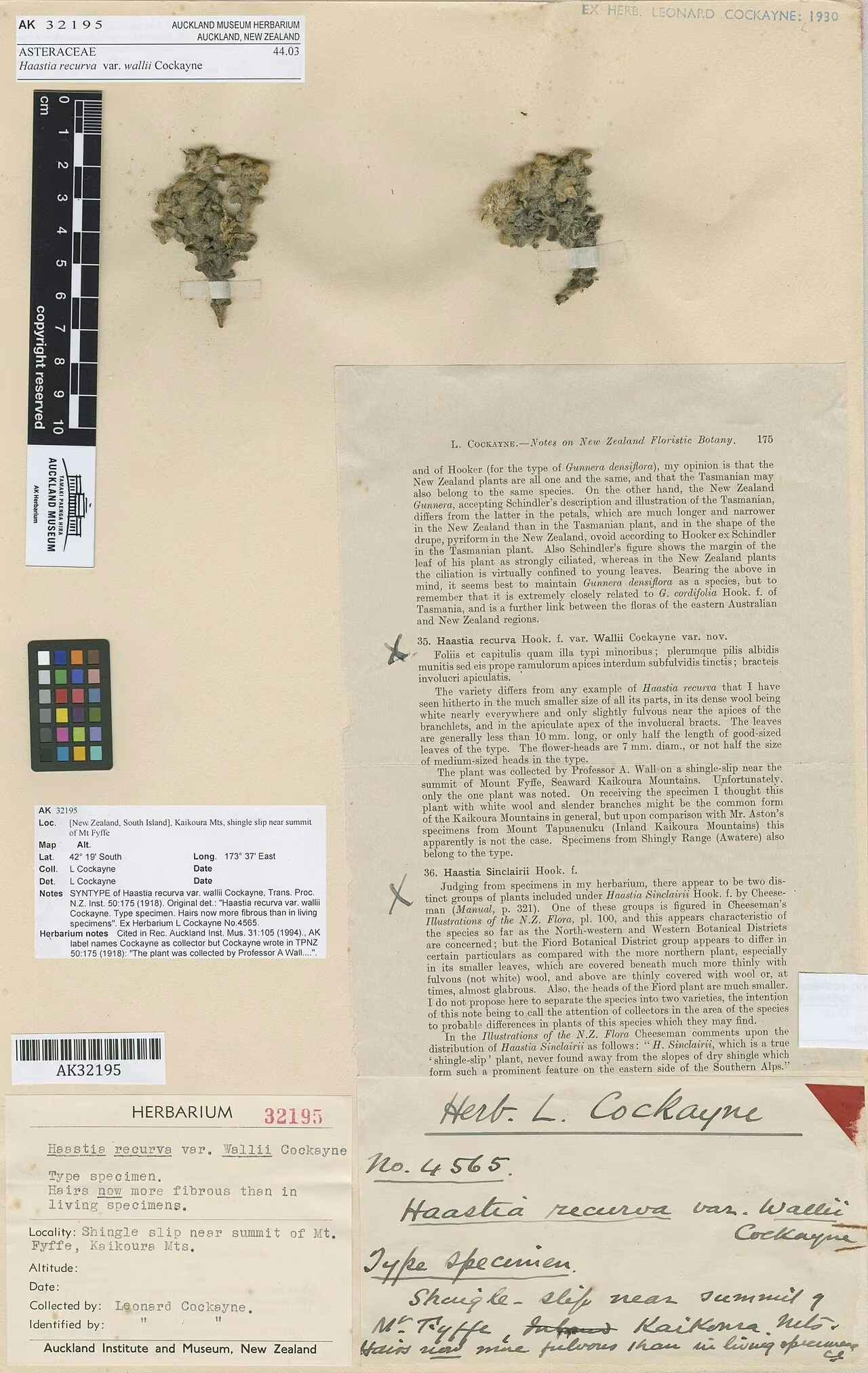
Haastia recurva var. wallii
Last updated:
Haastia recurva var. wallii is a small, woolly alpine daisy known only from subalpine and alpine screes in south Marlborough. It makes loose, low patches of branches up to about 20 cm long, set with backward-curling leaves up to 15 mm long densely covered in whitish hairs, so the plant looks dirty greyish-white against the rock. Compared with the typical variety it has smaller leaves and flower heads and pointed involucral bracts. Very little is known about it: it is ranked Data Deficient, and NZPCN says its status needs critical investigation, with feral goats a possible threat. Explore more native ground covers in our native plant guide.
Plant Description
Haastia recurva var. wallii is a summer-green perennial forming rather densely to loosely branched, procumbent patches. Branches reach about 200 mm long. The plant has a dirty greyish-white appearance from the dense whitish hairs that cover the leaves.
Its leaves are obovate, up to about 15 mm long and 9 mm wide, and strongly recurved in the upper half. Flower heads sit on receptacles 3 to 5 mm across, and the achenes are 2.5 to 3 mm long. The involucral bracts surrounding each head are distinctly apiculate, ending in a short sharp point.
The typical var. recurva of Marlborough and Canterbury has larger leaves up to 20 mm long, tawny to rusty hairs and linear involucral bracts with recurved tips. Both varieties differ from the cushion-forming vegetable sheep Haastia pulvinaris in their open, leafy habit, and from Haastia sinclairii in their strongly recurved leaves with loose, cottony hair.
Quick Facts
| Scientific Name | Haastia recurva var. wallii |
|---|---|
| Height | Low and procumbent; under 0.1 m |
| Spread | Branches to about 0.2 m long |
| Water Needs | Low at the surface; relies on moisture deep in the scree |
| Light | Full sun |
| Frost Tolerance | High; subalpine to alpine |
| Salt Tolerance | No information available; an inland alpine plant |
| Growth Rate | Slow |
| Lifespan | Perennial; summer-green |
Climate Best Suited to
Lives in the harsh mountain climate of the south Marlborough ranges, where summers are dry and sunny on the screes and winters bring snow and hard frost.
Regional Suitability
| City | Climate Suitability |
|---|---|
| Auckland | Low |
| Wellington | Low |
| Christchurch | Low |
| Dunedin | Low |
Plant Habitat
This variety is endemic to the South Island and known only from south Marlborough. In 2004 it was classed as Range Restricted, reflecting its small known distribution.
It grows on subalpine to alpine screes, the unstable slopes of loose rock that cover large areas of the dry eastern ranges. It shares this habitat with other specialised scree plants that root deeply between stones.
Growing Requirements
Soil Requirements
Plants root among the stones of mobile scree, where cool, moist fine material lies beneath a dry surface layer.
- Loose rock and gravel
- Excellent drainage
- Very low organic content
Light Requirements
Open scree gives full exposure to sun and wind.
- Full sun
- High light and ultraviolet levels typical of the eastern ranges
Water Requirements
Water comes from snowmelt and rain that drains rapidly through the scree, leaving moisture only at depth in summer.
- Dry surface, moist root run
- Not suited to wet, humid conditions
Planting and Establishing
This variety is not in cultivation, and NZPCN advises that it should not be removed from the wild. It is not suitable for home gardens.
Any future ex situ conservation work would need specialist alpine facilities, deep scree beds of coarse gritty mix and cold winter conditions.
Ecological Role
Like the typical variety, its pappus-bearing seeds are carried by the wind, letting them drift across the scree to new sites. Little else about its ecology, including its pollinators and population dynamics, has been documented.
Being summer-green, it grows and flowers in the short window between snowmelt and the first autumn frosts and dies back over winter.
Uses & Significance
Garden Uses
It has no garden use. It is a rare, poorly known plant that should be left in its natural habitat.
- Not in cultivation
- Of interest to botanists and conservation surveys
Ecological Value
It is part of the distinctive scree flora of south Marlborough and a little-known variety of an endemic genus that deserves further study.
- Contributes to regional scree biodiversity
- Represents variation within the endemic genus Haastia
Landscaping Uses
This plant has no landscaping role. Its value lies in the wild scree landscape of south Marlborough, where its whitish patches add to the mosaic of specialised alpine plants.
Those interested in alpine gardening can grow commercially available native scree and rock plants instead, leaving this variety undisturbed.
Seasonal Care Calendar
Spring
Emerges from winter dormancy as snow melts off the screes in late spring.
- Shoots appear after thaw
Summer
Flowers from November to January and sets seed from December to February.
- Best time to survey populations
- Seed dispersed by wind
Autumn
Foliage withers as the plant enters its winter rest.
- Growth ceases
Winter
Dormant under snow and frozen ground.
- Nothing visible above the scree
When to Prune and How Much
Pruning does not apply. Seasonal dieback and natural scree movement shape the plant in the wild.
Anyone surveying plants should avoid trampling or dislodging them, as disturbed scree can bury or uproot low patches.
How to Grow Haastia
NZPCN describes propagation as difficult and says this variety should not be removed from the wild. No published propagation method exists for var. wallii, and it is not in cultivation. Any propagation should be part of an authorised conservation programme, using small amounts of seed collected under permit. The notes below outline the standard approach for alpine scree daisies and are not a proven method for this plant. Expect losses even under ideal conditions.
From Seed
Seed is produced between December and February. The plumed seeds blow away quickly once mature, so collection timing is critical. Only collect under a Department of Conservation permit, and take a small fraction of the available seed.
- Monitor flower heads from late December
- Collect heads as the pappus begins to expand
- Sow promptly onto a deep pot of very gritty alpine mix
- Top with fine grit and keep outdoors in cold conditions over winter
- Water from below to keep the mix just moist
- Pot seedlings individually into deep containers once they have true leaves
From Cuttings
No cutting trials are recorded for this variety. Cuttings from wild plants should not be taken. If plants were ever established in an ex situ collection, short shoot tips in pure pumice under cool, ventilated conditions would be the method to trial.
- Use cultivated stock only
- Insert short tips in pure pumice or coarse sand
- Keep cool and well ventilated to prevent rot
Pests & Diseases
NZPCN suggests that feral goats may threaten this variety in some areas. Browsing by goats and other introduced herbivores can damage scree plants and disturb their habitat.
No insect pests or diseases are recorded for it.
Cultural Significance
No Māori name or traditional Māori use is recorded for Haastia recurva var. wallii in the sources consulted.
Leonard Cockayne described this variety in 1918. The genus name honours Julius von Haast, the explorer and geologist of the Canterbury mountains, and recurva means bent back, describing the leaves.
Bonus Tip
If you photograph a Haastia on south Marlborough screes, record the location and upload it to iNaturalist NZ. Because this variety is Data Deficient, well-documented sightings with close-ups of the leaves and involucral bracts can genuinely help botanists assess its status.
Related Plants
Explore other native plants that share similar characteristics or habitats with Haastia (Haastia recurva var. wallii), offering further insights into New Zealand's diverse flora. These related species provide context and opportunities for complementary planting in your garden.
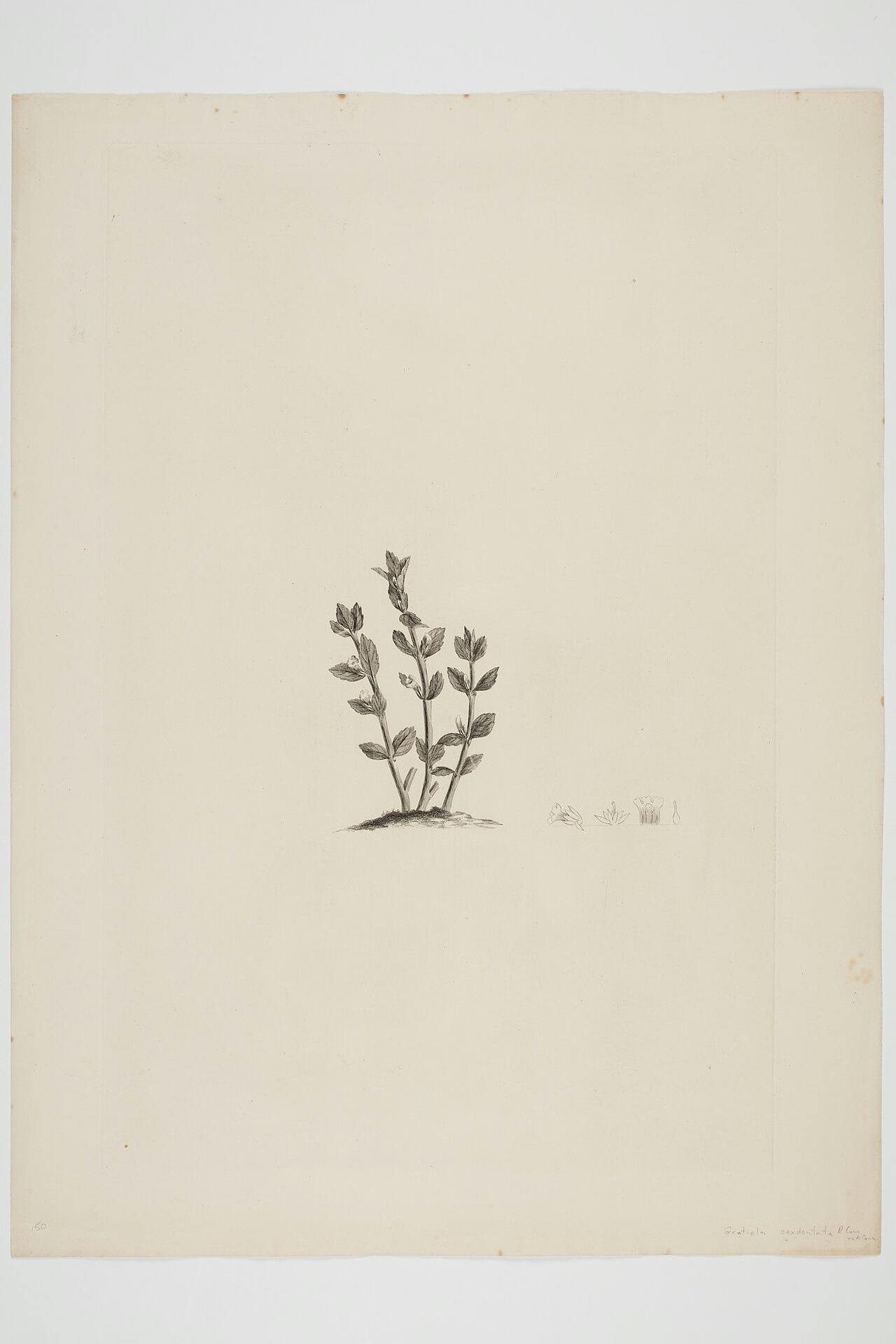
Gratiola sexdentata
Gratiola sexdentata
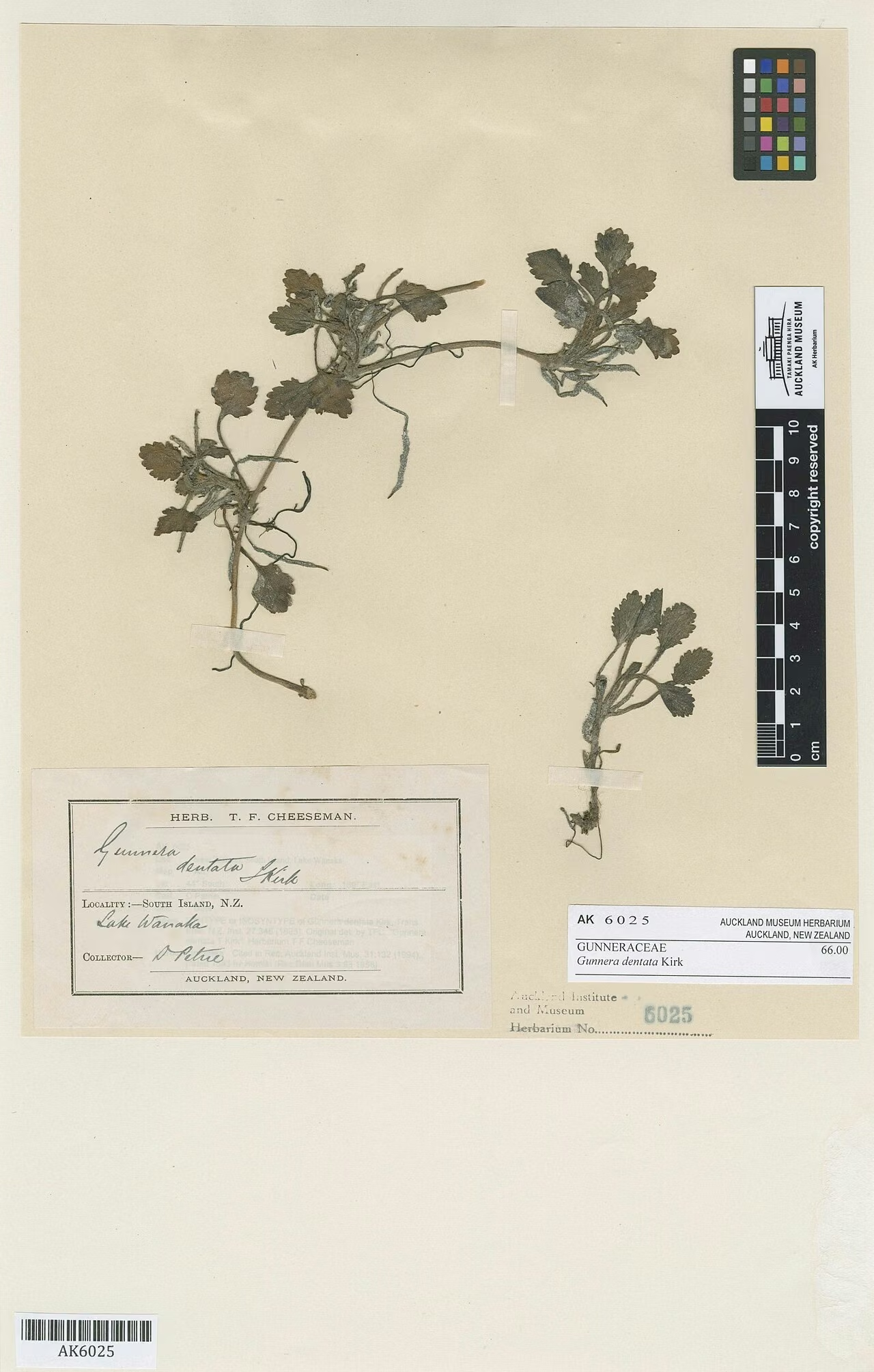
Sand Gunnera
Gunnera dentata
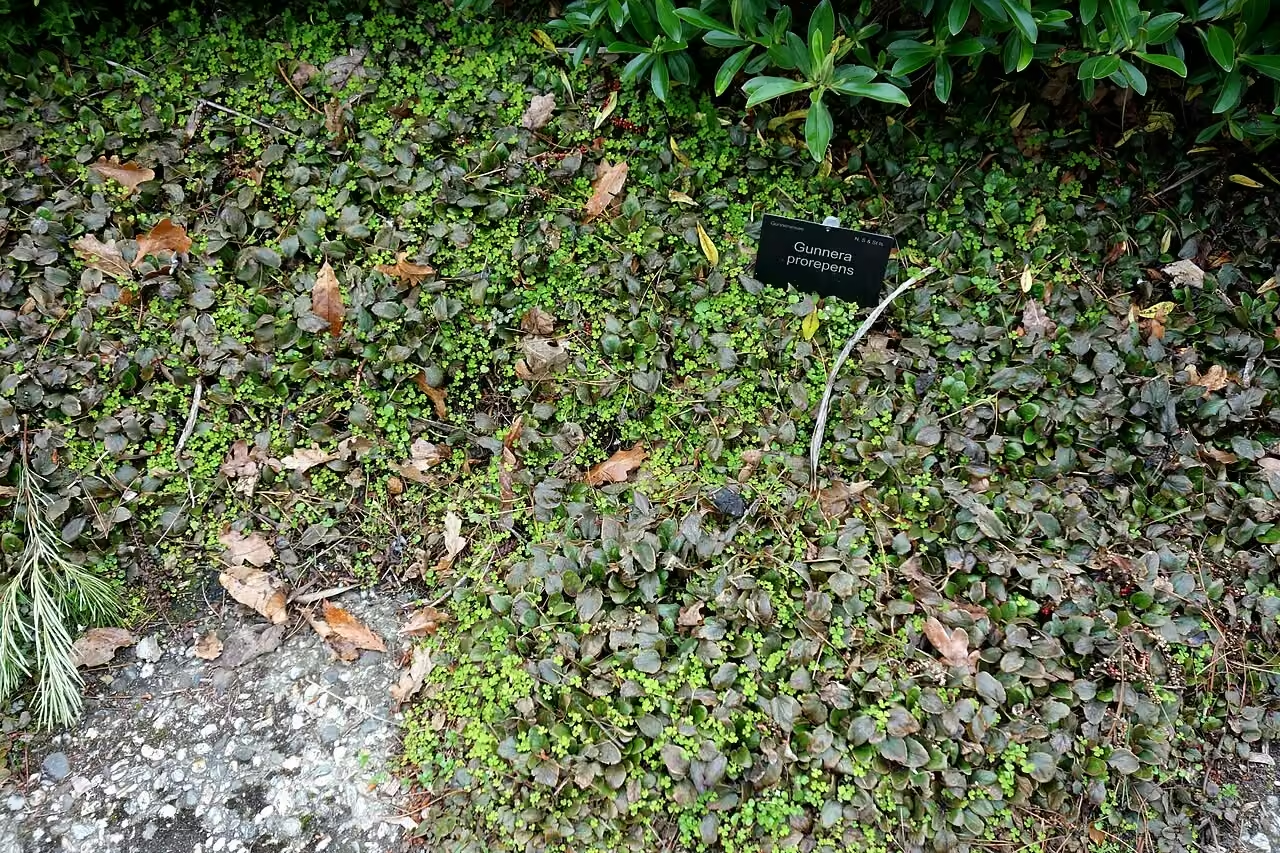
Creeping Gunnera
Gunnera prorepens
Haastia recurva var. recurva
Haastia recurva var. recurva
Veronica annulata
Veronica annulata
Armstrong's Whipcord
Veronica armstrongii
Chatham Island Tree Hebe
Veronica barkeri
Biggar's Hebe
Veronica biggarii
Plant Conservation
Haastia recurva var. wallii is ranked Data Deficient (2023), the same ranking it received in 2017, 2012 and 2009; in 2004 it was listed as Range Restricted. NZPCN states that its threats are not known and that the status of the variety needs critical investigation.
Survey work to establish its distribution and population size is the first priority. Controlling feral goats on the screes where it grows would reduce a likely browsing threat.
Frequently Asked Questions
Where is Haastia recurva var. wallii found?
It is endemic to the South Island and recorded only from subalpine to alpine screes in south Marlborough.
Why is Haastia recurva var. wallii ranked Data Deficient?
There is too little information on its population size and trend to assess it. NZPCN says the status of this variety needs critical investigation.
How does var. wallii differ from Haastia recurva var. recurva?
Var. wallii has smaller leaves and flower heads, greyish-white rather than tawny to rusty hairs, and distinctly pointed (apiculate) involucral bracts instead of linear, recurved ones.
Sources and Further Reading
The botanical, growing, and conservation details for Haastia (Haastia recurva var. wallii) on this page draw on the New Zealand plant references below. Consult them for full technical records and the latest distribution data.