Haastia
Haastia recurva var. recurva
Last updated:
Haastia recurva var. recurva is a low, sprawling alpine daisy endemic to the screes of Marlborough and Canterbury in the South Island. It forms loose, procumbent patches of branches up to about 25 cm long, clothed in obovate leaves up to 20 mm long whose upper halves curl sharply backwards. The whole plant is covered in long tawny to rusty hairs, giving it a dirty grey-yellow look that blends with the scree. It is summer-green, dying back over winter, and belongs to Haastia, a genus found only in New Zealand that also includes the famous vegetable sheep Haastia pulvinaris. Explore more native ground covers in our native plant guide.
Plant Description
Haastia recurva var. recurva is a summer-green perennial that forms rather densely to loosely branched, procumbent patches. The branches grow to about 250 mm long and are packed with leaves. The overall colour is a dirty greyish-yellow to grey, produced by a dense covering of long fulvous (tawny) to rufous (rusty) hairs over almost every surface except the upper side of the leaf base.
The leaves are obovate, up to about 20 mm long and 10 mm wide, and the upper portion of each is strongly recurved, the feature the name recurva (bent back) describes. Flower heads sit at the branch tips on receptacles 3 to 5 mm across and are surrounded by linear involucral bracts with recurved tips. The achenes (seeds) are 2.5 to 3 mm long and carry pappus bristles about 9 mm long, which help them blow across the scree.
It differs from Haastia pulvinaris in its open, leafy growth rather than a tight cushion, and from Haastia sinclairii in its very strongly recurved leaves and loose, cottony (floccose) rather than closely pressed hair. The var. wallii of south Marlborough has smaller leaves and flower heads, greyer hairs and pointed involucral bracts.
Quick Facts
| Scientific Name | Haastia recurva var. recurva |
|---|---|
| Height | Low and procumbent; under 0.1 m |
| Spread | Branches to about 0.25 m long, forming patches |
| Water Needs | Moist at depth, with sharp drainage |
| Light | Full sun on open screes |
| Frost Tolerance | High; a subalpine to alpine plant |
| Salt Tolerance | No information available; an inland alpine plant |
| Growth Rate | Slow |
| Lifespan | Perennial; summer-green |
Climate Best Suited to
Adapted to the cold, dry-summer mountain climate of the eastern South Island ranges, with snow cover in winter and intense sun and drying wind in summer.
Regional Suitability
| City | Climate Suitability |
|---|---|
| Auckland | Low |
| Wellington | Low |
| Christchurch | Low |
| Dunedin | Low |
Plant Habitat
This variety is endemic to the South Island, where it is found in the mountains of Marlborough and Canterbury. The genus Haastia is itself endemic to New Zealand.
Its habitat is subalpine to alpine scree: slopes of loose, shattered rock where the surface is constantly moving and few plants can establish. Plants anchor among the stones and spread their leafy branches over the scree surface during the short summer growing season.
Growing Requirements
Soil Requirements
It grows in loose rock scree, with roots running deep between stones to reach cool, moist fine material below the surface.
- Coarse, mobile rock debris
- Very sharp drainage at the surface
- Low fertility
Light Requirements
Screes are fully open, so the plant is exposed to strong alpine sun.
- Full sun
- No shading vegetation on its natural screes
Water Requirements
The scree surface dries quickly in summer, but moisture persists among the stones beneath, and snowmelt supplies water in spring.
- Dry surface with moisture at root depth
- Waterlogging around the crown is unlikely to be tolerated
Planting and Establishing
Haastia recurva var. recurva is not commercially available and NZPCN advises that it should not be removed from the wild. Gardeners wanting to see it should visit scree slopes in the Marlborough and Canterbury ranges in summer.
Any attempt at cultivation would need a deep scree bed or alpine house with gritty, free-draining mix, cold winters and protection from humid, wet conditions around the foliage.
Ecological Role
Its seeds are pappate cypselae dispersed by wind (Thorsen et al. 2009), which suits life on open screes where seed can travel across bare rock to new patches of stable ground.
As a summer-green plant it is active only during the brief alpine summer, dying back over winter when screes are snow-covered. Specific pollinators of Haastia recurva have not been documented in the sources consulted.
Uses & Significance
Garden Uses
It has no realistic garden use because it is difficult to propagate and not available in the nursery trade.
- Specialist alpine collections only
- Best appreciated in the wild
Ecological Value
It is one of the specialised plants that make New Zealand's eastern screes a distinctive habitat, and part of an endemic genus.
- Member of the endemic genus Haastia
- Part of the scree plant community of Marlborough and Canterbury
- Wind-dispersed seed helps it colonise moving rock
Landscaping Uses
In landscape terms this is a plant to admire rather than plant. Its woolly, tawny-grey patches are part of the subtle colour palette of eastern South Island screes, where they can be hard to spot against the rock.
Photographers and botanists visiting screes in early summer will find it most visible when new growth is fresh and flower heads are forming.
Seasonal Care Calendar
Spring
Plants remain dormant under snow or begin to shoot as screes thaw in late spring.
- New growth starts after snowmelt
Summer
Flowering runs from November to January and fruiting from December to February, when the plant is in full leaf.
- Flower heads at branch tips
- Wind-borne seed released
Autumn
Foliage begins to die back as temperatures fall, as the plant is summer-green.
- Growth stops
- Leaves wither
Winter
Dormant beneath snow and frozen scree, with only dormant stems persisting.
- No visible growth
When to Prune and How Much
No pruning applies to this plant. In the wild, natural scree movement and winter dieback shape its growth.
If ever grown in an alpine collection, simply remove dead foliage at the end of winter before new growth begins.
How to Grow Haastia
NZPCN describes propagation of Haastia recurva as difficult and states that plants should not be removed from the wild. No reliable nursery protocol for this variety was found, and it is not commercially available. What follows describes the general approach used for alpine daisies, offered as guidance for specialist growers working with legally collected material rather than a proven method for this plant.
From Seed
Seed ripens from December to February. Each achene carries a long pappus and is easily blown away, so it must be gathered as soon as the heads open. Collection from the wild requires permission from the Department of Conservation or the landowner.
- Collect seed heads just as the pappus begins to fluff
- Sow fresh on the surface of a very gritty, free-draining alpine mix
- Cover with a thin layer of fine grit
- Place outdoors in a cold, airy spot so seed experiences winter chilling
- Keep evenly moist but never waterlogged, and expect slow, uneven germination
- Grow seedlings on in deep pots to allow long roots to develop
From Cuttings
There is no documented success with cuttings of this variety. Growers of related alpine daisies sometimes root short shoots in pure pumice or sand under cool, humid but well-ventilated conditions, but losses are usually high.
- Use only material from cultivated plants
- Take short shoot tips in early summer
- Insert into pure pumice or coarse sand
- Keep cool and shaded with good air movement
Pests & Diseases
No specific pests of Haastia recurva are recorded. In cultivation, alpine daisies of this kind usually fail through rot in warm, humid or wet conditions rather than through insect attack.
In the wild, browsing animals can affect scree plants. NZPCN mentions feral goats as a possible threat to the related var. wallii, though no threat is recorded for var. recurva.
Cultural Significance
No Māori name or traditional Māori use is recorded for Haastia recurva in the sources consulted.
The genus Haastia is named after Julius von Haast, the geologist and explorer who led early surveys of the Canterbury mountains and founded Canterbury Museum. Joseph Hooker described Haastia recurva in the nineteenth century.
Bonus Tip
When searching screes for Haastia recurva, look for loose, tawny-grey patches whose leaves curl back at the tips. Those recurved leaf tips and the open, leafy habit separate it at a glance from the tight white cushions of Haastia pulvinaris.
Related Plants
Explore other native plants that share similar characteristics or habitats with Haastia (Haastia recurva var. recurva), offering further insights into New Zealand's diverse flora. These related species provide context and opportunities for complementary planting in your garden.
Gratiola pedunculata
Gratiola pedunculata
Gratiola sexdentata
Gratiola sexdentata
Sand Gunnera
Gunnera dentata
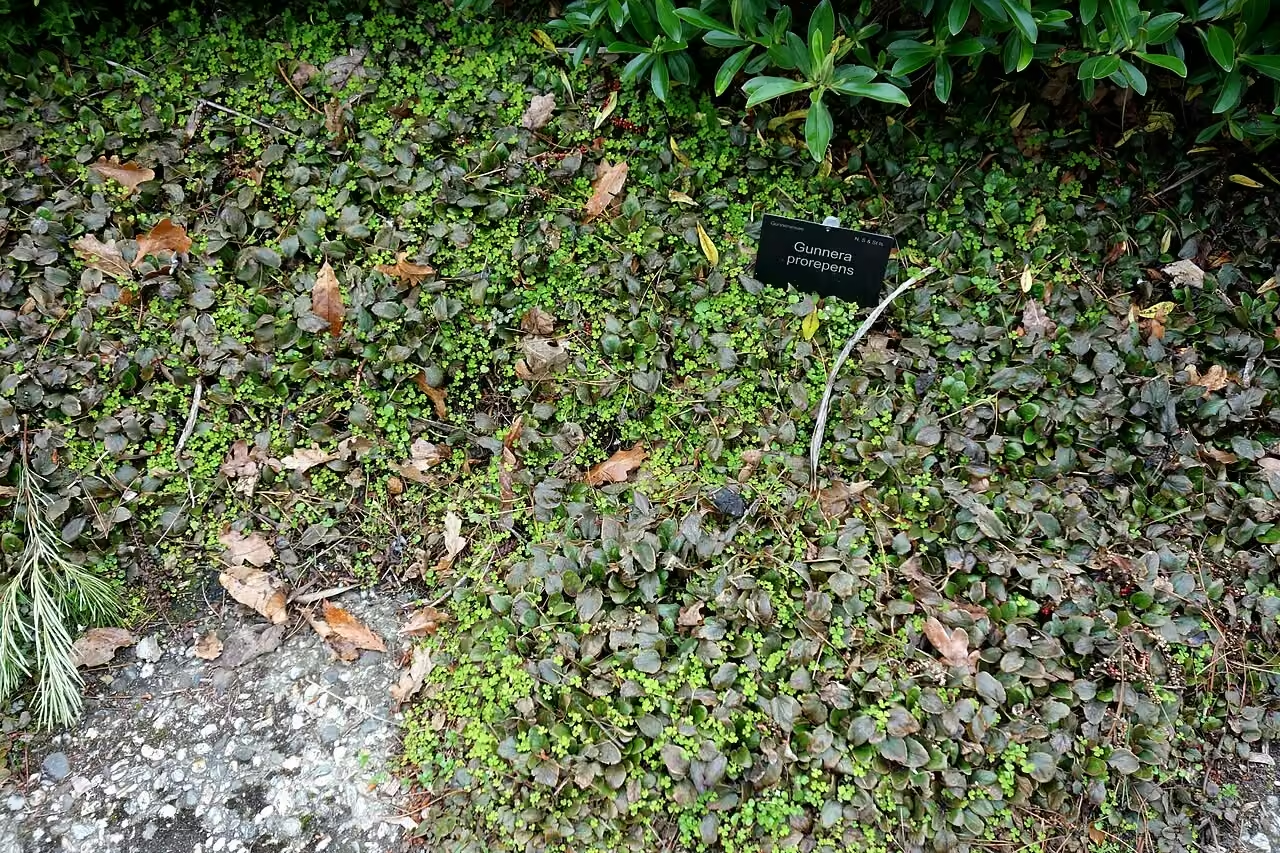
Creeping Gunnera
Gunnera prorepens
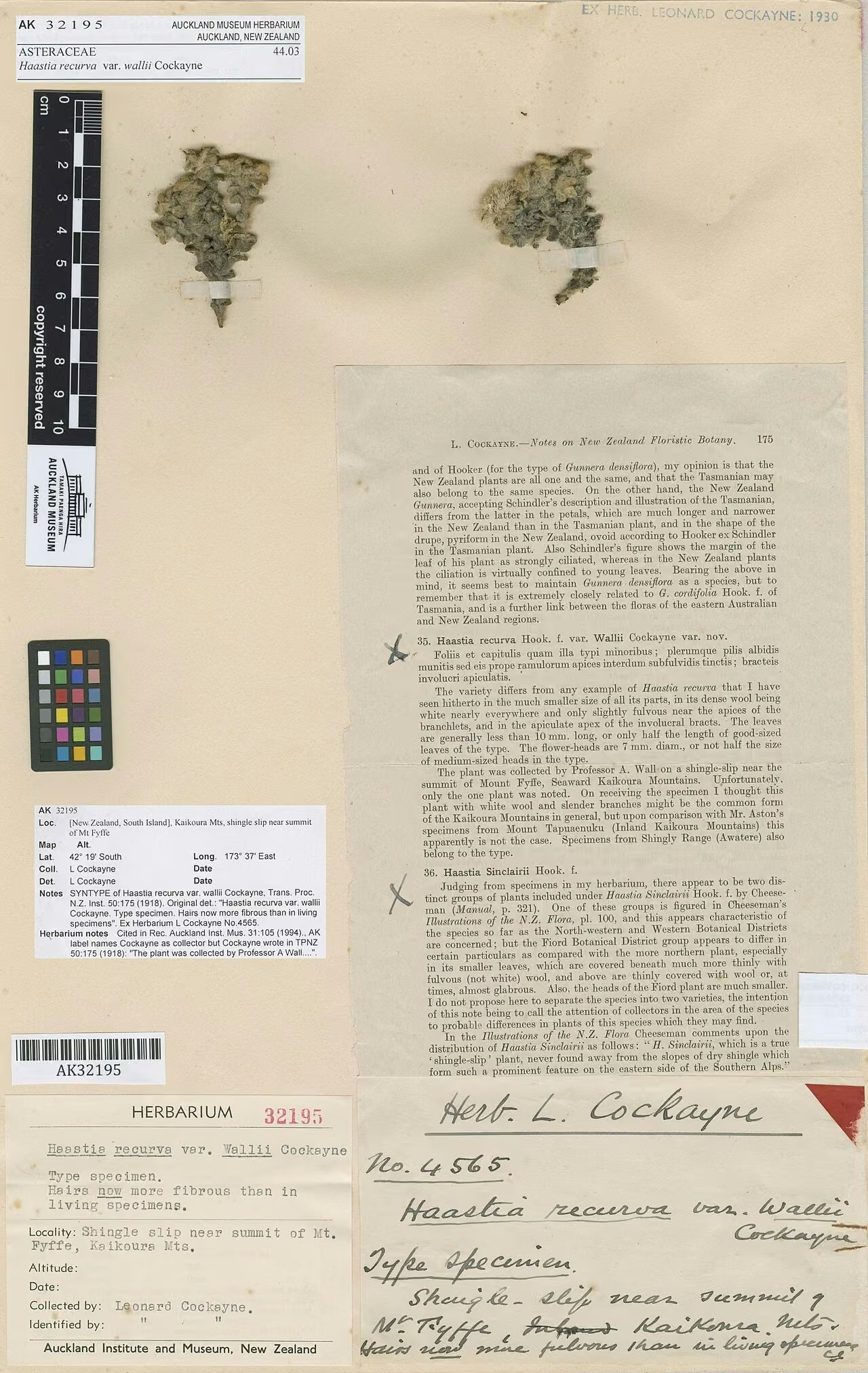
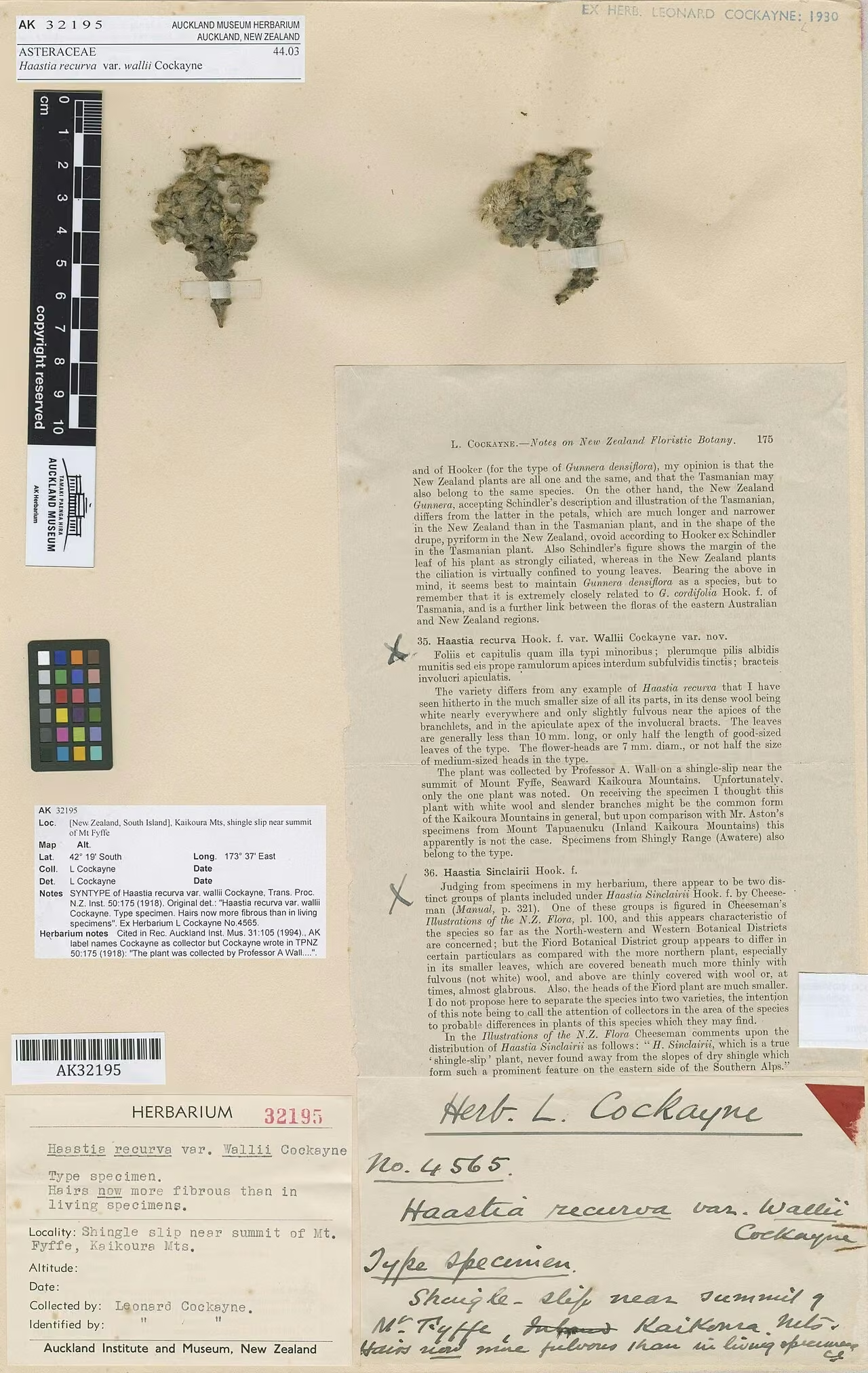
Haastia recurva var. wallii
Haastia recurva var. wallii
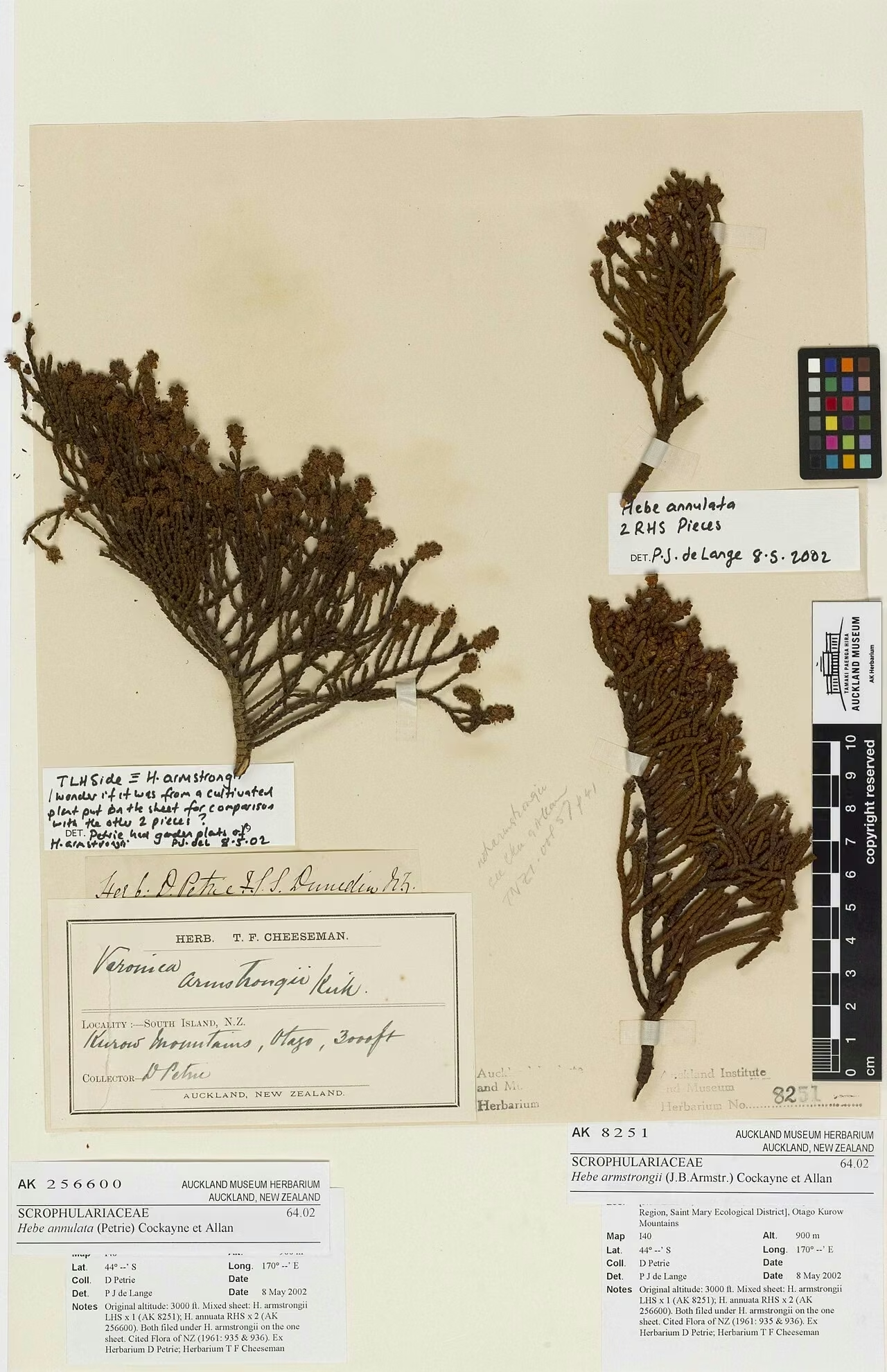
Veronica annulata
Veronica annulata
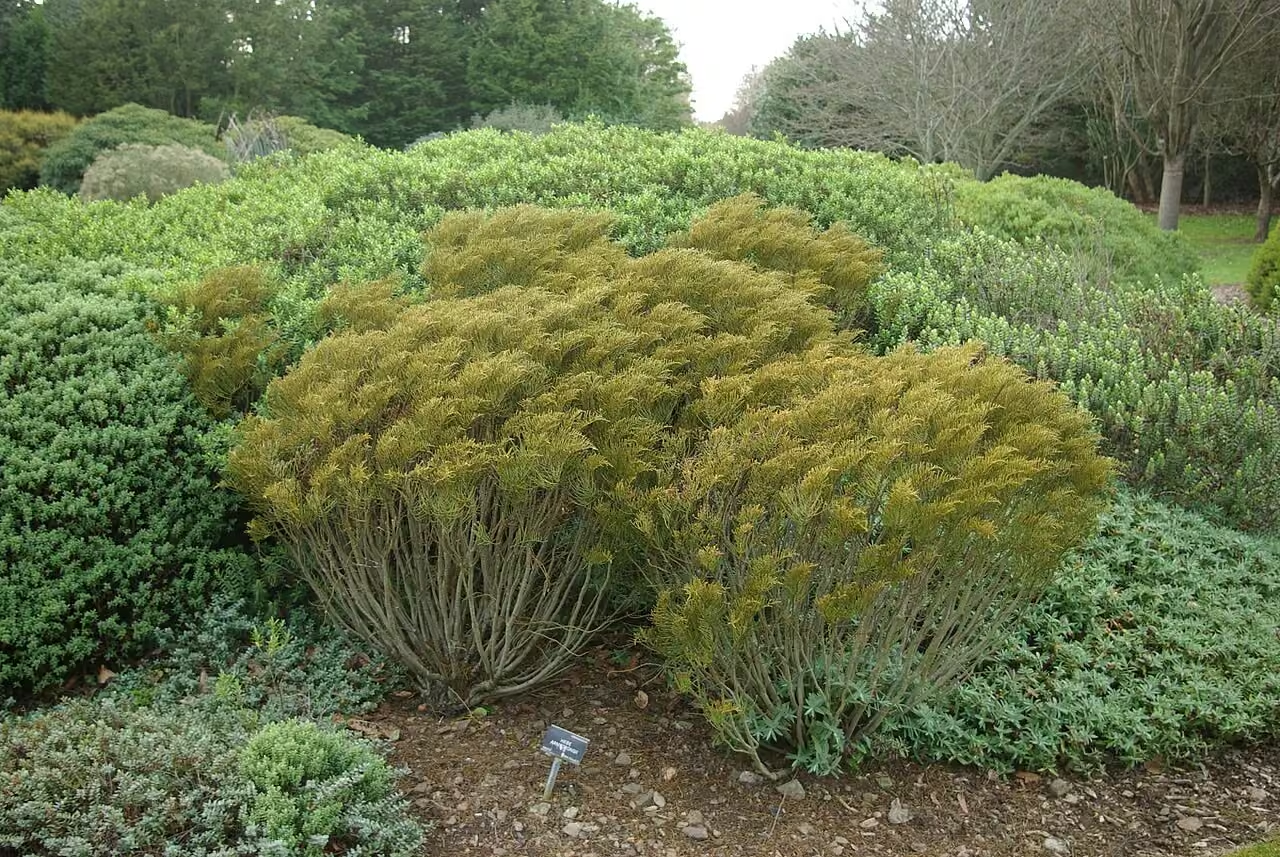
Armstrong's Whipcord
Veronica armstrongii
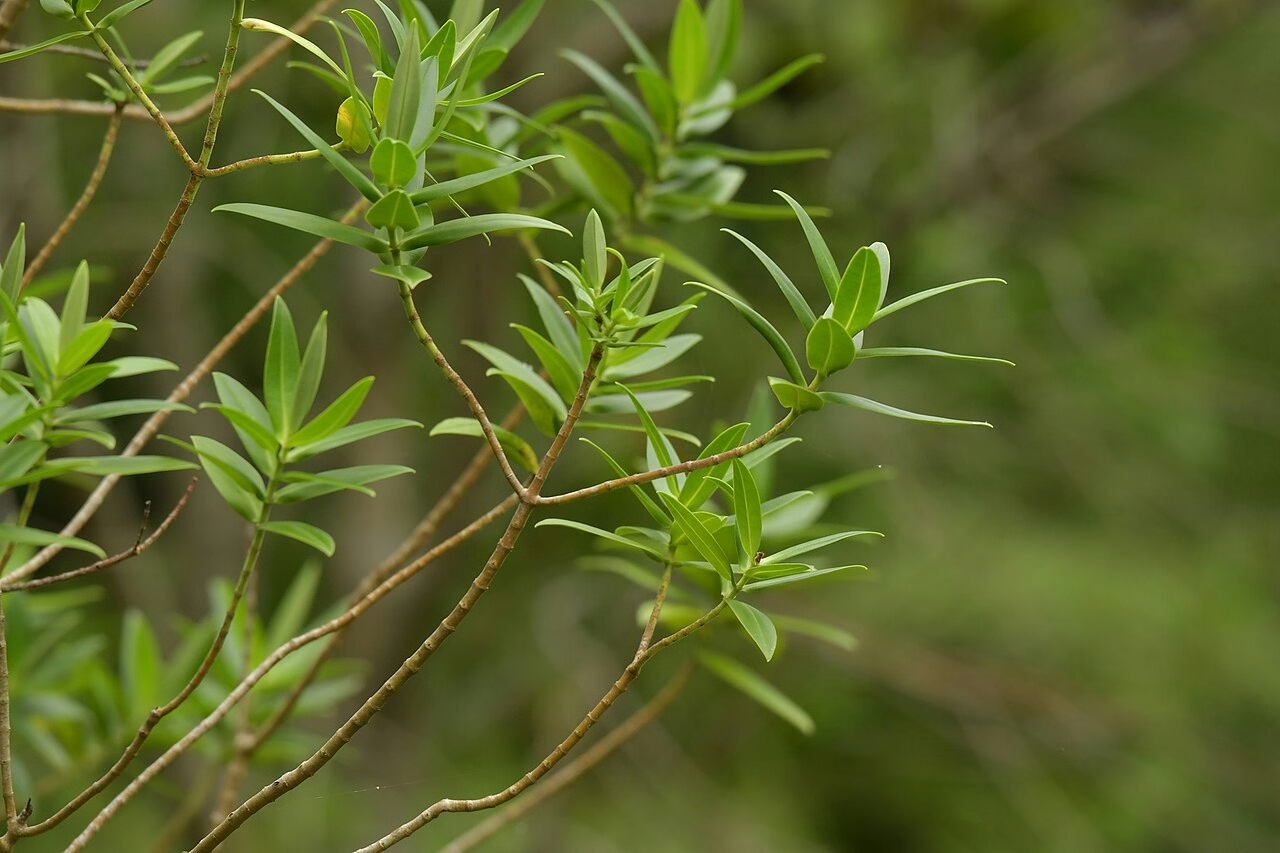
Chatham Island Tree Hebe
Veronica barkeri
Plant Conservation
Haastia recurva var. recurva is ranked Not Threatened (2023) and has held that ranking in every assessment since 2004.
Its scree habitat is largely in remote, high country. Leaving plants undisturbed, controlling feral browsing animals and avoiding damage to screes from vehicles or heavy foot traffic all help keep it secure.
Frequently Asked Questions
What does Haastia recurva look like?
It forms low, open patches of leafy branches covered in long tawny to rusty hairs, with leaves whose upper halves are strongly bent back, giving a greyish-yellow woolly appearance on the scree.
How is Haastia recurva different from vegetable sheep?
The vegetable sheep Haastia pulvinaris forms dense, hard cushions, whereas Haastia recurva is openly branched and distinctly leafy, sprawling across the scree in loose patches.
Can Haastia recurva be grown in a garden?
NZPCN describes it as difficult to propagate and says plants should not be removed from the wild. It is not commercially available and is best seen in its natural scree habitat.
Sources and Further Reading
The botanical, growing, and conservation details for Haastia (Haastia recurva var. recurva) on this page draw on the New Zealand plant references below. Consult them for full technical records and the latest distribution data.