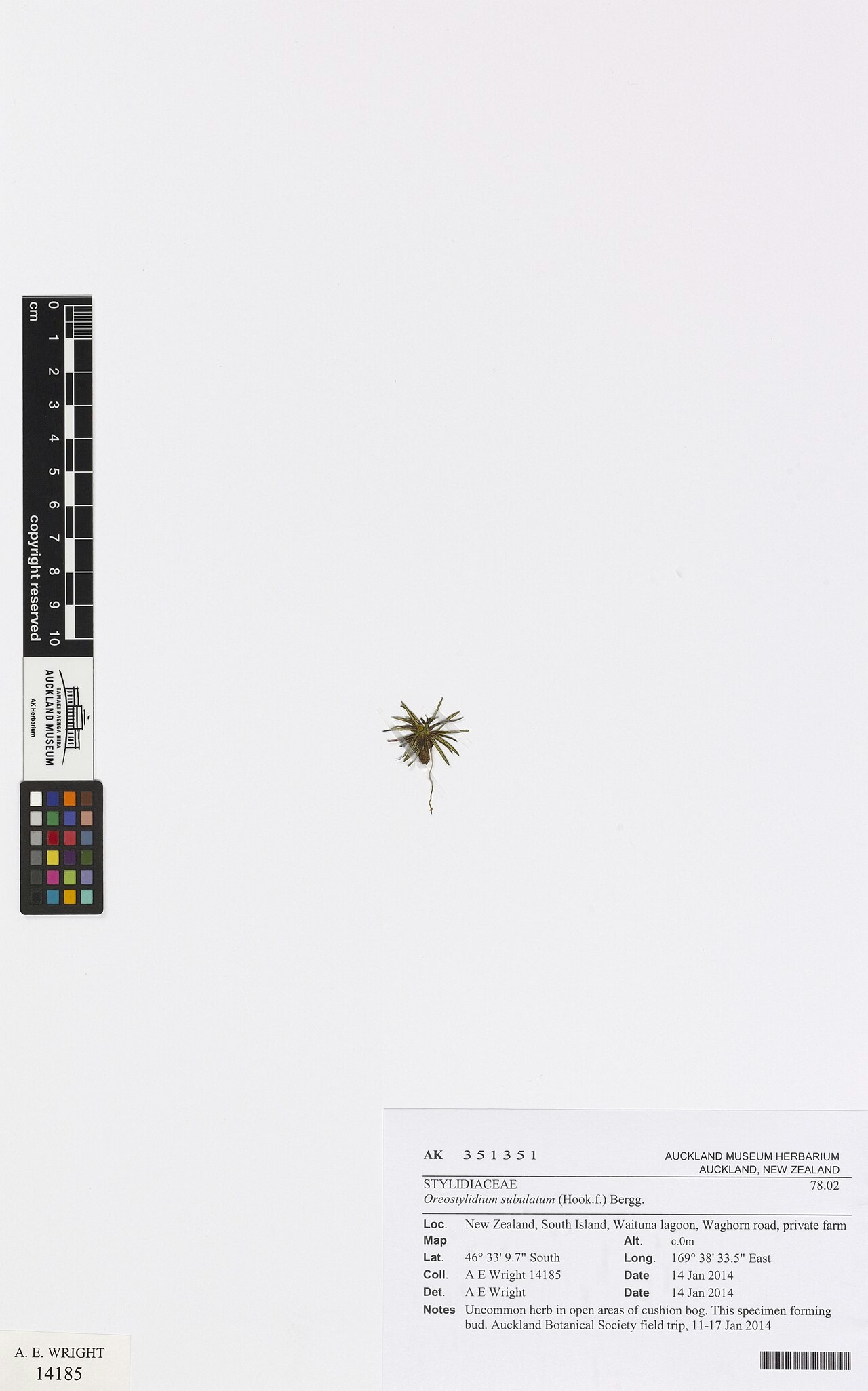
Trigger Plant
Stylidium subulatum
Last updated:
Stylidium subulatum, long known as Oreostylidium subulatum, is New Zealand's only trigger plant, a tiny endemic herb of damp grassland, boggy ground and herbfield. It forms dense tufts of narrow, awl-shaped leaves 1 to 4 cm long from a short stock with a deep taproot, and produces small white flowers 4 to 5 mm across between November and March. It grows from lowland to lower subalpine elevations from about latitude 38 degrees south, roughly the central North Island southwards, but is rather local. It is ranked Not Threatened nationally. Explore more native flowering plants in our native plant guide.
Plant Description
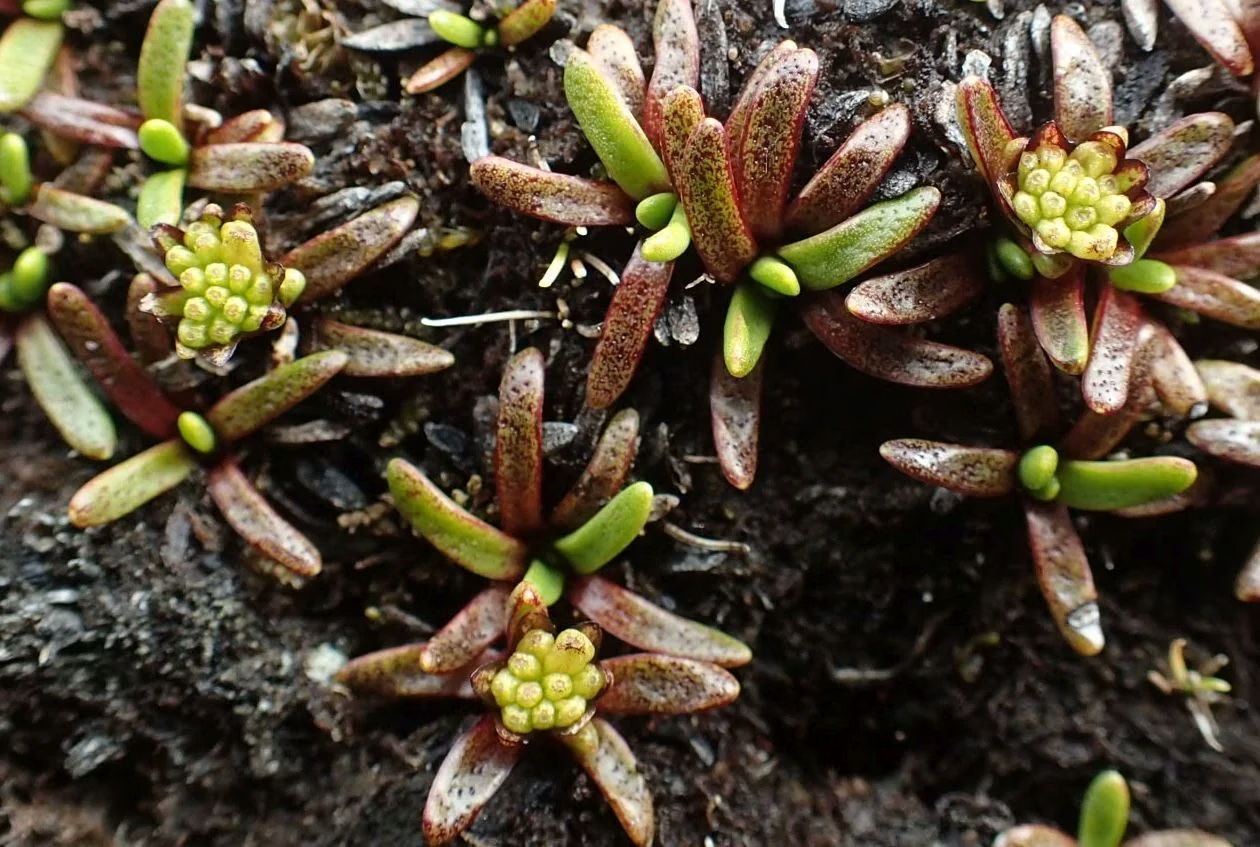
Stylidium subulatum is a small perennial herb with a short stock and a deeply descending taproot, sometimes producing slender stolons or rhizomes. Its leaves form dense, spreading tufts; each is linear, 10 to 40 mm long and 1 to 2 mm wide, shallowly curved in cross-section and ending in a small sharp point.
The flowers are 4 to 5 mm across, with spreading, oblong, blunt white corolla lobes. They are followed by broad-ovoid to almost round capsules 5 to 8 mm long. Flowering runs from November to March and fruiting from January to June.
In damp turf it can be overlooked among small grass-like plants, but the tufts of stiff, awl-shaped leaves combined with small white flowers held just above them help identify it. Its relatives in Phyllachne, sometimes called cushion plants, form dense hard cushions rather than loose tufts.
Quick Facts
| Scientific Name | Stylidium subulatum |
|---|---|
| Height | 1-5 cm |
| Spread | Small tufts, slowly spreading by short stolons |
| Water Needs | High; damp to boggy ground |
| Light | Full sun to light shade |
| Frost Tolerance | High; grows to the lower subalpine zone |
| Salt Tolerance | Not documented |
| Growth Rate | Slow |
| Lifespan | Perennial |
Climate Best Suited to
It suits cool, moist temperate to subalpine climates, from about the central North Island south, where summer moisture is reliable.
Regional Suitability
| City | Climate Suitability |
|---|---|
| Auckland | Low |
| Wellington | Medium |
| Christchurch | Medium |
| Dunedin | High |
Plant Habitat
This species is endemic to New Zealand. It occurs from about latitude 38 degrees south, roughly the central North Island, southwards through the South Island, and it is described in the Flora as rather local in occurrence.
Its habitats are lowland to lower subalpine damp grassland, boggy ground and herbfield. NZPCN rates it an obligate wetland plant, meaning it is almost always found in wet ground.
Growing Requirements
Soil Requirements
It grows in damp, often peaty soils in open turf, using its deep taproot to anchor itself.
- Moist, peaty or silty soil
- Low to moderate fertility
- Deep enough for the taproot to descend
Light Requirements
Open turf and herbfield habitats give it plenty of light, so it needs a bright spot free of taller plants.
- Full sun in cool districts
- Light shade where summers are warm
- Keep surrounding vegetation short
Water Requirements
As an obligate wetland plant it needs consistently wet ground.
- Keep the soil damp all year
- Suits the margins of bog gardens
- Do not let pots dry out
Planting and Establishing
No cultivation records for this species were found, and it is not commonly grown. Anyone attempting it should use a deep pot to allow for the taproot, with a damp mix of peat and grit, kept in a cool, bright position.
In restoration work it would only be planted as part of carefully sourced wetland turf, rather than as an individual garden plant.
Ecological Role
Trigger plants are named for the fused column of stamens and style that, in many Stylidium species, swings to dust visiting insects with pollen. How strongly this mechanism operates in Stylidium subulatum, and which insects pollinate it, are not documented in the sources consulted.
It is a small part of damp grassland and bog turf communities, growing among other low herbs, sedges and mosses, and its deep taproot helps it persist in these competitive mats.
Uses & Significance
Garden Uses
It is of interest mainly to collectors of unusual native plants and alpine bog flora.
- Specialist pot plant for an alpine house
- Small bog garden or trough
- Botanical interest as New Zealand's trigger plant
Ecological Value
Its value lies in contributing to the diversity of New Zealand's damp turf and bog communities.
- Member of endemic wetland turf flora
- Flowers available to small insects over a long summer season
- Indicator of intact, unmodified damp grassland
Landscaping Uses
Grow it in a trough with other tiny wetland natives so its small white flowers can be seen close up. Raise the container to eye level if possible.
It has no practical role in larger landscape plantings because of its size and slow growth.
Seasonal Care Calendar
Spring
New leaves grow from the stock and buds start to form.
- Check moisture levels
- Remove competing weeds
Summer
Small white flowers appear from November through summer.
- Keep constantly damp
- Look closely at the flowers with a hand lens
Autumn
Capsules ripen between January and June.
- Collect ripe capsules for seed
- Tidy any dead leaves
Winter
The plant persists as a low tuft.
- Protect pots from drying winds
- Minimal care needed
When to Prune and How Much
No pruning is needed for such a small herb. Remove dead leaves by hand if they accumulate.
Keep grasses and other turf plants trimmed short around it so it is not shaded out.
How to Grow Trigger Plant
There are no published propagation notes for Stylidium subulatum in NZPCN or the Flora, and it is not known to be grown commercially. The methods below are therefore suggestions based on its structure: it sets seed in capsules and sometimes produces stolons or rhizomes. Expect to experiment, and record your results. Because it has a deep taproot, disturbing established plants is risky, so seed is probably the safer method.
From Seed
Capsules ripen from January to June. Collect them as they begin to split and sow the fine seed fresh, as germination requirements are not known.
- Collect capsules as they turn brown and start to open
- Sow on the surface of a damp peat and fine grit mix in a deep pot
- Do not cover the seed, or cover only with a dusting of grit
- Stand the pot in a tray of water so it stays moist
- Keep outdoors in a cool, bright, sheltered place
- Leave seedlings undisturbed until they are well established
By Division
Where a plant has produced stolons or rhizomes with their own roots, these can be separated carefully. Do not attempt to split the main taproot.
- Locate a rooted stolon or rhizome away from the main crown
- Cut it free with clean scissors, keeping the roots intact
- Pot into a deep pot of damp peat and grit
- Keep humid and lightly shaded until new leaves appear
- Wait until the new plant has formed its own deep root before moving it to a permanent position
Pests & Diseases
No specific pests or diseases are recorded for this species. Slugs may graze the soft young leaves in cultivation.
In the wild, the main pressures are habitat changes such as drainage, overgrowth by taller exotic grasses and trampling of wet turf.
Cultural Significance
No Māori name or traditional use is recorded for Stylidium subulatum in the sources consulted.
Joseph Hooker described it in 1864 in his Handbook of the New Zealand Flora. Sven Berggren later moved it into his genus Oreostylidium, and the plant has also been placed in Phyllachne before being returned to Stylidium, the large, mainly Australian genus of trigger plants.
Bonus Tip
Search for this plant in summer when it is flowering: the small white flowers are the easiest way to pick out its tufts from the surrounding damp turf, and outside flowering it is very easy to mistake for a small sedge or grass.
Related Plants
Explore other native plants that share similar characteristics or habitats with Trigger Plant (Stylidium subulatum), offering further insights into New Zealand's diverse flora. These related species provide context and opportunities for complementary planting in your garden.
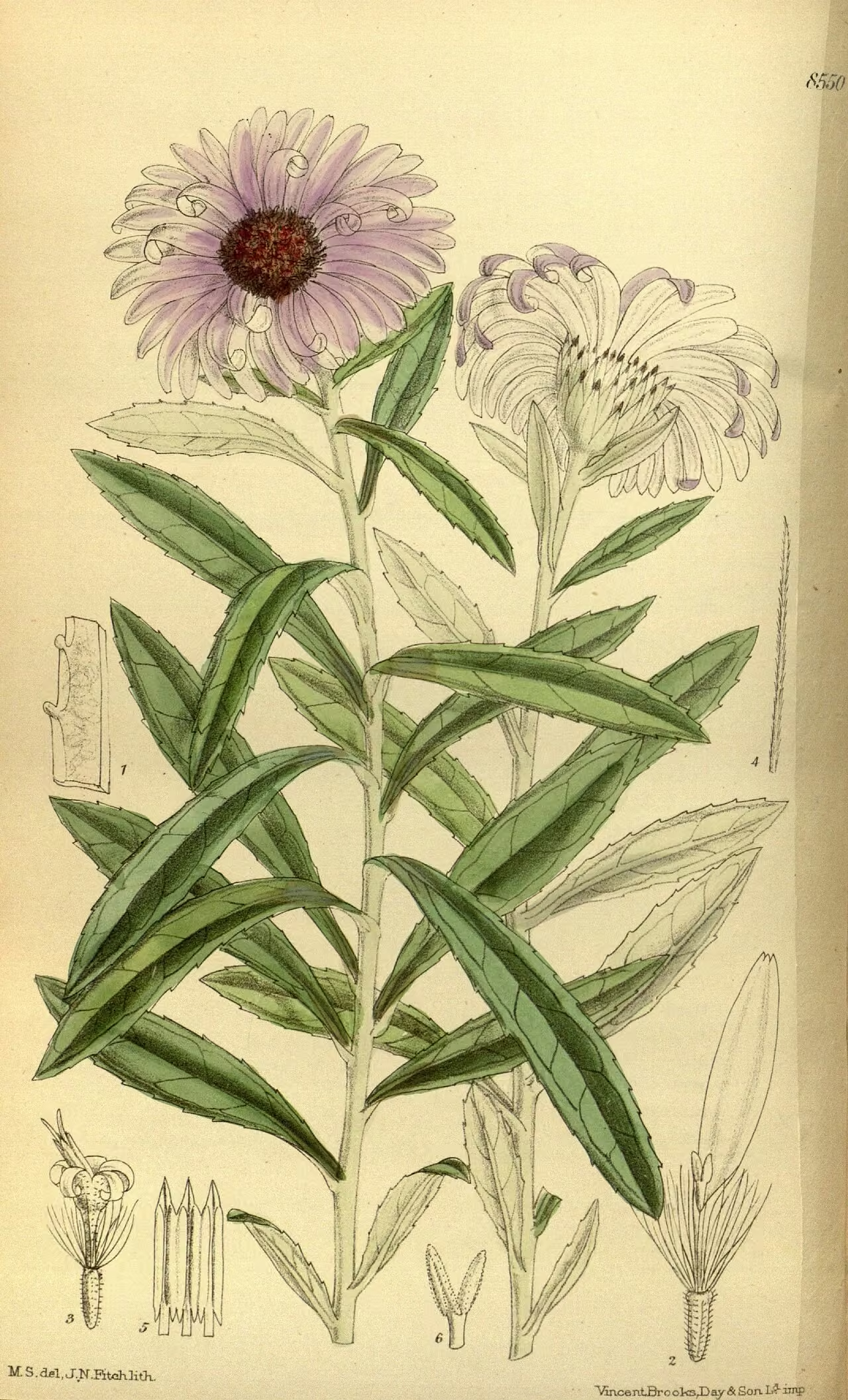
Hangatere
Macrolearia semidentata
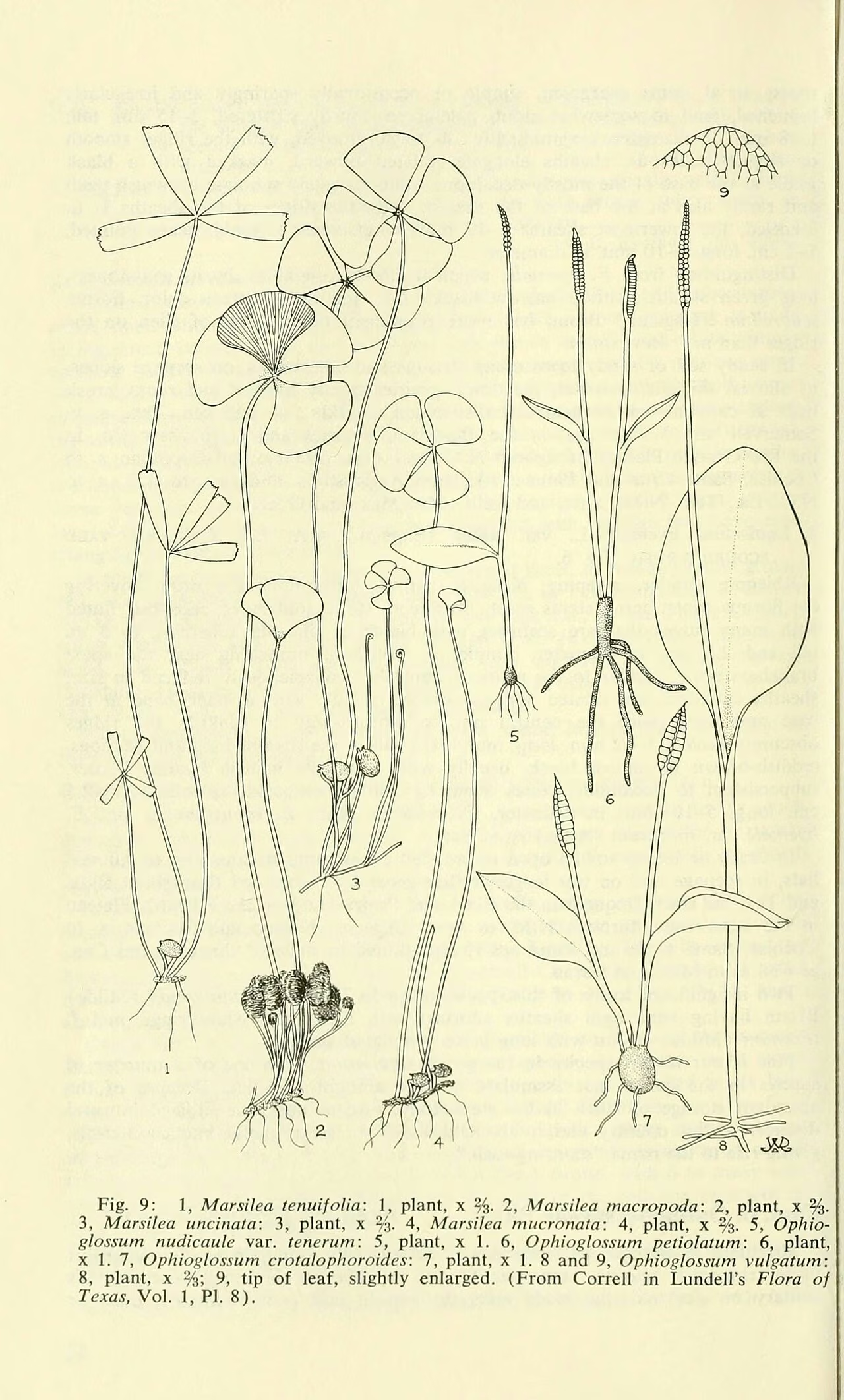
Stalked Adder's Tongue Fern
Ophioglossum petiolatum
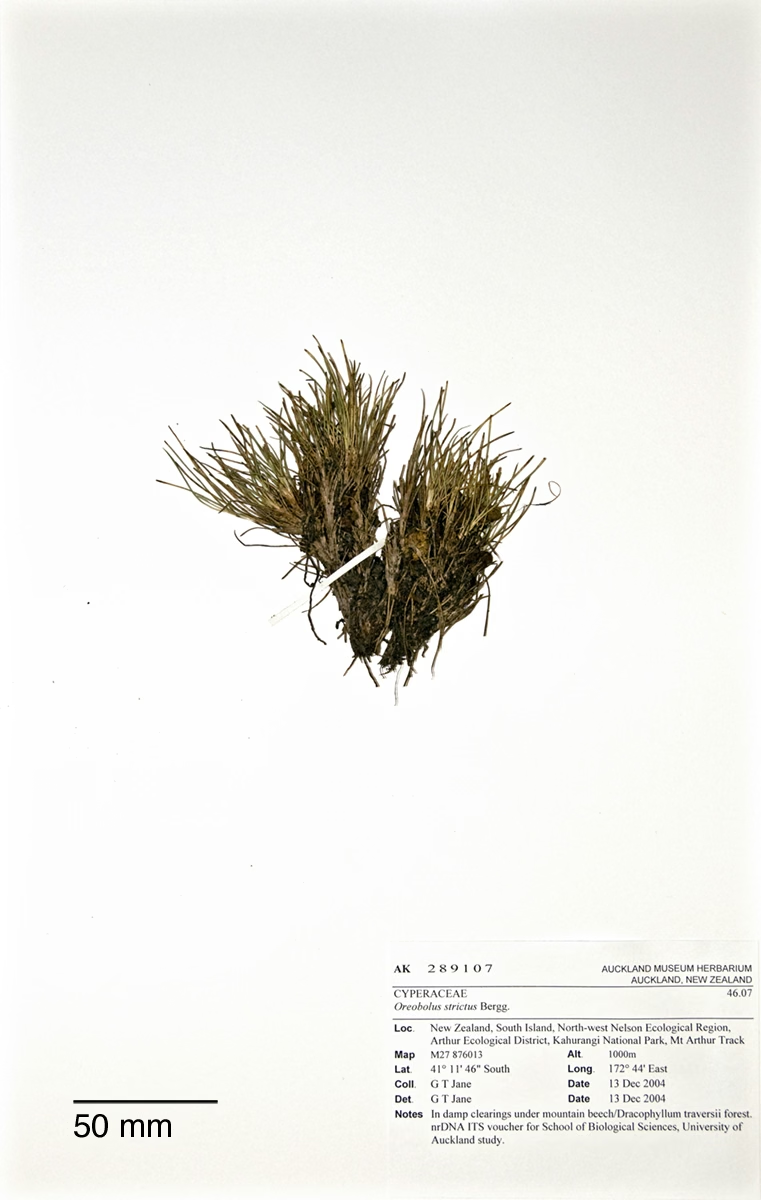
Oreobolus strictus
Oreobolus strictus
White Oxalis
Oxalis magellanica
Thompson's Oxalis
Oxalis thompsoniae
Mountain Tauhinu
Ozothamnus vauvilliersii
Hairless Cress
Pachycladon fastigiatum
Cushion Daisy
Cushion Daisy
Plant Conservation
Stylidium subulatum is ranked Not Threatened (2023), a status it has held in every assessment since 2004. Regionally, it is listed as At Risk - Regionally Naturally Uncommon in Otago and Data Deficient in Wellington.
Protecting damp grasslands and bogs from drainage, conversion and weed invasion is the main way to keep its populations secure.
Frequently Asked Questions
Is Oreostylidium subulatum the same as Stylidium subulatum?
Yes. Oreostylidium subulatum is an older name. The accepted name is Stylidium subulatum, the name Joseph Hooker first gave it in 1864, and the plant has also been called Phyllachne subulata.
What is a trigger plant?
Trigger plants are members of the large, mainly Australian genus Stylidium, in which the stamens and style are fused into a single column. Stylidium subulatum is the only member of the genus native to New Zealand.
Where can you find Stylidium subulatum?
It grows in damp grassland, boggy ground and herbfield from the lowlands to lower subalpine zone, from about latitude 38 degrees south through the rest of New Zealand, though it is local in occurrence.
What does subulatum mean?
Subulatum is Latin for awl-shaped, describing the narrow, pointed leaves that taper to a fine tip like a leatherworker's awl.
Sources and Further Reading
The botanical, growing, and conservation details for Trigger Plant (Stylidium subulatum) on this page draw on the New Zealand plant references below. Consult them for full technical records and the latest distribution data.