Mountain Tauhinu
Ozothamnus vauvilliersii
Last updated:
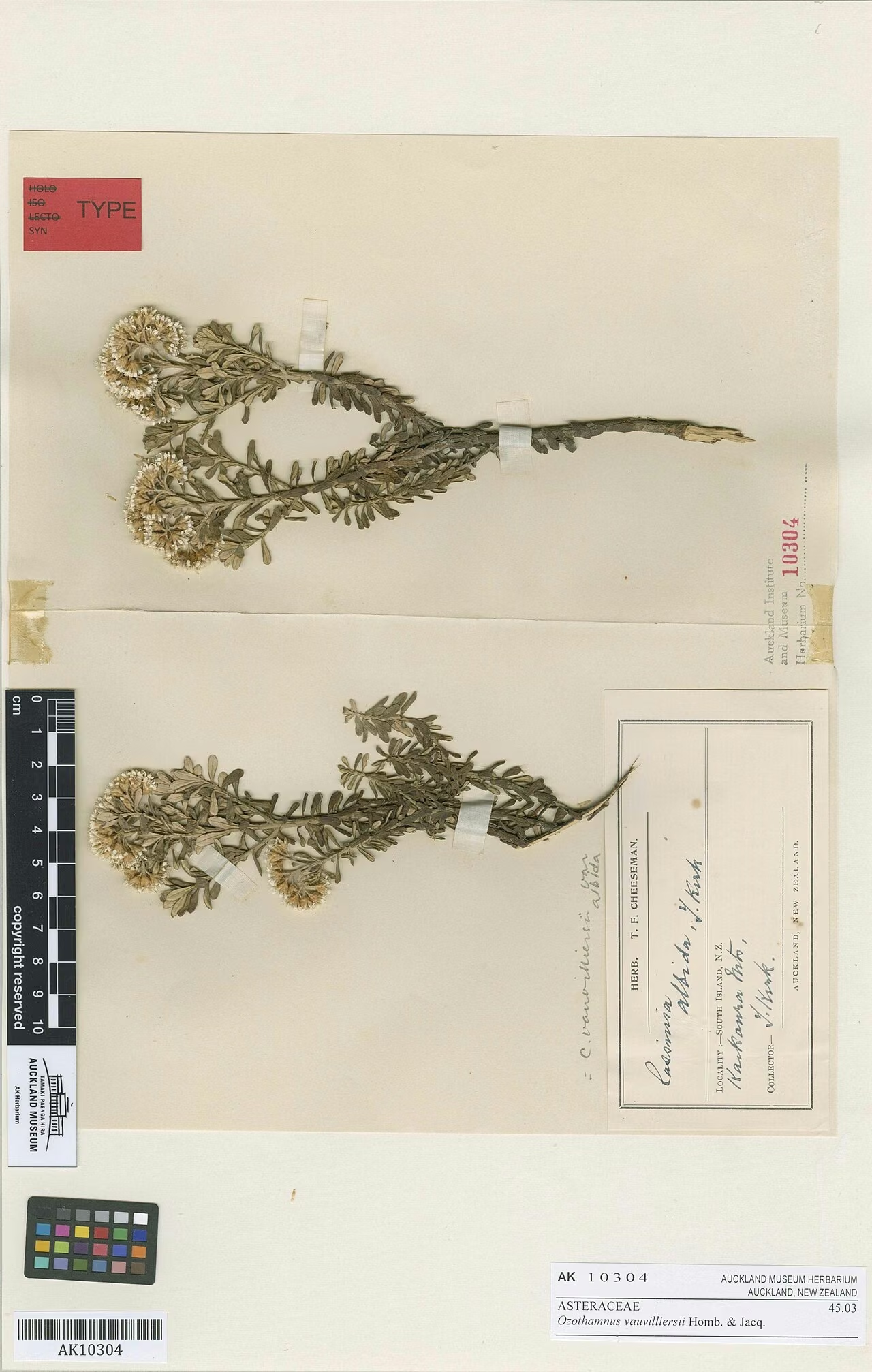
Mountain tauhinu (Ozothamnus vauvilliersii), formerly Cassinia vauvilliersii, is a bushy, yellow-green endemic shrub growing up to about 3 m tall. Its small oval leaves are only 3 to 10 mm long, and from December to May its branch tips carry tight clusters of small white flower heads made of papery scales. It grows in open lowland to montane and lower subalpine shrubland and grassland throughout the North, South and Stewart Islands and on the Auckland Islands. The genus name refers to the fragrance of the crushed foliage. It is Not Threatened and is a hardy, tough shrub for exposed sites. Explore more native shrubs in our native plant guide.
Plant Description
Mountain tauhinu is a bushy, yellow-green evergreen shrub up to 3 m tall. Its leathery leaves are short, 3 to 10 mm long, and linear-spathulate to narrow oblong-obovate, meaning they widen towards the tip. The yellowish colour comes from the hairs on the foliage and young stems.
From December to May, sometimes as late as August, the branch tips carry tight clusters of small flower heads. Each head is surrounded by white papery scales, giving the plant a frosted appearance in flower. Fluffy seeds follow from February to June.
It is very similar to Ozothamnus leptophyllus, which has linear leaves that do not widen, and NZPCN notes that mountain tauhinu may be just a form of that species. It can also be confused with Shawia species and with Olearia cymbifolia, which differ in leaf shape and in their daisy-like flower heads.
Quick Facts
| Scientific Name | Ozothamnus vauvilliersii |
|---|---|
| Height | 1.5-3 m |
| Spread | 1-2 m |
| Water Needs | Low to moderate once established |
| Light | Full sun |
| Frost Tolerance | High; grows to the lower subalpine zone |
| Salt Tolerance | Moderate; not primarily a coastal plant |
| Growth Rate | Moderate to fast |
| Lifespan | Perennial (woody shrub) |
Climate Best Suited to
It suits cool to cold temperate climates, from lowland to lower subalpine, and copes well with frost, wind and drought in open sites.
Regional Suitability
| City | Climate Suitability |
|---|---|
| Auckland | Low |
| Wellington | Medium |
| Christchurch | High |
| Dunedin | High |
Plant Habitat
Mountain tauhinu is endemic to New Zealand and occurs in suitable habitat throughout Te Ika-a-Māui/North Island, Te Waipounamu/South Island, Rakiura/Stewart Island and Motu Maha/Auckland Islands.
It is a plant of open lowland to montane and lower subalpine shrubland and grassland, often on disturbed or regenerating ground. It is ranked Regionally Naturally Uncommon in Wellington, where suitable montane habitat is limited.
Growing Requirements
Soil Requirements
It grows in open, often stony or thin soils in shrubland and grassland, and tolerates low fertility.
- Free-draining soils preferred
- Copes with stony and poor ground
- Avoid heavy, waterlogged clay
Light Requirements
It is a plant of open habitats and needs full sun to stay compact and flower well.
- Full sun
- Becomes leggy in shade
- Tolerates exposure to wind
Water Requirements
Once established it needs little watering; its small, leathery leaves reduce water loss.
- Water regularly in the first summer
- Drought tolerant once established
- Avoid poorly drained sites
Planting and Establishing
Plant in autumn or spring in a sunny, well-drained position. It is well suited to erosion-prone banks and open restoration sites in cooler districts.
Use locally sourced plants for restoration plantings, especially in montane areas, so that regional variation is preserved.
Ecological Role
Its many small flower heads attract a range of insects, including native bees, flies, beetles and moths, which feed on the nectar and pollen. Wind disperses the fluffy seed.
As a shrub of open and regenerating ground, it acts as a nurse plant that shelters seedlings of other native species, much like tauhinu and mānuka do in lowland succession.
Uses & Significance
Garden Uses
Mountain tauhinu is a hardy, low-maintenance shrub with a soft yellow-green colour and a summer display of white flower clusters.
- Hedging and shelter in cold, windy districts
- Bank stabilisation
- Native shrub borders
- Revegetation of montane and high-country sites
Ecological Value
It is an important shrub of open montane habitats and regenerating land.
- Long flowering season for insects
- Nurse plant for forest regeneration
- Cover for lizards and invertebrates in shrubland
Landscaping Uses
Its fine yellow-green foliage contrasts well with darker shrubs such as Coprosma and with tussock grasses in a high-country style planting.
It can be clipped as an informal hedge or left to grow naturally as a rounded shrub in a dry, sunny border.
Seasonal Care Calendar
Spring
Fresh growth gives the shrub a bright yellow-green colour.
- Plant new shrubs
- Light trim if needed
Summer
Flowering begins in December, with white clusters at the branch tips.
- Water young plants in drought
- Enjoy insect activity
Autumn
Flowering continues into May while fluffy seed ripens.
- Collect seed
- Take semi-hardwood cuttings
Winter
Occasional late flowers may persist into winter.
- Little maintenance needed
- Check stakes on young plants
When to Prune and How Much
Trim lightly after flowering to keep the shrub compact and dense. It responds well to regular light clipping when grown as a hedge.
Avoid cutting back hard into old, leafless wood, as recovery from such cuts is not reliably documented for this species.
How to Grow Mountain Tauhinu
NZPCN does not give propagation notes for mountain tauhinu, but its relative tauhinu (Ozothamnus leptophyllus) is commonly grown from seed and cuttings, and the same approaches are used here. Seed is plentiful, as each plant produces many flower heads, while cuttings allow particular forms to be reproduced. Collect from local plants for restoration so that the appropriate regional form is maintained.
From Seed
Seed ripens from February to June. The fluffy seeds are small and wind-dispersed, so collect them just as the heads begin to open.
- Collect seed heads as they turn fluffy
- Rub the heads gently to release the seed
- Sow fresh seed onto the surface of a free-draining seed mix
- Press in lightly and keep moist
- Place in a bright, sheltered spot
- Prick out seedlings once they are large enough to handle
From Cuttings
Semi-hardwood cuttings taken in late summer or autumn are a common method for Ozothamnus and give plants identical to the parent.
Choose shoots from a compact, well-coloured parent, and keep the cuttings out of strong sun while they root, because the small leathery leaves wilt less than larger-leaved shrubs but still dry out under glass.
- Take 8 to 10 cm cuttings of semi-hardwood side shoots
- Remove leaves from the lower half
- Dip in rooting hormone
- Insert into a mix of bark and perlite
- Keep in a humid, shaded environment until rooted
- Pot on and harden off before planting out
Pests & Diseases
No serious pests or diseases are recorded for mountain tauhinu. Scale insects may occasionally appear on garden plants.
Root rot can affect plants in poorly drained or waterlogged soils, so good drainage is important.
Cultural Significance
No Māori use specific to mountain tauhinu is recorded in the sources consulted. The common name borrows the Māori name tauhinu, used for its close relative Ozothamnus leptophyllus.
The species was described in 1852 by Hombron and Jacquinot, naturalists on Dumont d'Urville's French expedition. The epithet honours a person named Vauvilliers, whose identity is not given in the sources consulted.
Bonus Tip
To tell mountain tauhinu from ordinary tauhinu in the field, look closely at the leaf shape with a hand lens: leaves that broaden towards the tip suggest Ozothamnus vauvilliersii, while narrow, parallel-sided leaves suggest Ozothamnus leptophyllus.
Related Plants
Explore other native plants that share similar characteristics or habitats with Mountain Tauhinu (Ozothamnus vauvilliersii), offering further insights into New Zealand's diverse flora. These related species provide context and opportunities for complementary planting in your garden.
Oreobolus strictus
Oreobolus strictus
Stylidium subulatum
Stylidium subulatum
White Oxalis
Oxalis magellanica
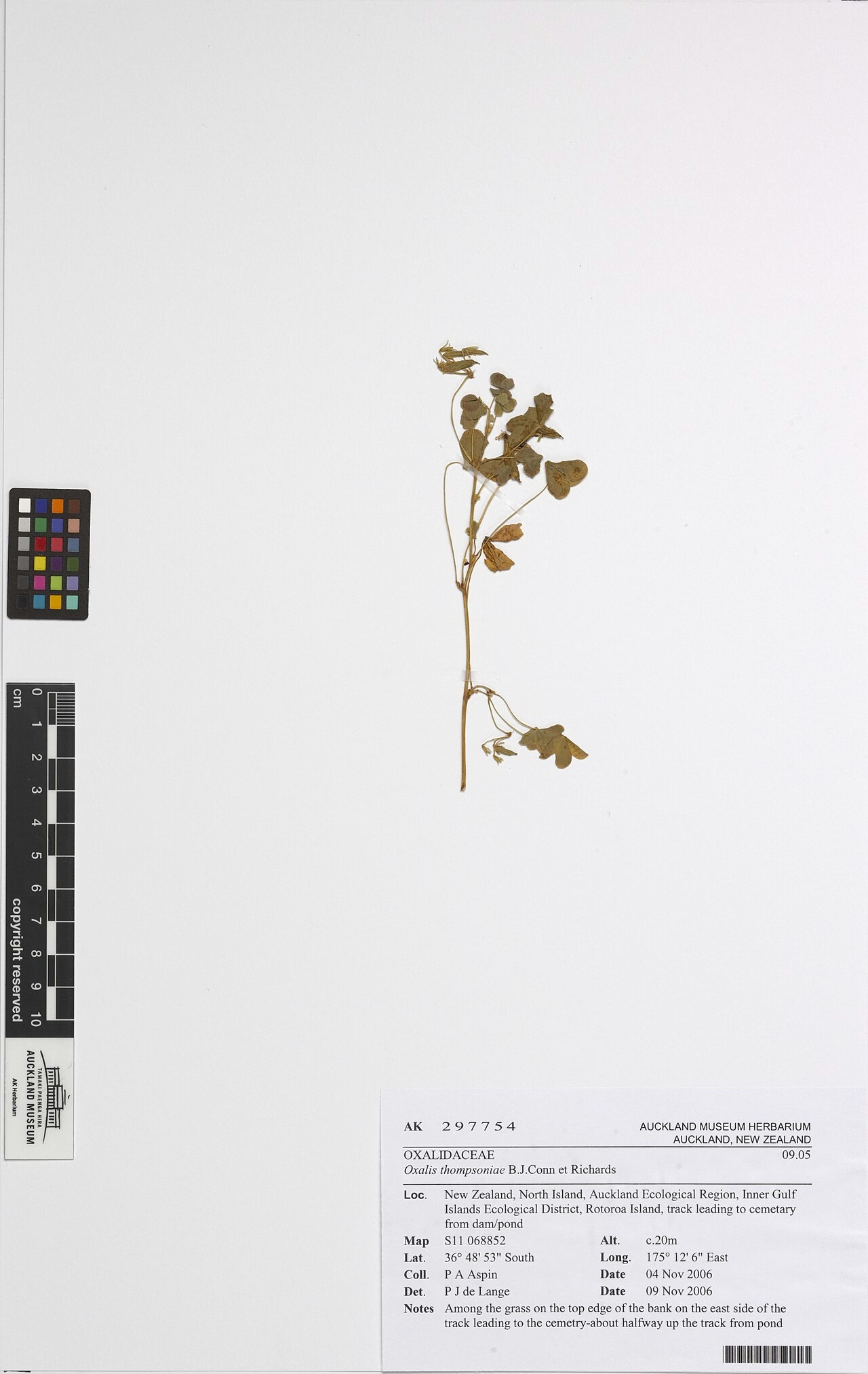
Thompson's Oxalis
Oxalis thompsoniae
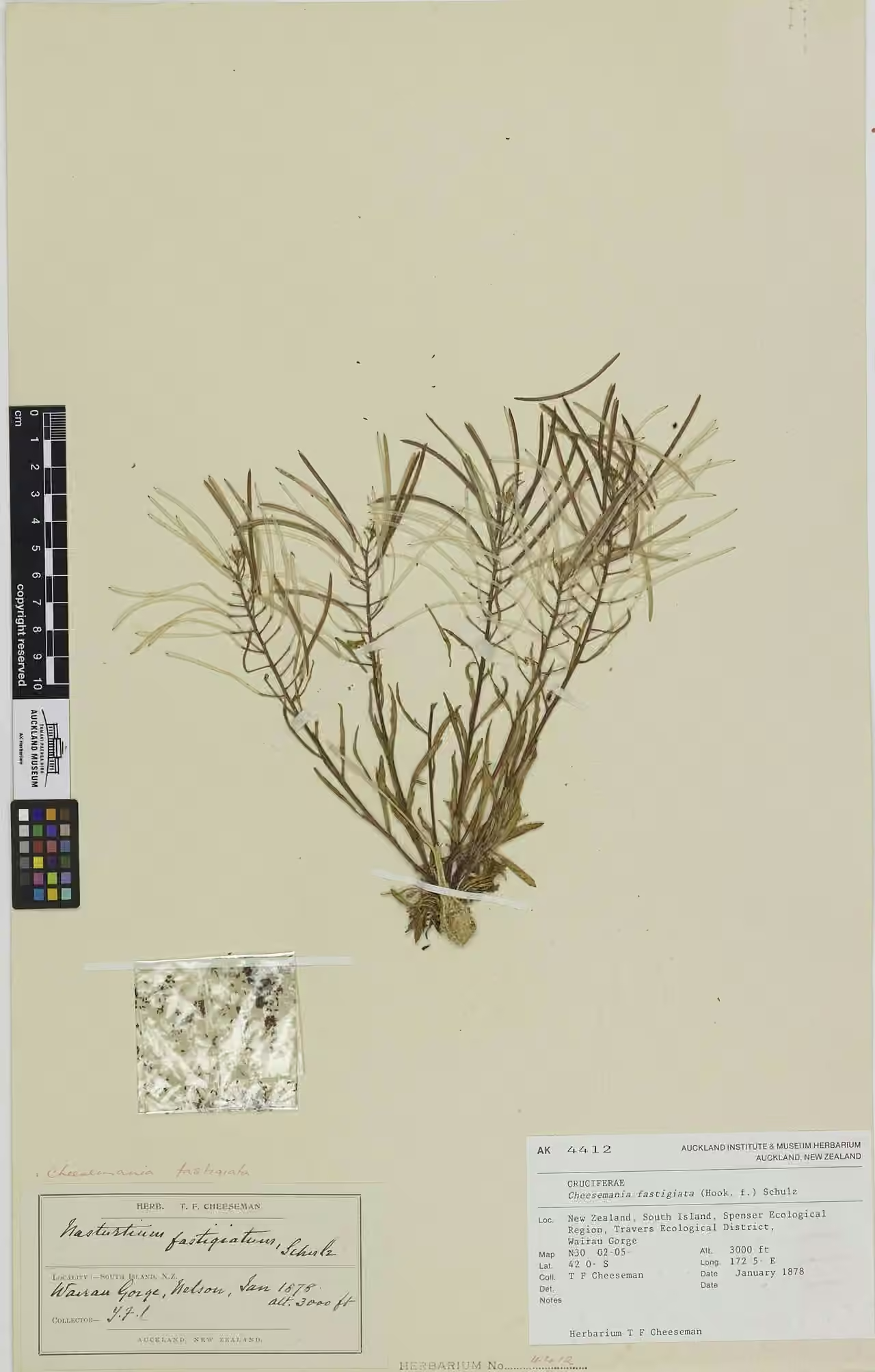
Hairless Cress
Pachycladon fastigiatum
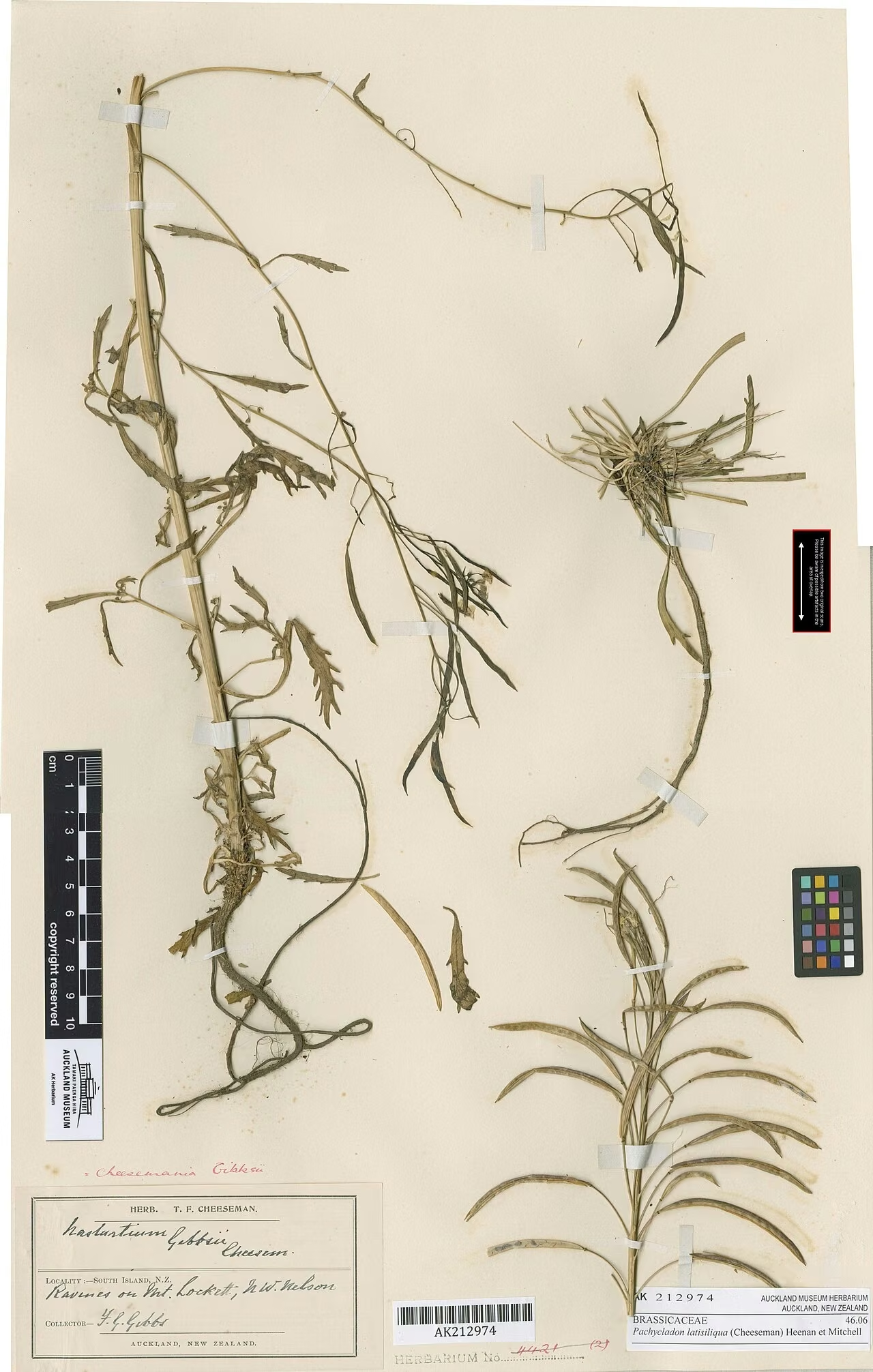
Pachycladon latisiliquum
Pachycladon latisiliquum
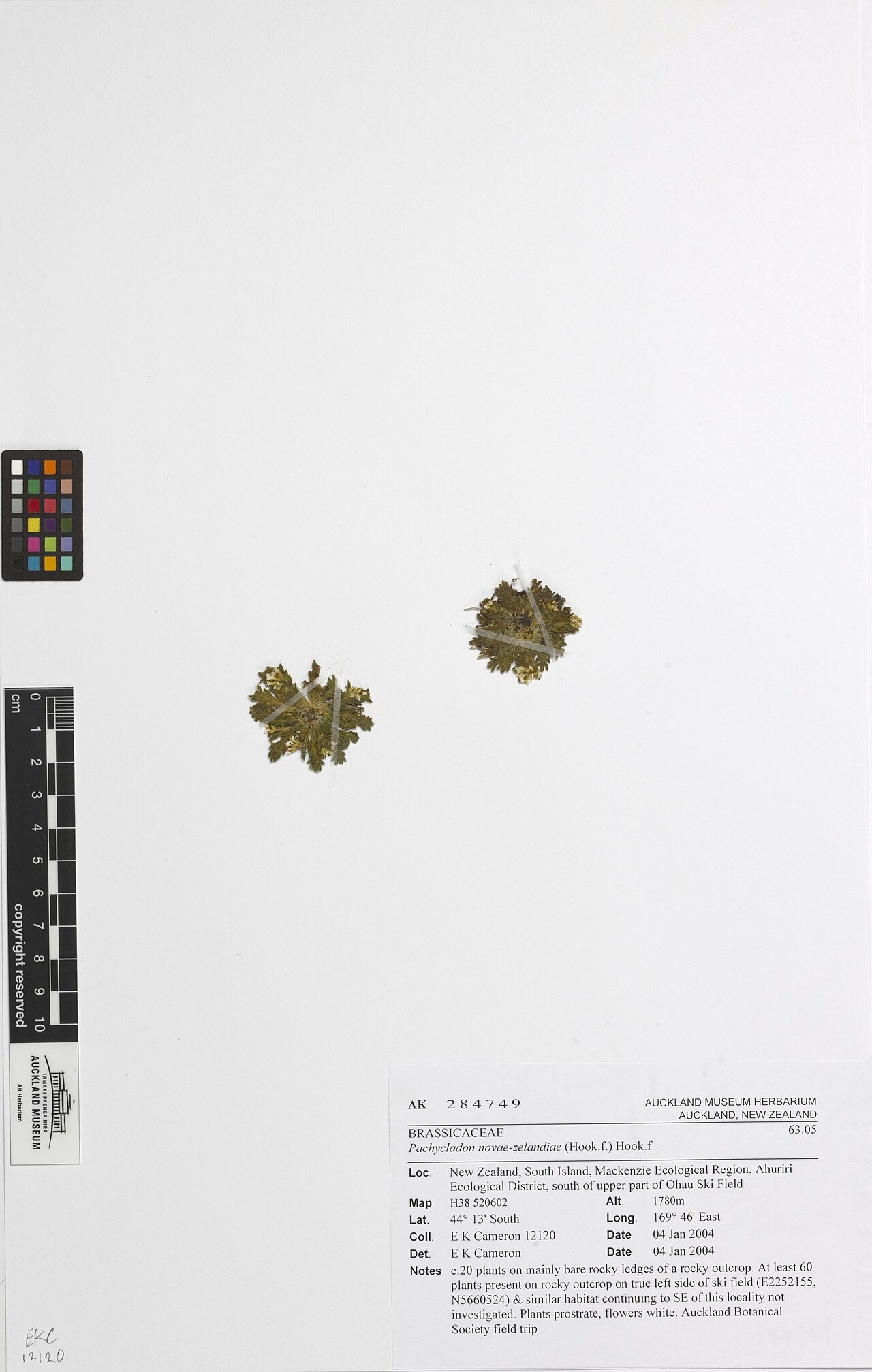
Pachycladon novae zelandiae
Pachycladon novae zelandiae
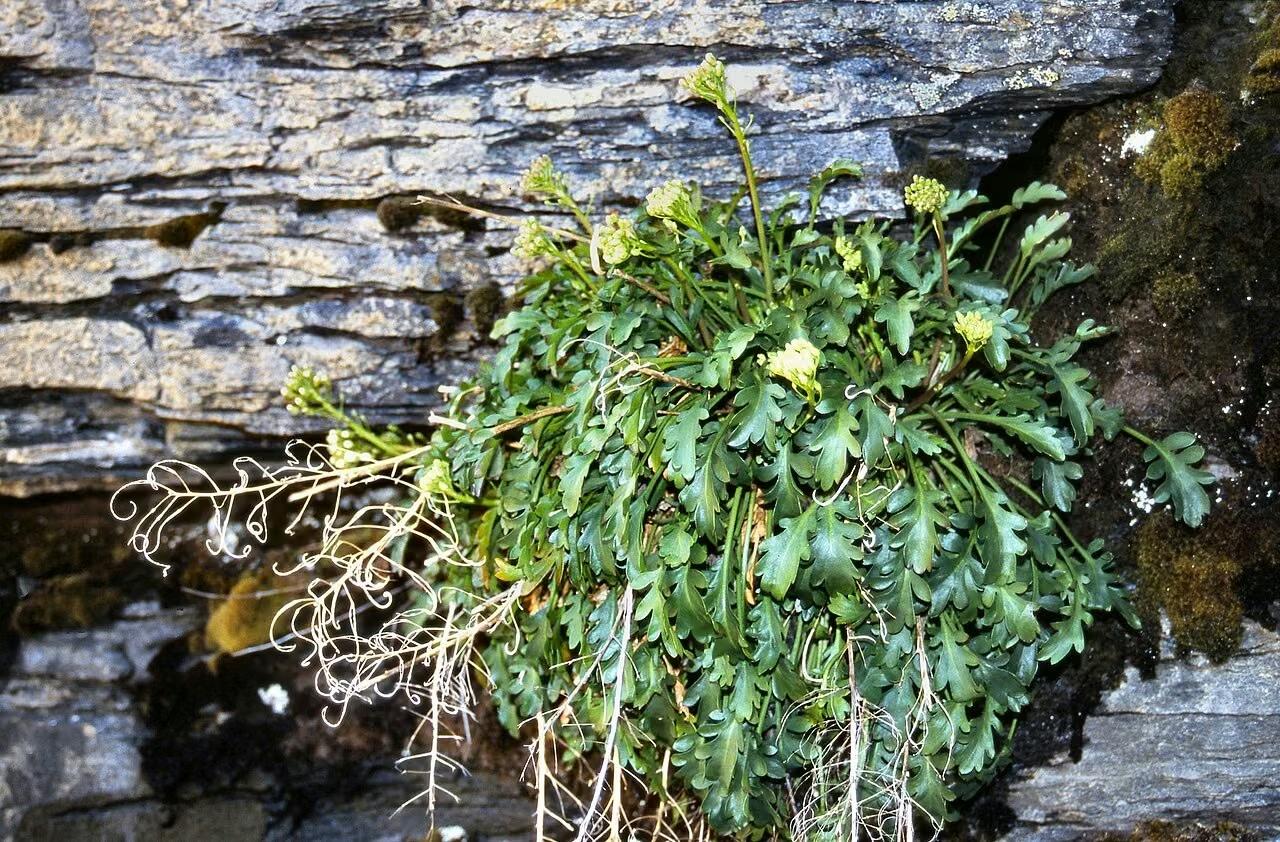
Pachycladon wallii
Pachycladon wallii
Plant Conservation
Ozothamnus vauvilliersii is ranked Not Threatened (2023) and is widespread. Regionally, it is listed as Not Threatened in Otago but At Risk - Regionally Naturally Uncommon in Wellington.
Its open shrubland habitats can be lost to land development, pine wildings and weeds such as heather and gorse, so protecting montane shrubland helps maintain its populations.
Frequently Asked Questions
What is the difference between mountain tauhinu and tauhinu?
Mountain tauhinu (Ozothamnus vauvilliersii) has short oval leaves 3 to 10 mm long that widen towards the tip, while Ozothamnus leptophyllus has linear leaves that do not widen. NZPCN notes the two may not be truly distinct species.
Was Ozothamnus vauvilliersii once called Cassinia?
Yes. It was described in 1852 and long known as Cassinia vauvilliersii before New Zealand's tauhinu were transferred to the genus Ozothamnus.
Where does mountain tauhinu grow?
It occurs throughout the North Island, South Island and Stewart Island/Rakiura, and on the Auckland Islands, in open lowland to montane and lower subalpine shrubland and grassland.
Why is the genus called Ozothamnus?
The name comes from the Greek ozo, to smell, and thamnos, shrub, referring to the fragrant foliage when it is crushed.
Sources and Further Reading
The botanical, growing, and conservation details for Mountain Tauhinu (Ozothamnus vauvilliersii) on this page draw on the New Zealand plant references below. Consult them for full technical records and the latest distribution data.